Spring colors always seem to come in waves. Late May brings blue spikes – baptisia, amsonia, columbine and sage,
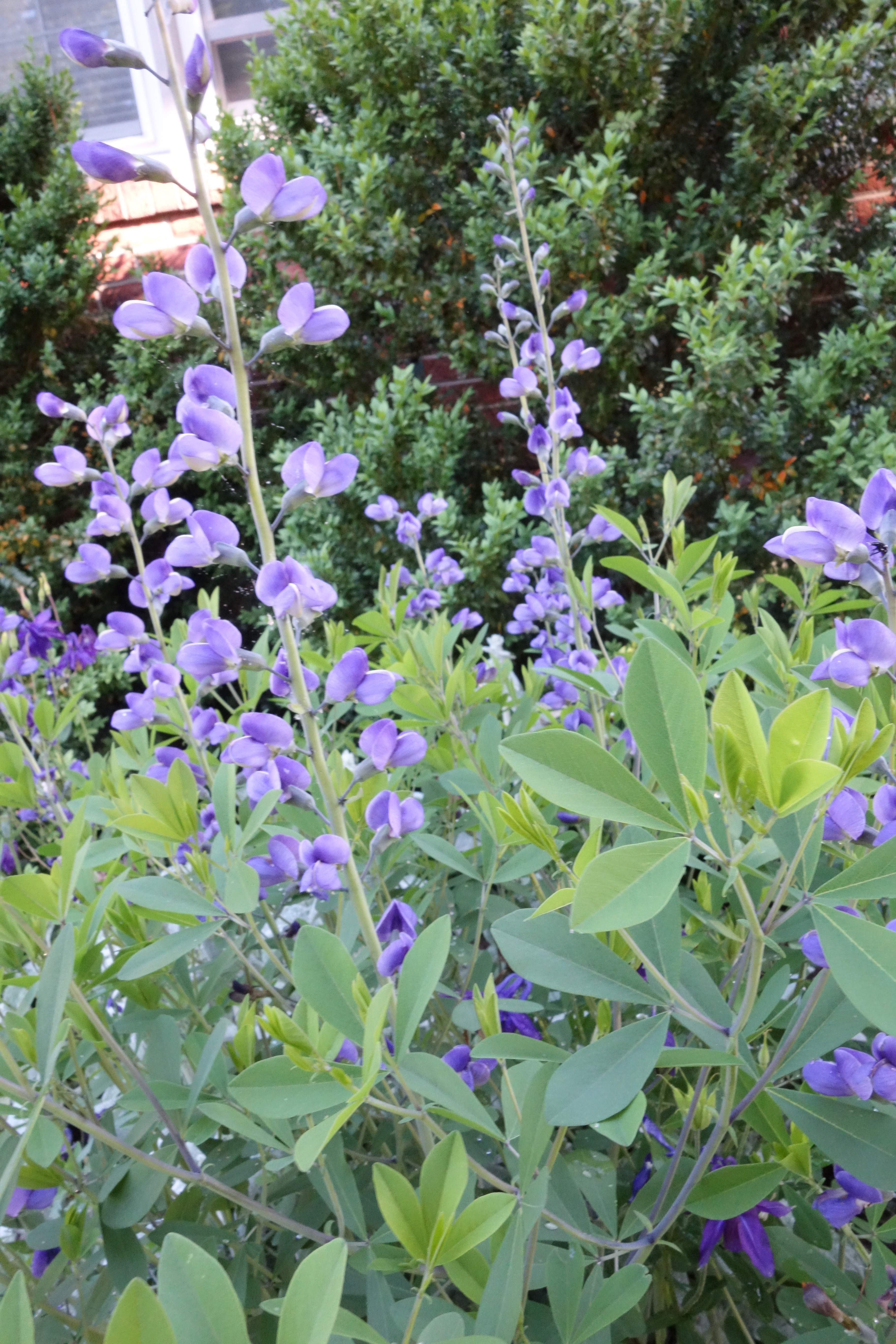

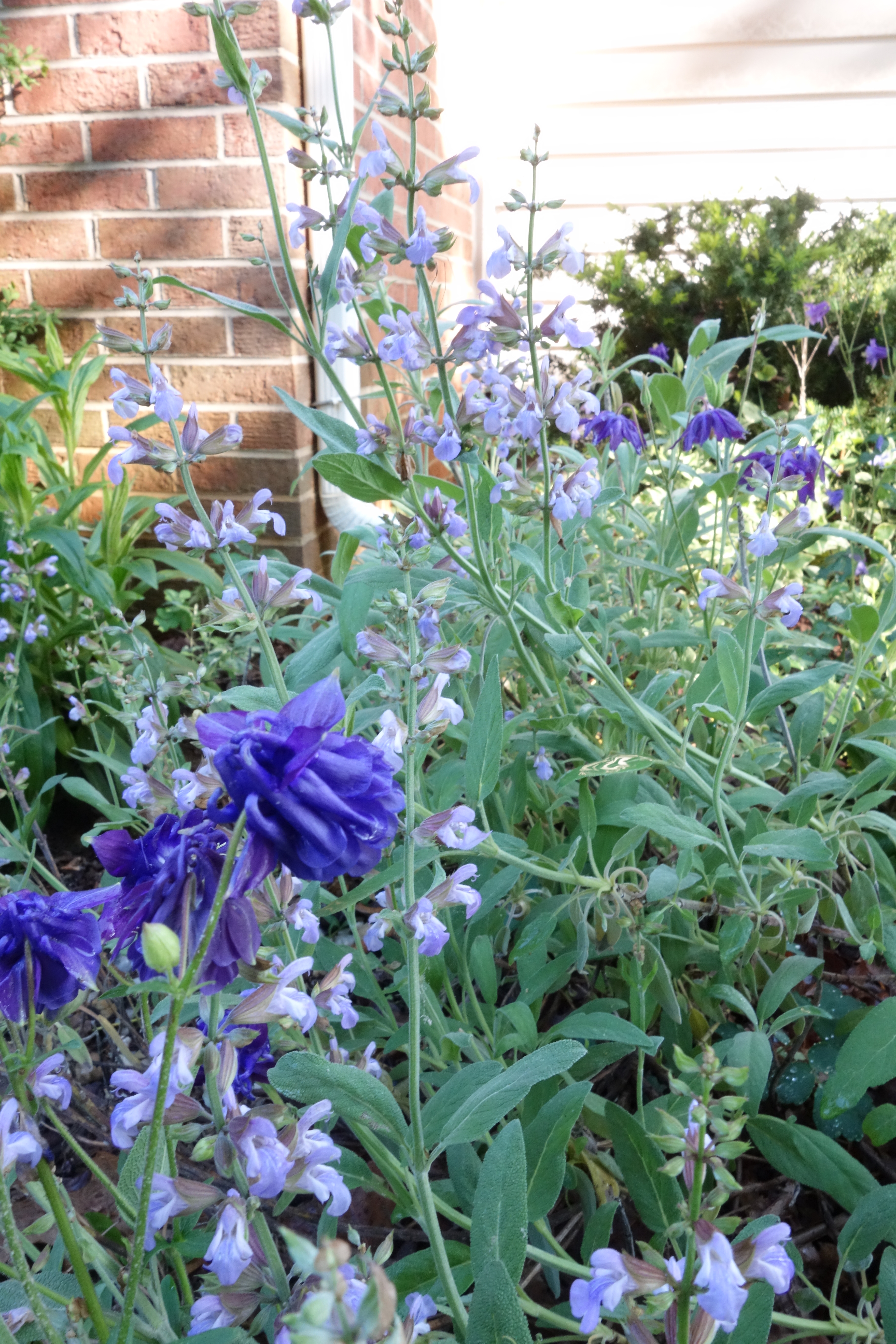 tradescantia and my new little clematis integrifolia, ‘Blue Boy.”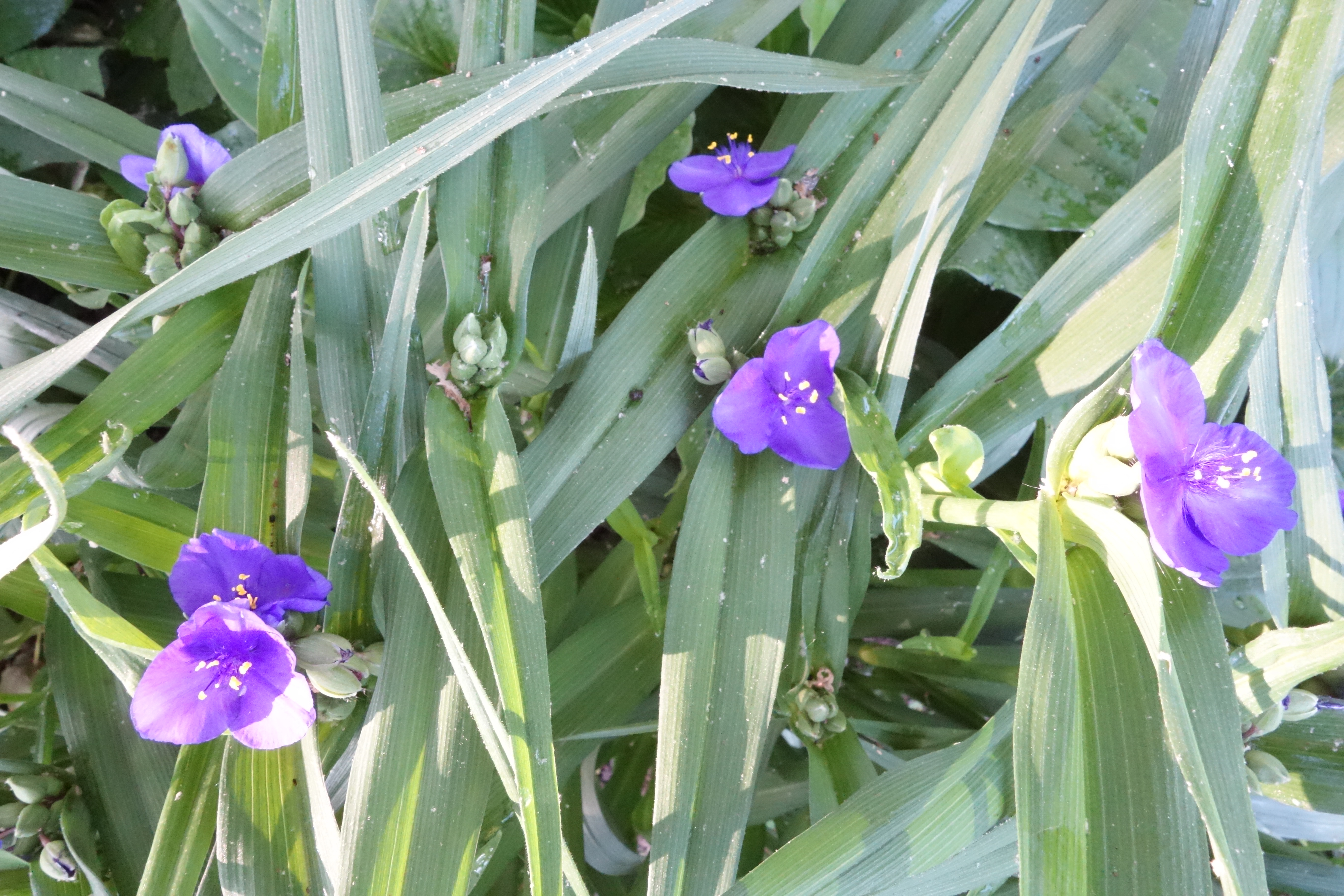
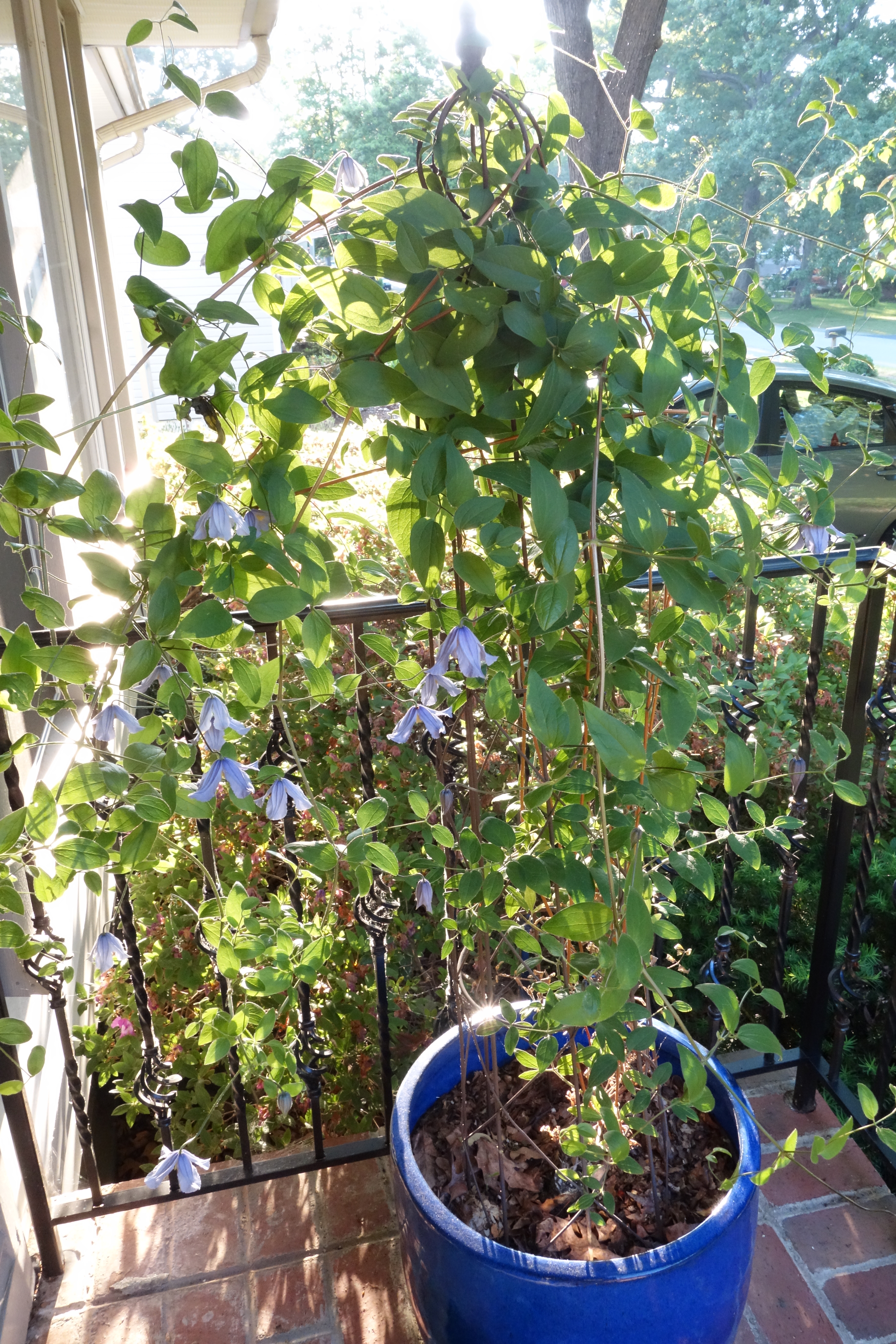

Spring colors always seem to come in waves. Late May brings blue spikes – baptisia, amsonia, columbine and sage,
tradescantia and my new little clematis integrifolia, ‘Blue Boy.”
Posted in blue
The raised bed is on the side of the house where the neighbors tend to see it more than I do, since it abuts their driveway. It’s been sort of a mess over there – scraggly grass, bulb cutting garden that soon flops over, self-sown datura and more recently bronze fennel that gets out of control. But since I installed the ‘Antony Waterer’ spirea to complement the dark pink crepe myrtle that hangs over the fence to the back yard, I’ve thought of it as the pink garden and have begun to proceed accordingly.
The spirea is now accompanied by a variety of sedums, including ‘Autumn Joy’ and ‘ Matrona.’ I’ve also planted several dahlias, my experiment this year in doing it right. Six of the nine I planted seem to be thriving (the other three, I think, were planted too shallowly). Otto’s Thrill, Park Princess, Fascination, Lambada and Renoir are planted here and on the edge of the sunny garden. Here’s someone else’s picture of the latter: So far they are just sitting there, awaiting their stakes, which of course I should have inserted at planting time, but one does what one can.
The other part of the so-called pink garden is the raised bed I put in a few years ago. I’ve had pretty good success but it tends to get out of hand at the height of summer, particularly since I’m inclined to let self-sown plants have their way. This year I vowed would be different: orderly rows of vegetables, bordered by flowers that would bloom all summer.
Here’s a look at phase one, two rows of Tuscan kale (from seed smuggled in from Florence), plus arugula and lettuce, a few chives, and some self-sown potatoes that I can’t quite let go of. Discipline is already failing… 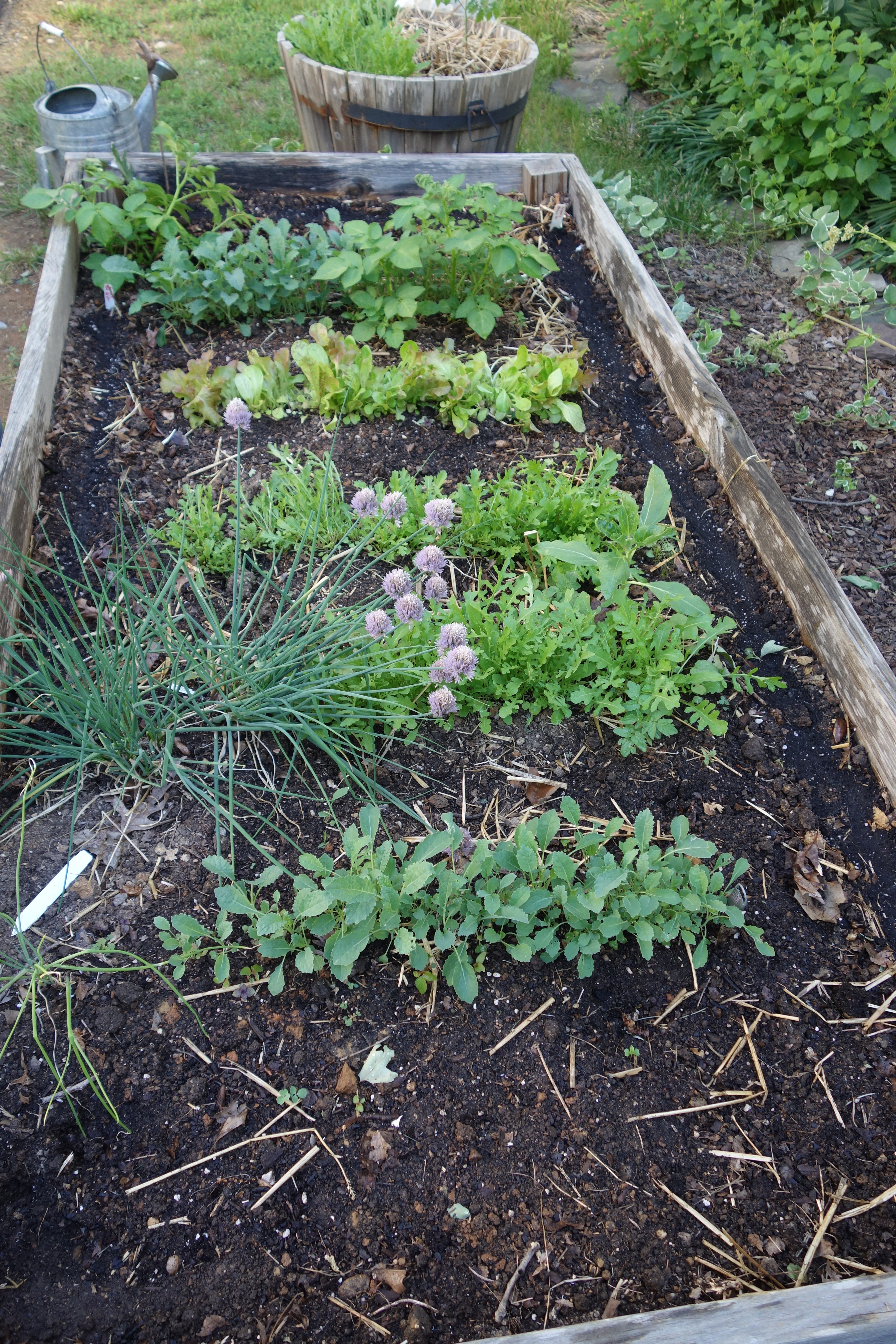 But the rest of the story is the scraggliness of the grass in that corner. I had been planning for some time to lay weed block cloth and cover it with mulch, and I finally did. In the course of this project, I also moved the edging rocks and made the garden beds just a few inches deeper. It may seem contrary to eliminate plants (grass) for mulch, but see how much better it looks already? Here’s the before:
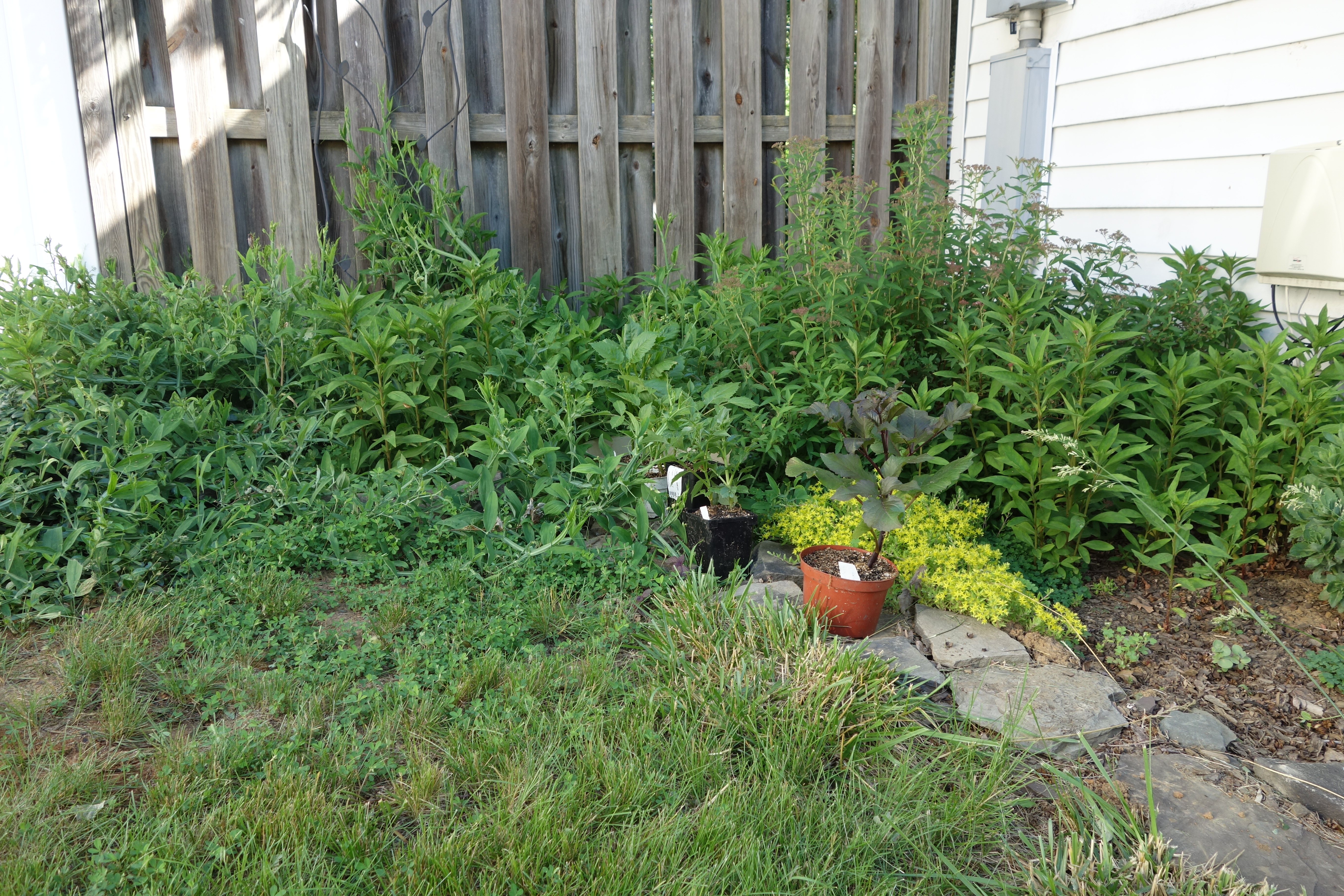 Note that the dahlias have not yet been planted, and the perennial pea vine is running wild.
Here’s the after:
 A few weeks ago I planted marigolds and zinnias along the edges of the raised bed. The arugula is already going to seed, as is the cilantro in the whiskey barrel. There’s a tomato in there that will take over soon. The green pot is for the squash seedlings, if they are still alive in a few days. Need more potting soil first. And I’ve moved the two blue glazed ceramic pots to the mulched area with some idea of planting something in there. A work in progress, the pink garden, but looking better and more intentional already.
Posted in dahlias, pink, shrubs, vegetables
It’s been a cool, wet spring, and right now everything looks delicious. August will come soon enough, but for now, enjoy these delights.
These tulips,  whose name I don’t have to hand, were gorgeous and blowsy and beaten down by the rain.
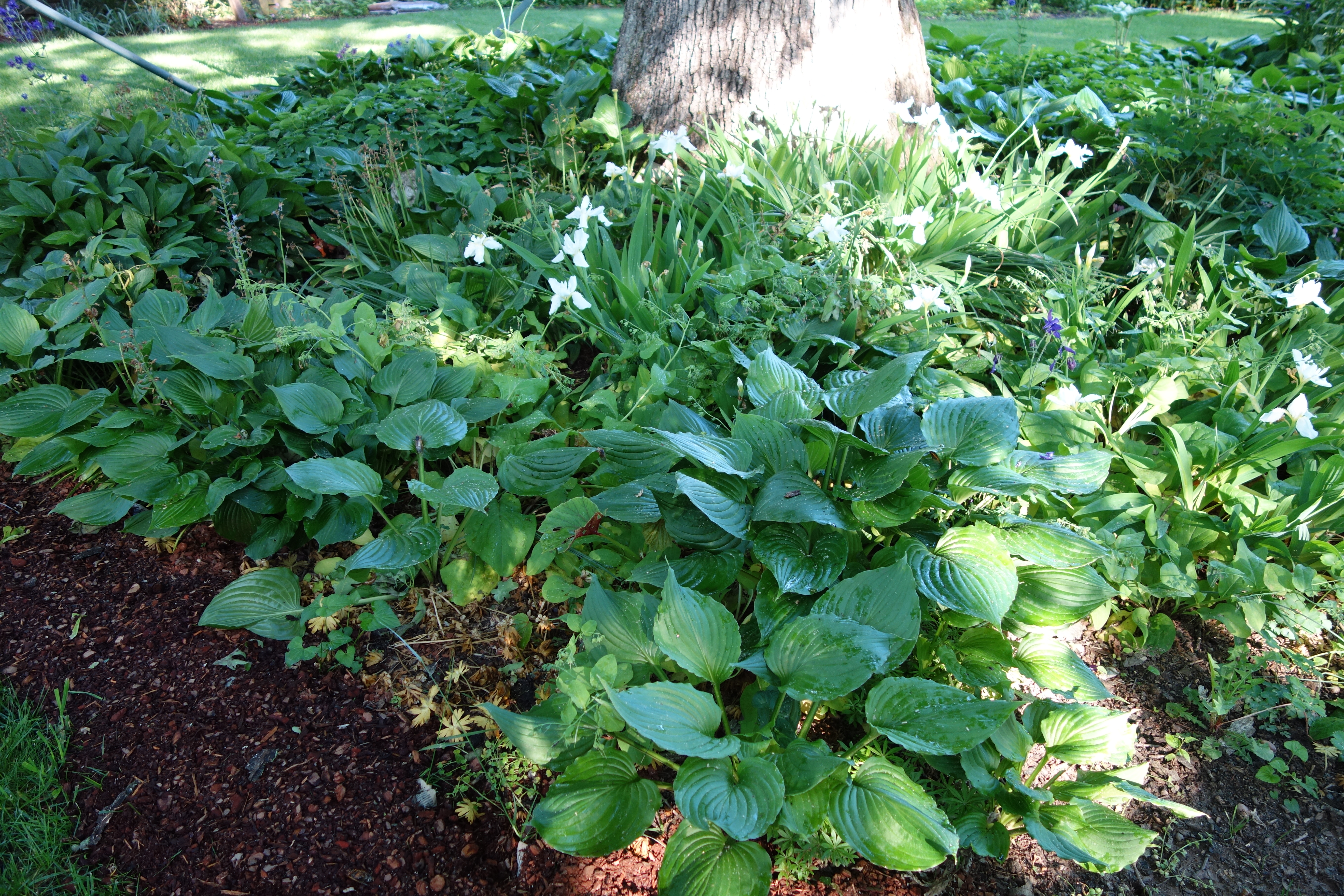
The oak tree garden is gradually coming to the end of its flowering and will soon become a sea of greens. But there are a few more highlights before it’s over. Here is the Jack-in-the-pulpit from Becky, and the Japanese roof irises, last to bloom.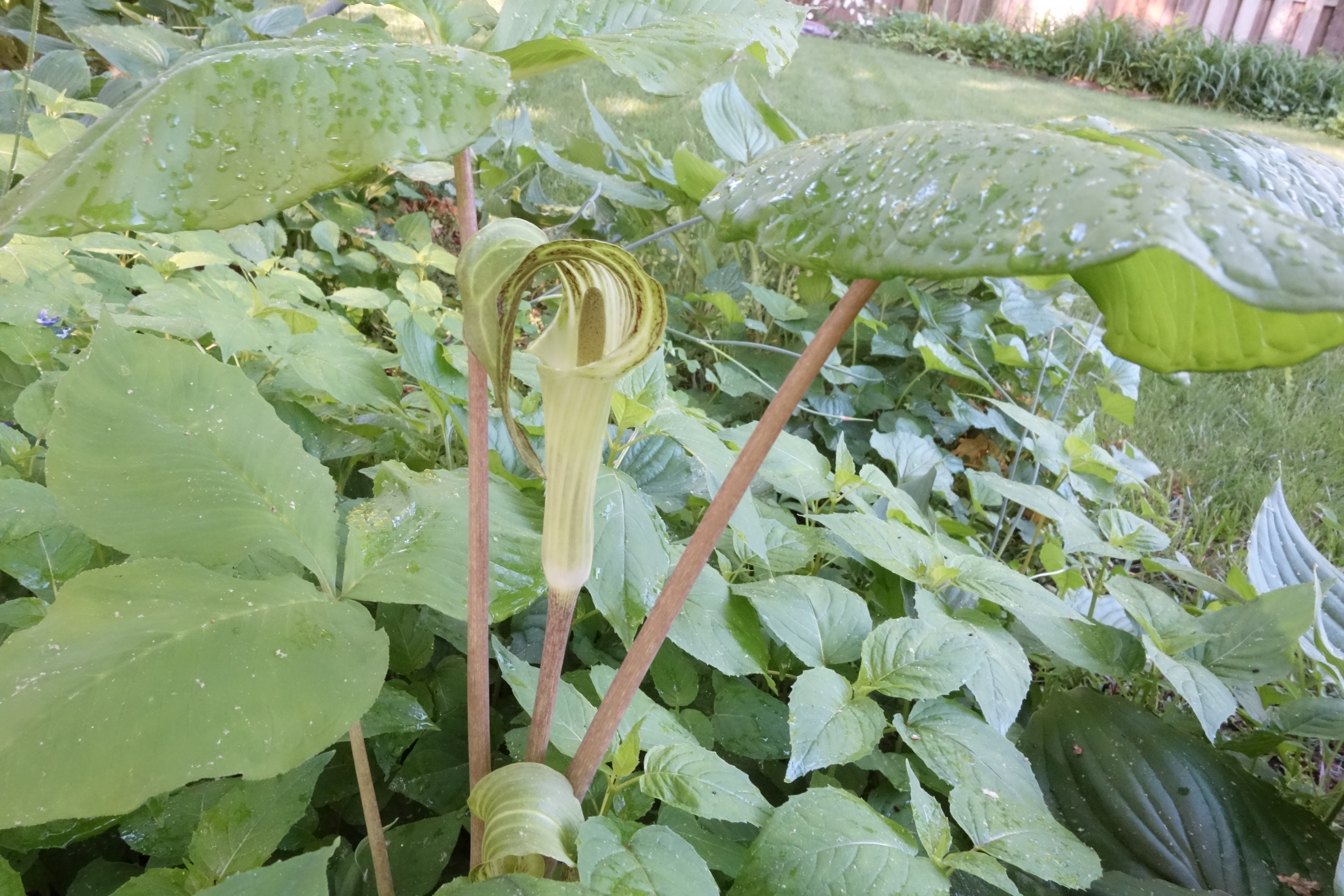
Rhododendron ‘Caroline’ finally demonstrated why people rave about her. I was convinced to try her because of the rave review from the late, somewhat lamented Carroll Gardens man:
There is no better Rhododendron than the Caroline. When it blooms in late spring beautiful clusters of blush orchid-toned flowers will cover the evergreen foliage, a display that will take your breath away. Not only pleasing to the eye, the subtle fragrance will lightly perfume your entire garden, a feature that you will surely enjoy while walking through your garden or having coffee on your porch. The clusters make perfect cut flowers and with such an abundance of blooms, there will be plenty to go around without losing any beauty in your garden. Even when not in bloom, the dense, evergreen deep green foliage will give a wonderful background for the rest of your garden or provide needed privacy.
Well, it has languished in my garden, but I was convinced to keep it on when I met people at the 2012 Philadelphia Flower Show who knew the gardener ‘Caroline’ was named for and raved about it. This single bloom, first since I planted it in 2007!, persuades me not to give up on her.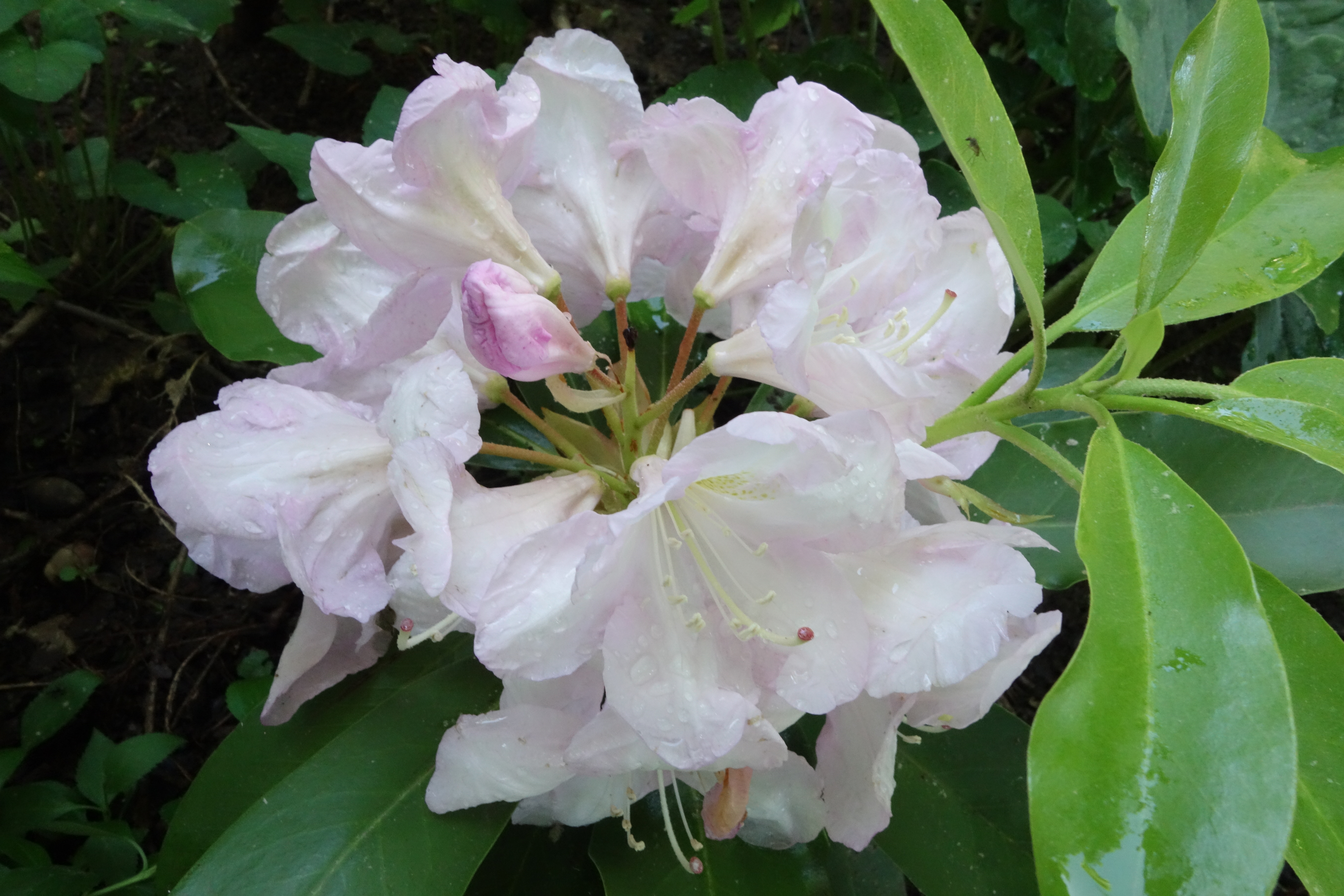
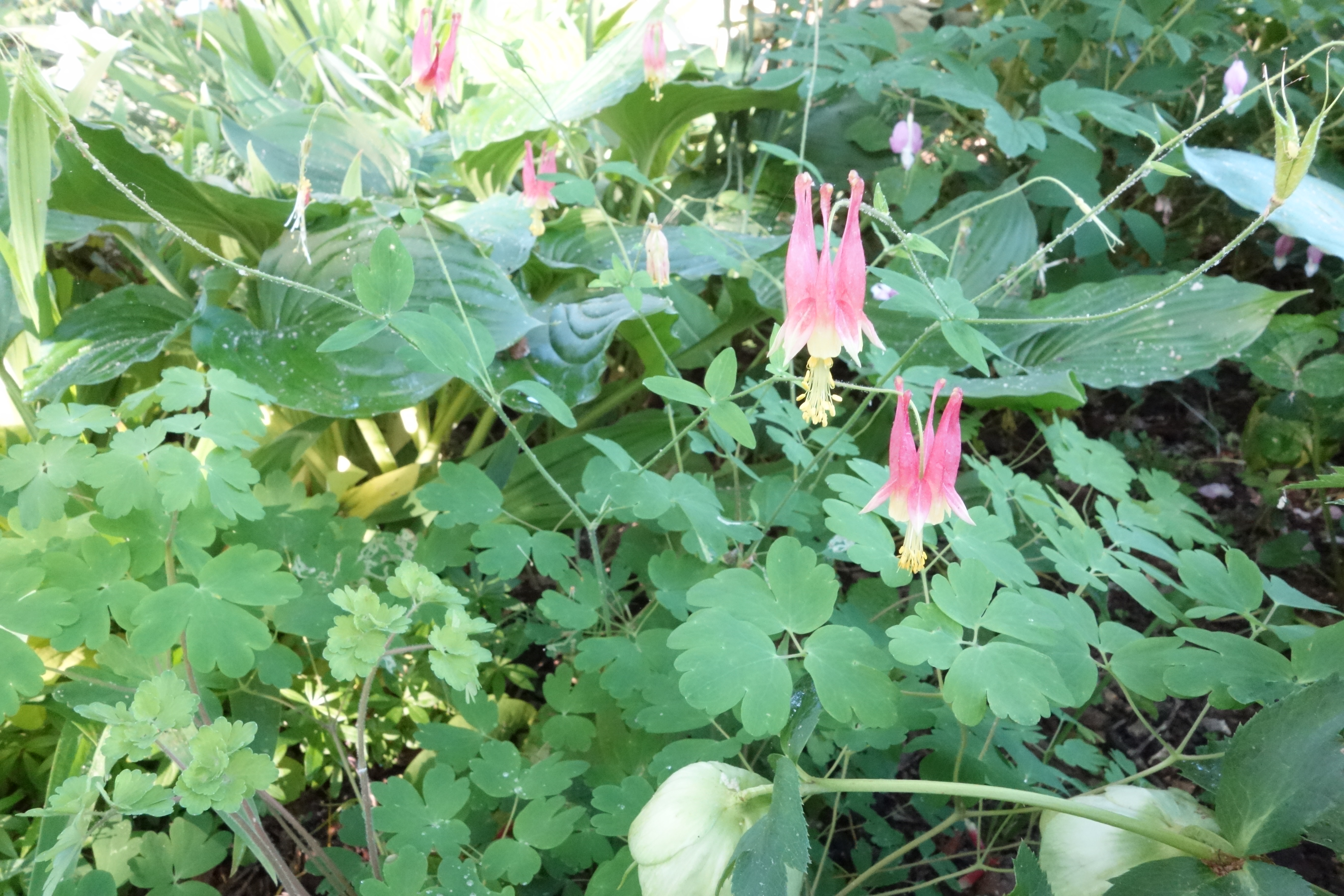 Above is the native columbine, nothing so special but, on the other hand, so airy and delicate that I want to add more to the oak tree garden.
By the terrace is this trio of stripy things, which I like to think I planned – but knowing the kind of gardener I am, I’m inclined to think it might have just happened.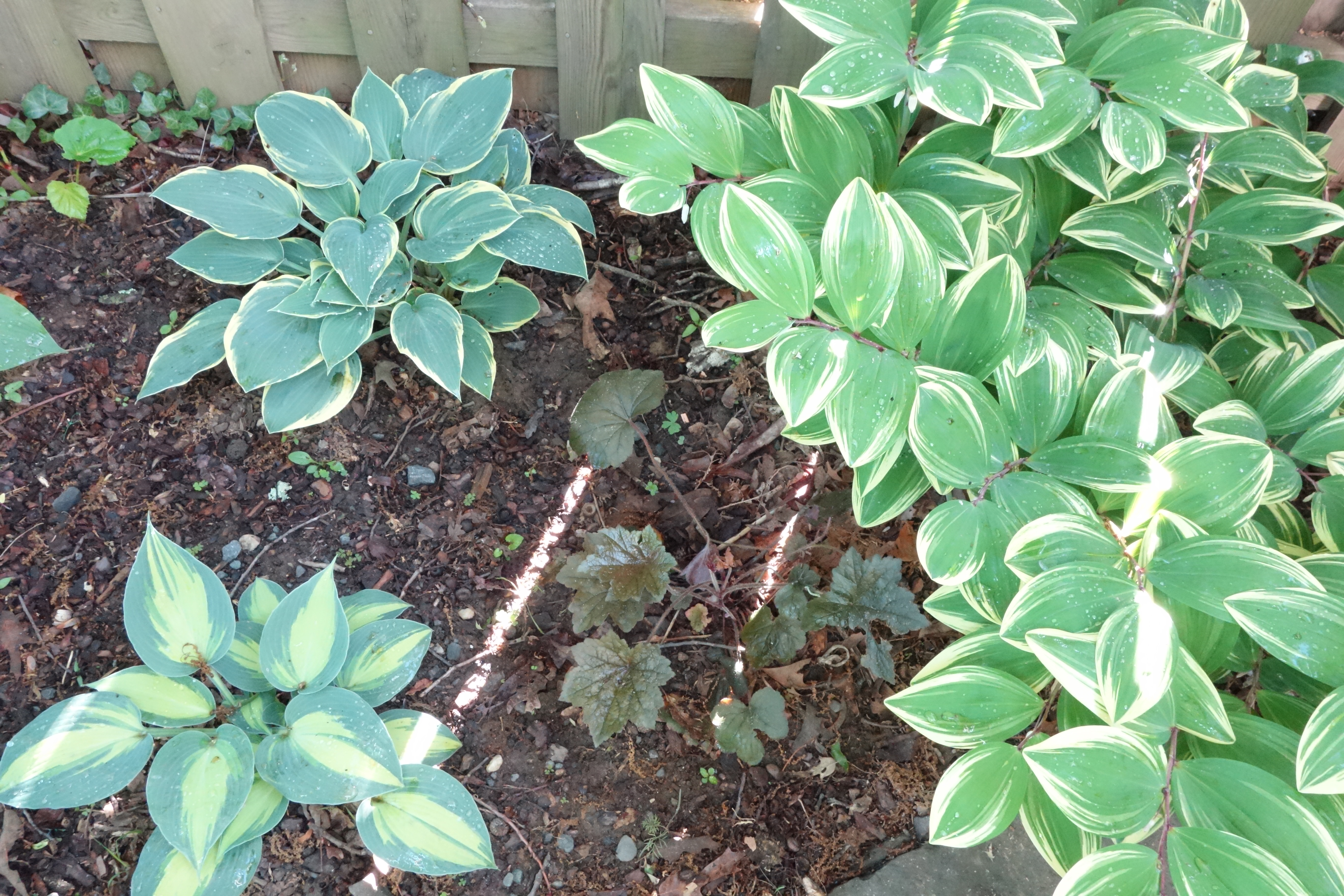
The swarm has emerged in Ferry Farm. Here’s what it sounded like one morning earlier this week.
 Not a single discouraging word is heard in this account of Chanticleer’s beauty, but judging by the spectacular photos by Rob Cardillo, the praise is justified. Though only twenty years old as a garden cultivated for public display, Chanticleer has great bones thanks to a 1930s stone house and mature trees, as well as a stream that runs through the site. Like me, the gardeners have made a woodland garden under a giant oak tree that used to sit in a sea of grass. Of course, they also have an Asian woods, an orchard, a pond garden, and so on. Clearly worth a visit!
Adrian Higgins is one of my favorite garden writers. He clearly writes about Chanticleer with great knowledge and experience. Still, I couldn’t help feeling that this was written to order as a puff piece. (It’s copyrighted by Chanticleer rather than by Higgins.) Not quite a criticism, since I devoured every word, just an observation.
Notes to self: find out what is this air spade* they used to remove the existing grass from under the oak tree; consider adding Anemone sylvestris and nemorosa along with the blanda, and Phlox stolonifera ‘Sherwood’s Purple’ (bought this week at Merrifield). Shrub rose Lady Elsie May (‘Angelsie’) is semidouble, coral pink, and freely produces blooms all season long (whatever that means, and allowing for the slightly cooler climate there) and might do for the pink garden. ‘Sea Shell’ peony, another possibility, is “cupped, single pink, robust and fragrant. It is one of the classic peonies for cutting.” Look for the Karma series of dahlias “which have been bred for cutting. They have a long vase life and straight stems.”
*It turns out that an air spade costs almost $2000 and must be used mainly by professional landscapers and builders. So, never mind.
Posted in book report, dahlias, other people's gardens, pink
It being spring, of course. Things have speeded up in the last week. I pruned the Annabelle hydrangea one day, and two days later the buds had turned into leaves. Gone for two days, I returned to find the red fern has gone from a tiny speck of green to six-inch-high fronds. And then came a visit to Roxbury Mills to pick up some Plant-tone, and look what happened.
 In my defense, let it be said that I had been contemplating autumn ferns to go in front of one of the trellises, so when I saw these I couldn’t resist. And then the geranium macrorrhizum which is not that easy to find for all that Margaret Roach touts it. These are ‘Bevan’s Variety.’ The white caladiums and the delicately edged coleus were there, too, so I grabbed them up before they sold out. Along with the light green sweet potato, they will go into containers. So in fact, it was all planned and must be in the budget!
The cherry blossoms were late this year, at least, later than the poor organizers of the DC festival predicted. Here at home, you just walk around and eventually the blossoms pop. Here’s the Fredericksburg festival, which lasted from April 8 through the 12th. It wasn’t helped by the typical April week in the 80s, followed by a strong morning rain.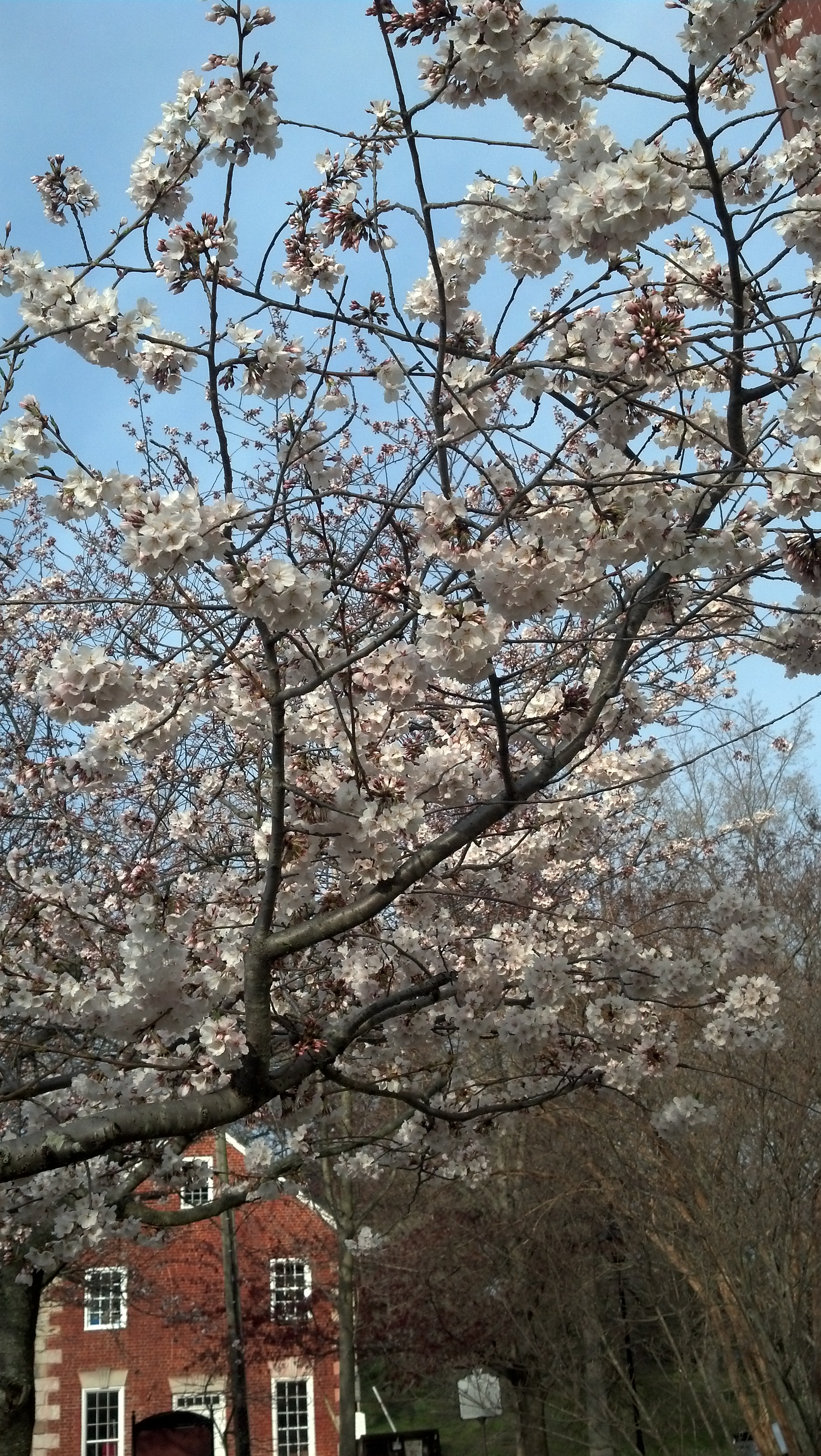 The cherry trees lining Lewis Street, looking back towards Caroline Street.
Next come cherries and weeping cherries in the neighborhood, snapped during an early morning walk.
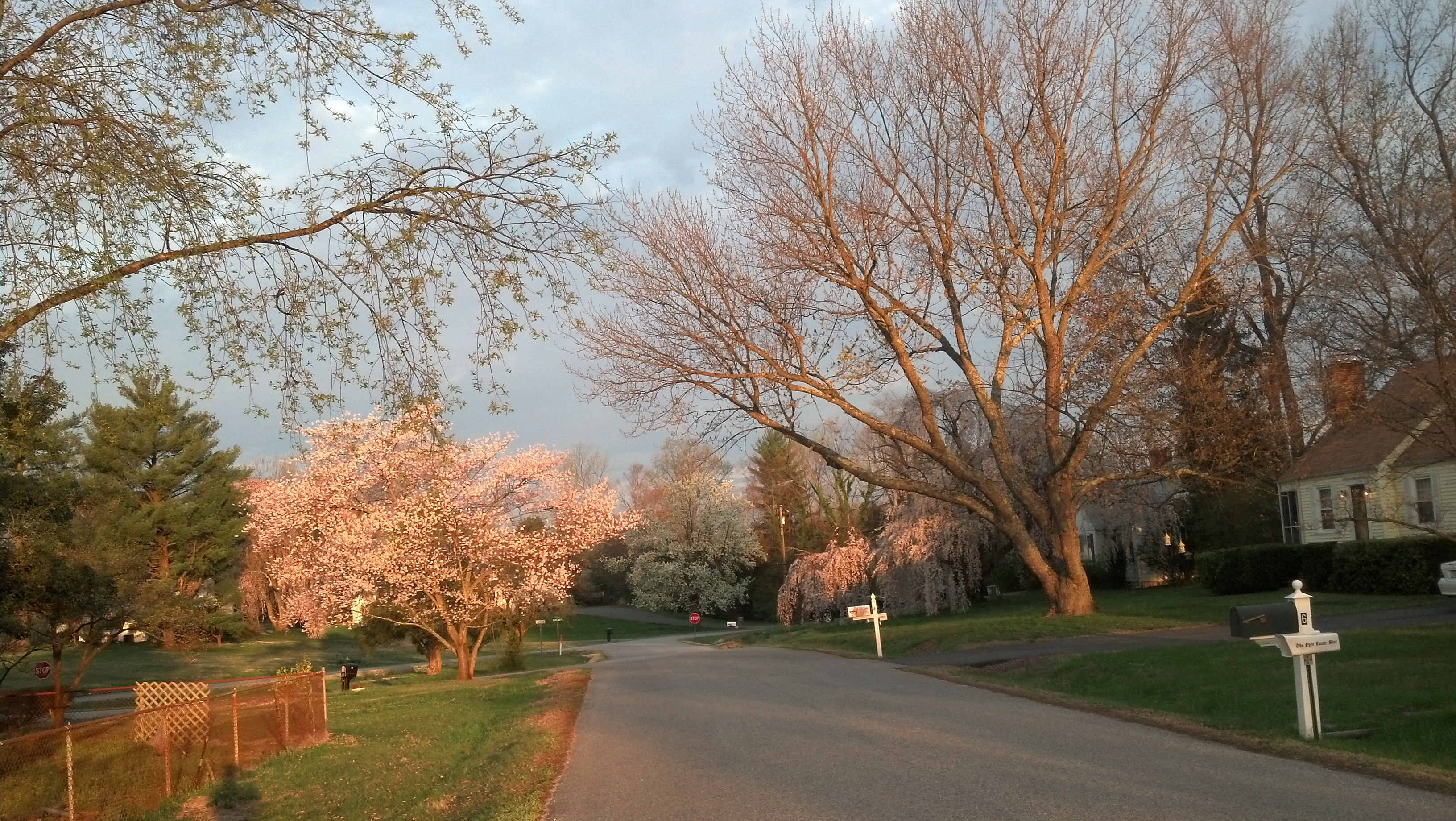
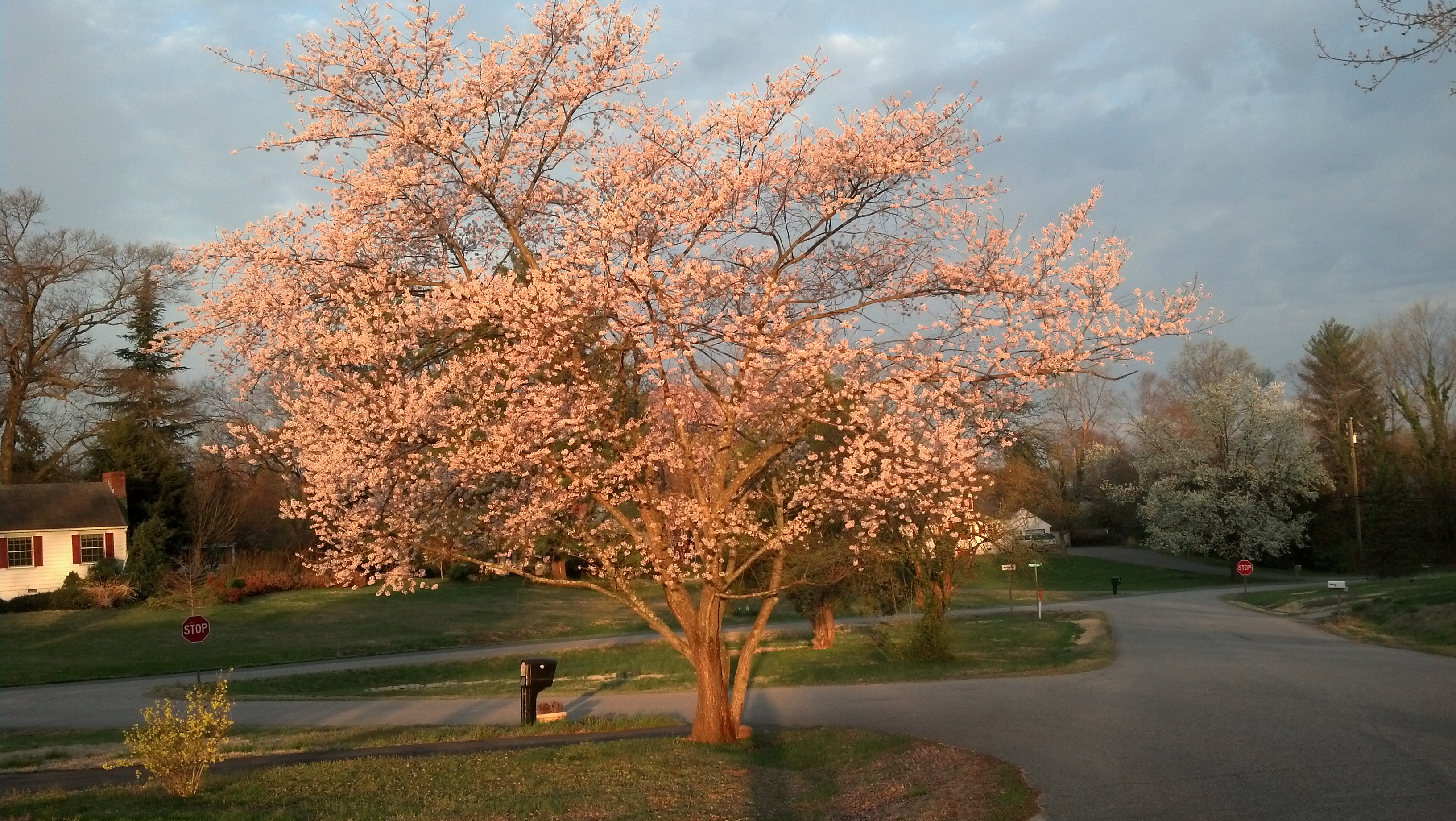
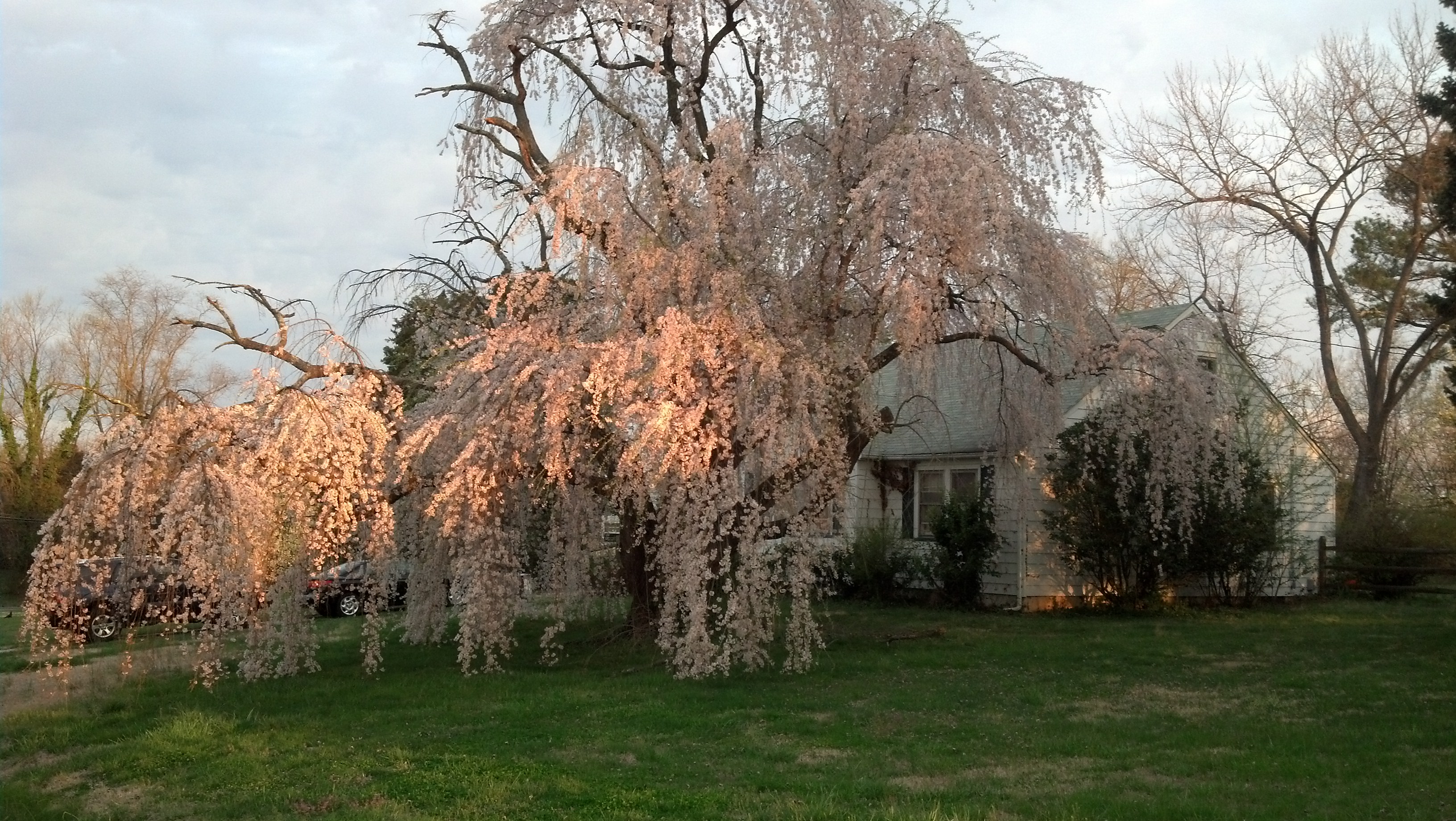
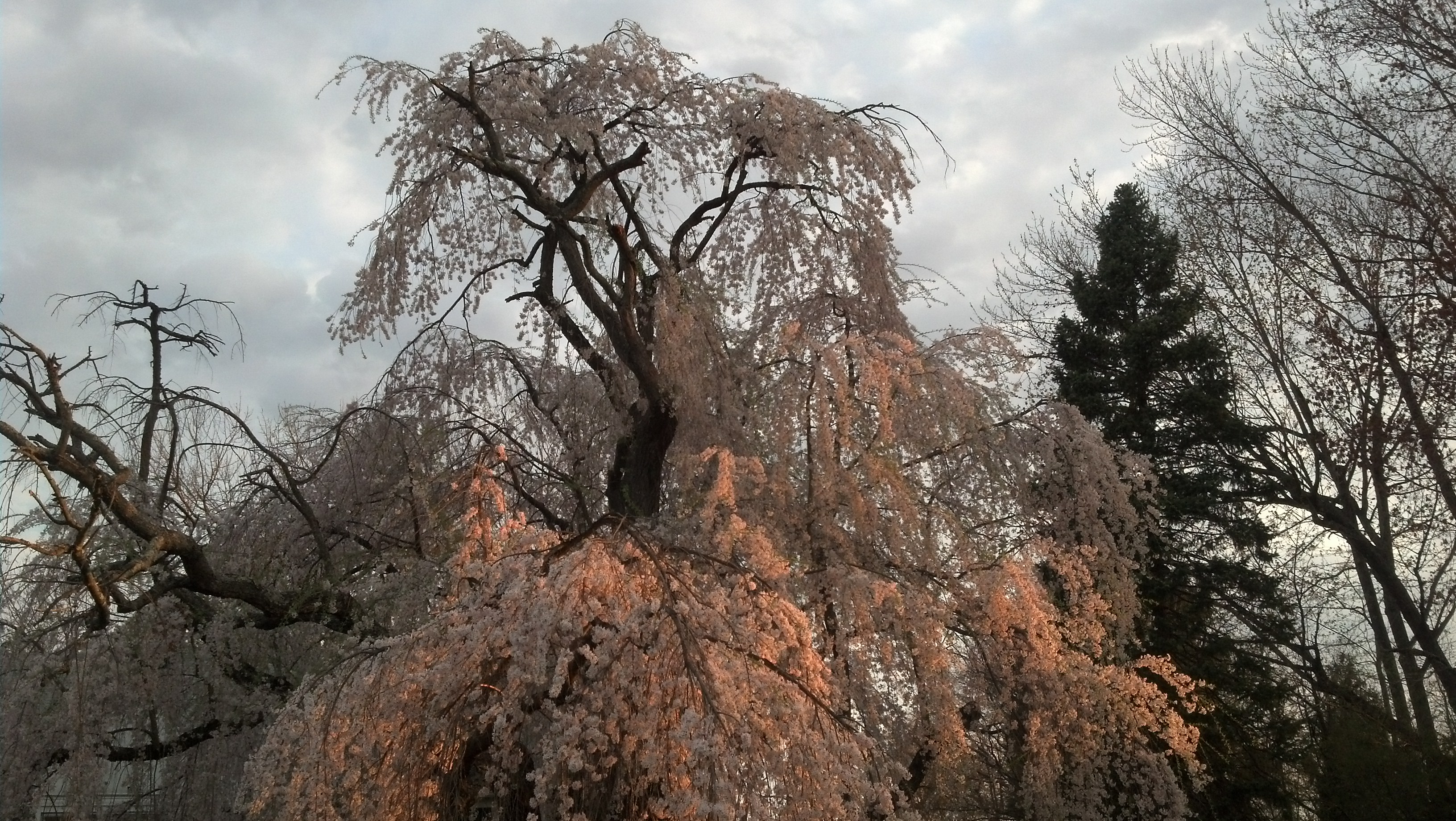 Finally, the blossoms on Lewis Street plastered on the windshield during the rain, and the last blossoms stuck to my car that afternoon.



Posted in other people's gardens, spring, trees

I know about the famous yellow book that lists private gardens in the UK open to the public, but didn’t realize we have the same thing here. For some reason, no Virginia gardens are included in the Garden Conservancy Open Days program, but any travel plans could be cross-checked against the list. Filter by state, and a pleasant diversion might appear.
Posted in other people's gardens
Note: written in July 2012 and never posted. If I ever find the photos, I’ll add them. ;(
Our route to Cushing takes us right past a sign for the Coastal Maine Botanical Garden, and this year everything aligned for us to make a visit. As the brochure points out, most botanical gardens arise from a rich person’s bequest of an existing garden or are associated with a university, but not this one. It was envisioned by passionate gardeners more than twenty years ago and is largely staffed by volunteers. But if that sounds like amateur hour, think again.
The perennial borders in full sun were magnificent – not because the plants were unusual – they’re not – but because of the sweeps of color and use of natives. The lilies were particularly beautiful and so fragrant that the aroma should be wafting from these photos. [3633 n 3634] These are ‘Golden Stargazer’ Orienpets.
The hillside garden offered miniature landscapes like these [3636] as it sloped gently down to the water. Lots of lichen, bark, and rocks, quintessentially Maine. This part of the garden is about the native landscape as much as about the individual plants.
But the outstanding feature was the use of sculpture. This year’s theme is Feathers and Foliage, Celebrating Bird and Plant Interactions in Maine, and to that end they have placed sculptures everywhere. (Maybe they do this every year? Another reason to return.) Some, like these stone faces and this gorgeous stone sofa, are permanent fixtures. But the birds! There was an owl in flight
a pair of crows
a marauding eagle,
and a nightjar that rocked gently on its metal stand.
This grasshopper only looks like a statue – he was perched on the fence surrounding the children’s garden.
This orb shows how scale makes such a difference in garden art.
So does this pinecone, which is stunning on its own and also repays a closer look.
Then there are the kinetic sculptures, like these birds in the frog pond. The wind lifts and moves them.
My favorite was “Wind Orchid,” the hypnotic sculpture in one of the perennial borders. Watch these videos and see if you are not mesmerized.
See more of their sculptures here.
The children’s garden included a marvelous garden gate, with Peter’s blue jacket in the background. Sal’s bear lives here to, complete with an overturned bucket of blueberries.
And the quote from Miss Rumphius was the perfect touch.
We also enjoyed the bullfrogs in the pool.
Plants to remember include this purple-tinged datura
and the gorgeous blue of this salvia. More salvias!
Perhaps in the end this garden is not really about the individual plants, of which I seem to have few pictures. It’s really about building a garden that incorporates native plants and uses the existing sweep of the land to its best effect. AKA, bloom where you’re planted – which, in my case, means returning to the heat and drought of midsummer in Virginia.
Posted in Maine, other people's gardens
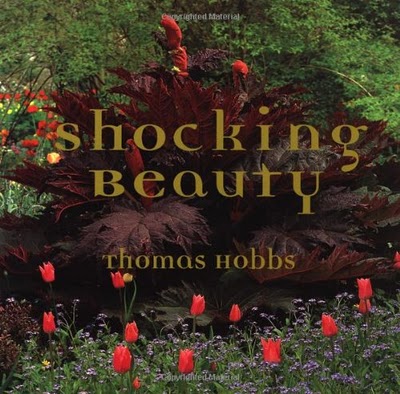 Thomas Hobbs’s earlier (1999) book, just like the Jewel Box Garden, relies heavily on gorgeous photographs and bold statements. He’s a strong believer in bold colors, carefully curated, and is not afraid to add colors where they are needed – maybe a touch of glitter glue on your grass plumes? Or this: “In late fall I like to spray paint these [E. agavifolium] with unusual colours as they stand in the garden, using automotive touch-up paints in metallic gun-metal shades. Why not?”
Why not, indeed? As he says, “‘No risk’ means ‘No art.'”
As to the plants, he is still wild about diascias, recommends verbascums for color accents (they should do well in the sunny garden), uses Rhodochiton atrosanguineum in containers and relies on Osmocote 14-14-14 time-release fertilizer for all of his containers and annuals.
Highly recommended for inspiration.
Posted in book report
 Caroline's Garden and Travel Record