St. David and the plastic puffins

DSC01329

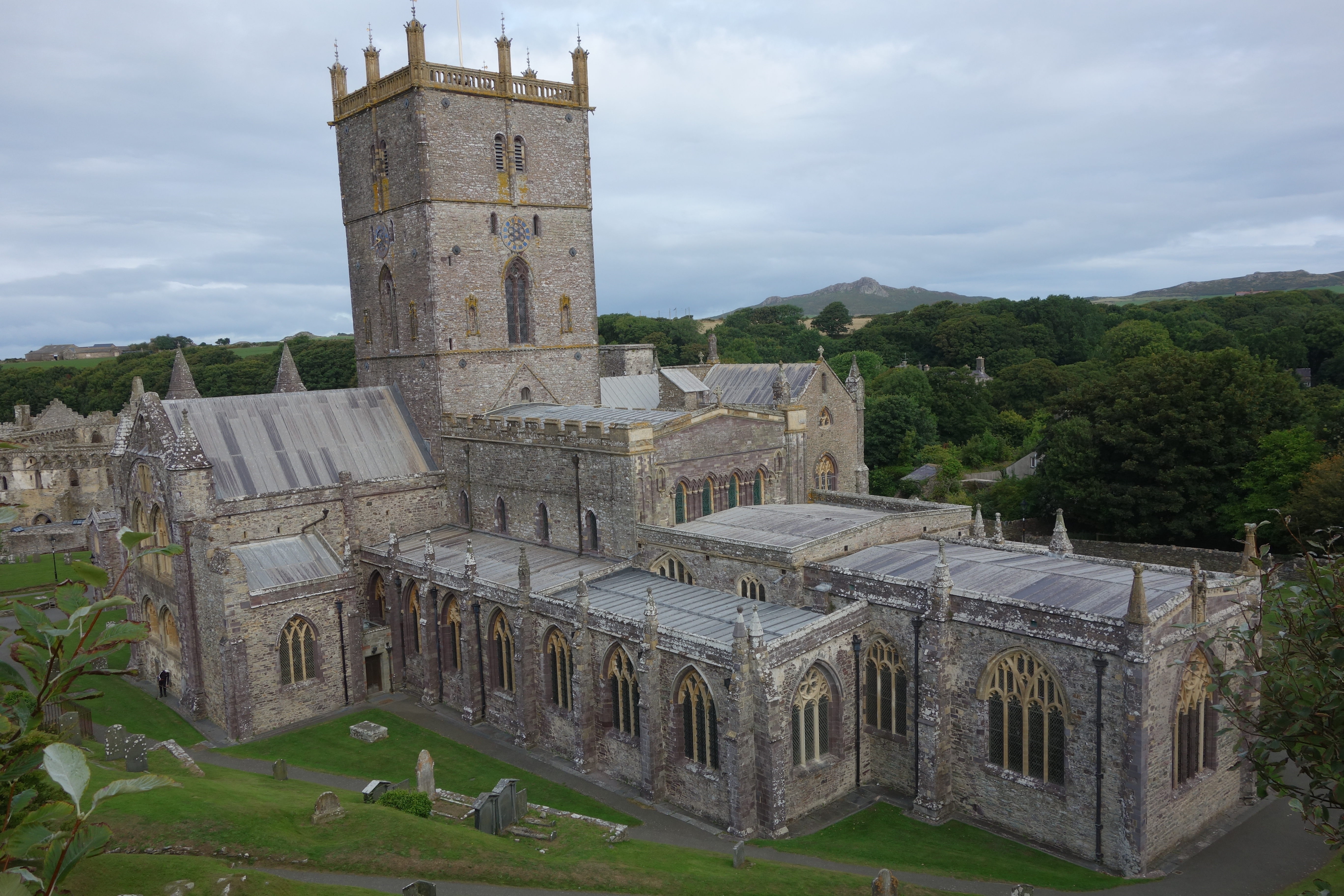
In keeping with our plans for this trip, we had nowhere to be today until our 1:00 boat ride.  After a full Welsh breakfast (remarkably like an English one, sans baked beans), we set out to see St. David’s cathedral, the only cathedral in Wales.

The problem was the Vikings, who had a habit of crossing the sea to pillage and plunder, so the builders sited the cathedral in a hollow where only the top of the tower appears from the town, in hopes that no one would notice it.  Their plan was not entirely successful (the cathedral was sacked seven times, most recently in 1078), but it does make for a breathtaking reveal.  You walk through the gatehouse, having seen only the tower, and there at your feet is an imposing building, hiding in plain sight.  This was all we could see from the road the evening  before.DSC01321
Inside, the highlights are a beautiful wooden ceiling, the playful carvings on the misericords, and a casket holding the bones of St. David himself!  We had a very pleasant walk around and then wandered over to the remains of the Bishop’s Palace next door.  Only walls and what’s left of an extensive parapet are still there, so we made short work of it.  Exit through the gift shop (slate coasters) and back into town in search of an early lunch.

We found sandwiches at a little cafe and packed them along as we set out for St. Justinians, where the boat leaves from the lifeguard station.  Though it’s only two miles away, the boat people recommended leaving half an hour for the trip, I guess because the narrow roads could be filled with traffic from fellow tourists.  We made it in good time and without nicking any other cars we passed, and ate our sandwiches on the site.

The boats for the Voyages of Discovery leave from the St. Justinian’s lifeboat station which we should have visited.  The station is high up in the air, in preparation for high seas, I guess, allowing the lifeboats to be lowered as needed.  Our launch, on a big inflatable boat, was in the water far below the station.DSC01366

We borrowed heavy waterproof jackets that kept us warm but also made us look like Michelin men. Luckily, we will never see these people again, so who cares!  Toby was our guide, obviously well educated, especially in geology, and interested in wildlife.  His commentary was somewhat canned, but entertaining.

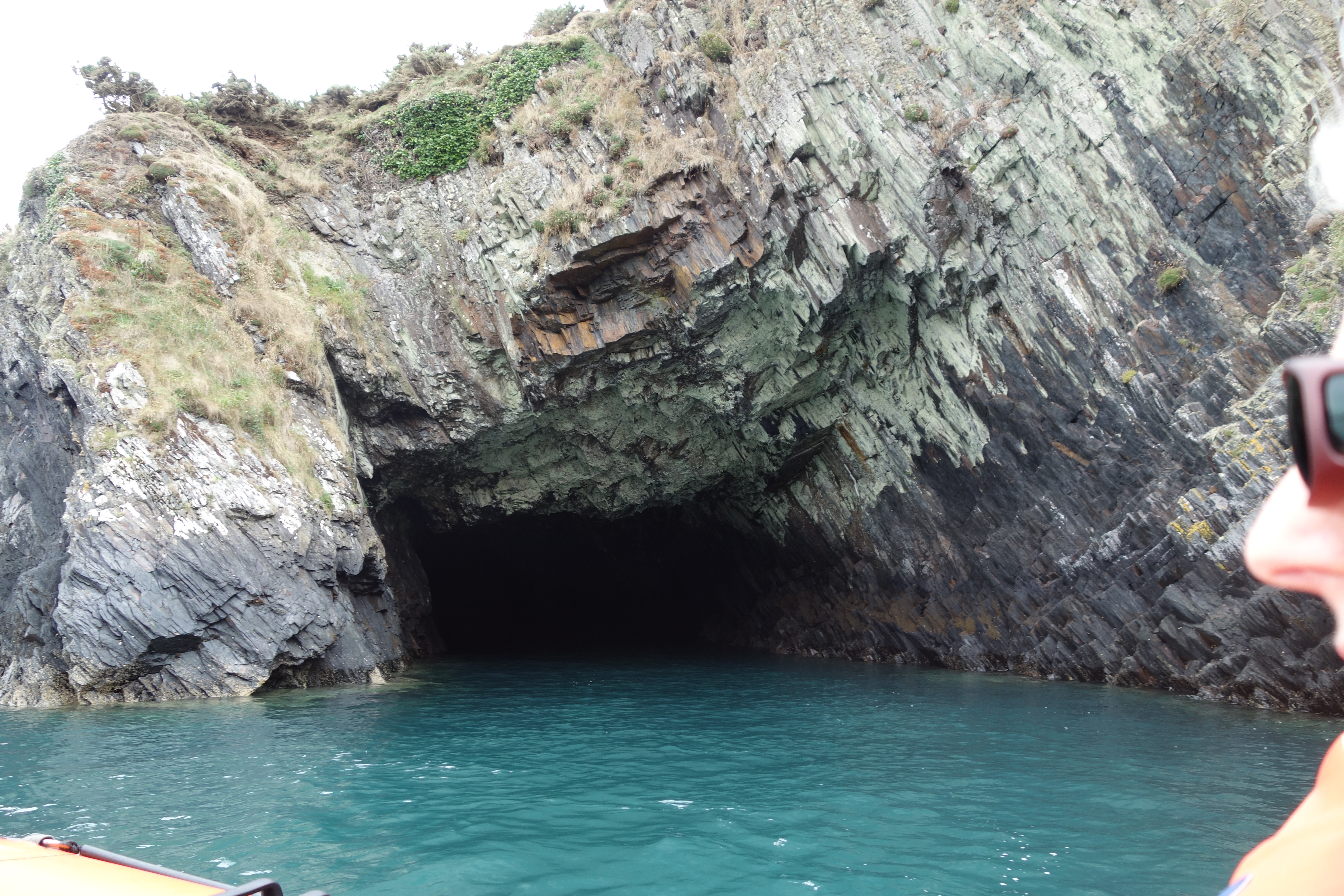
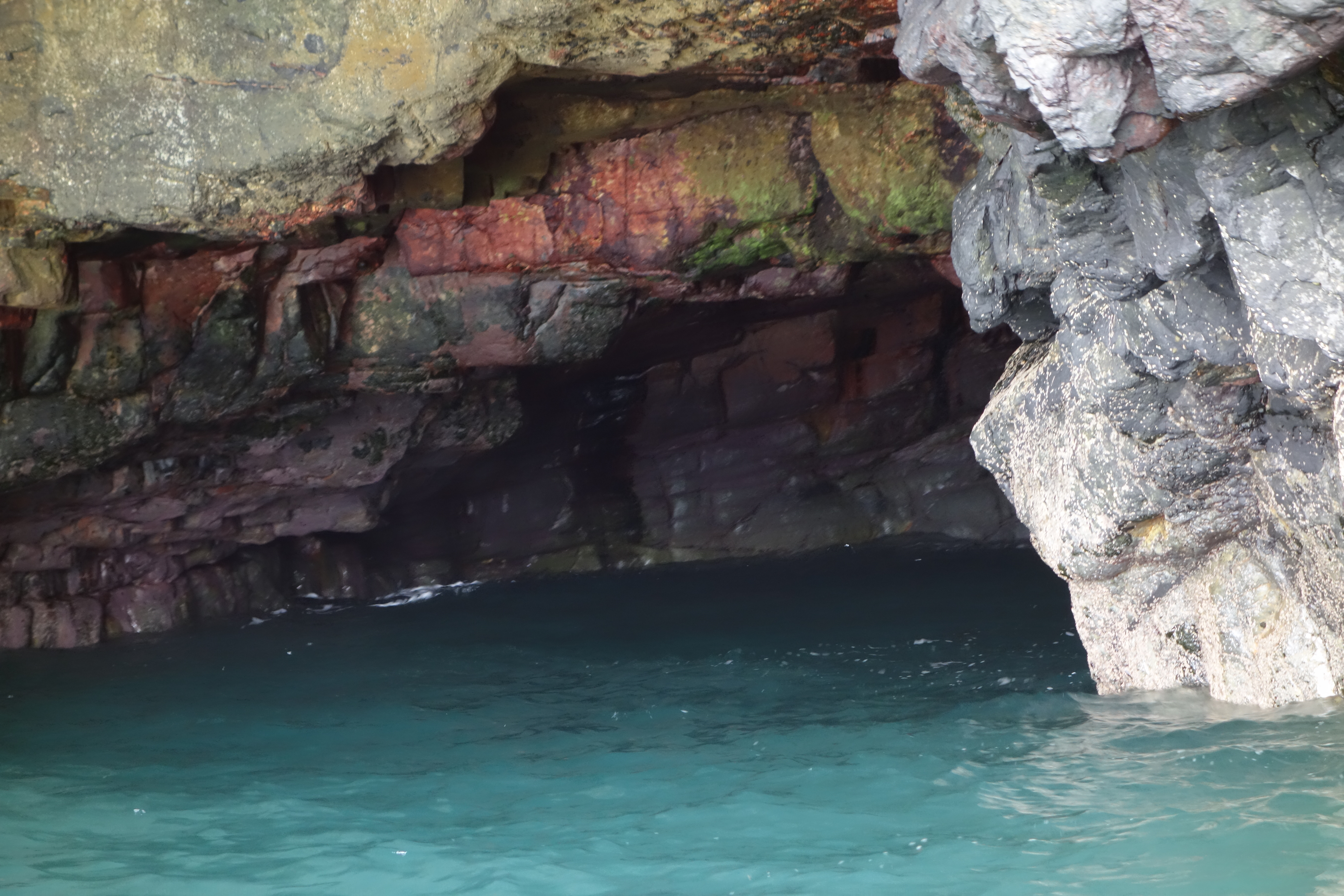
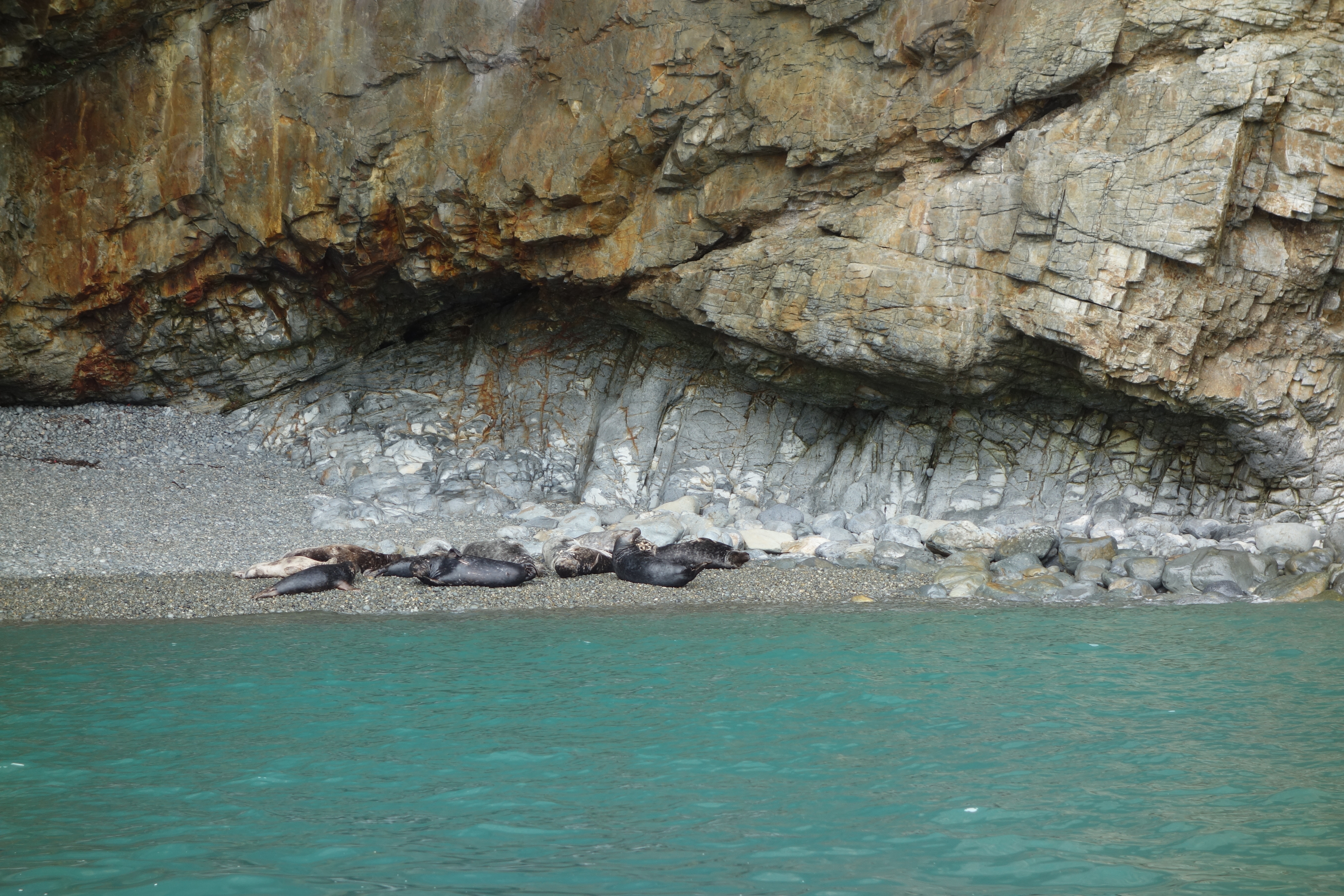
We went into caves, of which there are many along the coast of Ramsey, DSC01360 DSC01350and then saw some seal pups onshore, plus the ‘Bachelor seals’ consisting of adult seals and young male seals, who sun themselves on a beach while the pups are born and raised.  The bull seals had the most amazing whiskers.DSC01355
Toby also pointed out the lichens, some of which thrive on sea water, others not so much; the fulmars that have the habit of vomiting a horrible substance that keeps other birds away; a gannet flying off over the water; a shag, and then puffins.  Or were they?

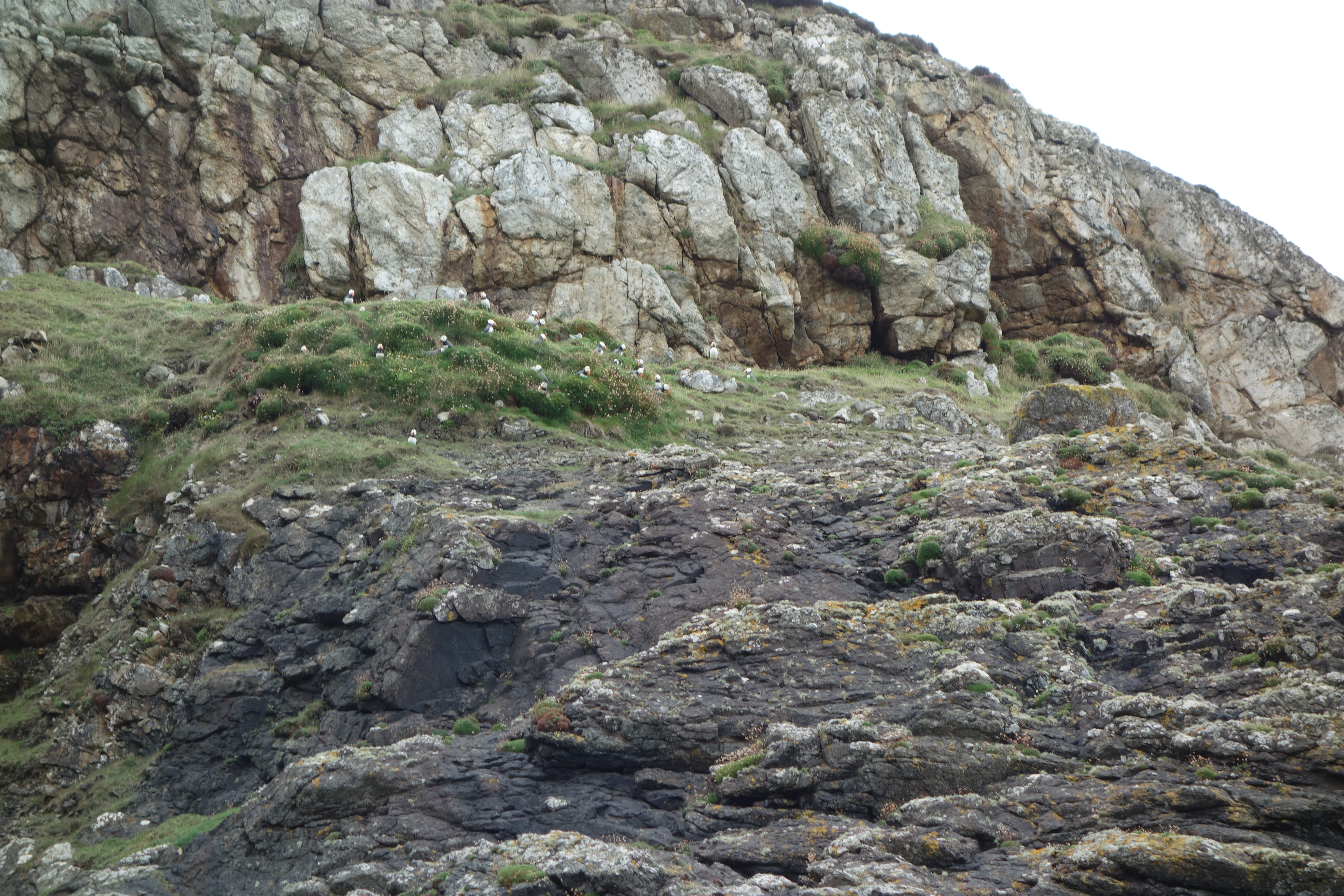
As we rounded another corner of the island, Toby cautioned us to be quiet because this was a great photo opp. Wet thought we wouldn’t see puffins here, but… could it be?  DSC01363No, of course not, it was a joke for the tourists. An infestation of rats about eight years ago made the puffins stop nesting here, but the Royal whoevers have installed plastic puffins to encourage them to return, now that the rats are gone.  This year puffins visited for several weeks, but since they have not yet bred here, it can’t be counted a success – yet.
All in all, the trip was great.  We were both a little wary of this inflatable boat, especially when it bounced up and down on the waves, but we surrendered to it and had a good time.  At the end, of course, the driver felt compelled to make a big figure eight that made us lean first to one side, the to the other, which you either love or hate.  But all in all, well worth it.

Returning to St. Davids, we spent a pleasant hour or more napping, reading, connecting online, and not worrying that the pleasures of St. Davids lay at our feet while we diddled about.  A little before 6:00, we returned to the cathedral for evensong.

A visiting choir was singing tonight.  The soprano, though a bit breathy, sang Mendelssohn’s Wings of a Dove with piercing beauty, well supported by the rest of the choir.  The minister, who read tales of betrayal from both Old and New Testaments, was very jolly as he greeted us on departure (and greeted us again in his civvies at the Saffron Restaurant).  It was a wonderful moment of beautiful music in a most imposing setting.

Dinner at the Saffron, the only Indian restaurant in town, was quite good, spiced up with discussions of faith and the belief in belief.  Goodnight and sleep tight.

Hiking all day, part two

After lunch I took the bus to Solva, only a ten minute ride away, in order to walk back to St. Davids via the coastal path.  With the help of a hikerish-looking couple, I got off at the right one of three Solva stops (meanwhile, Solva is no bigger than a minute) and walked down along the harbor to the path.DSC01390

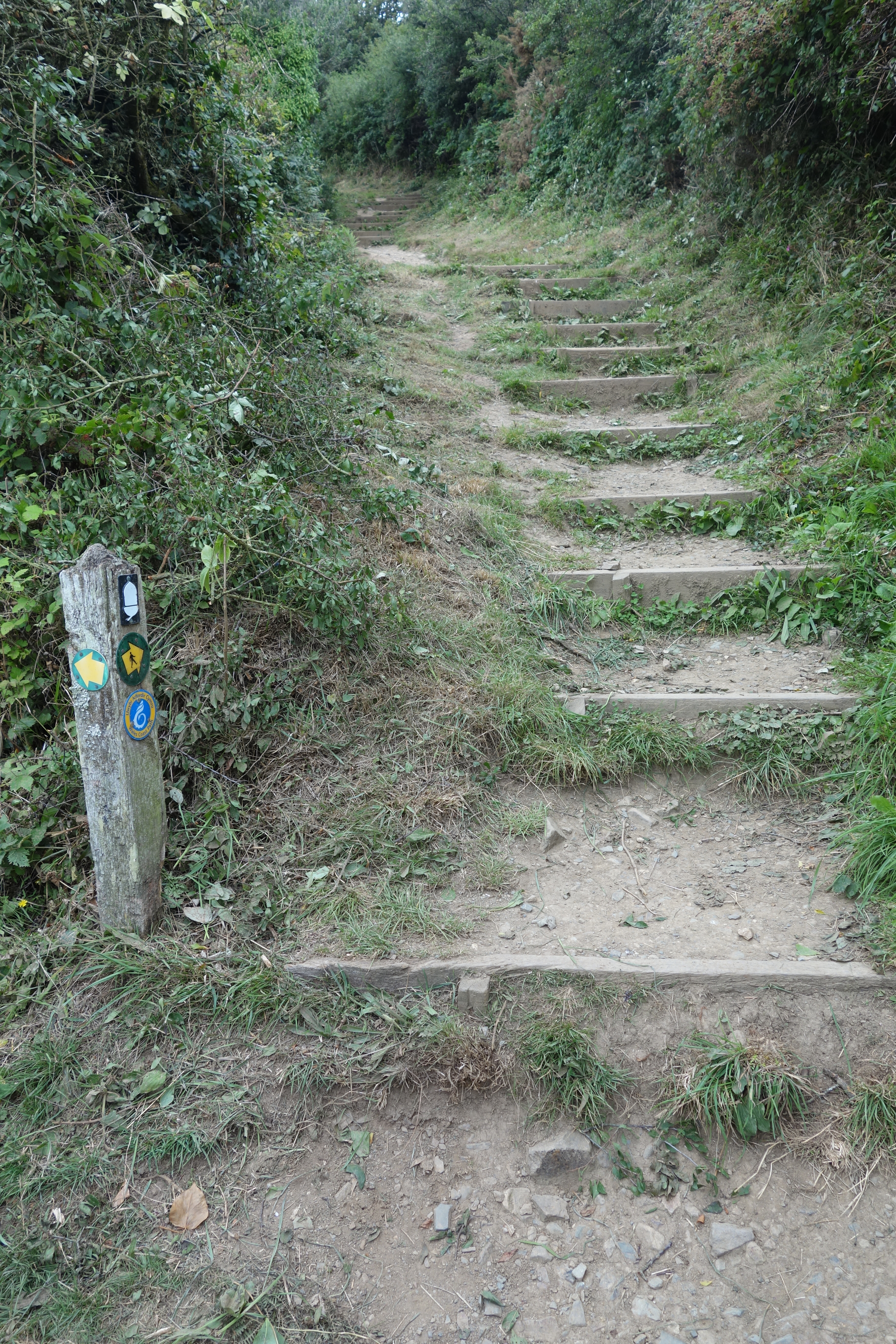
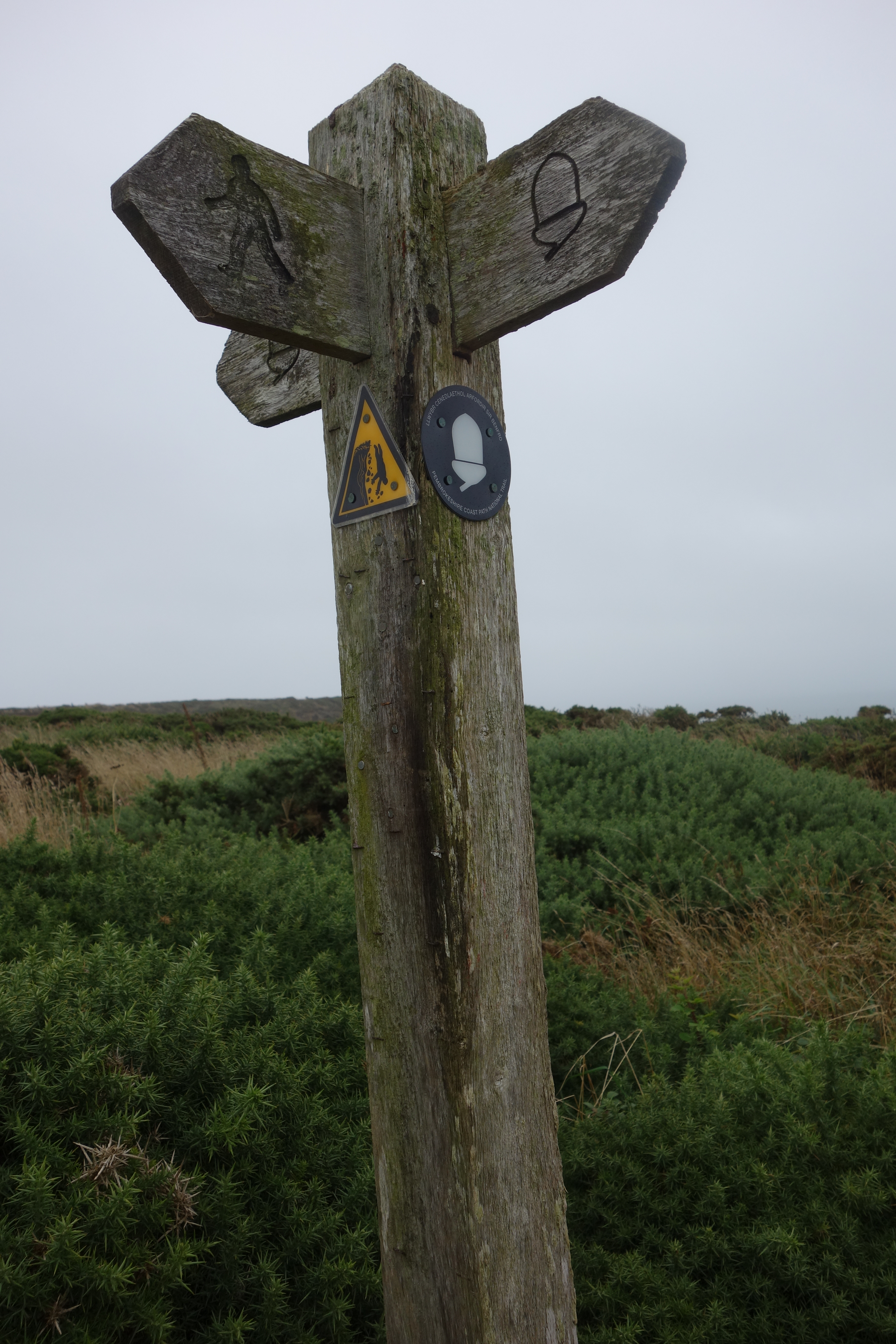
Up the steep steps I went, DSC01391then at the signpost I followed my guidebook and walked down a driveway.  Coming towards me was another hiker couple, the woman calling out, “Are you looking for the coast path?”  Turns out the signage is confusing, but a nice man at the bottom of the driveway redirected them and they kindly redirected me in turn.  Note to self:  look for the acorn if you want the coastal path, the hiker man is just a symbol for a random footpath.DSC01402

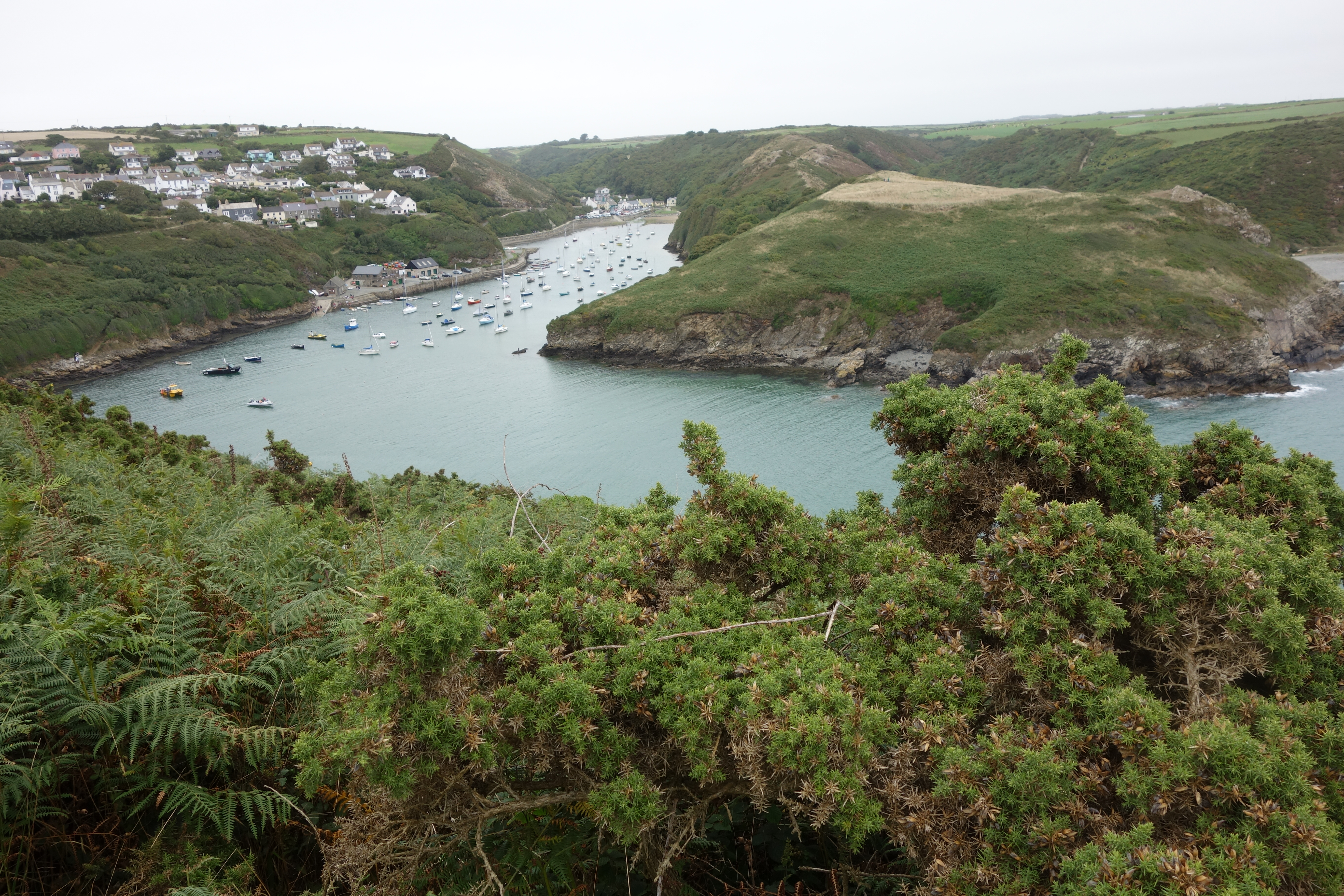
Here’s the view back over Solva Harbour.DSC01393

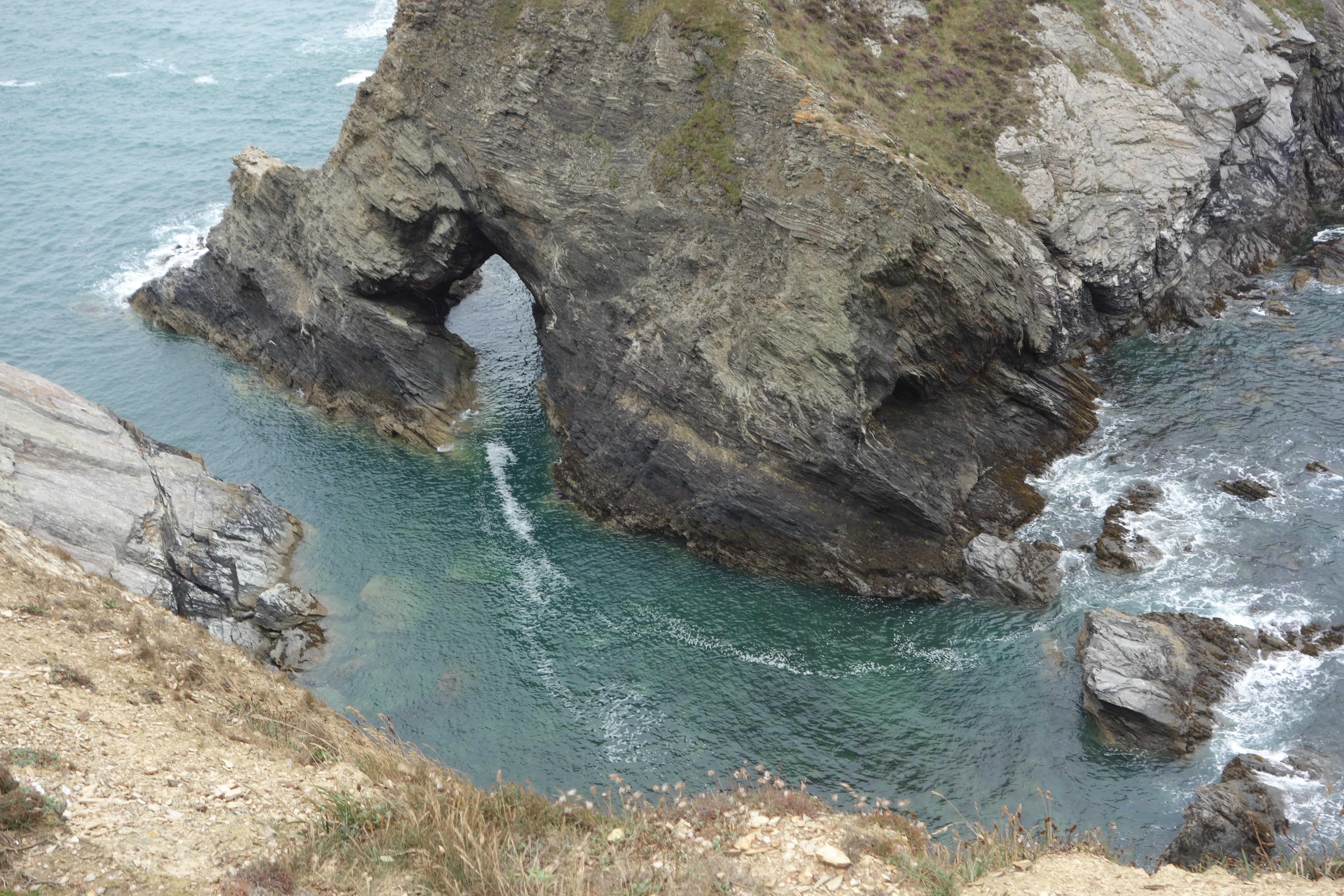
The terrain was very different from this morning.  The cliffs were still steep, and often eroded, and below there were rocks and arches and caves and foaming waves.  DSC01395But on the other side, rather than hills of heather, I saw fields and pastures and livestock.  It was a less dramatic walk (unless you looked over the cliffs’ edge to the eroding wall of earth and stone) but very satisfying anyway.

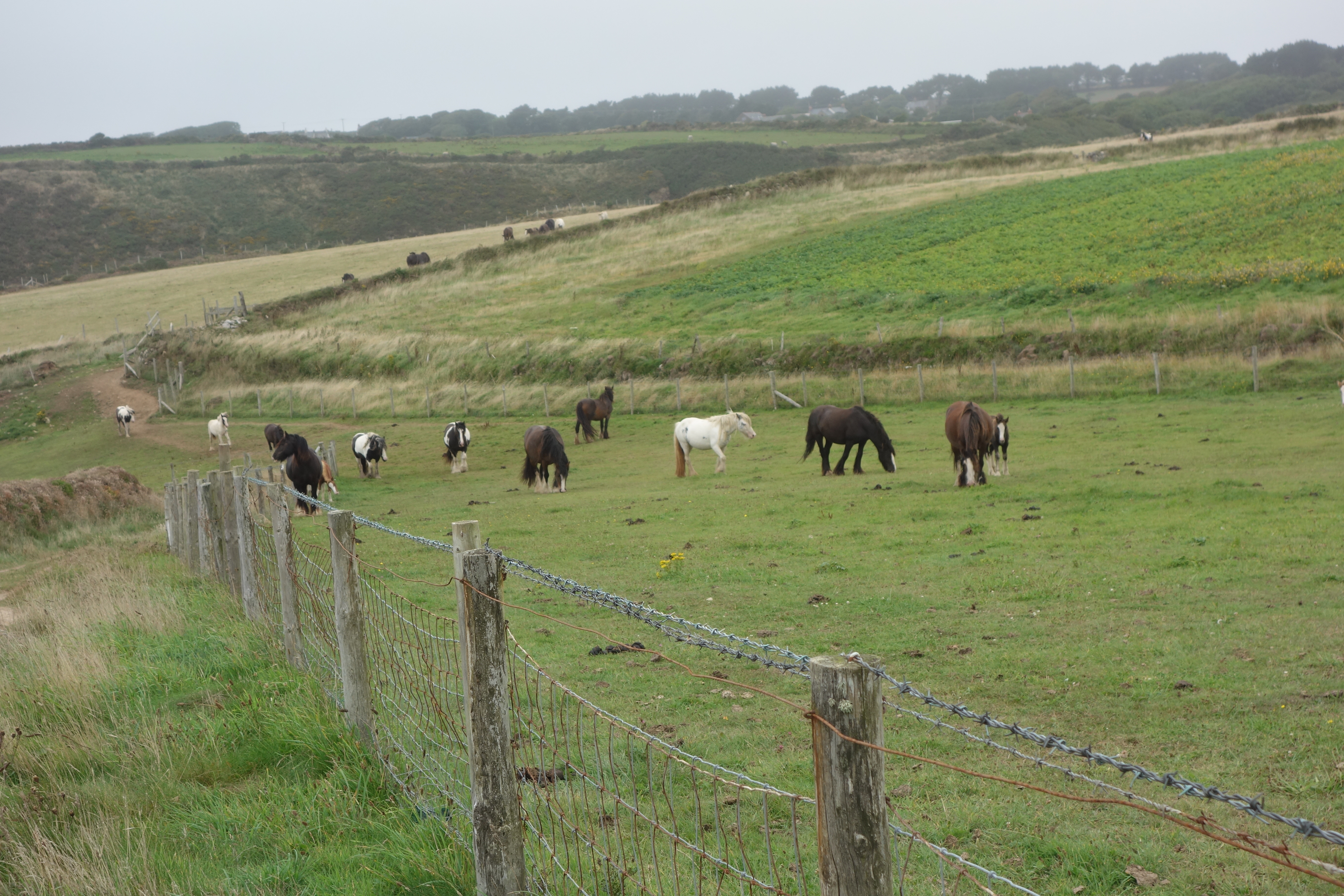
On the way down a hill, the path paralleled a pasture, and a herd of horses surged out of their field alongside me (but separated by the fence, thank goodness). DSC01403I spotted the helpful hikers and followed the path up to where they were enjoying a sandwich.  “You must be sightseeing,” the woman said briskly, “because this is not the path.”  I had blindly followed where my eye led me.  I told her I must have imprinted on her like a baby duckling and simply followed her, but she had no time for levity.  I backtracked, trying unsuccessfully to keep my dignity, and got back on the real path.

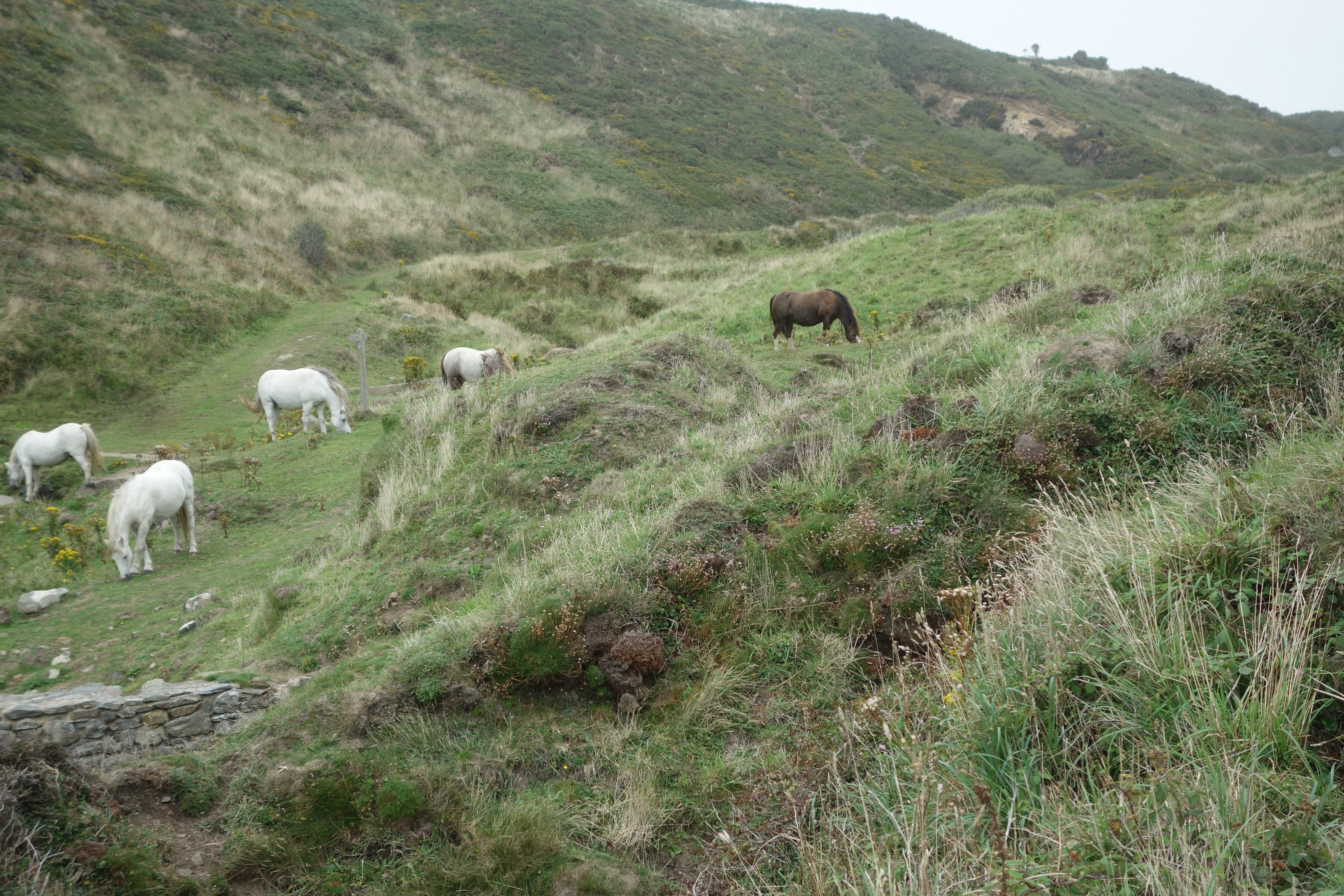
The next excitement was from a herd of horses scattered along the path farther along.  They paid me no mind as I quietly picked my way between them.  DSC01408Next up was a herd of big black cattle, who were so slow that I was able to exit before they got to where I was walking.  Only then, as I went through a gate, did I see this sign about taking care when farm animals are nigh.DSC01409

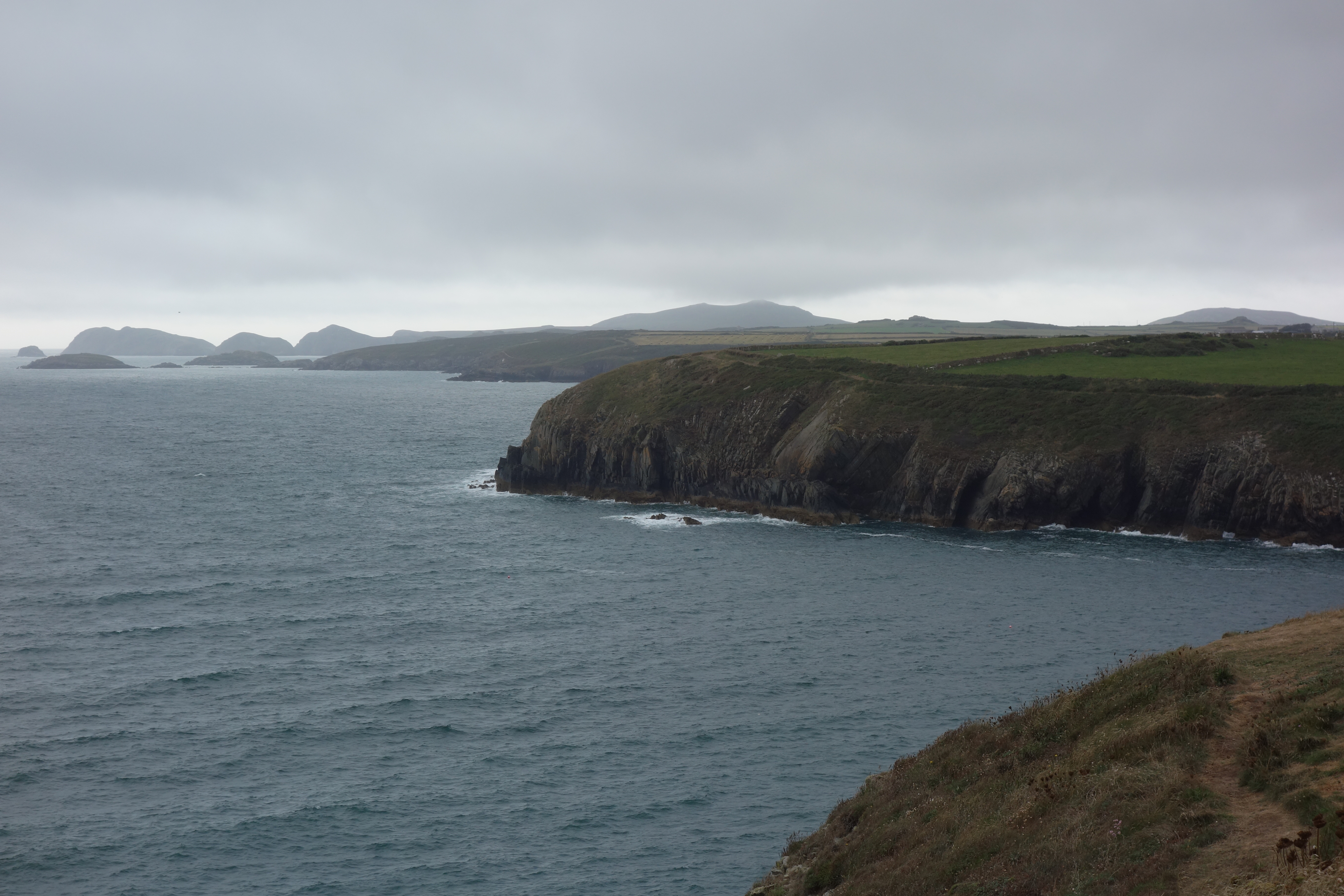
As  I got closer to St. Davids, the clouds lifted just a bit and a silvery light appeared over the water.  These are my attempts to capture it – better photographers and painters than I can give you a better view.DSC01412

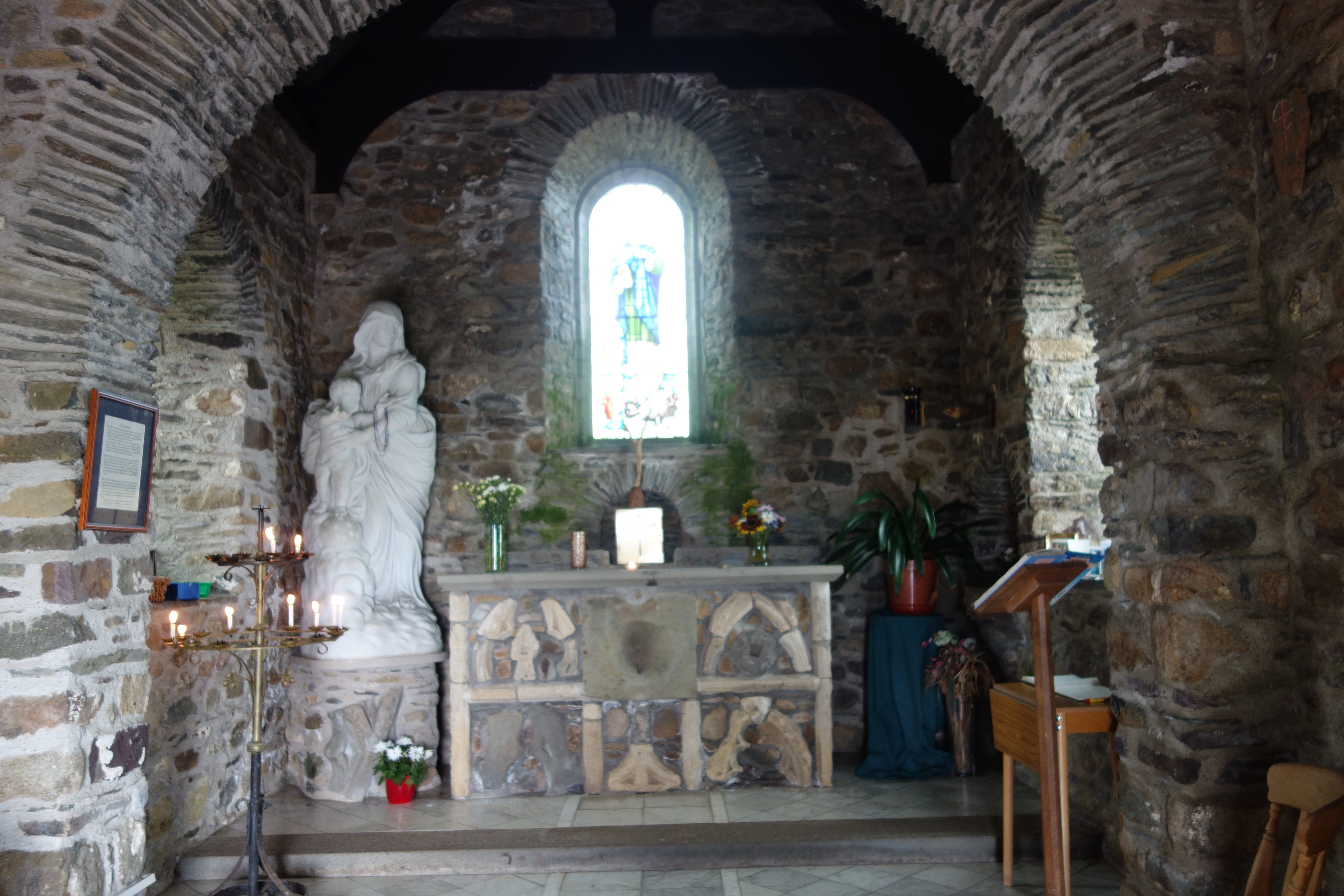
By now I had been walking for about five hours and I was beginning to feel it.  I asked several people along the way how far it was to St. Non’s, my end point.  My favorite directions came from two hikers, one totally pierced, who looked it up in their guide book and informed me that it was just a few pages along!  At last I came to the sign for St. Non’s where a chapel and a retreat center mark where St. David is said to have been born.  I glanced into the chapel (built in 1937) DSC01413and then made my way down the lane and back to the B&B.  A quick shower and then we were off to dinner – at Bishops again, not great food but good for people-watching.

On the road to Moelfre despite engine failure

This morning we had our last cooked-by-someone-else breakfast and bid farewell to Gloria and Rob.  We had noticed the sign offering the B&B for sale, and Gloria had cheerfully alluded to their need for prayers when we mentioned we were off to the cathedral.  It turns out that they had hope to retire a few years ago and only this week got a firm offer to buy the property.  They are ready for something else to do, and who can blame them?  It must be a hard life, and though Gloria is an effervescent extrovert with a warm manner and great sense of humor, even she must find it hard to greet people every day of the week.  Plus she does all the cleaning and cooking, while Rob hauls the bags, serves breakfast and displays a dry sense of humor. We parted on very warm terms, us wishing them the best and hoping that the offer comes through.

Back into the car we went.  Ah, the car.  On the first day out of Cardiff it gave us an alarming message, Engine Failure, Repair Needed, complete with a loud warning bell and flashing red exclamation marks. Nothing happened, however, and though the message came up a few more times the car continued to drive normally.  Once in St. Davids we managed, with some difficulty (why do mobile phones work only intermittently when you’re abroad, why?) to contact the company who contacted a mechanic (whom Rob happened to know, which was heartening) to check it out.  In the end, he topped up some fluids but could find nothing wrong, so we are going on regardless.

The road from St. Davids to Aberystwyth, our first stop, revealed a new side of Wales.  If, like me, you think of Wales as mining and mountains and dark woods, you’ll be surprised at how many sandy beaches it has.  Some of the views were spectacular.DSC01432 The mostly level land around St. Davids gave way to hillier country where you could look over and see fields and sheep and cows and hedges (no stone walls here).

Coming in to Aberystwyth, we kept our eyes peeled for the National Library. I was hoping for a look at one of the original copies of the Mabinogion, but it and the Black Book of Carmarthen are no longer on permanent display, unfortunately.  Instead we wandered through some mildly interesting exhibits, one on communication in Wales that probably meant a lot to the Welsh but was too insider for us, and another on great Welsh writers that included John Cowper Powys.  I knew the name, but that’s all.  Based on the exhibit, he is worth a better look.

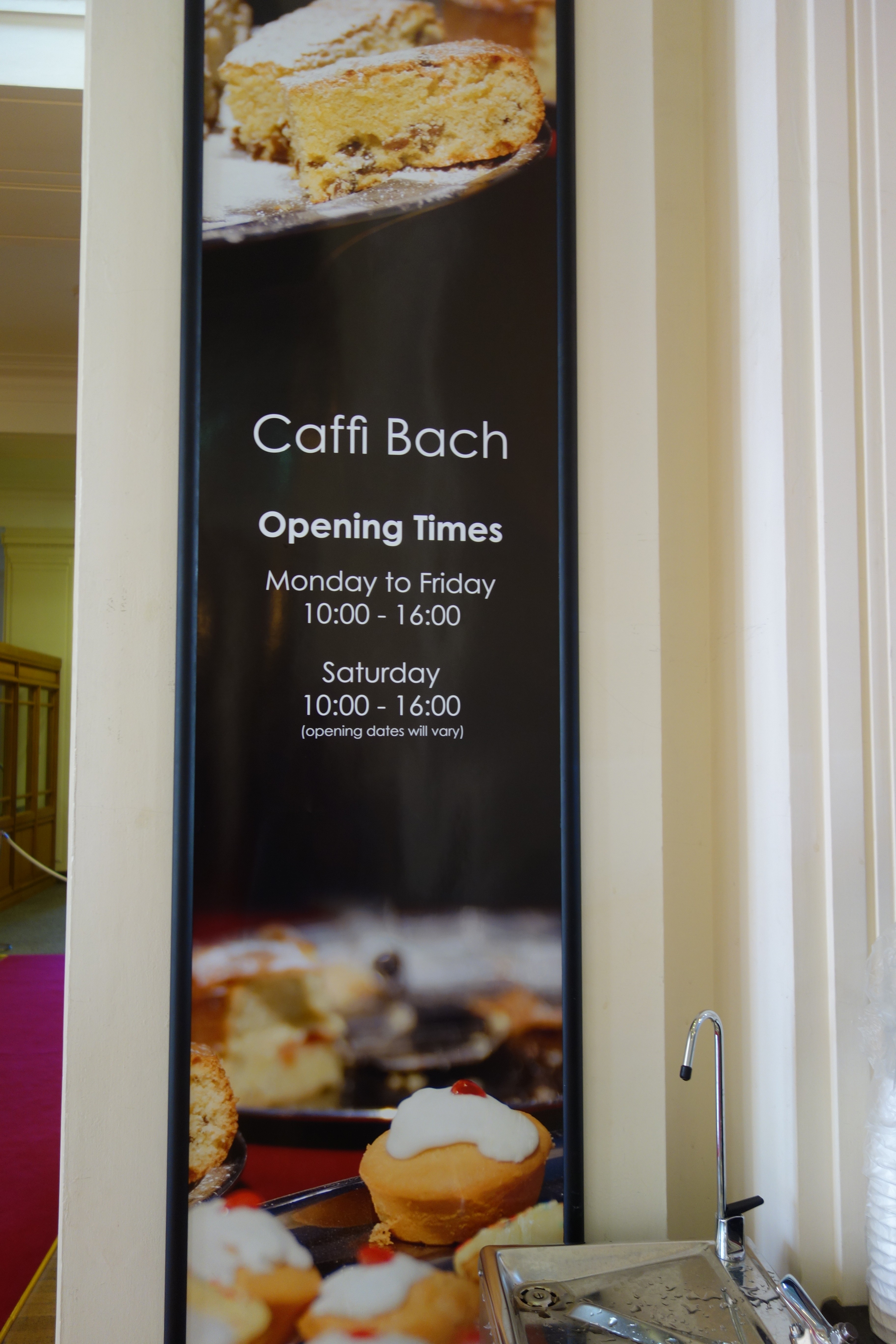
After a light lunch in the cafe (featuring this classic library sign), DSC01429we were on our way again.  The countryside changed as we went farther north.  Somewhere above Aberystwyth we realized that we were seeing stone walls instead of hedges.  Also, the terrain changed dramatically, until we were staring up at hills that reminded us of Scotland or the Lake District: steep, bare and subtly colored in shades of brown, gray and green.

The country leveled out again as we neared the Menai Strait, the river-like sea that separates Anglesey from the mainland of Wales.  We were searching for the Britannia Bridge (not the more famous Telford Bridge), after which we were to take the first exit and turn right.  Well, we took an exit but it didn’t seem to be the right one.  Reversing was a bit scary, especially when I came to a fork and couldn’t quite work out which side we were supposed to be on.  But apart from a little honking and blinking of lights, the reversal was successful, and on our second attempt we found ourselves on the right road for Moelfre.
We found White Pebble Cottage without any trouble.  Despite its name, it’s not a cottage so much as a townhouse kind of place, fairly newly built and very nicely done.  The main floor flows from kitchen and dining table to living area, to a deck bordered with a small garden.  DSC01625Beyond is a little stream, separated from the walkway by a low fence.  Two doors down appears to be a year-round resident, complete with dogs and washing on the line.  The houses on either side of us appear to be empty or on holiday.  Upstairs are two bedrooms and bath.  All is new and Ikea-like and very comfortable, if not exactly what you picture with the words “a little cottage in Wales…”DSC01605

At the cafe next door we asked about a grocery and were directed down the street to a small store that provided all the necessities except for ground coffee.  We got back in the car and drove to Benllch where we’d spotted a Tesco and, with some difficulty slotting the car into the tiny car park, we successfully rounded out our shopping.  Home again to scrambled eggs with cheese, toast and bacon.  Yum!!

Hiking all day

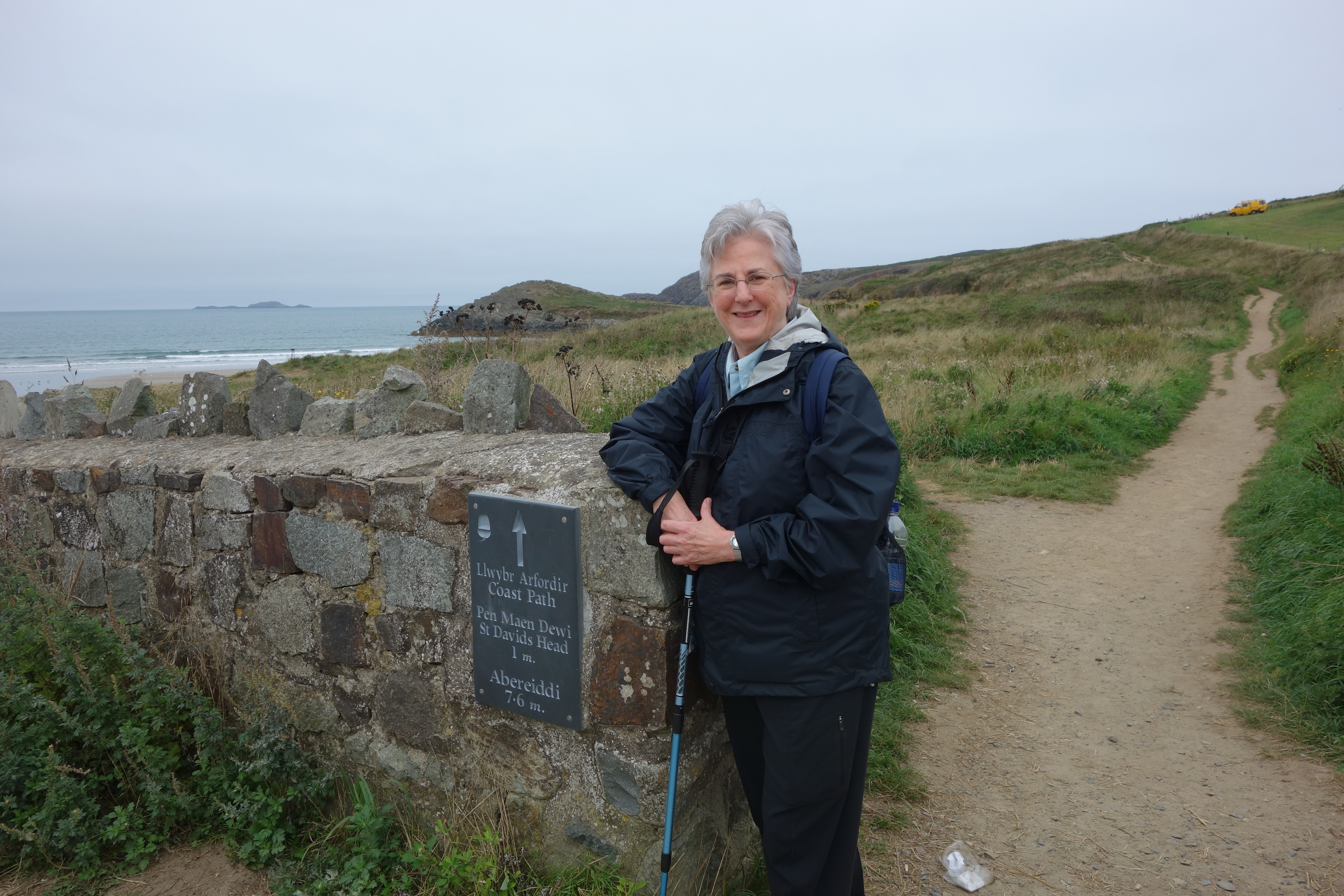
All of Wales is encircled by the Wales Coast Path, the only country that can claim such a thing, and in this region it’s known as the Pembrokeshire Coast Path.  This morning, Alison and I planned to hike from Whitesands Bay to St. Davids Head along the path, so we set out in the Peugeot for the Bay, just a few miles away.  Having paid and displayed, a great British invention, we hoisted our poles and set out.DSC01369
On a sunny day, Whitesands Bay is apparently thronged with people, but today was cloudy, damp and cool, so there were only a few cars. DSC01372The path started uphill next to a farmer’s field, and as we climbed the views of the sea got more and more spectacular (a word I can use only once per post, so take it as a given if you don’t see it again).  Wildflowers were everywhere.DSC01374

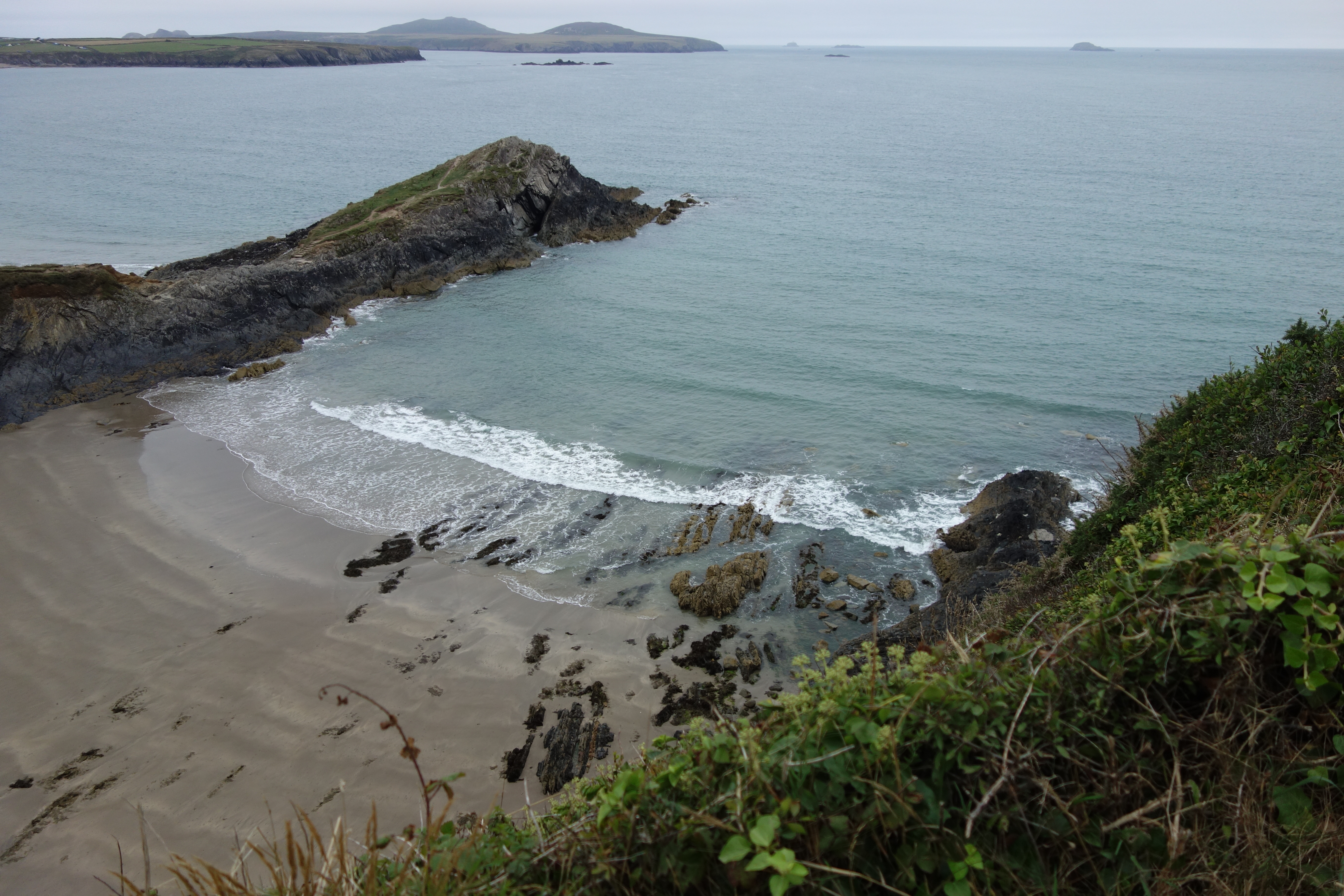
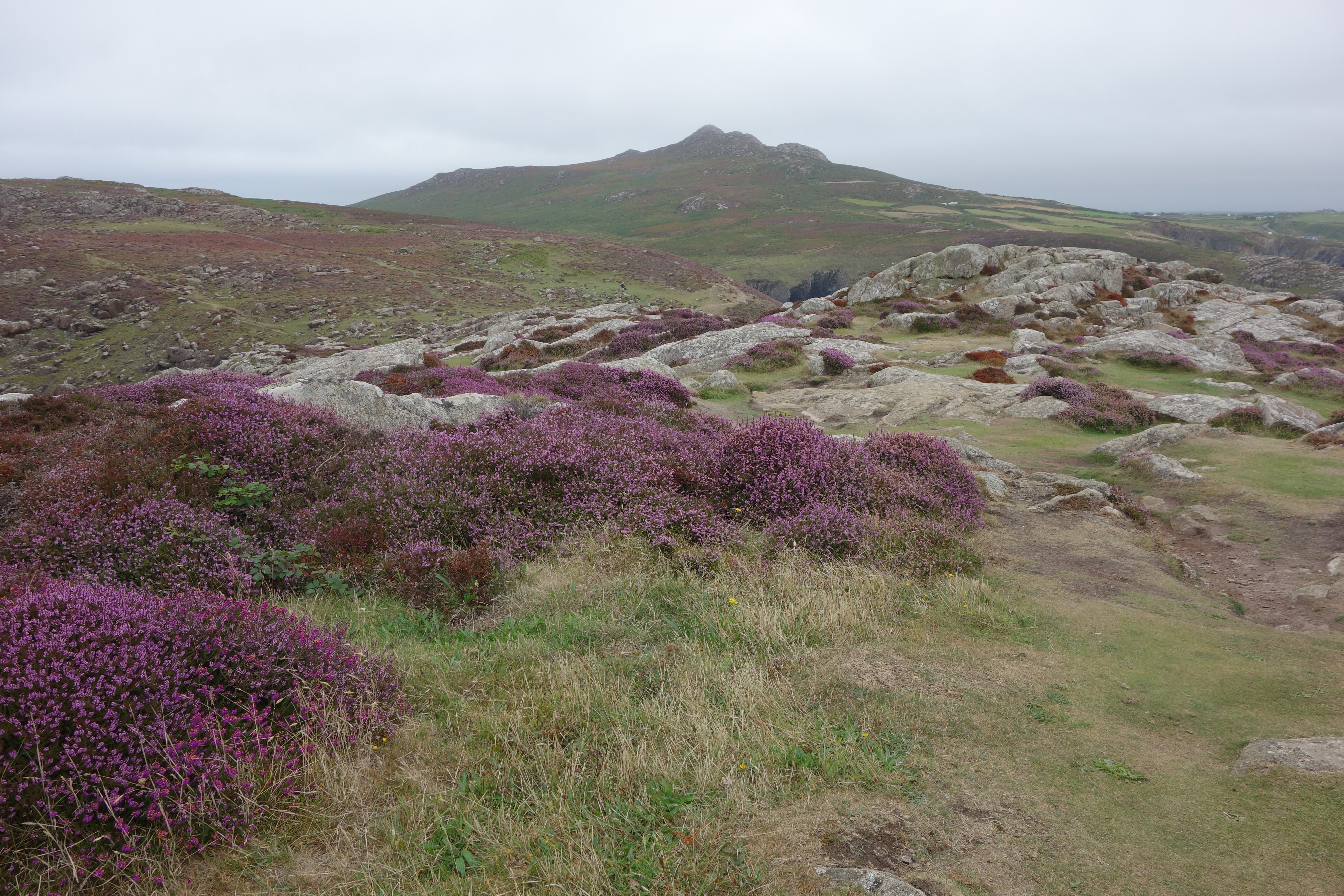
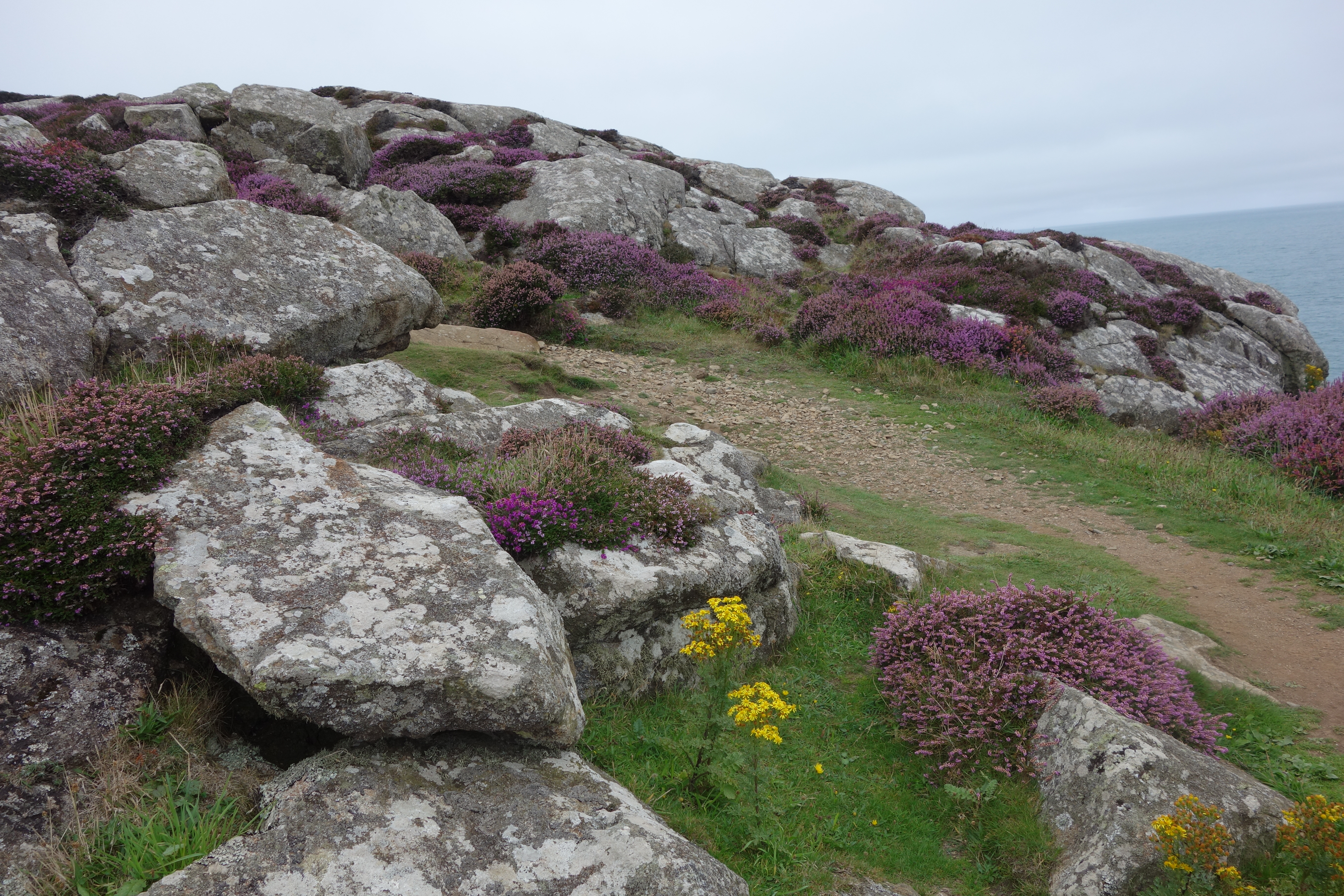
The path wound uphill and downhill, aiming towards St. Davids Head, once an Iron Age fortress.  DSC01380Alison found a seat on an obliging rock (squint and you can spot her), DSC01383while I made my way between the stone ramparts onto the head.  Great views, lots of heather and rock and, at the very tip of the point, two men who were surveying the scene with powerful binoculars, documenting the wildlife they could see for a scientific survey.  I did not dare take their picture and regret that I didn’t take a picture of the view from the head – great sweeps of sea dotted with rocky islands.  But here are the beautiful heather and rocks, reminiscent of Maine.DSC01381

We left the Coast Path to make our way to Coetan Arthur, an ancient burial chamber.  (Its connection with Arthur, if any, unknown to me.)  DSC01387Then we followed one of several footpaths over the heather and down the hill to another path that went back up a hill  to Carn  Llidi.  By this time the mist on top of the Carn had descended to our level and was rapidly turning into real rain, so I skipped the detour to the top and we booked it back to the car park, arriving drenched but triumphant (if this is what triumphant looks like, maybe we were actually fussy – and this was before it rained).DSC01389 By the time we made it back to St. Davids, the rain had stopped and our quick-dry pants were nearly dry.  Time for a sandwich eaten on a bench outside, and then we parted ways, Alison to explore the town and me to take another coastal walk.  To Be Continued

Into the country

DSC01307We picked up the car in the far reaches of Cardiff, and the nice young man assured us that we would be fine.  The first twenty minutes are always the worst, trying to judge how much car looms out to your left, and how close to get to the center line without going over it.  Oh, and the roundabouts.  But most of our route was on theM4, a dual carriageway, or, as I heard him say, a “jewel carriageway.”

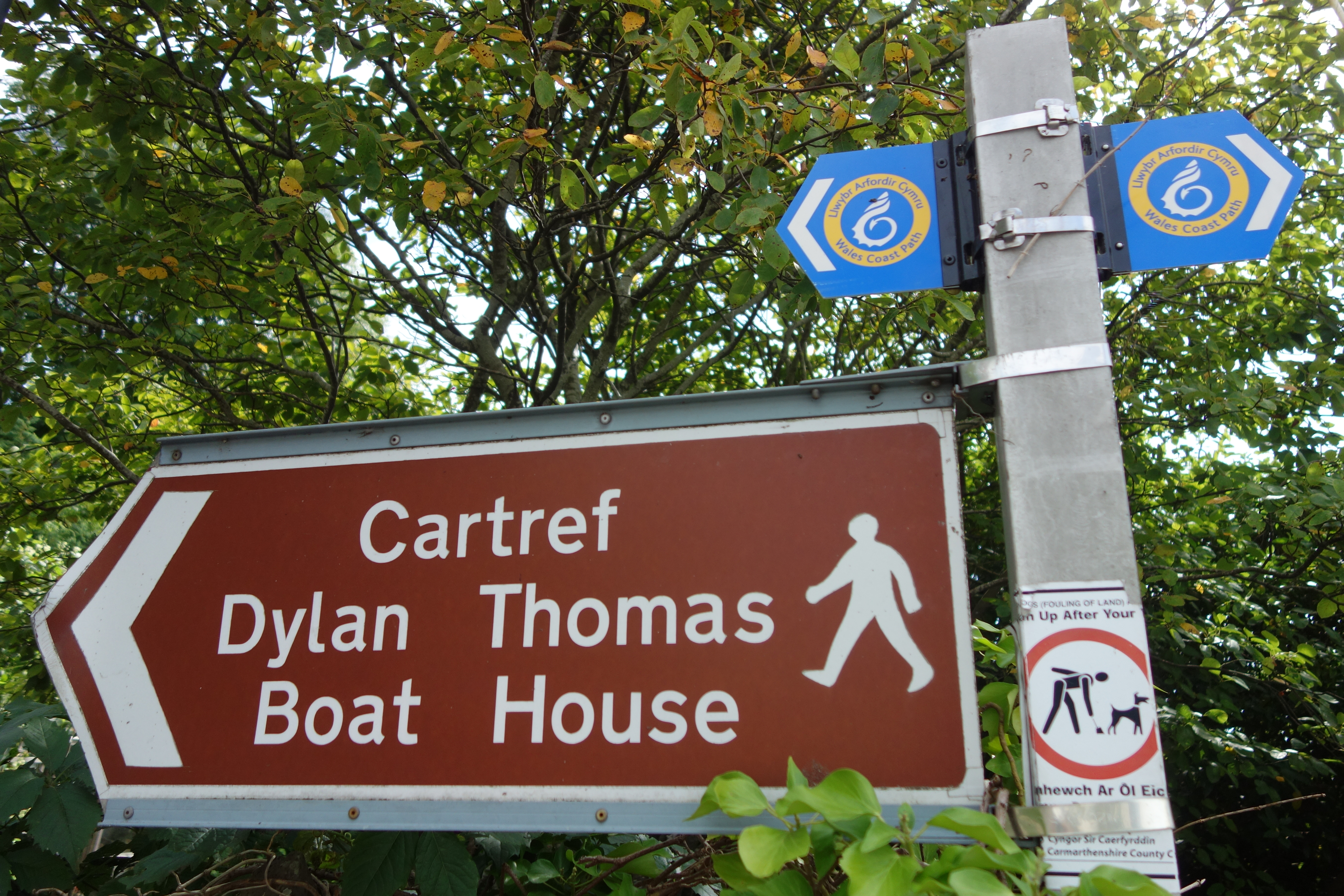
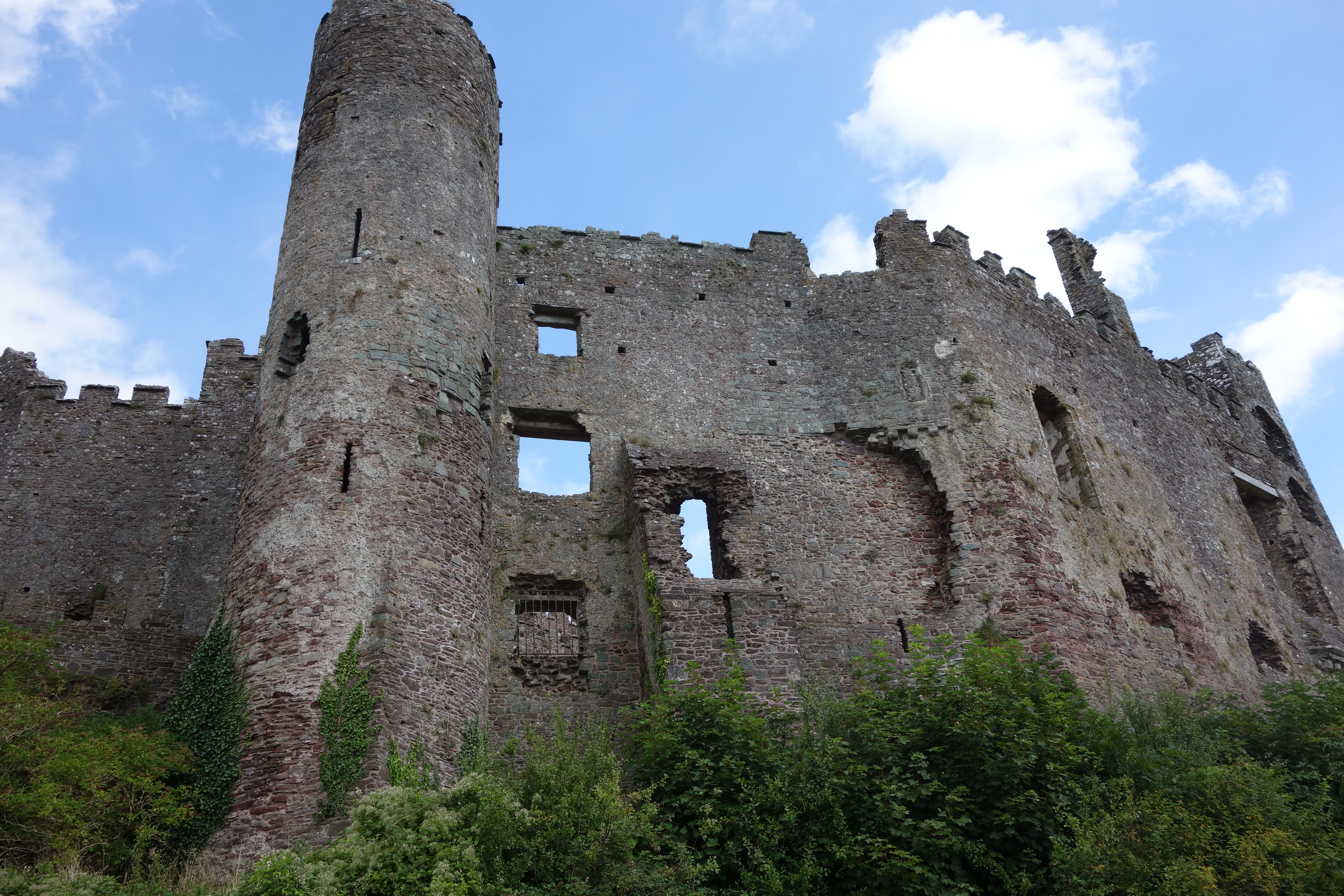
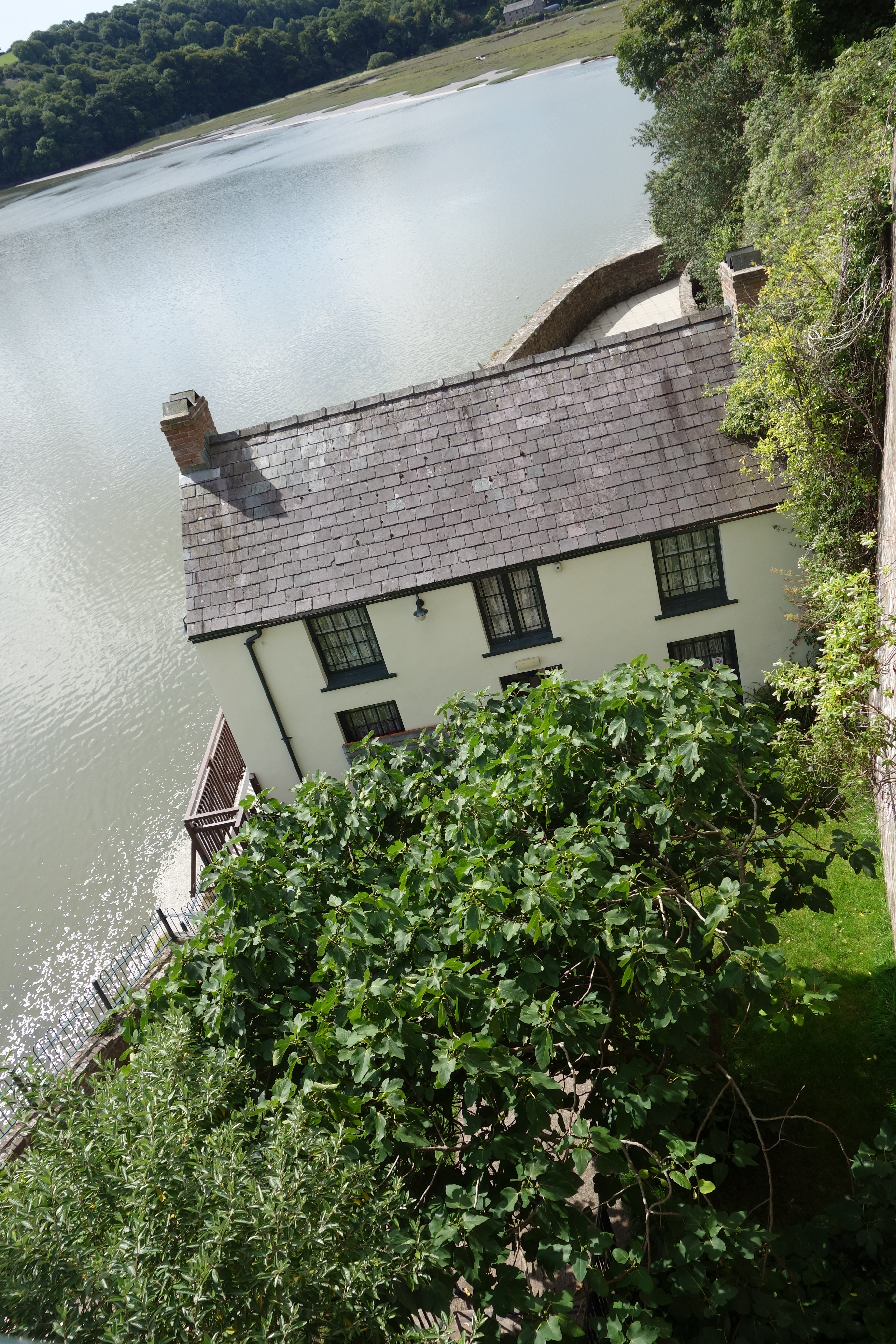
We proceeded on to Laugharne, which despite the assertions of people from Cardiff, is pronounced Larne, not Loch-ern.  The Post had recently run a story about the place where Dylan Thomas spent his last four years and where he wrote “Under Milk Wood.”  It’s a small village on the coast, winding roads that end in a small cluster of shops and restaurants, with the estuary and the castle above overlooking it all.  DSC01302We made our way up a steep path DSC01303to Dylan’s Boathouse, the house where he and Caitlin and their three children lived.DSC01313

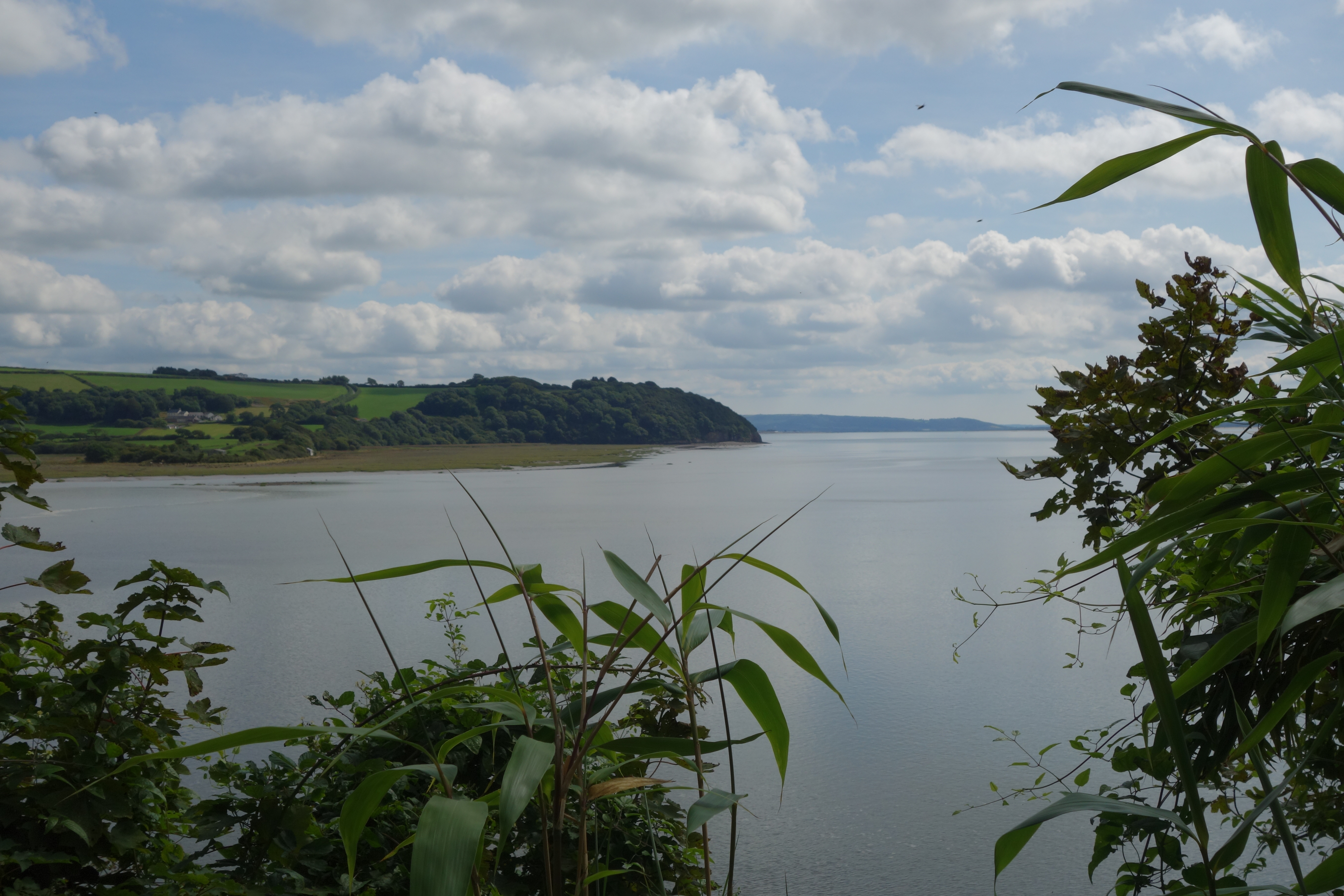
It’s currently being used for a film about Thomas, to coincide with the 100th anniversary of his birth in 2014, so there were workers building sets on the stone terrace.  The rooms were intact, though, and we watched a short film and then roamed through the parlor filled with memorabilia.  The shed where Thomas worked is perched up high, a bit down the lane, and peering through the windows you can see the postcards tacked up on the wall and crumpled pages from his typewriter strewn on the floor.  The view of the estuary is hypnotic.DSC01309We had a light lunch of lamb broth, bread and cheese at the Owl and the Pussycat, which was bustling with customers at 1:30, and then set off for St. Davids (yes, they’ve officially dropped the apostrophe).   After a complicated maneuver to get the Peugeot turned around on the narrow street, we set off up hill and down dale, getting closer to the sea.

When we got to Newgale, the road came right down to the sea, with a high wall of loose stones the only thing keeping us and the Duke of Edinburgh pub from getting drenched.


4754127-Newgale_Newgale

Unfortunately, my attention was distracted by an enormous truck ahead of me, too big for me to see around and pass, while the line of cars behind me just got longer.  The truck finally turned off, and we could see the sea again.  A handmade sign for St. Elvis which I thought was a joke but turns out to be a real place, then Solva, where I hope to walk while we’re here, then the national park center just outside St. Davids.

[thanks, TripAdvisor]

The center was beautifully designed to fit into the landscape.  We spent a few minutes perusing the books and then visited the exhibit of animal paintings by Graham Sutherland and a few others.  Then off into the smallest city in Britain.

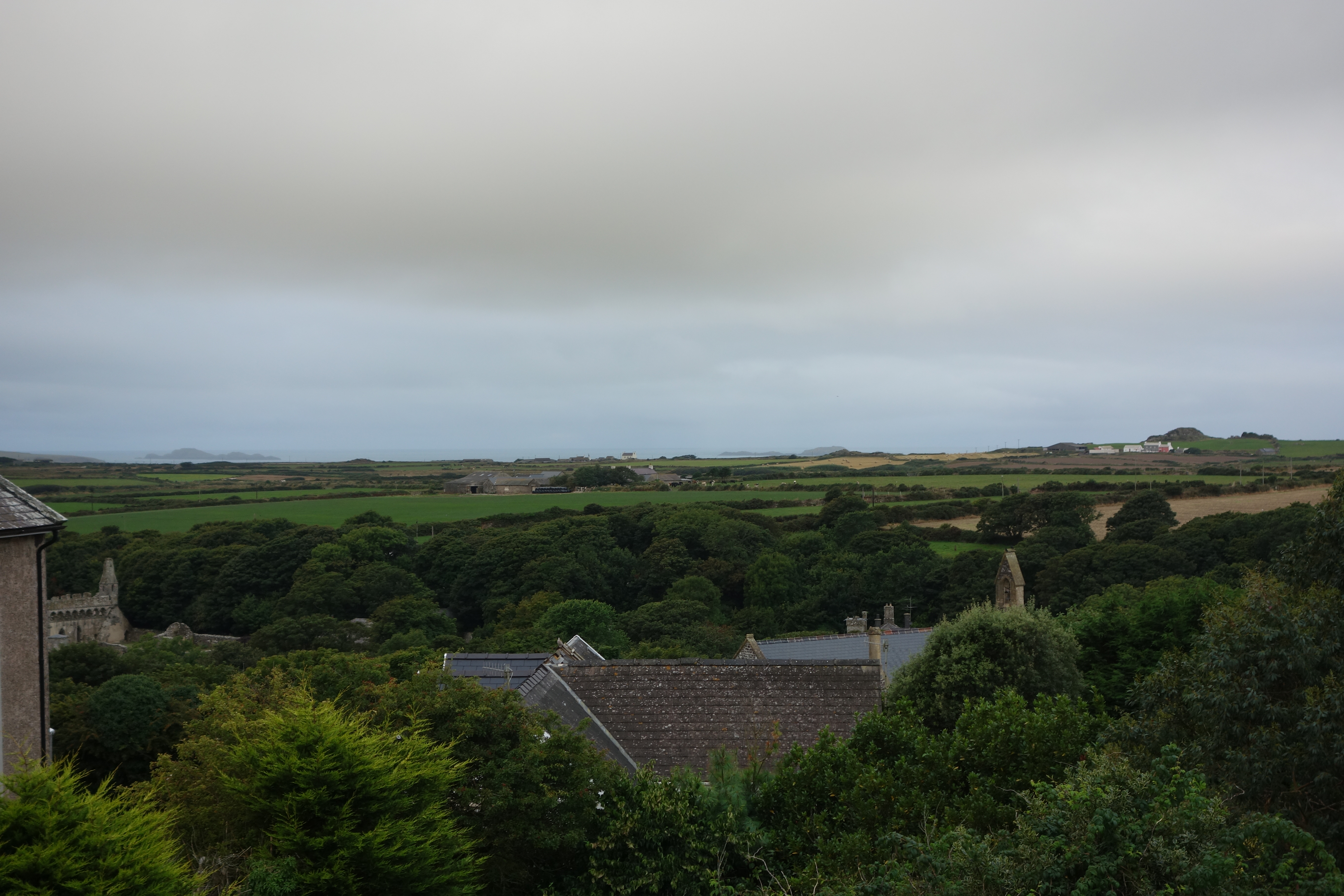
Our B&B is well situated, though our third floor rooms mean that hauling the suitcases is a challenge (and we thought we were packing light!).  Luckily, Rob did most of the hauling.  Our room is tiny but it has a stunning view over the land to the sea.  Look closely and you will see the outline of an offshore island.DSC01324

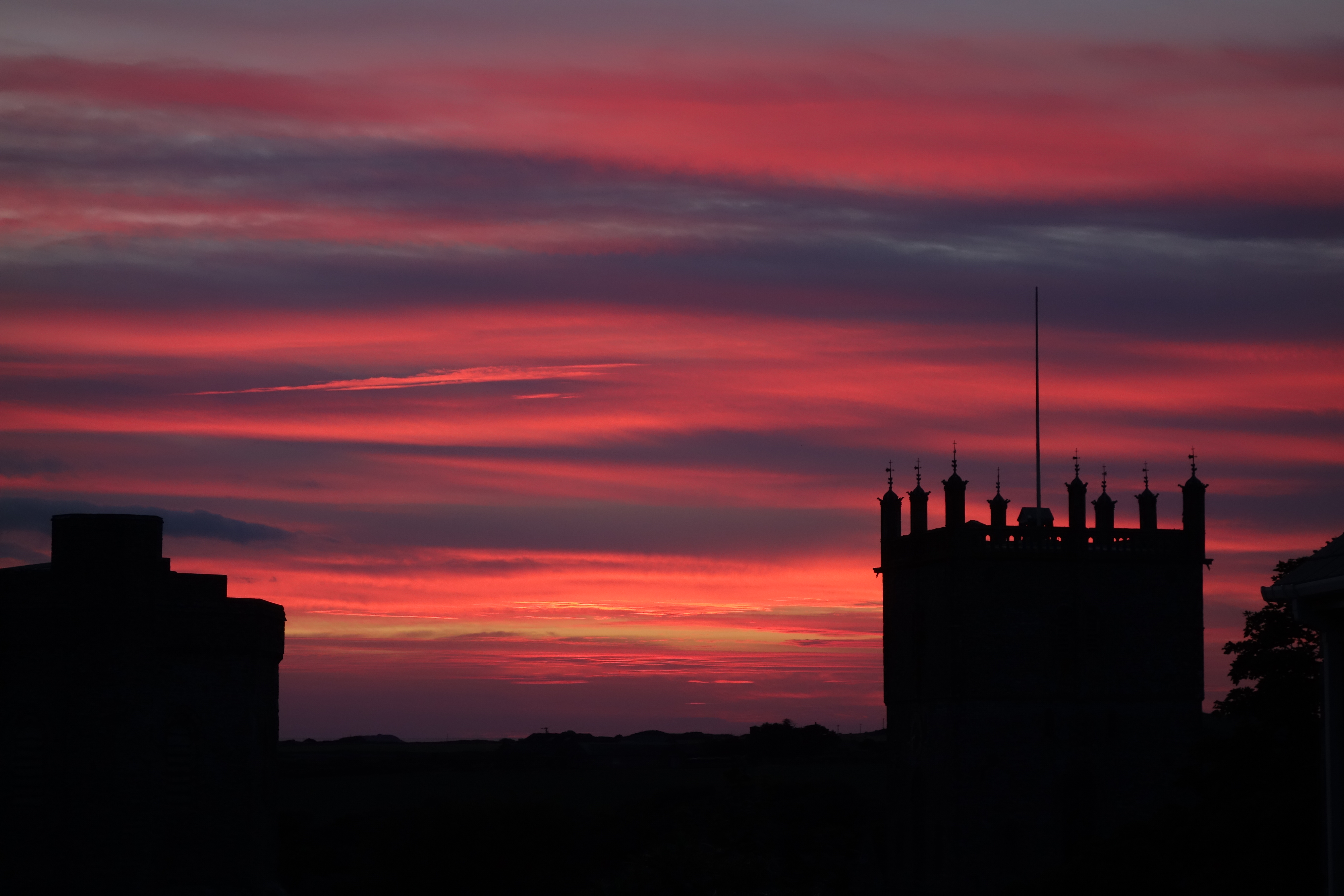
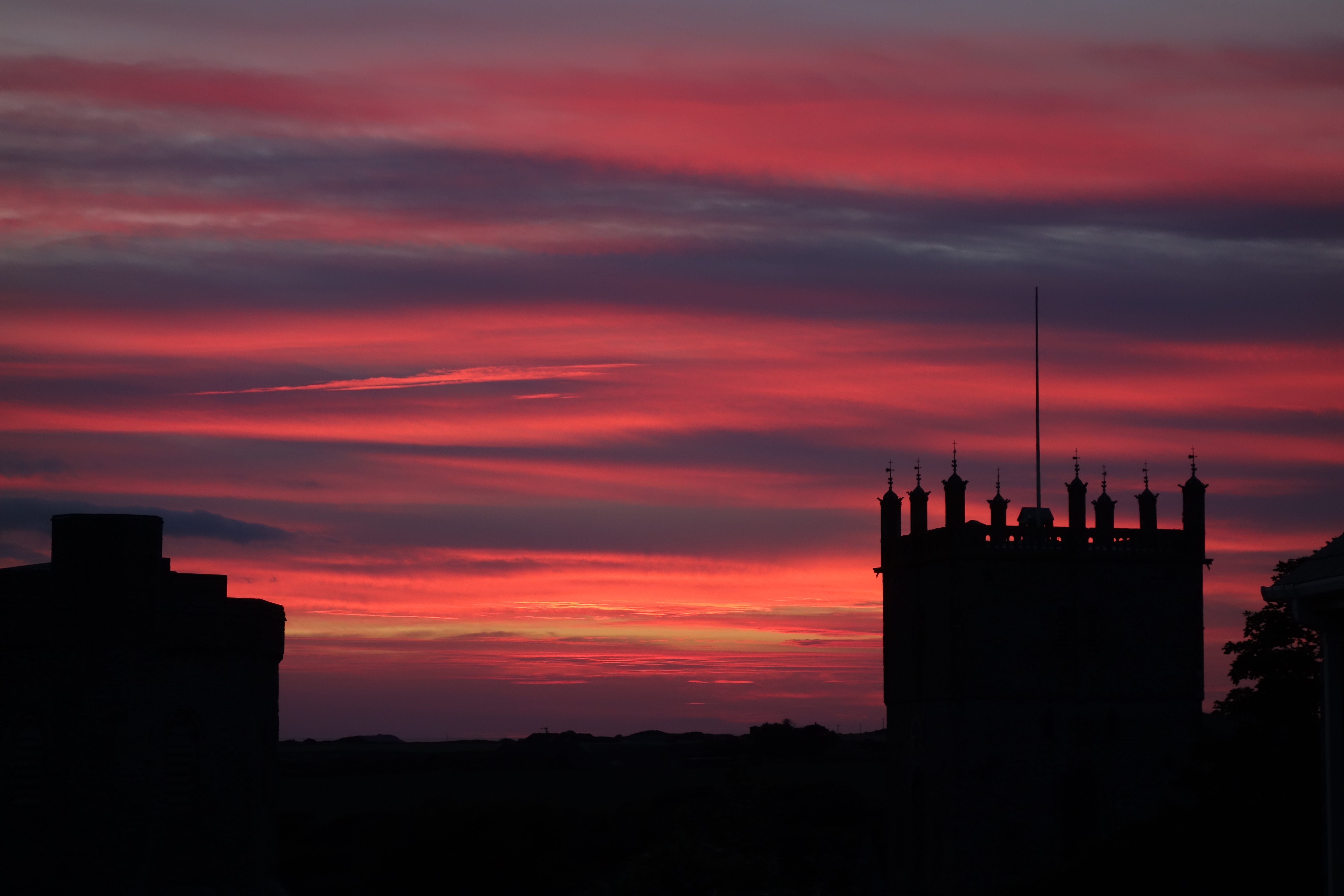
We booked a boat trip to Ramsey Island for tomorrow, then had an okay dinner at The Bishops, the big pub in the center of town.  It was filled with families, so it must be popular, but the food was not remarkable – it’s a pub, after all – though the crab salad we had was fresh.  Back up the rise to our BB, stopping only for views of the incredible sunset.DSC01321

Castles and Brains and missed connections

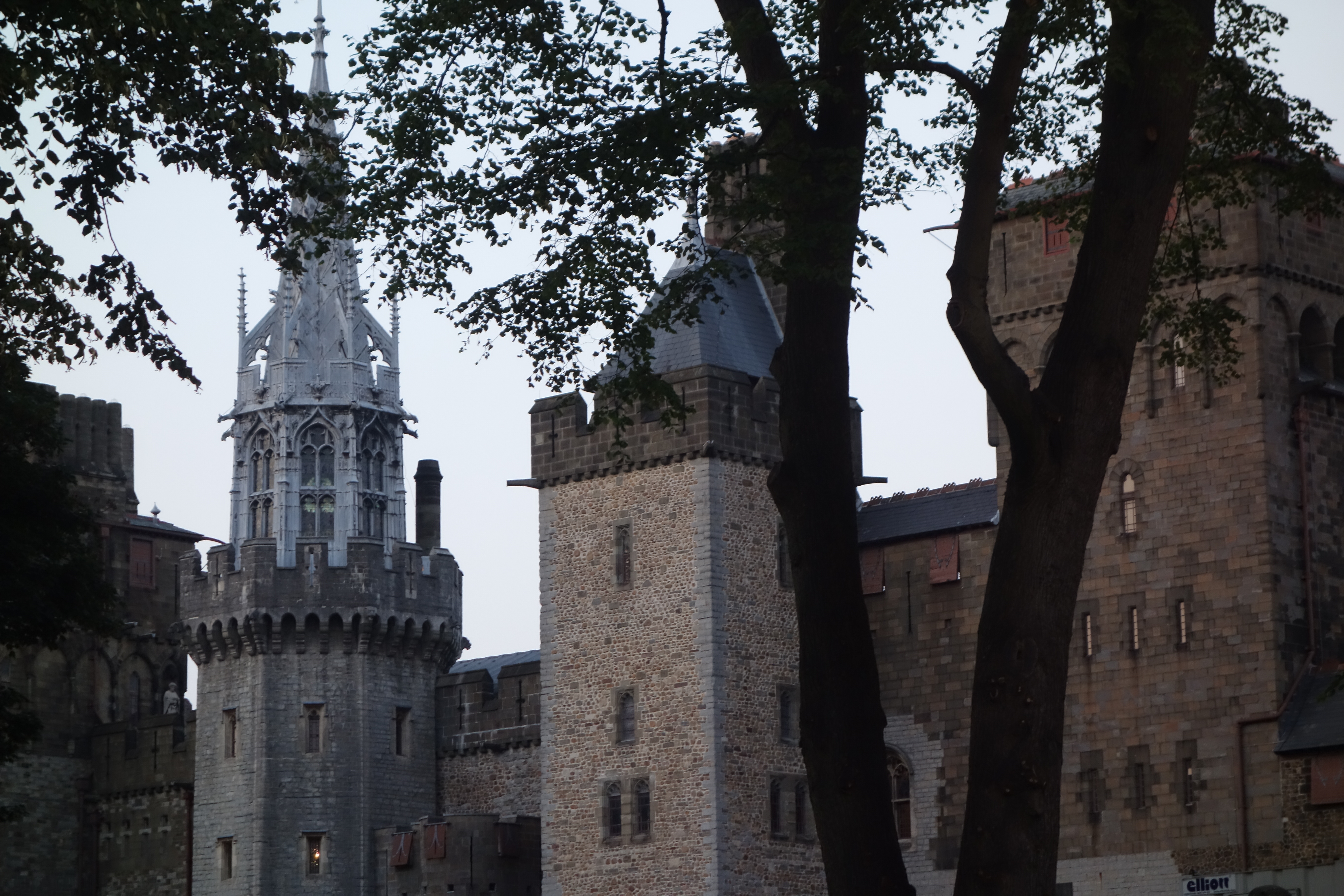
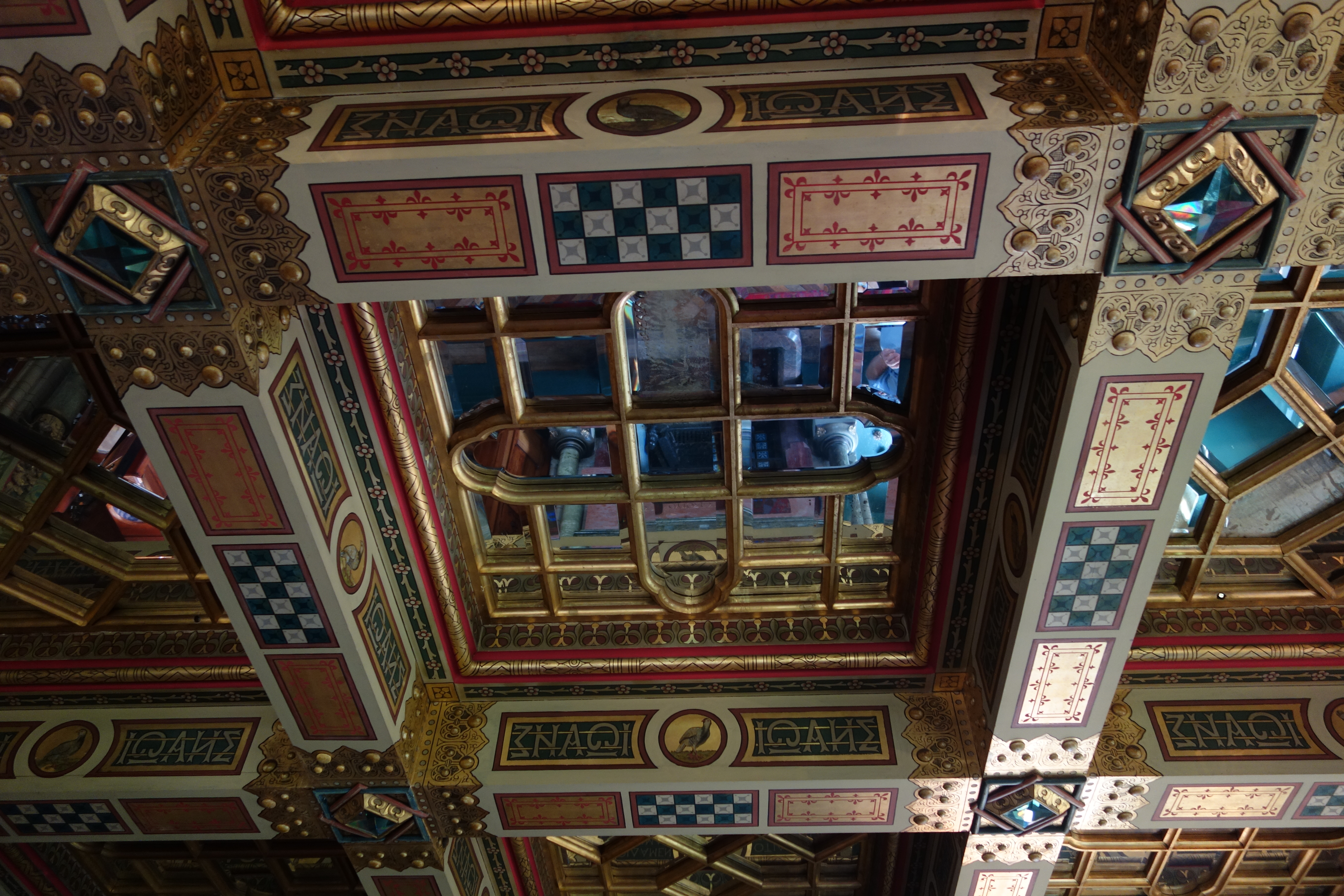
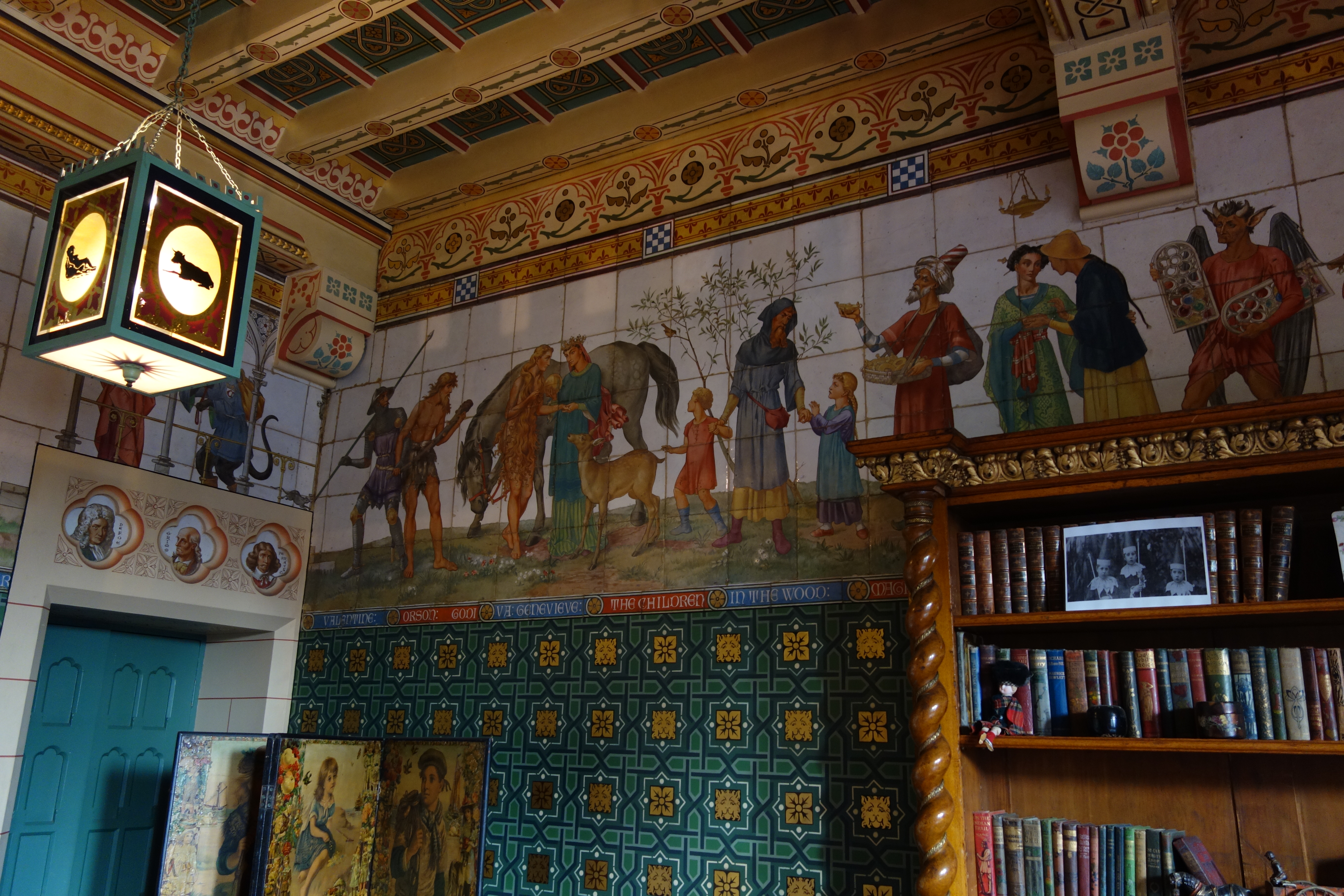
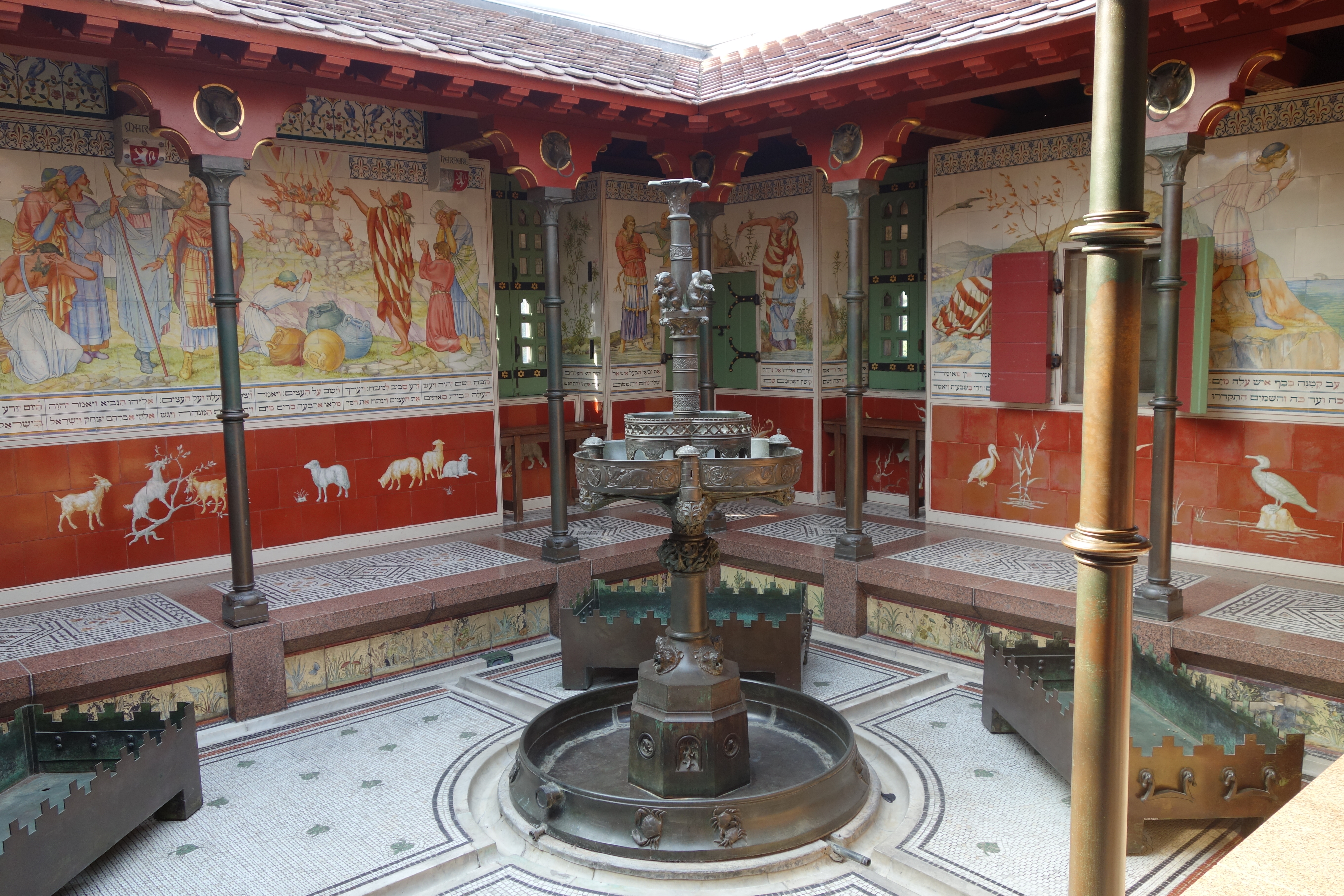
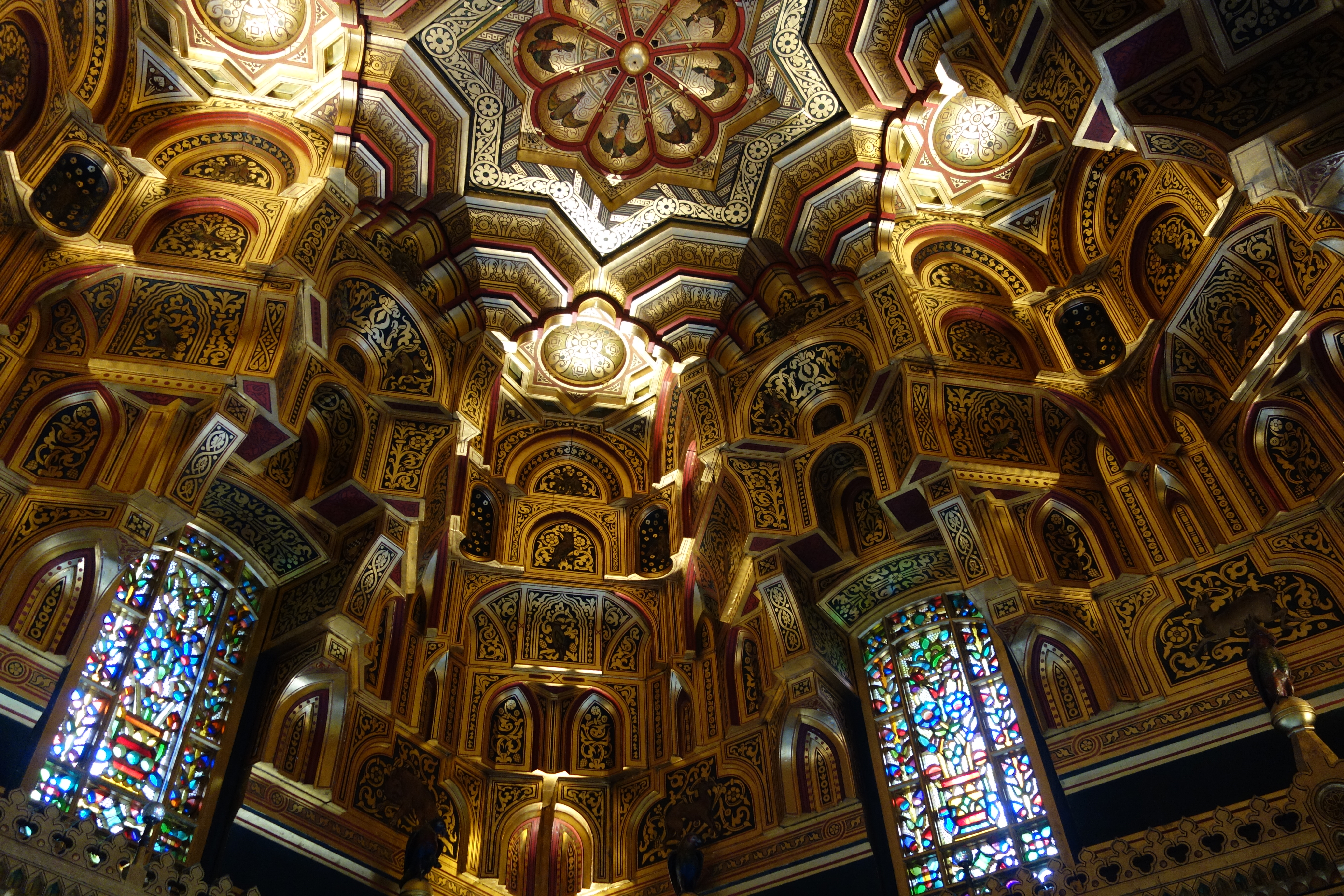
Just one castle, actually, but what a castle!  The Earls of Bute married into Cardiff Castle, made lots and lots of money in Cardiff from coal and docks, and then produced the third Earl, who was the richest baby in the world when he was born in 1847.  Although he and his family lived in the castle for only six weeks a year, he cooked up a scheme to redo it in a highly decorative Victorian Gothic style.  Led by architect William Burges, the project resulted in rooms filled with detail and color, based on Arab culture as well as a romanticized view of medieval life.  A few highlights here.

The castle from the streetDSC01251

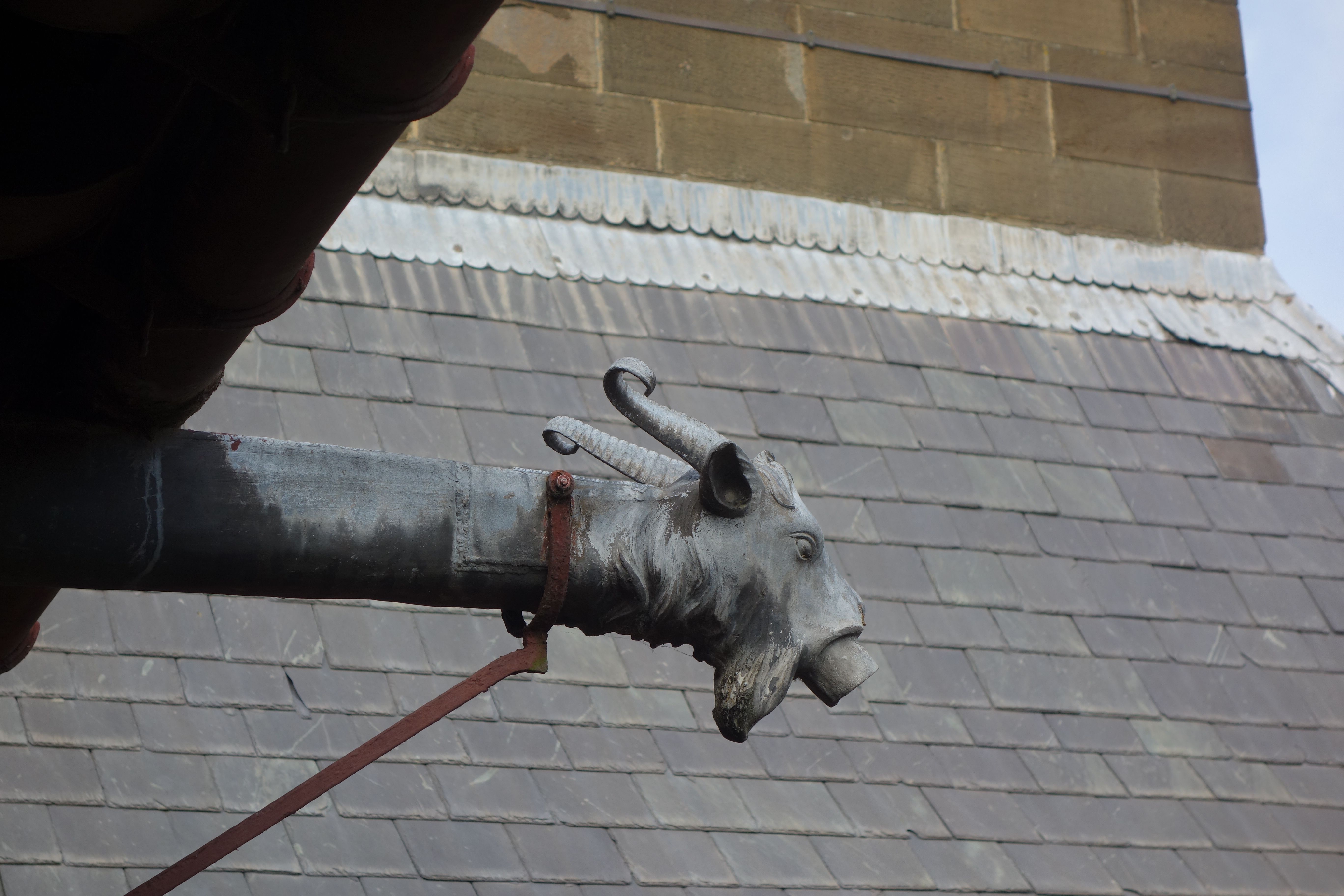
Decorative gutter

DSC01260

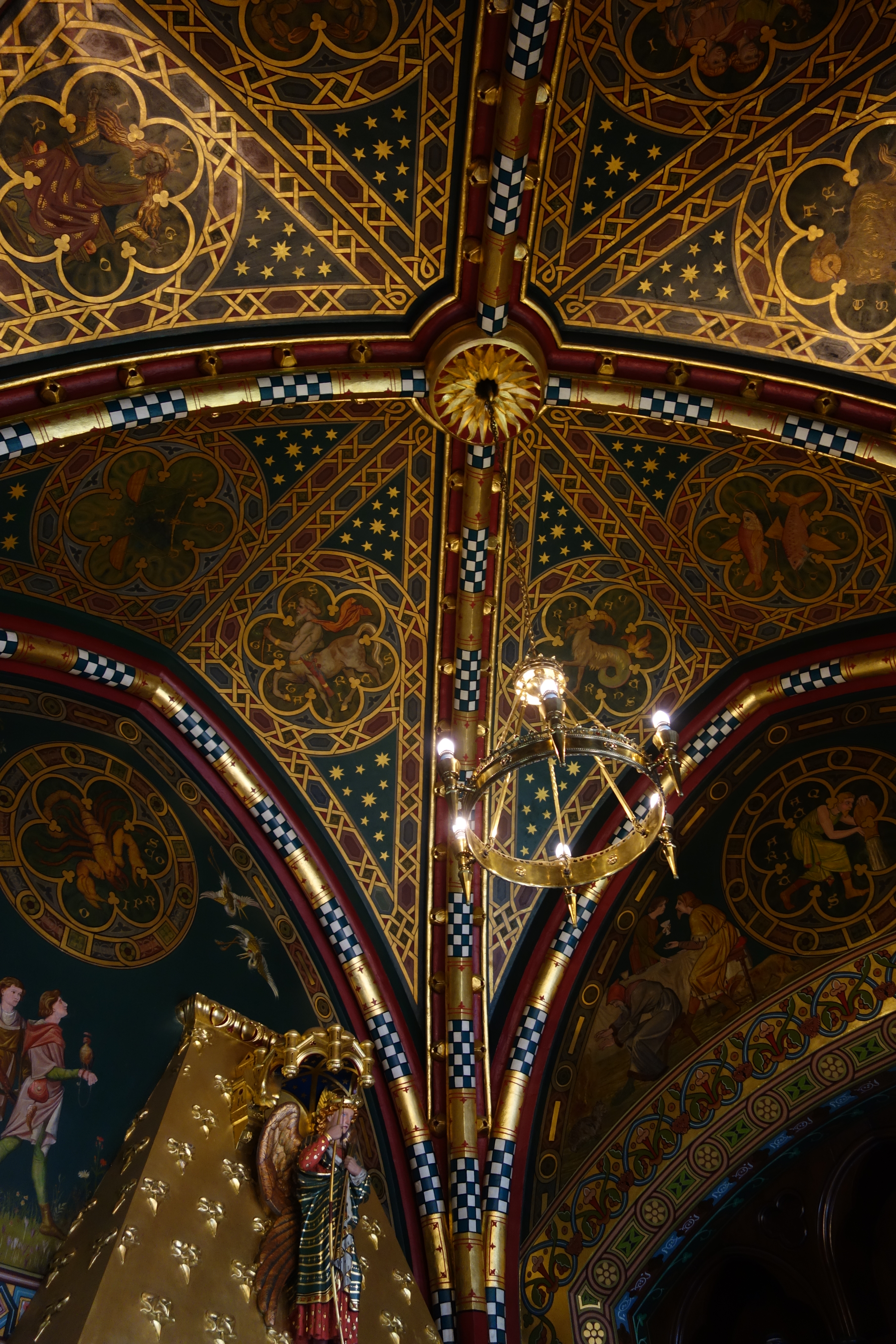
DSC01261Victorian Gothic ceiling (above)

Nursery tiled with figures from famous tales

DSC01265DSC01267banqueting hall (above)

elaborate ceilingDSC01271Roman terrace on the top level – there used to be a garden here, but the floor began to leak…

DSC01274Elaborate chapel

DSC01277A falconer was tending to the birds kept on the grounds of the castle

DSC01288

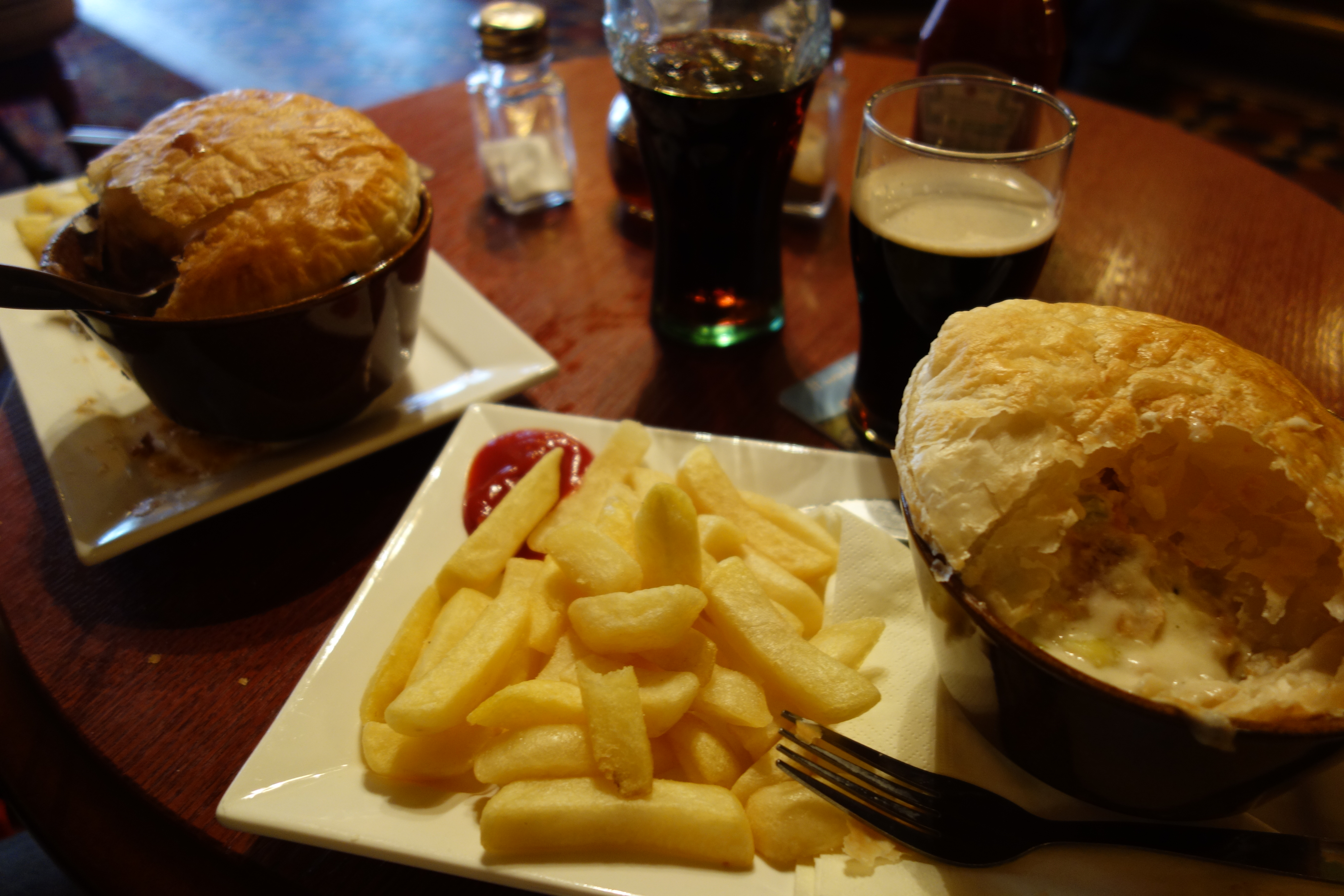
From the castle, we needed merely to cross the street to find the Goat Major, a traditional pub famous for its pies.  We were the only customers at their noon opening time, though soon enough a man came in, ordered a pint, and appeared to be settled in for the duration.  The pies were lovely – the Wye Valley, an award winner with chicken, leeks and Tintern Abbey cheese, and the ubiquitous lamb and mint.  With a half pint of dark Brains, the local brew, DSC01289 DSC01290lunch was delicious.

We rallied our forces for the second event of the day, a visit to the National Museum.  We split up, Alison to see the art and me headed to an exhibit about the geological origins of Wales.  I soon decided that it was too much detail without John McPhee by my side, and I decided to track down a few of the top ten items on display.  The ancient fire irons were interesting, as was the exhibit on ancient life in Wales.  The silver toilet service was not to my taste, but the 19th century glass sea creatures were amazingly detailed and beautiful.  A few Monets, a few Turners, and I was done.  A restorative cup of tea in the cafe, where we observed a tart grandmother admonishing two darling little boys, and then we made our way back to Bute Park.

The plan was to take the AquaBus down to Cardiff Bay and noodle around.  But fate was against us.  The loss of one of the regular boats to “technical difficulties” meant that by the time we got there, we were last in line and couldn’t get on.  Plan B was to ride the hop-on hop-off bus, but the kind driver told us we’d be wasting our money for such a short trip and advised the public bus #6 (as the boatman had also suggested).  We got four different stories about where to get the bus, but we finally figured it out and rode down to Mermaid Bay.

This whole complex is the result of the Barrage, built about ten years ago to get rid of the “stinking mud flats,” home to thousands of wading birds, and enable development.  The young woman in the visitors center admitted that she had been against it when the Barrage was first proposed, but after all, she now had a job there. She did say that no one had told the birds where they were supposed to go once the mud flats disappeared, so who knows how they are faring.  Another plan to build a second barrage at the mouth of the Severn River is now being proposed as well, and it sounds like a terrible idea.

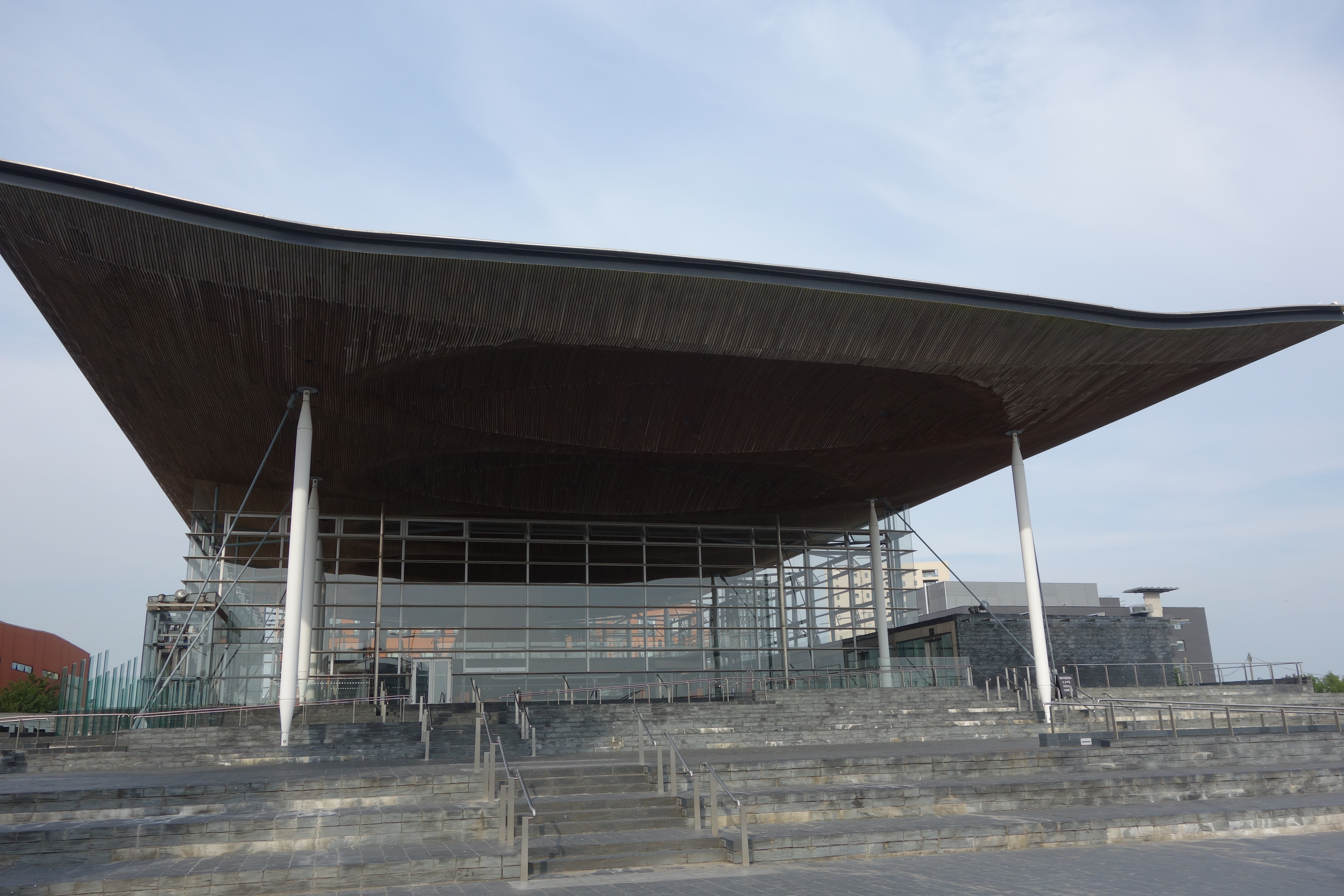
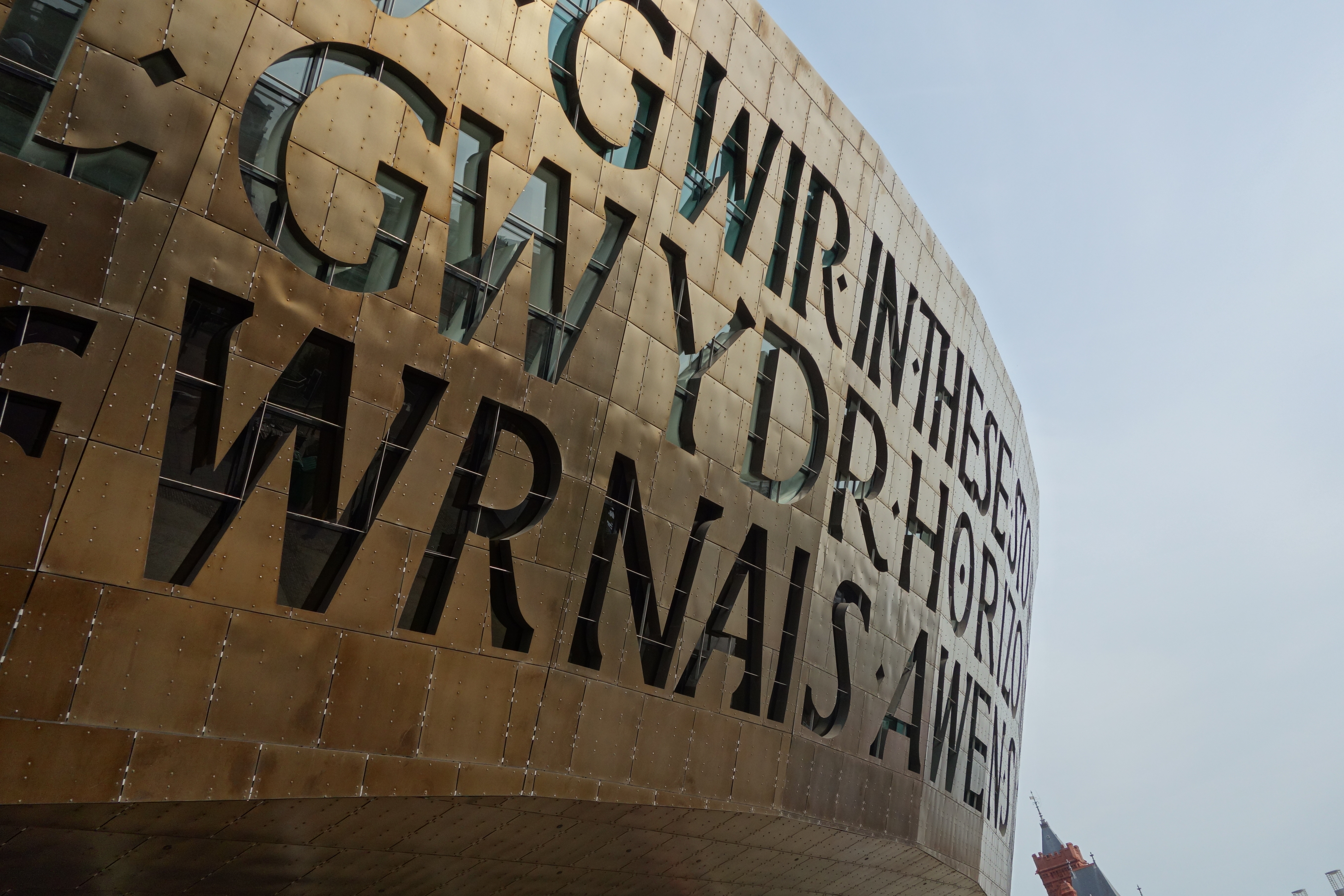
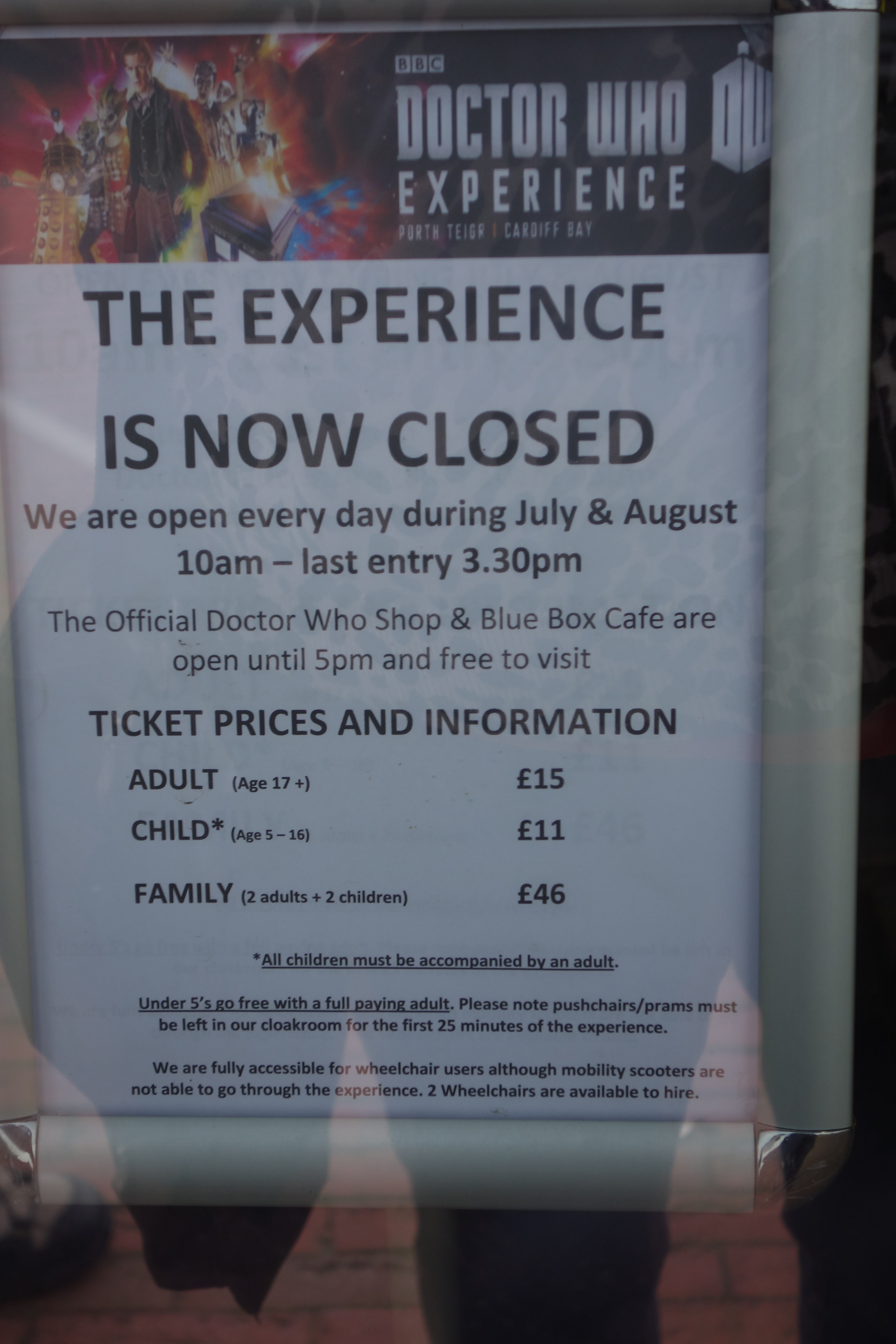
We wandered along the path that circled the one-time Docks building, now a public building; the amazing architecture of the Synedd, where the Wales government meets (I think), DSC01294and the Millenium Center;DSC01292 and the Norwegian Church.  There were apparently a number of Norwegians who settled here in the 19th century, and this is where Roald Dahl was christened.  Just beyond was the Dr. Who experience, but it was closed…DSC01296

Back on the number 6, foiled in our dinner attempt at the Potted Pig, redirected to the Meating Place with its hooks for hanging kebabs (they insert the hooks into these holes poised right above your table), DSC01298and a delicious dinner of cod with razor clams for me, and a mixed kebab for Alison. Yum! And so to bed.

Arriving in Wales

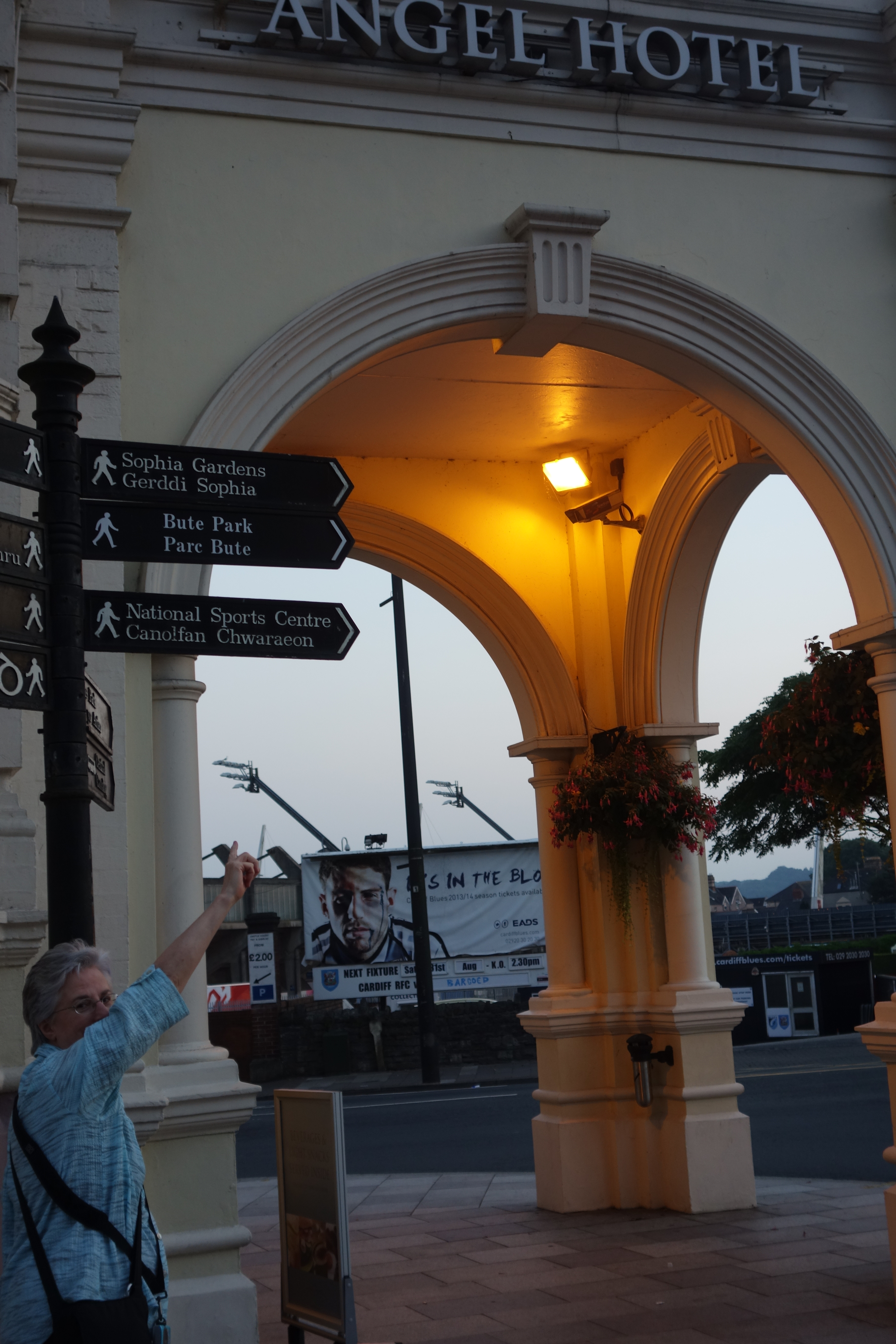
Alison, Bute ParkAn uneventful flight to Manchester, then the easy train to Crewe and on to Cardiff.  The Angel Hotel is substantial and centrally located.  DSC01252We had sandwiches and the local Brains ale, then walked down to the Tic for info and to Waterstone’s for books (Alan Garner’s Weirdstone of Brisingamen for me).  Then a nap and, much refreshed, back to town for dinner at Bella Italia after a lovely walk in Bute Park along the River Taff (top and below).  And so to bed.DSC01248 DSC01247

Garden fails (plus a few wins)

Any garden fail is, of course, an opportunity for something new.  Here are a few of this year’s fails, with notes on what to do next time.

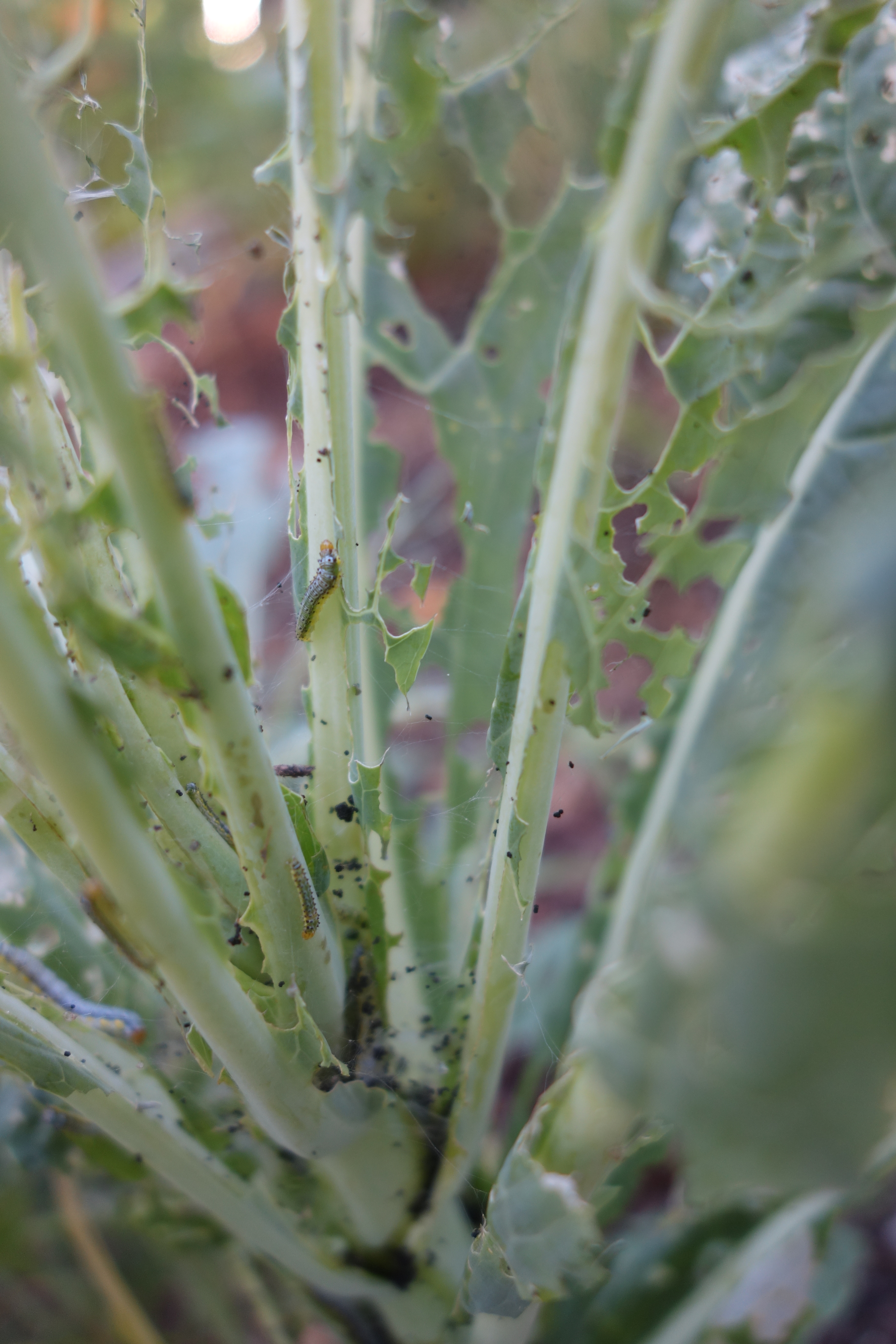
First, the Tuscan kale that I smuggled in from Tuscany looked fine for a while, and I should have harvested it while it was thriving.  Instead, I waited, and some creatures got there before me.  Flea beetles??

kale beting eaten

This one is not a big fail, just a not very interesting use of this coleus.  I think its delicate shapes and colors would be more effective against a stronger color rather than all alone in a pale green pot.boring by itself

These variegated hostas (there are a few more under the oak tree) were pass-alongs from Sara Toye, and I appreciate her generosity.  But I used them as fill-ins until something better came along, and that time is now.  The one in this picture is being crowded out by a much more interesting epimedium rubrum.  Plus, their leaves are looking ratty in a year when most hostas are looking gorgeous.  Off with their heads, I say!DSC01162

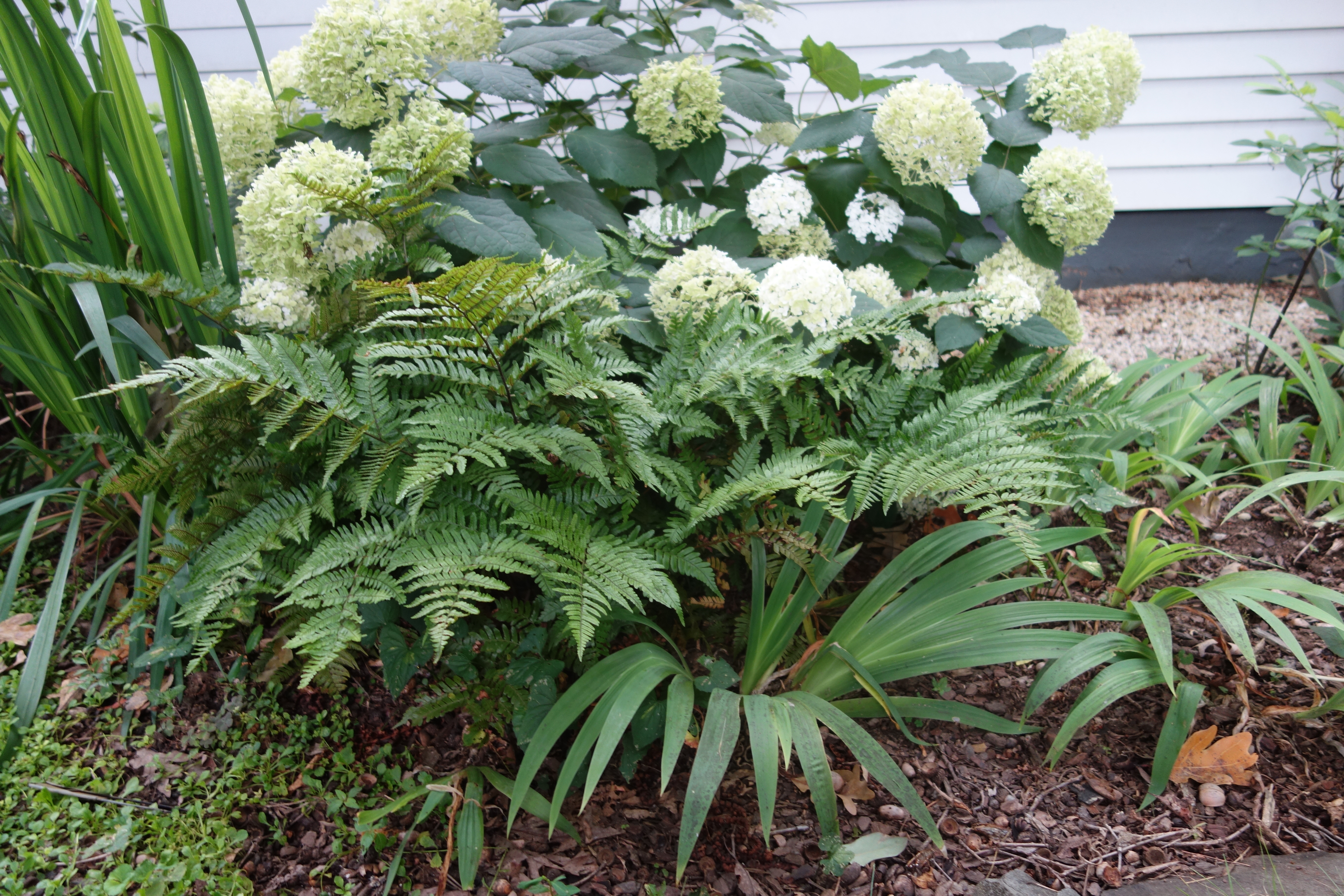
This is not a fail so much as a realization.  The  ‘Annabelle’ hydrangea has gotten so big that it overtops the autumn ferns.  Admittedly, in the winter and early spring, the ferns will look fine, but they have a better life planned in front of the compost fence, where I have already planted three this spring and find them perfect.DSC01161

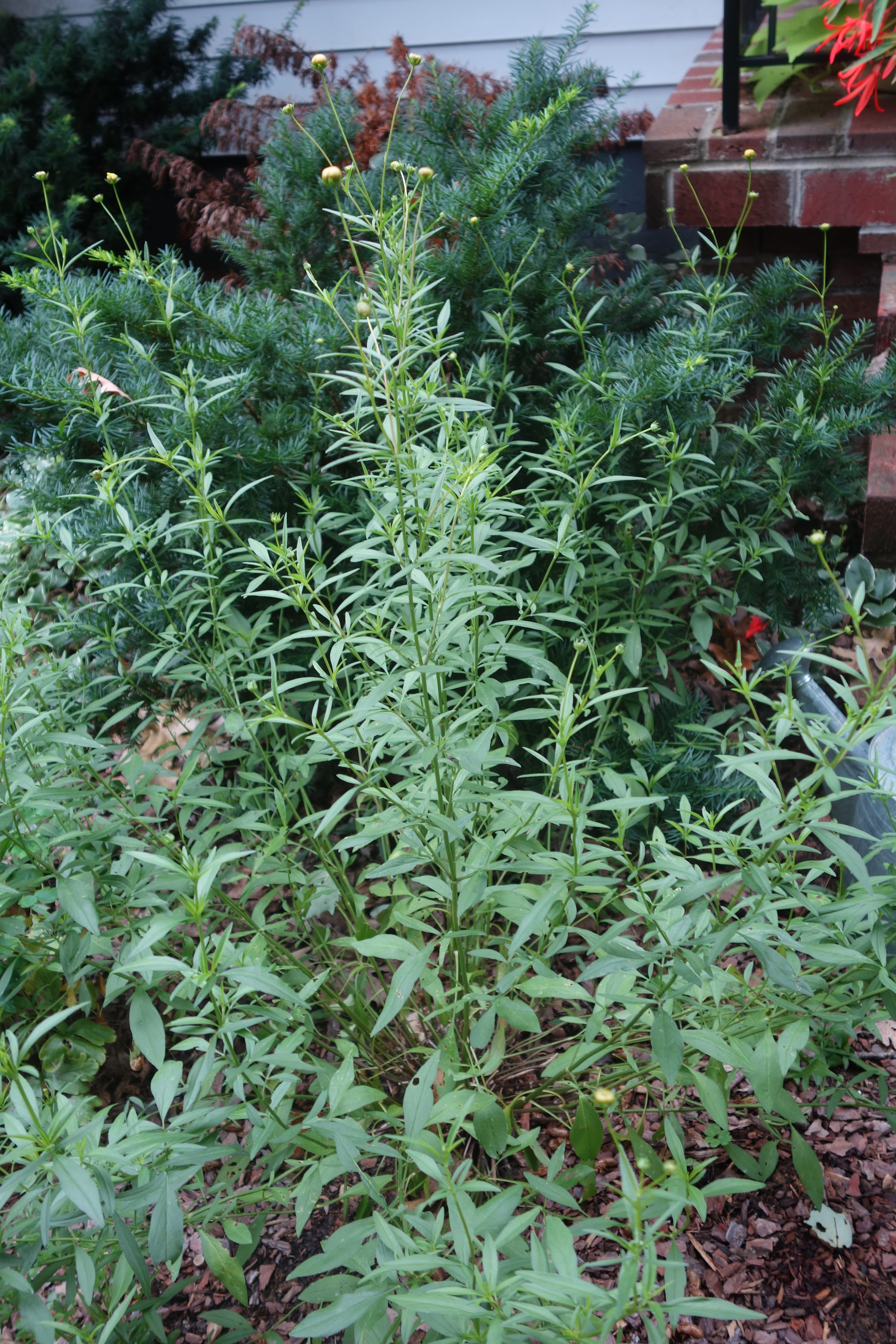
This coroepsis ‘Full Moon’ is too tall in front of the yews.  I admit that their flowers twine charmingly around and about, but the scale is off.  Their future lies in the sunny garden, where they can twine to their hearts’ content.Garden fail - coreopsis 'Full Moon'

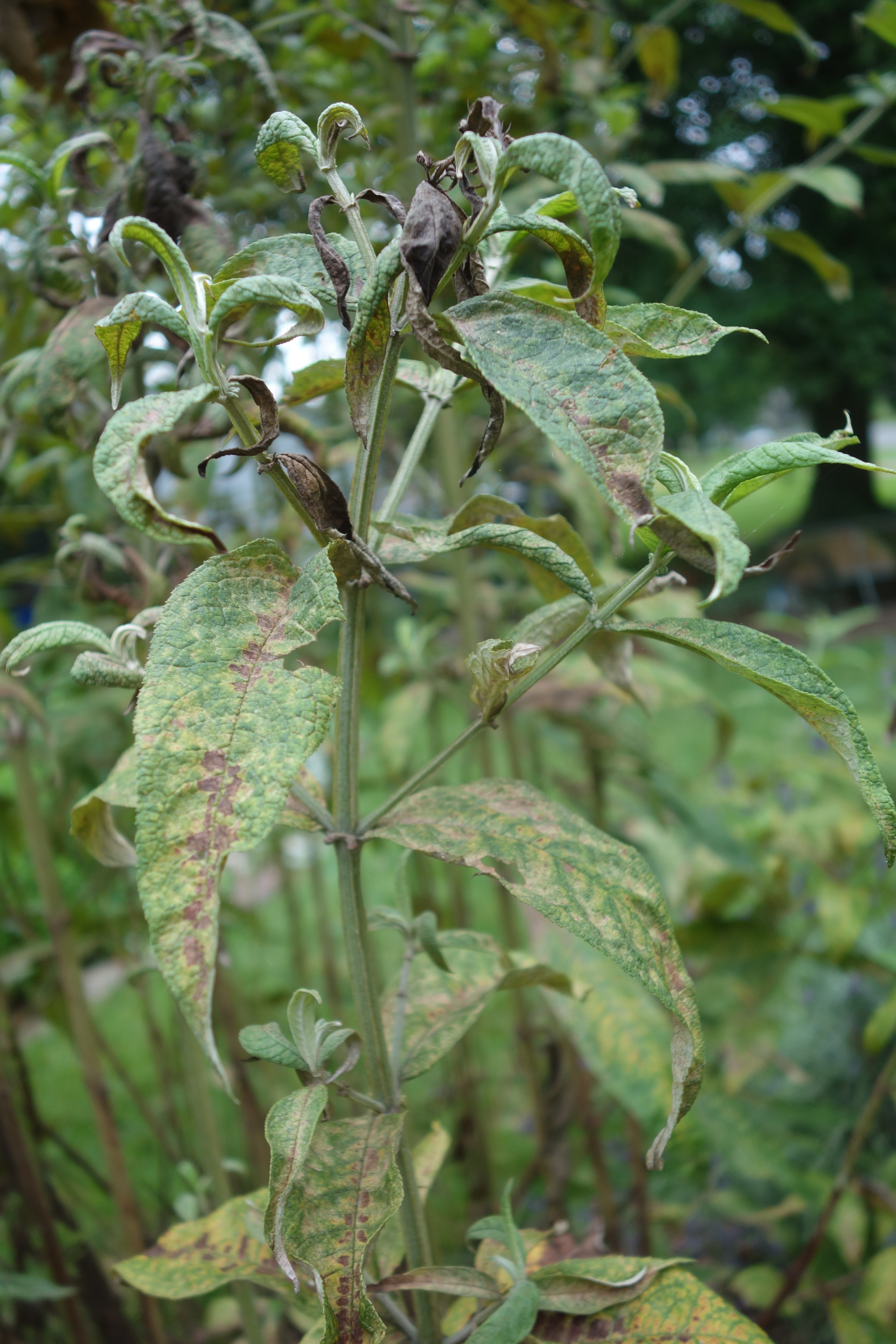
This butterfly bush was fine for a couple years, another pass-along that I intended to replace this fall.  Perhaps knowing its fate, it decided to succumb to powdery mildew (I think) and has been very unattractive this year.  Goodbye, bush!  Now I have to make a decision about what will take its place (vitex, Japanese maple, wild cherry, smokebush, etc. etc.).butterfly bush disease - downy mildew?

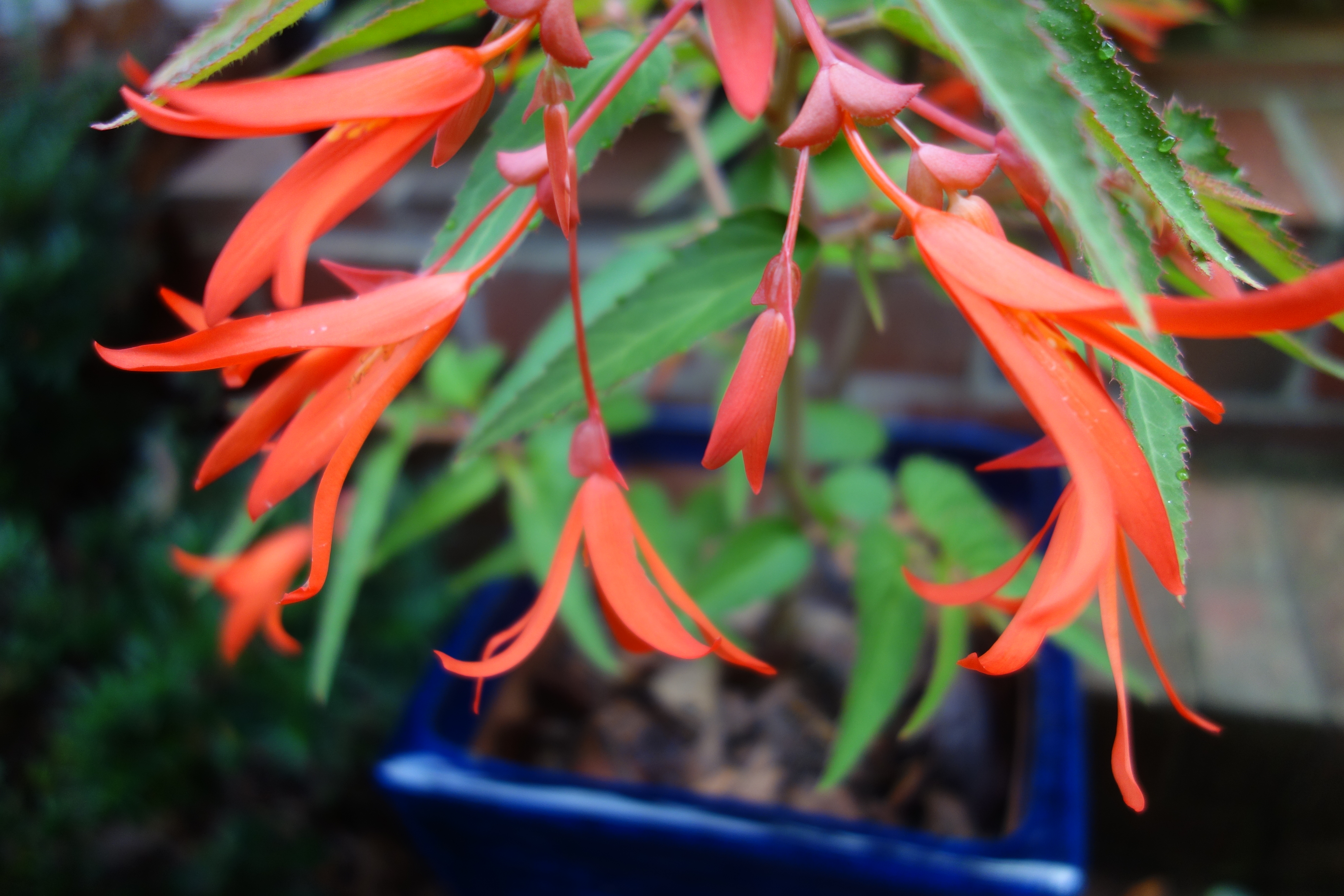
On a happier note, here are a couple rescues.  First, this begonia ‘bonfire’ was one of three I grew last summer.  I tossed two and kept the third in its pot and placed the pot in the shed.  To my surprise, it was trying hard to grow when I pulled it out this spring, and it has come happily back to life.  Win!begonia 'Bonfire'

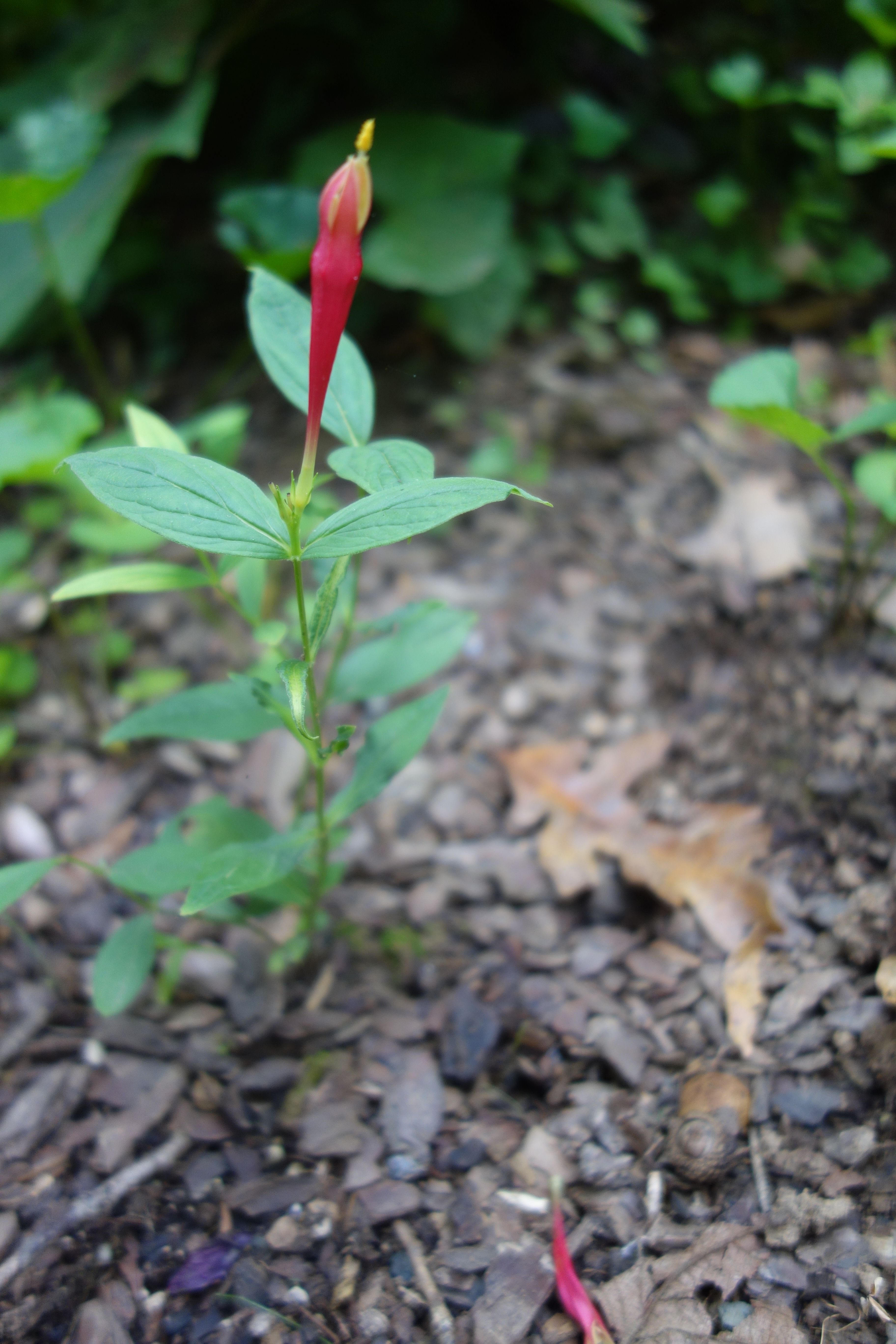
The other rescue is an Indian pink that I planted last year in the corner garden.  The over-enthusiastic man who got rid of my leaves used his chopping machine to chop away at plants, not realizing they were intentional.  The hellebores he slashed came back fine but I had given up hope for this.  Then, while tidying up this bed (weeding and mulching), what should I find but a tiny little bloom.  If it had not appeared, I’m sure I would have weeded this, too.  Now I have hope that it will survive and thrive in the years to come.DSC01160Finally, I have had bad luck with geranium ‘Rozanne’ despite its being touted everywhere as a perfect plant, perennial of the year, and so on.  I’ve planted at least three and lost them all – until this year.  Here is ‘Rozanne’ twining happily among the perilla in the walkway garden.  Who knows if it’s been too dry, not sunny enough, or what, that it’s never done well before, but I felt better after reading this blog post about how another gardener in northern Virginia has had the same bad experience.  Perhaps this year’s rain has given it (and me) hope, but I won’t blame myself if it never comes back.DSC01179

Daylilies

Along the walkway garden I planted White Flower Farm’s (100) Daffodils and (50) Daylilies mix.  The results, too, have been mixed.  Neither one seems to have filled the space sufficiently.  In fact, I can’t find a photo of the way it looks in spring, so it clearly isn’t memorable then, though it’s pleasant enough.  But I have enjoyed the daylilies and now need to edit them.

The first to bloom was one I had planted in addition to the mix.  ‘Strawberry Candy’ is widely touted, but I’m not crazy about it.Strawberry Candy day lily - first to bloomBicolors  – meh.  Maybe planted en masse, they would look  better.

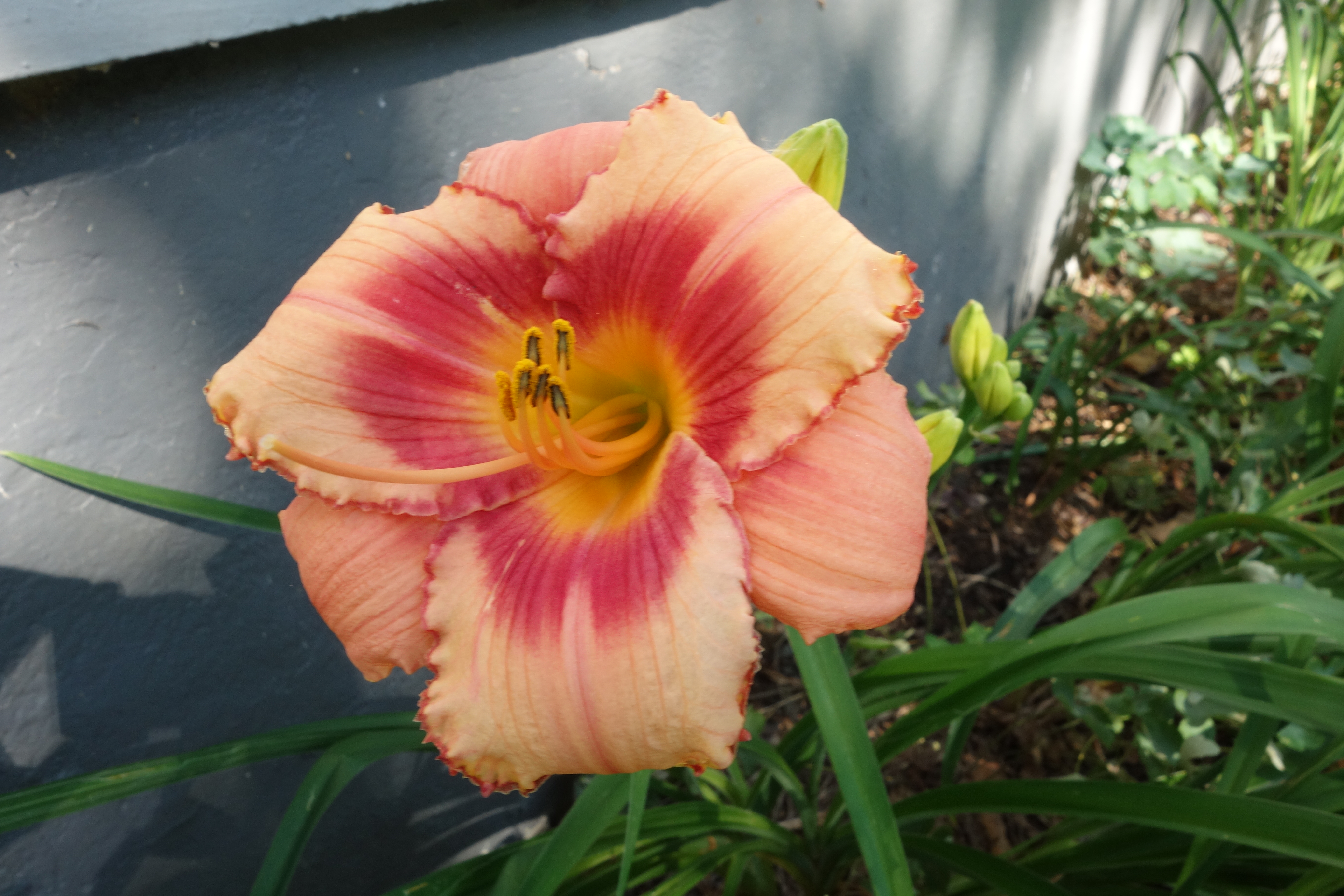
I’m drawn to either pastels or deep colors.  Here is a lovely pale apricot.

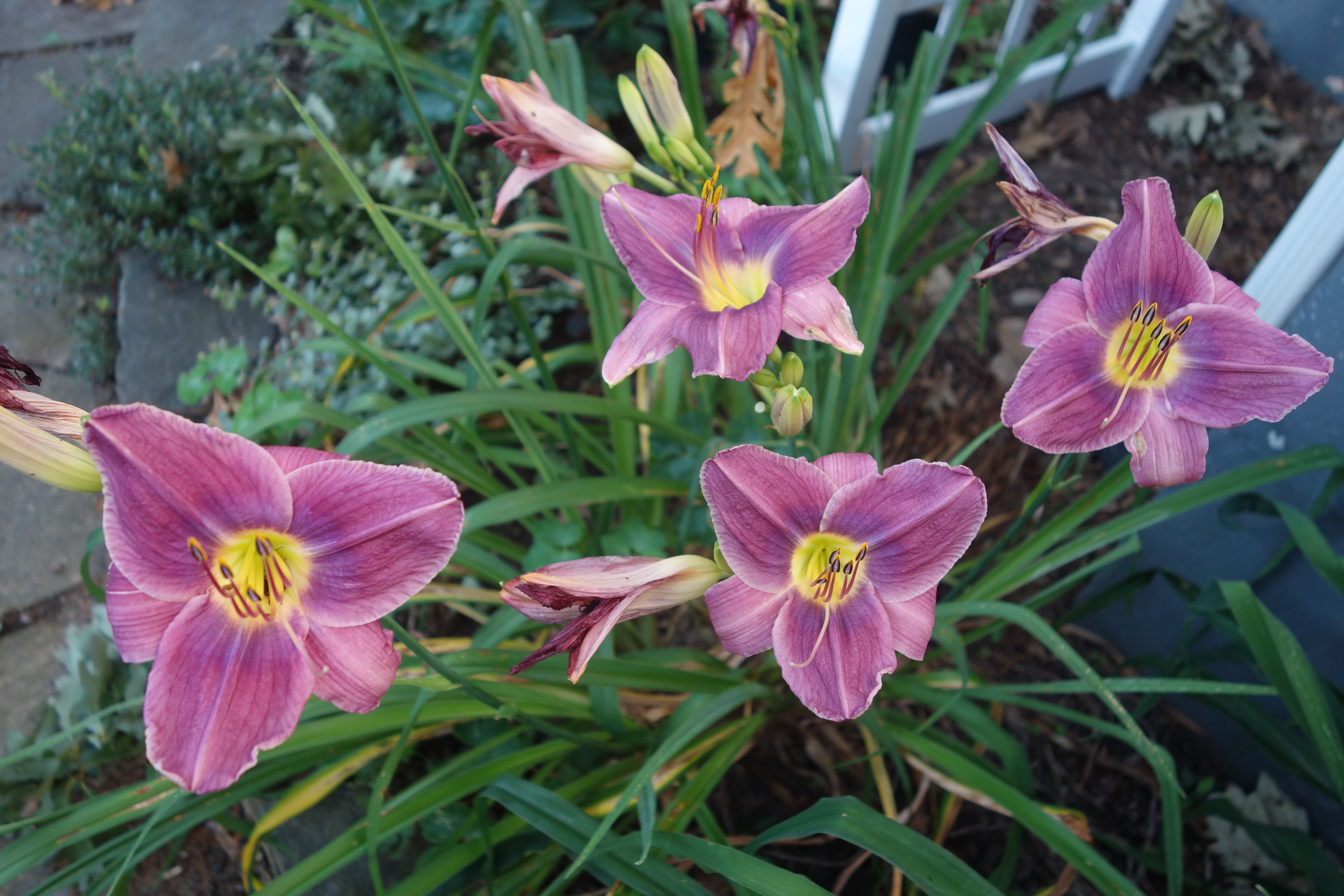
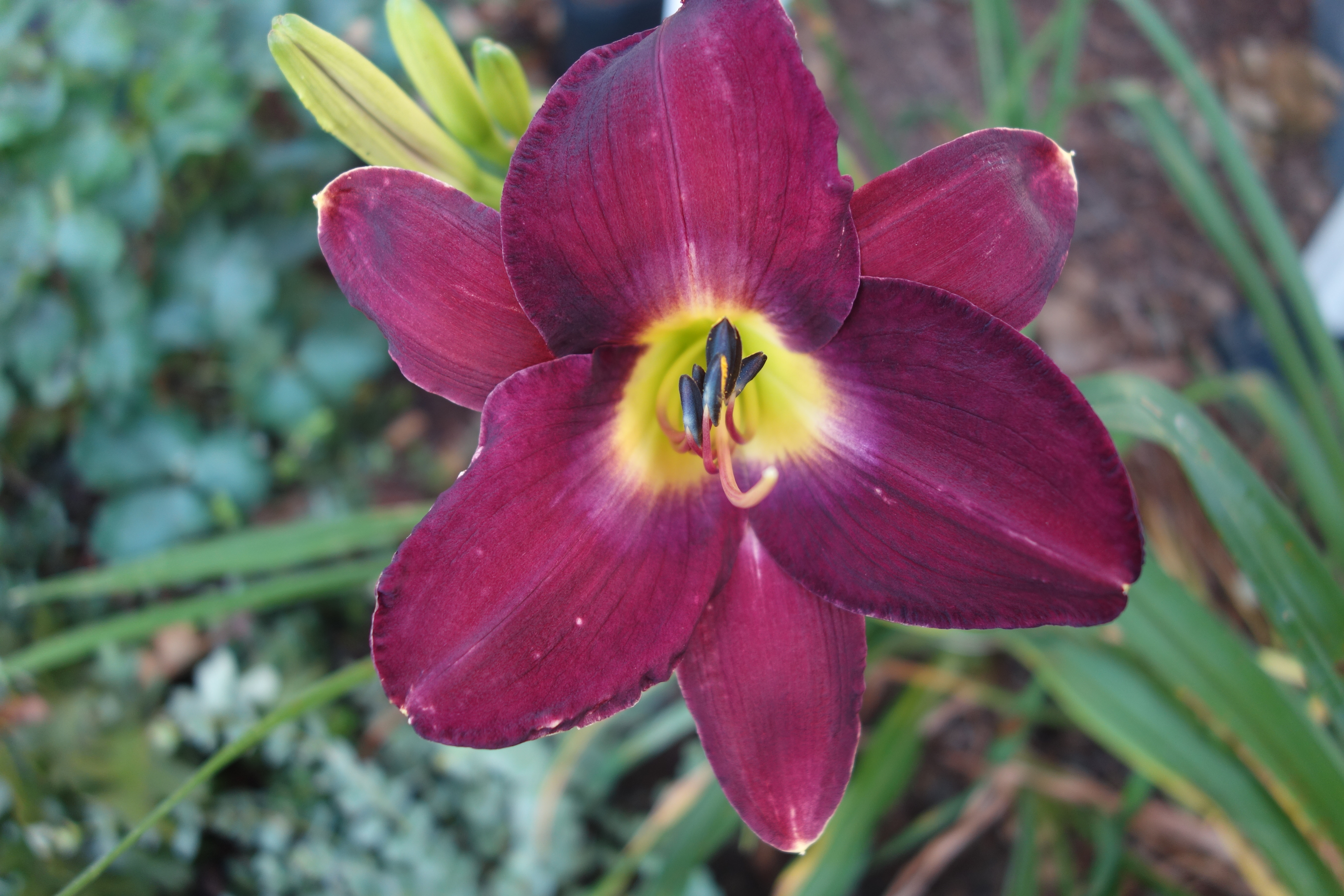
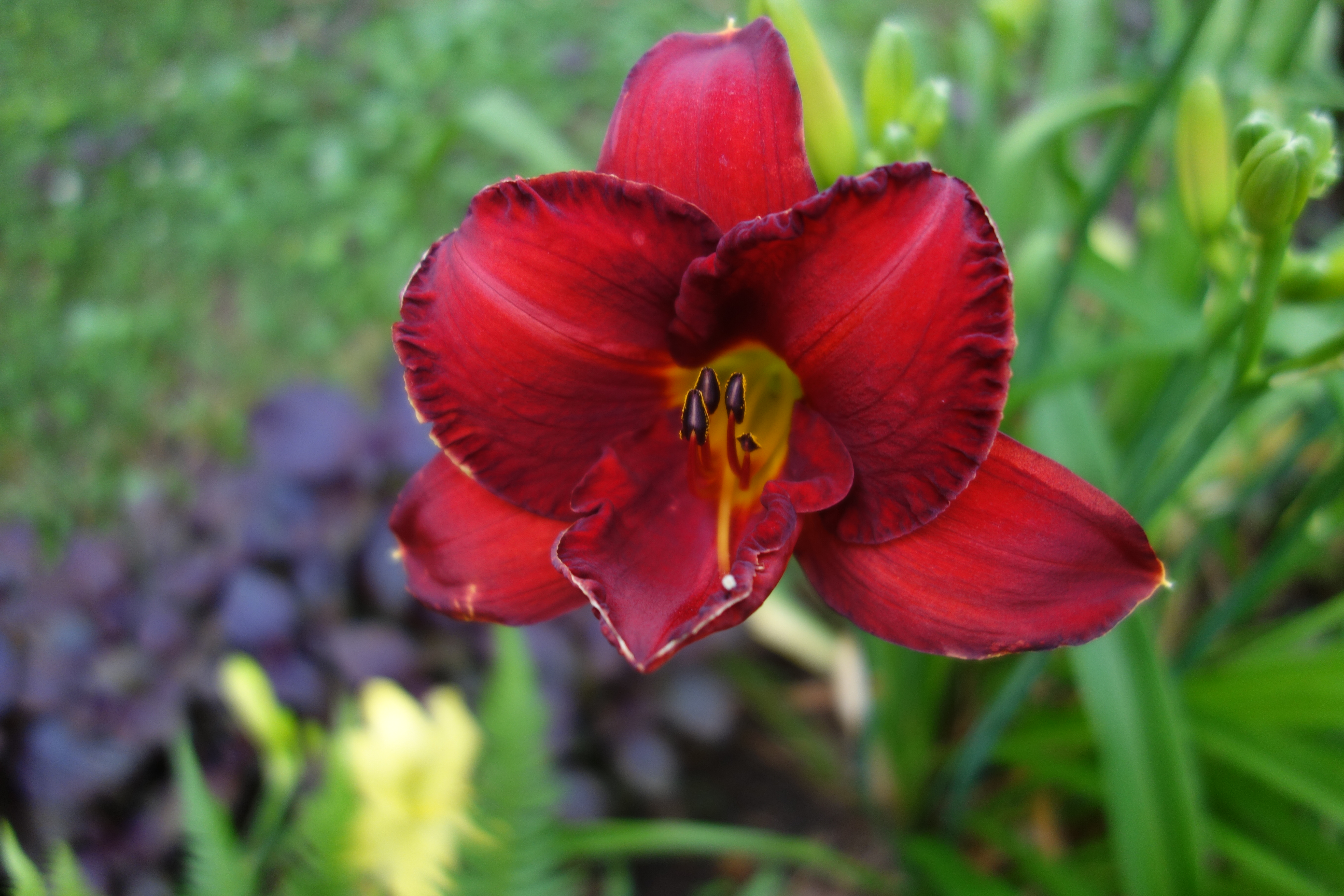
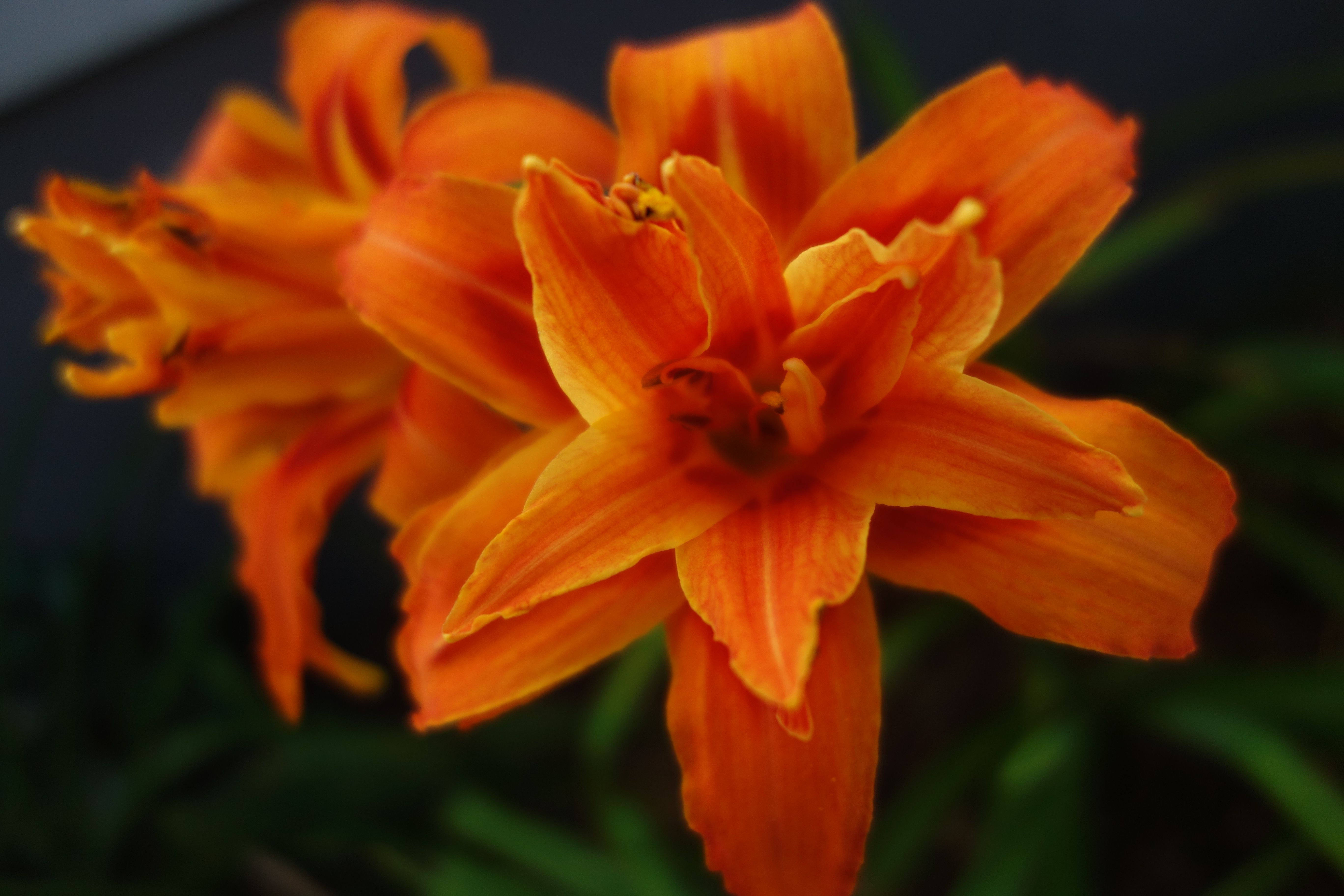
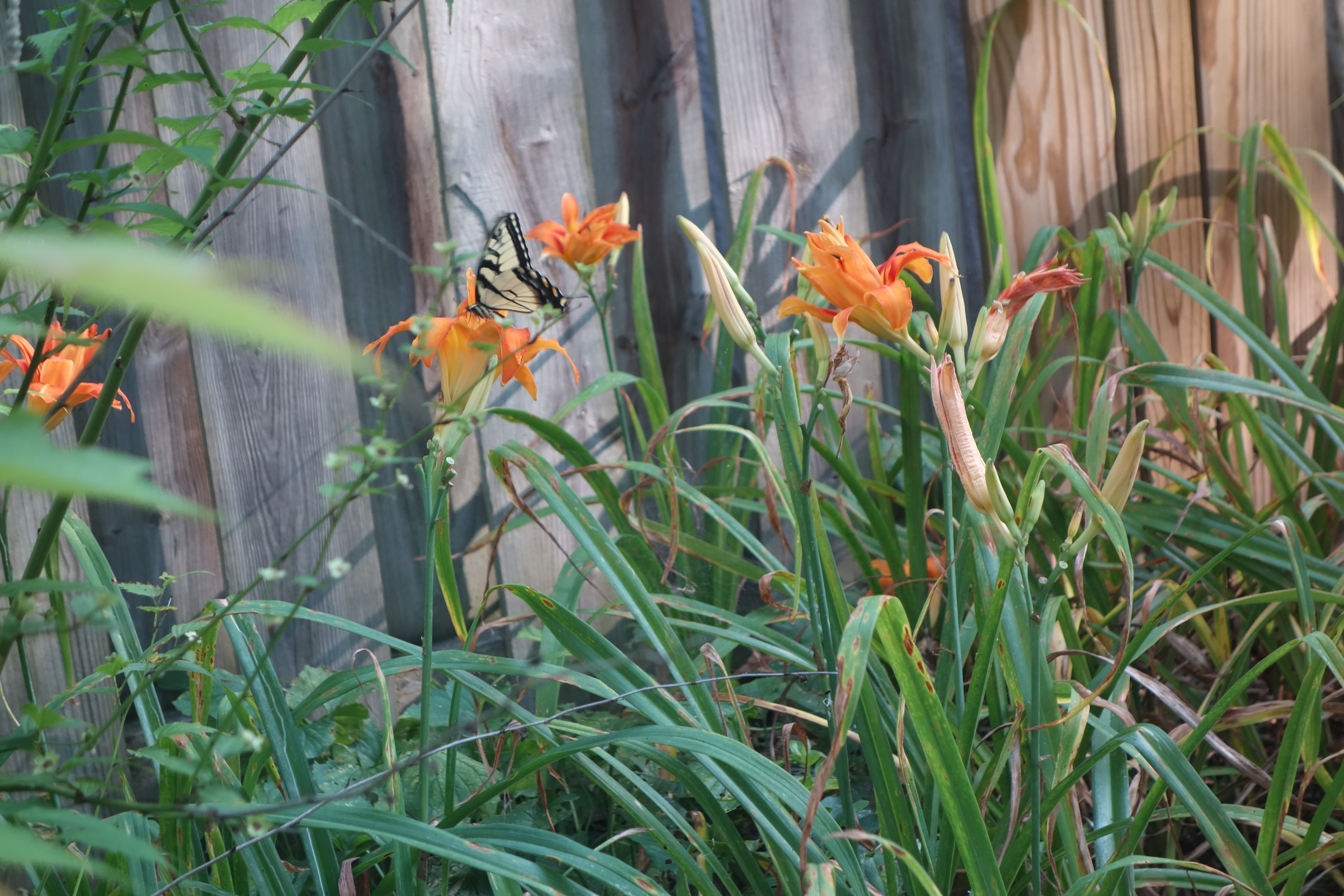
DSC01155But the muddy purples below are really not to my taste (though I will say that they are not quite that purple IRL).DSC01156 DSC01157This dark one above appeals to me, but I really swoon over these dark reds.gorgeous daylily DSC01178Then, of course, there are the double orange ones from Aunt Betsy.  They spread slowly but reliably and fill in the gaps.double orange daylilyThe butterflies do love them.butterfly

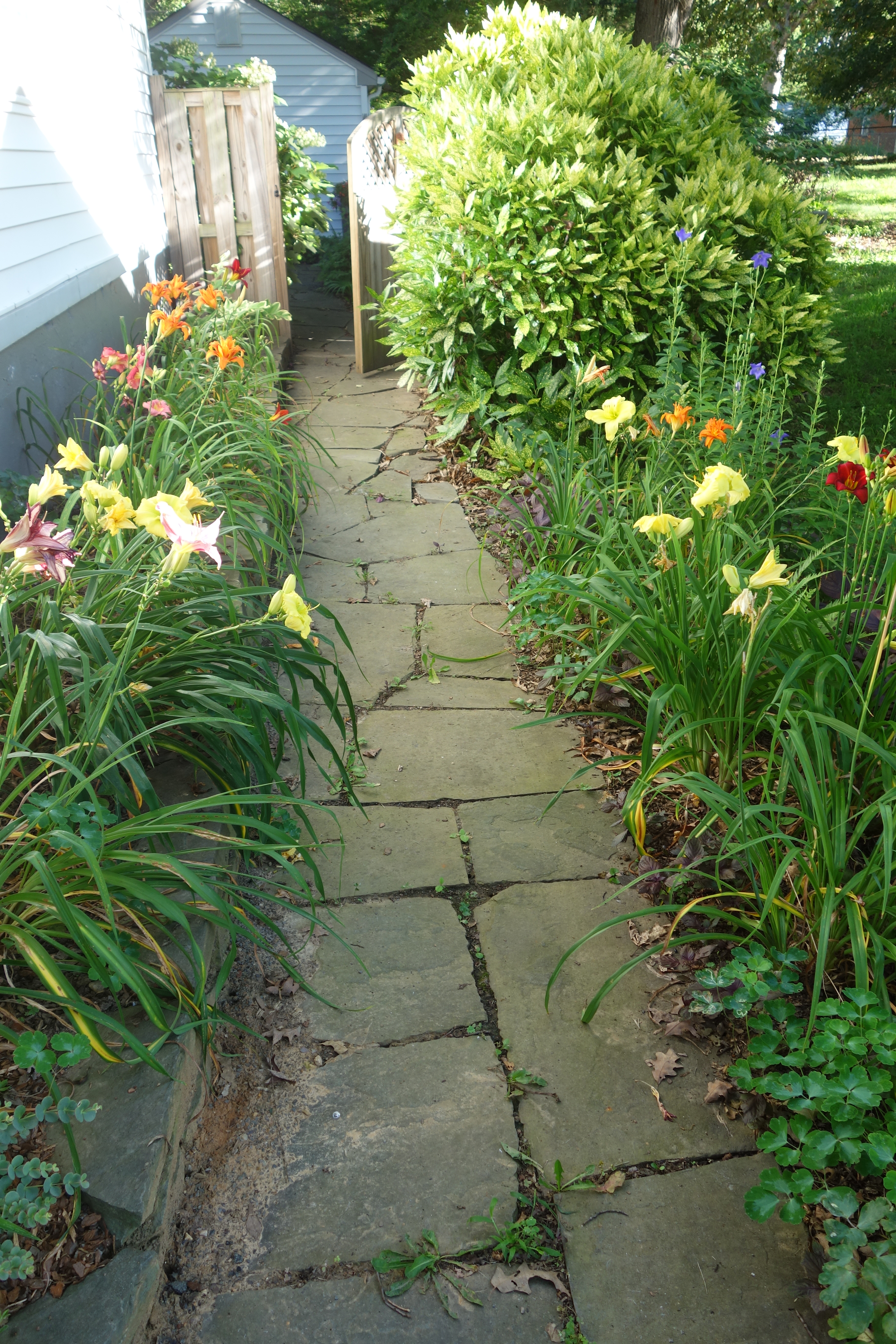
Along the fence in back I have a few pale yellows, possibly ‘Hyperion,” which I should transplant and/or order more of for this border.  It’s at its height around the  Fourth of July, so (note to self) could use more late-blooming varieties.  Here’s a look on July 7th.  Thank you, Anne Little, for suggesting that I transplant the balloon flowers here.  Their spikes of blue and white are the right height for the space and a terrific foil for the aucuba and the yellow-orange daylilies.walkway garden in bloom

Farewell to Brood II

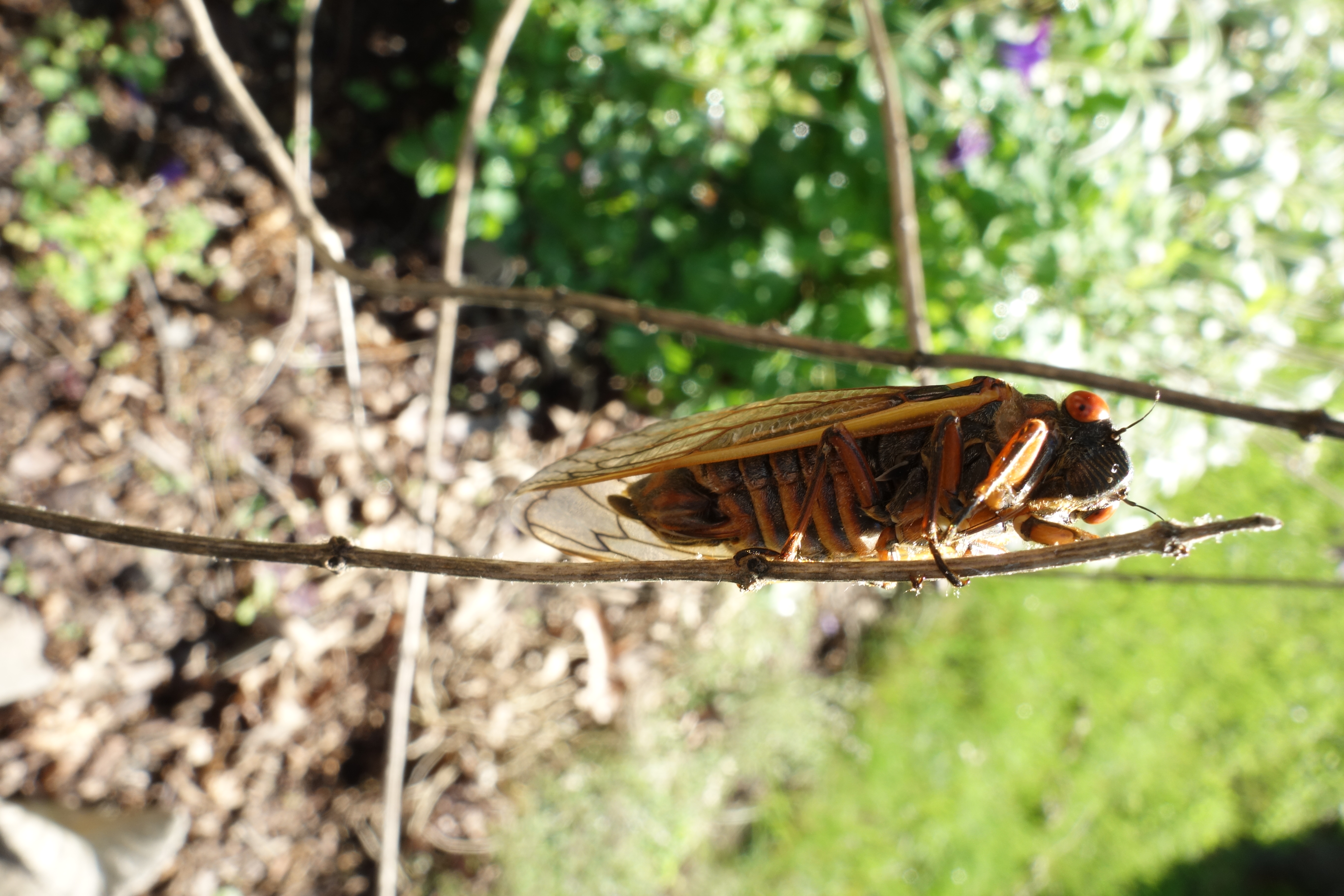
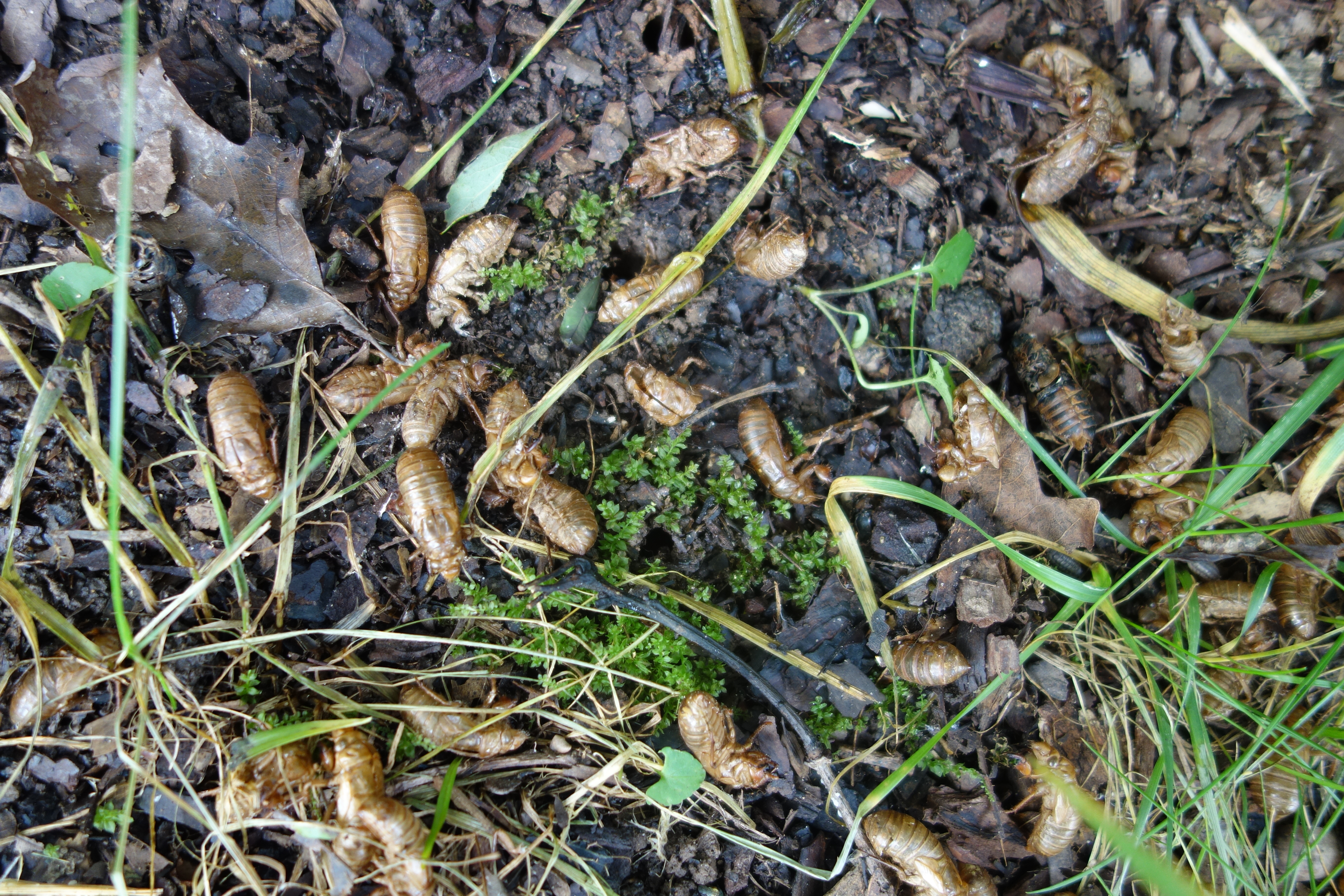
The cicadas were everywhere for a while, and then one day I realized that I could barely hear them any more.  What they left behind were their shells, the skins they slid out of after emerging from underground to enjoy their brief lives on top of the earth.

DSC00973 Are these alive or dead??DSC00974Of course, they made a lot of noise, as I posted back in May.  Here’s another video capturing the cacophony, this time in the shade garden.

Now all that’s left are their shells

more cicada shells

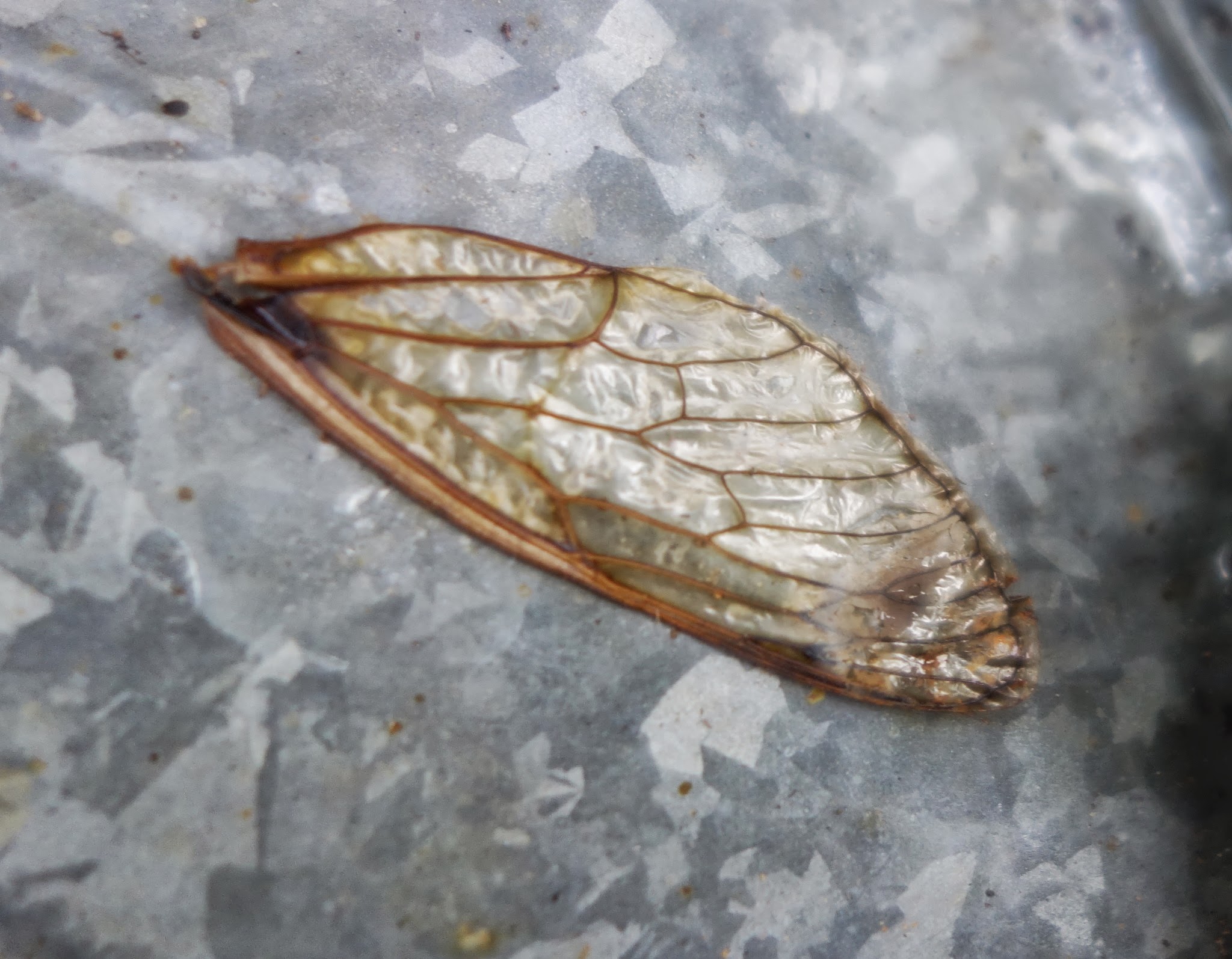
and a few wings: DSC01167See you again in 2030.