
One of the best things we did was to go on a Historical Walking tour. Here’s Donal, our guide, telling us about the Battle of the Boyne in the old Irish Parliament building. Notice how, like a real Dubliner, he prounounces his th’s as t’s.
We started out at Trinity College,  home to everyone from Samuel Beckett to JP Donleavy to Jonathan Swift. (See my review of Donleavy’s The Ginger Man here.)
 Gray buildings and beautiful trees made up the campus, and soon we we were walking into town. We started at the old Parliament building (see above) which now houses a bank. The tour guide was clearly still outdone that the Parliament had dissolved itself in 1800 so that the English could take over.
He took us down Parliament Street and into Dublin City Hall, a beautiful Georgian building that figured largely in the Easter Uprising of 1916. We snuck into the rotunda, set up for an afternoon wedding, and admired the murals.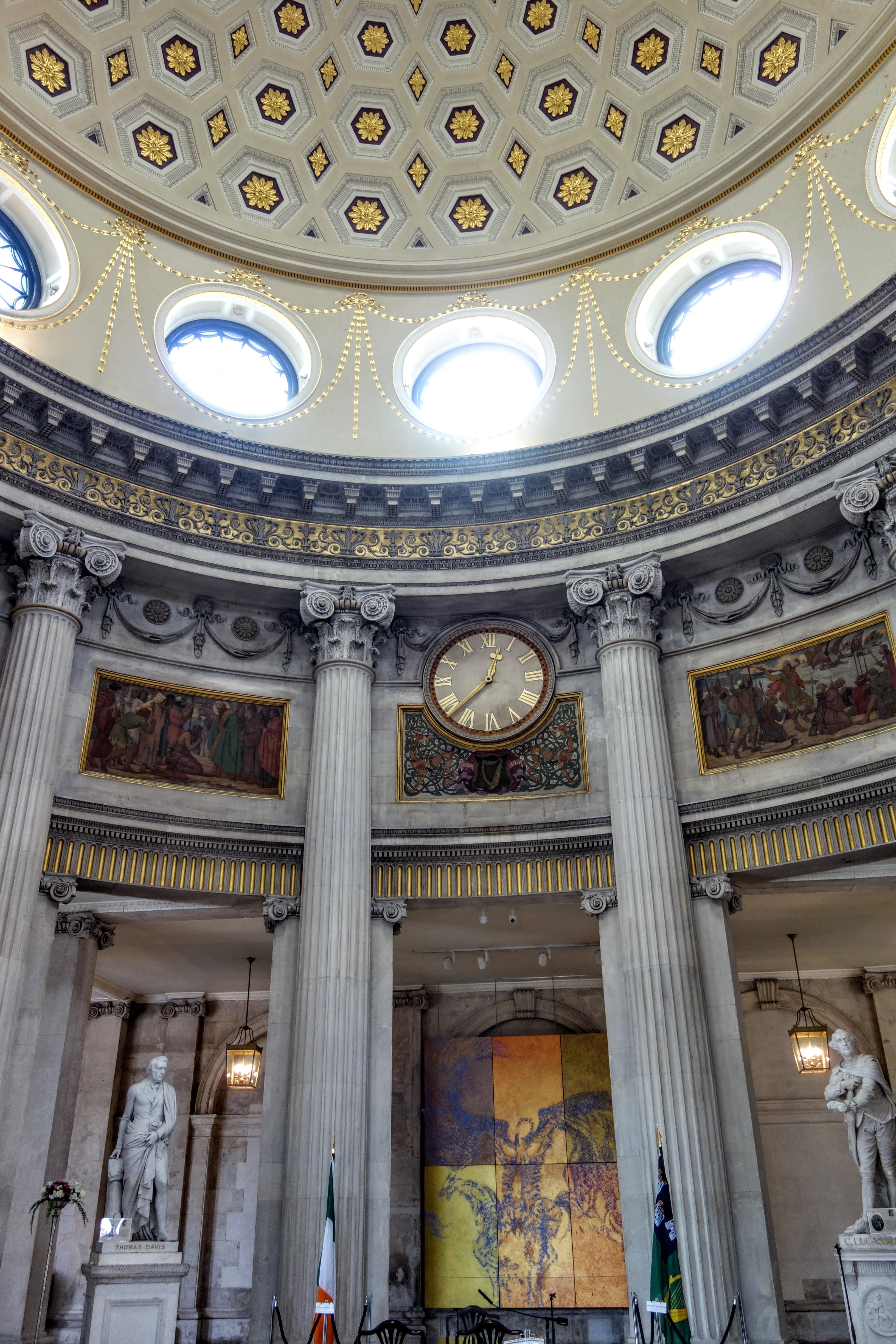 Next up was Dublin Castle, which we were not too excited about since it is not worth touring. But pity our ignorance, because in fact it was the home of the British government in Ireland and thus heartily despised. Here’s the famous statue of Justice,
 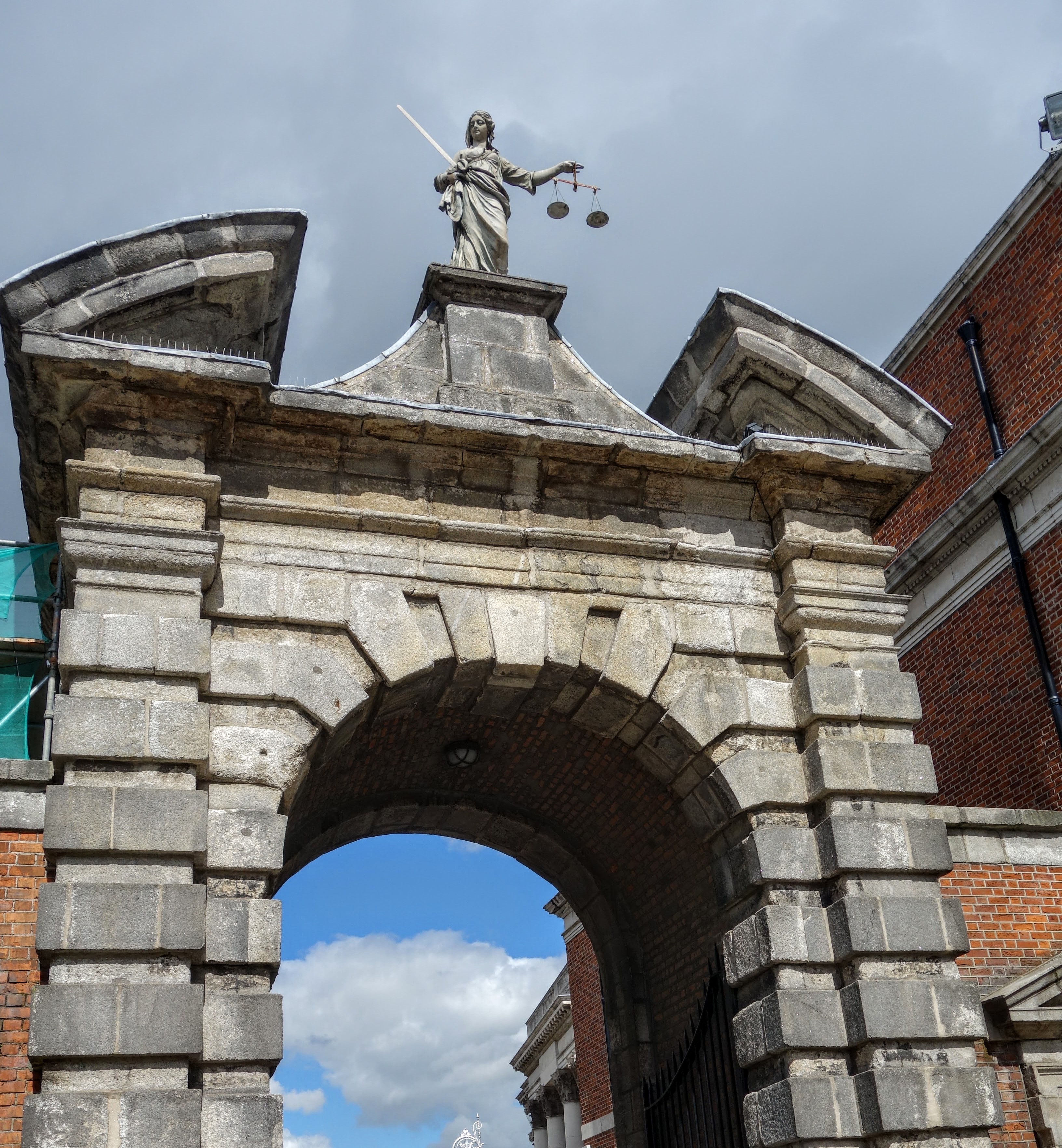 which faces into the courtyard of the Castle, giving rise to the ditty, “The Statue of Justice, mark well her station, her face to the castle and her arse to the nation!” Our guide invoked the feelings of all involved as we faced the gate and imagined the fighting that raged here on Bloody Sunday 1920 when three IRA members were killed.
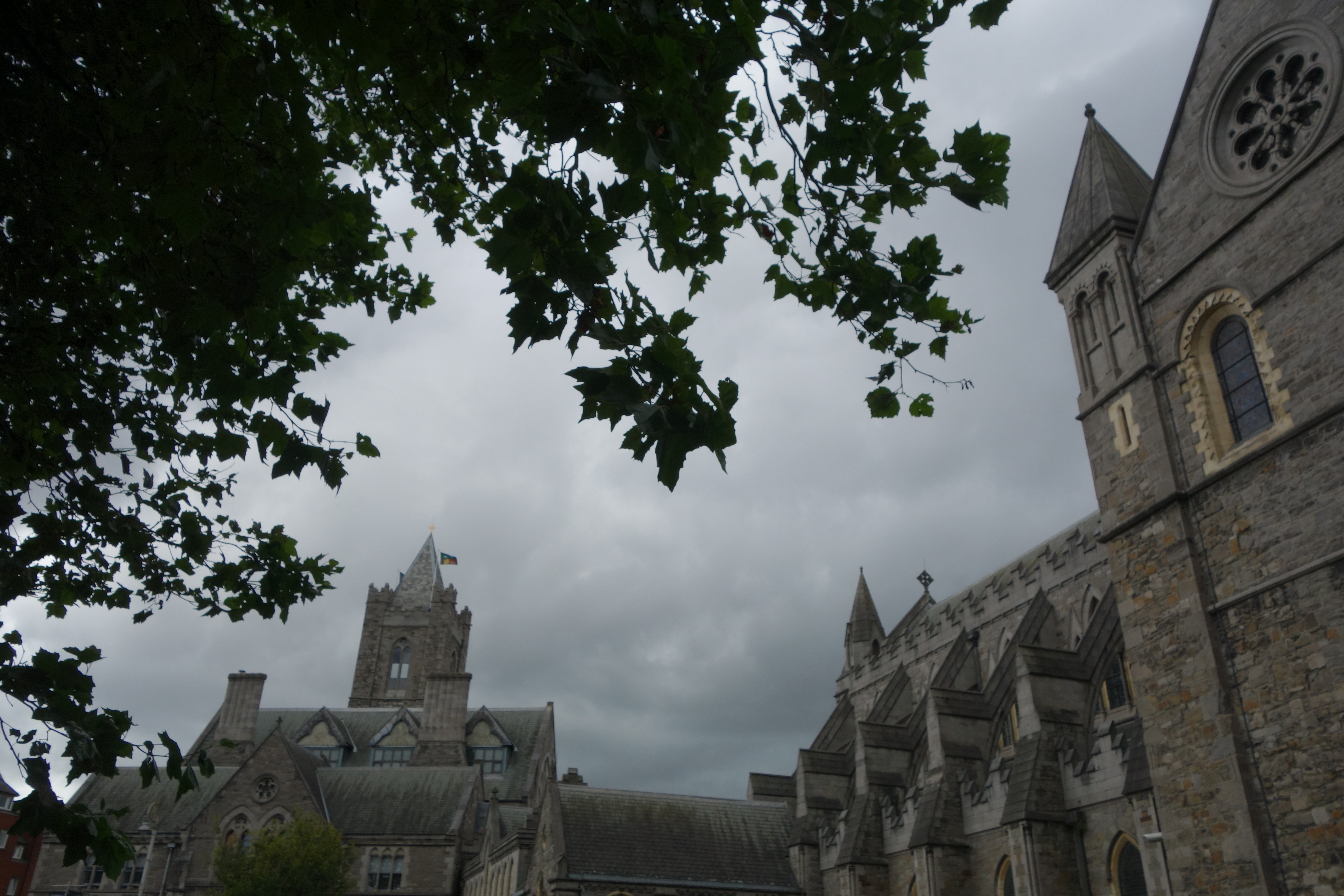
When Donal left us at Christchurch Cathedral, we were filled with more knowledge of the Irish struggle than we had ever had (and have since mostly lost, sadly) and were eager for more. At his encouragement, we decided to visit Kilmainham Gaol, where so many Irish political prisoners were imprisoned, tortured and killed.
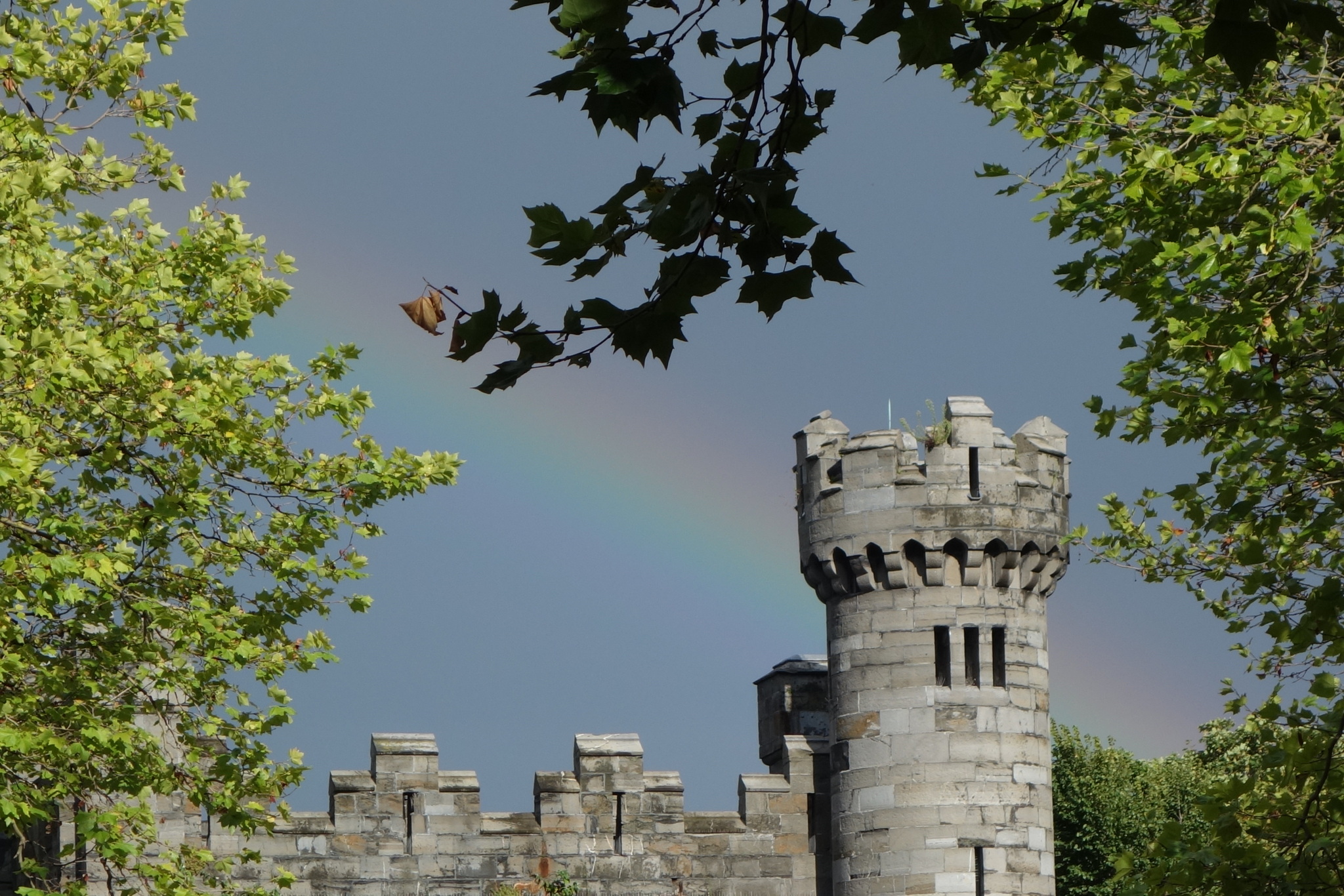 This is not actually the gaol but a view of the Irish Museum of Modern Art across the way. After our visit we needed this rainbow.
The guide was not a great storyteller, but his low-key presentation was just right for the terrible stories he had to tell. Follow the link above for the details.
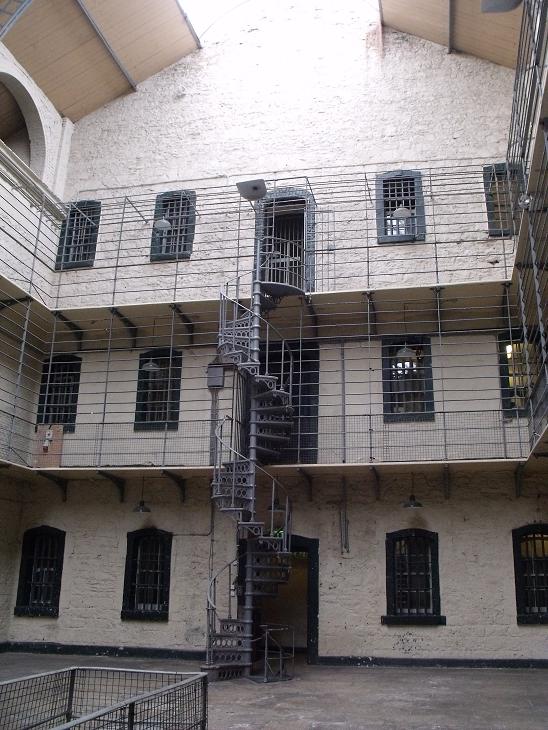
The cells were tiny and dark, leading off long, straight corridors, incredibly depressing. This section was the relatively airy second floor of a newer part of the gaol.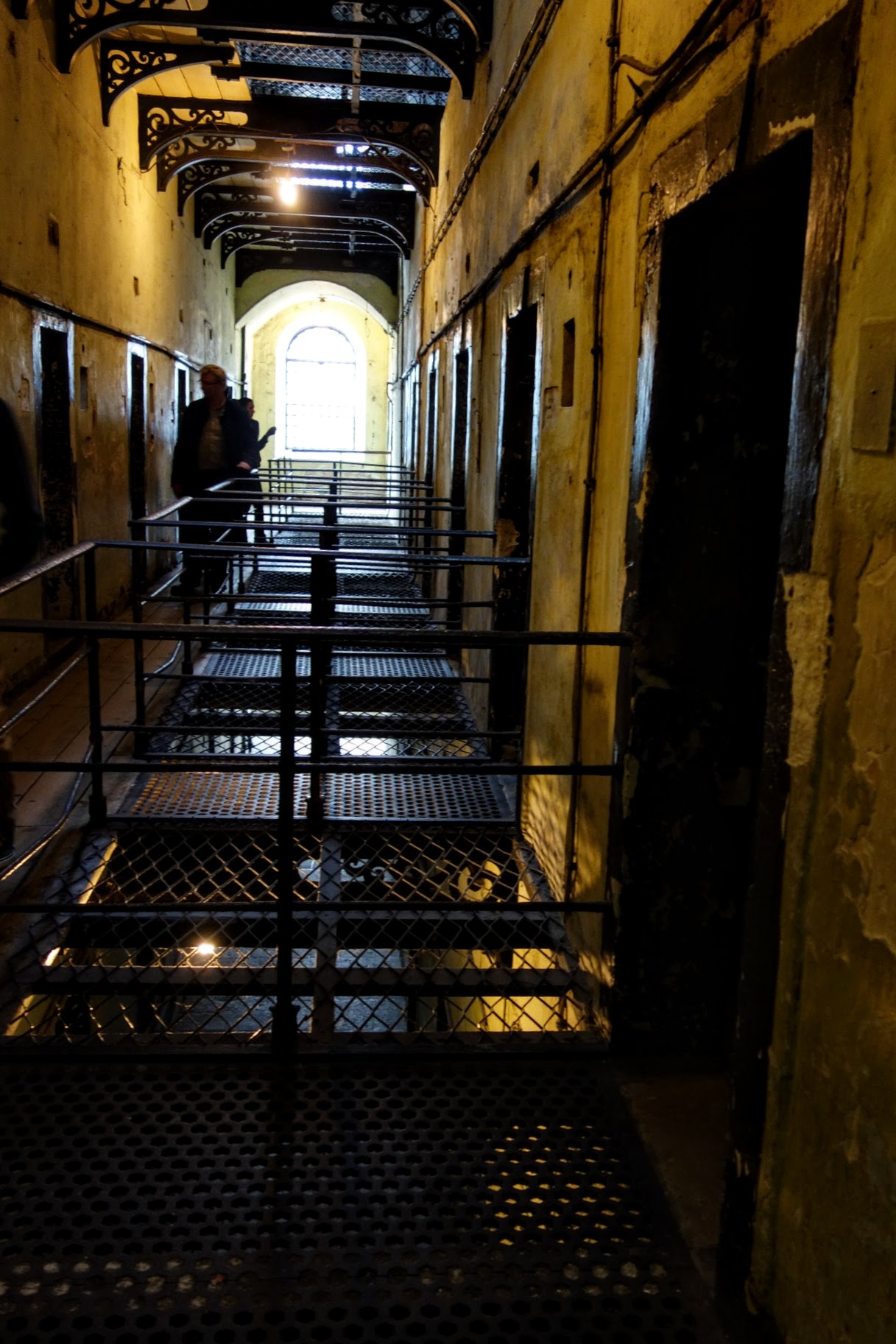 Here is someone else’s picture of the main part of the gaol, where the prisoners could occasionally walk around.
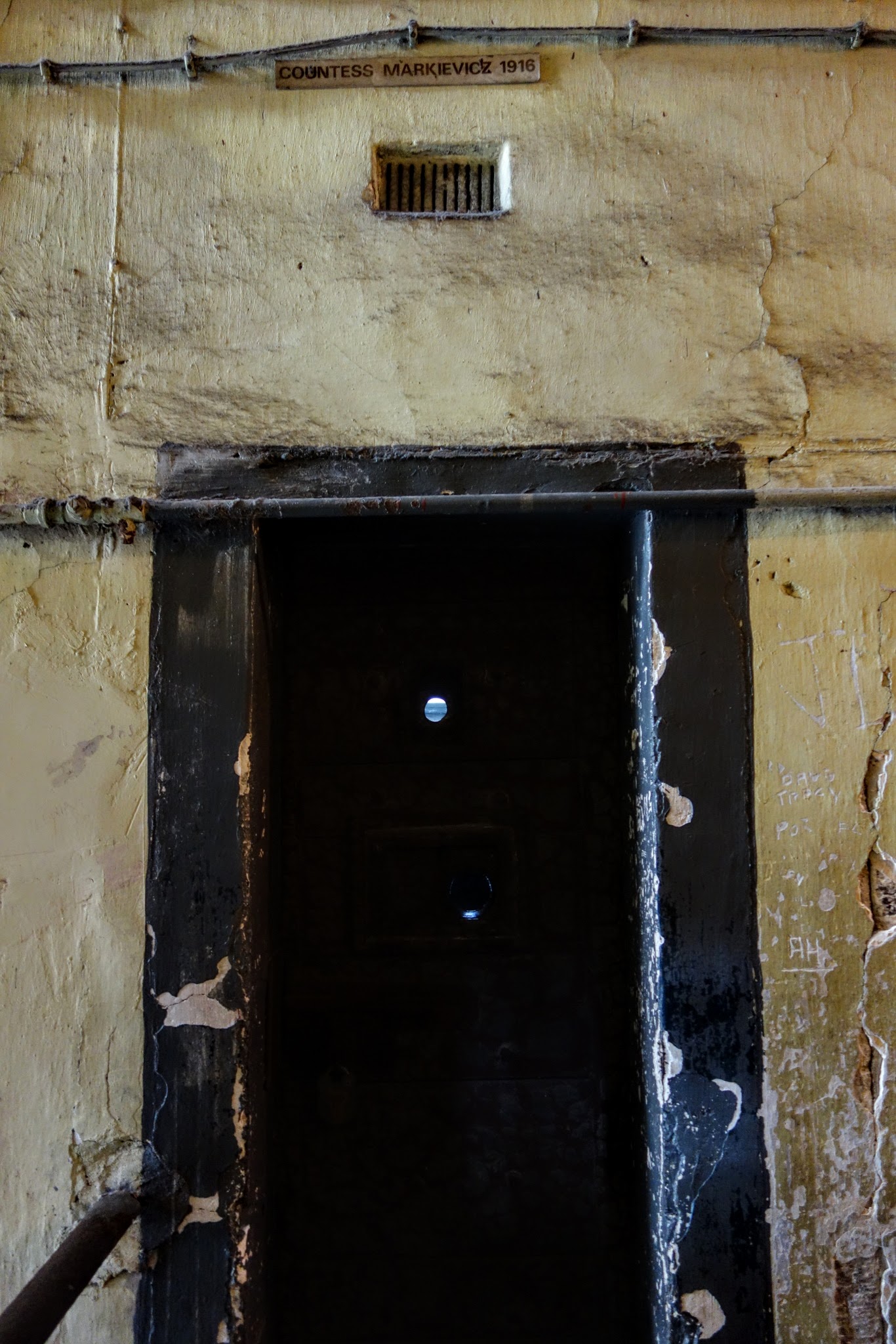
  Some of the cells are now marked with the names of the more famous prisoners, this being the cell where the Countess Markievicz was held in 1916. She was an Englishwoman who married a Polish count and was active as a suffragist as well as a member of Sinn Fein.
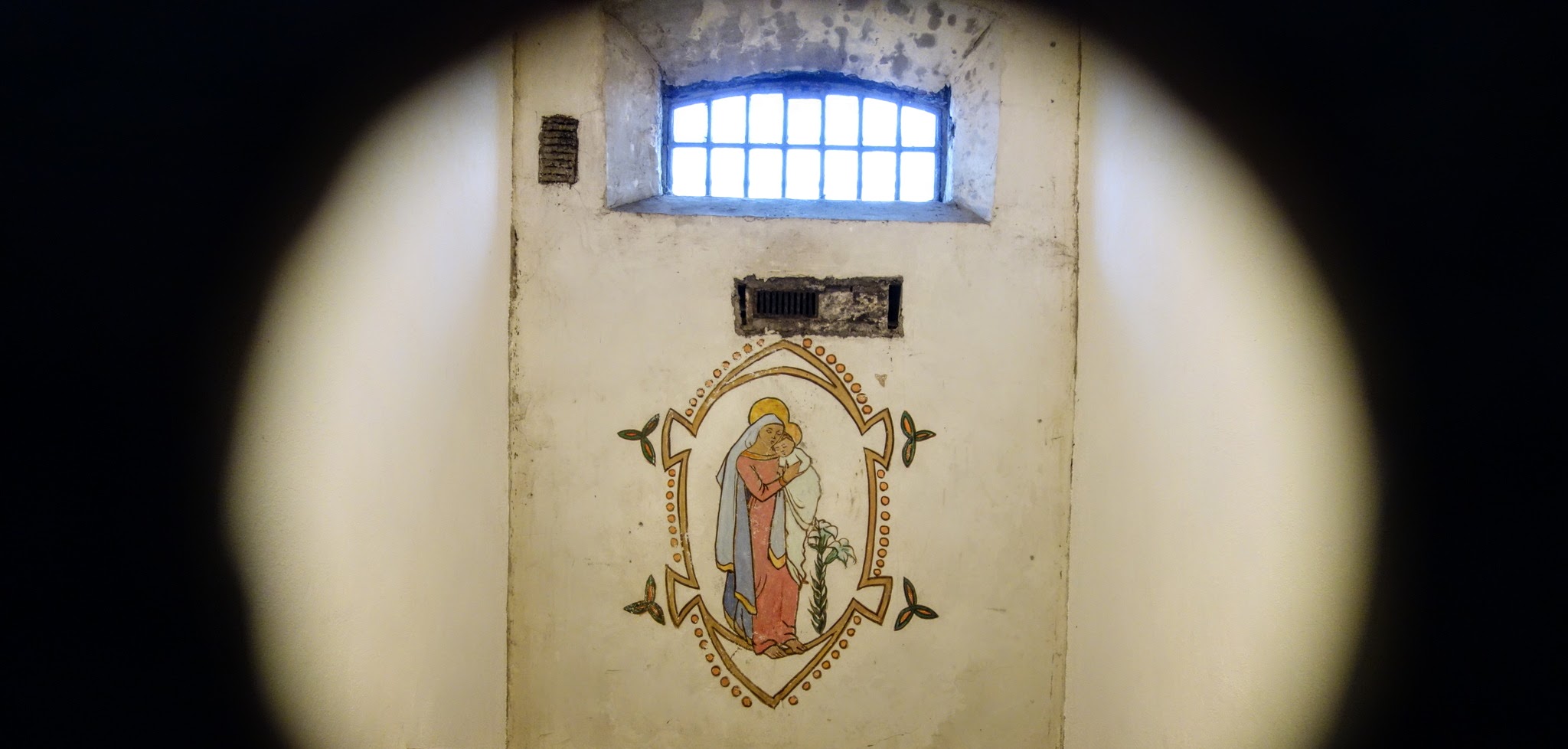
 Peering through the peephole in one of the cells revealed this painting by Grace Plunkett, who married her husband only hours before he was executed.
 But most chilling of all was the visit to the place where prisoners were executed, one so weak and wounded that he had to be tied to a chair so that he could be gunned down. This was very moving, and appropriately, it began to mist while we stood there.
 A tragical history indeed, and I am so glad we learned more about it.
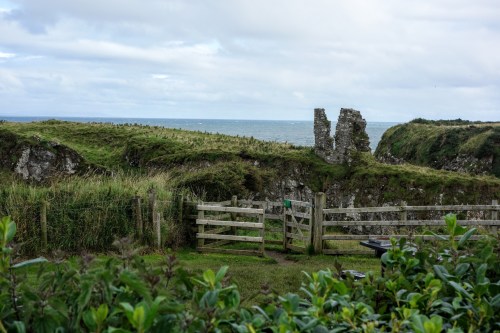 Since this is NOT a hiking trip, I booked a guide to lead me along the coastal path. Paul was a quietly congenial man who guides during the season, has a “minor job,” and enjoys his free time otherwise. He proposed a route from Dunseverick Castle to the Giant’s Causeway, a distance of about five miles along clifftops and up and down. It was spectacular.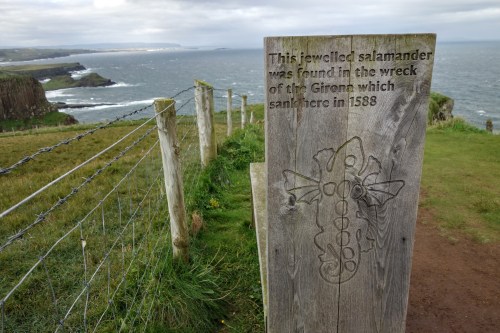
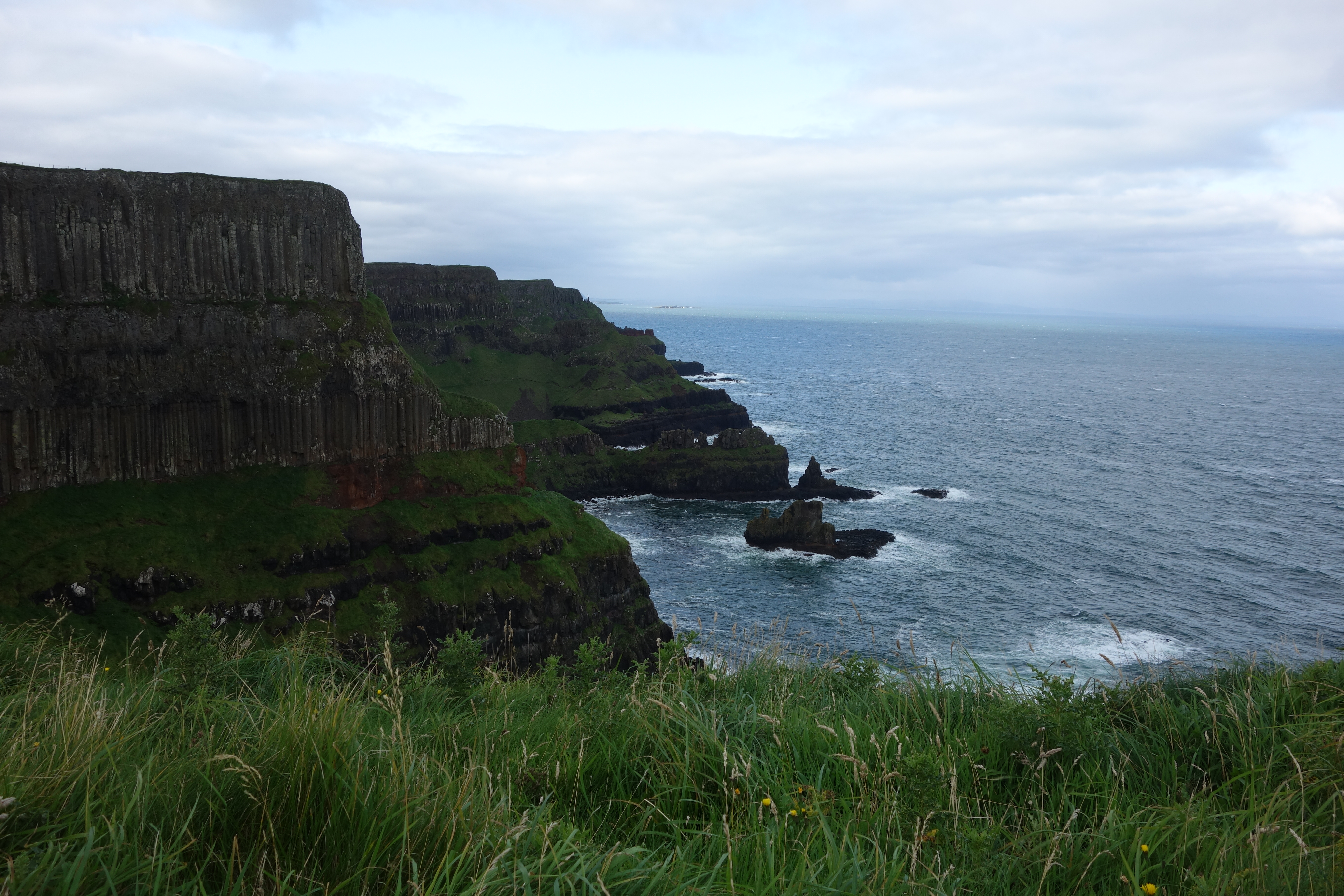
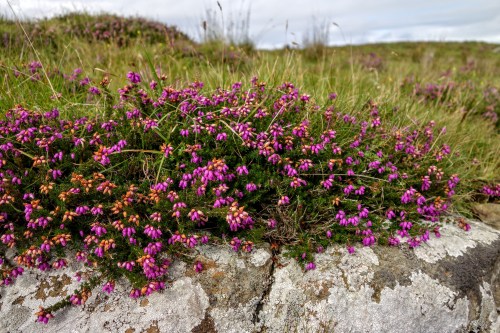
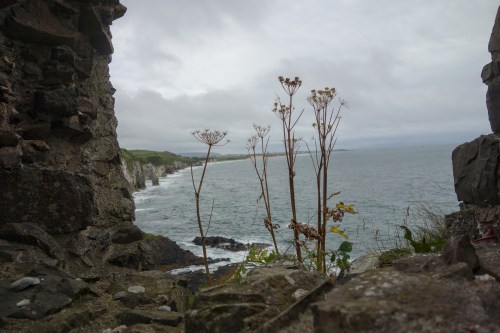 Fulmar, black-backed gulls, gannets, cow parsley, two kinds of heather (bell heather and ling), herb Robert, eye-bright, thistle, scabious, and on and on. Of course, a month or so ago we would have seen much more, but this was a delight.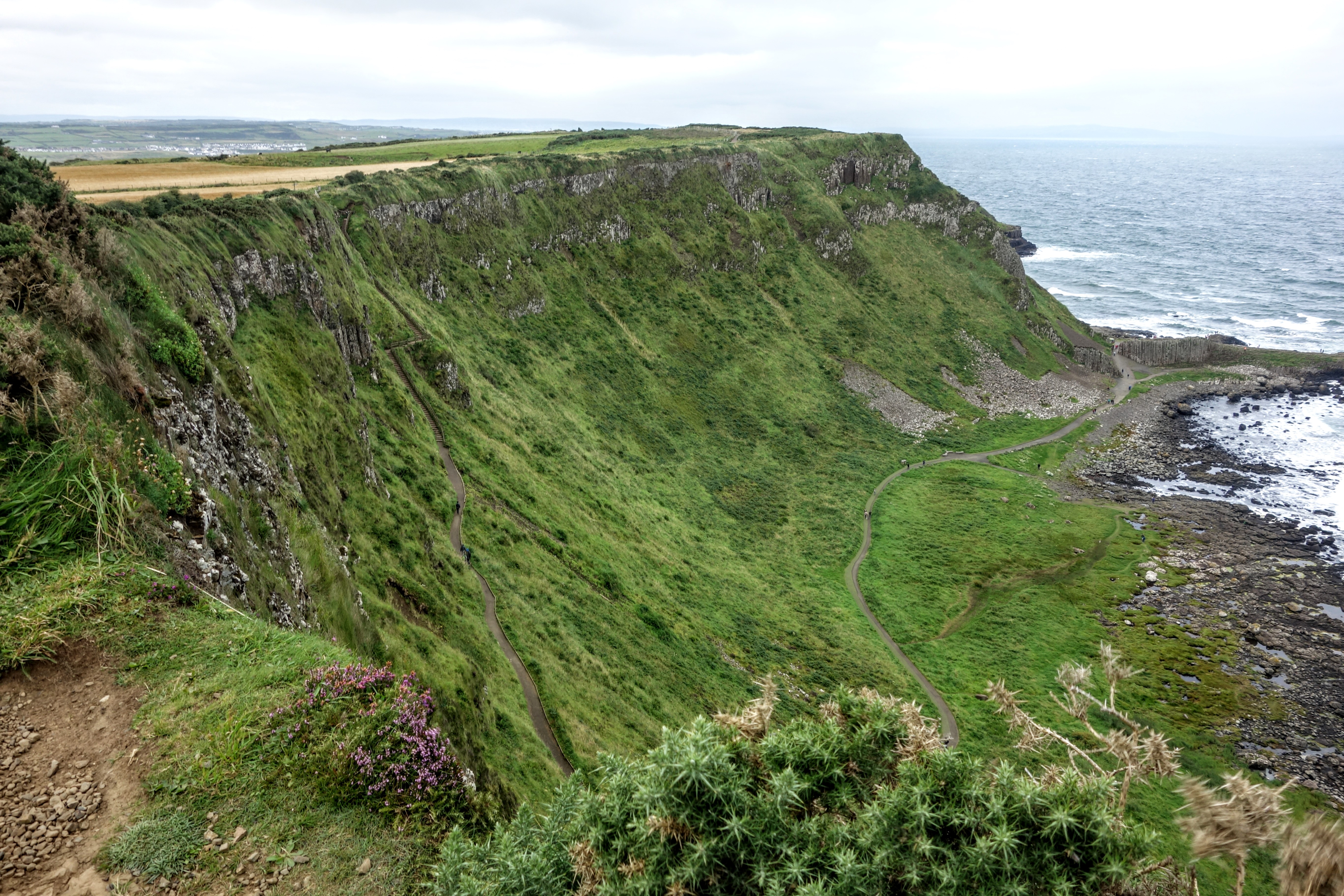
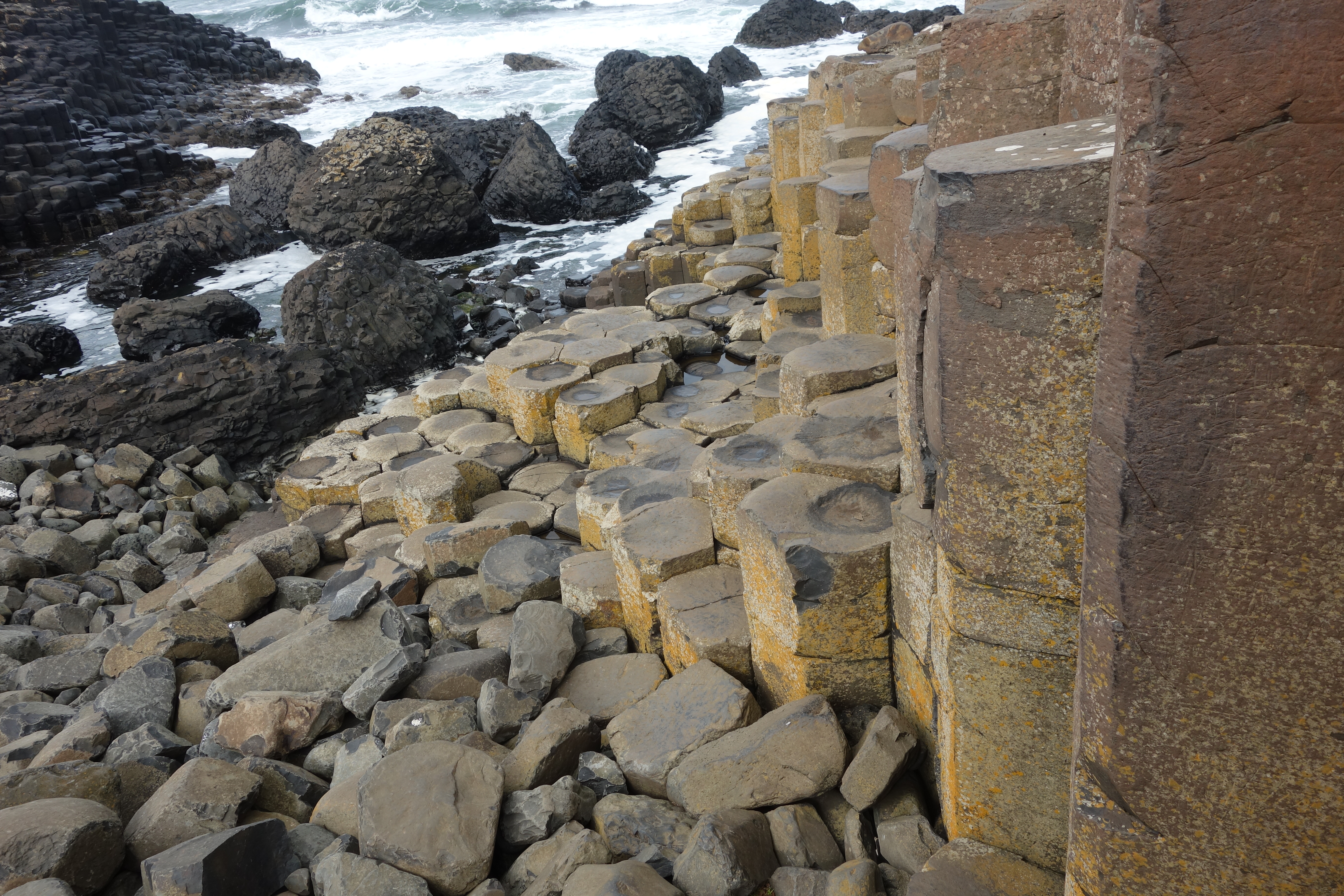

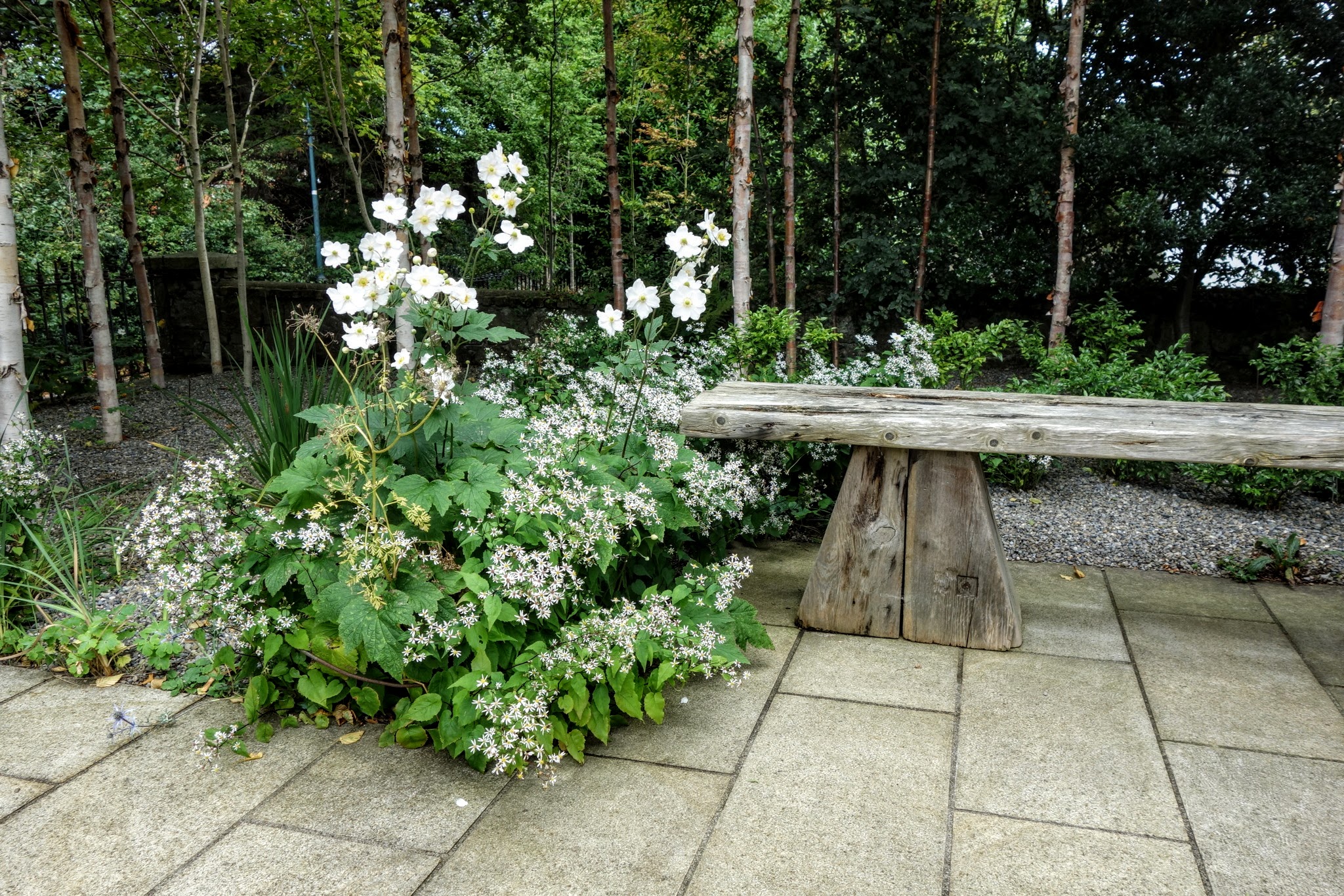
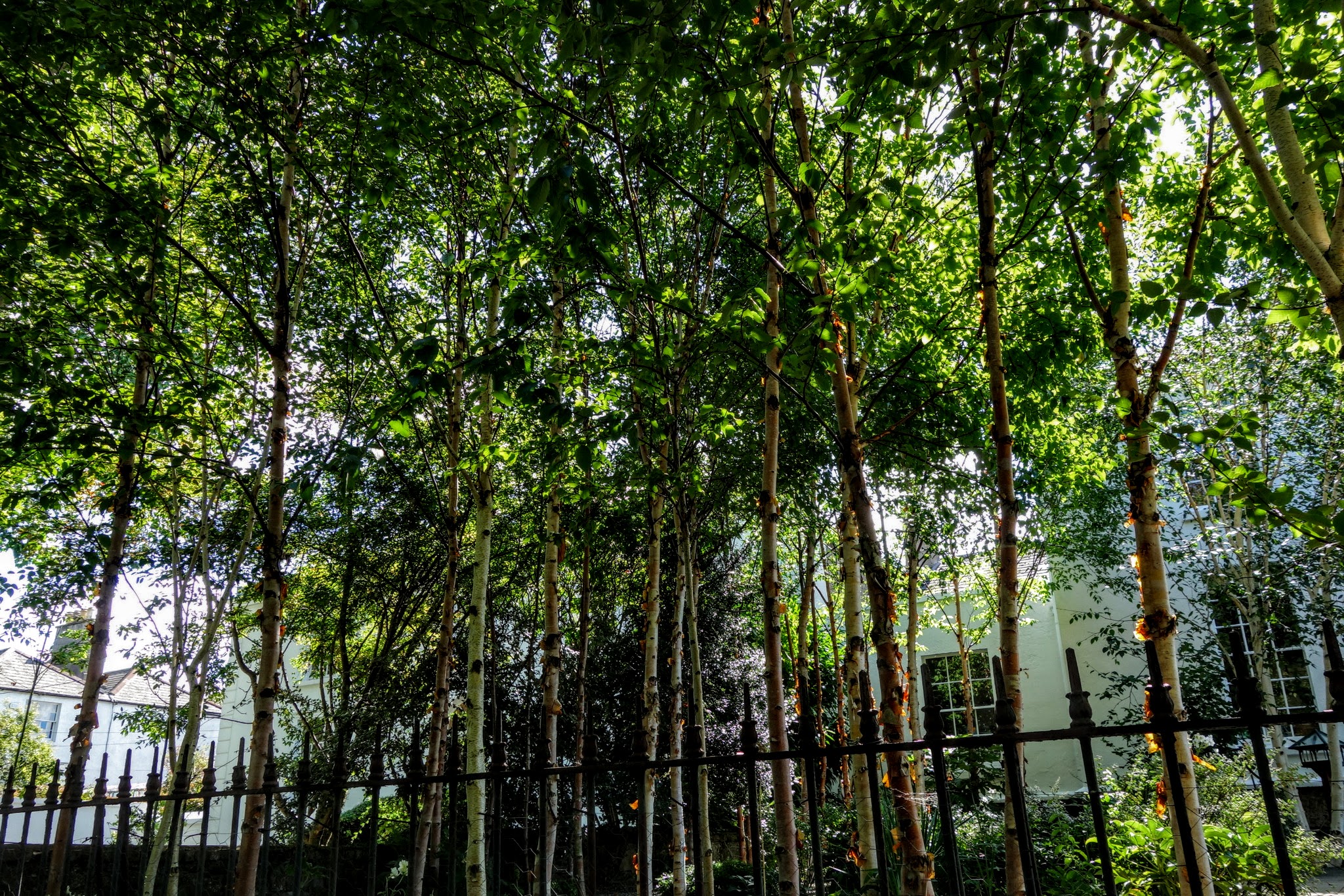
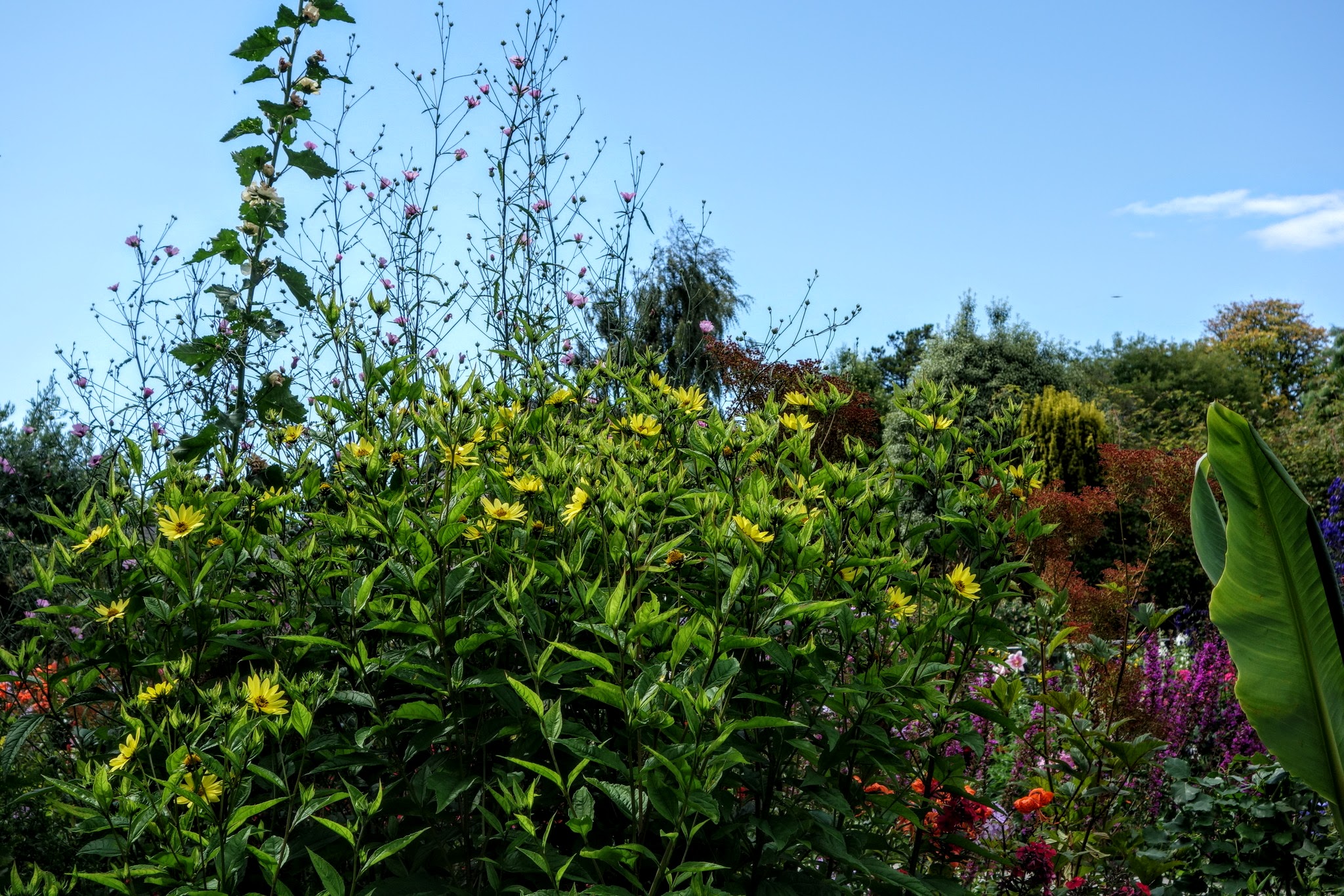


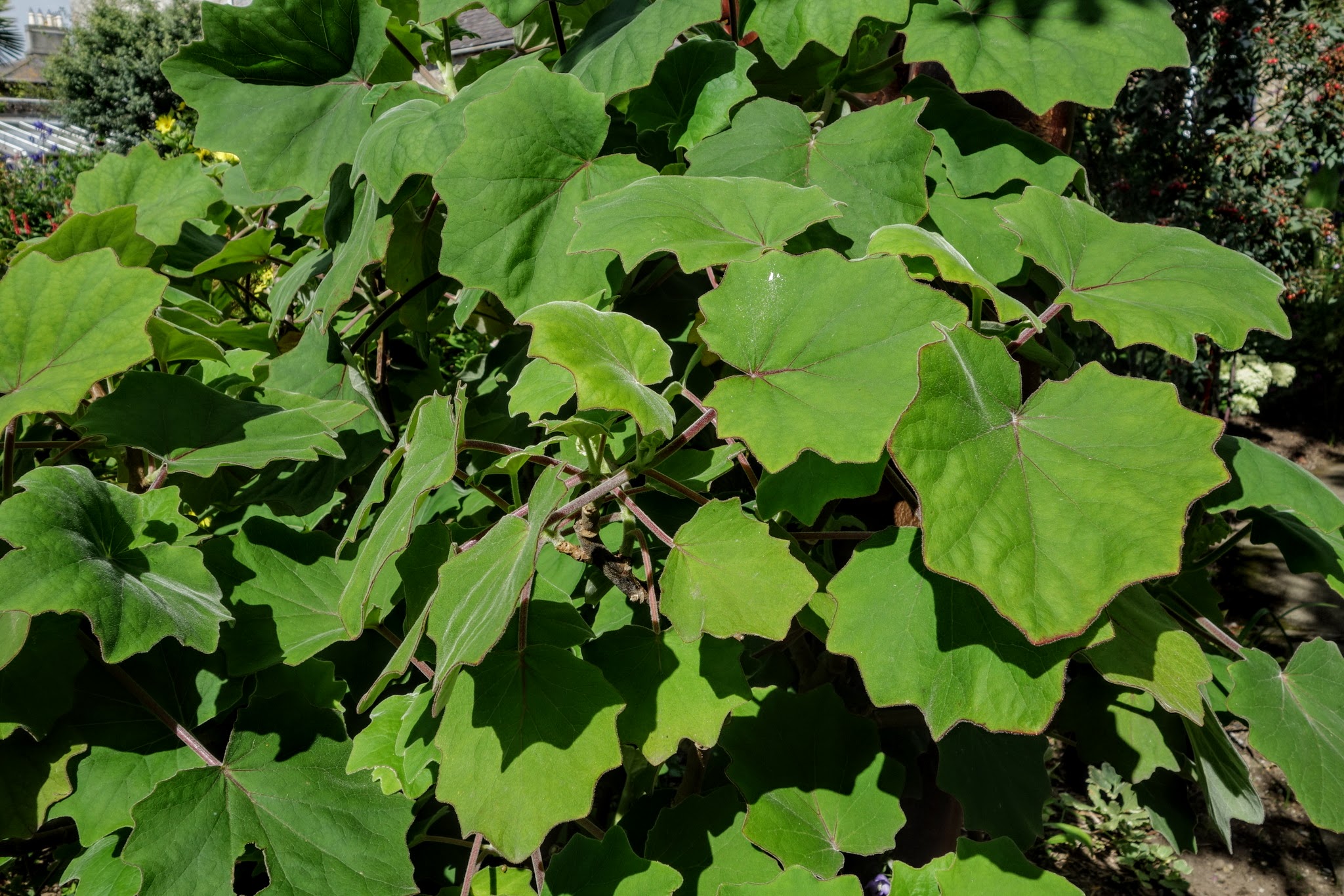



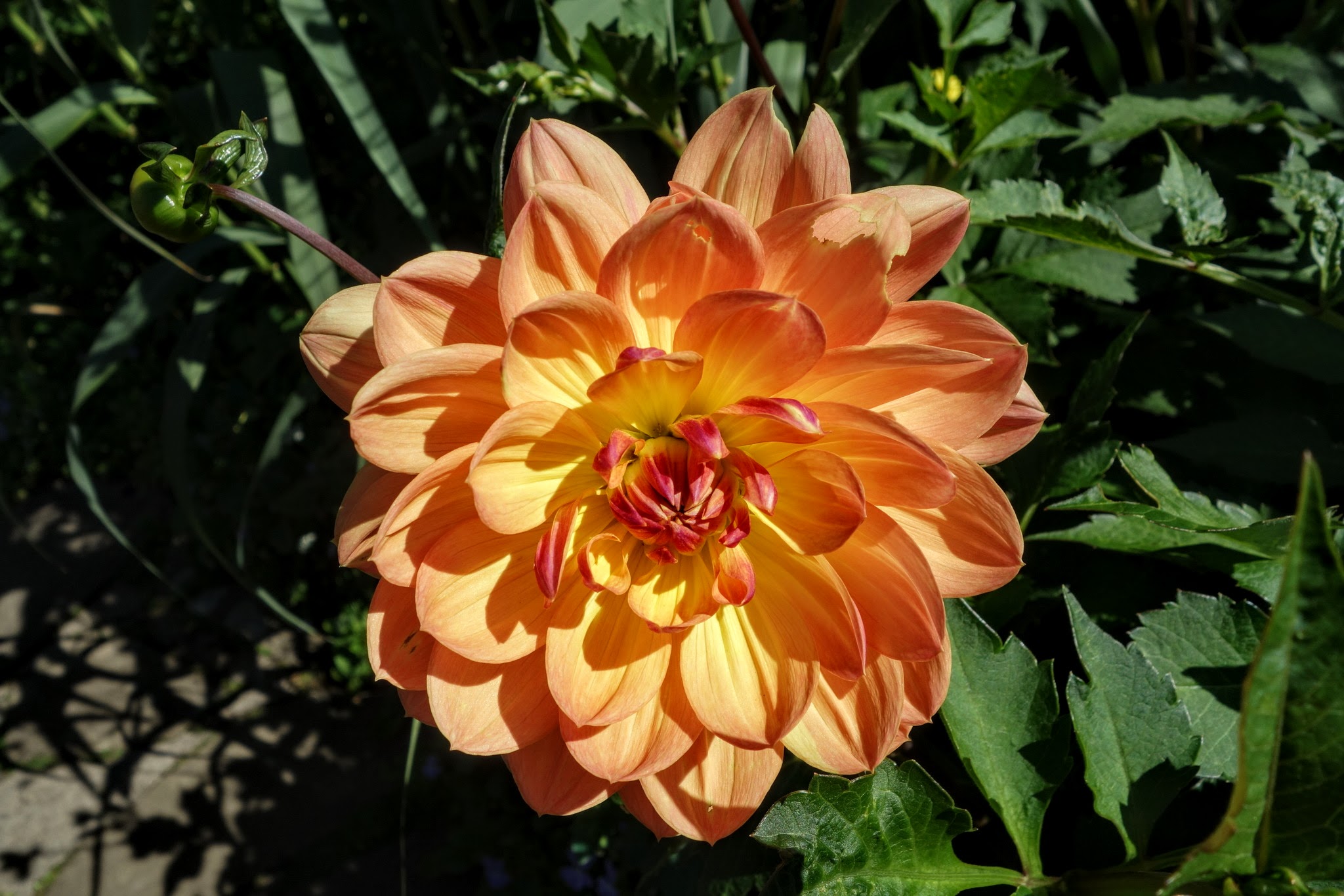


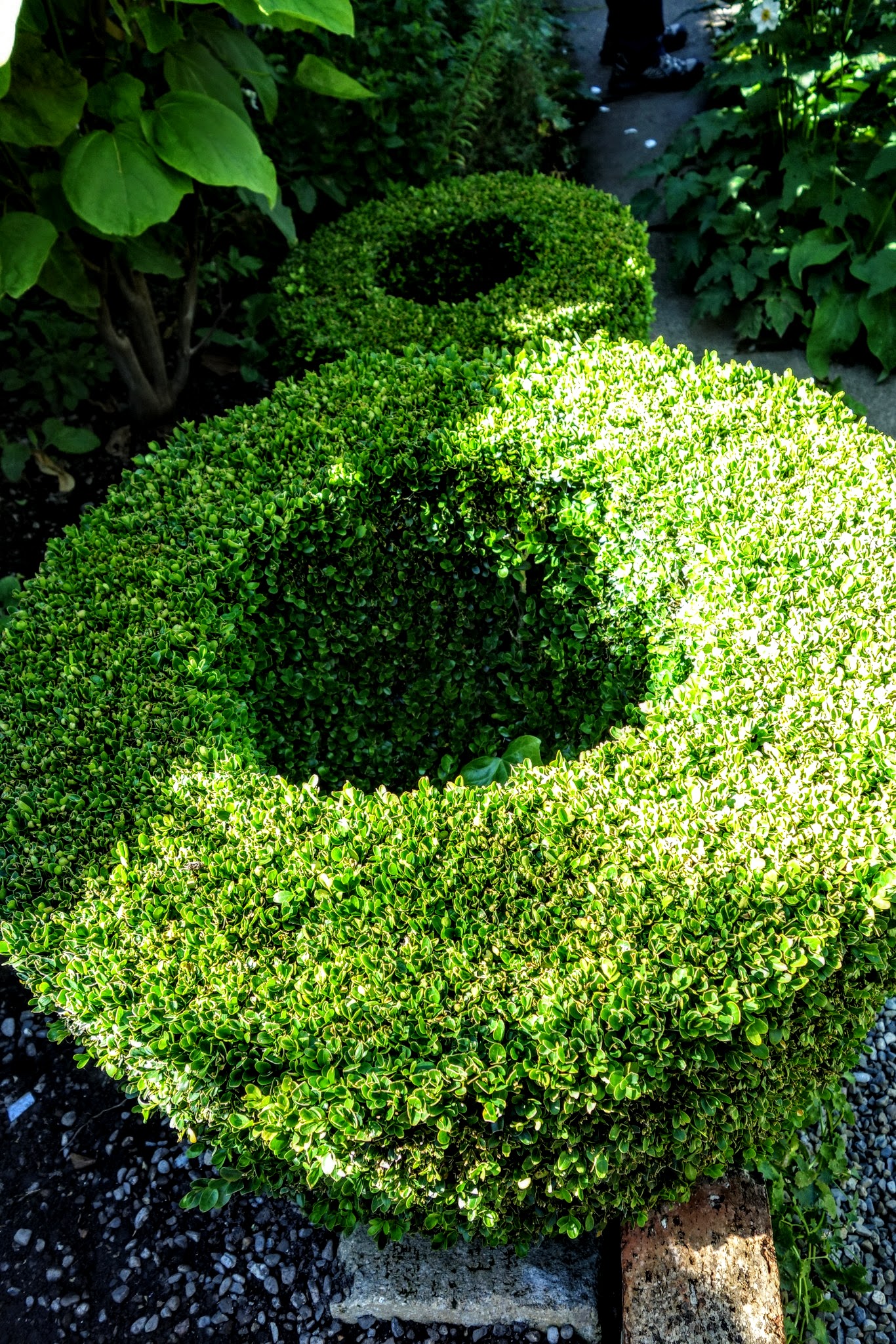
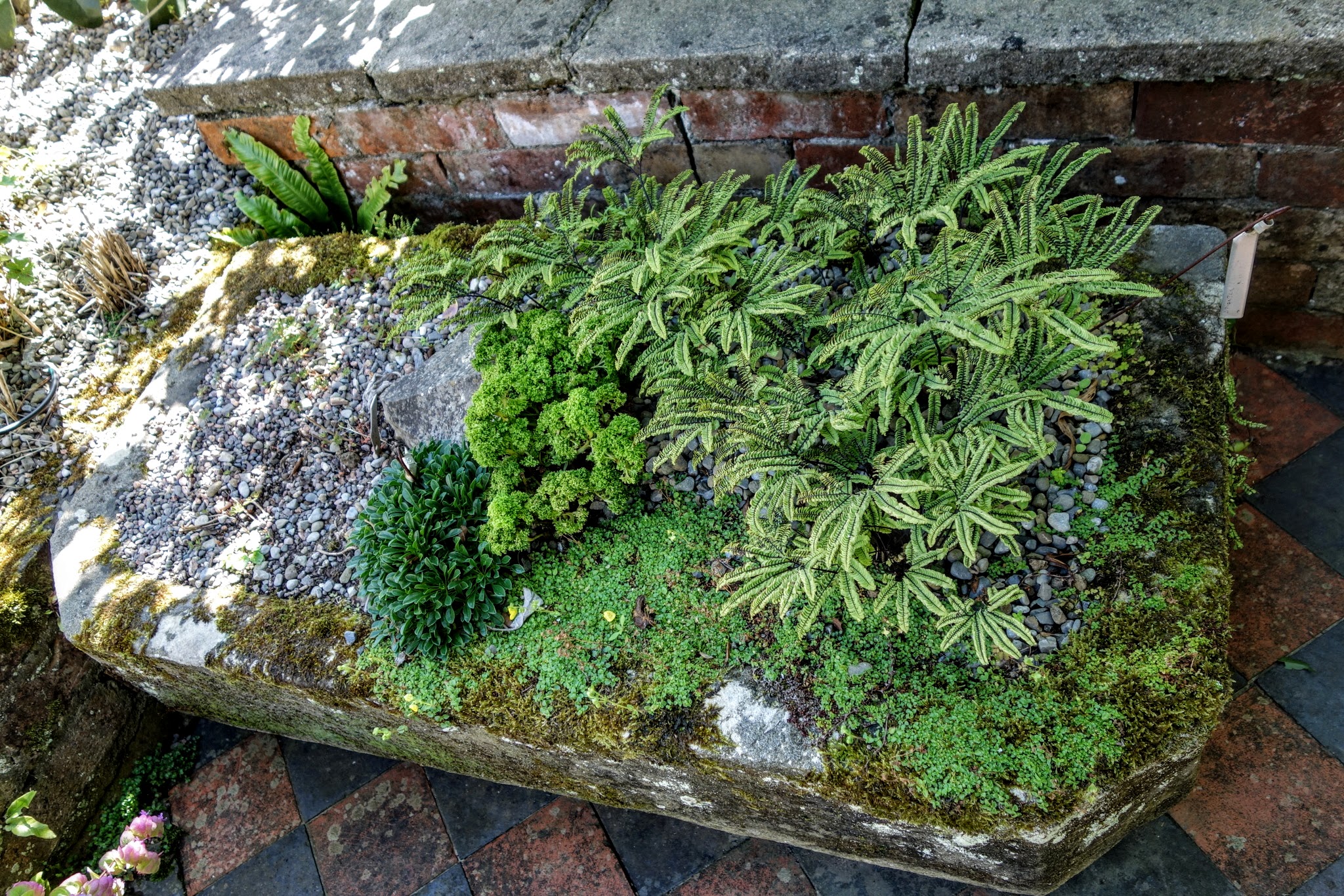


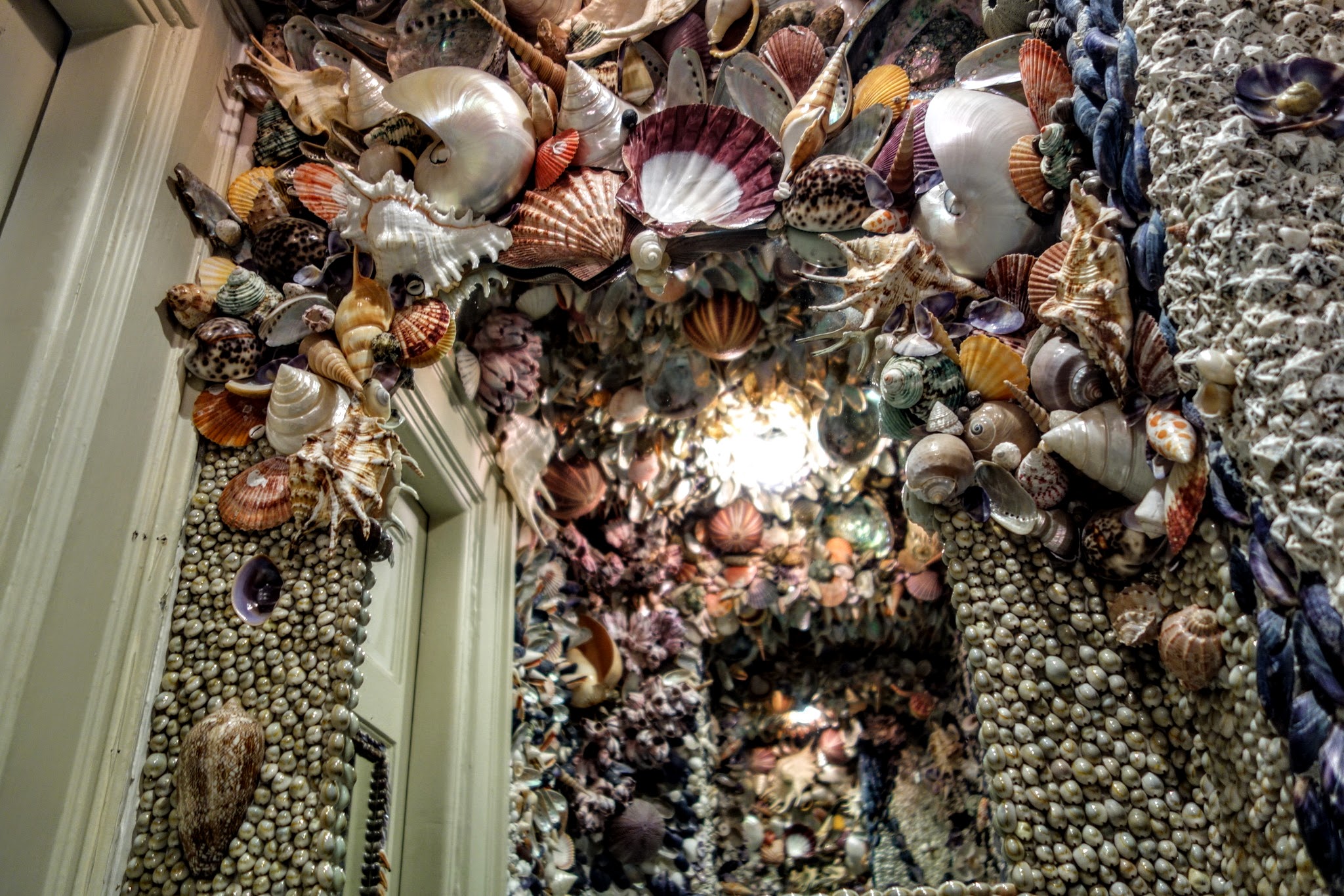
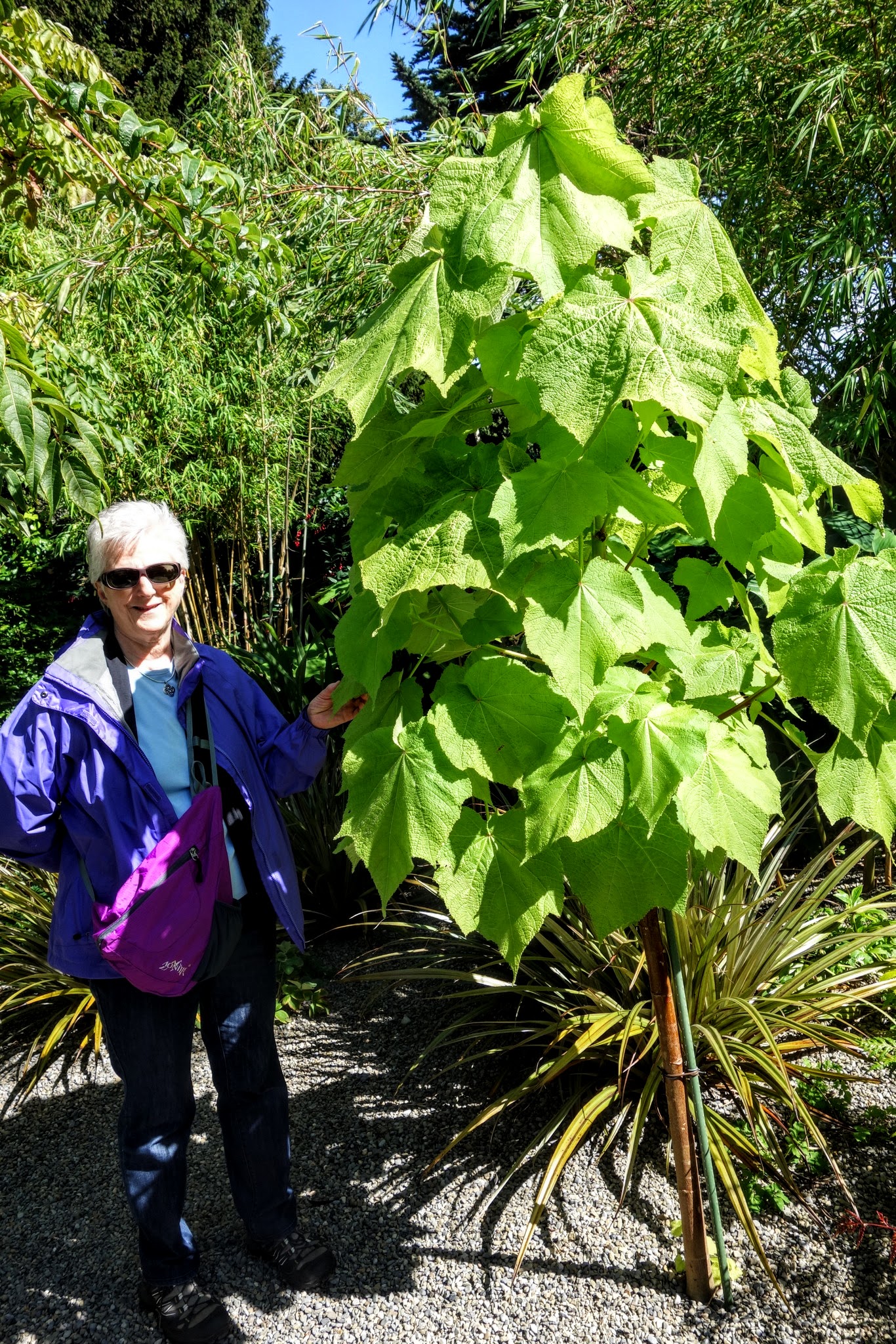
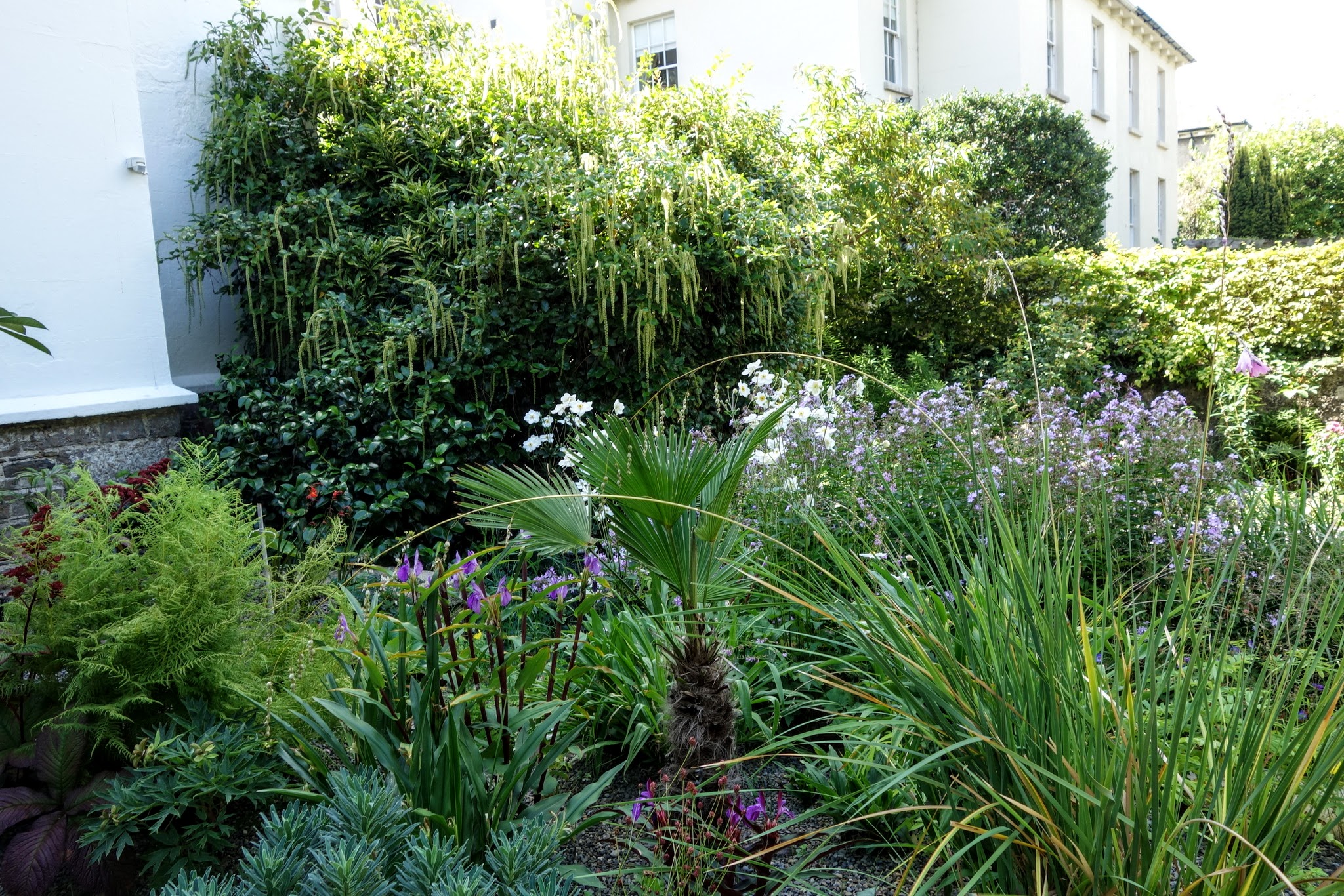

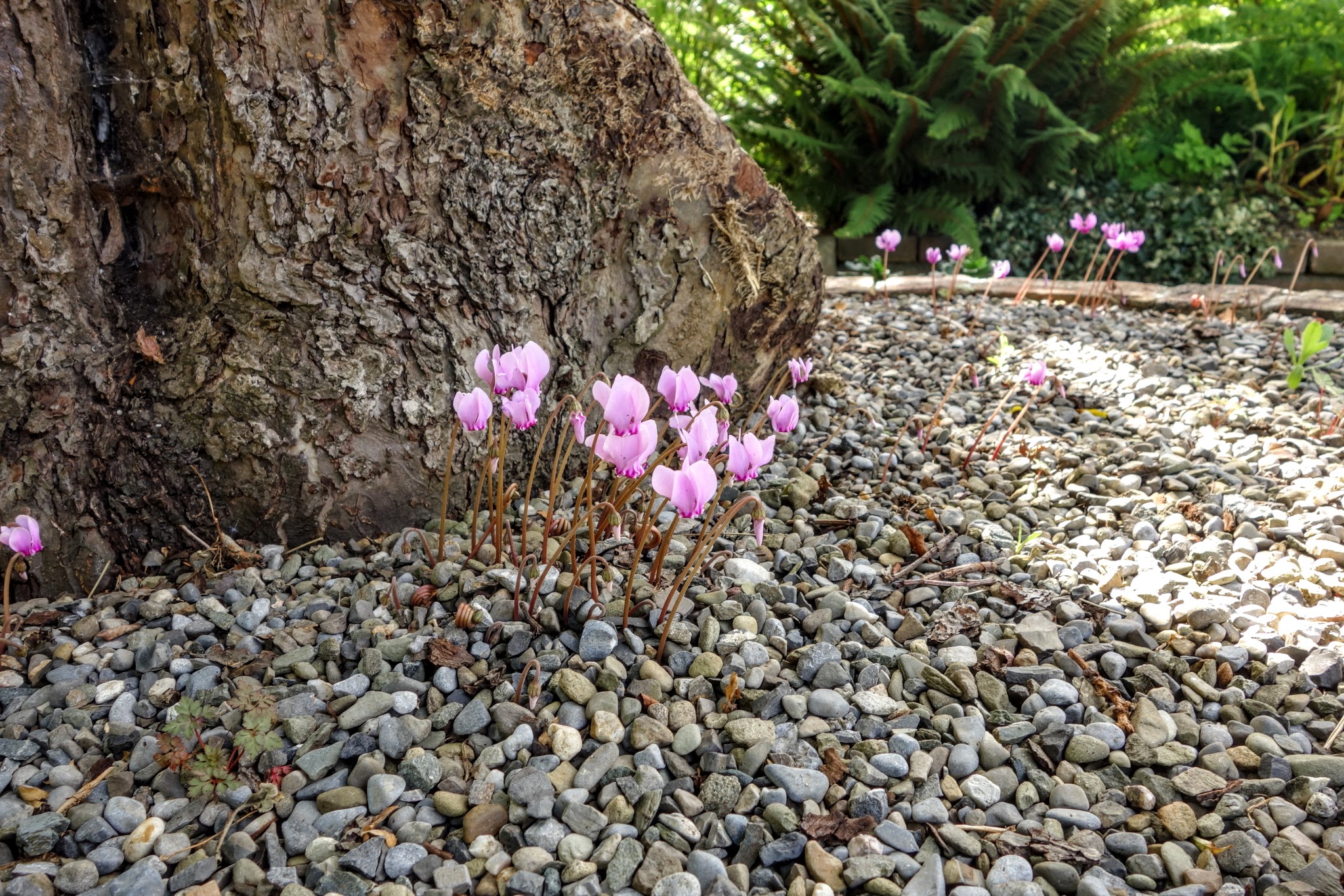
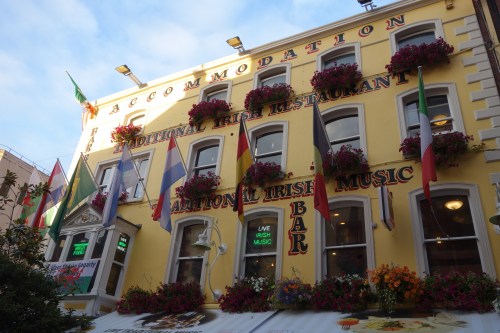 This was another Rick Steves recommendation, and it was great! We met at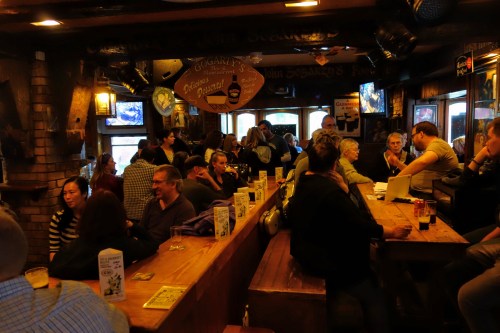
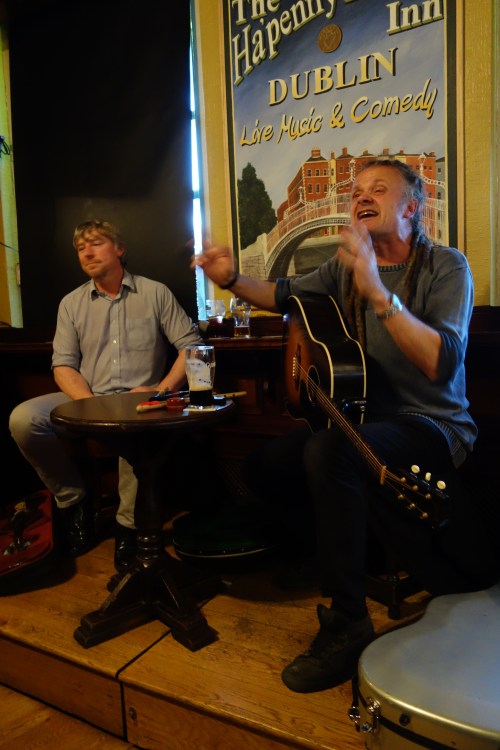
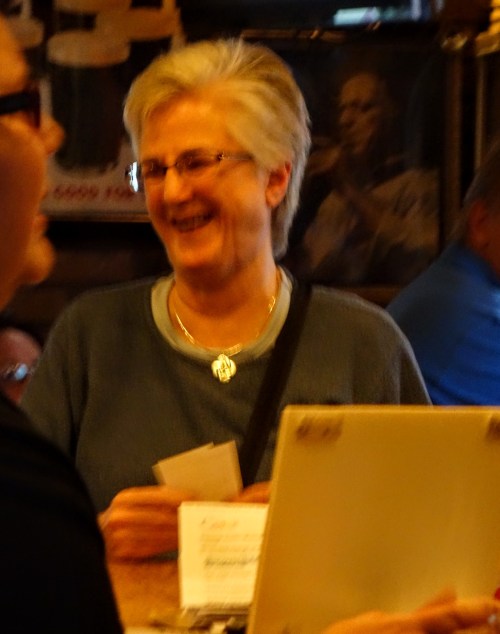
 Today we booked a tour of Rathlin Island, accessible via the 8:00 ferry from Ballycastle harbor, about half an hour away. We accordingly rose at 5:30 and were on the road by 7:11. There was almost no traffic, and we scooted along little roads that hugged the coast.
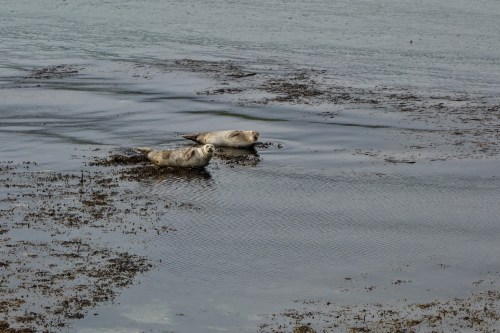 along with five or six other heads in the water. She told us they were curious creatures, and the heads did seem to follow us as we walked along. We marveled at gannets who plunged straight down to catch fish, and hooded crows that are common as dirt here but new to us. Starlings, swallows (their real name will come to me), cormorants, and eider ducks were all over the harbor, too.
 and to visit two churches, a Catholic one with stained glass,
  and a Protestant one with many plaques in memory of the Gages, once lords of the manor here. Only the latter church has a graveyard, leading people to joke that only on Rathlin can you start life as a Catholic and end as a Protestant. Several graves were of people lost at sea, back during the 19th century, during WWI and more recently, too. Many of those seemed to have happened during January – be careful out there! And of course, since this is the UK, an odd little sign.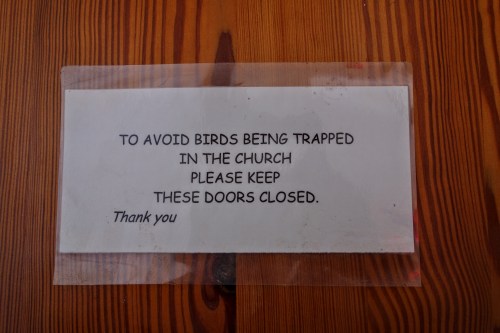
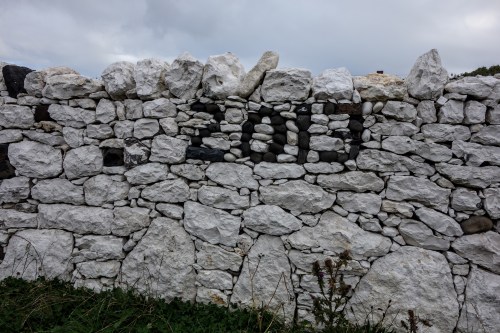 an abandoned kelp house
  that is about to be turned into an art gallery or a science lab, several sightings of the visiting nurse visiting elderly patients (Julie knew who lived at each house), and a short climb to great views rounded out our walk.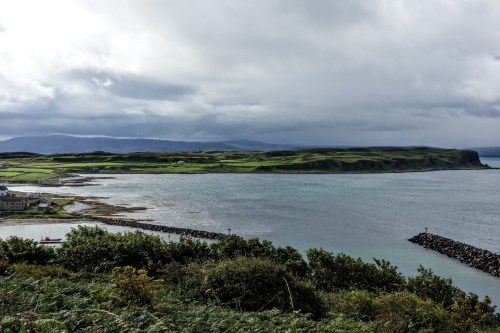
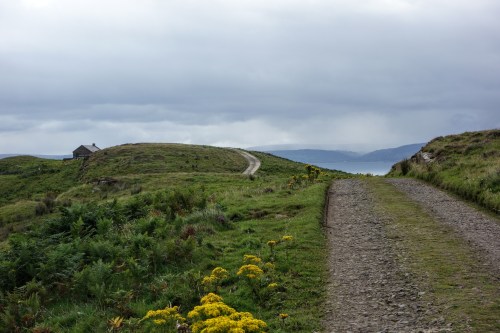
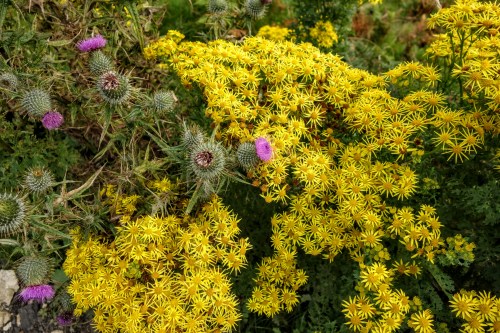 We were about two weeks too late to see puffins, and about five days too late to see the fulmar chicks launching themselves into the air. The only thing left was to climb down the 100 or so steep steps to the observation area.
 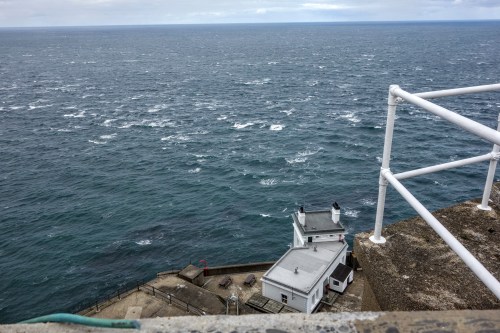 Lord, the wind was blowing hard! I clutched the railing with both hands and tried to look down at the next step rather than out into space.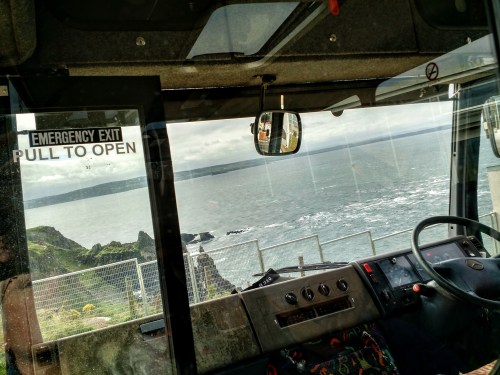
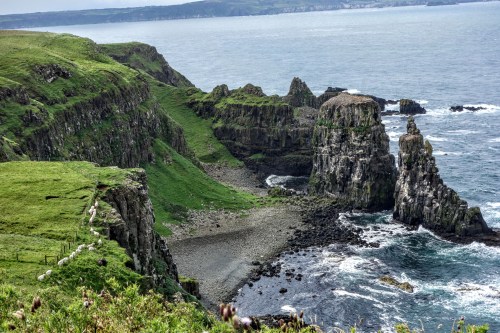 The ride back was steep with one near miss (“I’ve opened my eyes now,” the driver joked,) and left us off by the pub. Here I had the biggest and most delicious piece of fried fish and chips I’ve ever eaten.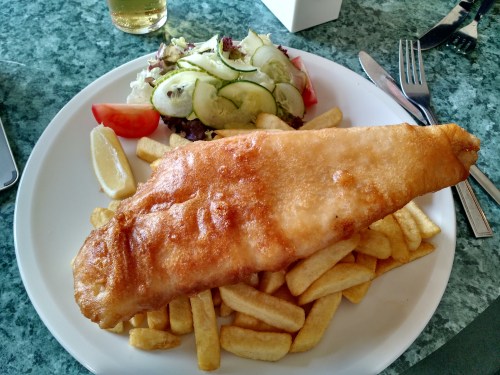

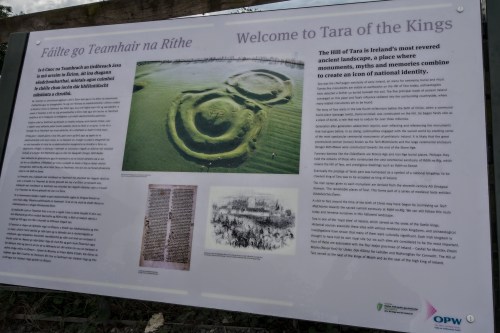 We arrived in Trim after the usual knuckle-biting drive on the left. Actually, driving on the left is hardly a problem – give me the M1 any day! It’s the decision-making when you come to a roundabout or try to make a right turn against oncoming traffic, which is unaccountably coming from the wrong direction, that gives me the willies. Luckily, I have a good navigator.
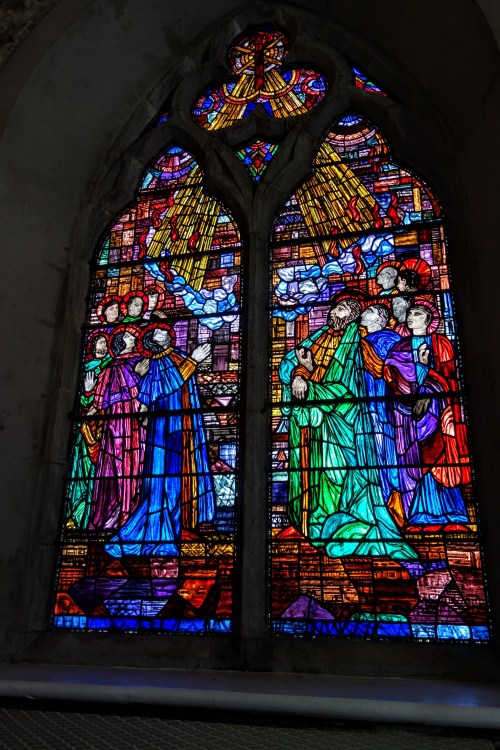 is covered by a gently lowered screen, and visitors are treated to a pleasant film introduction to the ancient site.
 and, if I understood her right, a bit of it is in Scotland as the Stone of Scoone, which the Scots claim as the real one. Of course, they are wrong (if you are discussing this in Ireland). This is where kings and queens were crowned for years. To determine if you were the rightful heir to the throne, you either scraped your carriage wheels along the stone or placed your foot on it. If you were the right one, the stone would speak and all would acknowledge your power.
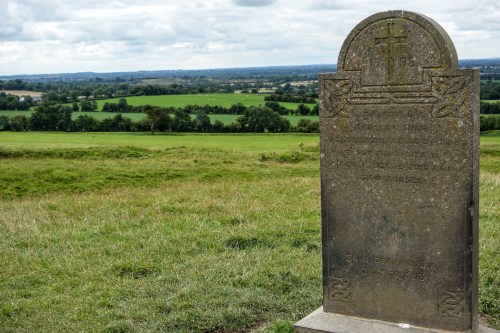 which lasted six months and ended in failure, as usual. This is the one where the Irish joined forces with Napoleon, or at least tried to. Napoleon and the Vikings appear everywhere on the islands.
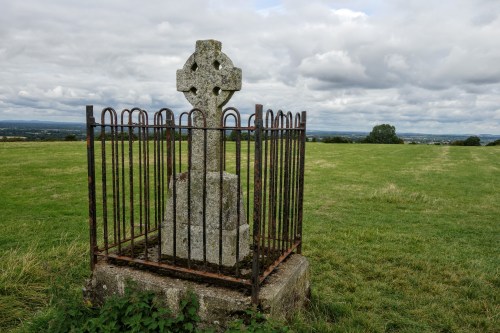 and the outlines of other burial mounds nearby.
 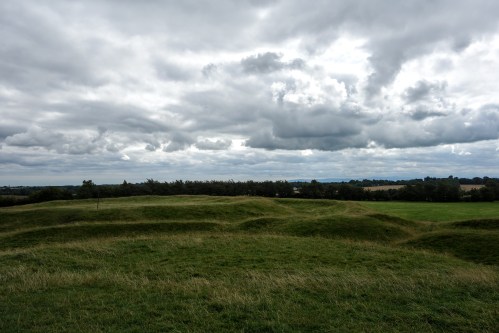 Archaeological work is ongoing.
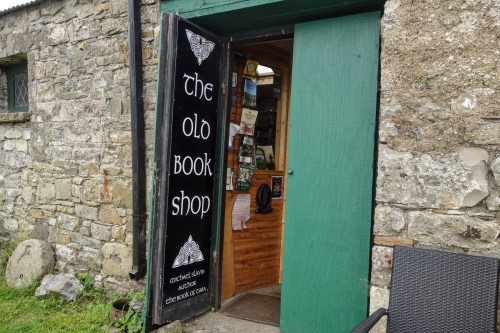 I was very happy to find a copy of T.H. White’s The Goshawk, described and maligned in Helen MacDonald’s wonderful book. This was a real used bookshop with an eclectic mix including a volume on how to do laundry, numerous gardening books both coffee-table and early twentieth century ones in black and white, and a selection of Irish literature, folklore and history.
 and the ruins of Trim Castle.
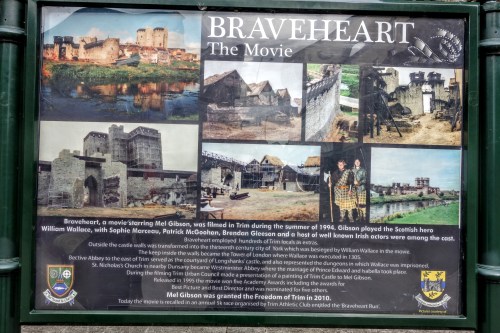
 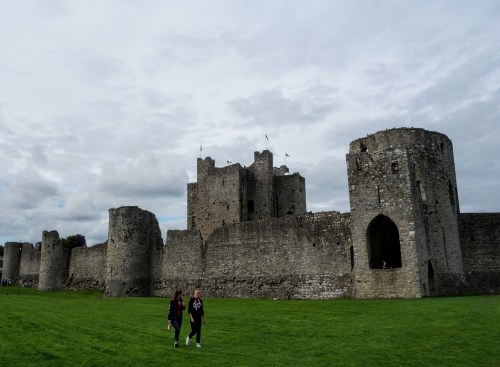 We walked over to the castle in a desultory way and were almost relieved that tours of the Keep were fully booked. Seeing this sign made us both think it was time to watch Braveheart again and enjoy the castle on DVD instead.
 We had a wander around the grounds and made our way back. Dinner tonight was at a very jolly restaurant that specialized in steaks. It was plastered with plaques of the corniest variety (To be is to do, to do is to be, doobie doobie do, etc.) and filled with lots of locals. And so to bed.
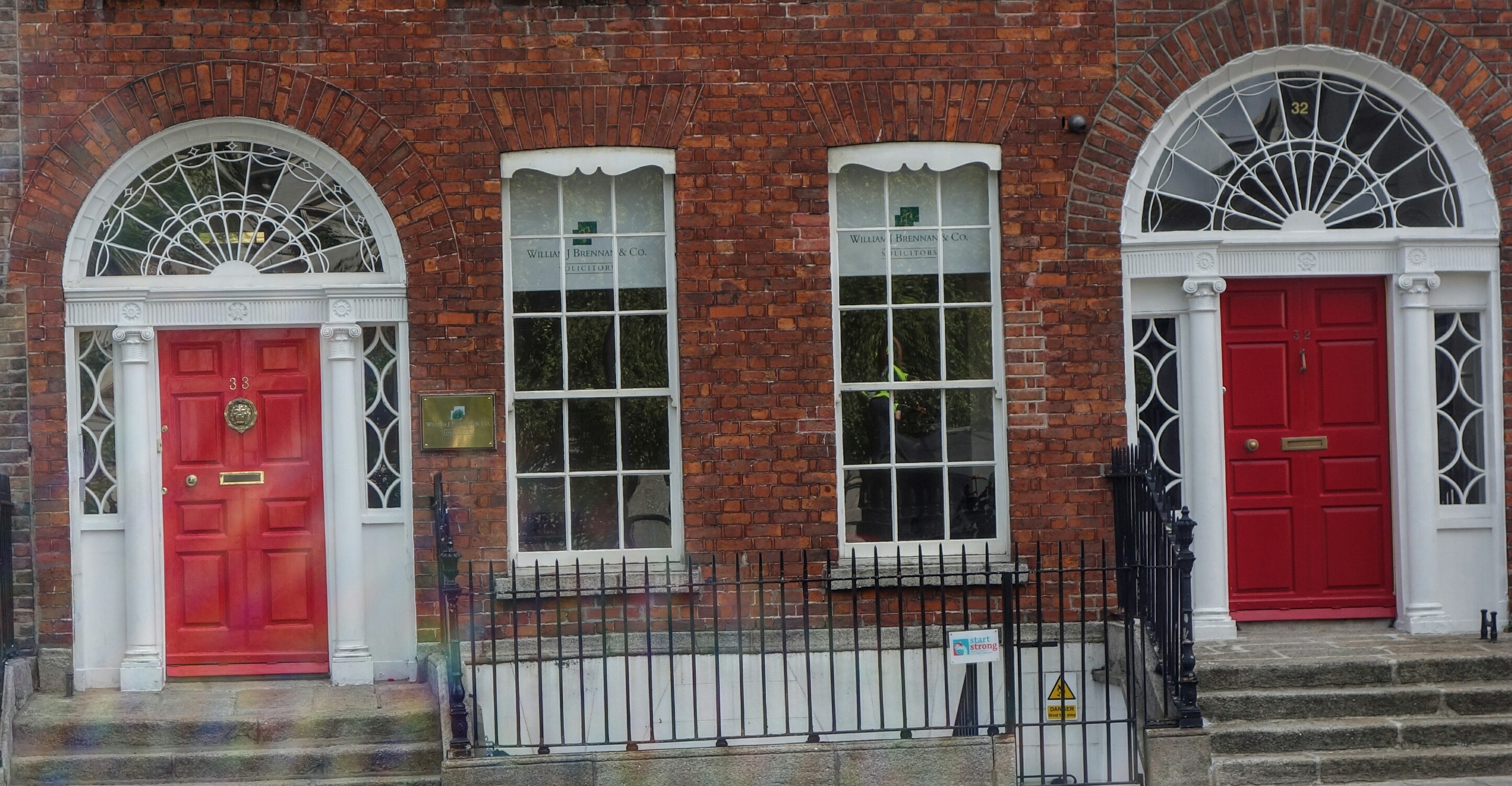

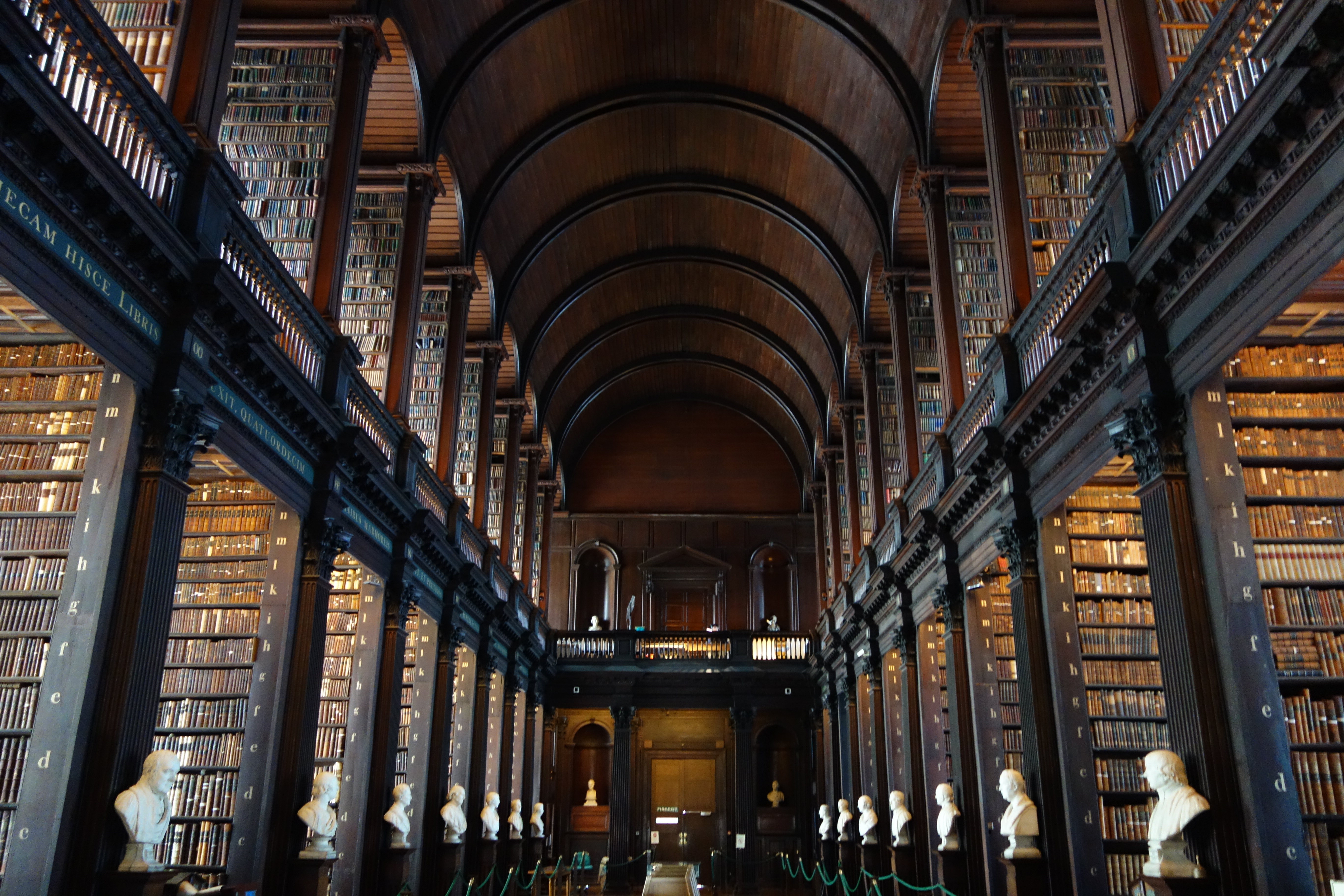
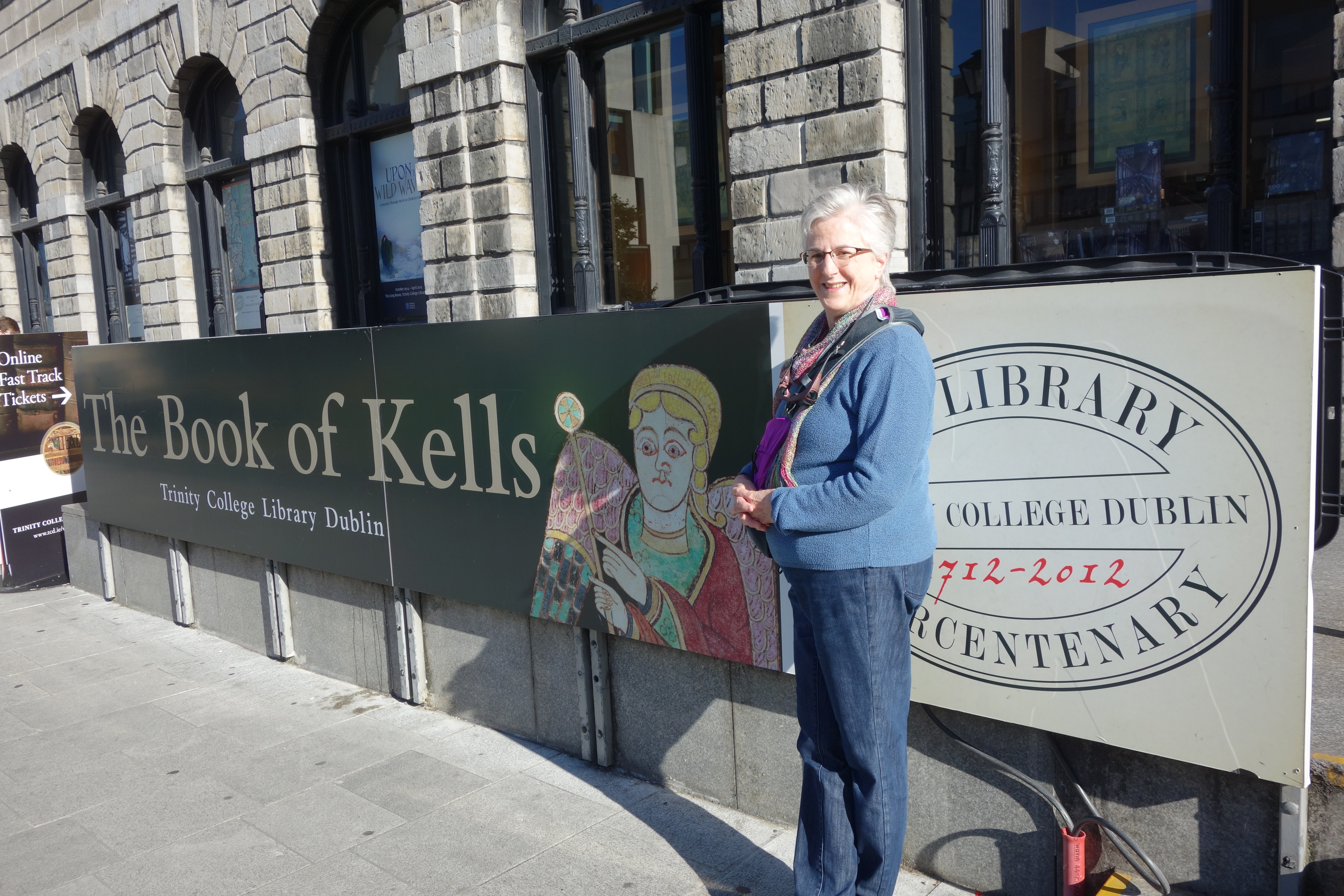
 Today was all about history, and by the end of it we were able to hold most of it in our minds. But first we walked down to the end of the street to Trinity College and the Book of Kells. (This is history, too, of course, but very different from the rest.)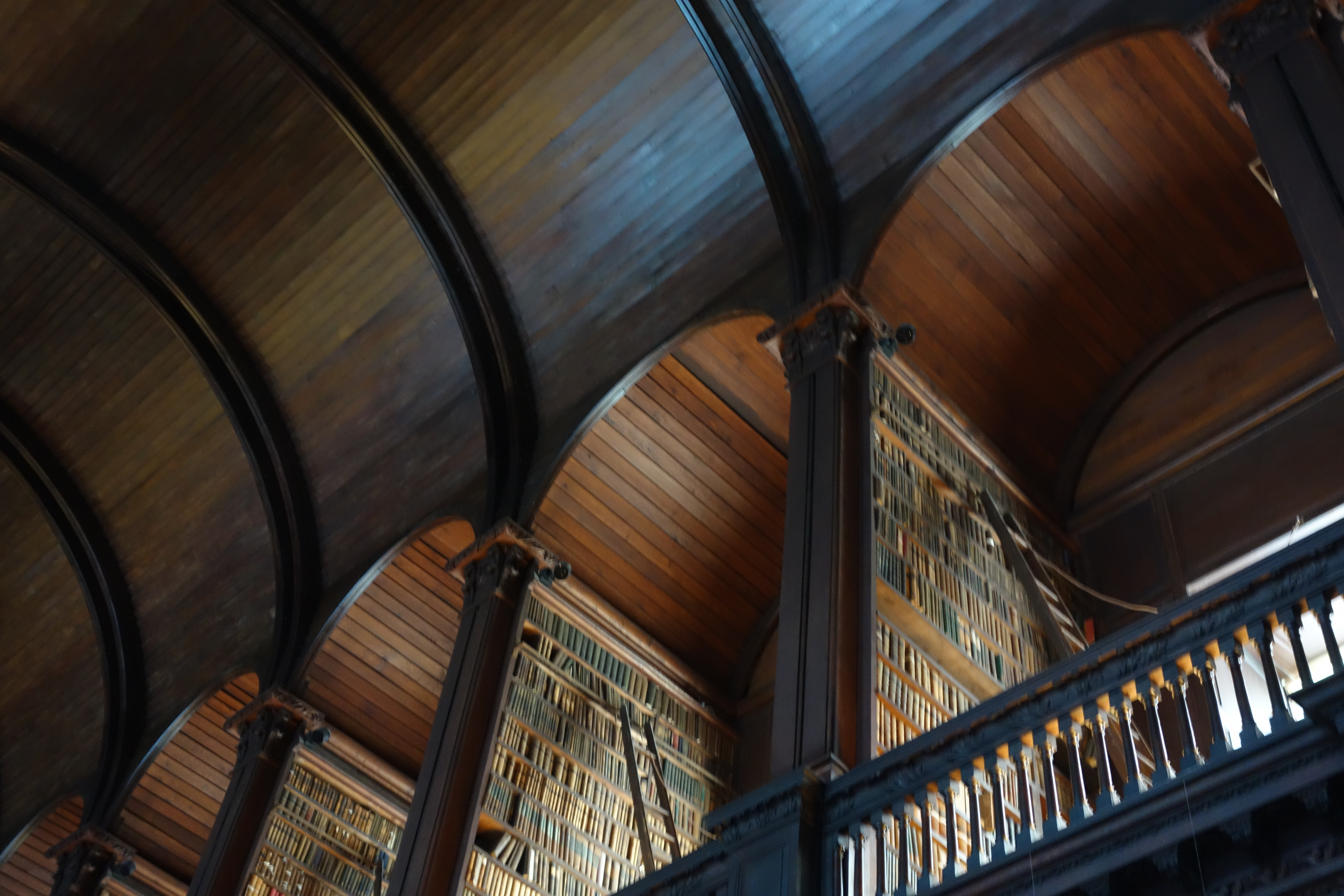


 Caroline's Garden and Travel Record