
 We arrived in Trim after the usual knuckle-biting drive on the left. Actually, driving on the left is hardly a problem – give me the M1 any day! It’s the decision-making when you come to a roundabout or try to make a right turn against oncoming traffic, which is unaccountably coming from the wrong direction, that gives me the willies. Luckily, I have a good navigator.
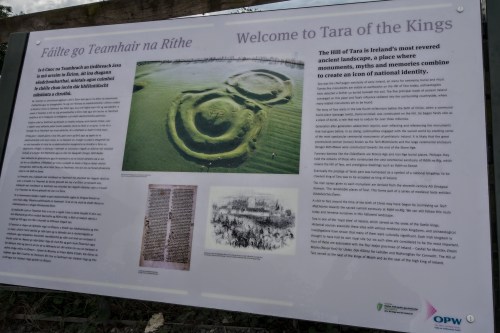
At any rate, we found our way from the Dublin airport northwest to the Hill of Tara, a World Heritage Site and seat of Irish power from ancient times. The landscape is gently rolling, so even a slight incline like that at Tara gives a great view. We started out at an old church that is now the visitors’ center. The quite lovely stained glass window (1932 in honor of the 1500th anniversary of St. Patrick’s arrival) 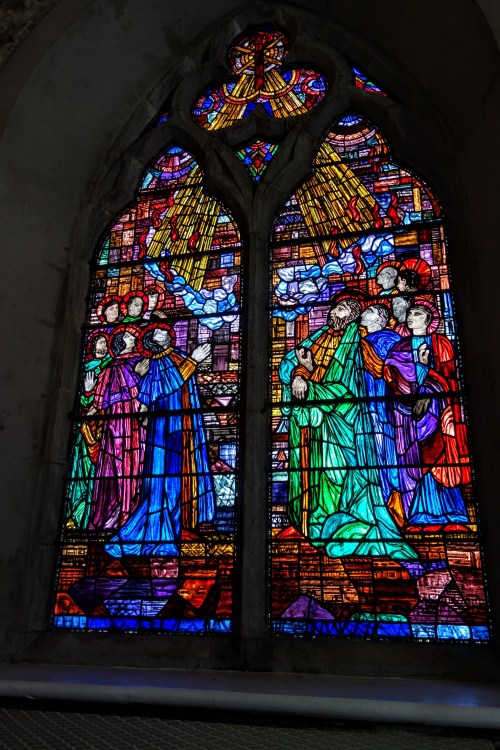 is covered by a gently lowered screen, and visitors are treated to a pleasant film introduction to the ancient site.
We followed our guide through the churchyard with its fertility stone (imagine her feet above her ears, the guide explained succinctly) to a green hill with two stones at the top. One is the Stone of Tara  and, if I understood her right, a bit of it is in Scotland as the Stone of Scoone, which the Scots claim as the real one. Of course, they are wrong (if you are discussing this in Ireland). This is where kings and queens were crowned for years. To determine if you were the rightful heir to the throne, you either scraped your carriage wheels along the stone or placed your foot on it. If you were the right one, the stone would speak and all would acknowledge your power.
Also on site is a stone commemorating the 1798 revolution, 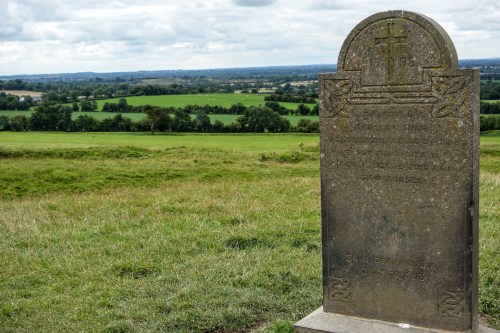 which lasted six months and ended in failure, as usual. This is the one where the Irish joined forces with Napoleon, or at least tried to. Napoleon and the Vikings appear everywhere on the islands.
We stopped at the burial mound, a replica of which we had seen at the Museum of Archaeology in Dublin. This is a passage tomb, where cremated remains were buried. The tomb itself is low and short, with the mound above built of earth and stone.
The other features of the site are a stone cross protected by a railing, 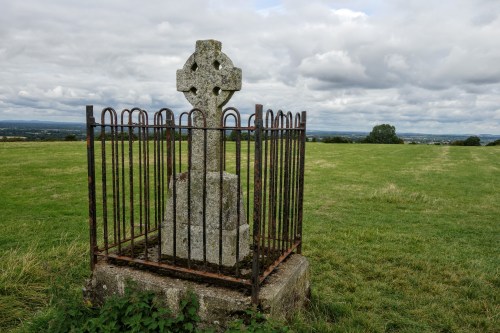 and the outlines of other burial mounds nearby.
 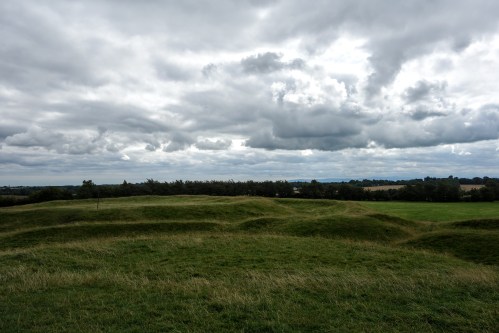 Archaeological work is ongoing.
Back down the hill to the tearoom and bookshop for lunch and a quick browse. 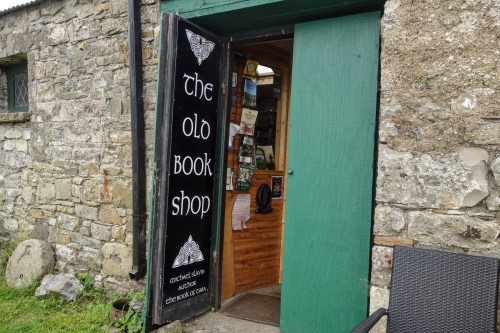 I was very happy to find a copy of T.H. White’s The Goshawk, described and maligned in Helen MacDonald’s wonderful book. This was a real used bookshop with an eclectic mix including a volume on how to do laundry, numerous gardening books both coffee-table and early twentieth century ones in black and white, and a selection of Irish literature, folklore and history.
Getting to Trim involved asking directions several times. We are gradually learning that when someone in Ireland tells you it’s “just around the corner” or “at the top of the hill,” it could be miles and miles away. Then, when we were within spitting distance of our destination, we were foiled by a cycle race that blocked the road. We found a little spot to wait it out, and finally we could park the car and heave a sigh of relief.
The Highfield House B&B was just the ticket for an overnight visit: spacious, comfortable, good breakfast and one of the best bathrooms on the trip.

It’s set on top of a hill with great views of the River Boyne (complete with grazing donkeys)  and the ruins of Trim Castle.
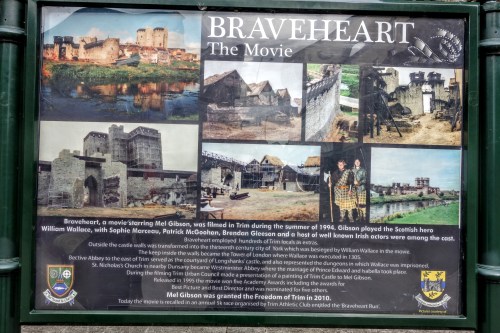
 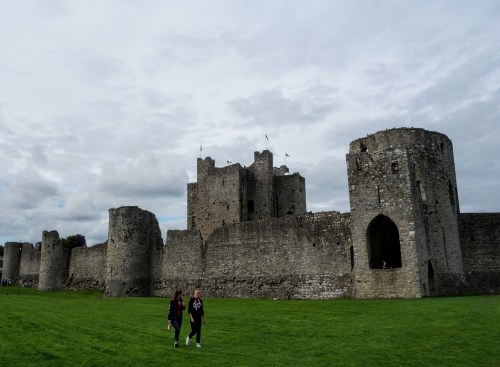 We walked over to the castle in a desultory way and were almost relieved that tours of the Keep were fully booked. Seeing this sign made us both think it was time to watch Braveheart again and enjoy the castle on DVD instead.
 We had a wander around the grounds and made our way back. Dinner tonight was at a very jolly restaurant that specialized in steaks. It was plastered with plaques of the corniest variety (To be is to do, to do is to be, doobie doobie do, etc.) and filled with lots of locals. And so to bed.
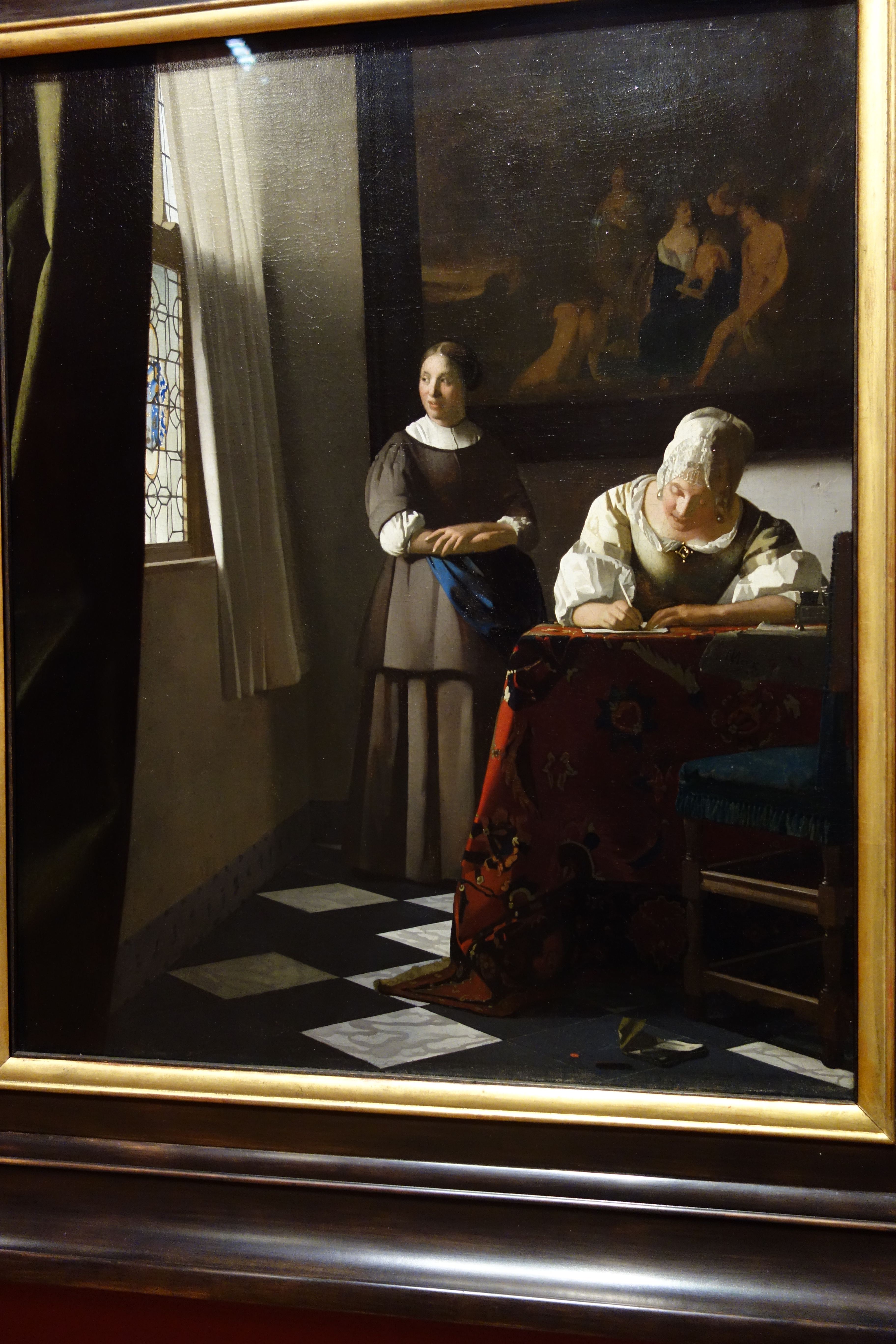
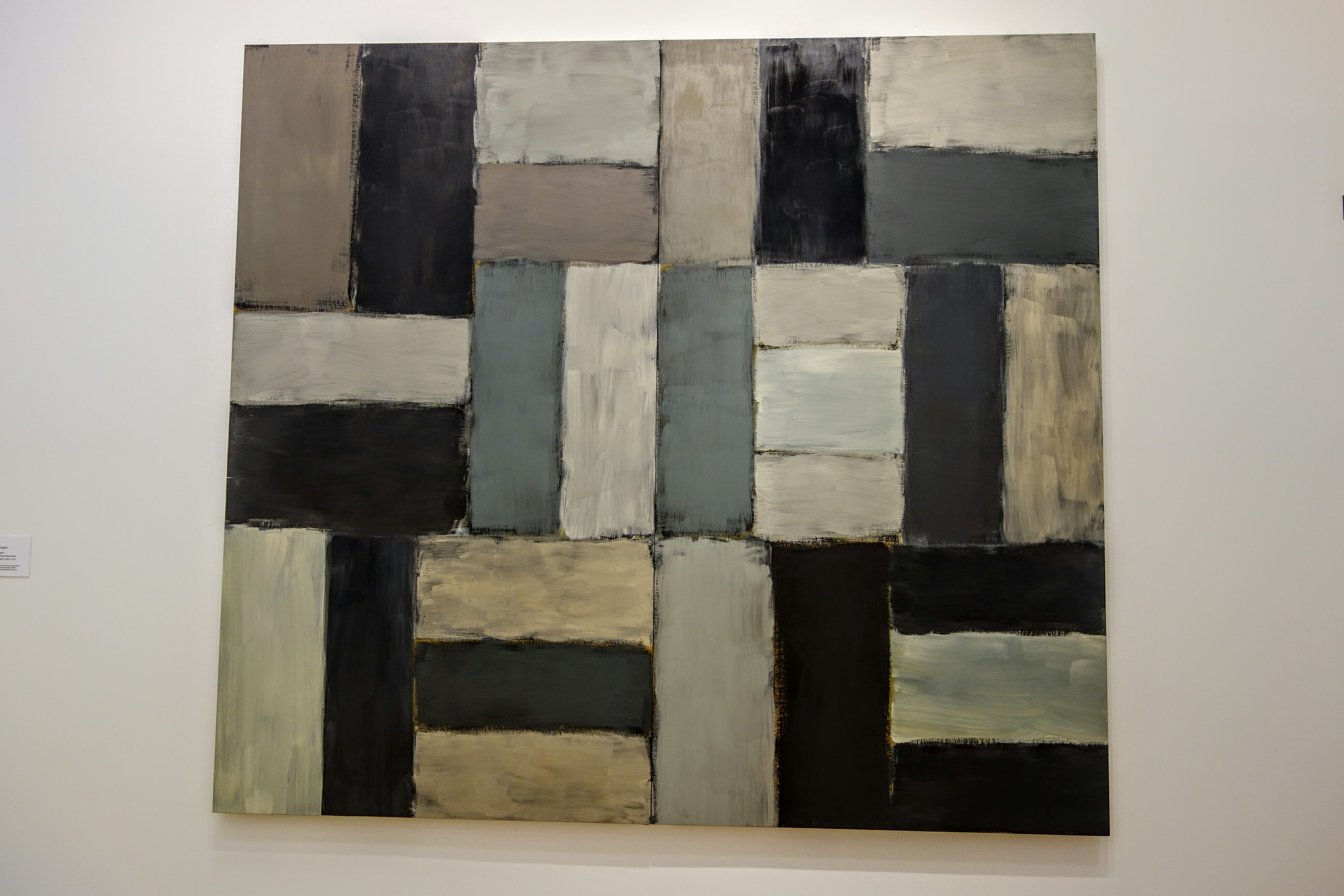
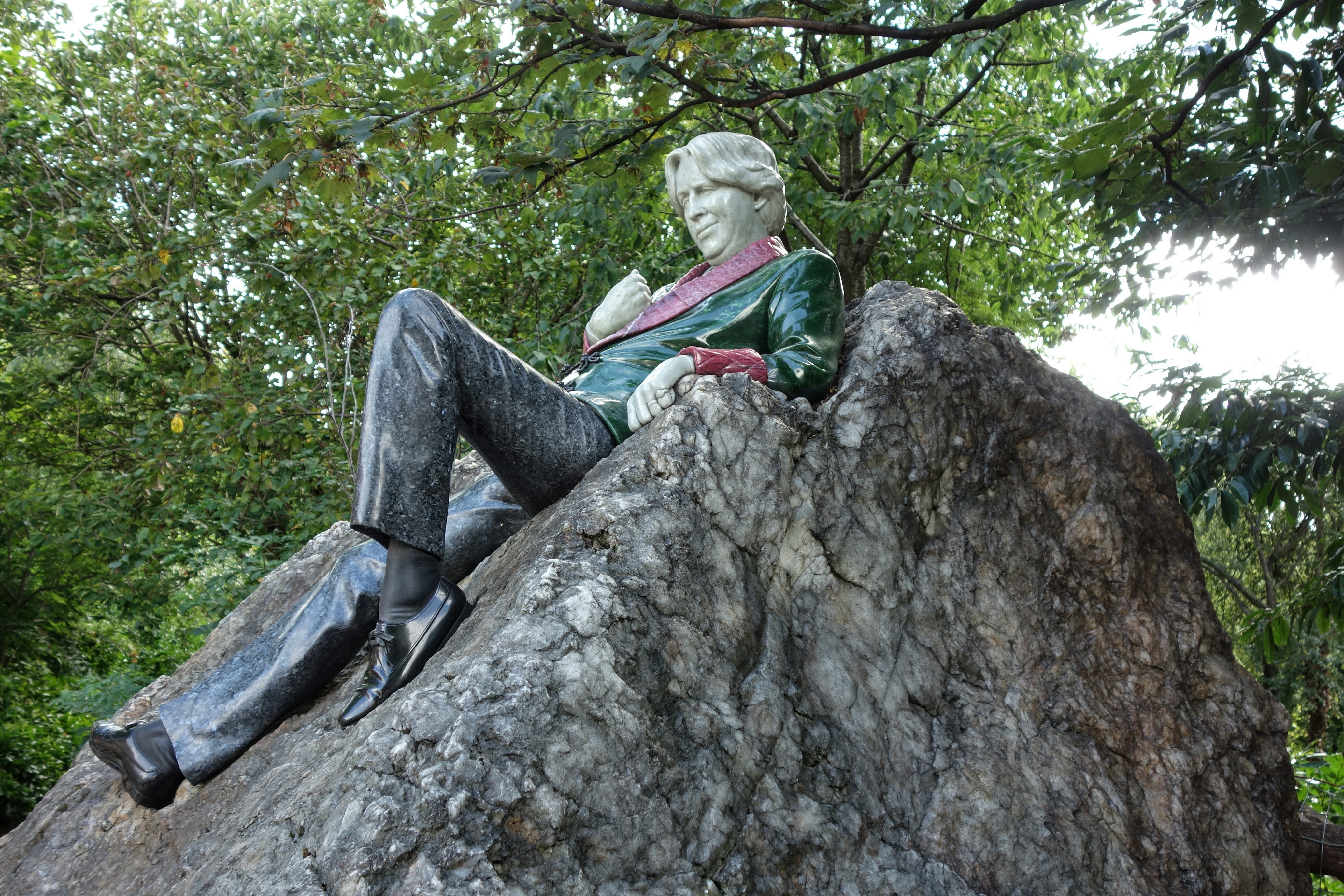
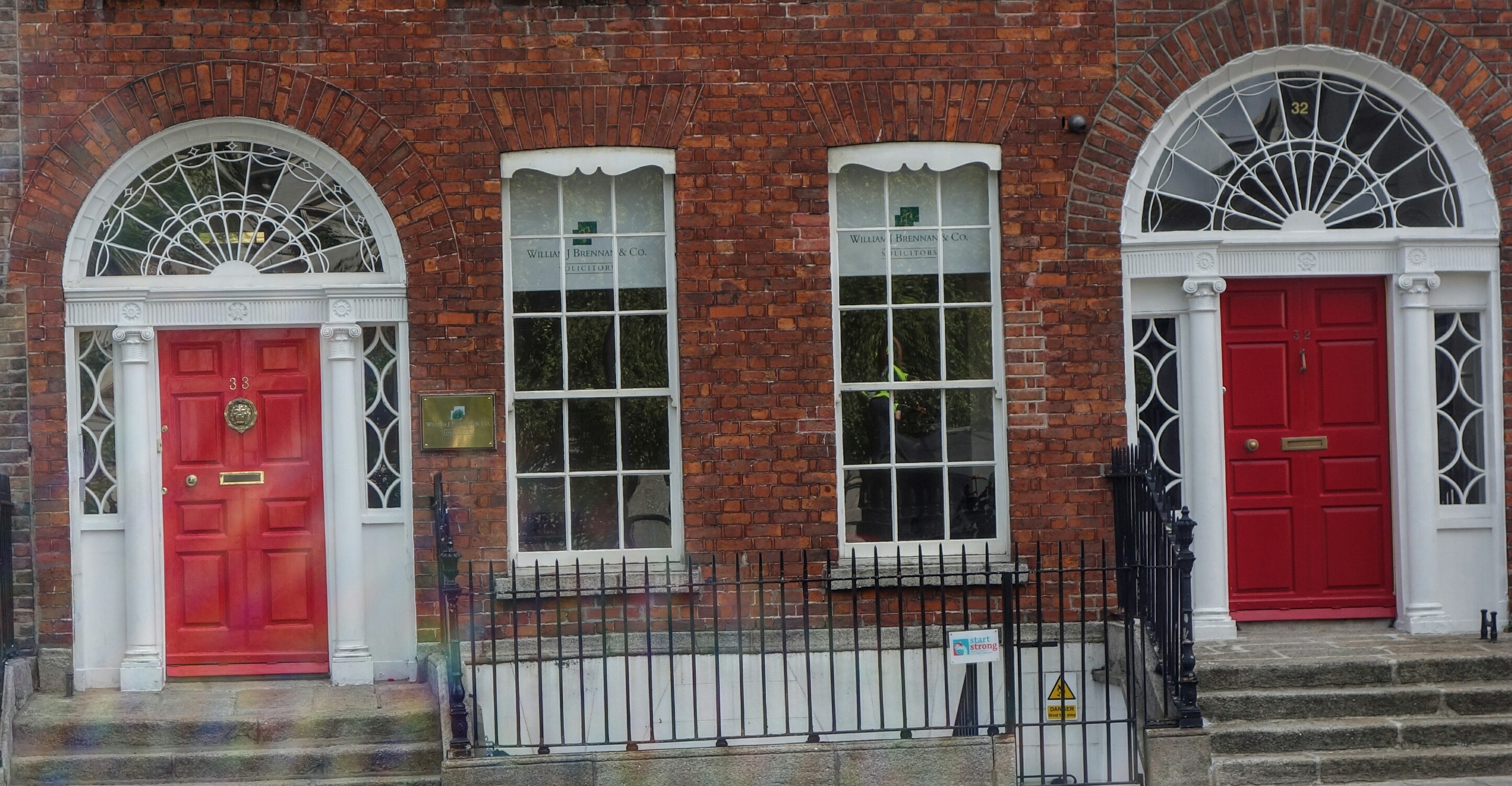

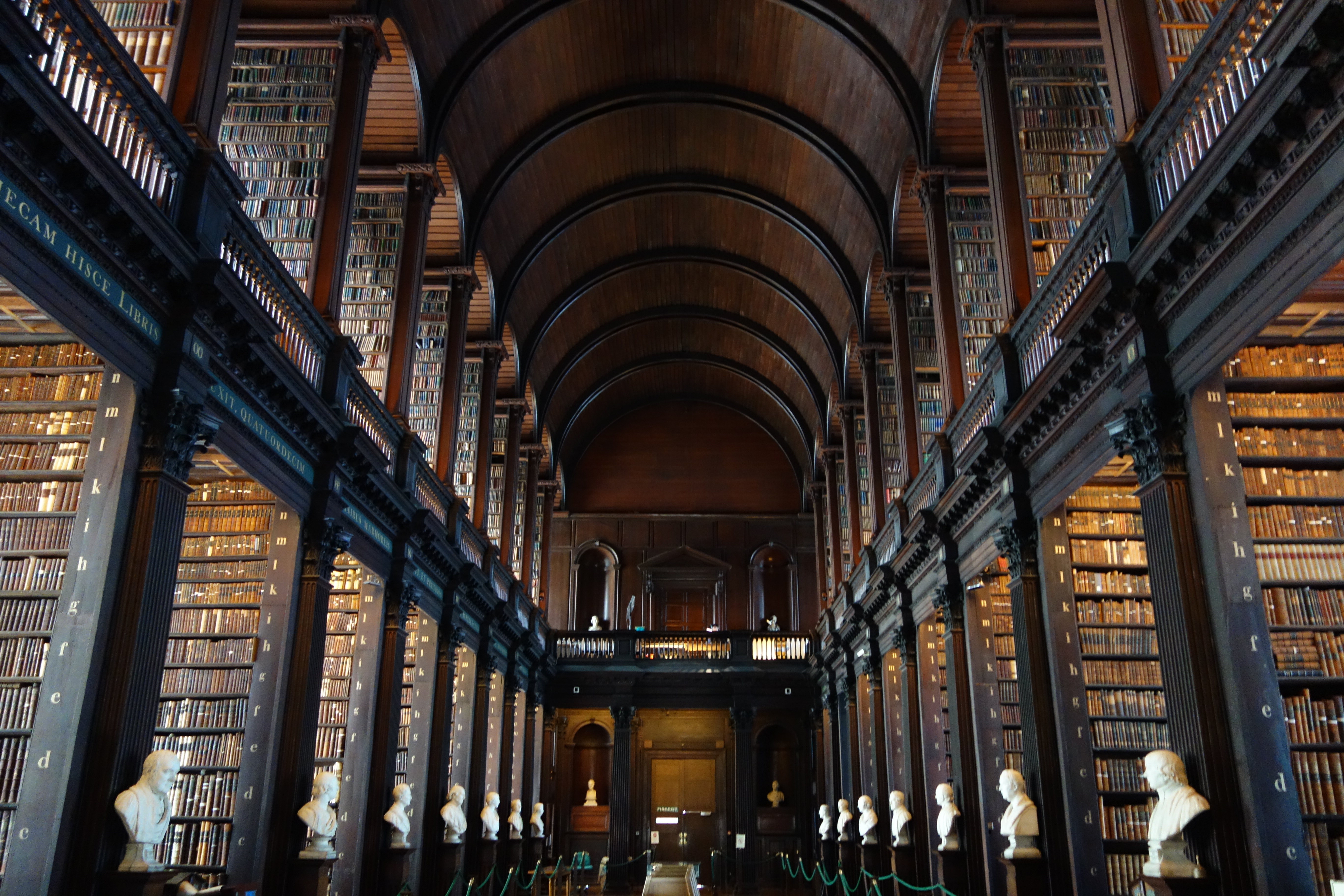
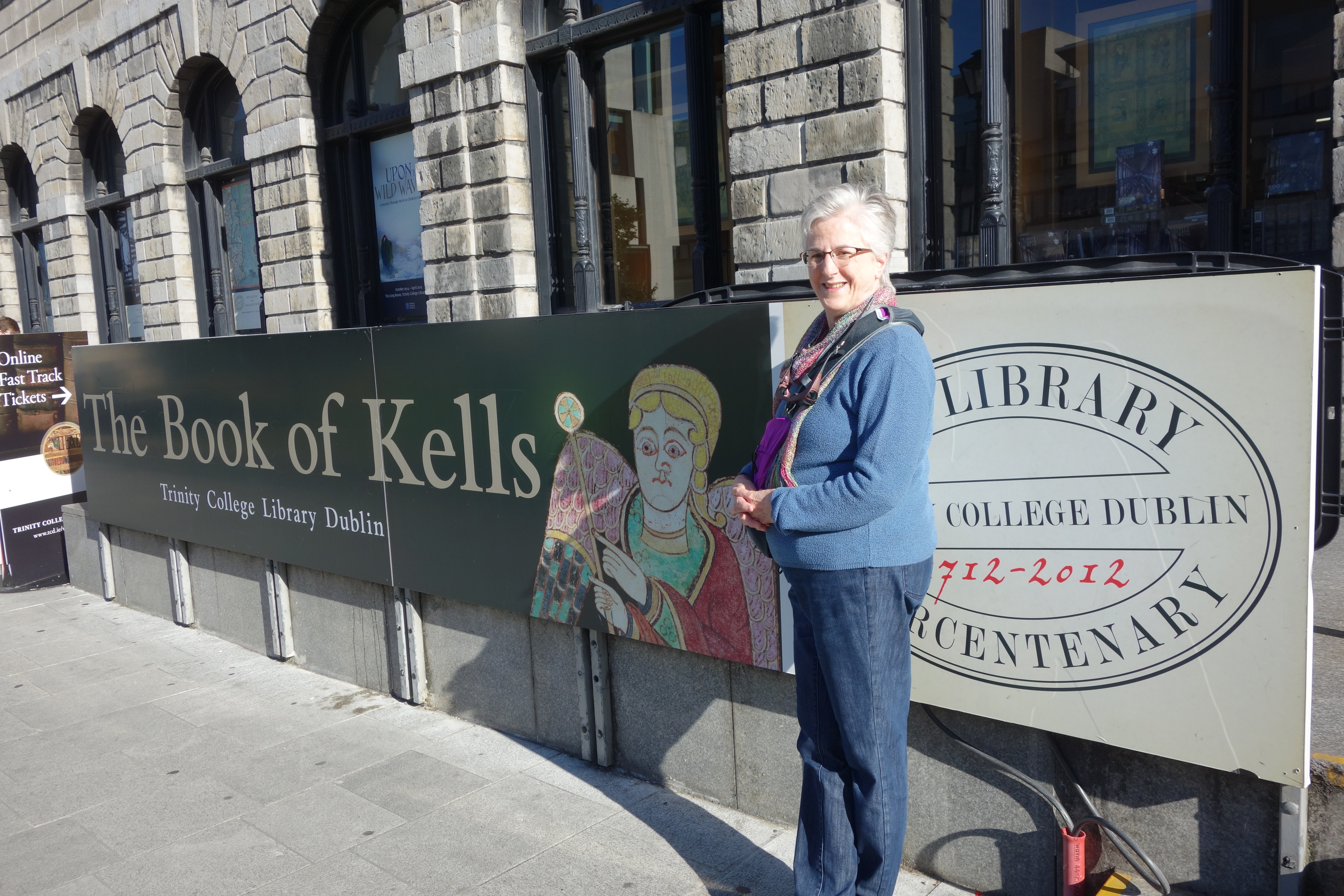
 Today was all about history, and by the end of it we were able to hold most of it in our minds. But first we walked down to the end of the street to Trinity College and the Book of Kells. (This is history, too, of course, but very different from the rest.)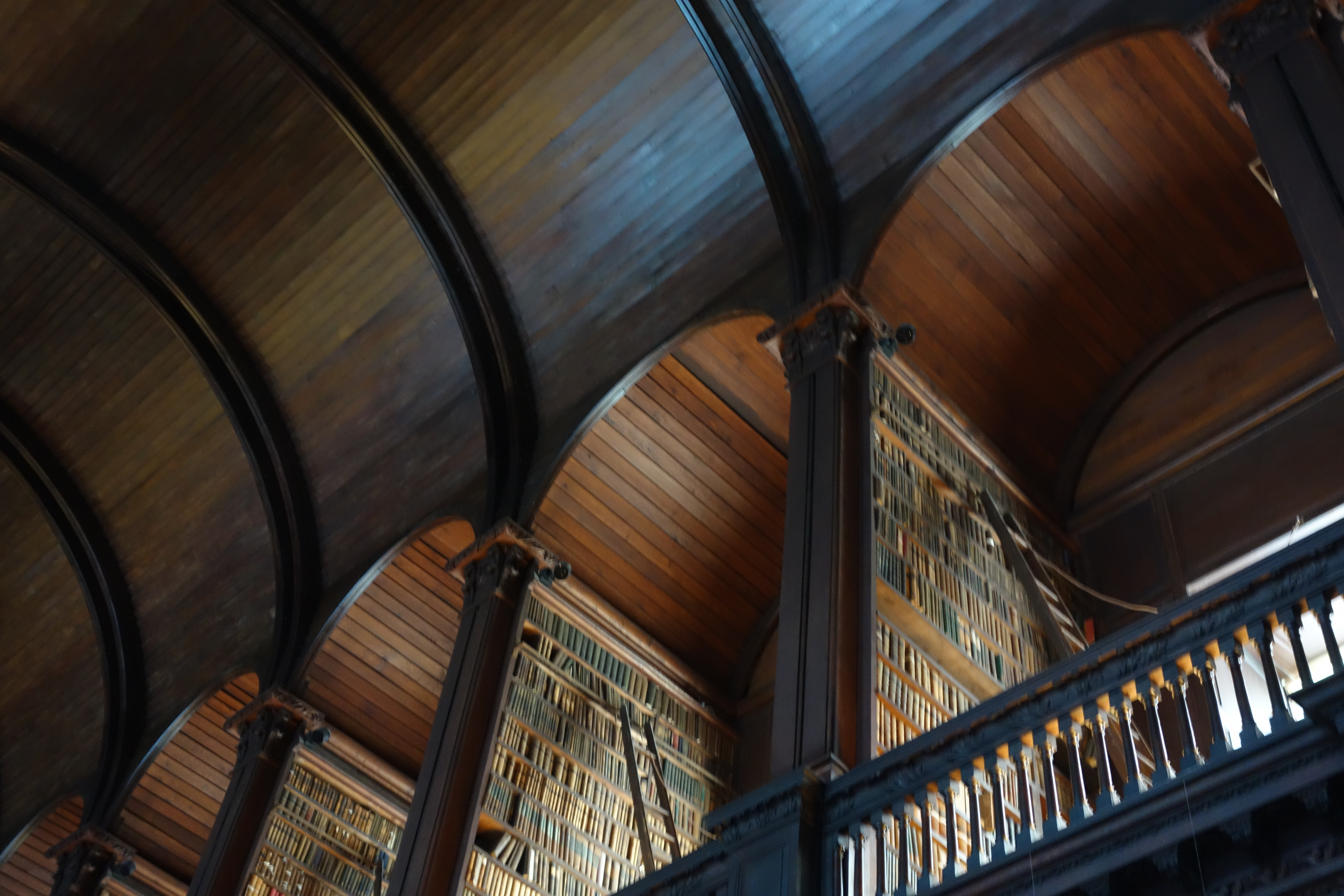






 Caroline's Garden and Travel Record