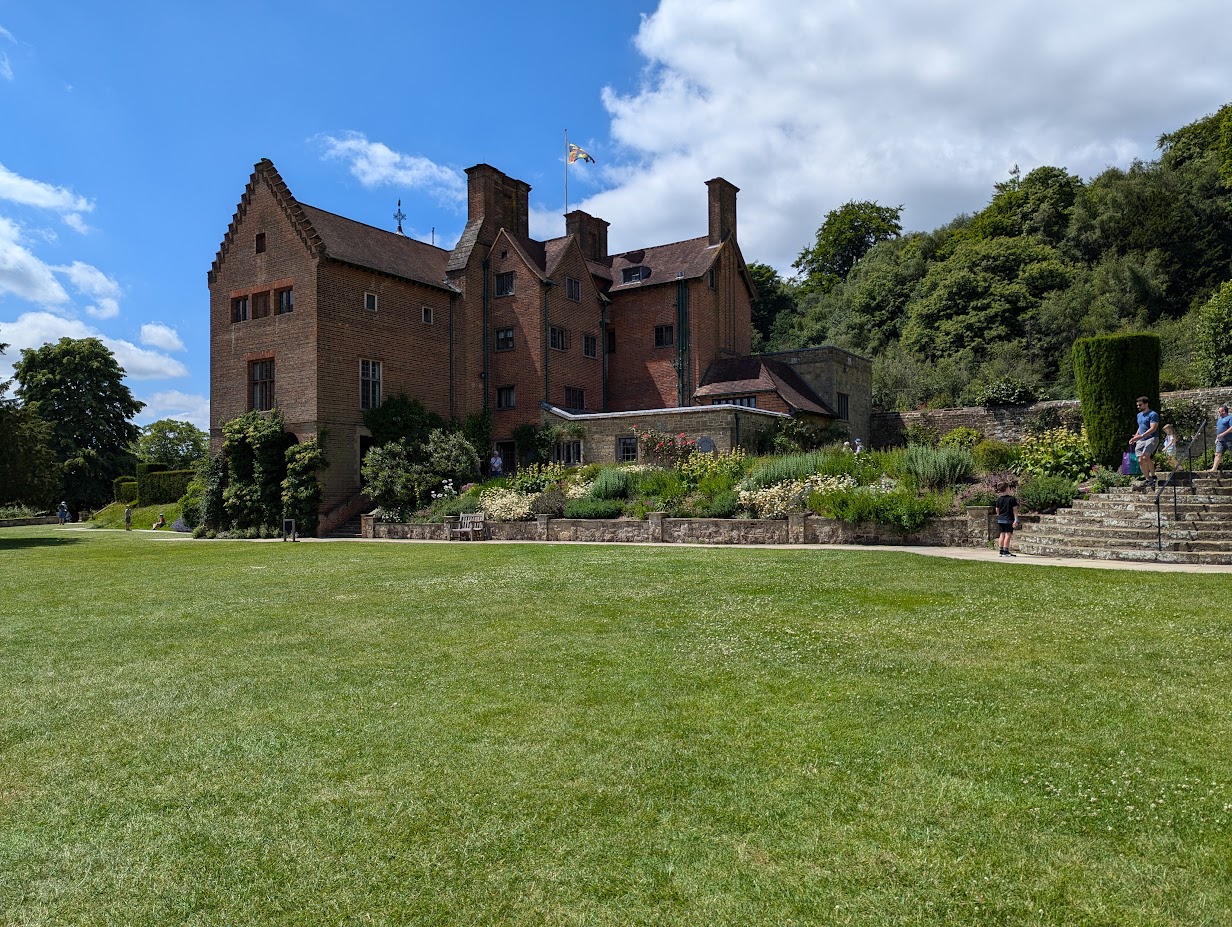
Churchill lived at Chartwell for more than forty years, and it was here that he gardened, painted, built walls and lakes, met with politicians, and enjoyed a vast array of friends. This wonderful description of a late night dinner there is priceless:
“In January 1928, James Lees-Milne stayed as a guest of Churchill’s son Randolph. He described an evening after dinner; ‘We remained at that round table till after midnight. Mr Churchill spent a blissful two hours demonstrating with decanters and wine glasses how the Battle of Jutland was fought. He got worked up like a schoolboy, making barking noises in imitation of gunfire, and blowing cigar smoke across the battle scene in imitation of gun smoke'”.
After Churchill died, Lady Churchill donated the house to the National Trust, and the house has been open to the public since 1966. We decided to take a day trip to visit the Old Man’s property. A train to Oxted and then a cab to Chartwell got us there easily.
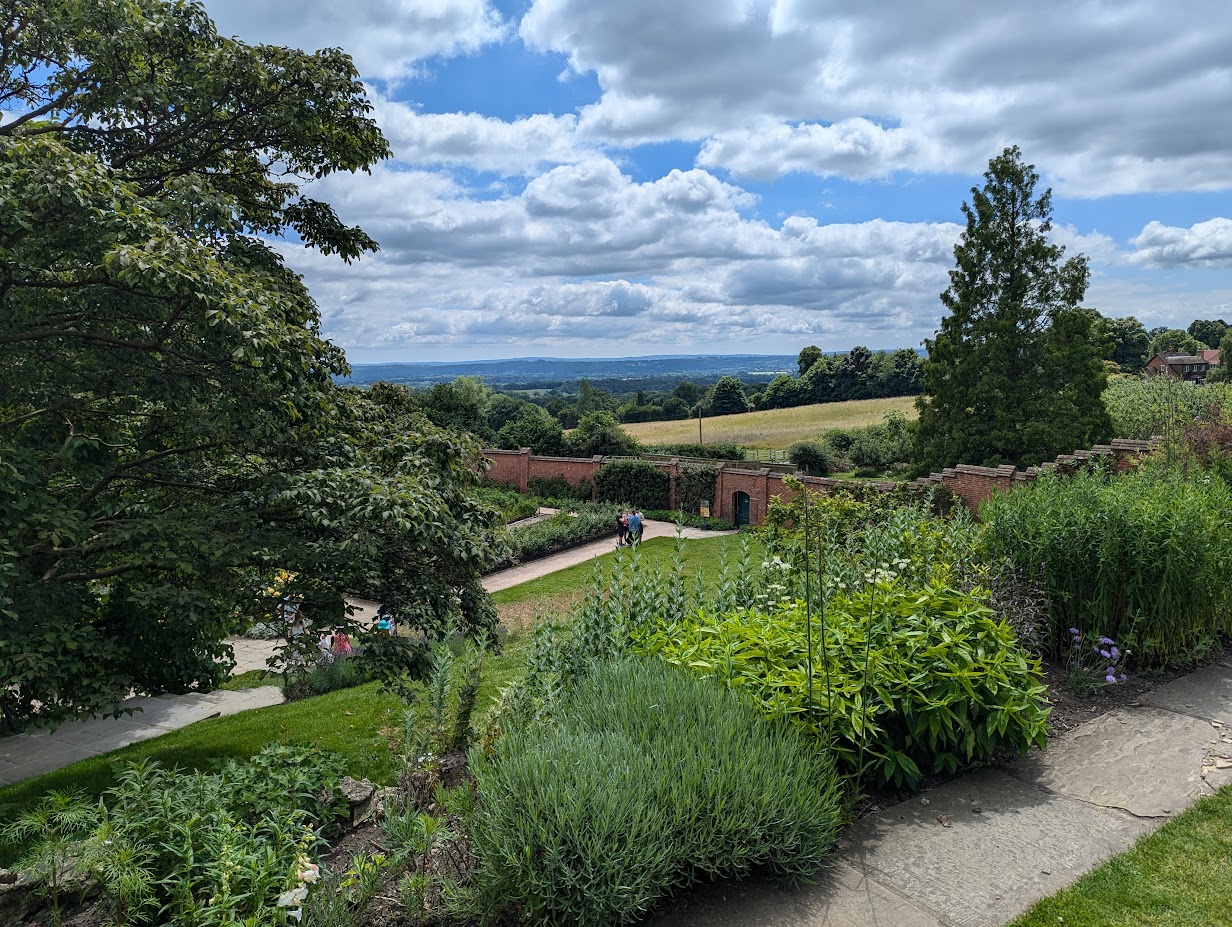
The approach to the house winds along a gentle slope, featuring a couple of these gorgeous trees
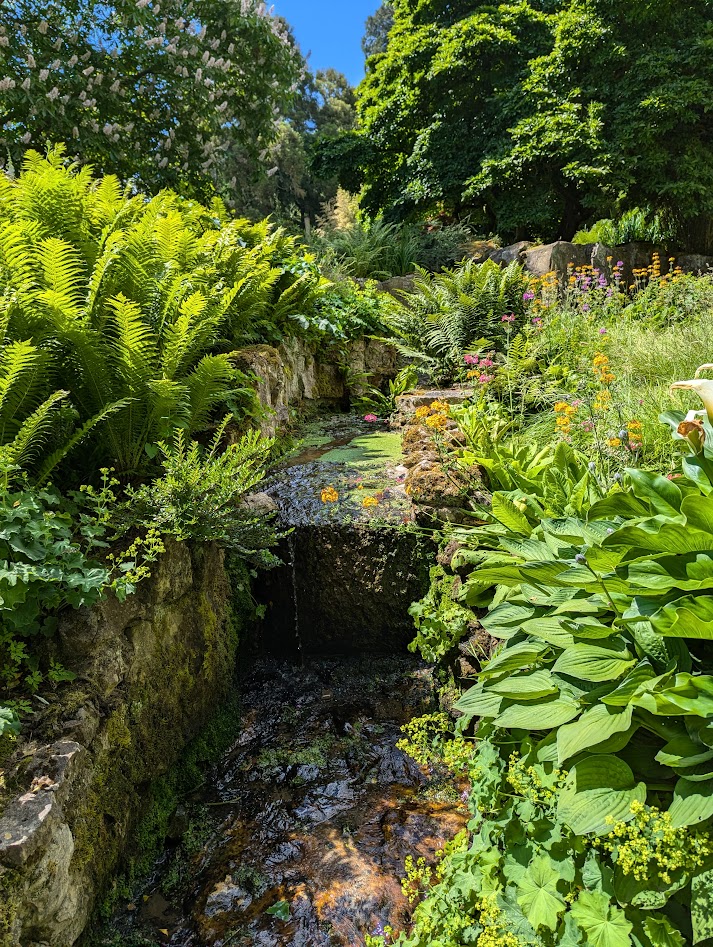
and the charming Gavin Jones Cascade.
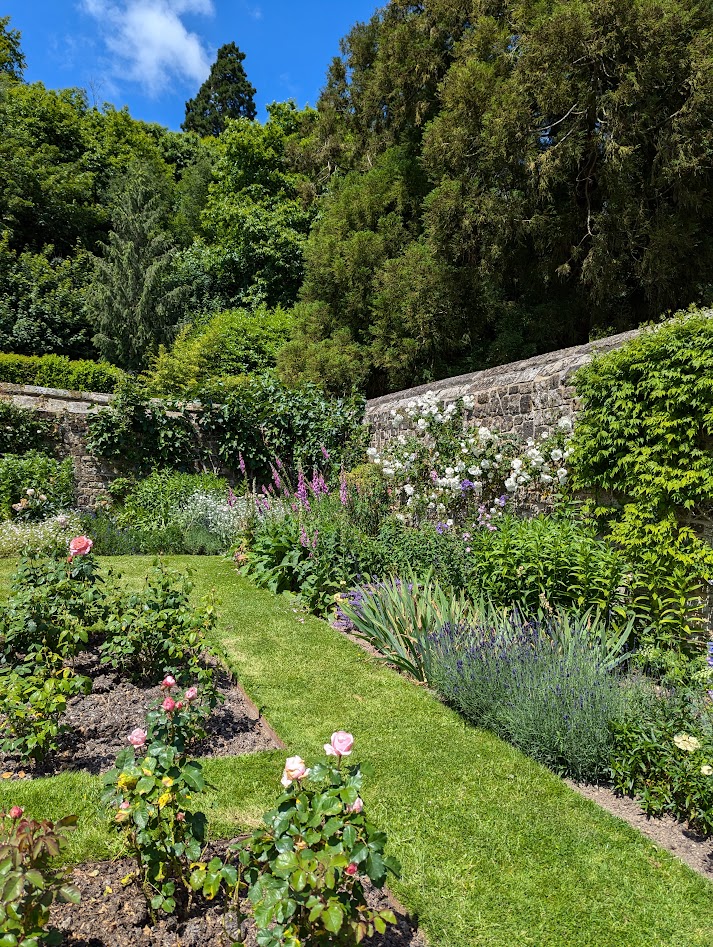
From here we wended our way up and through the grounds. There’s nothing like an old brick wall sheltering a sunken garden.
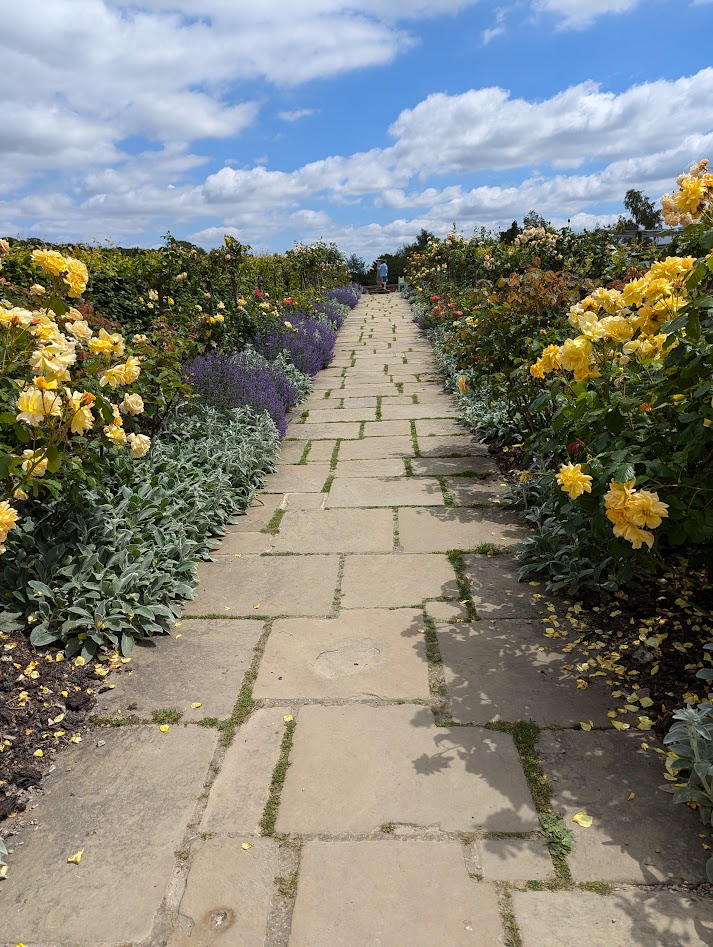
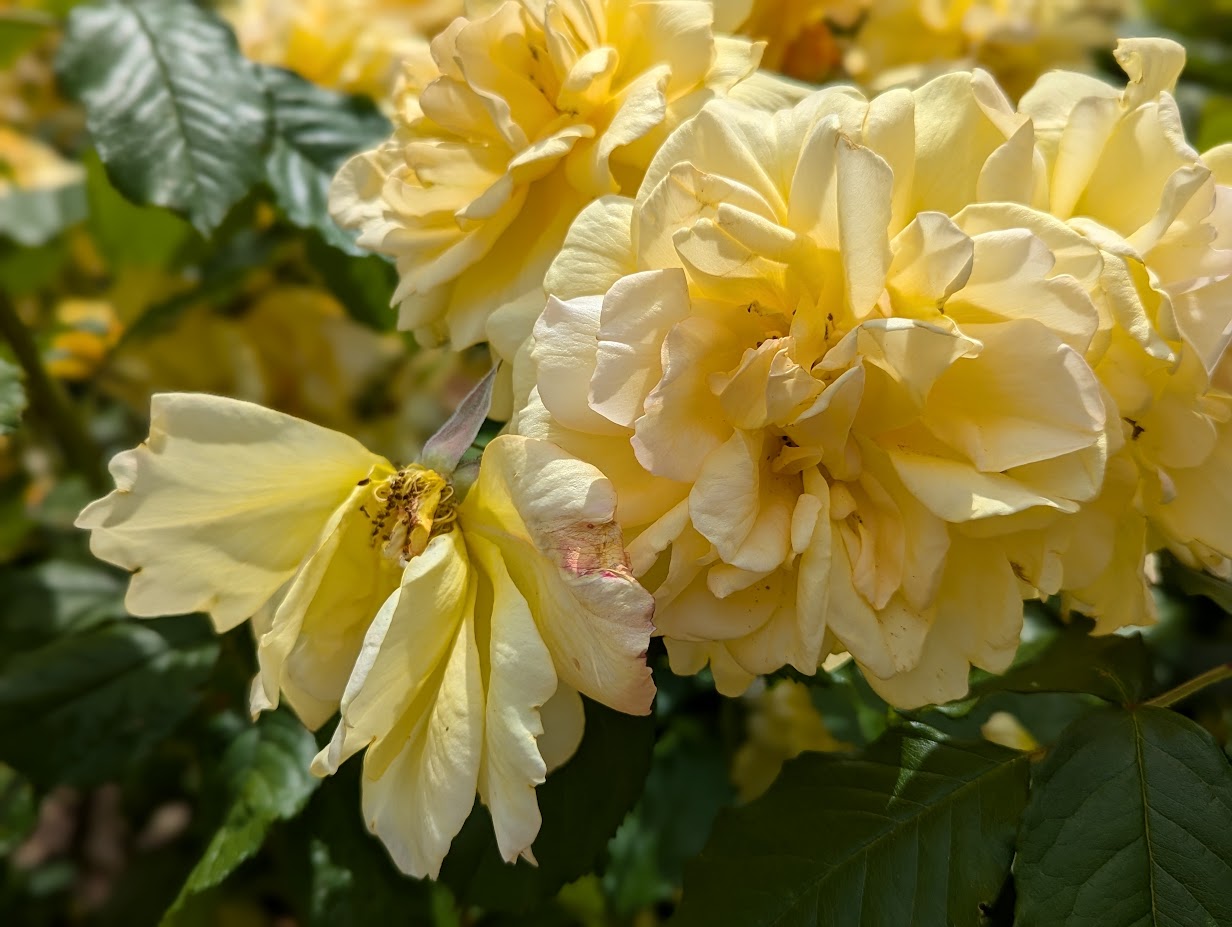
And then there is a lovely, long rose border
and some abundant rose petals:
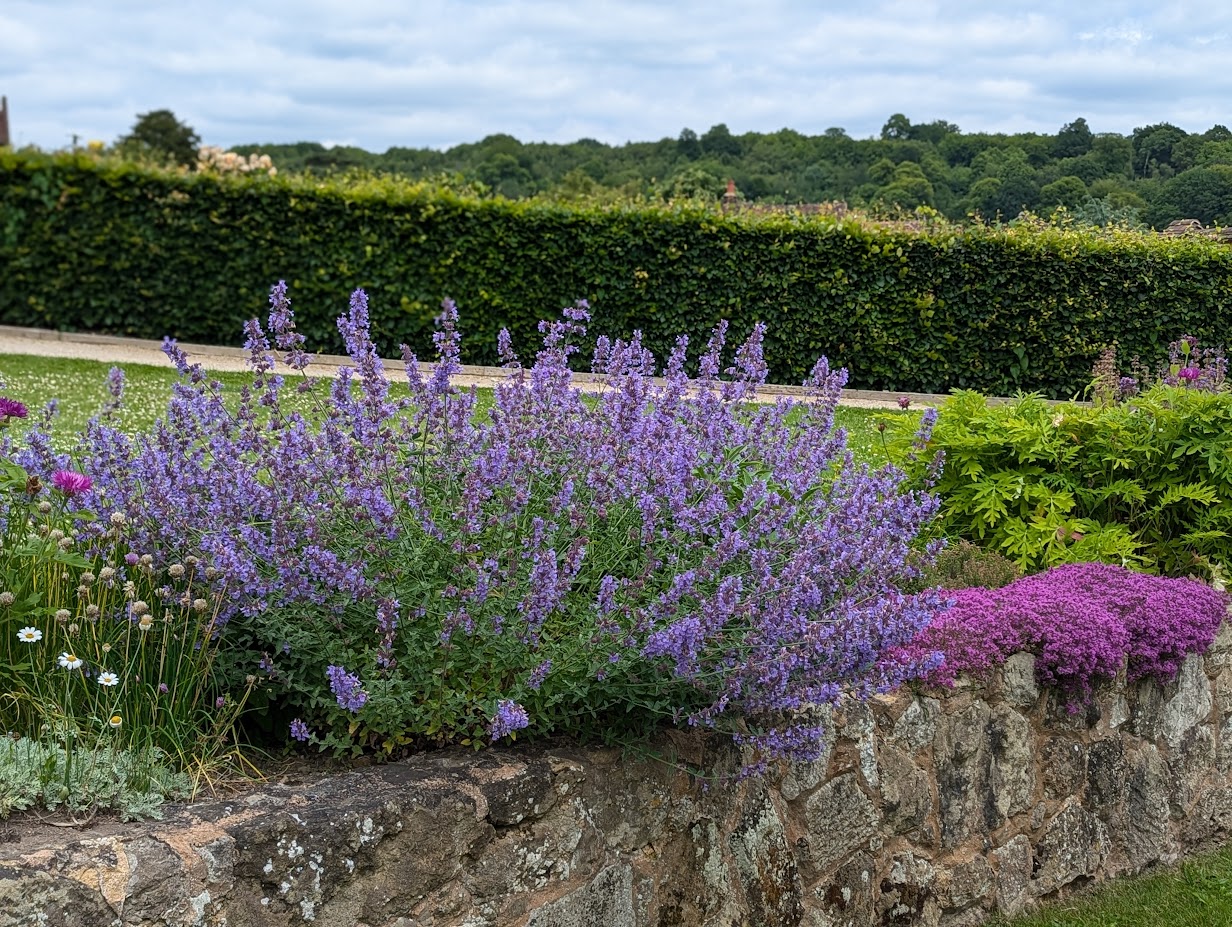
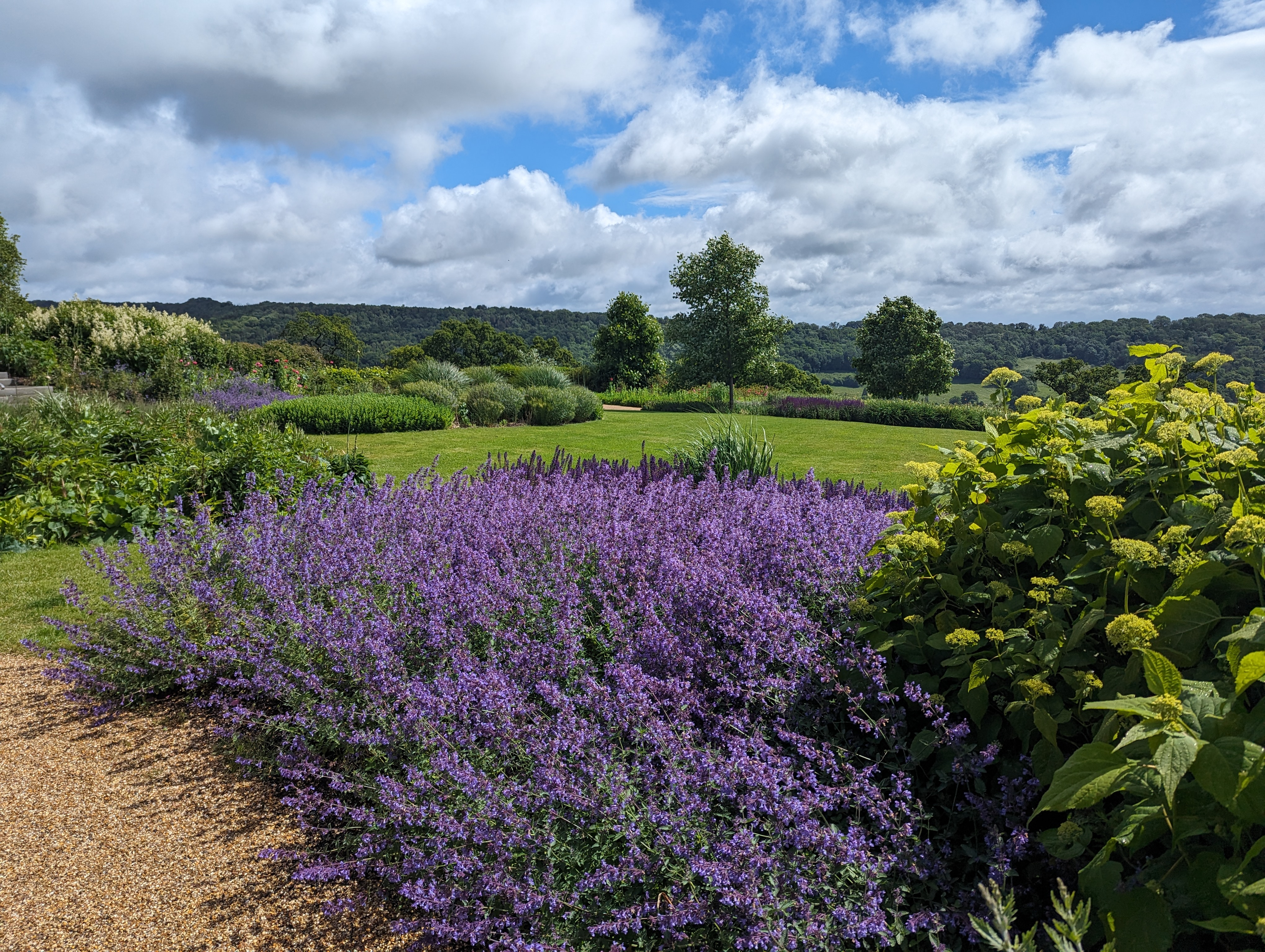
And then these catmints.
I love the inscription: The greater part of this wall was built between 1925 and 1935 by Winston Churchill with his own hands
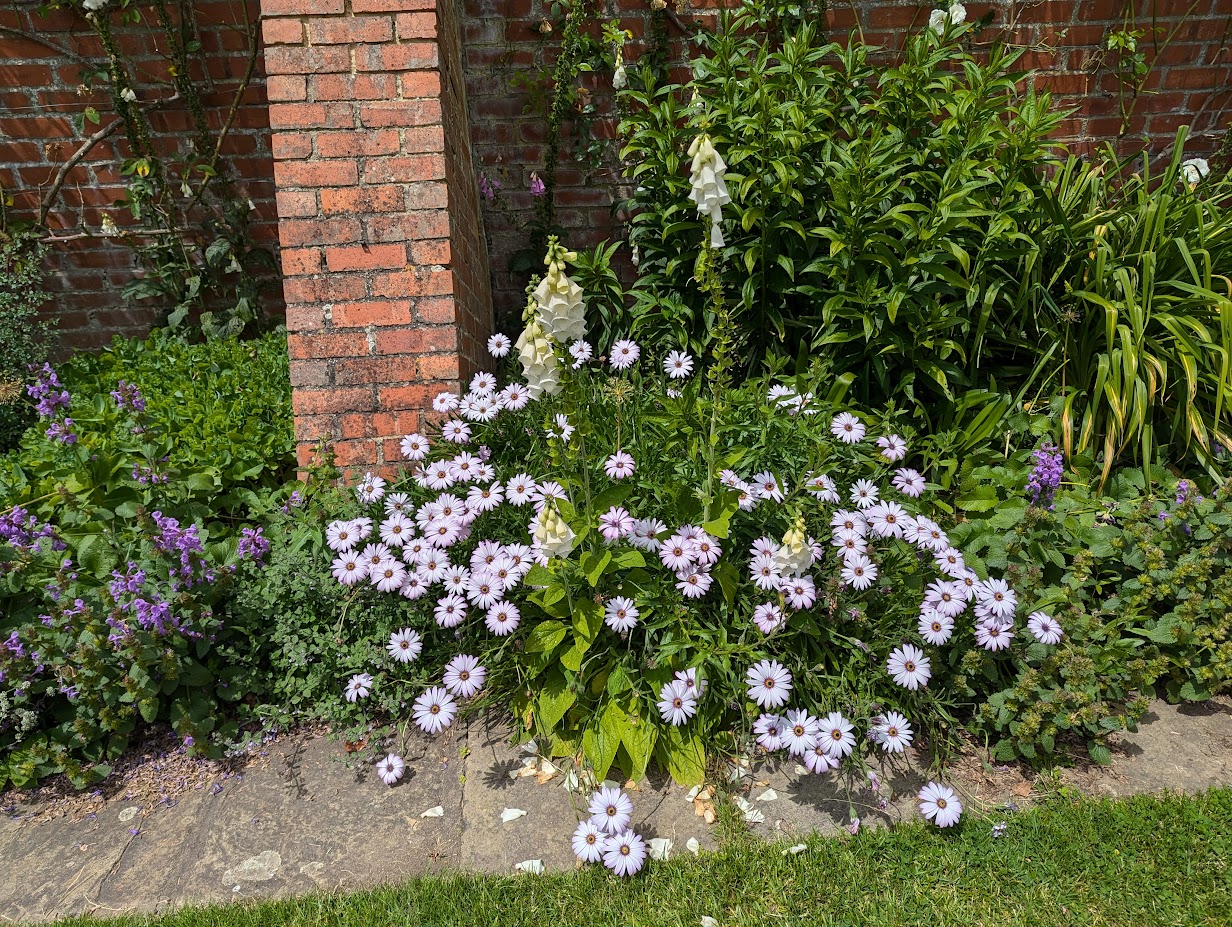
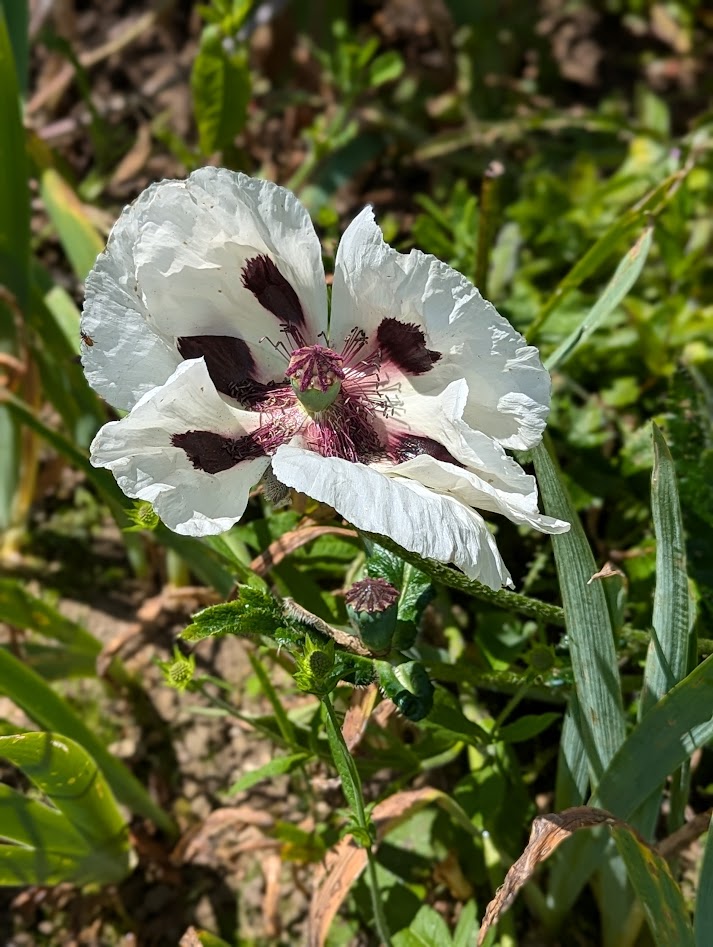
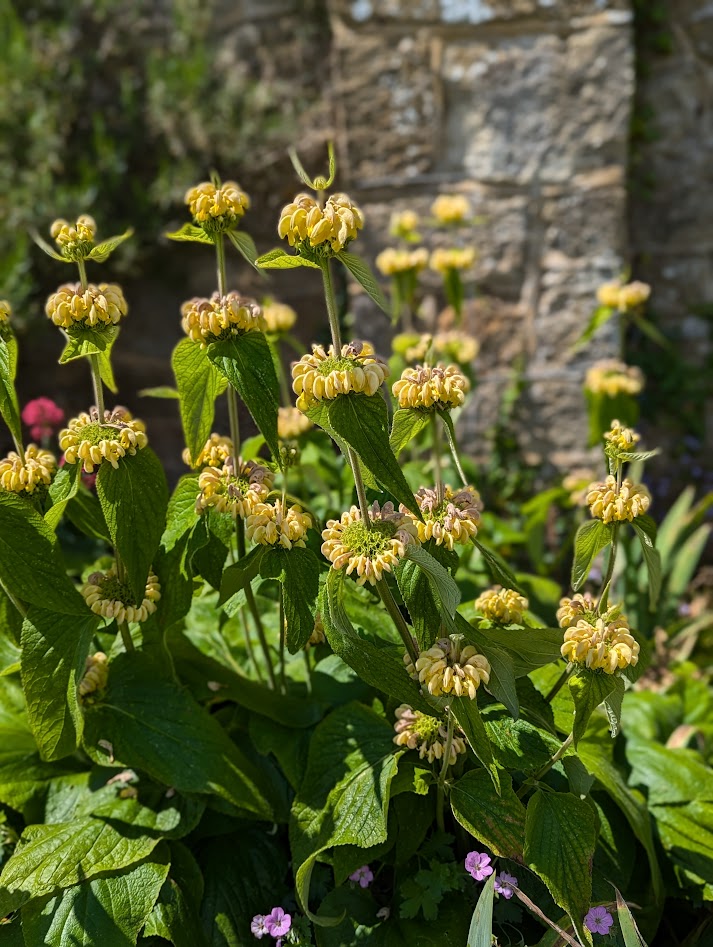
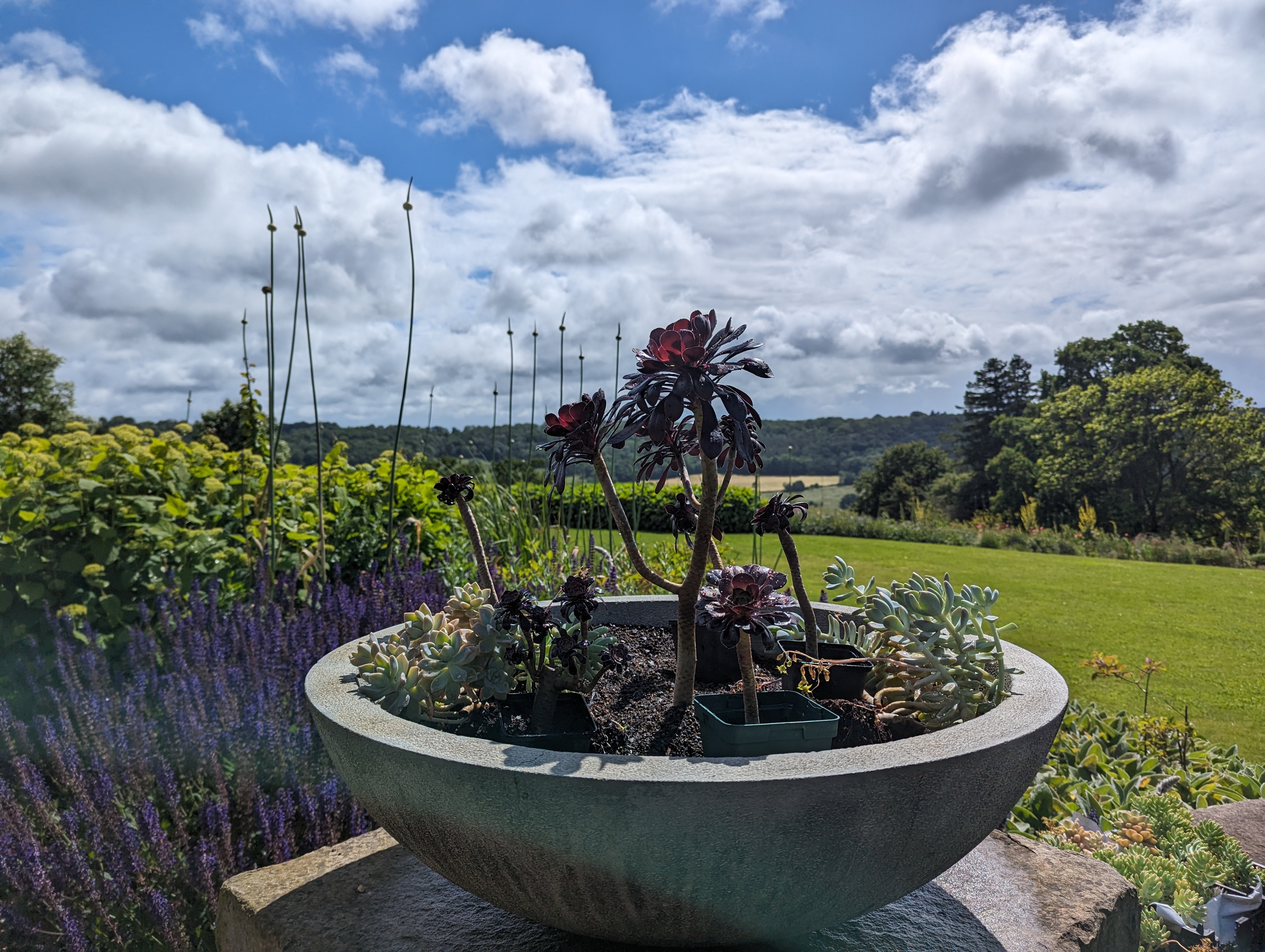
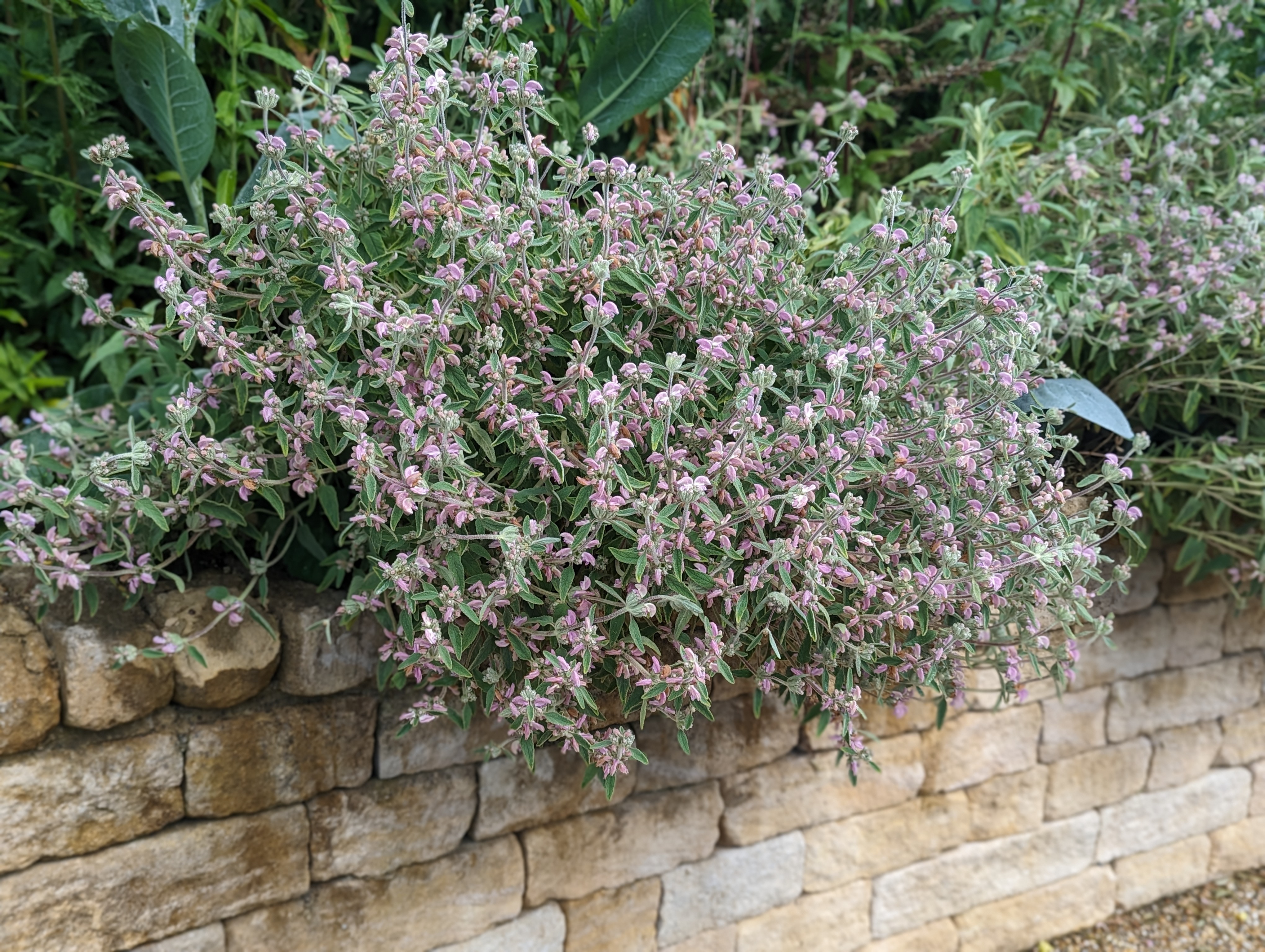
A few more beauties: cape daisy, oriental poppy and Turkish sage, Phlomis russeliana.
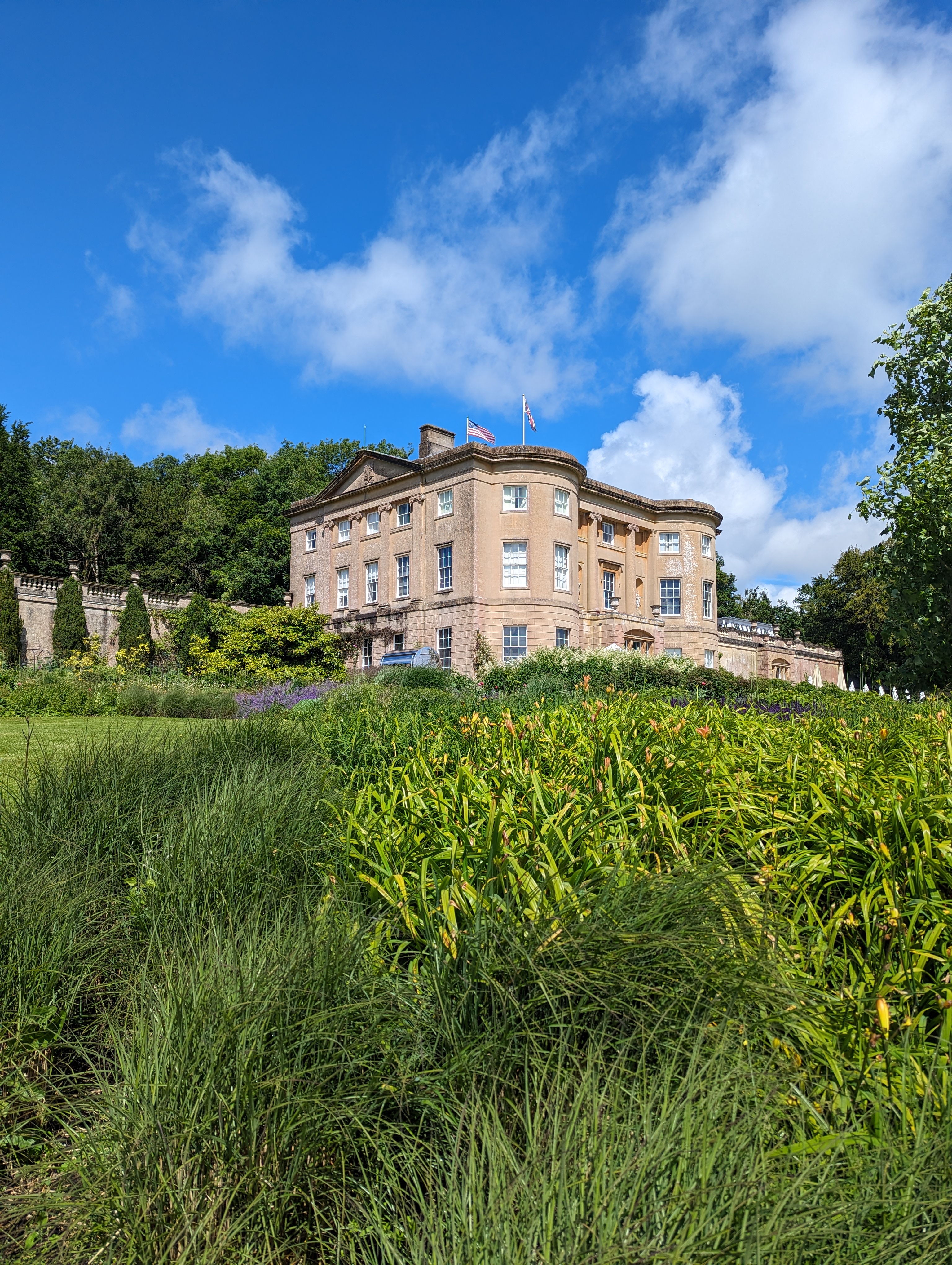
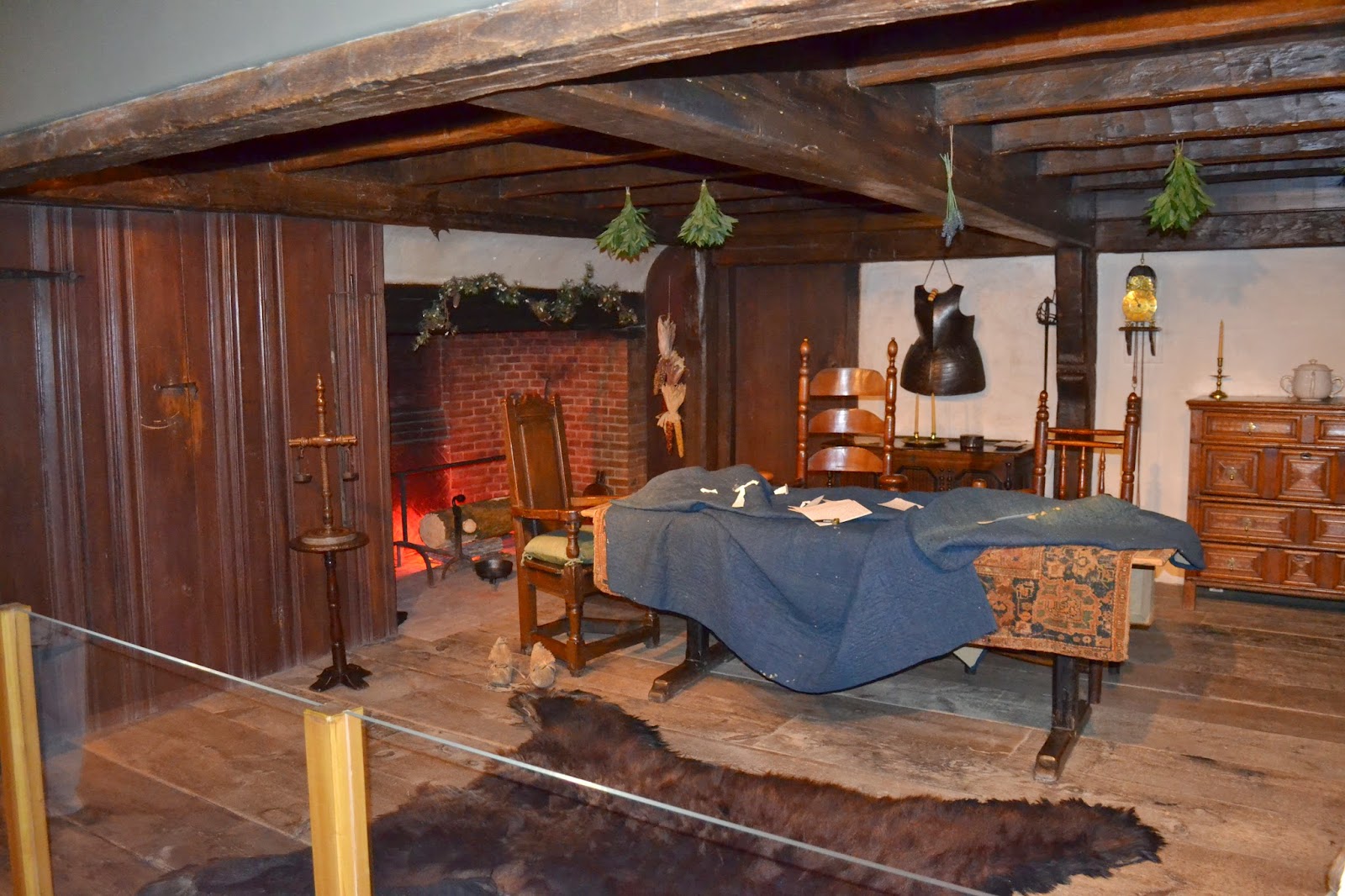
Two Englishmen who were both interested in antiques decided in the late fifties to collect American furniture and other items to introduce the best of America to the Brits. They set up their finds in a big house they found just outside of Bath that had most recently been used as housing for students but worked well as a museum of Americana. Each period room features a different example of American history and culture.
One of the rooms, for example, is furnished with an over-the-top carved bed and brilliant wallpaper from 19th century New Orleans,
while another was a New England room of about 1790 with wooden furniture of the period,
and so on, including items from American Indians, the Pennsylvania Dutch, the Civil War, etc. Dallas Pratt, one of the owners, also donated his collection of Renaissance-era maps, nothing to do with America really, but reflecting his interests. In other words, a little bit of this and a little bit of that.
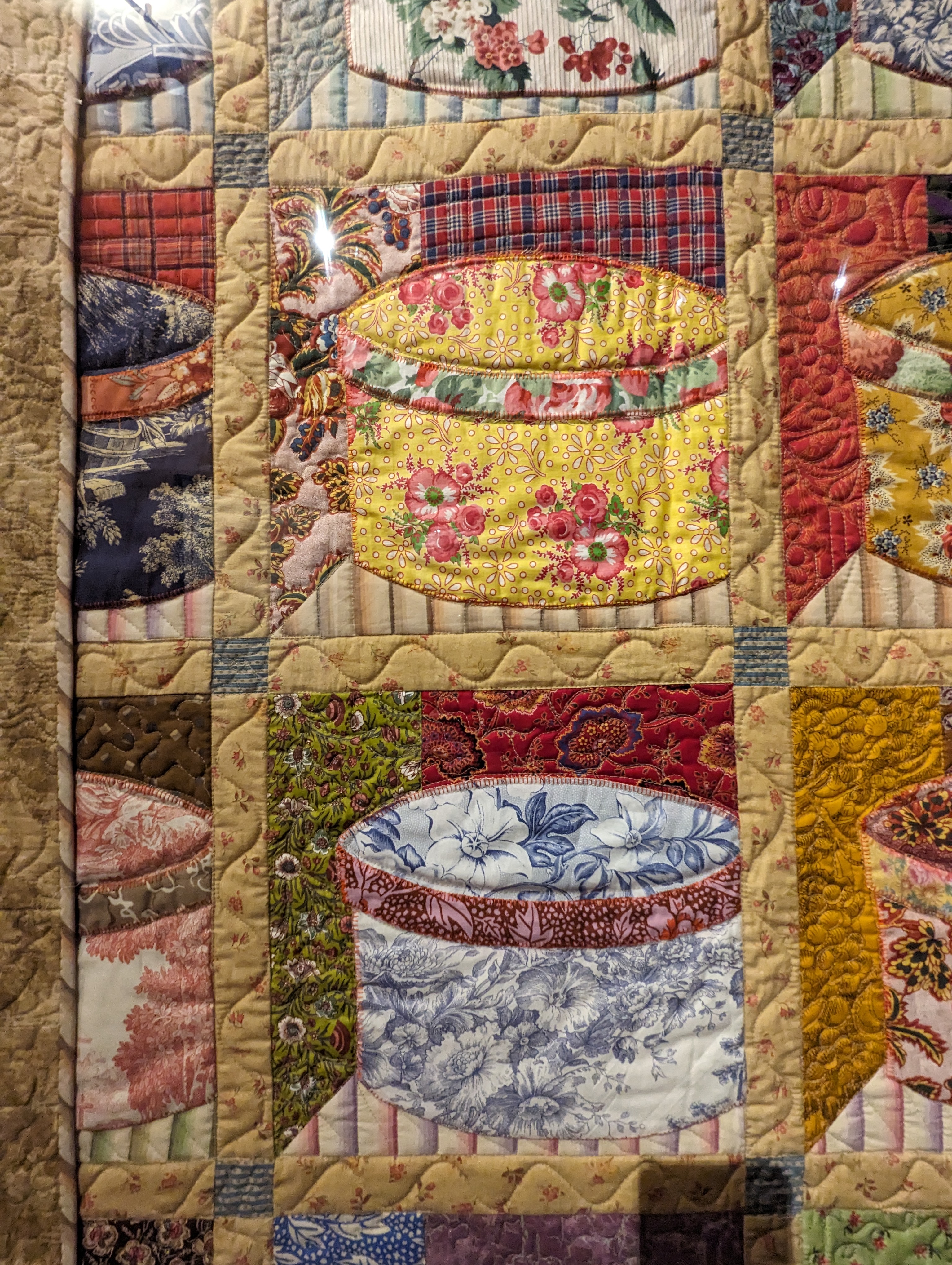
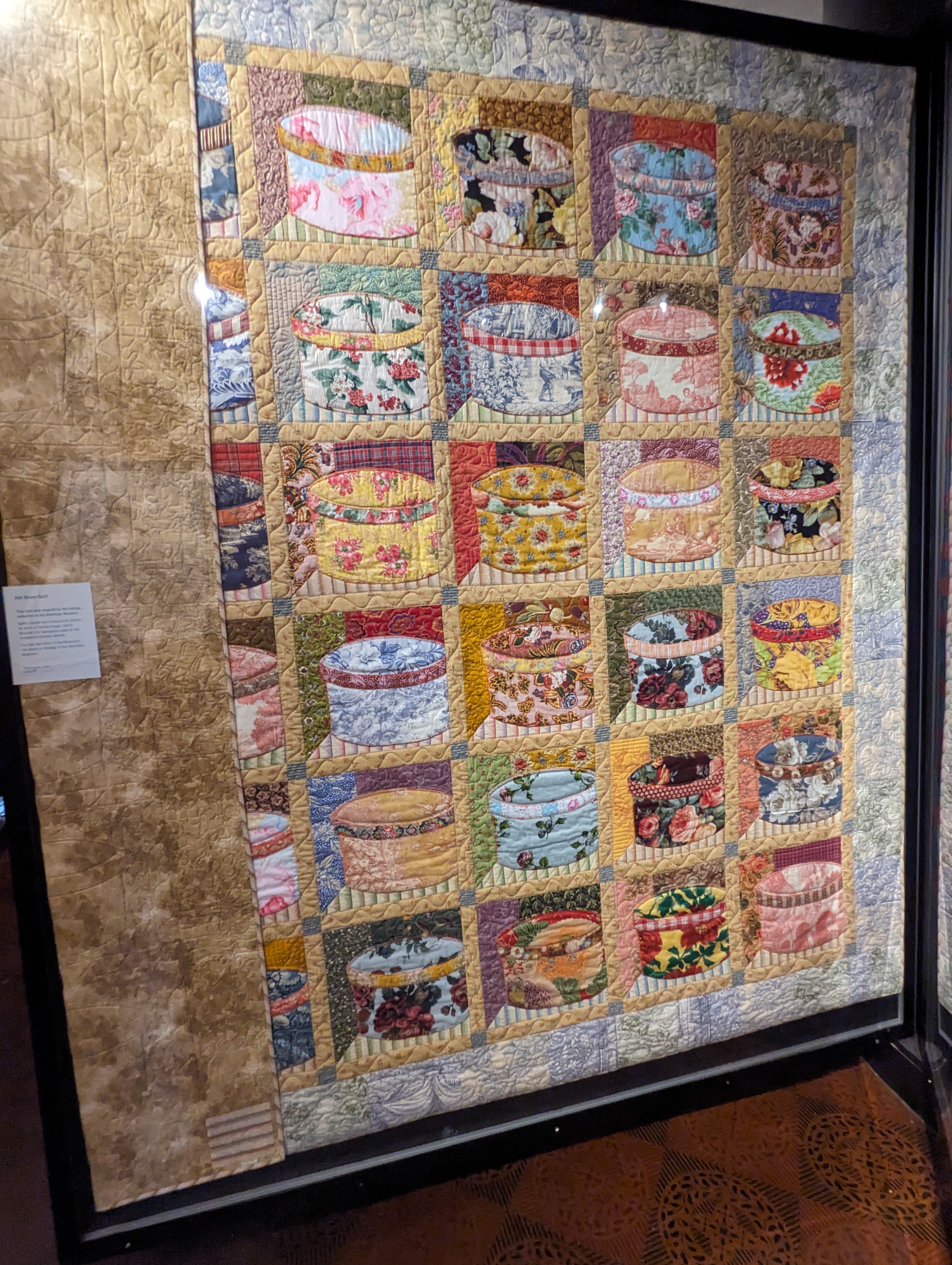
The men also amassed a collection of around 250 quilts, with 50 on display at any given time. They were nicely displayed on panels that allowed viewers to see every detail. This collection too was quite eclectic, ranging from an elegant silk log cabin,
to a Red Cross crazy quilt,
to a Kaffe quilt,
to a striking mourning quilt, also called “Darts of Death,” though that’s new to me,
to a square in a square quilt, one of my favorite motifs,
and more. There was no particular rhyme or reason that I could discern as to what kinds of quilts they collected – how about all kinds?- but an intriguing collection nevertheless.
Apart from the quilts, the collection was a bit of a jumble to my untrained eyes. A wonderfully displayed collection of Pennsylvania Dutch carvings caught my attention, less so the pressed glass and the pioneer cabin. But what was really amazing was the garden, 2.5 acres set in 125 acres of “rolling green topography,” as one critic described it.
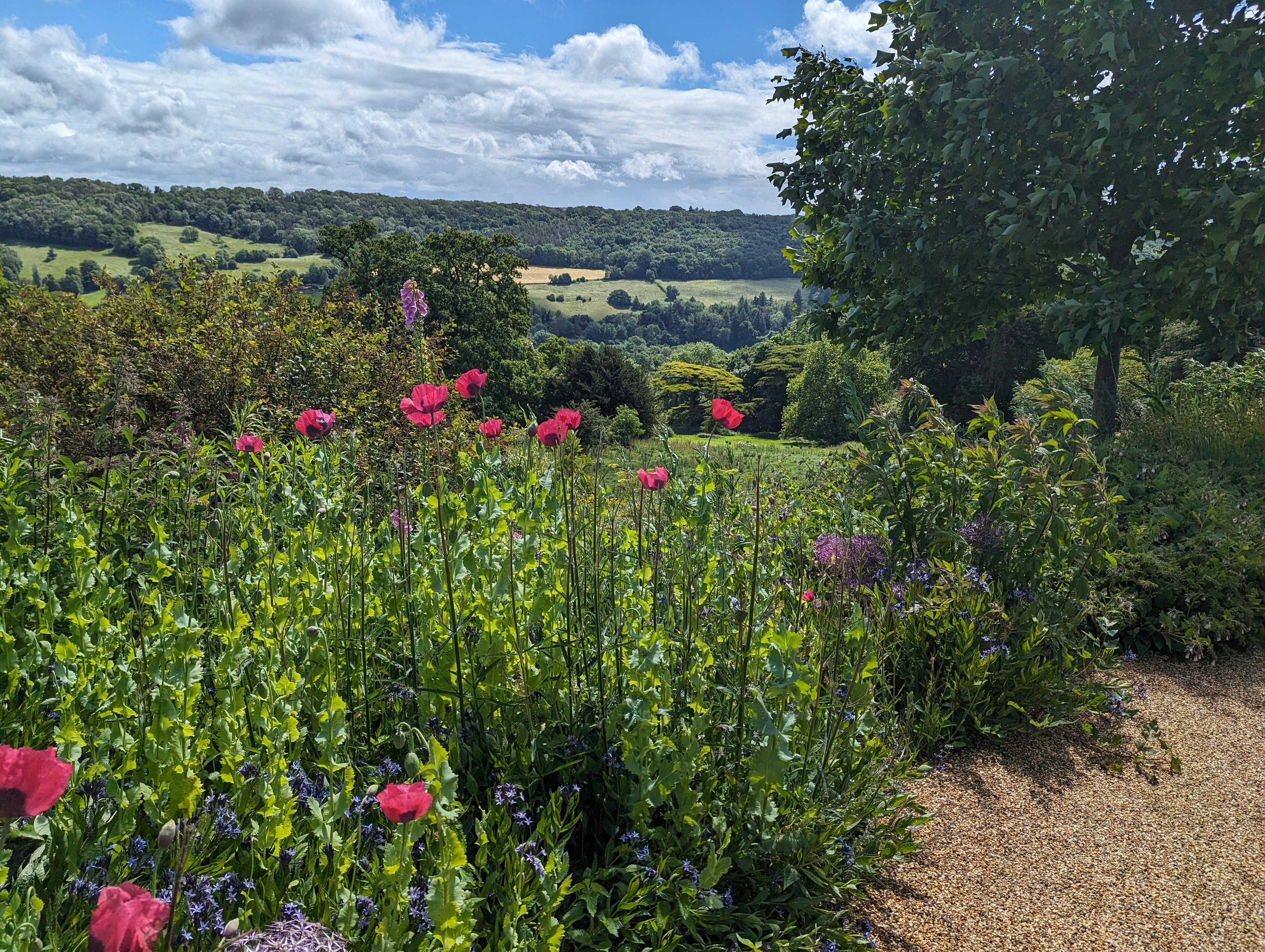
Oeme/Van Sweden had entirely reworked the garden about six years ago, and the results were astonishing. Start with a sloping site that looks down on a valley and up a borrowed landscape on the other side,
then add in huge swathes of grasses, lavender, poppies, verbascum (I think), foxgloves, roses, and daisies, among other things. (Click through for the full effect.)
And a month from now I’m sure another array of beauties will be in bloom. An interesting article about it can be found here. It was well worth the visit!
Our first stop today was Hailes Abbey, a Cistercian Abbey that was mostly destroyed in the Dissolution, so all that’s left are some stones, pillars and arches. But when you look at the expanse that the church encompassed, you have a sense of how enormous it must have been. Unlike its sister Cistercian Abbey, Rievaulx, which we visited back in the 90s, so little is left that it’s not imposing, but the audio guide was good at giving a sense of the place. Henry VIII has a lot to answer for, I must say – thousands of monks and nuns displaced, the entire country torn apart…
Speaking of tearing the country apart,
Brexit loomed over this trip and we discussed it with people a couple of times. At the Abbey, the attendant told us that the EU had changed dramatically from when the UK first joined, now the EU dictated what each country could do. What if, he said, the US, Canada and Mexico were under one government, the American flag was taken down and the seat of government was in Costa Rica?? I have no idea if this is a real scenario, but somehow I think not. But if that’s how some people see it, it makes more sense that after forty years, some of them want to leave. In any case, Alison encouraged me not to engage the man on the way out, so we escaped.
Meanwhile, all day long – a beautiful, sunny Sunday – we encountered small groups of hikers complete with hiking boots, poles, and rucksacks, walking on one of the trillion footpaths that cover this country. An entirely different culture from ours, for sure.
Lunch was in Snowshill at the local pub across from St. Barnabas Church. Most all of the tables were booked for a Sunday roast, but we managed to slip in for sandwiches before everyone arrived. Just as we were leaving, several multi-generational family parties arrived. The English have a sense of ritual – Millennium memorials, Sunday roast, etc. – that we have never had. It may be a bit stuffy but it’s also comforting.
We had two gardens on our agenda, but we could only manage one. Having been to Hidcote 25 years ago, we plumped for Kiftsgate right across the road, and it was wonderful. It’s a family house and garden, and the third generation of the gardening family still lives there.
The house is built at the top of the escarpment, with this gorgeous view over the Cotswolds.
This means that you descend from the house down to the lower garden, and then back up again, offering the opportunity for paths, views and various plantings. Here’s the house at the top.
This was a very relaxing garden, perhaps because within the spaces defined by stone walls or boxwood, plants twined somewhat wildly with each other. Lots and lots of roses, like this ‘Trumpeter,’ since this is the home of the famously enormous Kiftsgate rose (past its bloom now), but also at this time of year dahlias, Japanese anemones, asters and various other beauties. The water gardens were especially beautiful and imaginative. Just look at this elegant installation, with its flowers that gently pour into the pool.
and this simple fountain in the midst of a bountiful border.
Here’s a view from the pool at the bottom of the hill back up to the house,
and I thought of how this house and garden would be wonderful for entertaining. I wonder how the latest generation, who must be about our age, are planning for the future.
We wandered back home on this beautiful day and had dinner at the Kings Arms. They were full up (caution: Sunday is a hard time to find dinner without a reservation) but squeezed us in on the top floor, where several family parties – or maybe just one big one?- were filling up the space. An okay dinner but with lovely views of the square and the church.
Leaving Oxford on a bright, clear day, we picked up a little white Golf to carry us to Stow. Our first goal was Blenheim Palace, but Alison got an email from them saying that because of an “incident” they would not be opening until lunchtime. Since the park was still open, off we set.
The driving was not too bad, despite a few times retracing our steps and breathing heavily. But now we were told that the palace would not be opening until 2:00 (still no explanation, but you can see the police tape). After a look around the shop, we picked up a picnic sandwich to eat under a tree before our stroll around the park.
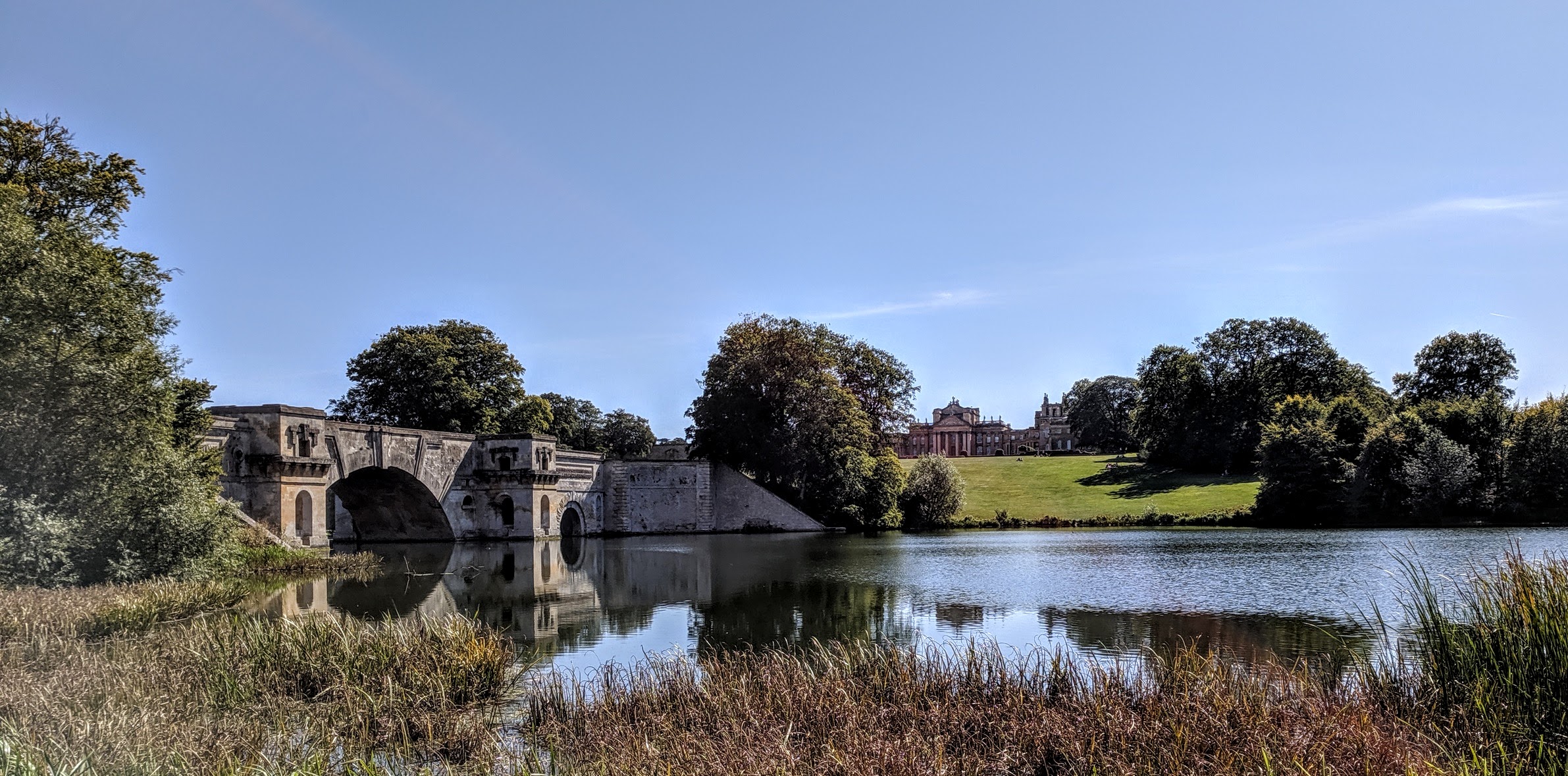
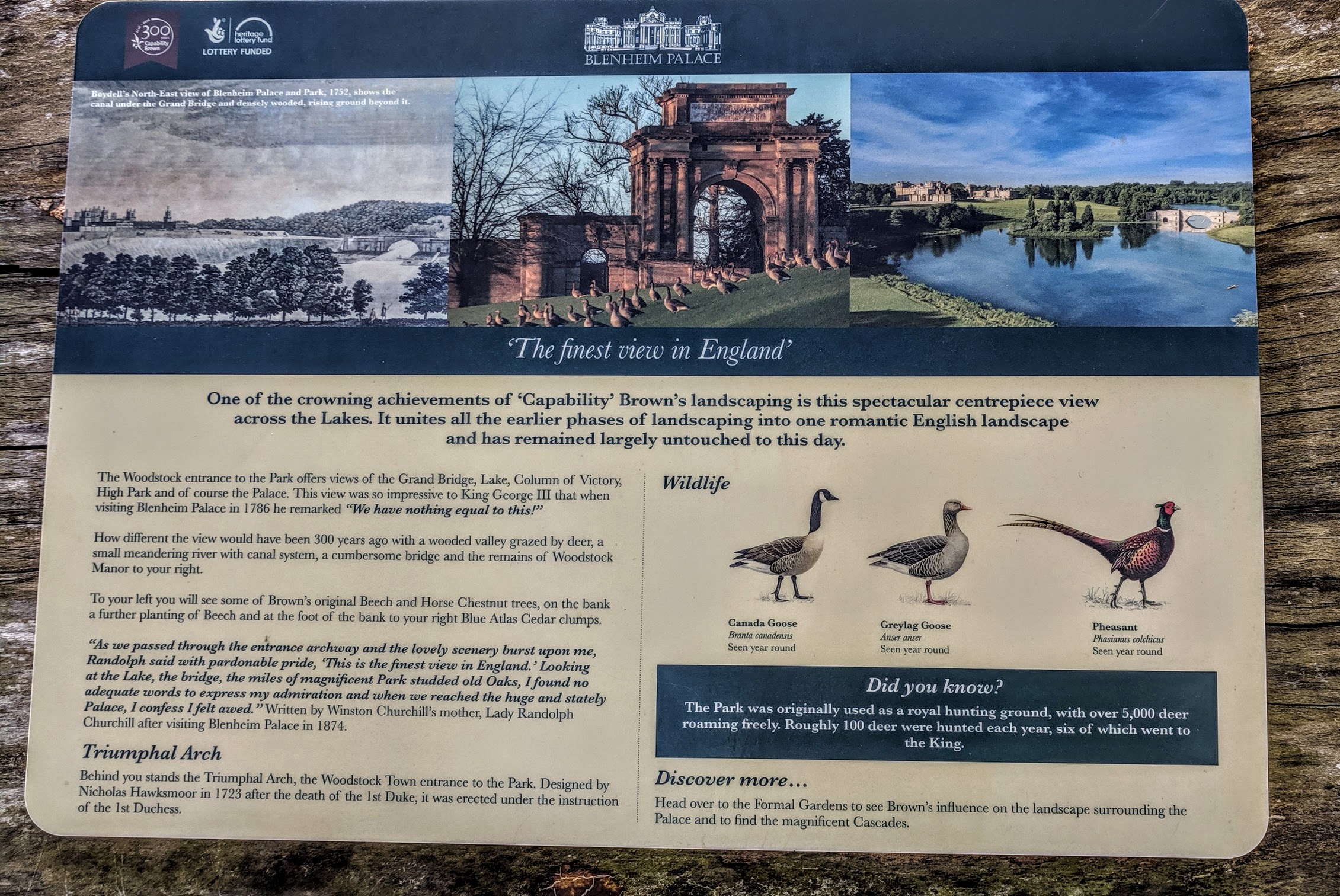
The park, meanwhile, was updated by Capability Brown in the 18th century and is just as lovely as can be. Passing over the Vanbrugh bridge (so large it contains 30 rooms!), we came to yet another Harry Potter tree, a cedar which has been propped up to keep it alive by the skin of its teeth. (This is the one that Severus Snape hung from in Order of the Phoenix, when he was being bullied by Harry’s father.) You can see that it is carefully preserved from any rabid fans who might be tempted to try the same.
As we walked along, we got a good glimpse of the Column of Victory, erected in memory of the Duke of Marlborough’s victories at war. Here is is, charmingly accompanied by a herd of sheep. From here I continued around the Queen’s Lake while Alison went back to the shops. Gorgeous views, magnificent trees, thank you, Capability Brown!
At this point we were told that they would not open today at all but did extend our tickets through the 20th if we decided to return. Still no word on what the “incident” was, but Alison discovered it when we got home. No, it was not a muuurder, it was a theft! Of a golden toilet (part of an art installation, see more further on)! As of last fall, its fate was still unknown, though there’s plenty of speculation.
Despite losing the way twice, we made our way to Stow in just a few hours. Luckily, people are very helpful with directions. But finding the house was a nightmare. We kept circling around Stow’s High Street, with people close behind us all the way, and finally found Shepherd’s Way. It is a tiny, narrow passageway that set the car to beeping because it was so tight. No room to park whatsoever! See?? We parked in the next street just beyond, and thanks to friendly neighbors who encouraged us to find our house, we had the strength to pick up our groceries and bags and go back along the narrow alley in search of Carter’s Cottage.
It turned out to be a delightful little house about midway down on the left, with two tiny terraces smothered in roses, Japanese anemones and honeysuckle. It’s just two up, two down (mostly) but with a really good bathroom and a washer/dryer (mysterious like all British appliances, but we made it work). Here’s a look at the cottage, which suited us down to the ground.
We had a glass of wine on the terrace and then had a delicious dead chicken from Tesco, along with a salad and shortbread for dessert, which we seemed to need. Looking forward to a real shower, that does not require standing up in a tub or kneeling!
This morning we looked out the window at blue skies and decided to go to the Royal Botanic Garden while the weather held. We walked over to the North Bridge and picked up the bus, with a bit of help from the kilt-clad man at the door of the Balmoral Hotel. When the ticket taker told us the blue poppies were in bloom, that was all I needed to hear. They have a reputation for being extremely difficult to grow, and because they come from Nepal or China or somewhere I did not expect ever to see them. They were amazing, so blue and so many of them. They were even more enchanting close up.
I’m not actually sure that I like that shade of blue, but no matter- we saw them in abundance and that was enough. (Note that I have since seen them at Kildrummy Gardens among others, so they must not be so rare on this side of the Atlantic.)
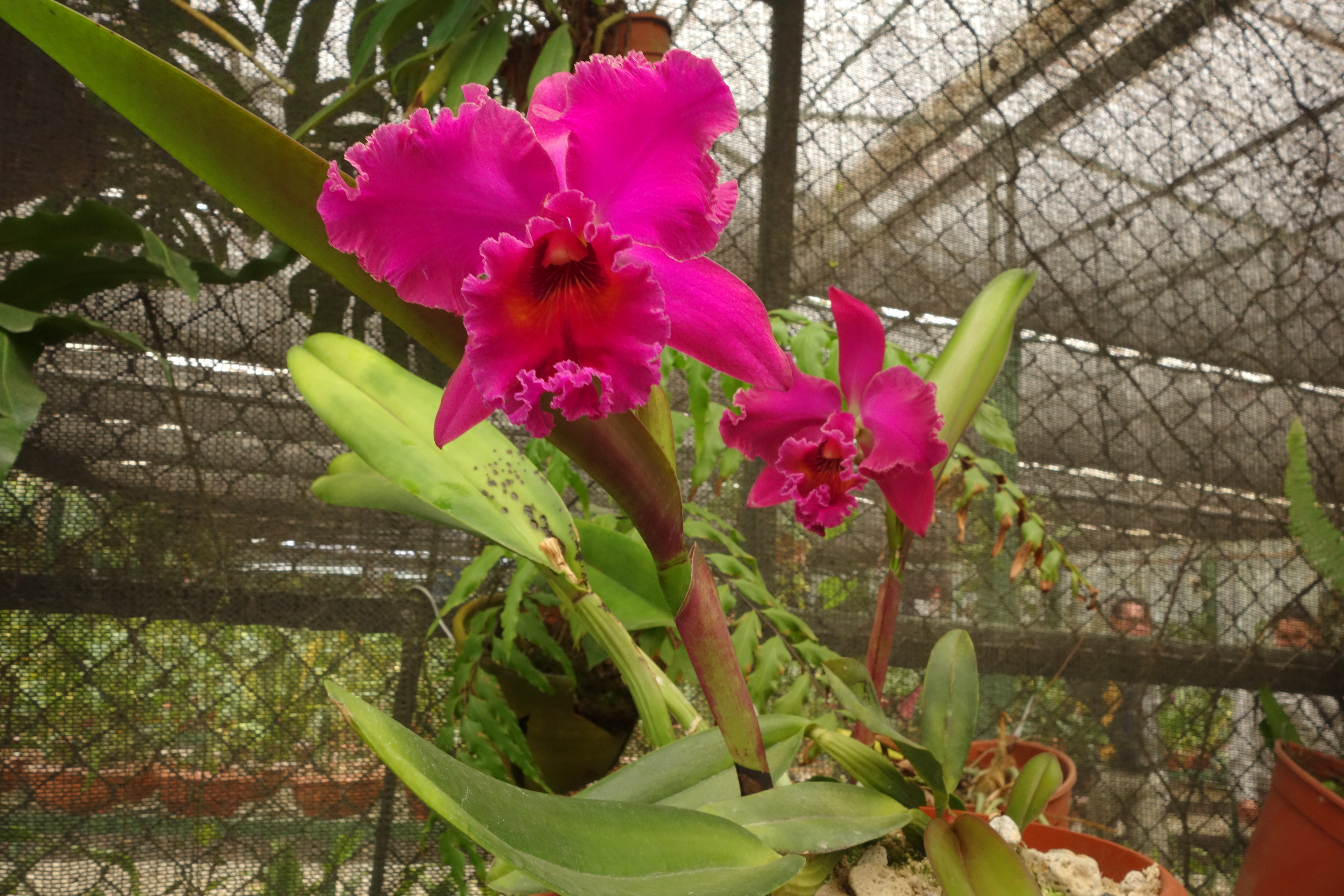
As usual, I was struck by the perfect edging and the low-cut grass with tiny daisies, quintessentially British to my American eye. In addition, we saw the glass houses with lots of begonias and orchids. I could become a begonia collector without too much difficulty… A few more images that took my fancy:
These beautiful water lilies
A monkey puzzle tree, just like in books!
And a Seussian primula. I wish I could grow these, but they prefer more water than Virginia usually provides.
Had a sandwich lunch outside at the cafe with three of my favorite things,
and walked to the bus stop. A very nice young woman with her young daughter helped us to find the right stop to get off at the National Museum of Scotland.
Here, fading just a bit, we wanted to see the early people (Neolithics), the Lewis chessmen, and the strange coffins of dolls found on Arthur’s seat in the nineteenth century and never fully explained. We saw them all. The Neolithic stuff was organized by topic so was a bit hard to follow, but we looked for items found on Orkney and found quite a bit. Here, for example, is a comb from the Brough of Birsay, though the majority of items were made of stone. Those who are interested can find more images of objects here by searching for Orkney. The Lewis chessmen were as charming as ever, and the strange little coffins were just as mysterious as ever (though you can find details on what we do know in this article). A quick tea and cake in the cafe and back home again. Dinner was next door at Badger, named in honor of the Wind in the WIllows because Kenneth Grahame was born next door at our B&B and they are both capitalizing on this fact. It was nice to come downstairs and just have dinner next door – game pie for me (watch out for pieces of shot!) and cheese plate for dessert – while surrounded by charming badger memorabilia. Then home to pack in prep for leaving tomorrow.
For the last few years (really), a little slip of paper has been floating around in the piles on the kitchen counter. I had planned to see Margaret Roach’s garden in Copake, New York, at her Open Garden Day as part of a trip to visit Uncle Buzz in Salisbury. Sadly, her garden was devastated by hail, so instead of a tour she offered an illustrated talk. I was disappointed not to see her garden, which I’ve been following virtually here for years, but felt worse for her to have so much work turned into shredded leaves in just a few moments. The good news is that her lecture was fascinating, as I can remember from my notes, scribbled on a piece of hotel stationery and saved since, I kid you not, June of 2013.
“The garden is a 365-day-a-year thing. The garden never closes.”
Non-gardeners and sometimes even gardeners can get trapped into thinking the garden is all about smashing moments, nothing more, but there is always something there. Even on the most dreary day of winter, you’ll find something to look at, to take note of, to think about. It’s not all roses, people.
“When people say some colors don’t go together, think of the colors of the sunset. It is YOUR garden.”
So if you want to have orange marigolds next to pink lilies, be her guest. Mom always said, somewhat ominously, that you could tell a lot about a person by her garden. So, embrace it!
“Design your garden from viewing spots in the house.”
This is just common sense, but how often do we really do it? The oak tree garden is a focal point from the dining room and even from the front door, and it’s my most successful garden, so that’s good. The kitchen window overlooks the rhododendrons and the akebia on the trellis, not terribly exciting but okay. The living room windows overlook the maple tree, so not too bad, and the back door offers a good view of the terrace. Pretty good on the whole, but not on purpose.
My final notes are about a few plants she suggested.
For big leaves, go for Rodgersia (I think it’s too dry here) and Astilboides (maybe ditto).
Leave rhubarbs to flower, they are gorgeous.
Cissus discolor, the rex begonia vine, is a tropical she has written about here. Gorgeous leaves!
It was a wonderful morning, and I intend to go back…one day. Maybe this June or August?
I must have been searching for Irish gardening books when I came across Helen Dillon, whom I’d never heard of but who is clearly a garden writer of note. I wrote about her one of her books here and hoped to visit her garden on our trip. Although Alison is not a gardener, she is game. We made our way to the garden on the public bus (see below), and it was spectacular. So much to say that I have divided this account into multiple categories.
Some plants I have and how Helen Dillon uses them
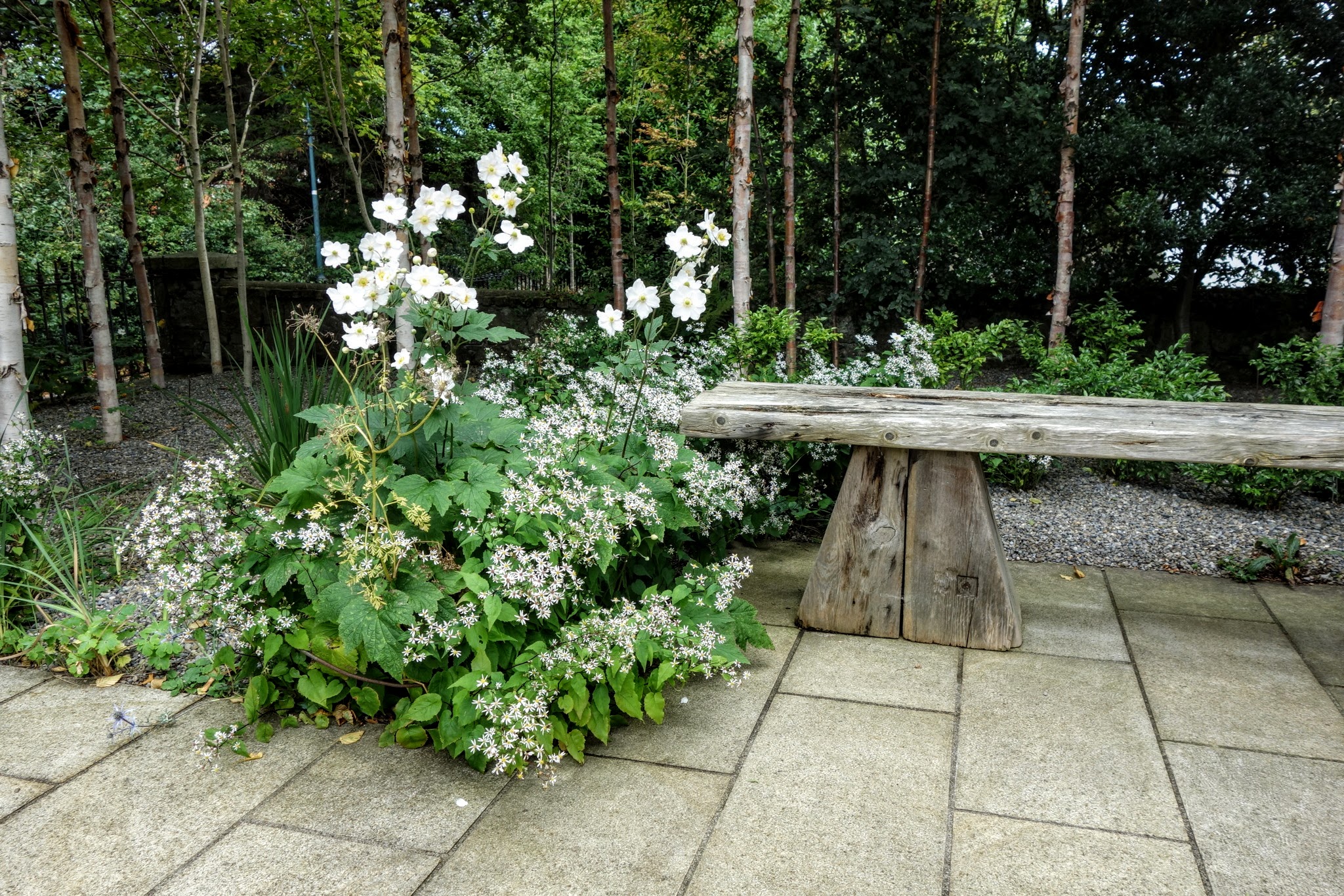
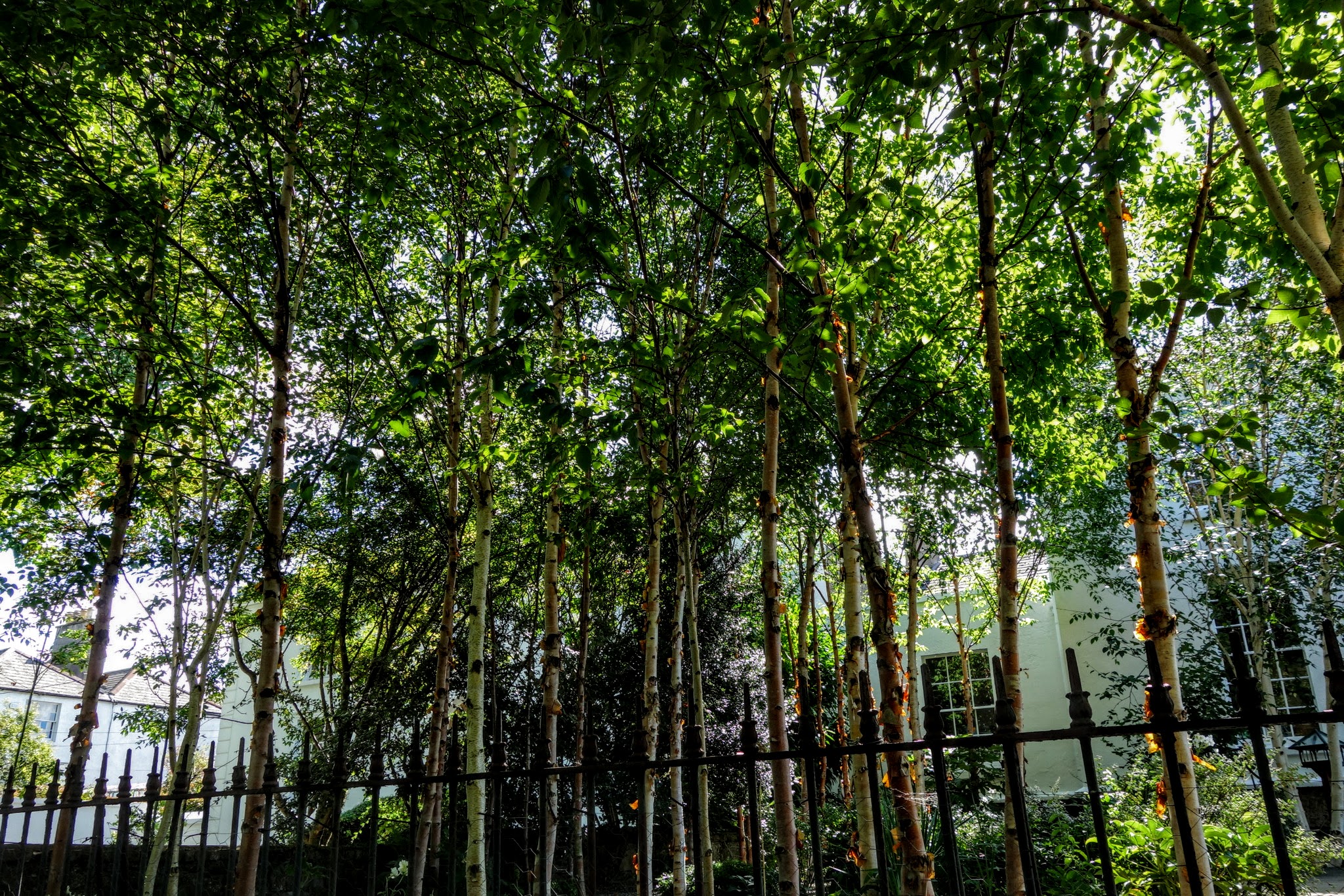
I plant woodland aster under the maple tree in front because they can take the dry shade that is a constant challenge in this garden. Helen, on the other hand, pairs them with white Japanese anemones. Now, I have tried anemones three times and they never come back, but maybe this time will be the charm. Her asters are a bit more floriferous than mine, but then I guess I could actually water them occasionally and see if that makes a difference. This is in the front garden, which she has made into a birch grove and a very quiet, serene place. Here it is from the street.
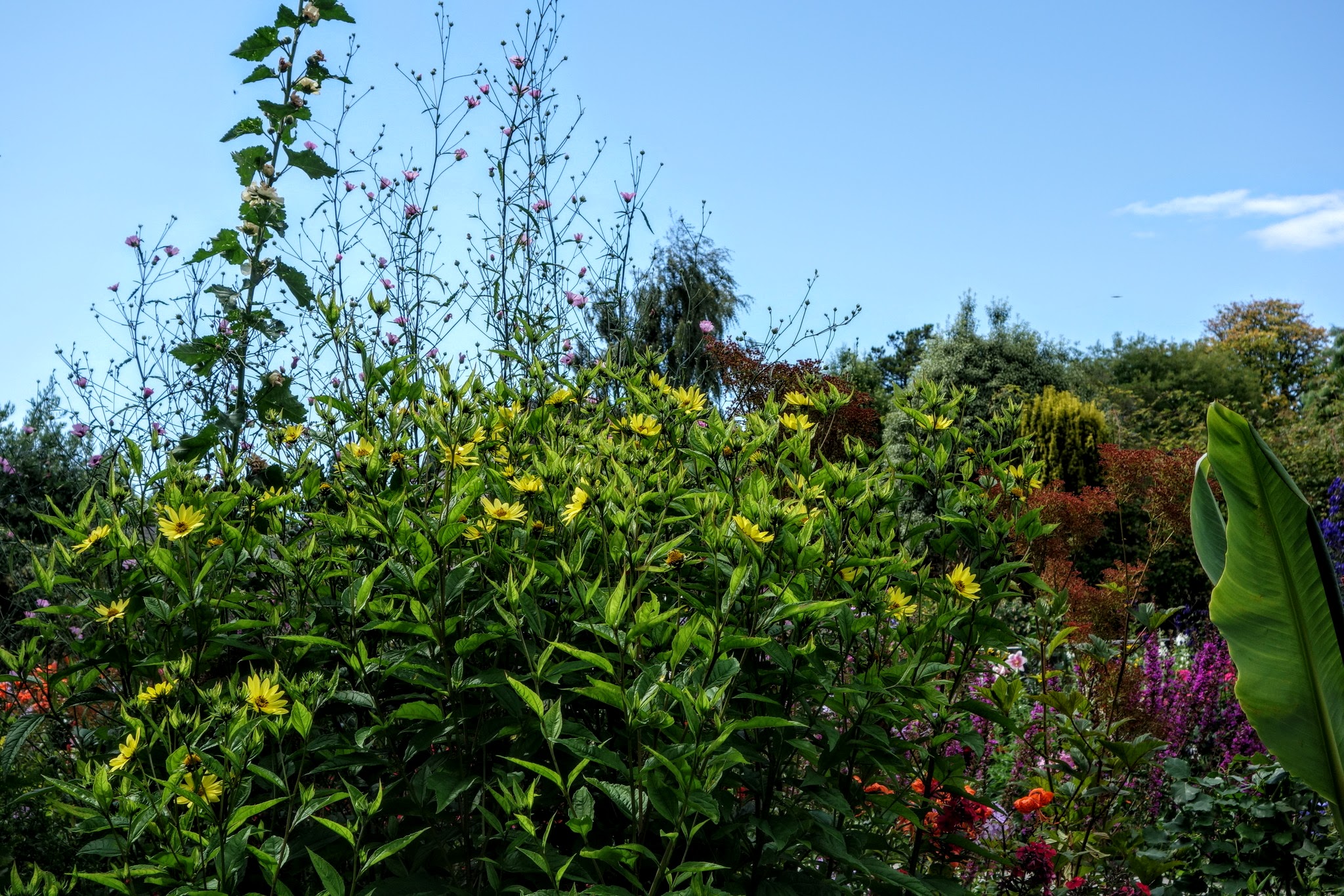
I have a love/hate relationship with my helianthus, which I sometimes call helenium (see, there are several issues). The first year, it blew over in a storm and crushed the plants beneath. Then it spread vigorously, so that I have had to root it out. Plus, it is so tall that I now give it the Chelsea chop in early summer so that it doesn’t get too big and then fall like a giant redwood.
But here it is in Helen Dillon’s garden, appearing to behave itself and consorting with the verbena in a lovely way.
Water elements
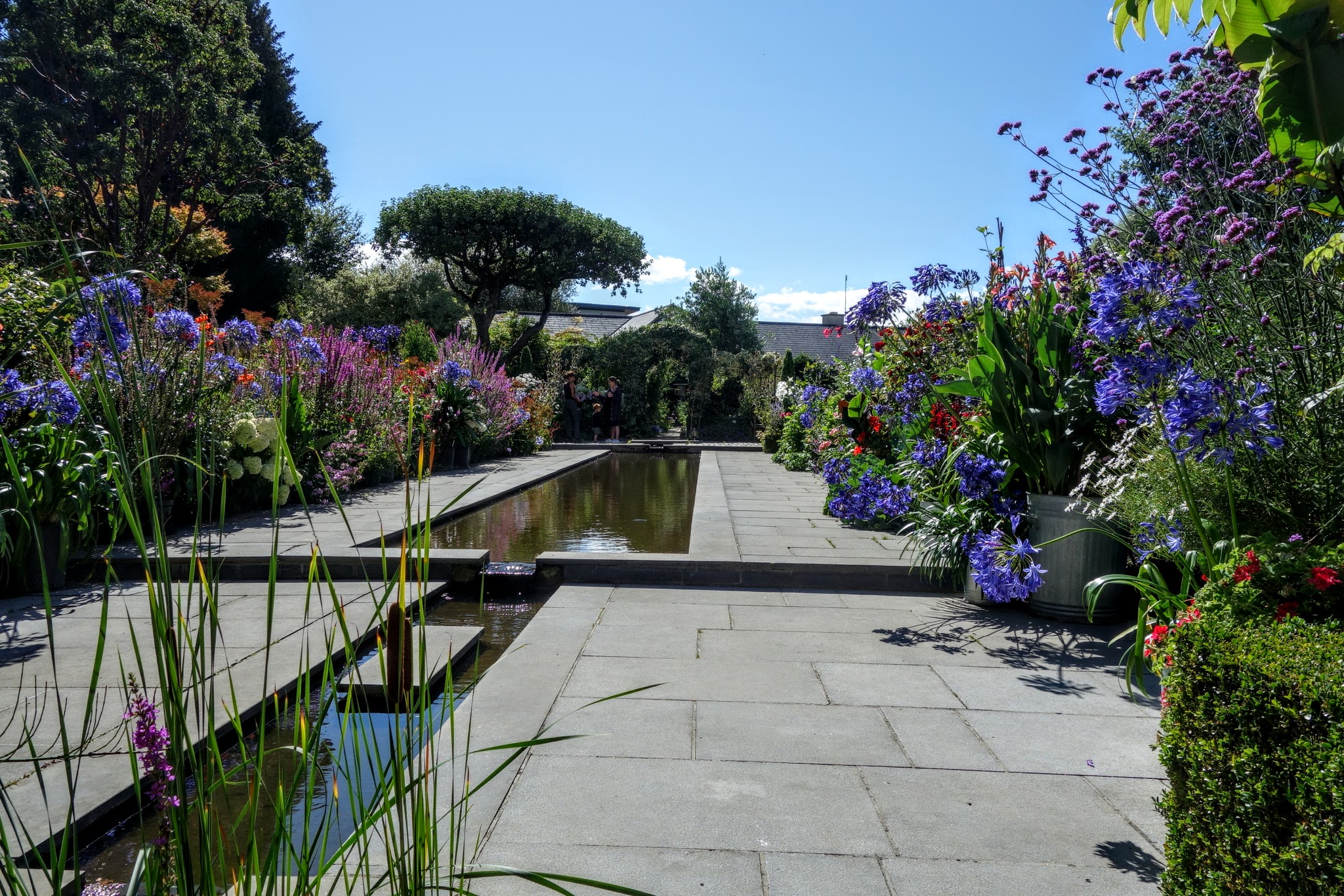
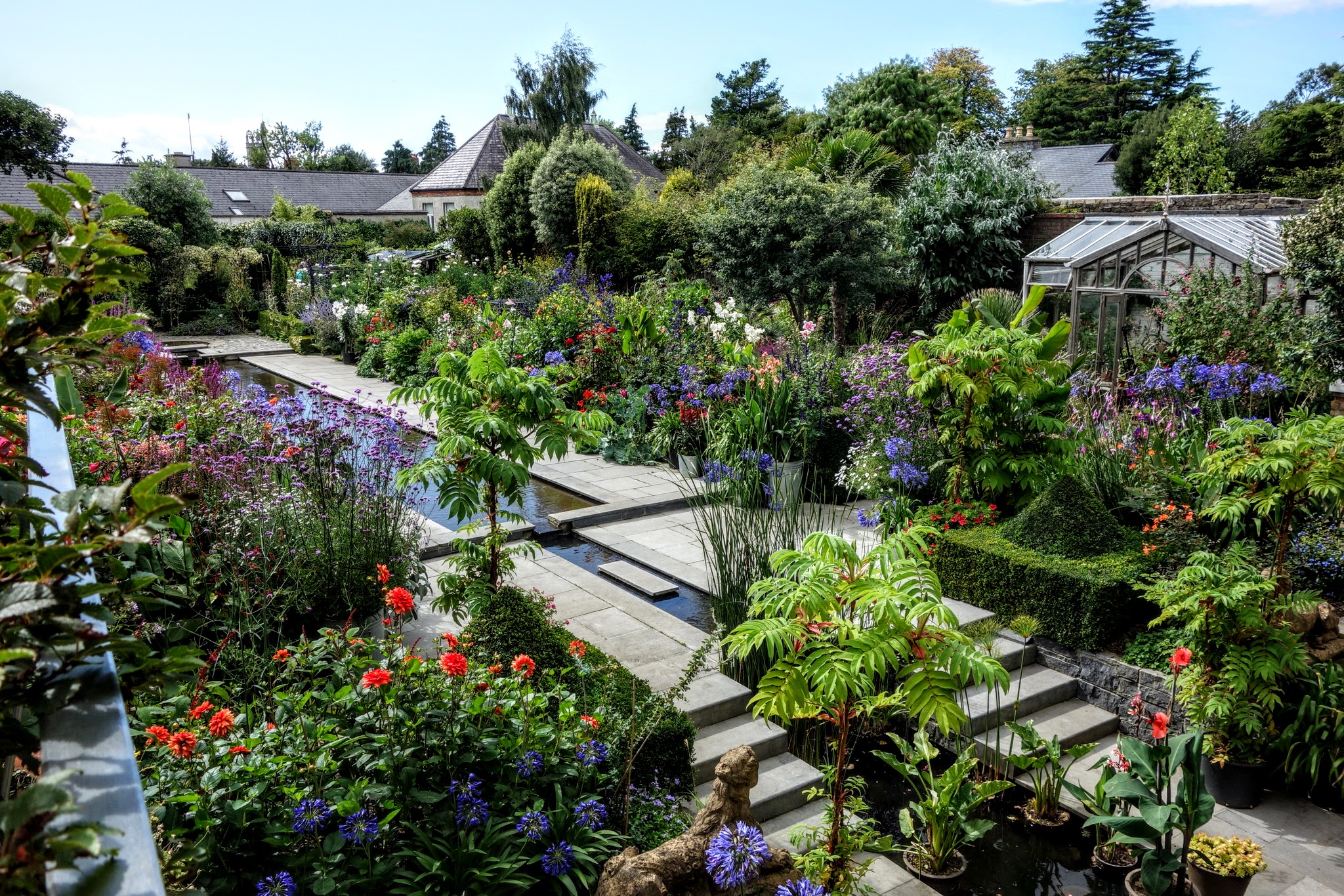
Oh, how I long for a water element and how I just can’t make it happen. Well, Helen just tore everything out one day and installed this elegantly simple pond in her back garden.Here’s a bigger view.
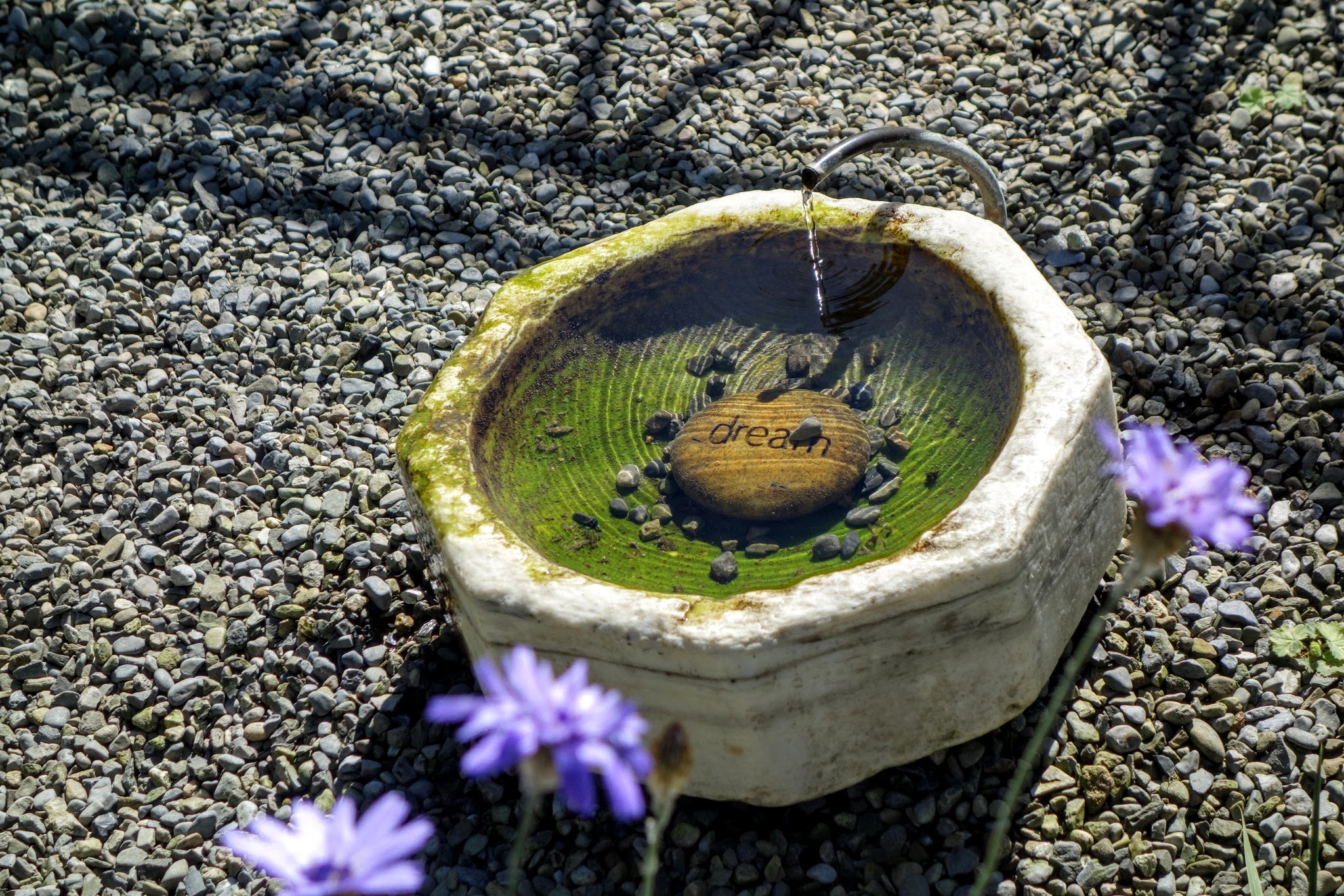
Another water element, so simple and lovely. I imagine the birds love it, and it’s more to my scale.
Foliage
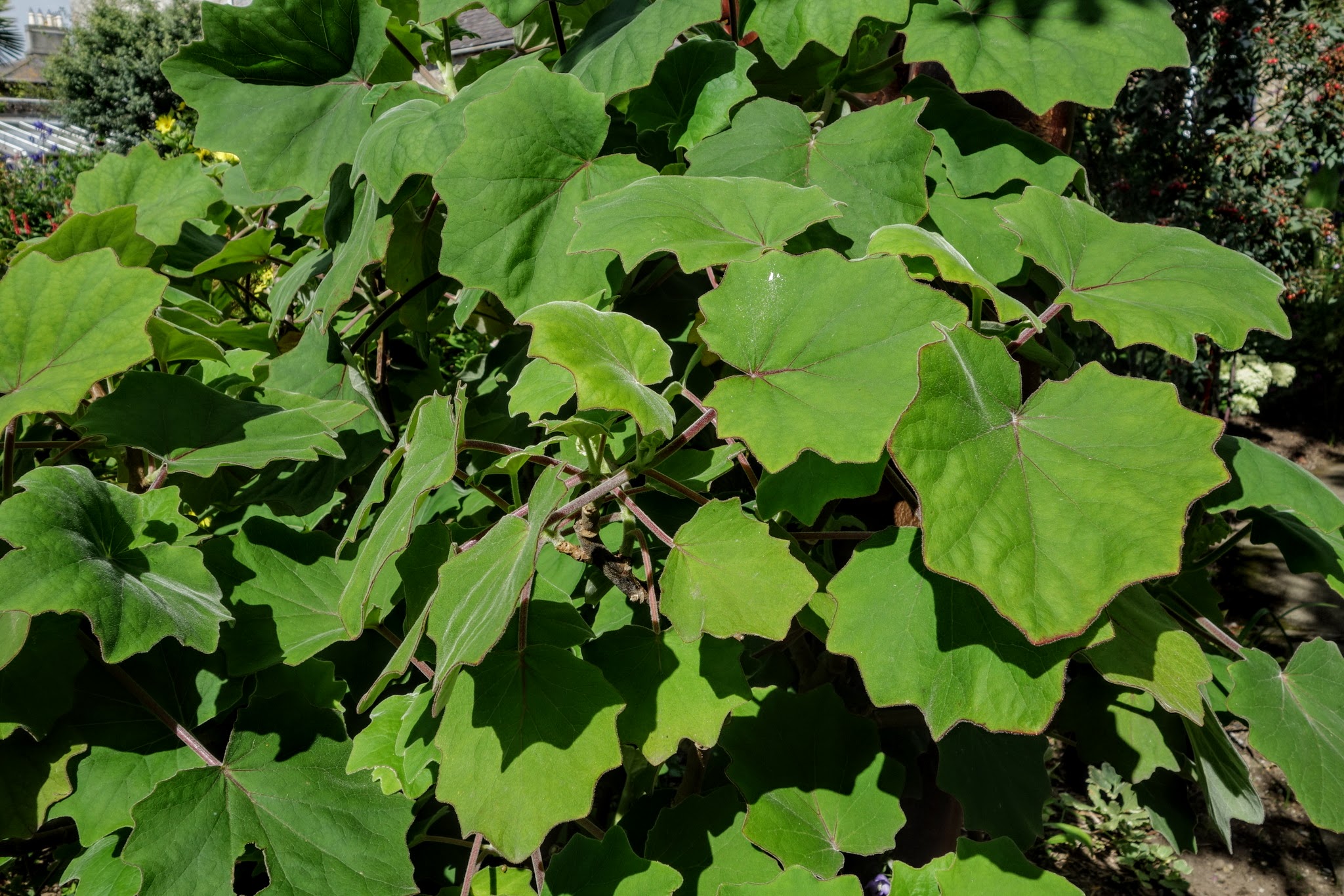
Foliage becomes more important the longer you live with a garden. Flowers will come and go, but the leaves may linger through three seasons. Here are some of the most wonderful foliage plants that caught my eye.
Not sure what these are – the last filled in under a small tree.
Use of color
Apparently she started out with carefully “curated” borders of one color each, but finally just said the hell with it and went to town. See?This is the border along one side of the pool. She is also famous for gardening in pots. She no longer plants everything in the ground, just pots it up and hauls it out when it’s looking good and hauls it back when it fades. Of course, this implies lots of space and a strong back, but it’s an interesting concept. She doesn’t even use remarkable pots, just plain black ones that fade into the background. Or even garbage cans, as in these ferns that were tucked under the deck but clearly still on display.
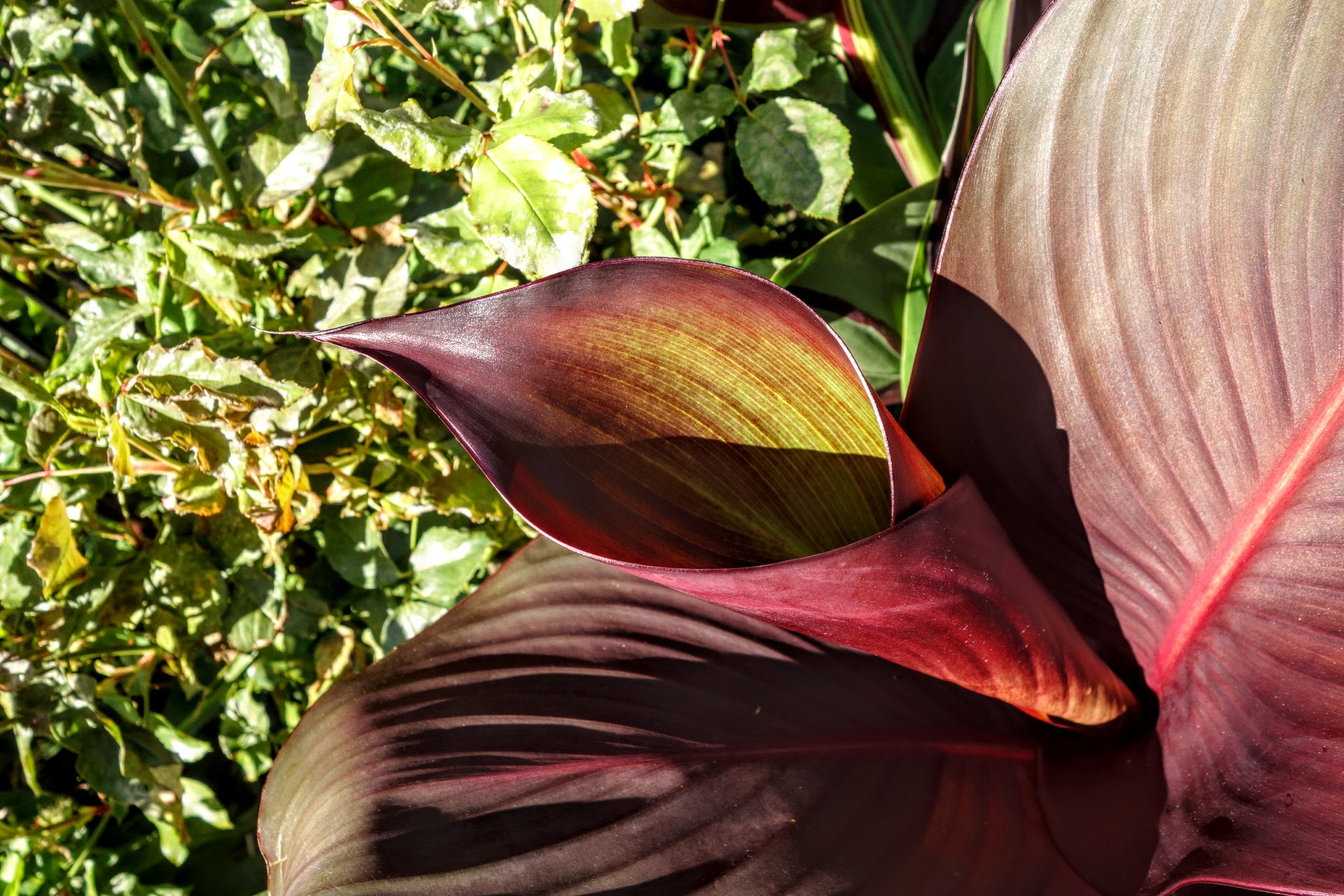
Here are some red things. I know the dark leaf is a canna, but I’m not sure about the pinky red flowers in the pot.
Miscellaneous darling things
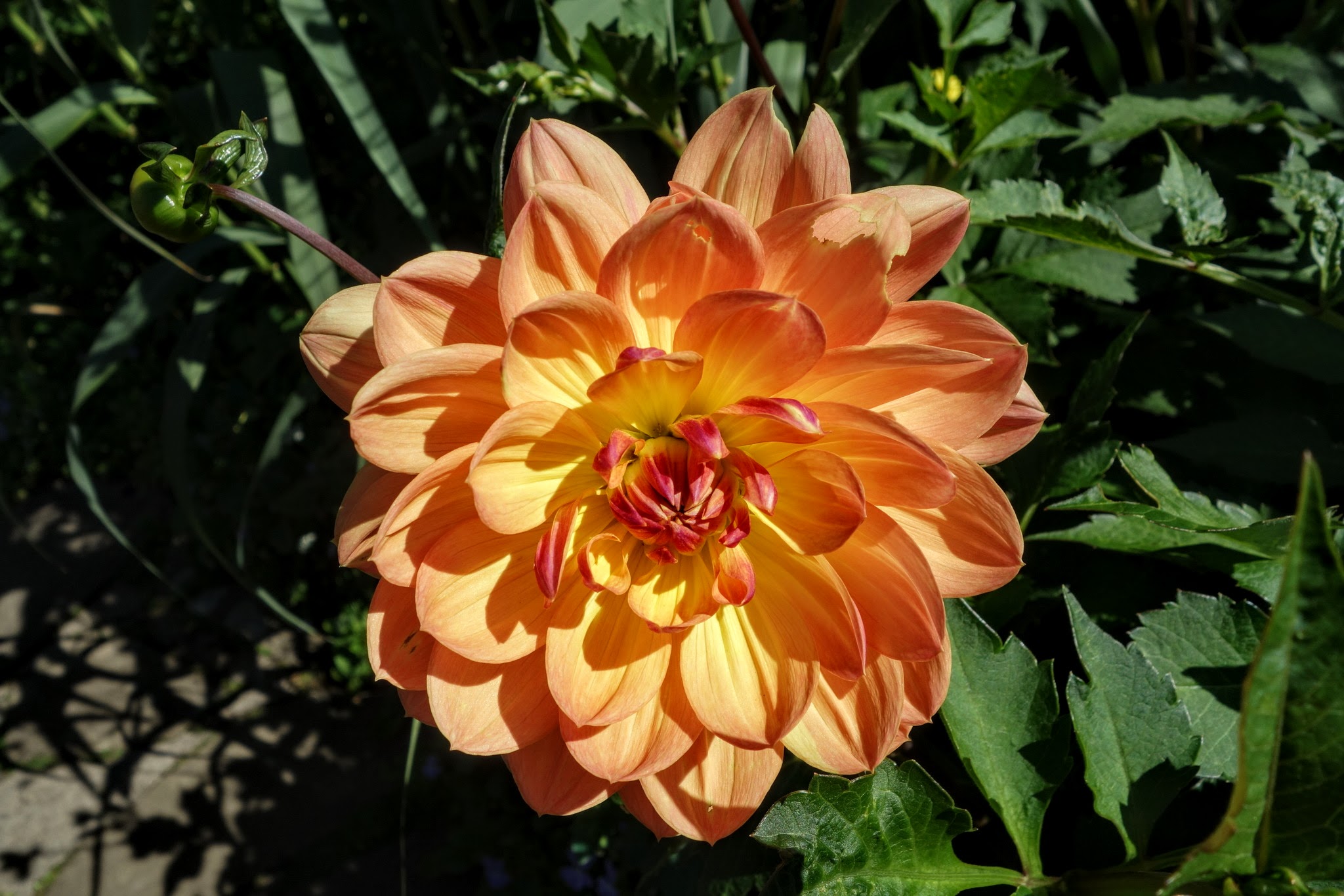
Beautiful dahlias – I must try them YET AGAIN.
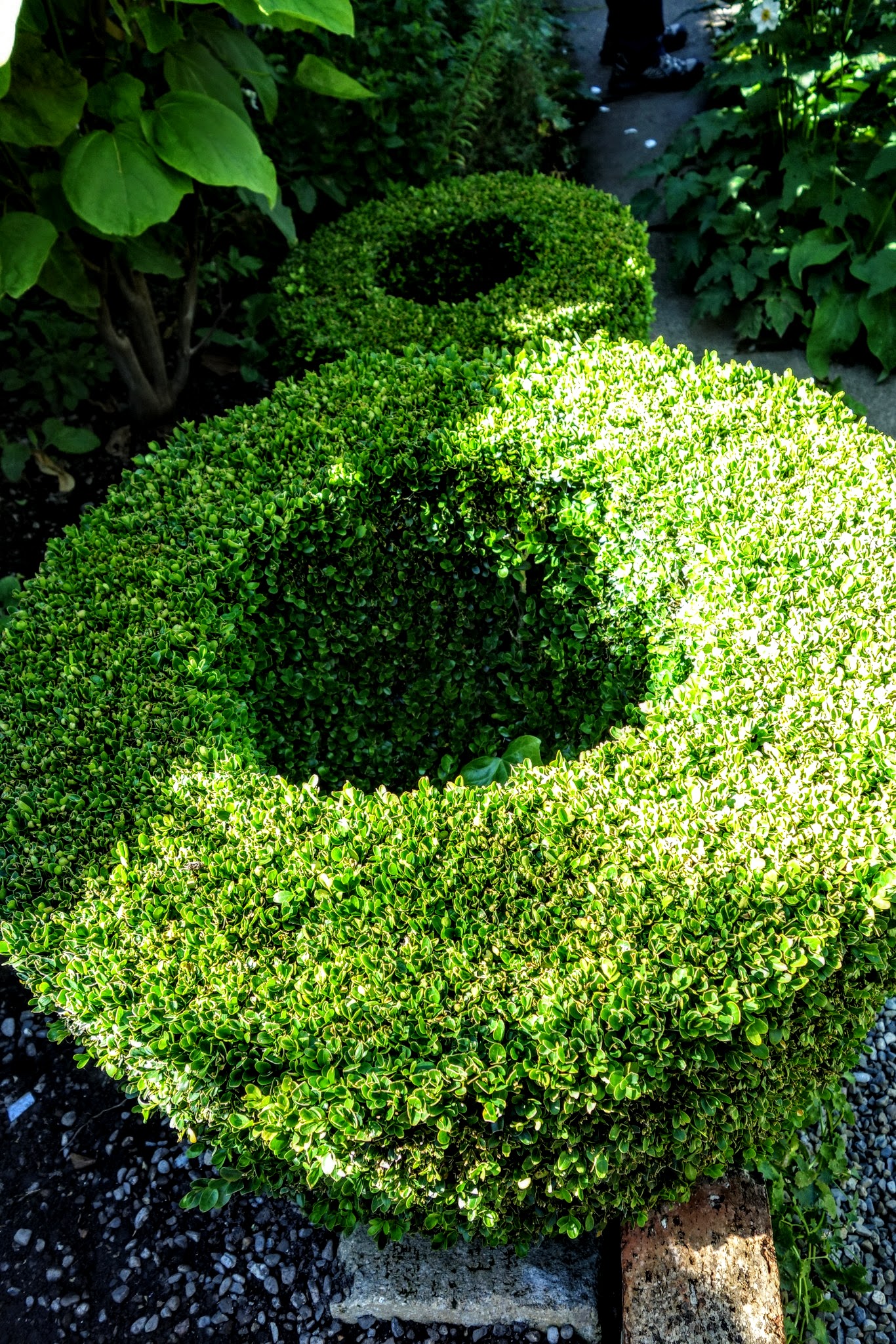
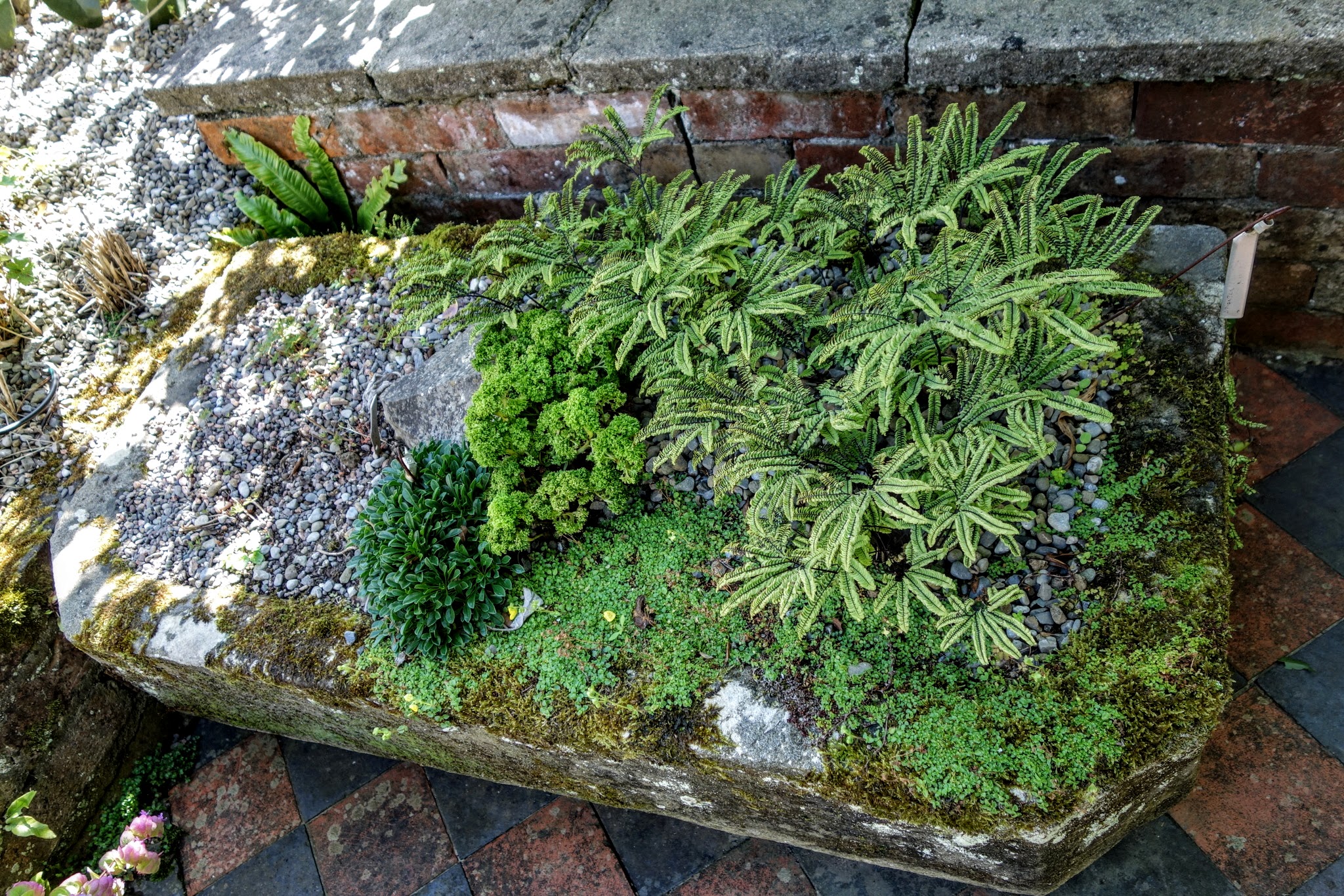
Elegant Japanese anemones, dittoBox bushes shaped to echo a nearby potDelicate maidenhair fern in a concrete trough
Meeting the Dillons and visiting the bathroom
So you are really just coming to their house when you visit. You ring the doorbell, and Val Dillon lets you in, takes your 5 pounds, and shows you in to the drawing room that overlooks the garden.This first view is stunning, but if you can tear yourself away you will also see a table with her signed books for sale. I picked up Helen Dillon On Gardening The room is filled with beautiful paintings, furniture and doodads, evidence of their earlier careers as antique dealers.
When we came back through the house to leave, Val invited us to use the bathroom if we wished. He said it was unusual and that we might enjoy it. In fact, he said, on day an elderly friend came to visit and when he checked on her all he could see were her feet sticking out the door. Had she passed out or died? No, she was just trying to get the whole bathroom in her camera lens. I understand. Here are my attempts.I didn’t quite lie down on the floor, but you can see why she did. Asked how long it took to make, Val said drily, “About 30 seconds to write the check.”
The bus ride
The website assures you that the #11 bus stops right at the Dillon Garden. Of course, it’s not quite that simple. We got directions from the TIC near Trinity and walked down the street until we finally got to the bus stop. Once on the bus, there was no way to know when we had arrived. The brusque driver did finally point out our stop just when we had given up hope. We wandered down the street, heartened by a sign for the Dillon garden, and finally figured out that we should just walk through a small opening to the road where the house was. Not that hard after all, but confusing. Luckily it all worked easily on the way back.
The end plus a video
Here are just a few more random wonderful things, plus a video that gives you a glimpse of Helen herself as well as their drawing room.The good sport
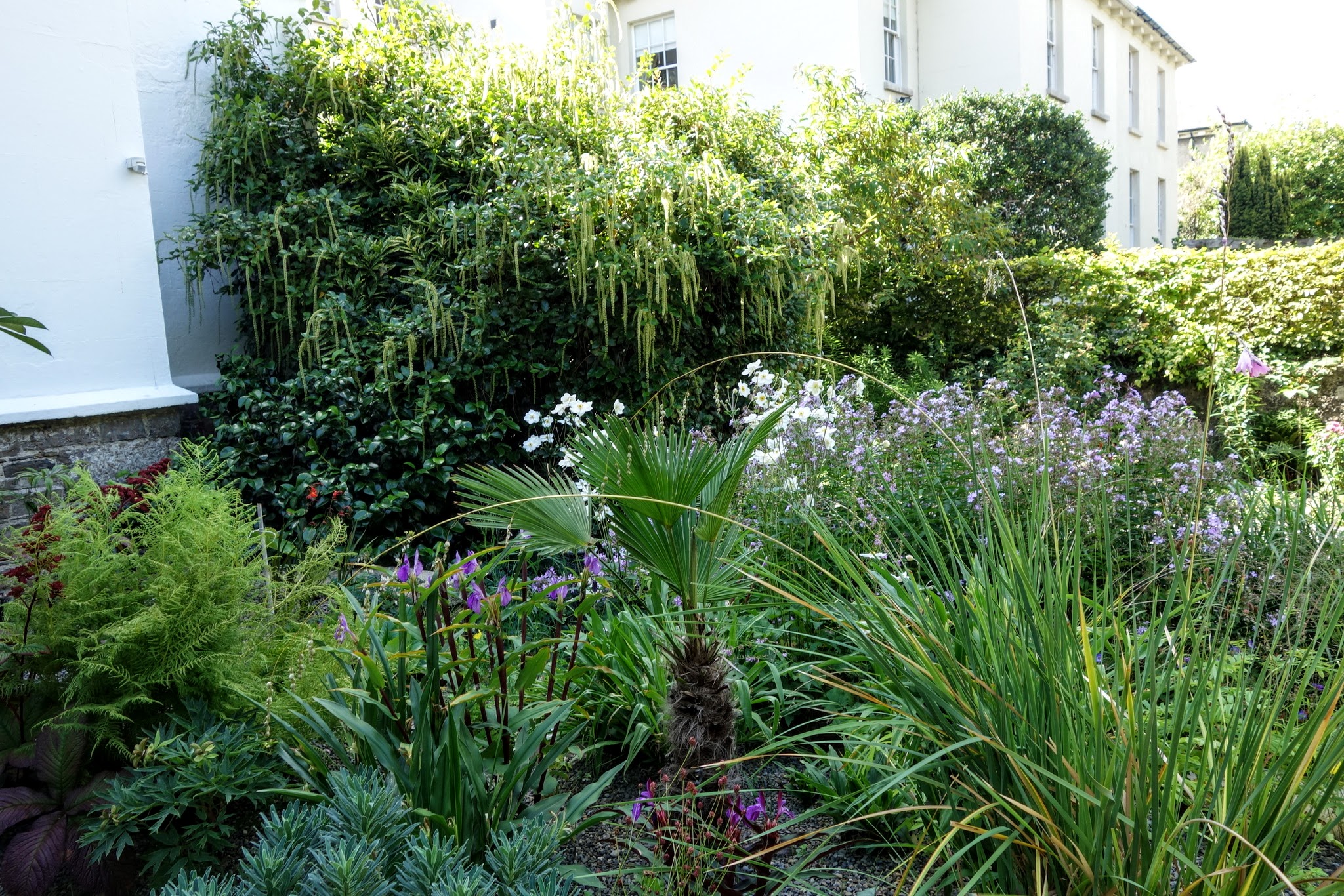
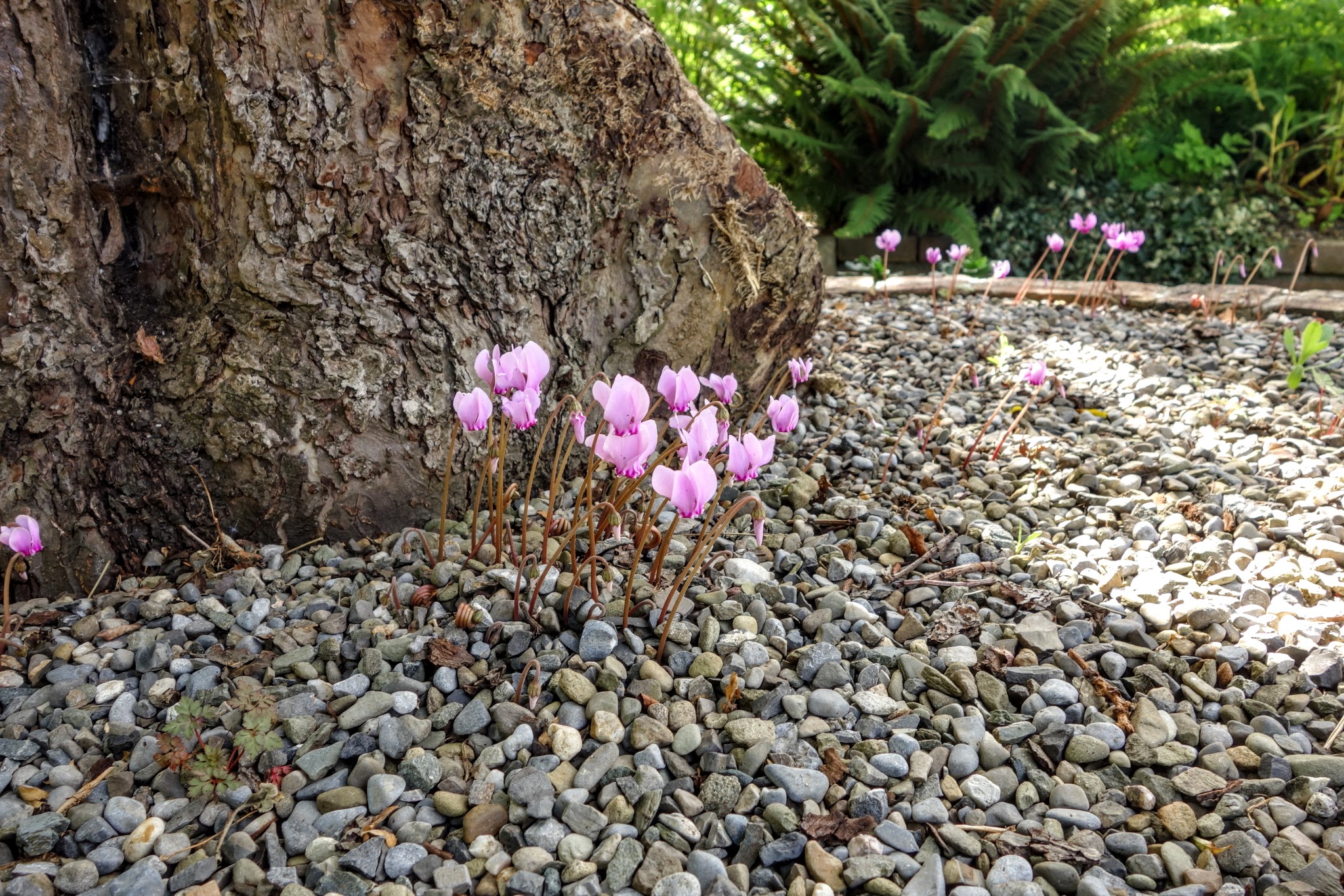
Garden by the driveway on the way outsnails’ trailsAutumn cyclamen growing in pebbles
Short clip of a palm tree swaying in the wind
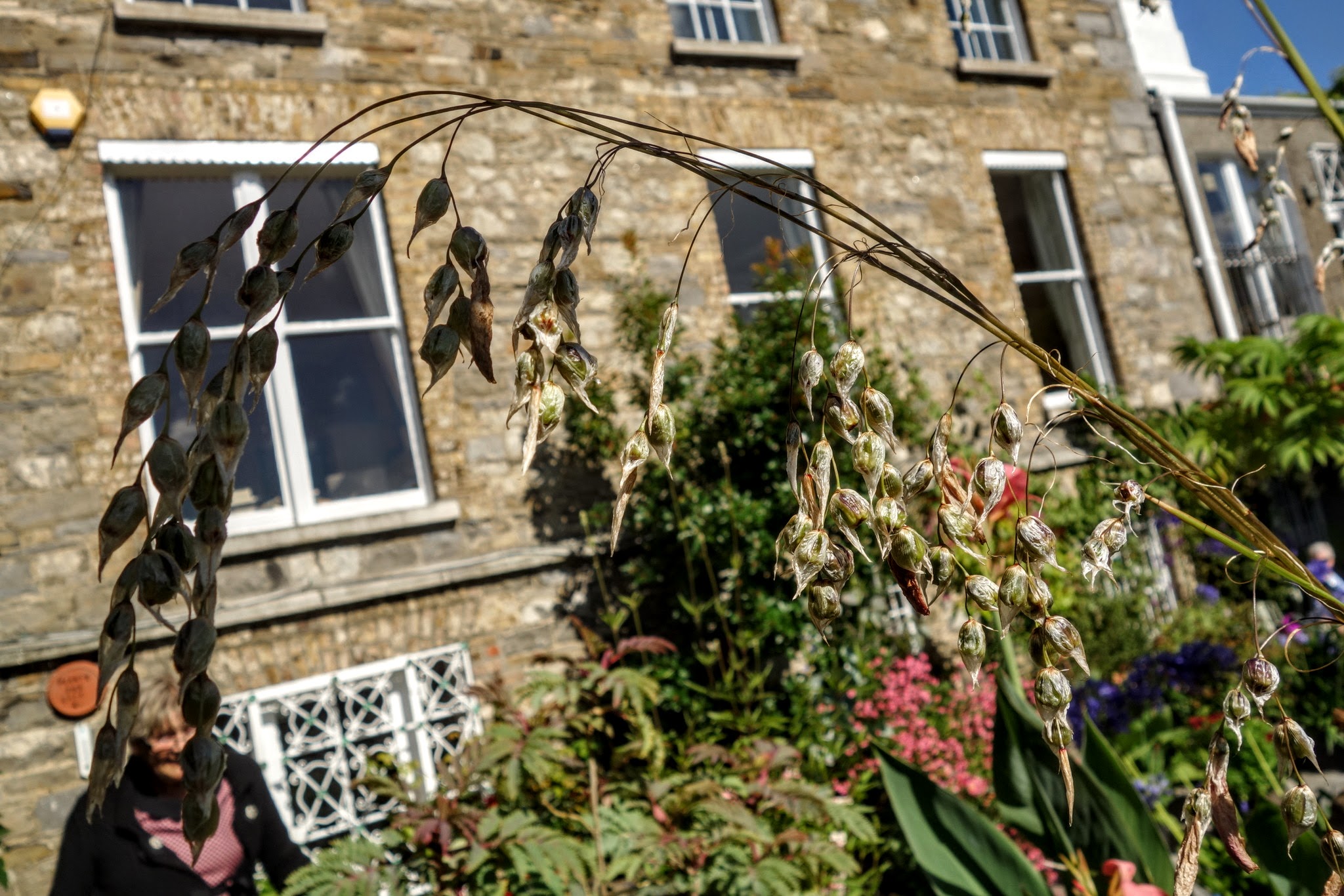
sea oats and a glimpse of Helen herself in the garden
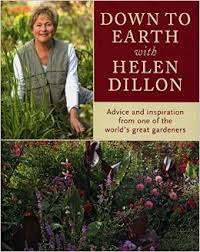
Helen Dillon has gardened in a small Dublin garden for over thirty years. Short essays paired with photos of her garden detail her likes, her dislikes, even her bold uprooting of garden elements she installed in previous decades. Many of her plants come with a story about who gave them to her or where she first saw them, and big names like Graham Stuart Thomas pepper the text. She says not a word about native plants, cheerfully installing plants from around the world. She even includes Americans like tree of heaven that are highly invasive here but apparently behave well in Dublin.
As she discusses her gardens from the 1960s to now, she compares gardening styles to hair styles. Both change over time but if we’re not careful, we end up with “a 1960s Cilla Black look – that’s if I don’t get the softly curly Nancy Reagan, or the ubiquitous à la grandmère, with every curl betraying its roller-friendly origins.”
Her garden is open to the public, and I hope to visit this summer. But I’ll be on my best behavior: she has some sharp words for garden visitors who try to hide their theft of plants and cuttings in their capacious handbags, or those who loudly criticize the garden and the gardener in her hearing. Can’t say I blame her.
Although much of what she says is specific to her climate and conditions, I still found much to think about and admire. (Why again don’t I have a water element in my garden, I ask myself.) Like the best garden books (Green Thoughts comes to mind), this is one to keep on the bedside table. You could pick it up and read randomly from time to time and always learn or re-learn something good.
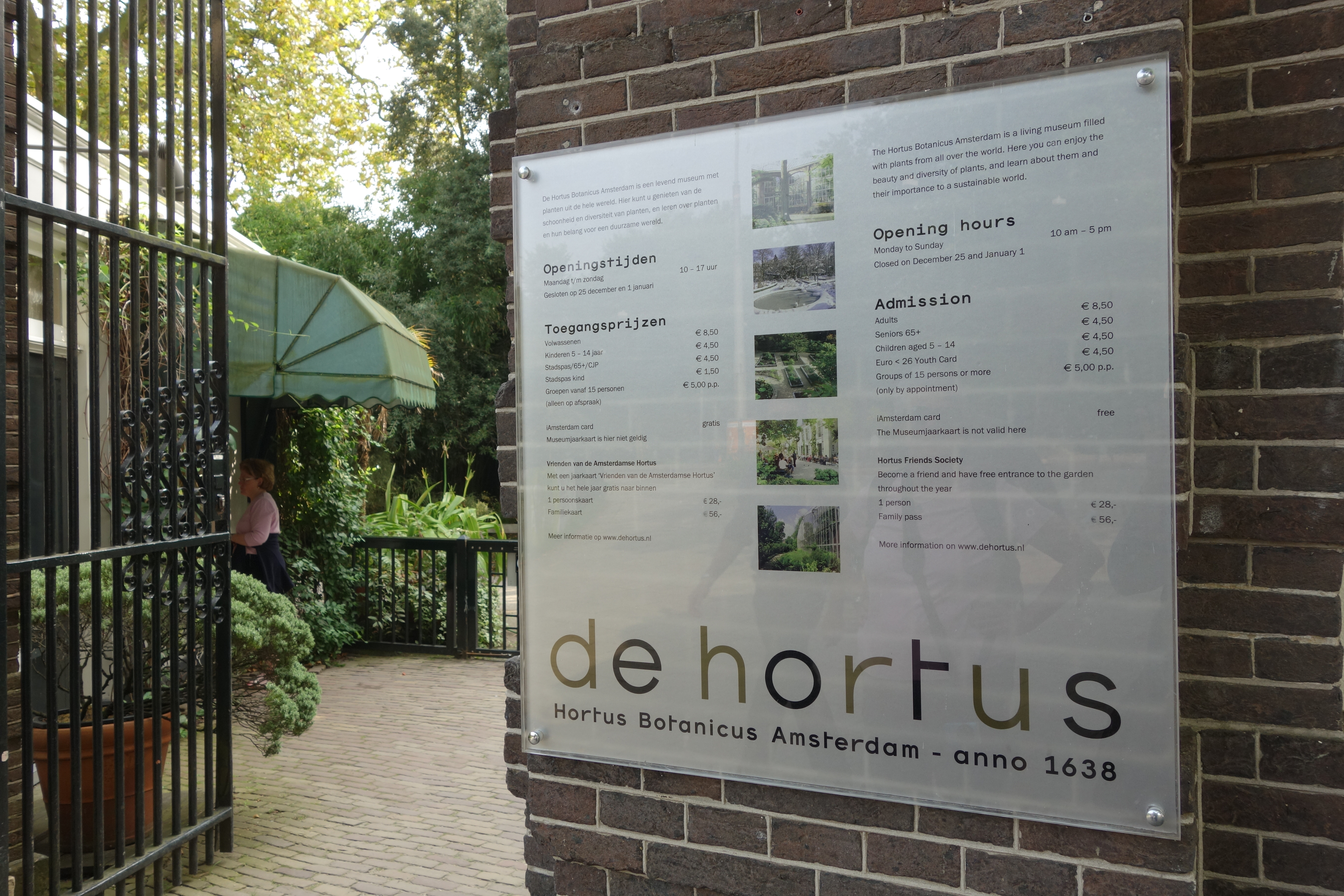
The botanical garden in Amsterdam is one of the oldest in the world and at three acres also one of the smallest. It’s tucked into the Plantage district, a green area of central Amsterdam, near a big public park and the zoo.
One of us took this opportunity to sit in the cafe and read, but I did my best to explore the compact, diverse plantings, ranging from water garden to desert, in the hour we had before closing.
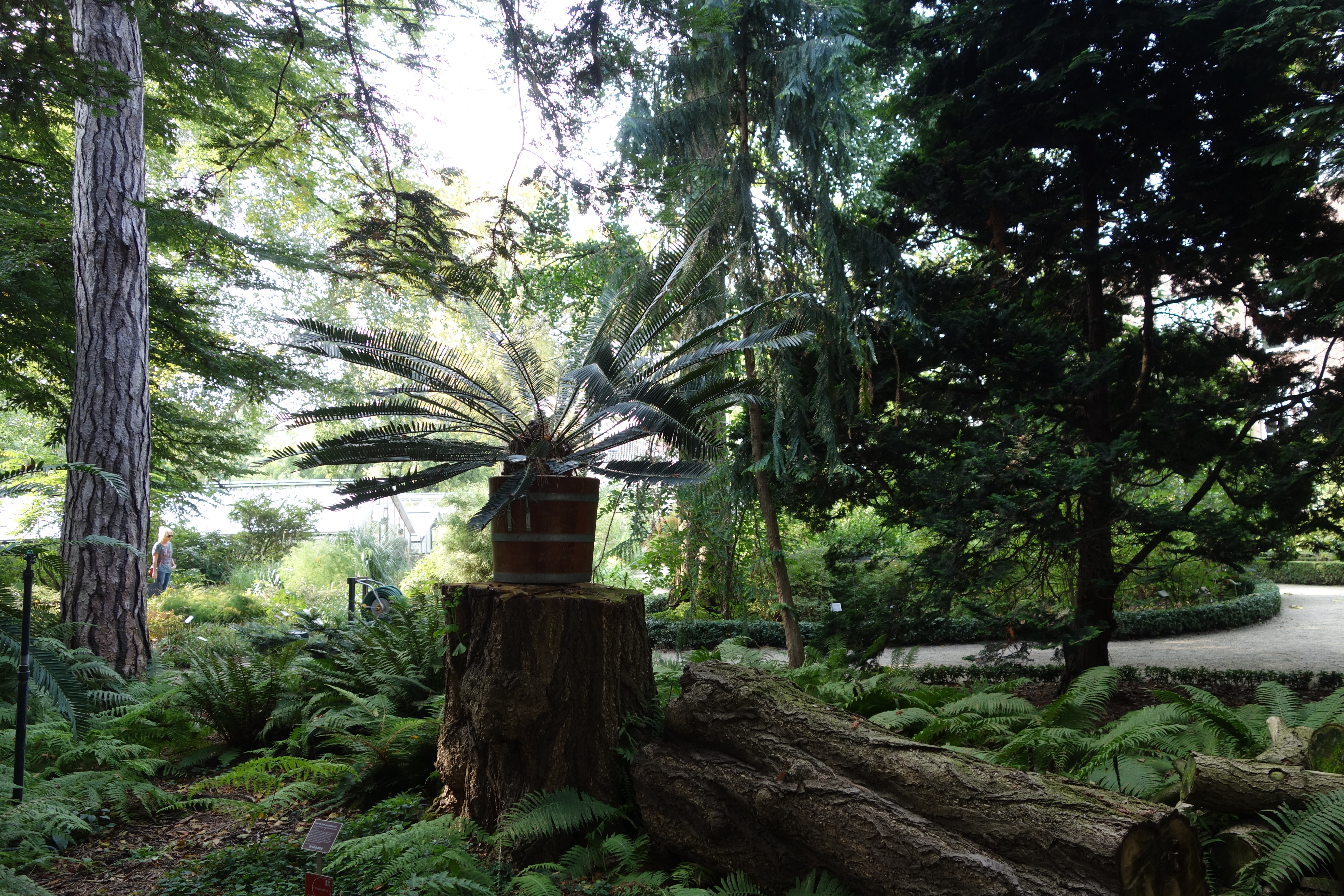
The water garden featured these beautiful tropical leaves – shades of the Oxford Botanical Gardens (which I really should report on even if my visit was back in 2009). The water garden was roughly circular, with these giant water lilies (they start them from seed in May) in the pond, while a huge gunnera plant, which you see everywhere in English gardens, dominated the central point.I couldn’t resist closeups of the blooms.But the garden is really known for its collection of cycads, primitive plants that have been around since before the dinosaurs. They mostly lived in a glasshouse, but some were growing along the paths.This one is so rare that it lives in a cage, apparently. I think it’s the Wollemi pine, known only through fossils until it was collected in Australia in 1994 and distributed to botanical gardens around the world to keep the species alive.
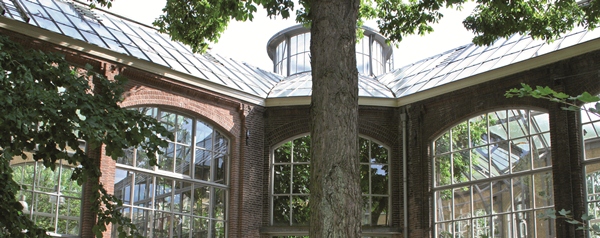
The glasshouses are renowned although I have to confess that I was underwhelmed, perhaps because these plants don’t interest me too much. In fact, I have no pictures of them so you will have to look at this one from their website, which does display their elegance but gives no sense of scale. Both in the glasshouses and along the paths are plants first collected by the VOC in the East Indies in the 18th century, including coffee plants from seeds brought here in 1706. They formed the basis of the coffee plantations later established in South America.
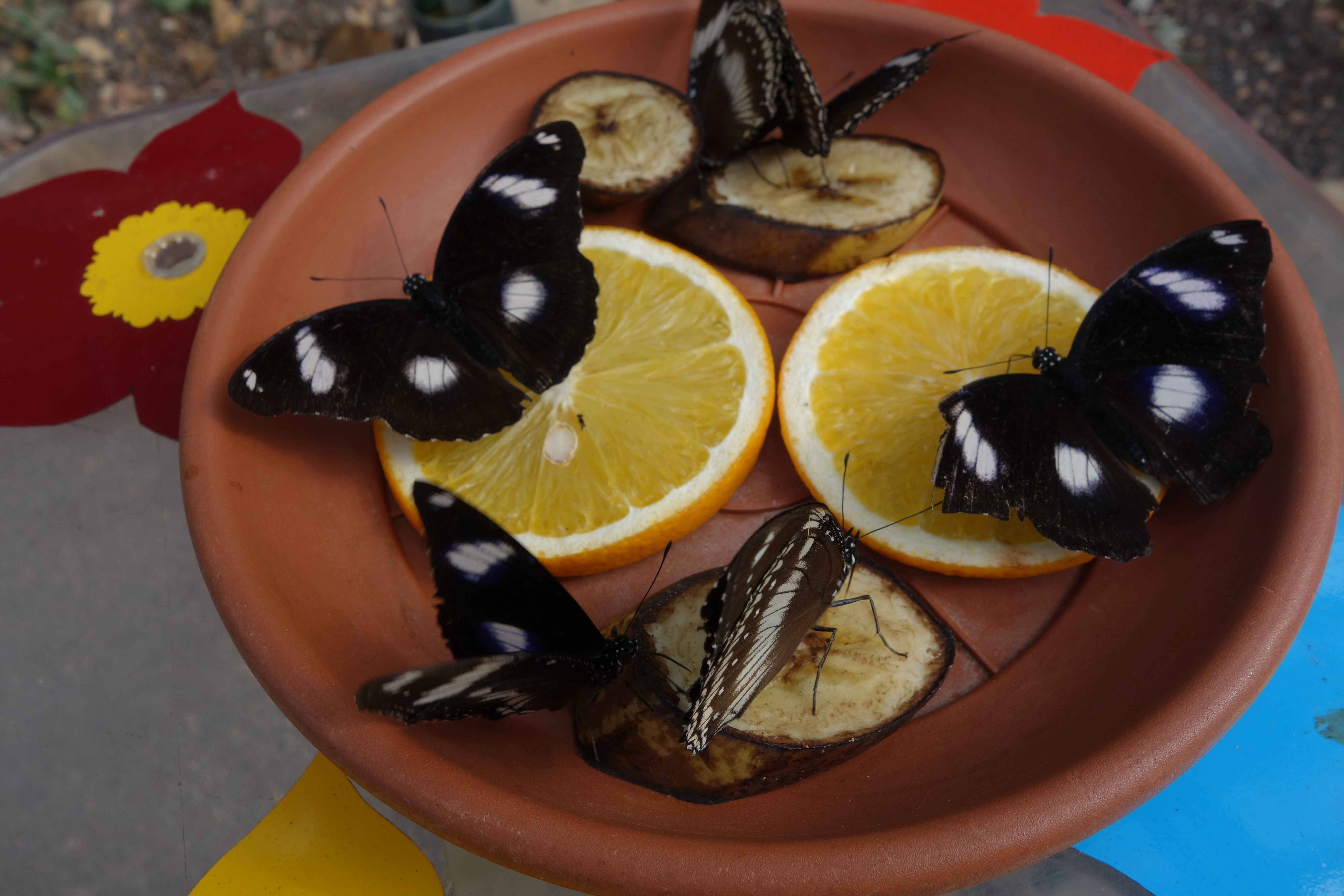
On the other hand, the butterfly house was enchanting. How could you not like these butterflies? Hypolimnas bolina, according to the sign, that live on sweet potato vines and flourish in Madagascar and New Zealand.
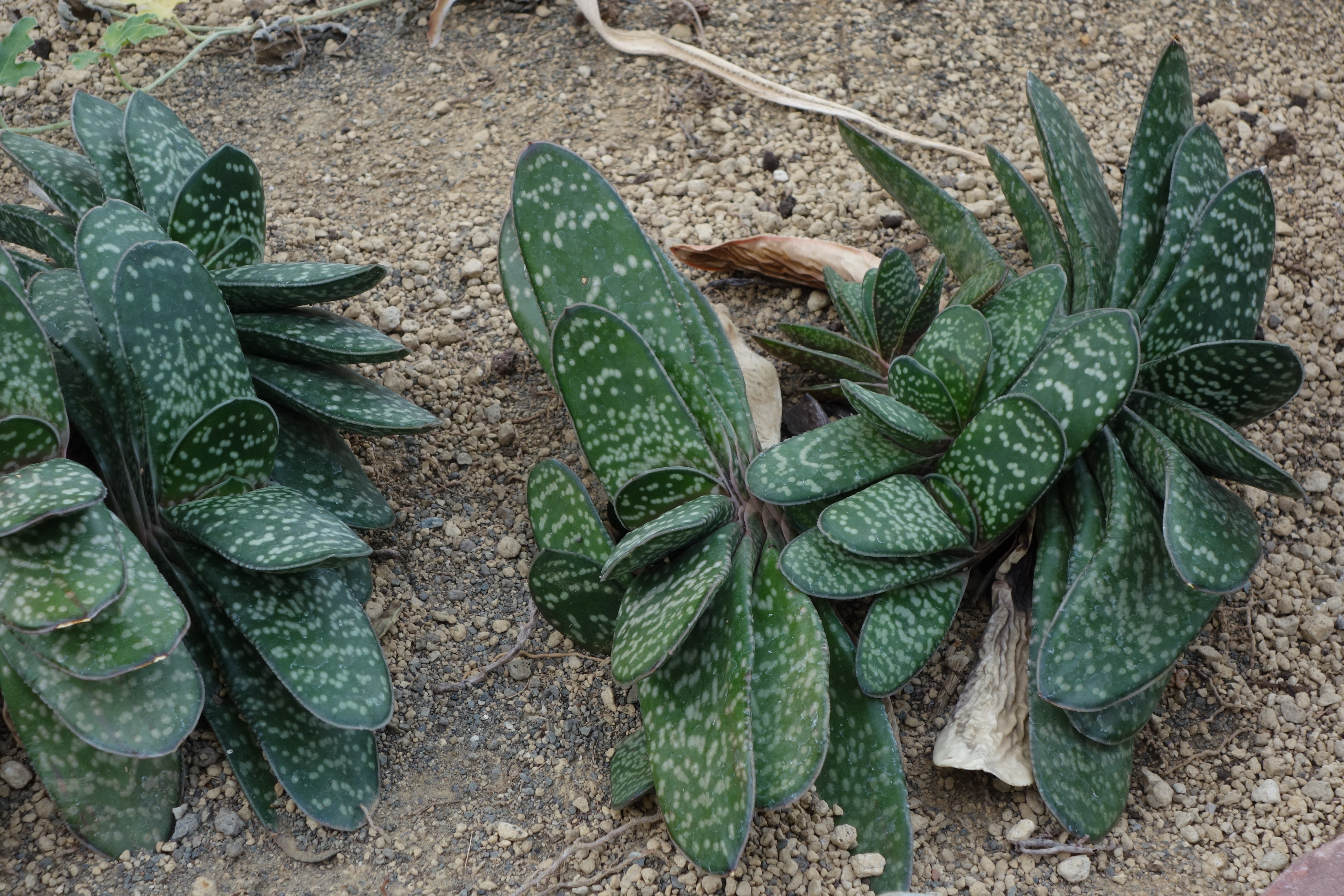
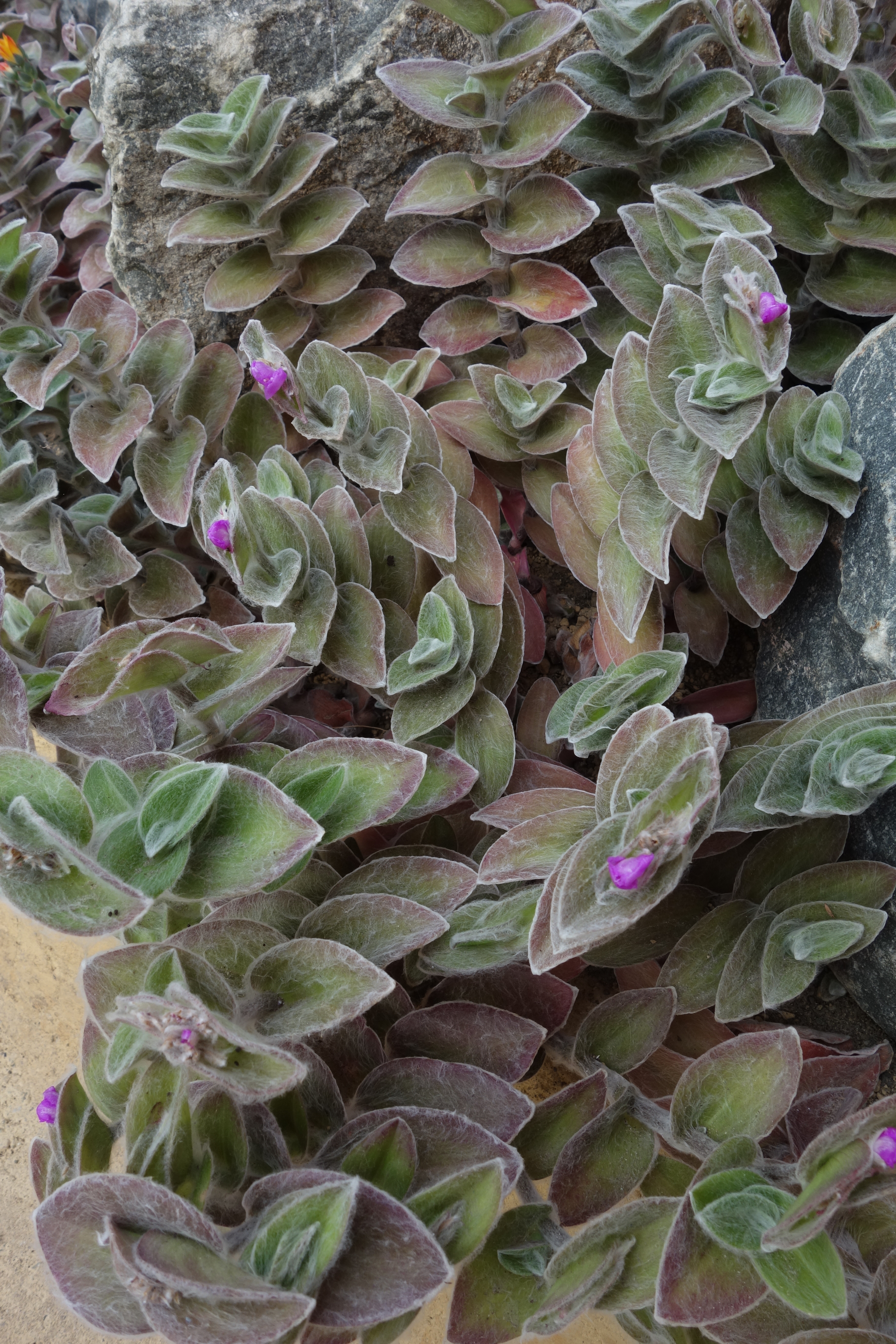
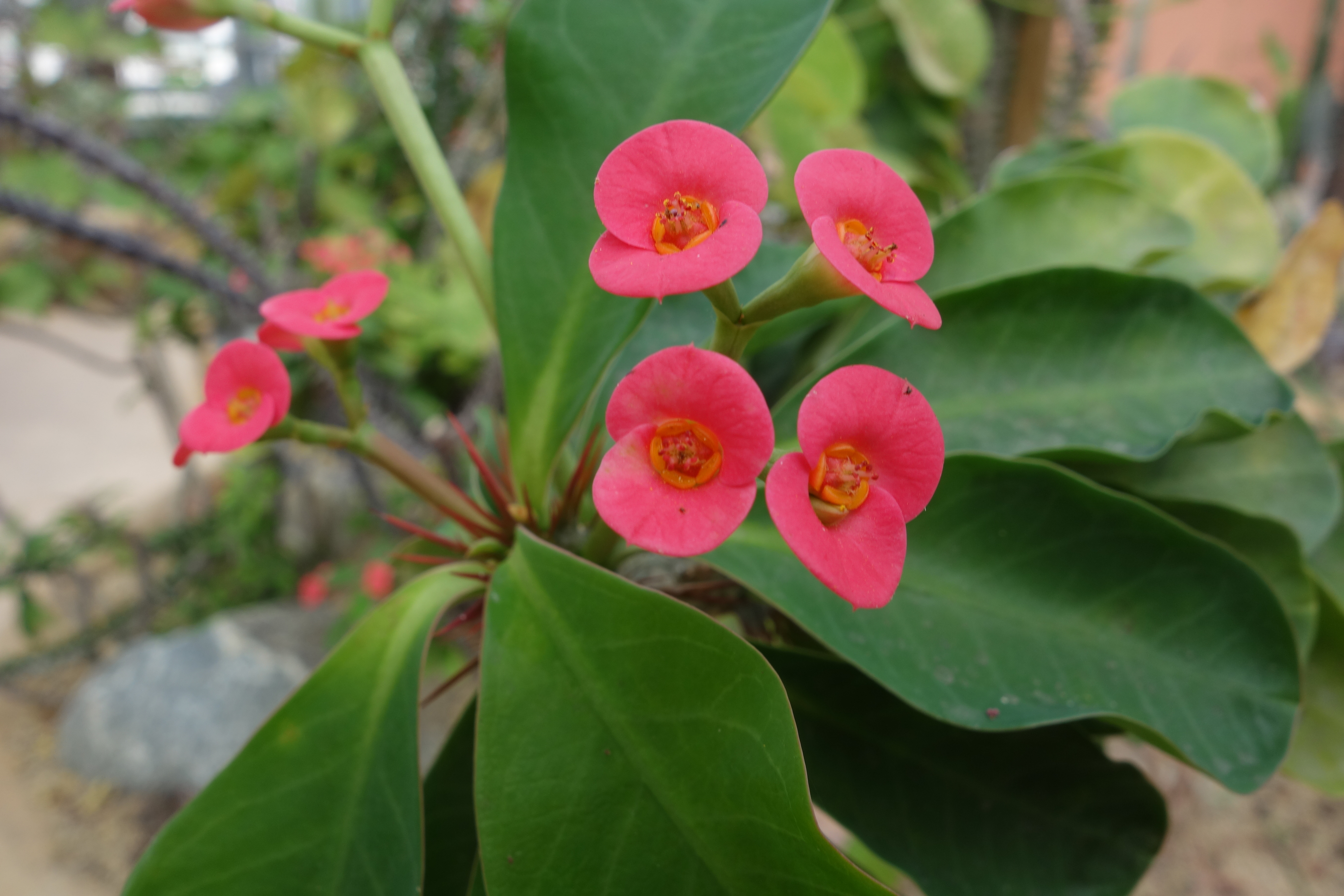
In the green houses were tropical and desert gardens, the latter of which I fell in love with for their shapes and patterns. This one looked like stacked tongues (but in a good way).This one is some kind of tradescantia, weirdly: sillamontana Matuda from northern Mexico. Softly fuzzy and subtly shaded in purple and green. I had no idea that spiderwort could be so succulent.I loved these flowers as inspiration for applique.Finally a small tree that is actually clethra – a bit scary that it could get that big.C. arborea Aiton, native to Madeira, so I probably don’t need to worry about my C. alnifolia.
My favorite story from the arboretum is about the famous 19th century director, Hugo de Vries. He once threatened to leave unless the board installed the glasshouses that allowed him to display palms and cycads. Another perk was the installation of a private gate on one side of the garden, that opened on the street directly across from his house. If you like your director, make it easy for him to stay!
Birds
blue jay
bluebirds
brown thrasher
cardinal
Carolina wren
catbird
chickadee
chipping sparrow
downy woodpecker
goldfinch
house finch
mockingbird
mourning dove
nuthatch













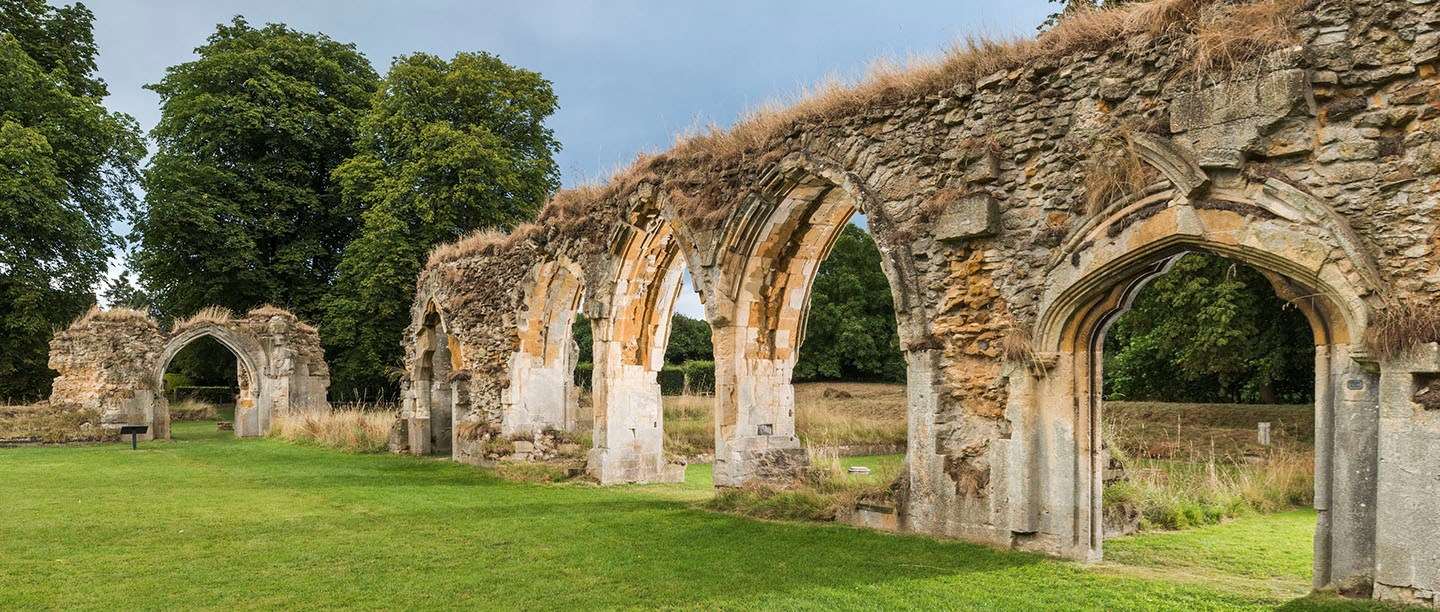 Our first stop today was Hailes Abbey, a Cistercian Abbey that was mostly destroyed in the Dissolution, so all that’s left are some stones, pillars and arches. But when you look at the expanse that the church encompassed, you have a sense of how enormous it must have been. Unlike its sister Cistercian Abbey,
  Brexit loomed over this trip and we discussed it with people a couple of times. At the Abbey, the attendant told us that the EU had changed dramatically from when the UK first joined, now the EU dictated what each country could do. What if, he said, the US, Canada and Mexico were under one government, the American flag was taken down and the seat of government was in Costa Rica?? I have no idea if this is a real scenario, but somehow I think not. But if that’s how some people see it, it makes more sense that after forty years, some of them want to leave. In any case, Alison encouraged me not to engage the man on the way out, so we escaped.
 Most all of the tables were booked for a Sunday roast, but we managed to slip in for sandwiches before everyone arrived. Just as we were leaving, several multi-generational family parties arrived. The English have a sense of ritual – Millennium memorials, Sunday roast, etc. – that we have never had. It may be a bit stuffy but it’s also comforting.
 This was a very relaxing garden, perhaps because within the spaces defined by stone walls or boxwood, plants twined somewhat wildly with each other. Lots and lots of roses, like this ‘Trumpeter,’
 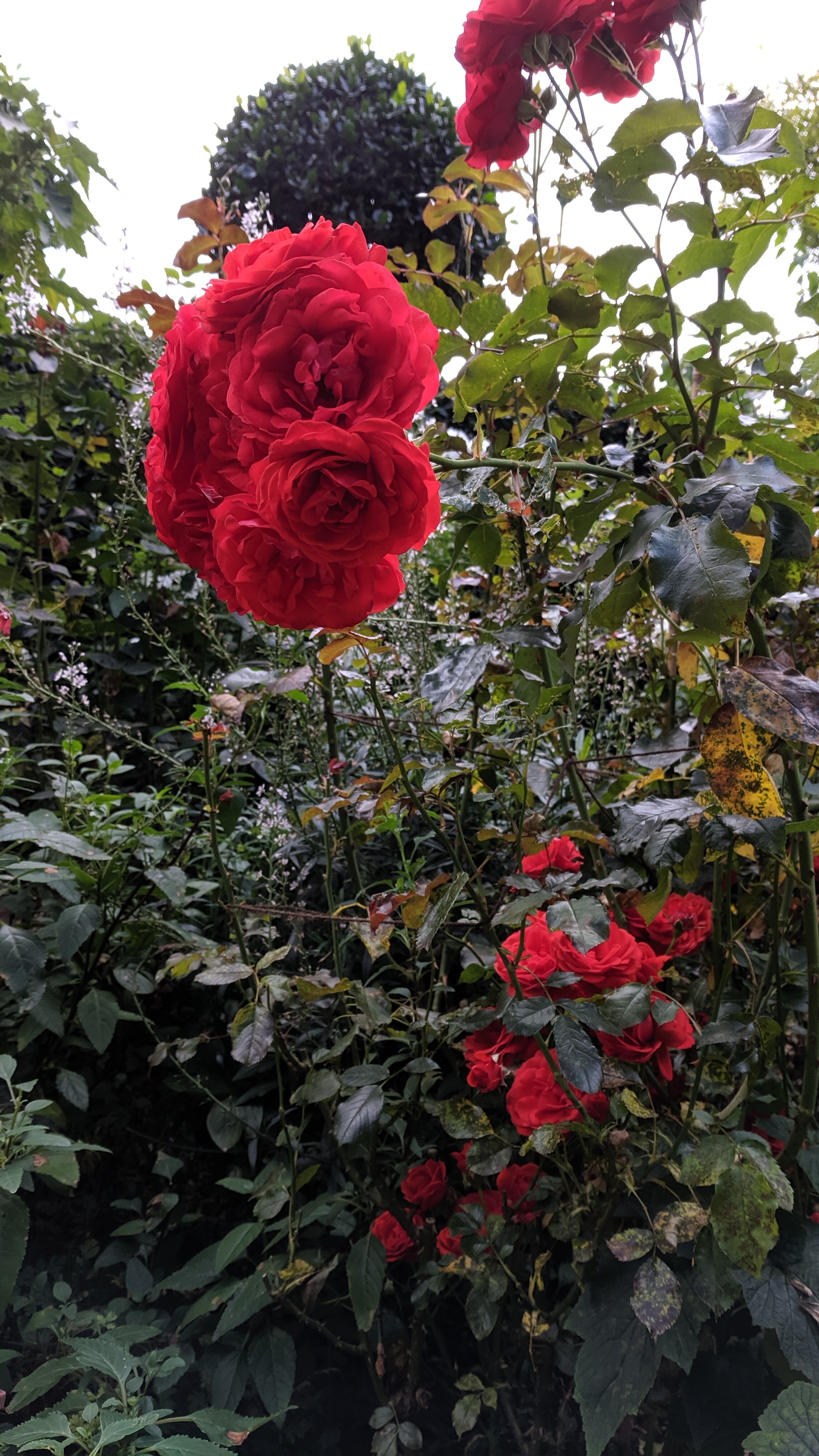 since this is the home of the famously enormous Kiftsgate rose (past its bloom now), but also at this time of year dahlias, Japanese anemones, asters and various other beauties.
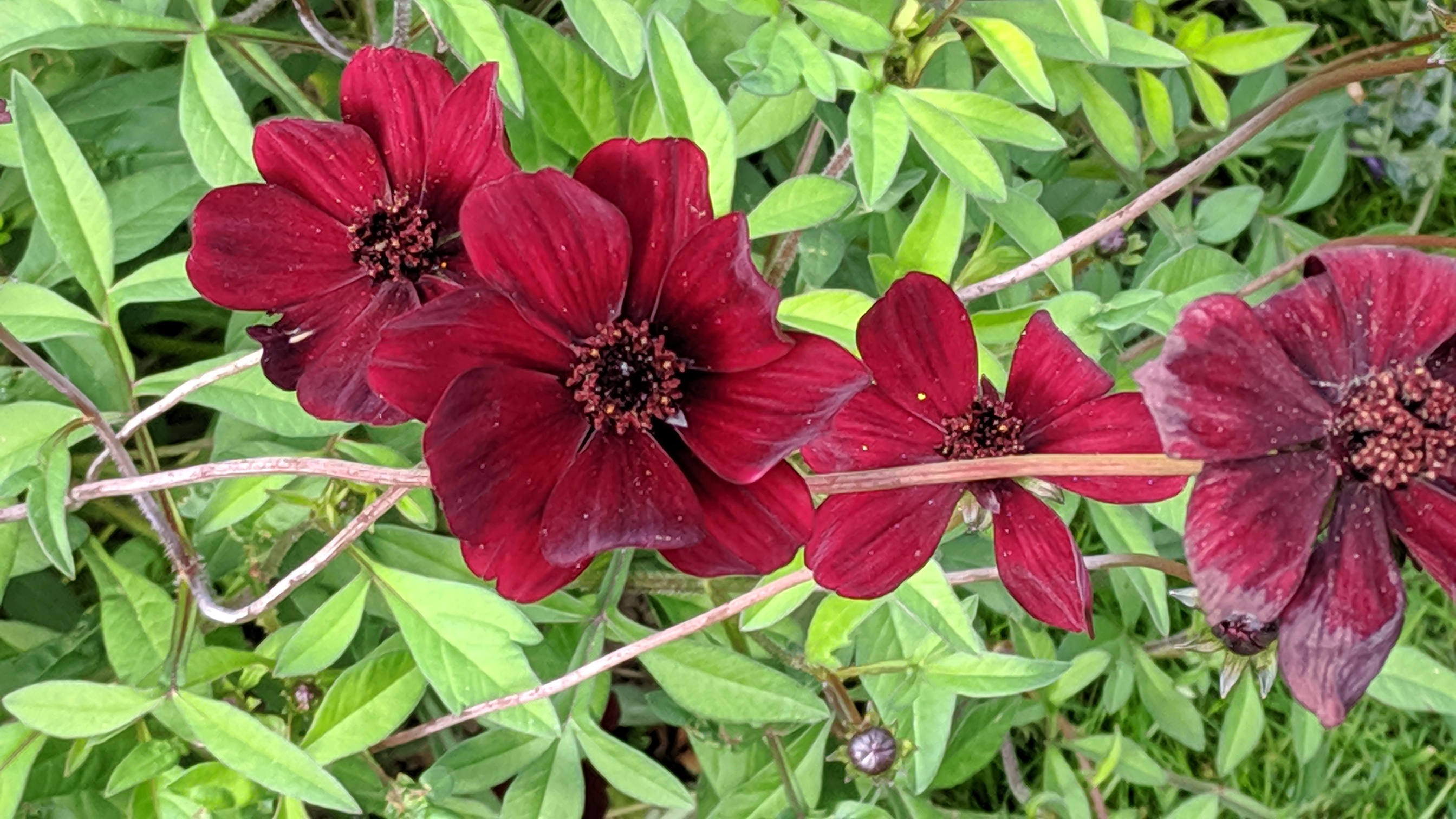 The water gardens were especially beautiful and imaginative. Just look at this elegant installation, with its flowers that gently pour into the pool.
 and I thought of how this house and garden would be wonderful for entertaining. I wonder how the latest generation, who must be about our age, are planning for the future.
 Leaving Oxford on a bright, clear day, we picked up a little white Golf to carry us to Stow. Our first goal was Blenheim Palace, but Alison got an email from them saying that because of an “incident” they would not be opening until lunchtime. Since the park was still open, off we set.
 we came to yet another Harry Potter tree, a cedar which has been propped up to keep it alive by the skin of its teeth. (This is the one that Severus Snape hung from in Order of the Phoenix, when he was being bullied by Harry’s father.)
 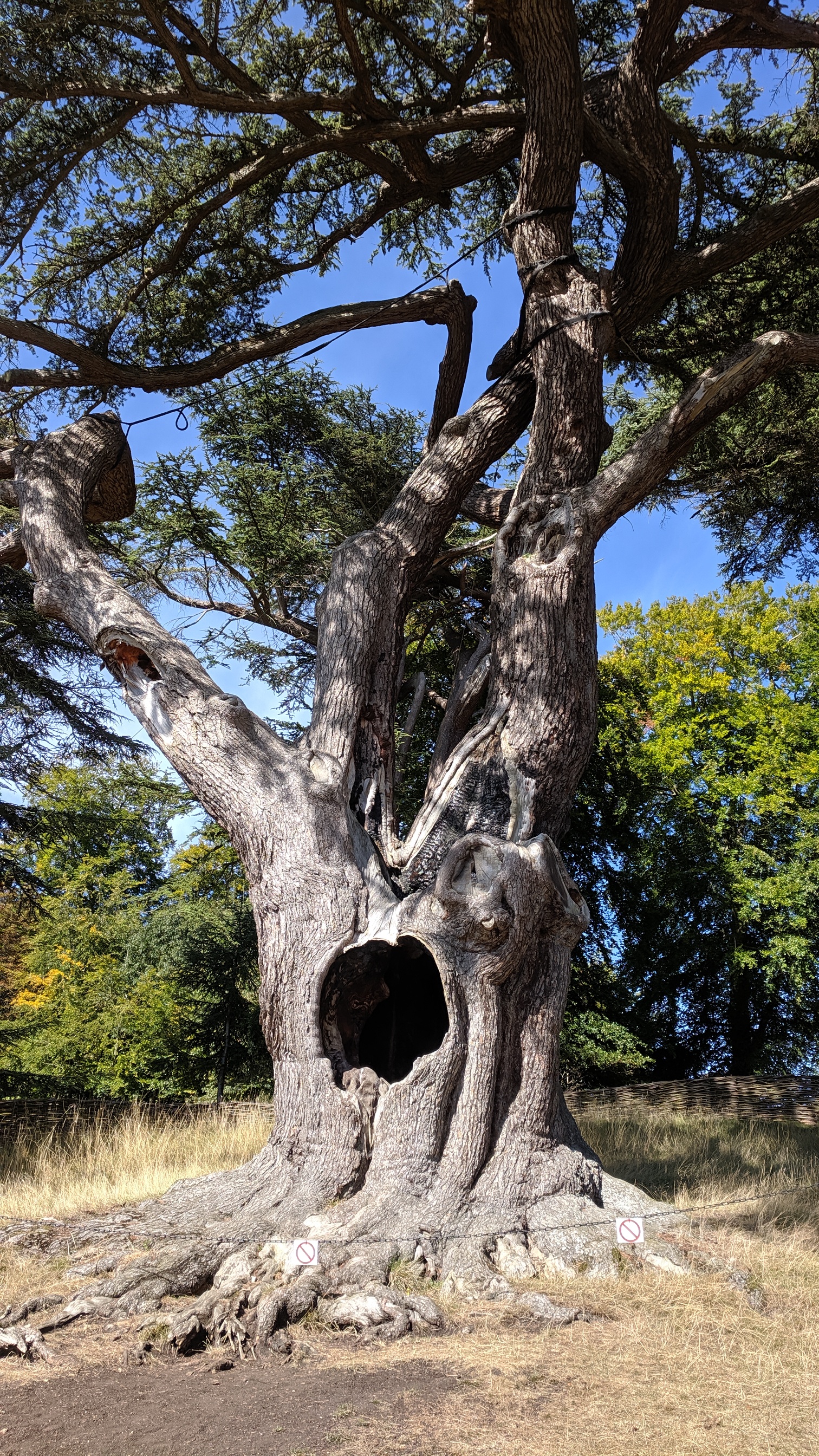 You can see that it is carefully preserved from any rabid fans who might be tempted to try the same.
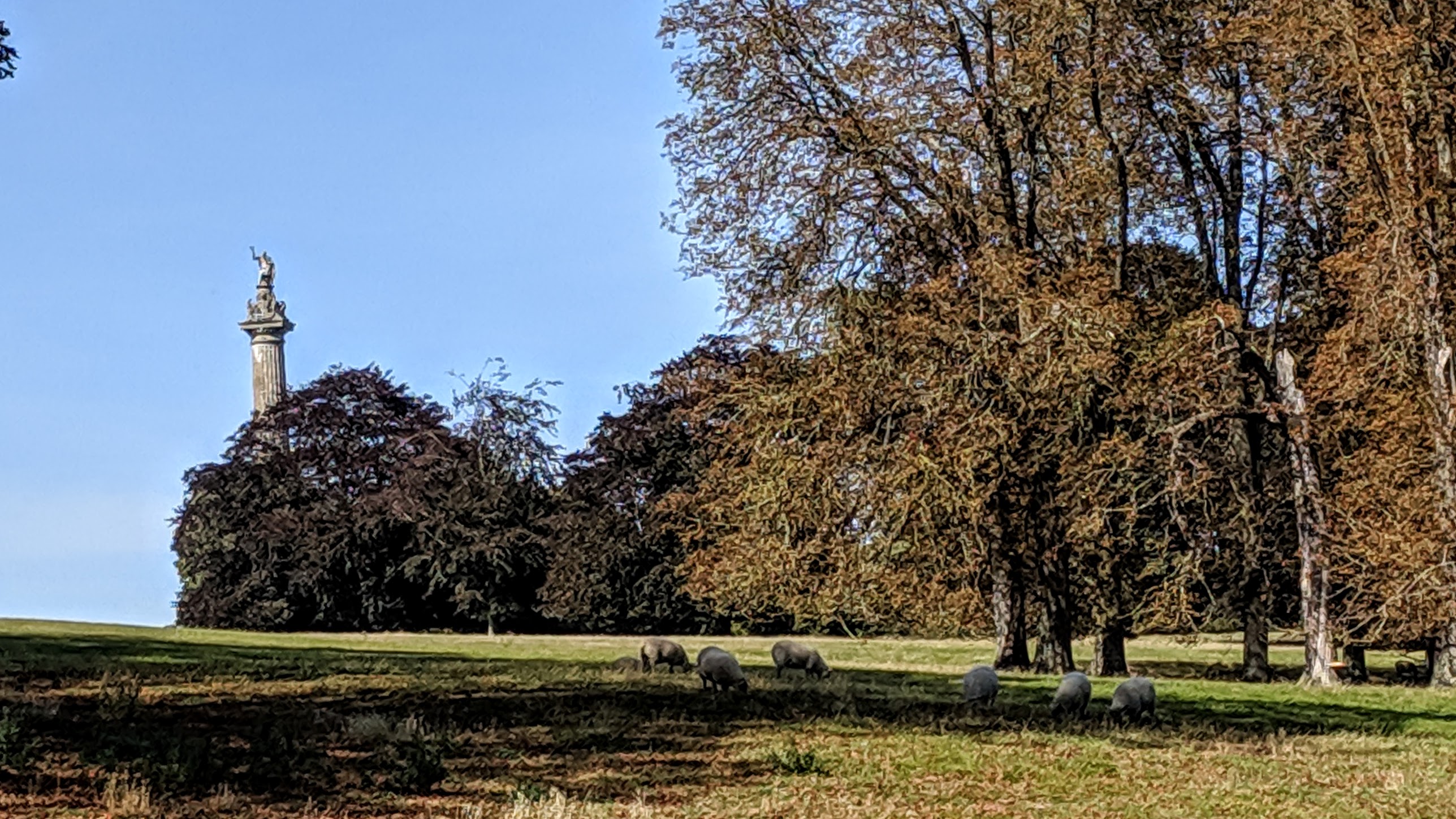 From here I continued around the Queen’s Lake while Alison went back to the shops. Gorgeous views, magnificent trees, thank you, Capability Brown!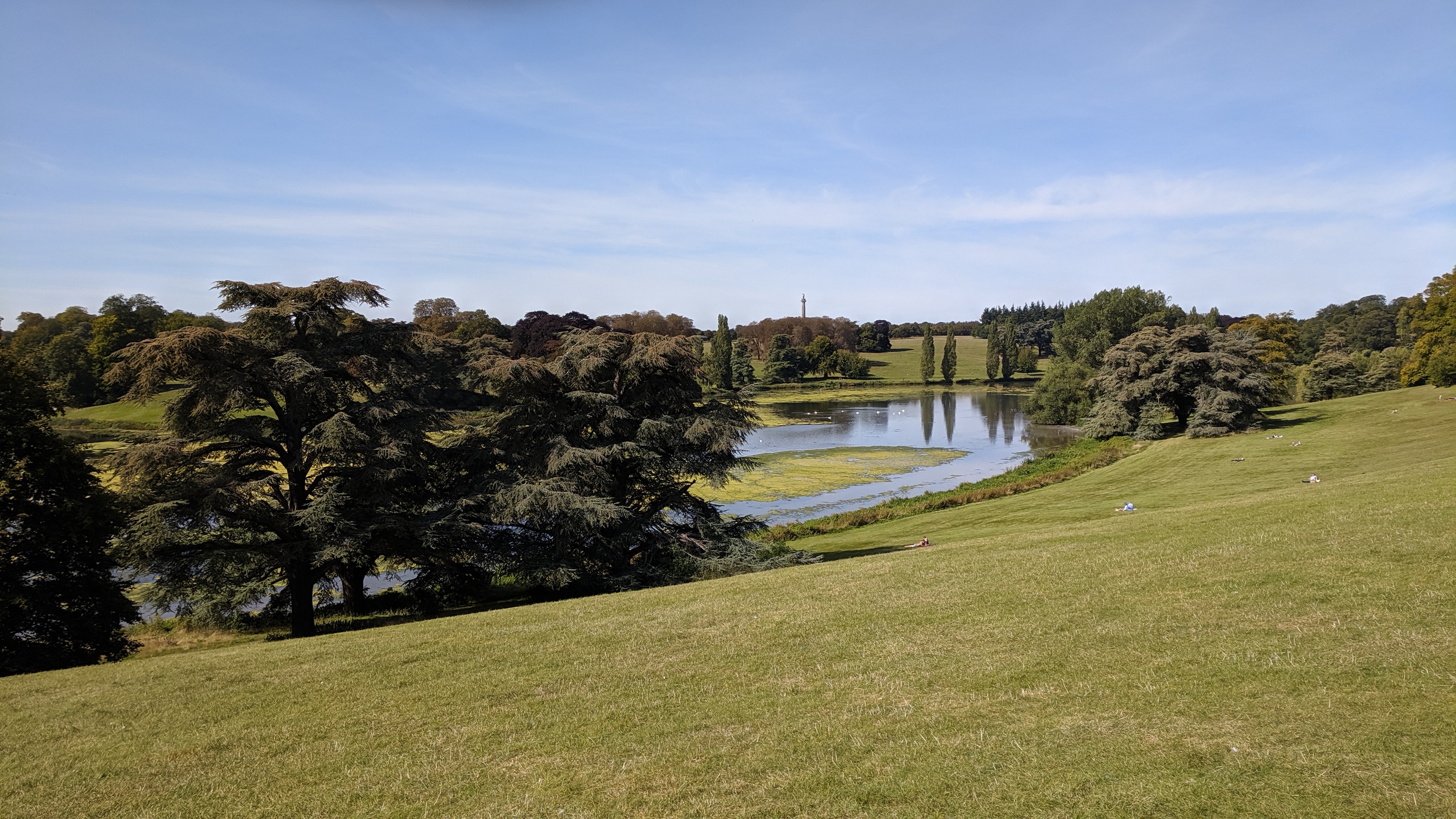
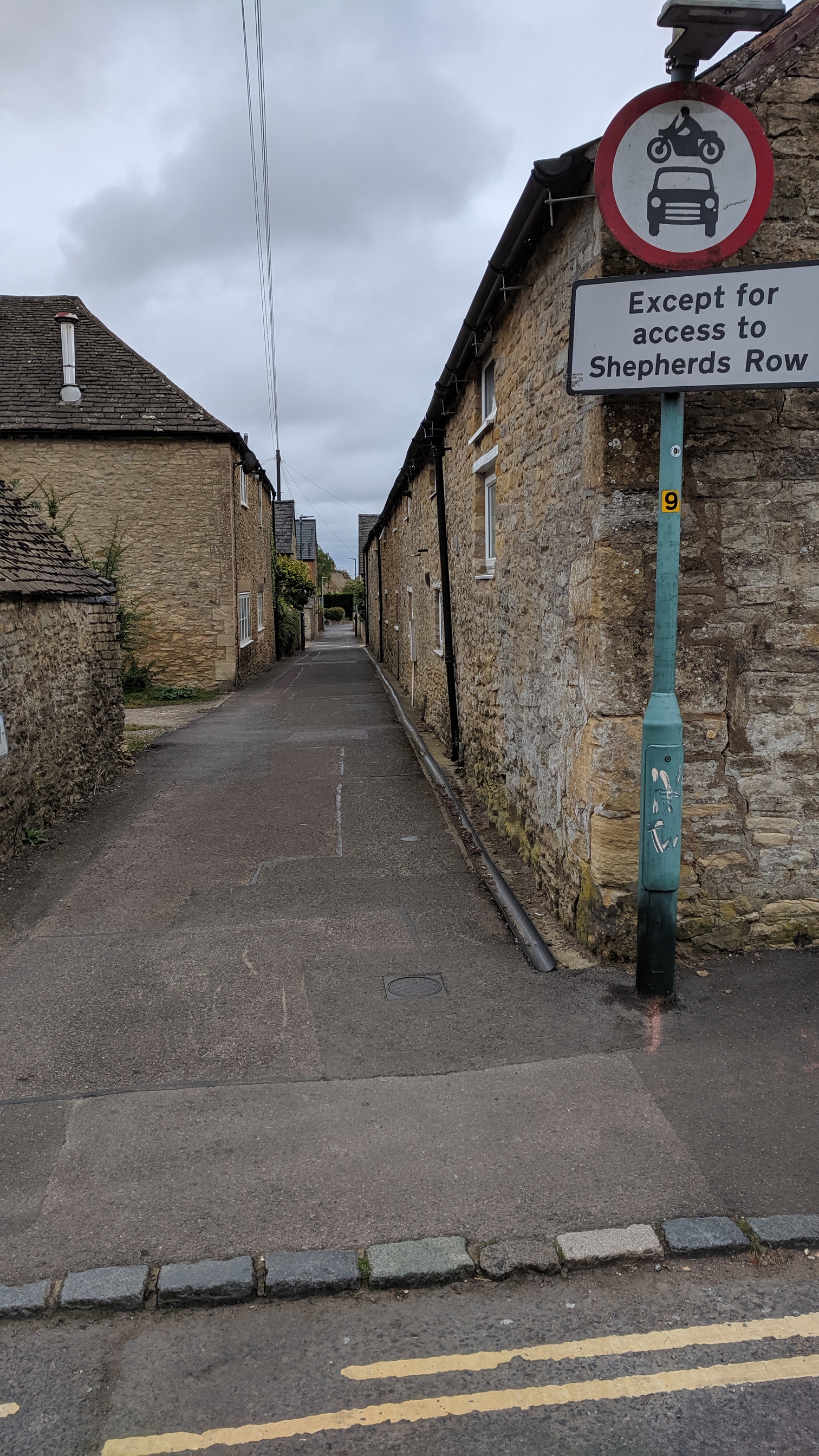 See?? We parked in the next street just beyond, and thanks to friendly neighbors who encouraged us to find our house, we had the strength to pick up our groceries and bags and go back along the narrow alley in search of Carter’s Cottage.
 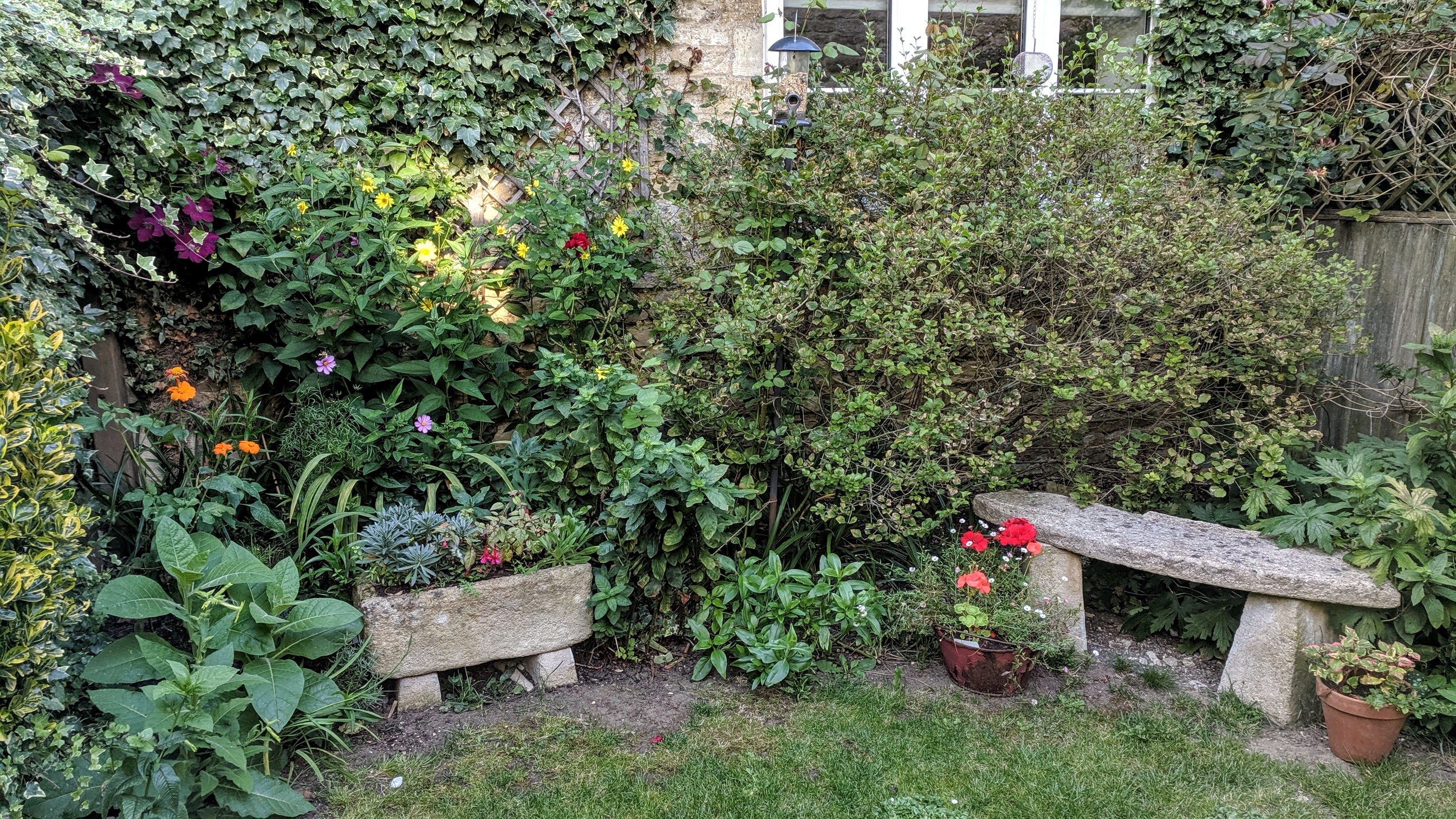 It’s just two up, two down (mostly) but with a really good bathroom and a washer/dryer (mysterious like all British appliances, but we made it work). Here’s a look at the cottage, which suited us down to the ground.


 and then had a delicious dead chicken from Tesco, along with a salad and shortbread for dessert, which we seemed to need. Looking forward to a real shower, that does not require standing up in a tub or kneeling!
 This morning we looked out the window at blue skies and decided to go to the Royal Botanic Garden while the weather held. We walked over to the North Bridge and picked up the bus, with a bit of help from the kilt-clad man at the door of the Balmoral Hotel. When the ticket taker told us the blue poppies were in bloom, that was all I needed to hear. They have a reputation for being extremely difficult to grow, and because they come from Nepal or China or somewhere I did not expect ever to see them. They were amazing, so blue and so many of them.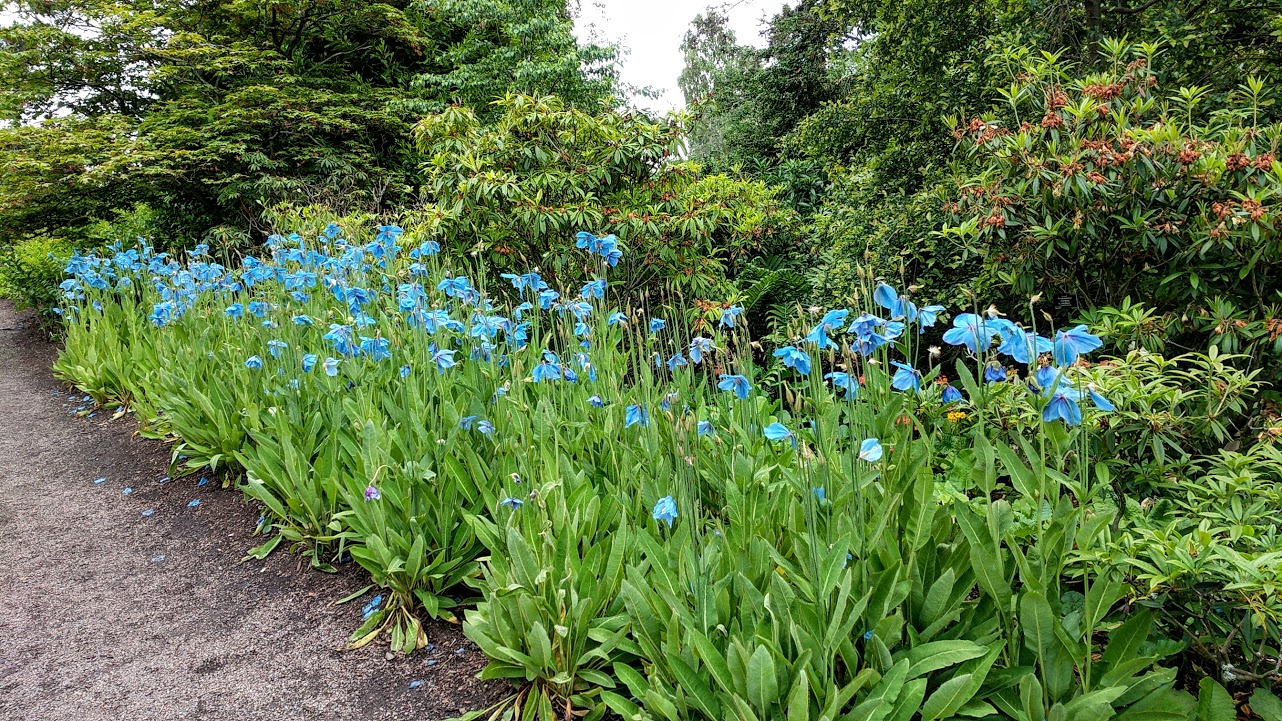


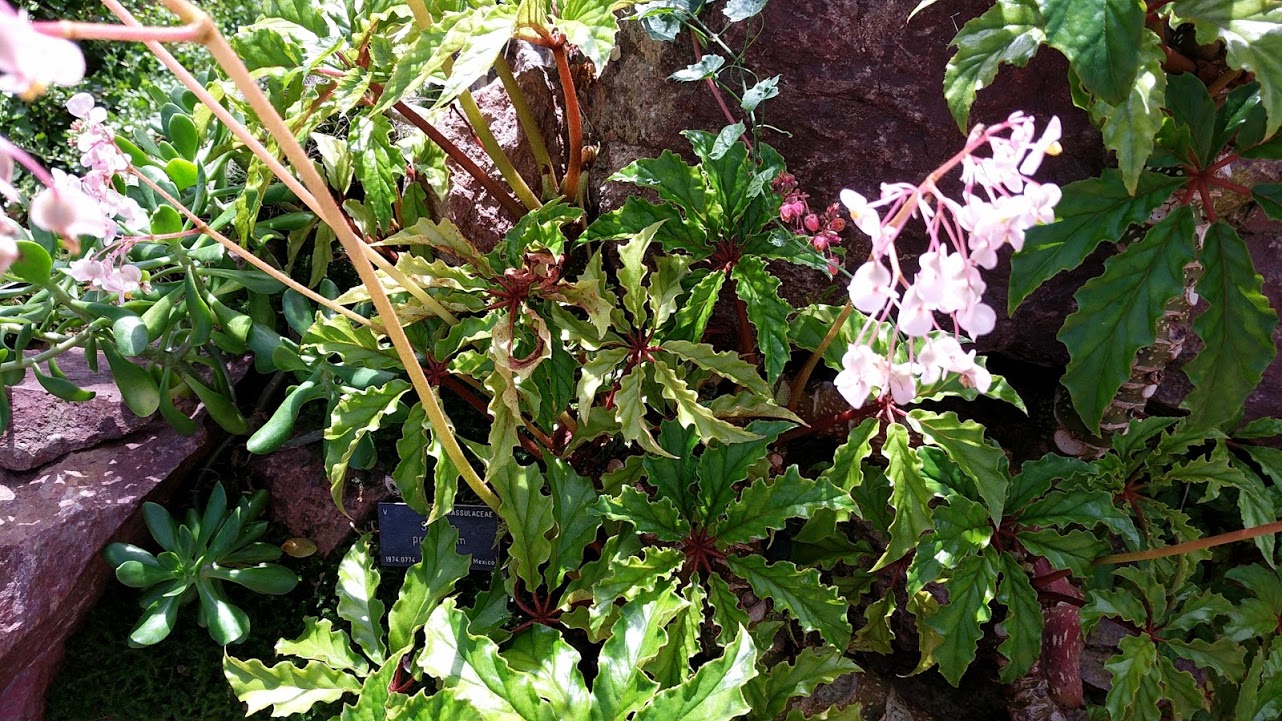
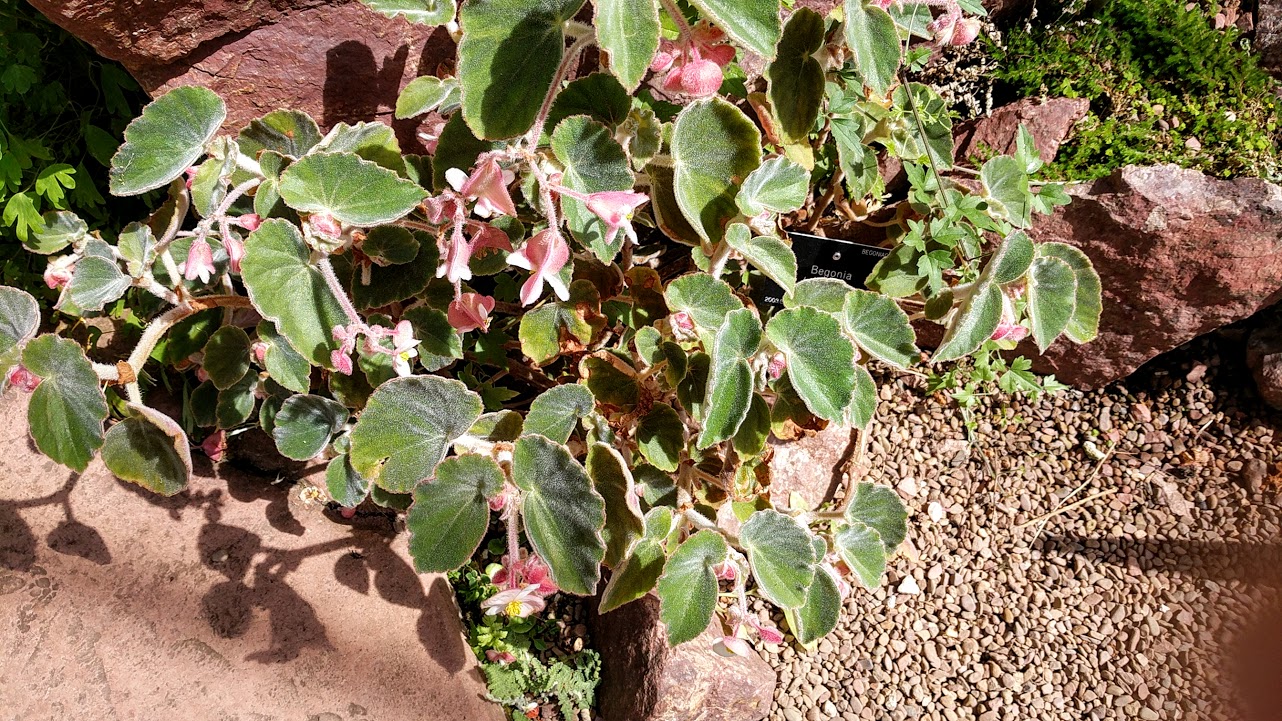 A few more images that took my fancy:
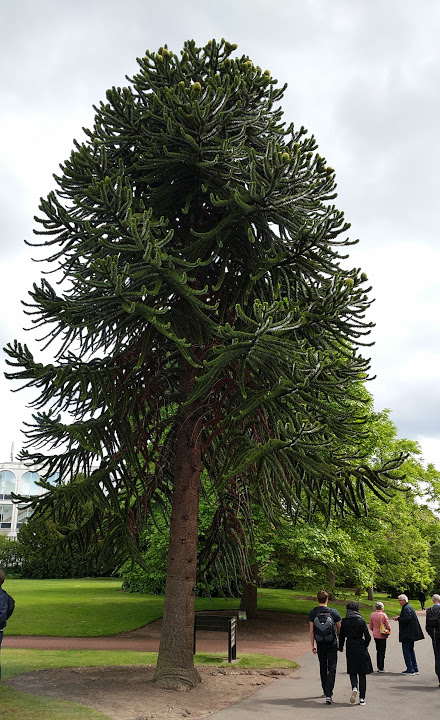
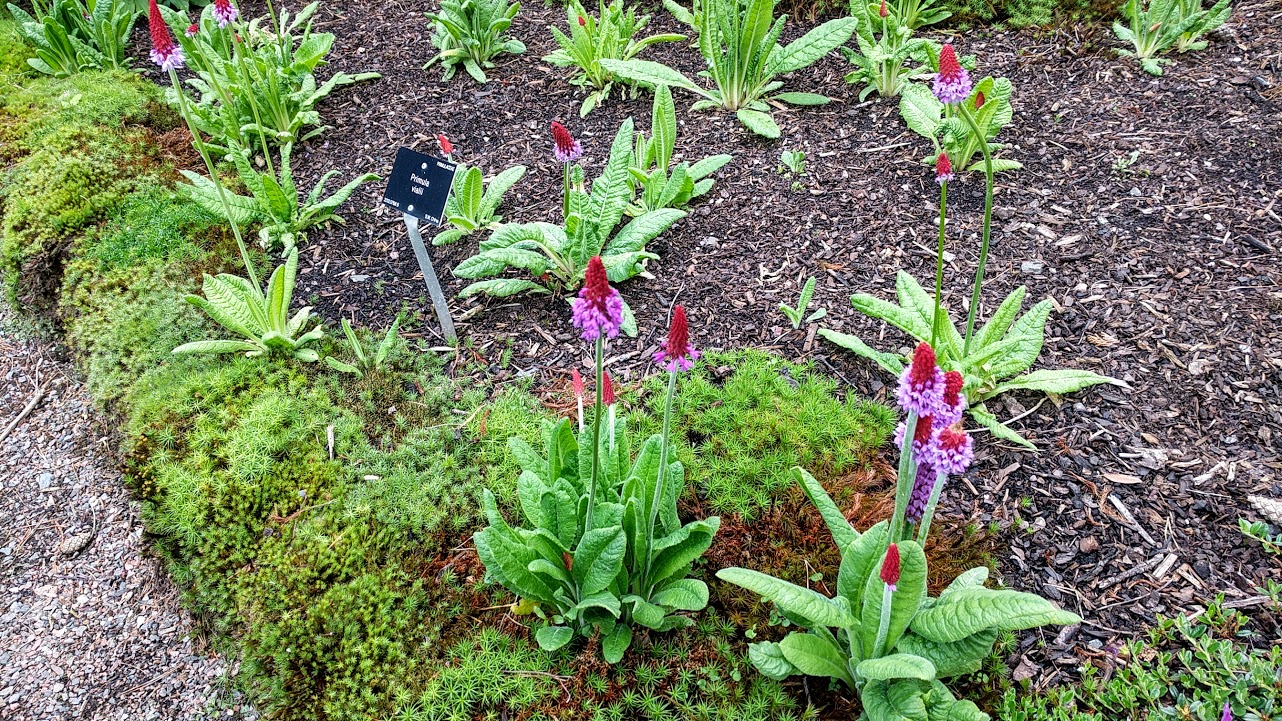

 though the majority of items were made of stone. Those who are interested can find more images of objects
 Then home to pack in prep for leaving tomorrow.
 For the last few years (really), a little slip of paper has been floating around in the piles on the kitchen counter. I had planned to see Margaret Roach’s garden in Copake, New York, at her Open Garden Day as part of a trip to visit Uncle Buzz in Salisbury. Sadly, her garden was















 Caroline's Garden and Travel Record