Image

On to Salisbury

We bade farewell to our efficient little apartment, packed, tidied up and taxied to the train station. The trip to Salisbury was easy, highlighted by a view of one of the chalk horses found in this part of the world.

Googling discovered that this one is known as the Westbury white horse. It has been recut (into the turf) numerous times since 1778. A nice little bonus as we trained along.

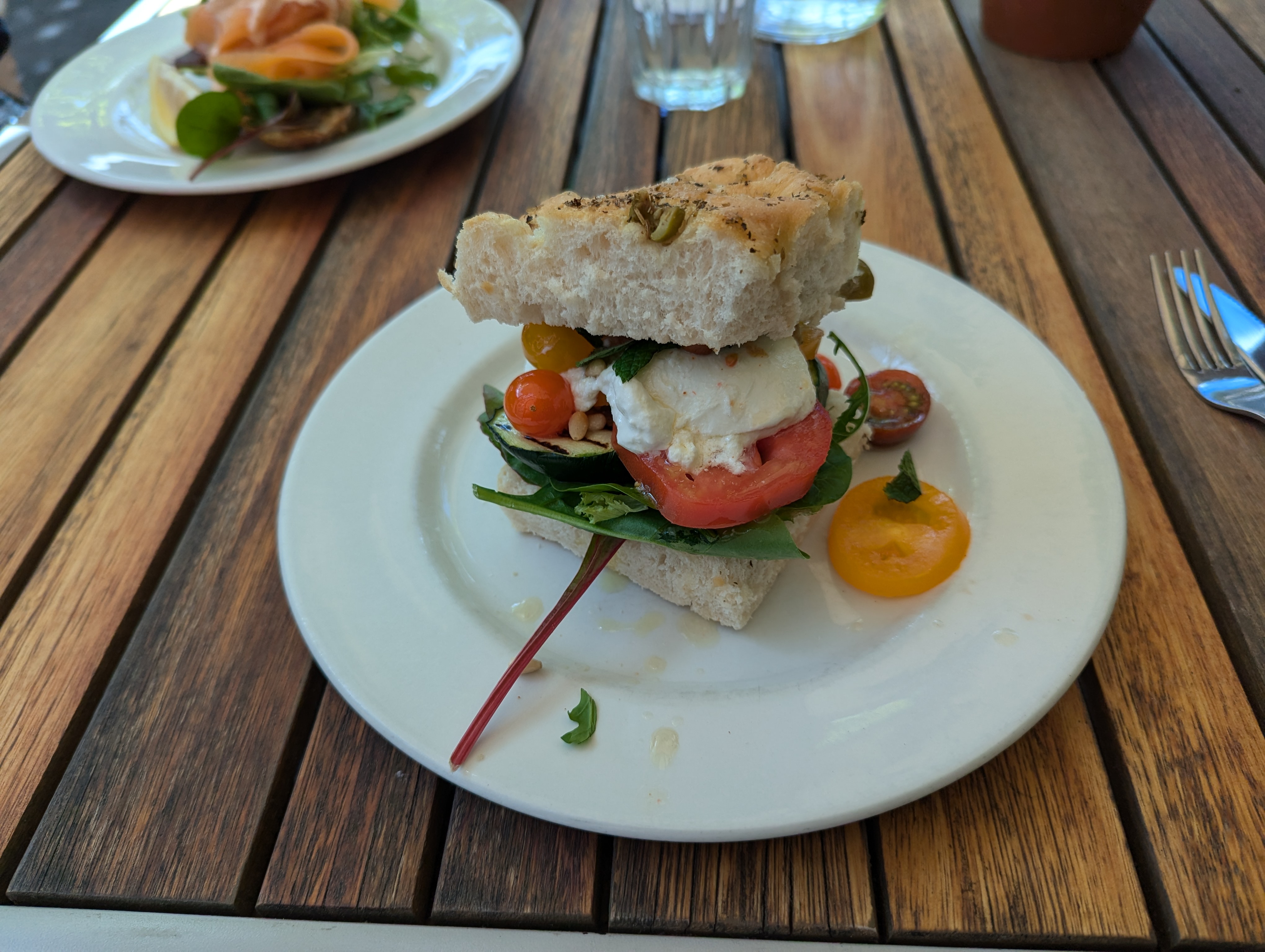
We dropped our bags at Caboose (a left luggage operation inside a pub) and headed into town for a light lunch at a little outdoor cafe.
We walked down towards the Cathedral, which we’ll visit tomorrow, and went into the Salisbury Museum. They have a Rex Whistler exhibit on at the moment, and an enthusiastic docent made us pay more attention than we might have otherwise. I was vaguely aware of him, but discovered that he knew everyone in the arts and society at the time (1928 onward), until his death in the war in 1944. This is a jaunty self-portrait from 1933.

Perhaps we should indeed have included Wilton House (where he painted numerous portraits and decorations) on our itinerary, but you can only do so much.

The Stonehenge exhibit was good prep for our visit there tomorrow. Everything from skeletons to cooking utensils to pottery, like this neolithic Durrington Walls Grooved Ware pot,
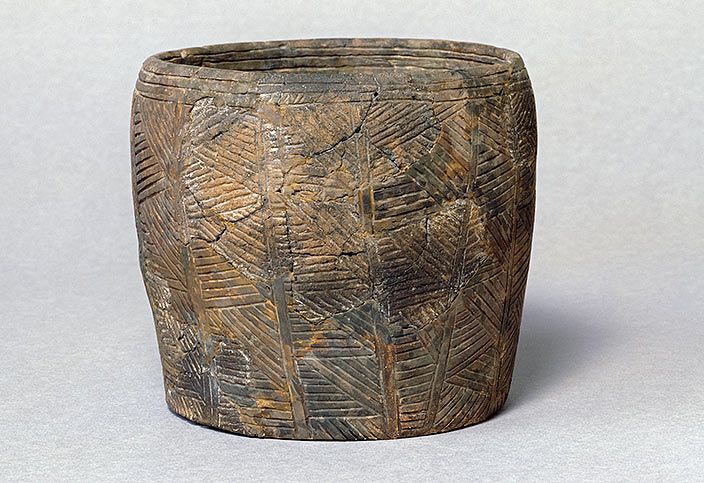
was on display, some dug up by treasure seekers, others by early archaeologists, and eventually by modern diggers with better equipment, all displayed in reverse chronological order that actually made a good deal of sense. I don’t know which I like more, the artifacts themselves or the be-whiskered old men who wrote about what they found in the 18th century!

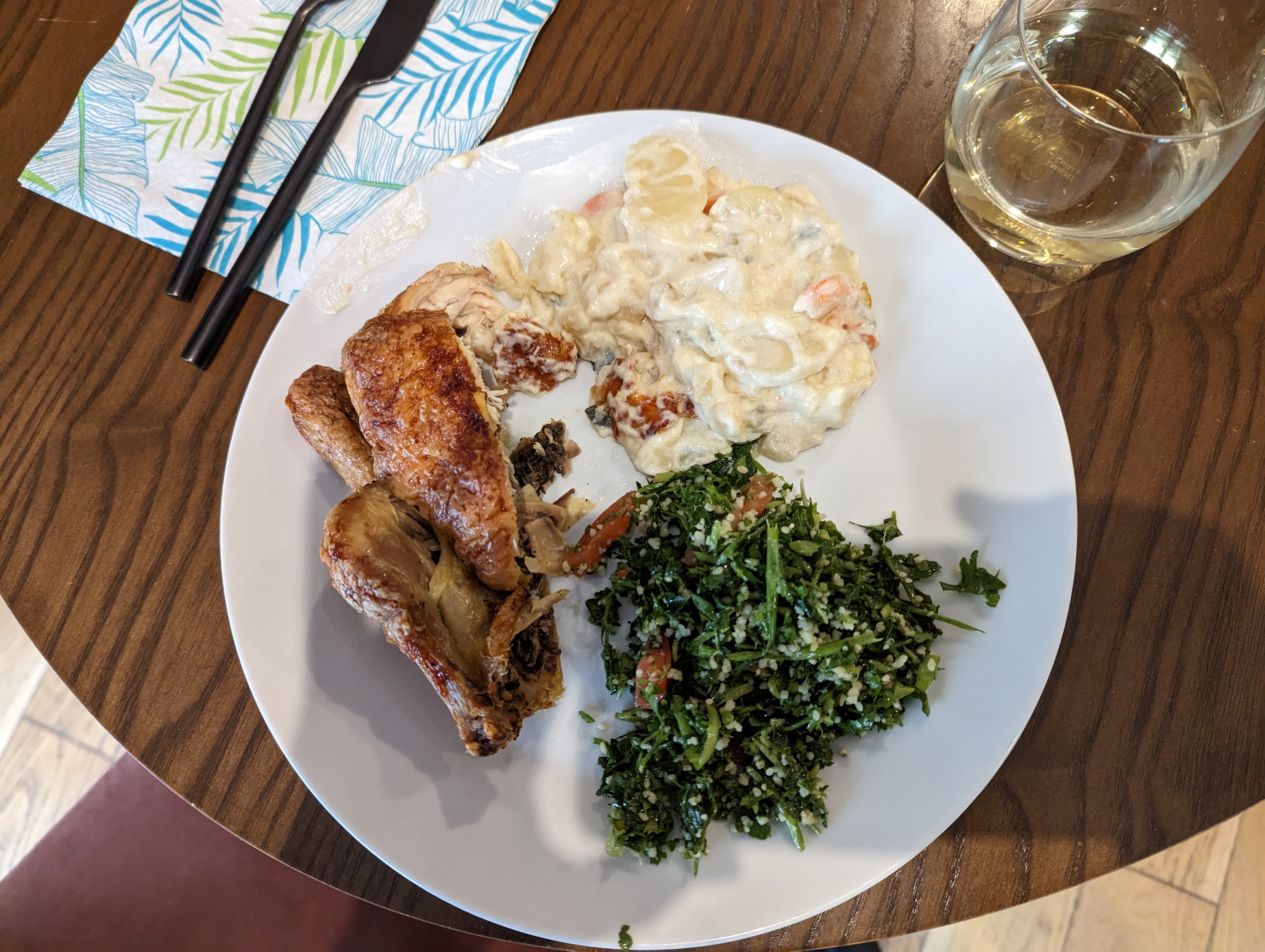
A quick stop at the food hall at Marks & Spencer for supplies, and we were soon enjoying a glass of wine on the terrace of our new digs for the next three days.
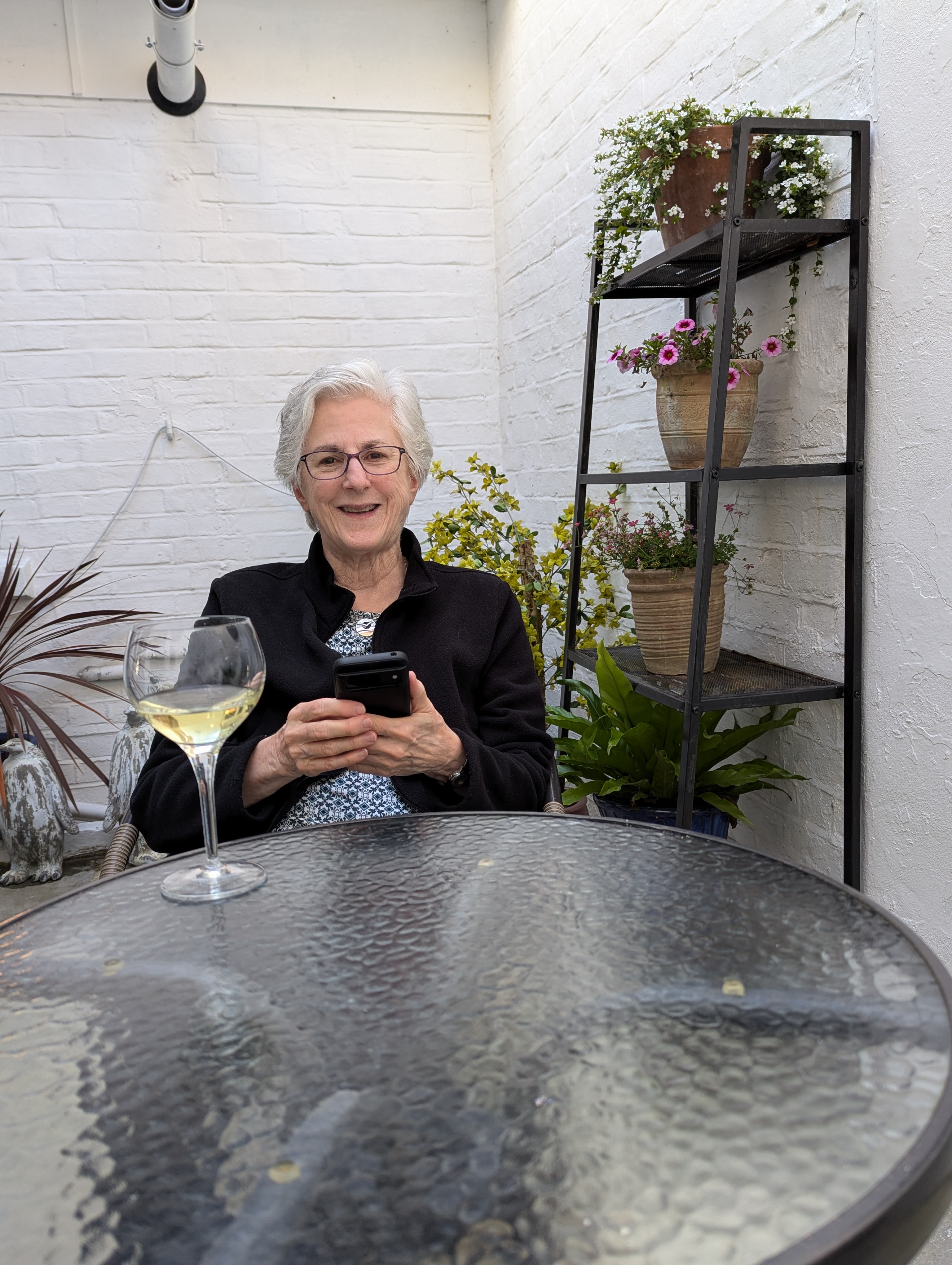
The flat is very thoughtfully designed, with notes of Morocco in some of the lighting and fabrics.

Another very steep staircase, but we’re getting used to hanging on to the balustrades as we go up and (especially) down.

Dinner tonight was at Baroushka, a Lebanese restaurant five minutes away. Alison had some most delicious lamb, and I had a roasted sea bream, and we were both happy. We might even come back again on Wednesday!
Image

Americana in Bath

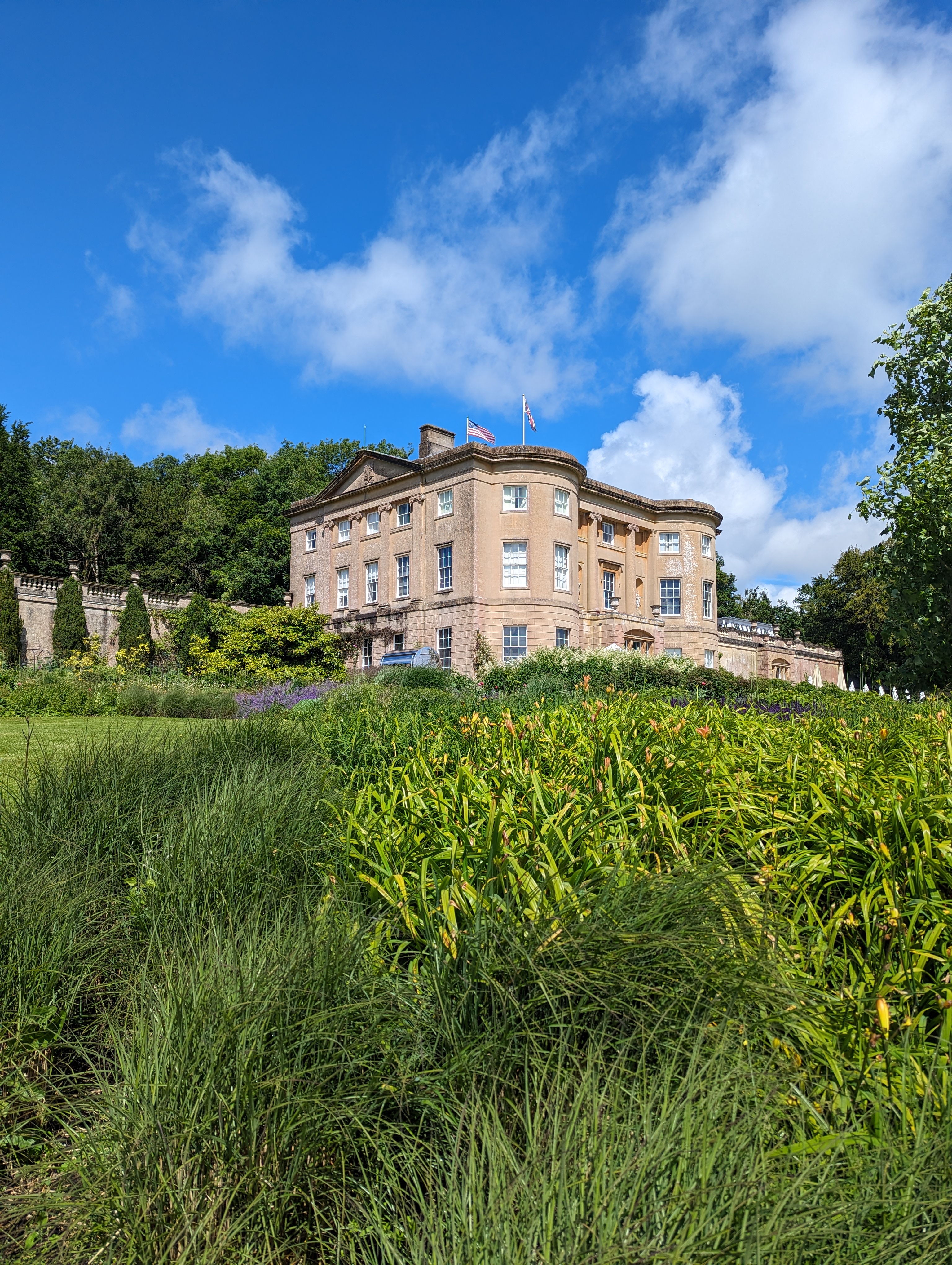
Two Englishmen who were both interested in antiques decided in the late fifties to collect American furniture and other items to introduce the best of America to the Brits. They set up their finds in a big house they found just outside of Bath that had most recently been used as housing for students but worked well as a museum of Americana. Each period room features a different example of American history and culture.

One of the rooms, for example, is furnished with an over-the-top carved bed and brilliant wallpaper from 19th century New Orleans,

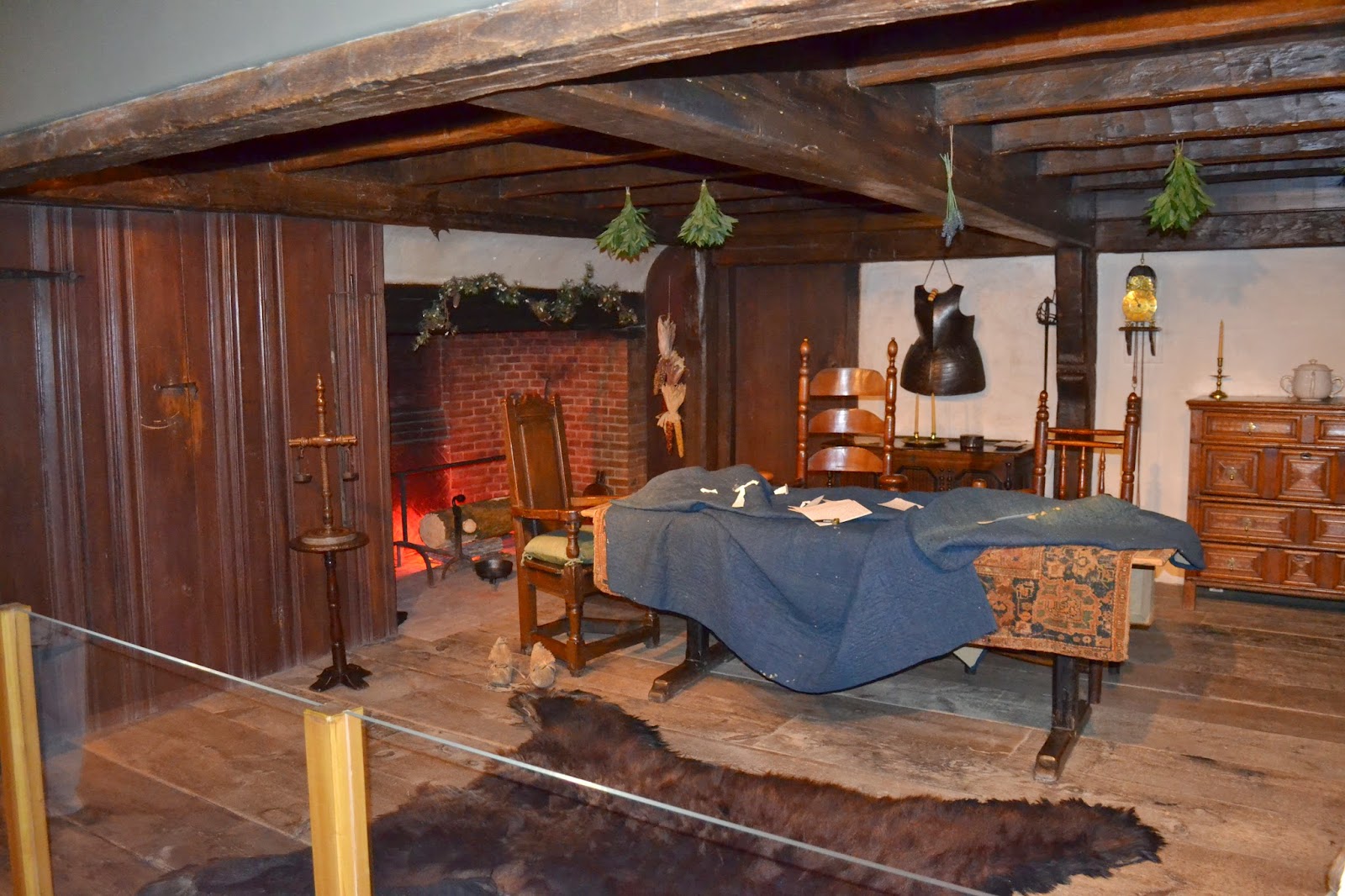
while another was a New England room of about 1790 with wooden furniture of the period,

and so on, including items from American Indians, the Pennsylvania Dutch, the Civil War, etc. Dallas Pratt, one of the owners, also donated his collection of Renaissance-era maps, nothing to do with America really, but reflecting his interests. In other words, a little bit of this and a little bit of that.

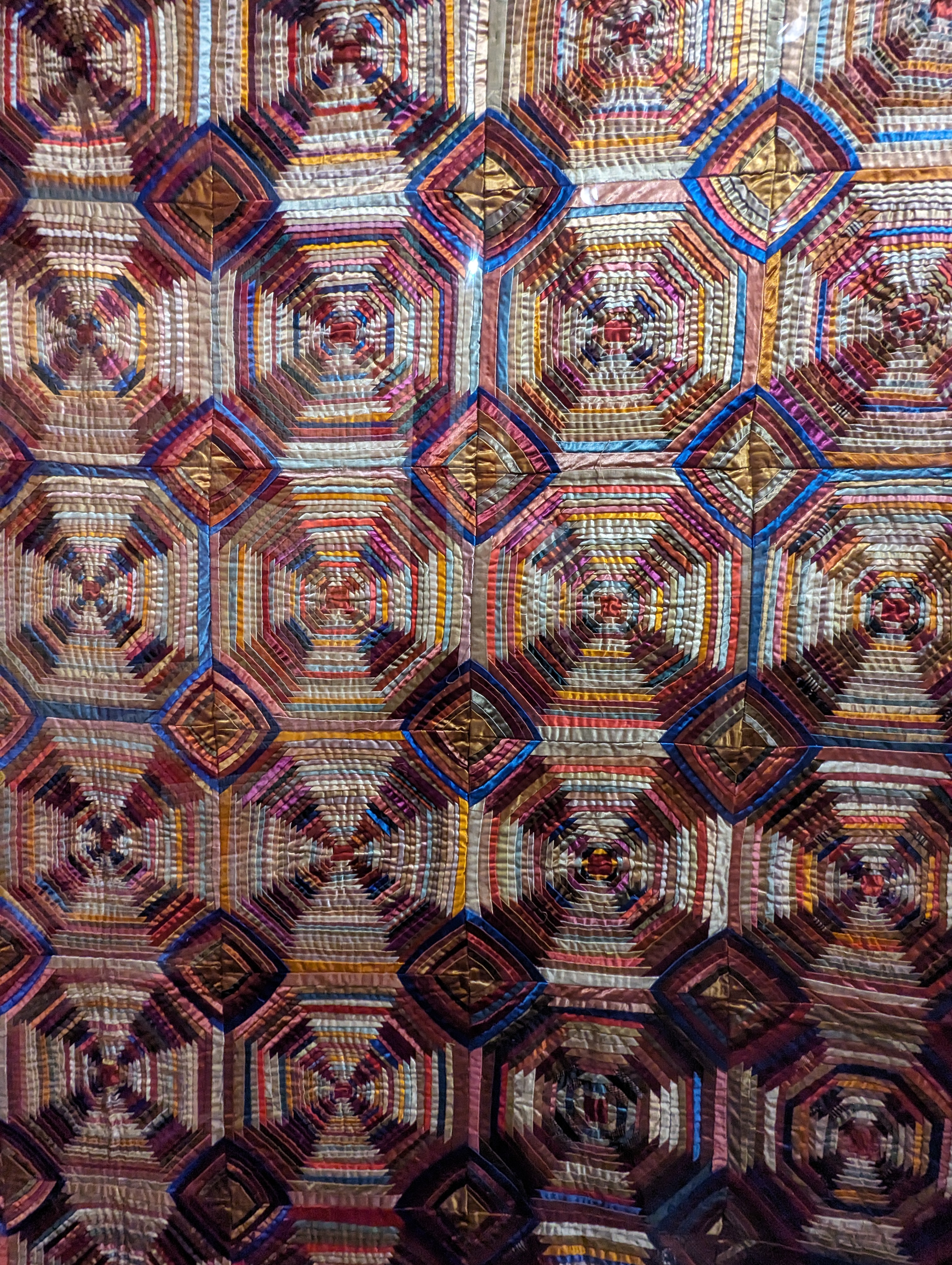
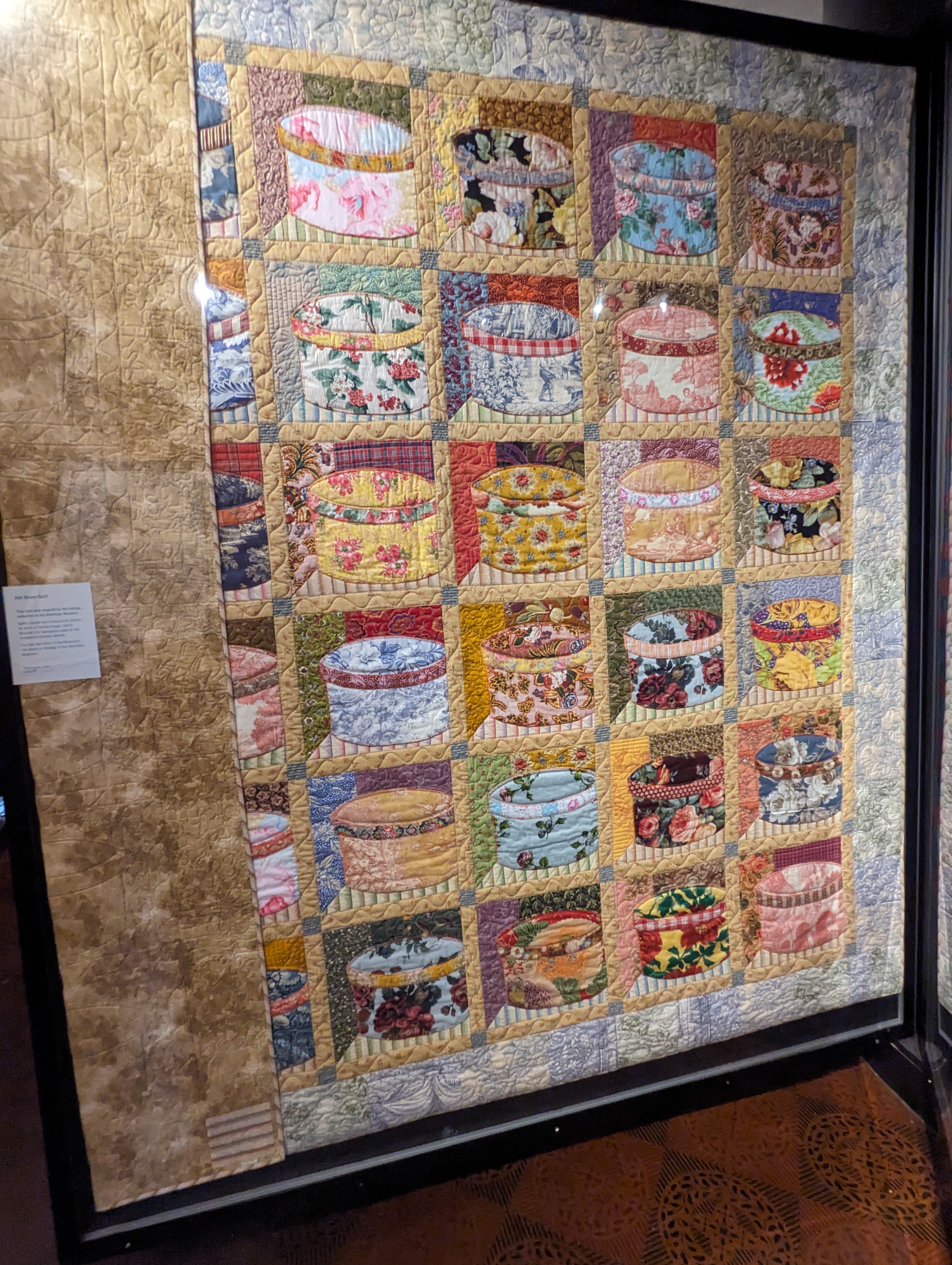
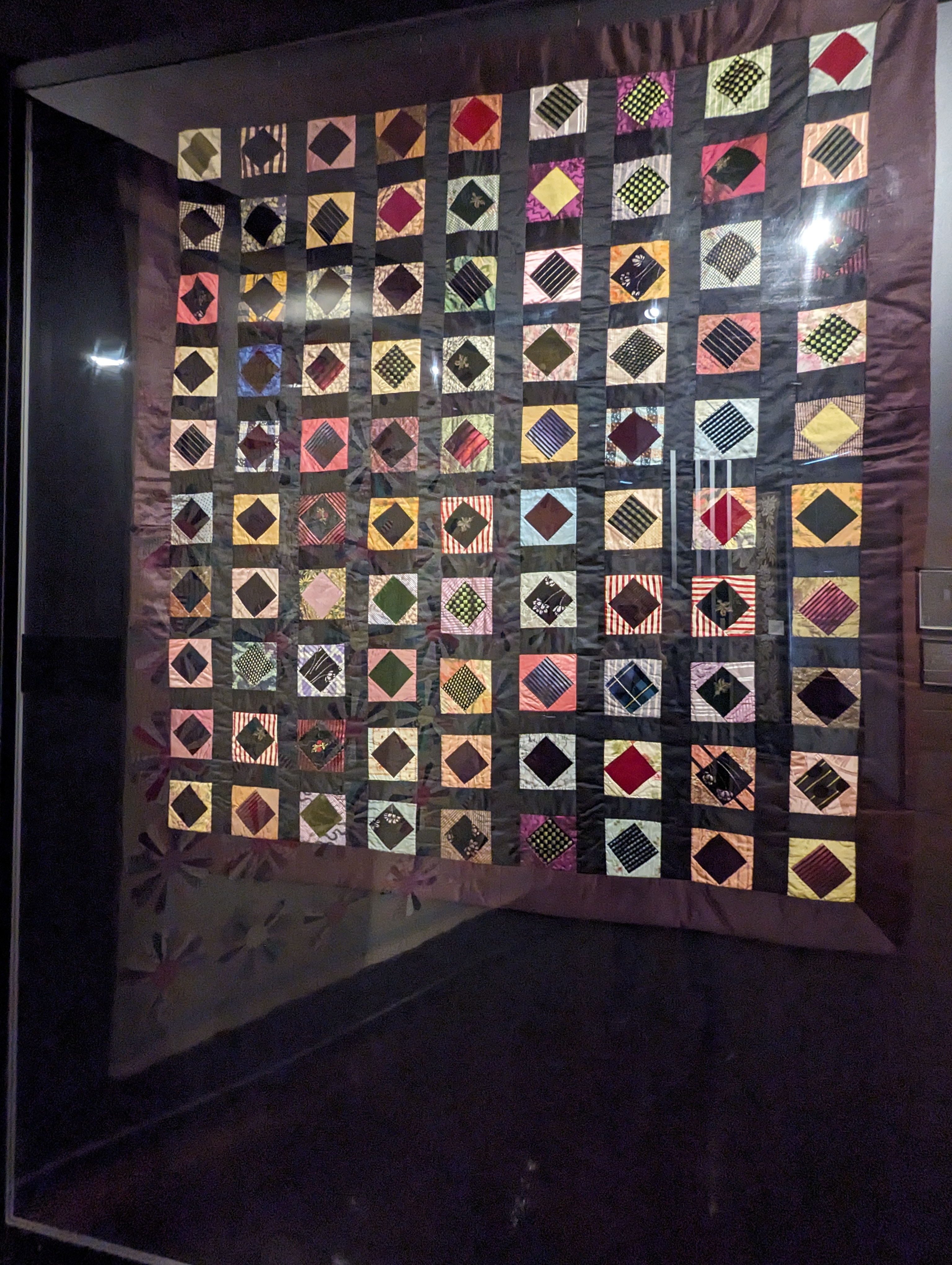
The men also amassed a collection of around 250 quilts, with 50 on display at any given time. They were nicely displayed on panels that allowed viewers to see every detail. This collection too was quite eclectic, ranging from an elegant silk log cabin,

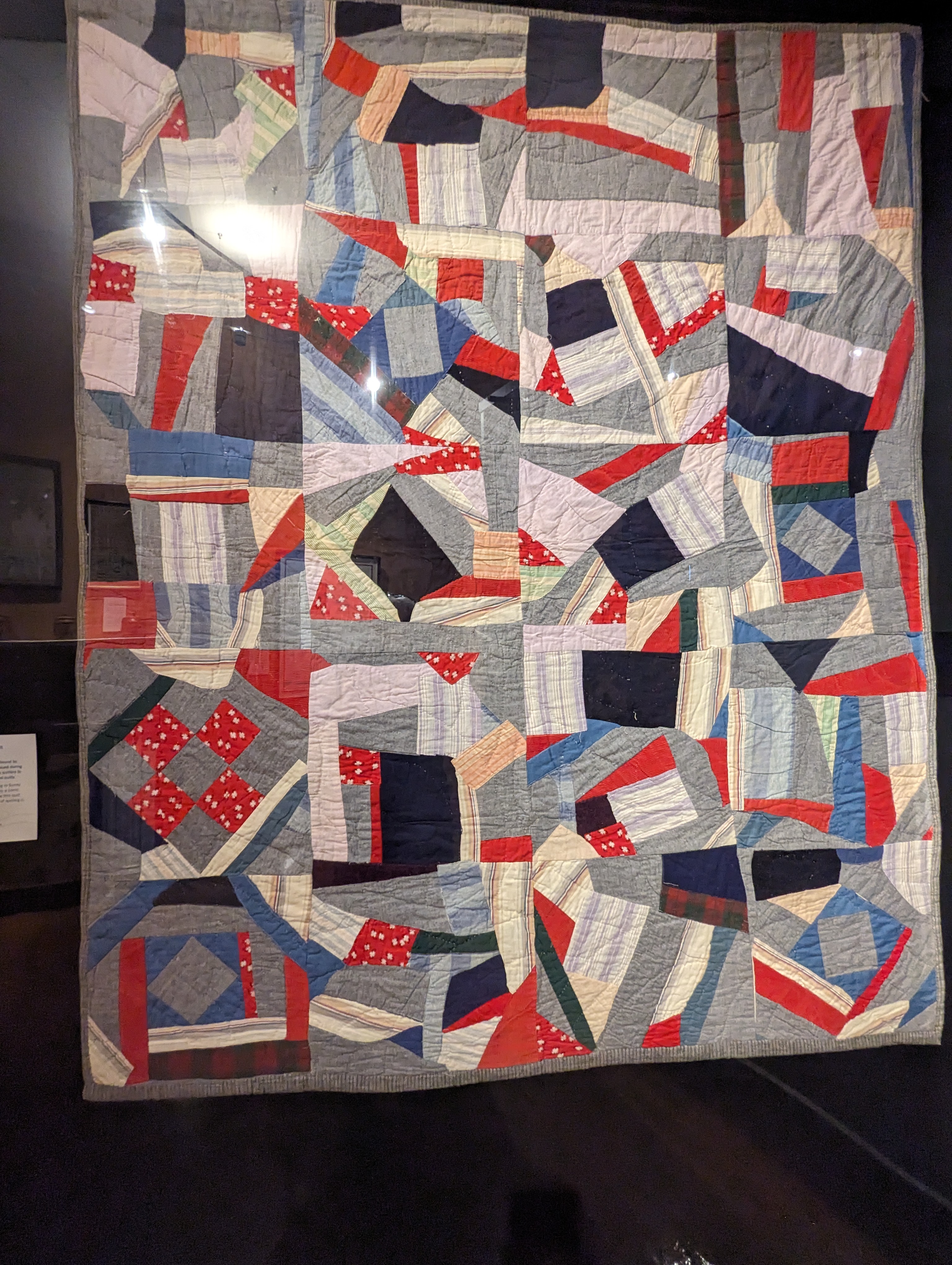
to a Red Cross crazy quilt,

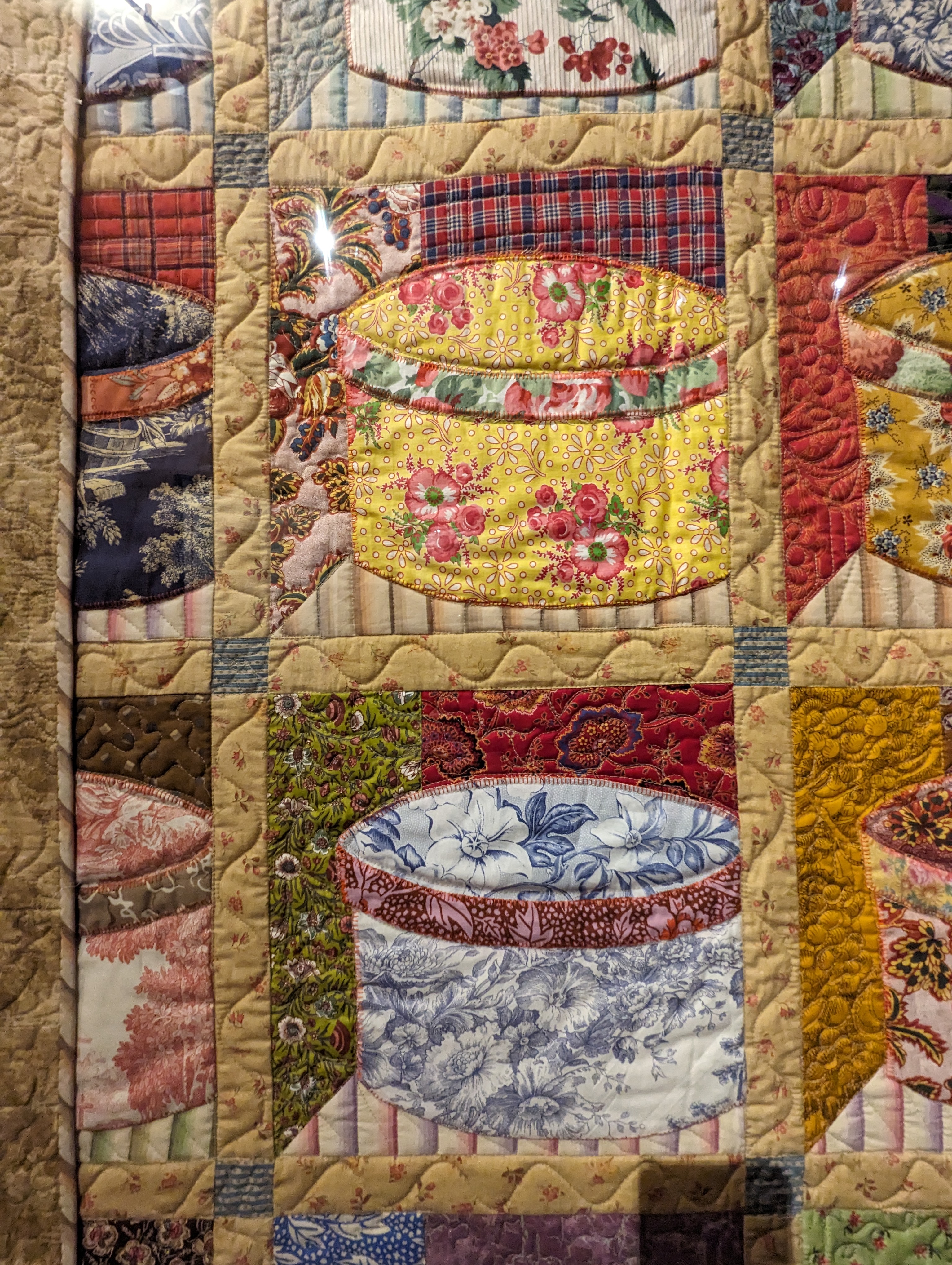
to a Kaffe quilt,

to a striking mourning quilt, also called “Darts of Death,” though that’s new to me,

to a square in a square quilt, one of my favorite motifs,

and more. There was no particular rhyme or reason that I could discern as to what kinds of quilts they collected – how about all kinds?- but an intriguing collection nevertheless.

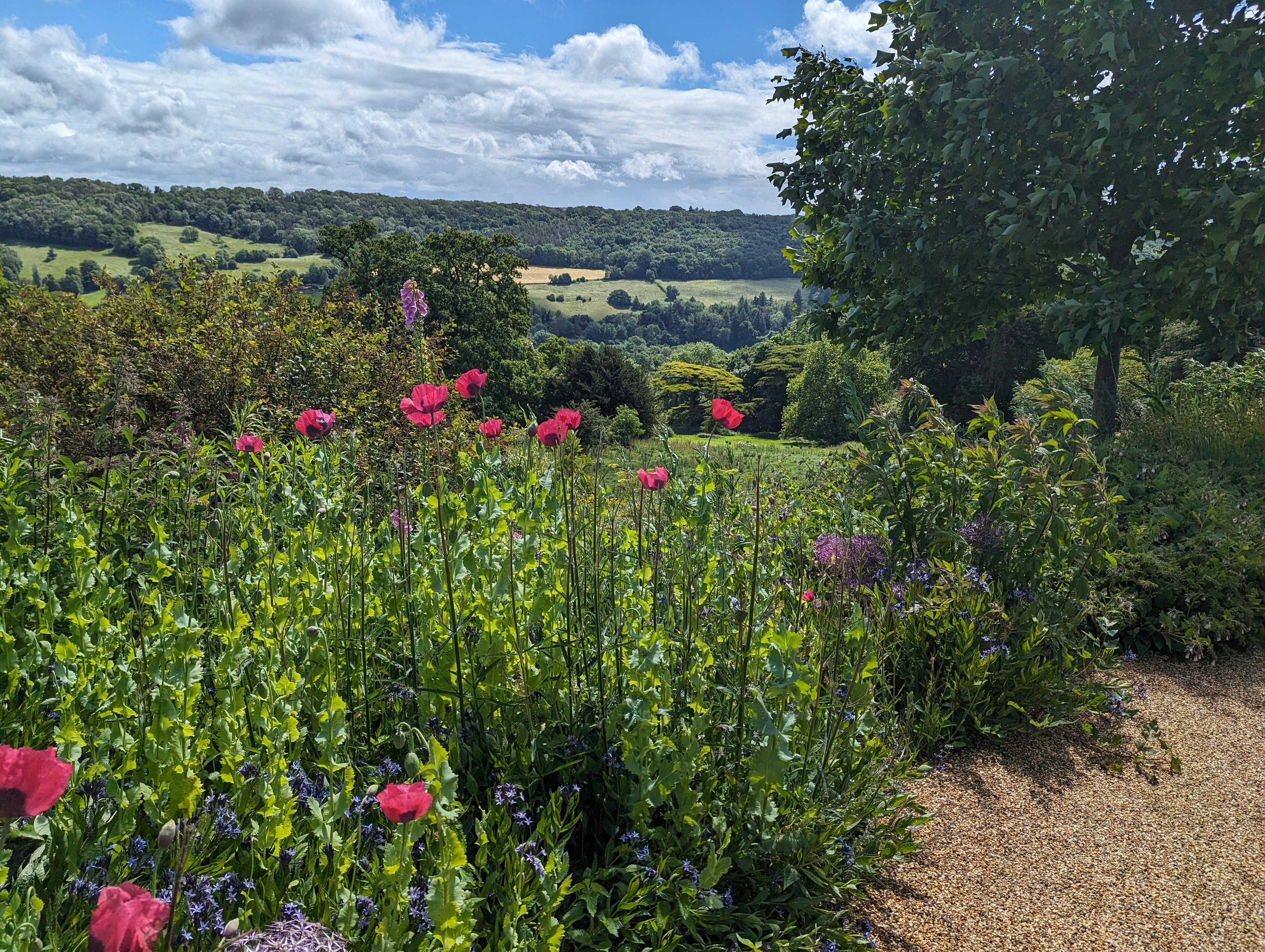
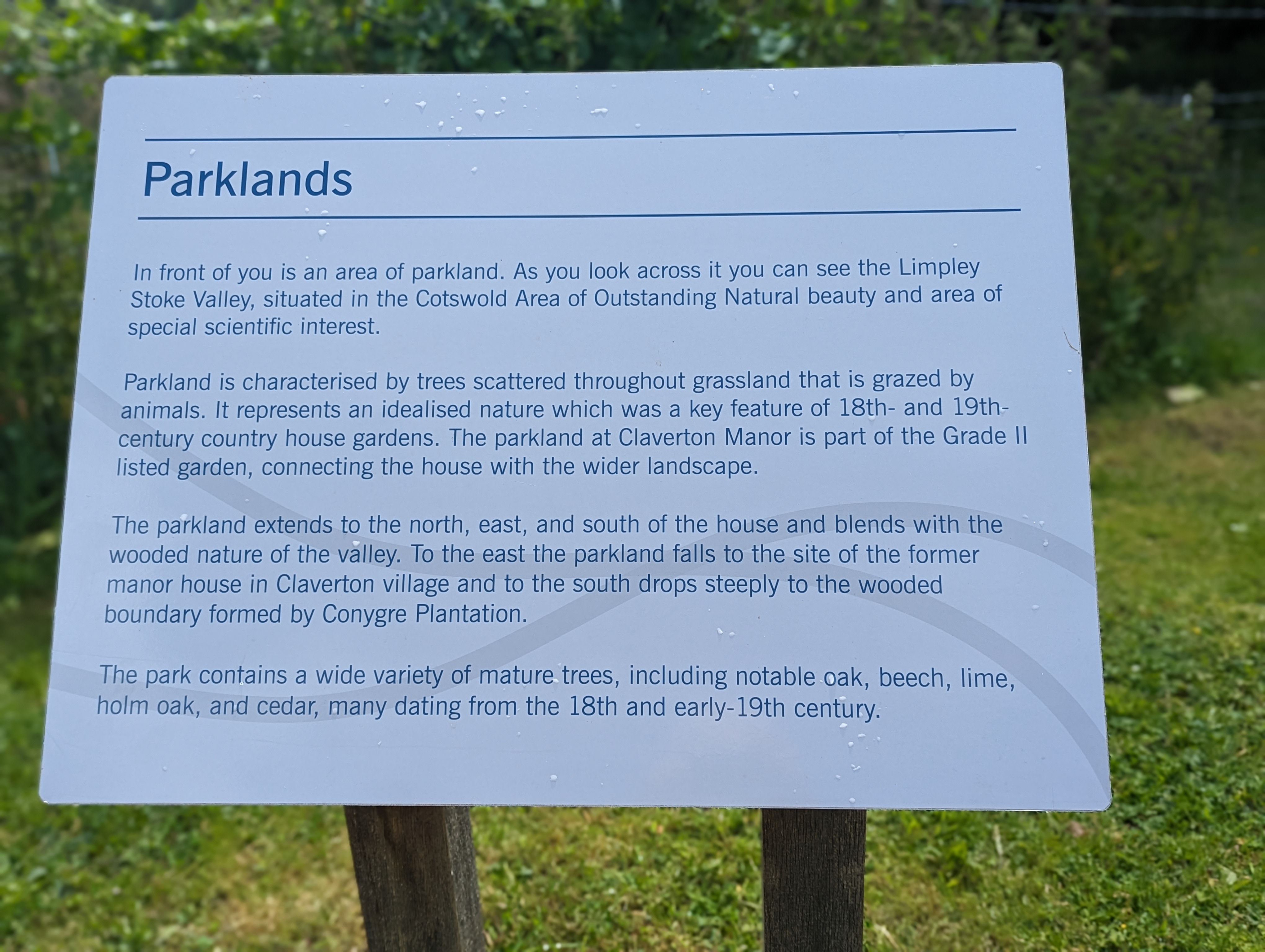
Apart from the quilts, the collection was a bit of a jumble to my untrained eyes. A wonderfully displayed collection of Pennsylvania Dutch carvings caught my attention, less so the pressed glass and the pioneer cabin. But what was really amazing was the garden, 2.5 acres set in 125 acres of “rolling green topography,” as one critic described it.

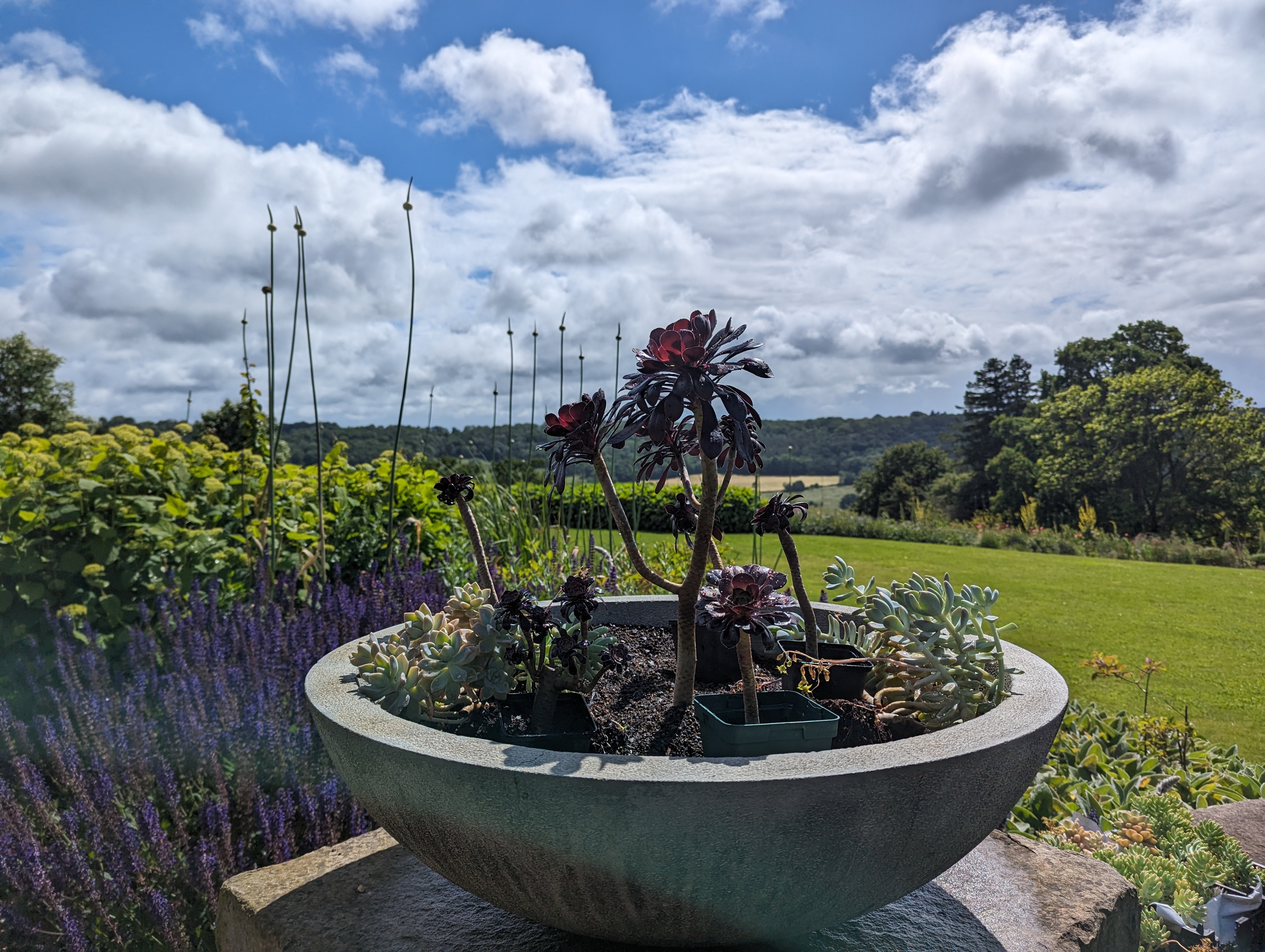
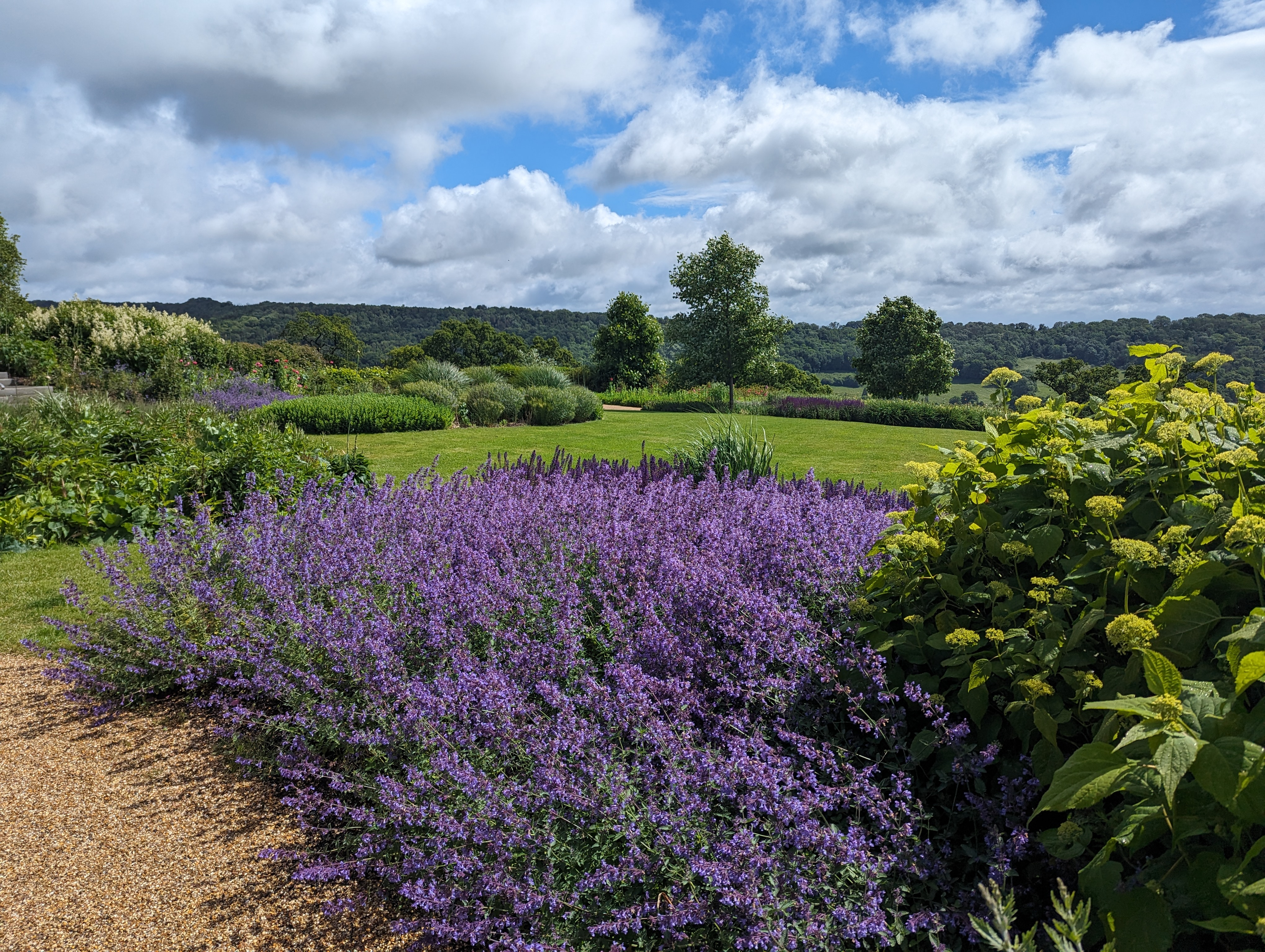
Oeme/Van Sweden had entirely reworked the garden about six years ago, and the results were astonishing. Start with a sloping site that looks down on a valley and up a borrowed landscape on the other side,

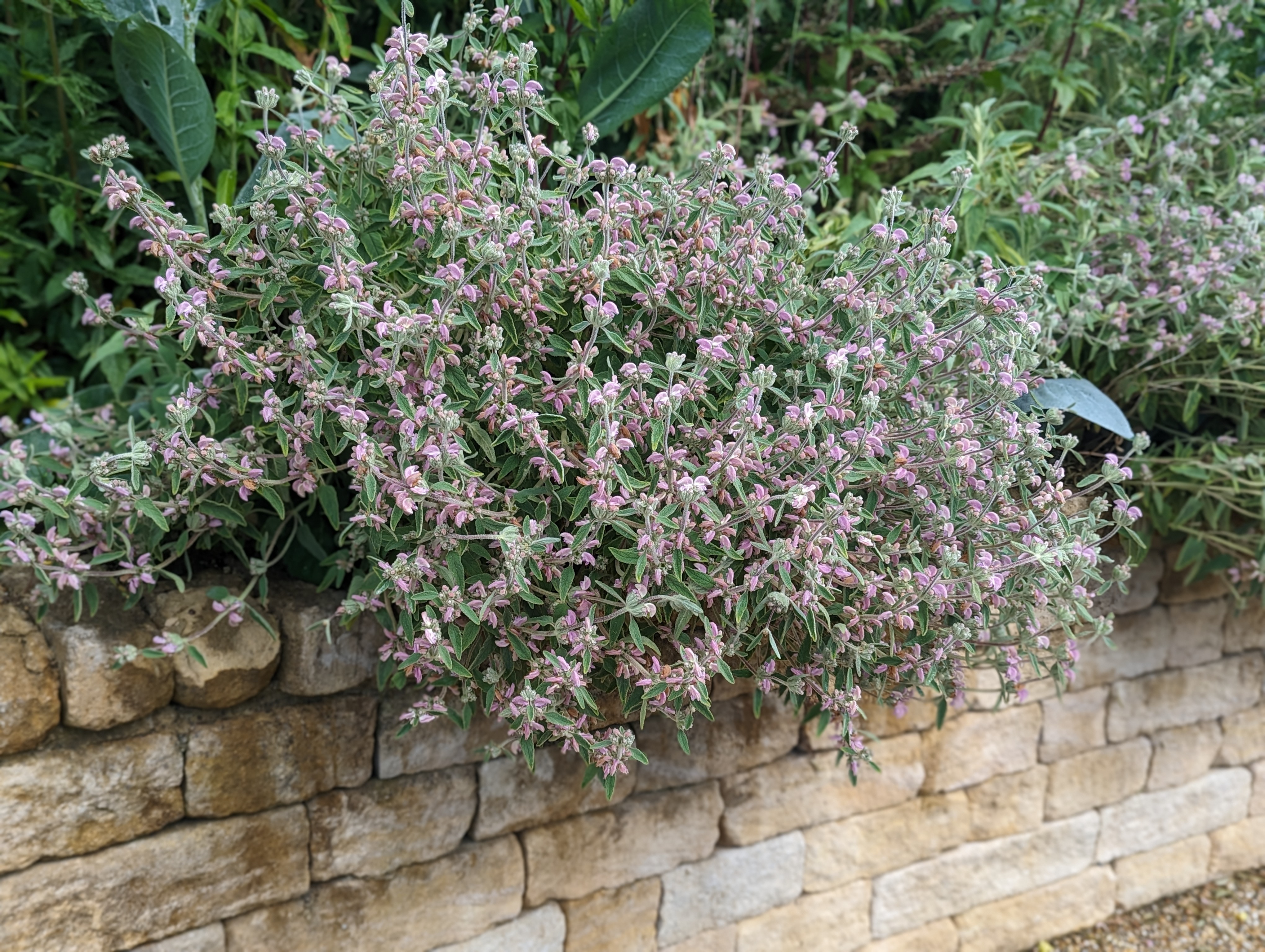
then add in huge swathes of grasses, lavender, poppies, verbascum (I think), foxgloves, roses, and daisies, among other things. (Click through for the full effect.)

And a month from now I’m sure another array of beauties will be in bloom. An interesting article about it can be found here. It was well worth the visit!
Image

Roman ruins, tea, and science

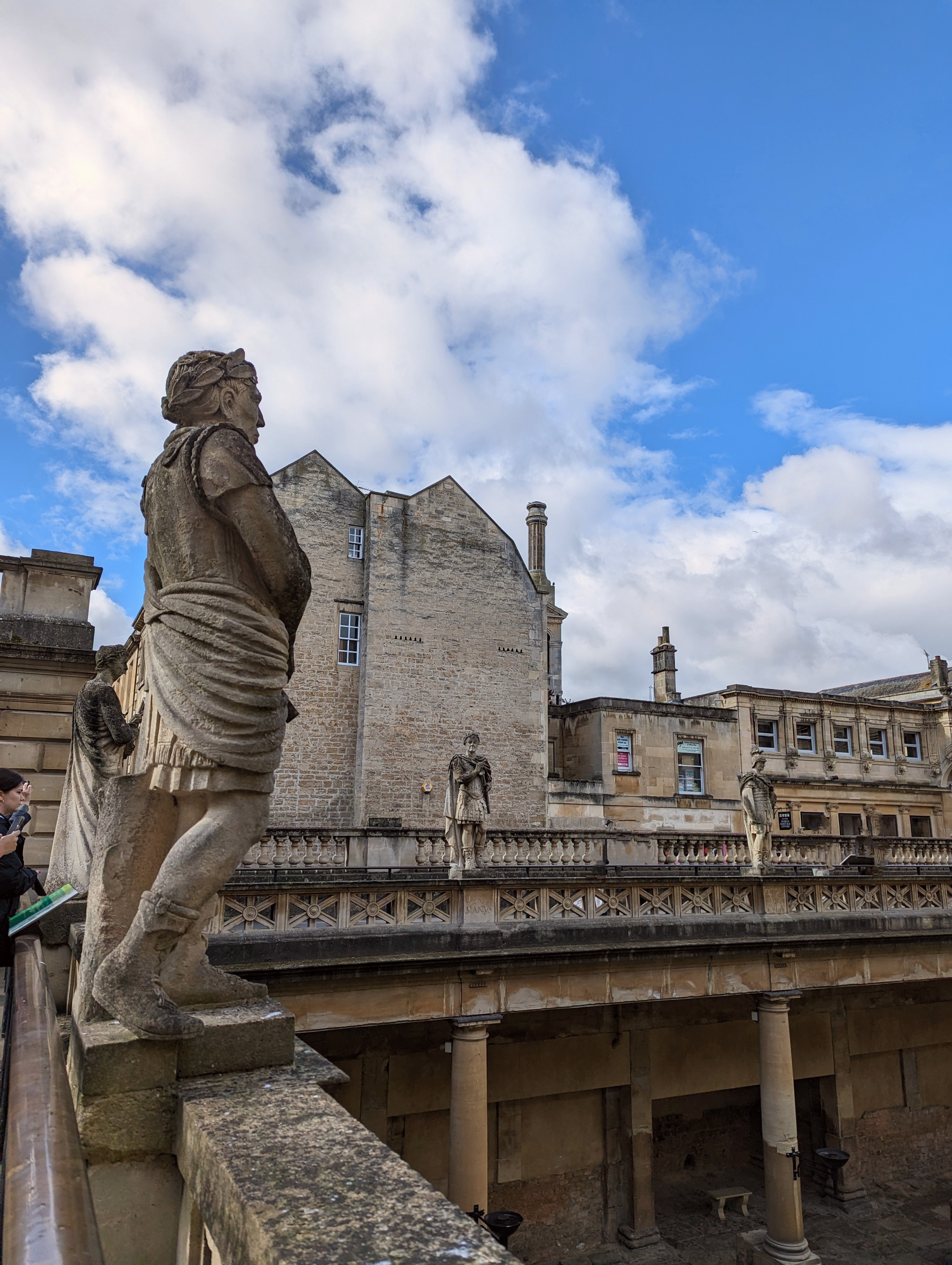
The Roman baths are a highlight for those of us who are not total Jane fanatics. They are such an agglomeration of Saxon, Roman, and Victorian eras that it’s a bit of a puzzle to understand exactly what you’re looking at, but the local council do a good job of sorting it all out for you in well-designed, informative panels that accompany the artifacts.

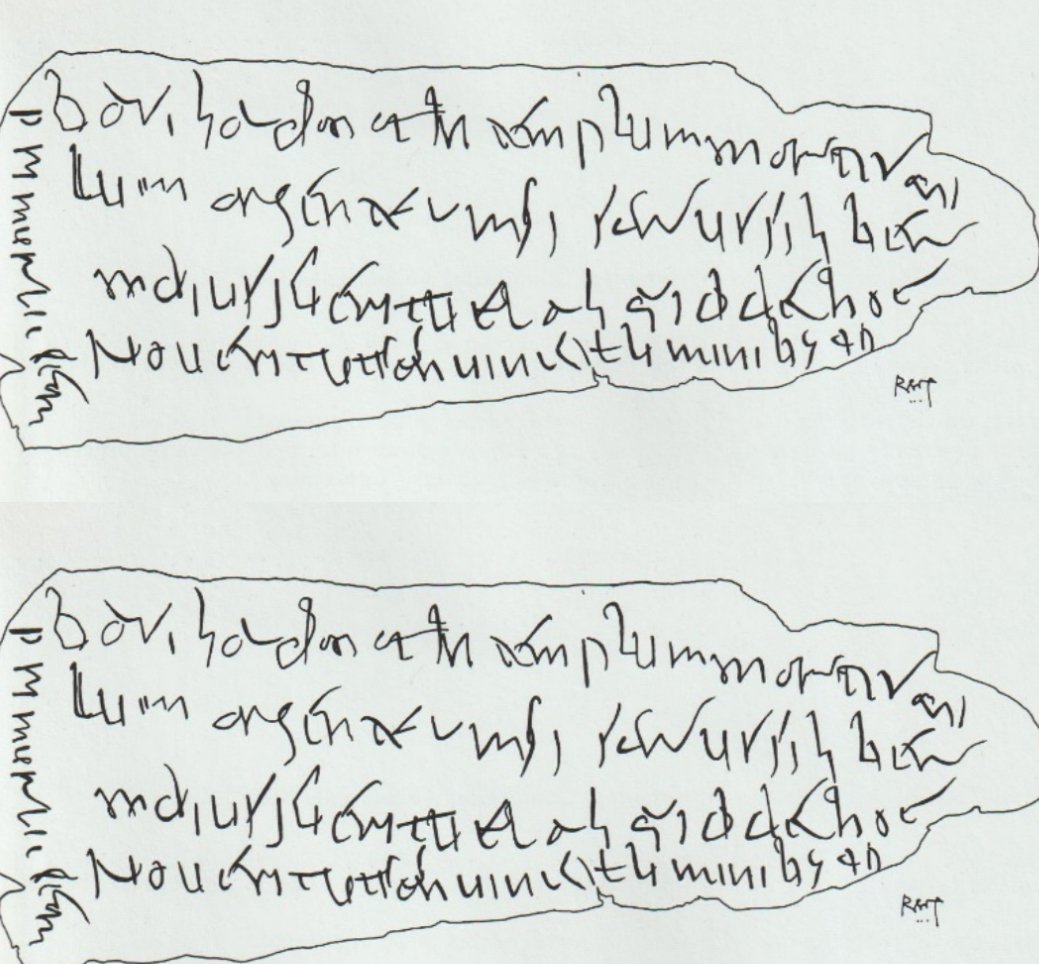
Peter Davenport’s Roman Baths , which I read in preparation for the trip, explains the layers of history found underground: the Celts, the Romans, the Saxons and the Victorians all discovered and used the healing waters over the centuries, and they dug up old roads, built on top of ancient stoneworks, and generally mixed everything up. The most interesting bits, to me, are those show what daily life involved. The very human curse tablets, thrown into the springs in hopes of justice being done, are a good example, described thus in Wikipedia: “…the stolen property is declared as having been transferred to a deity so that the loss becomes the deity’s loss; the suspect is named and, in 21 cases, so is the victim; the victim then asks the deity to visit afflictions on the thief (including death) not as a punishment especially but to induce the thief to hand the stolen items back.”

The victims’ fury echoes down the centuries! (Thanks to this site for the image!)

We dutifully took a sip of the waters, which were actually quite neutral (I was expecting sulfur), rust colored, and slightly warm. Take a look here.

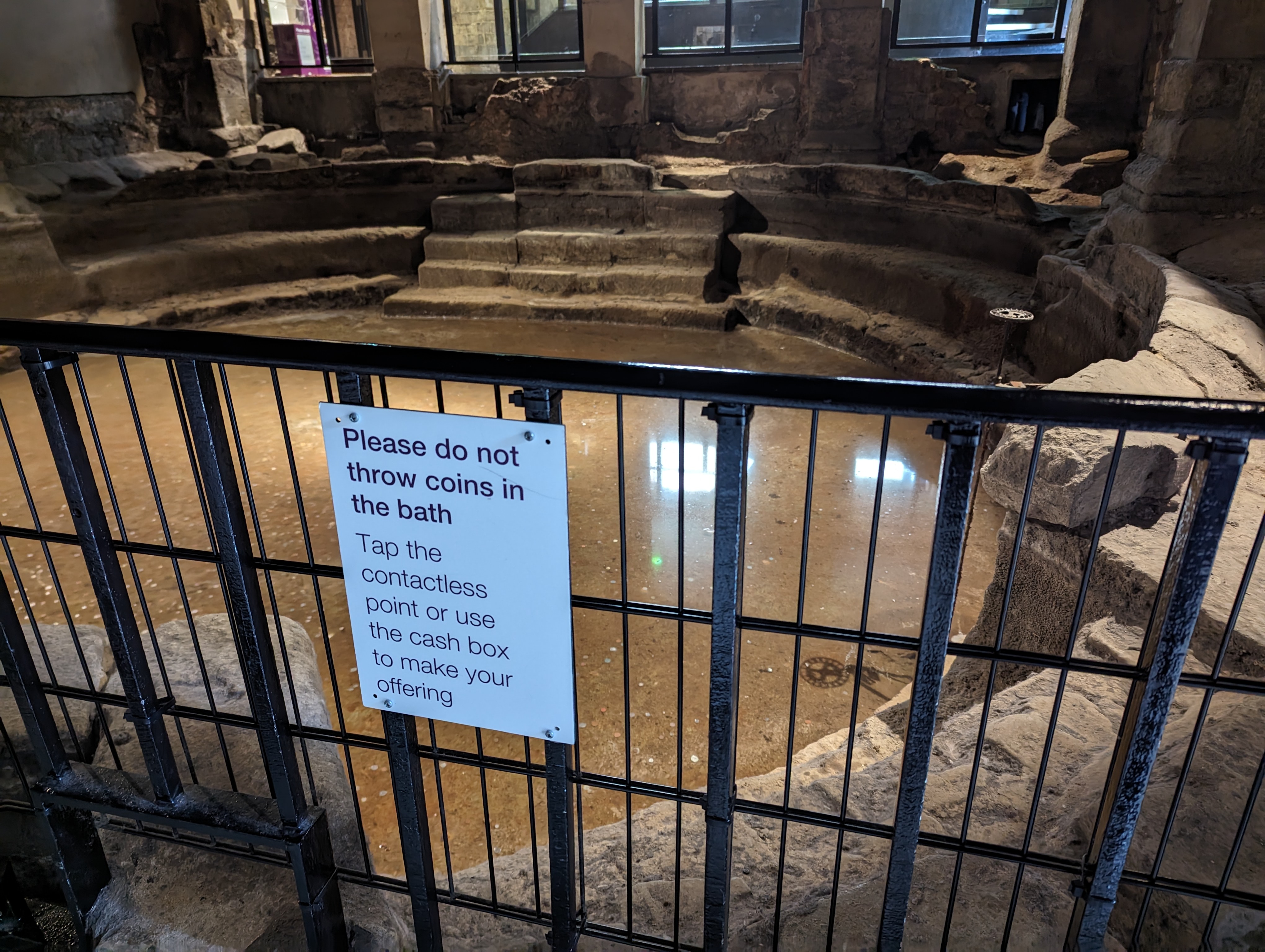
I loved this sign,

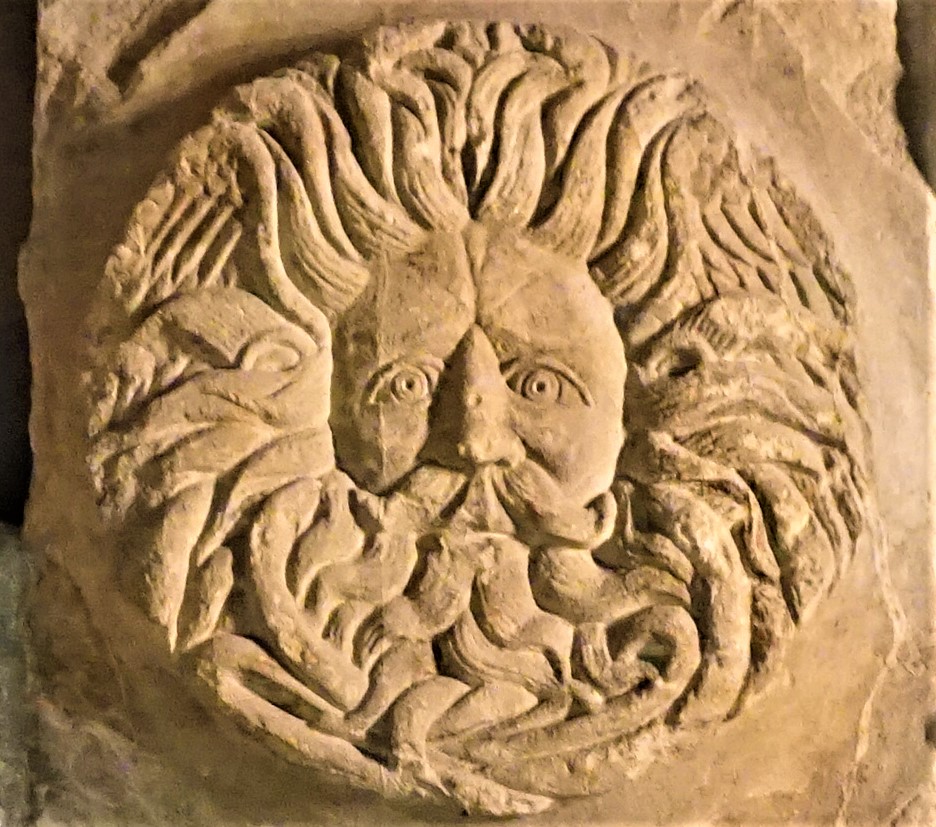
warning us not to throw stones into the waters but instead tap your contactless point. The Romans are so up to date! I celebrated the visit by taking home a replica of the Gorgon’s head, which has puzzled people for at least two hundred years. Is it the mythical creature killed by Perseus? Or is it a water god? Regardless, I plan to install it in the garden as a tribute to the Romans.

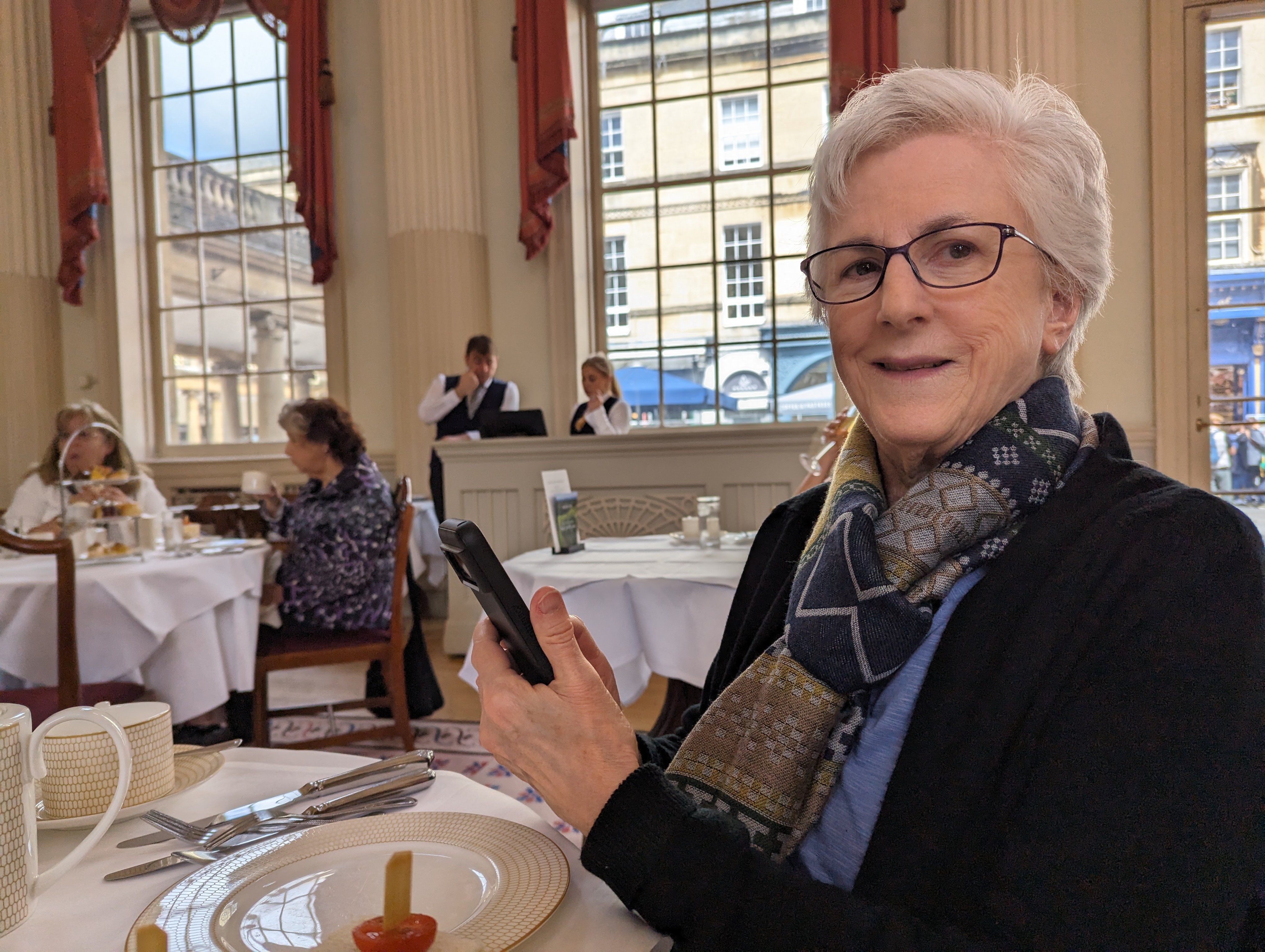
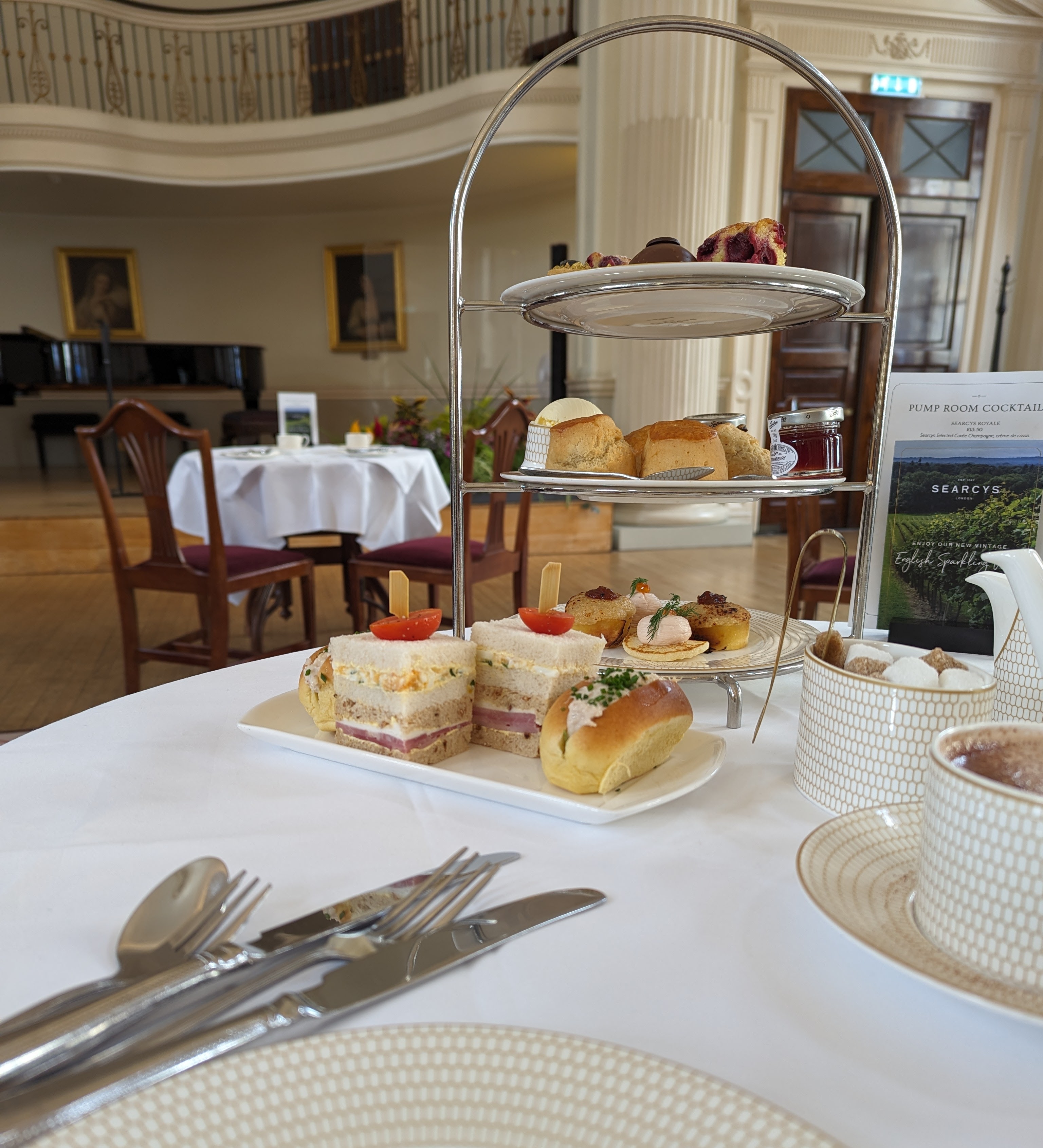
We had afternoon tea booked at the Georgian Pump Room, where fashionable people used to stroll around to see and be seen. It’s directly next to the baths, and when the pump room was built in the early 1700’s, they of course found the remains of a Roman temple. You can’t swing a cat in Bath without running into Roman ruins!

Tea was served in a large, elegant room complete with a pianist to set the tone. Delicious little savory and sweet confections, accompanied by tea, of course, made for a light lunch.

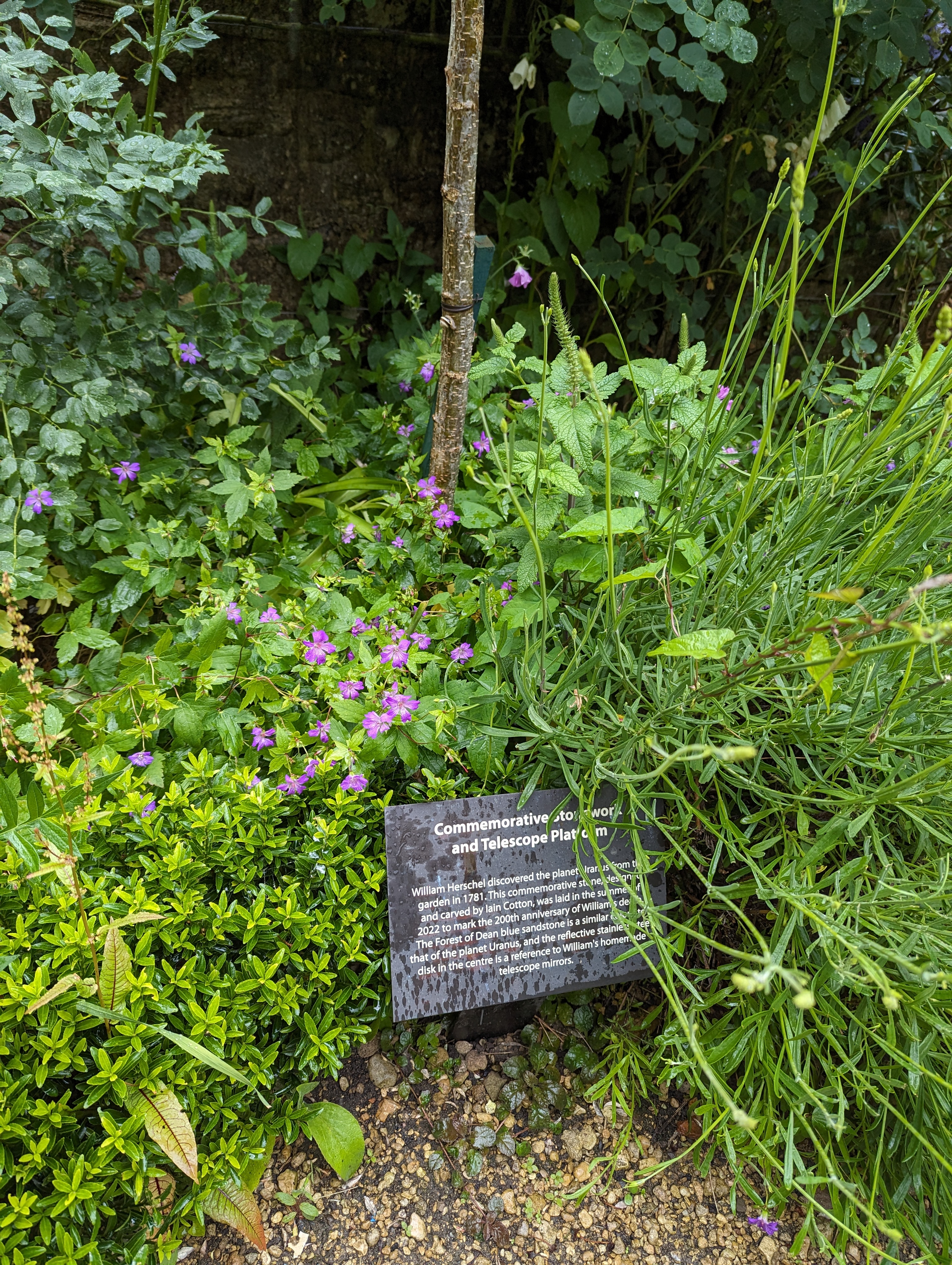
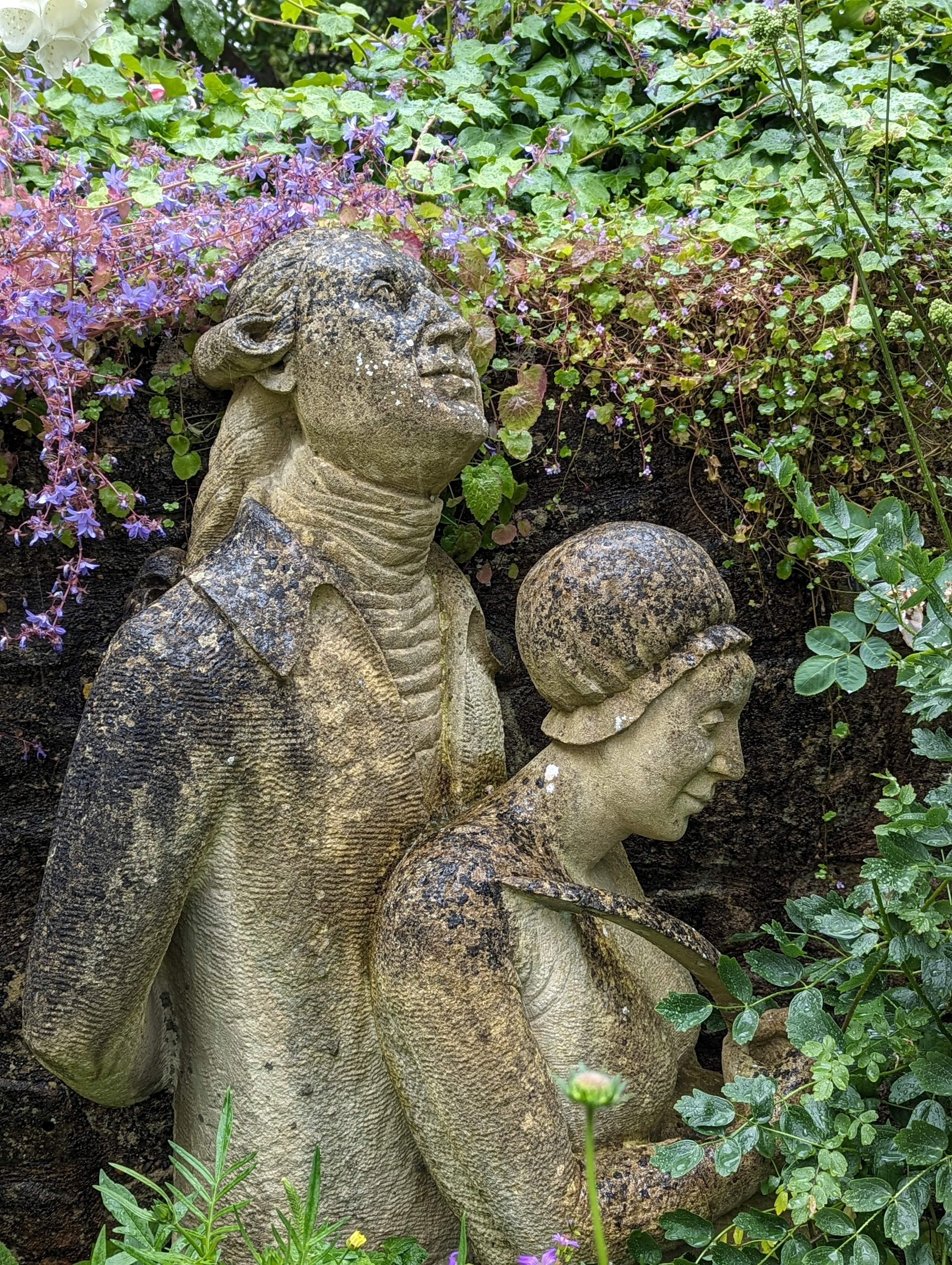
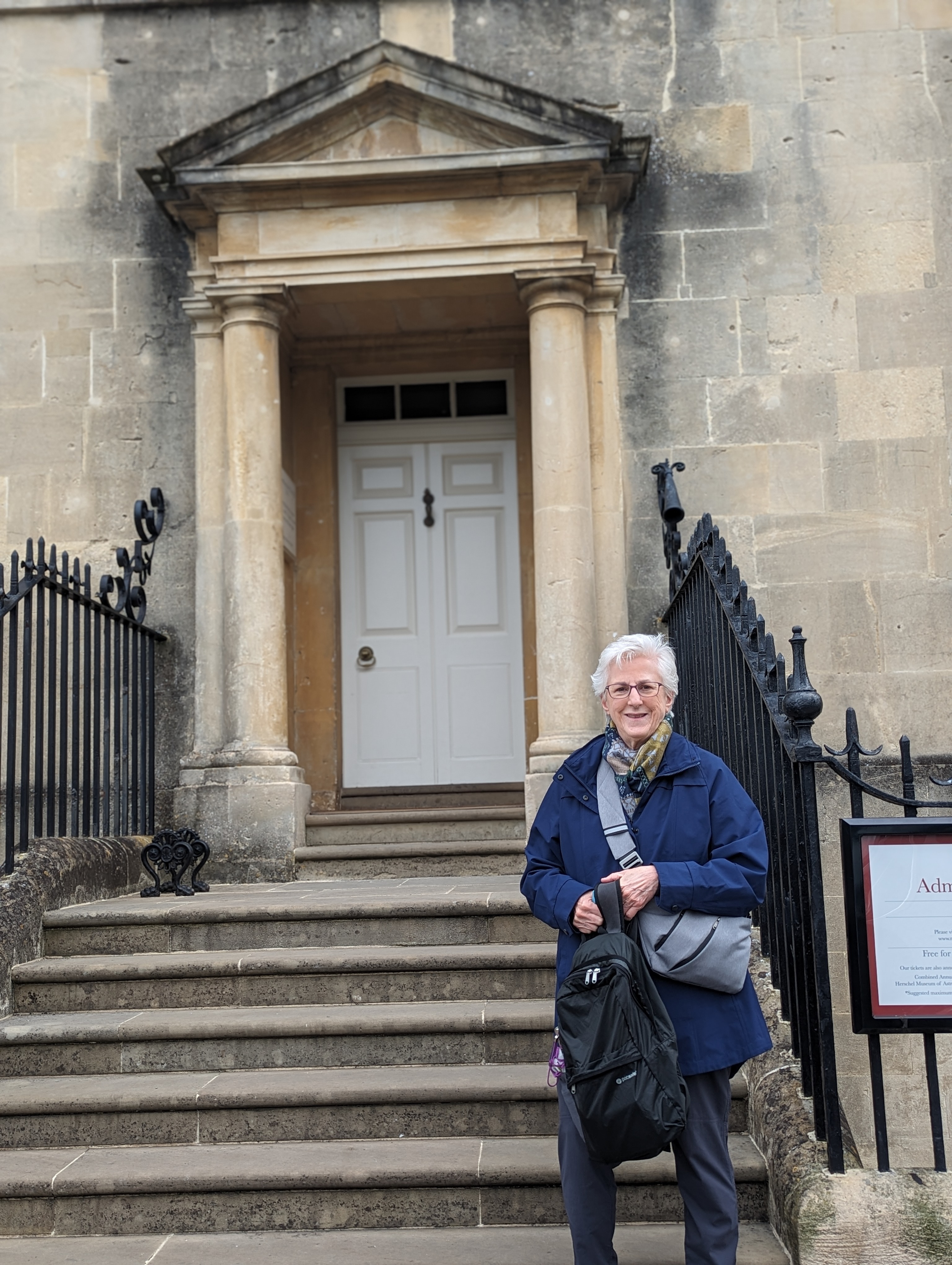
After an afternoon nap, and in between the showers that popped up frequently during the day, we walked down the block to the Herschel Museum of Astronomy. We had both read Carrie Brown’s “The Stargazer and His Sister,” about Herschel and his sister Caroline, when the author spoke at our staff day several years back, and it was a good introduction to the museum. It’s a small house filled with musical instruments (they were both musicians) and memorabilia from their scientific endeavors. I especially enjoyed the small garden in the back.

The plaque on the left commemorates Herschel’s discovery of Uranus on this site. This is where Herschel climbed up a ladder to adjust his telescope and scour the heavens. Caroline fed him while he stood there, both of them freezing cold and dedicated to science. And Caroline, whom he taught to read and write, made numerous discoveries of her own. Think of the talent that might have been wasted if she had been left to keep house with her difficult mother and never been taught anything at all!

Dinner tonight was at a tapas place, Pinxto, very noisy but delicious. Back to the flat, and bed.

Image

Many photos of Stonehenge

For all my interest in stones, menhirs, and other prehistoric sites, I had never been to Stonehenge. Time to fix that!

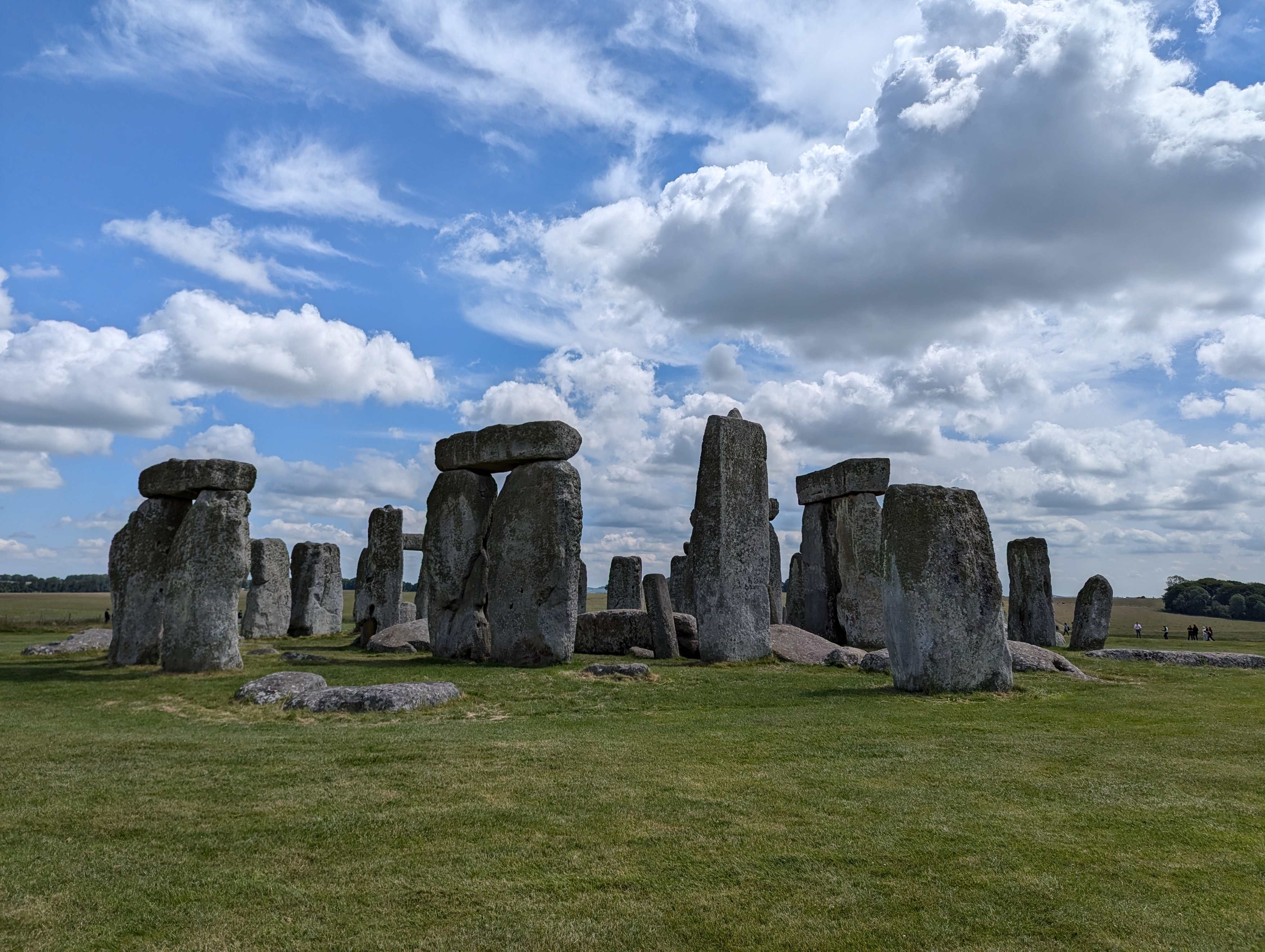
Our flat in Salisbury is just five minutes away from the train station, where the Stonehenge bus leaves on the hour. We hopped on and gazed upon the green landscape for the half-hour trip to the site. It is very well staged to allow everyone to visit without too many long lines: a shuttle to the site, a walk up a gentle hill, and there it was!

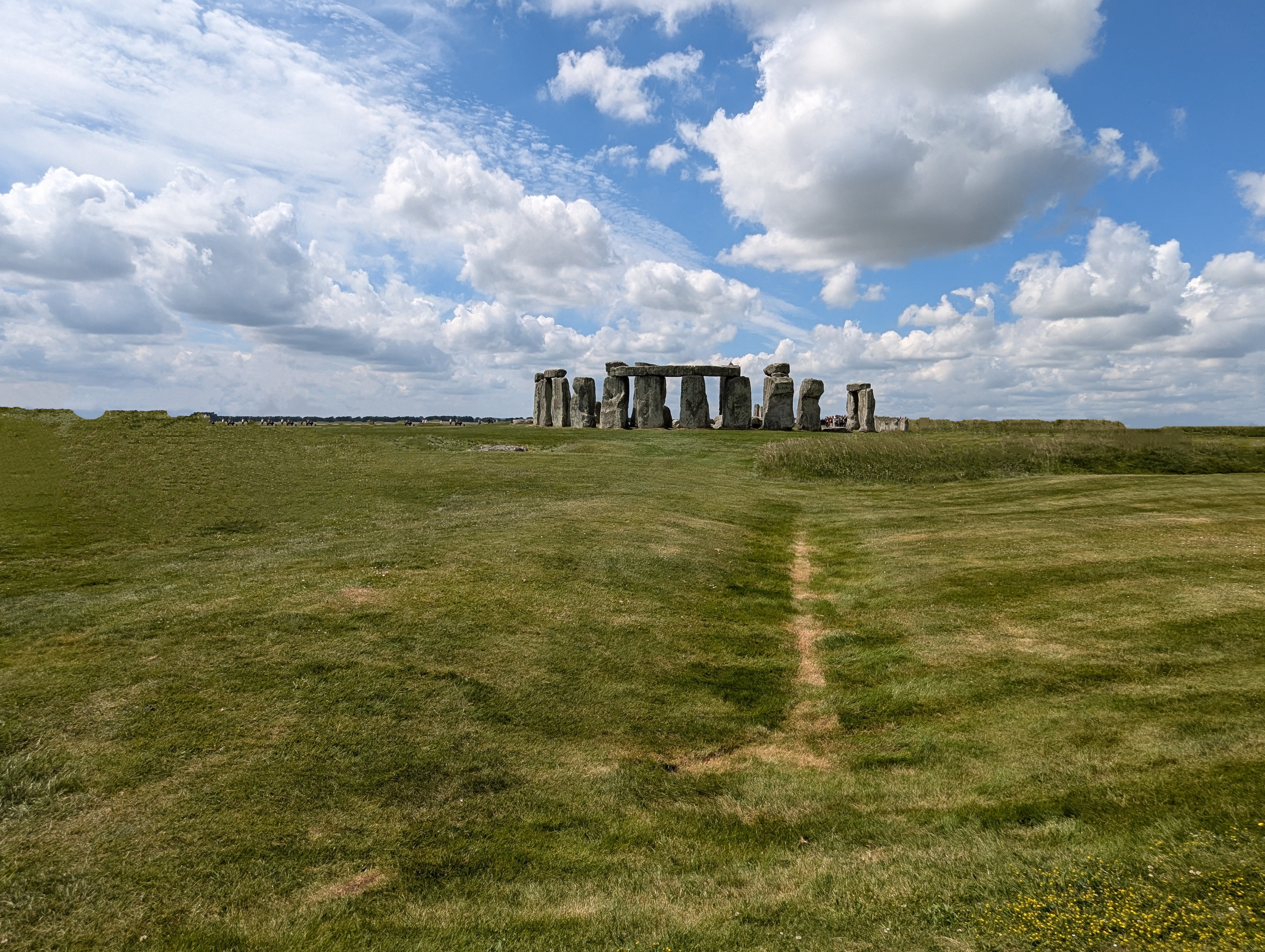
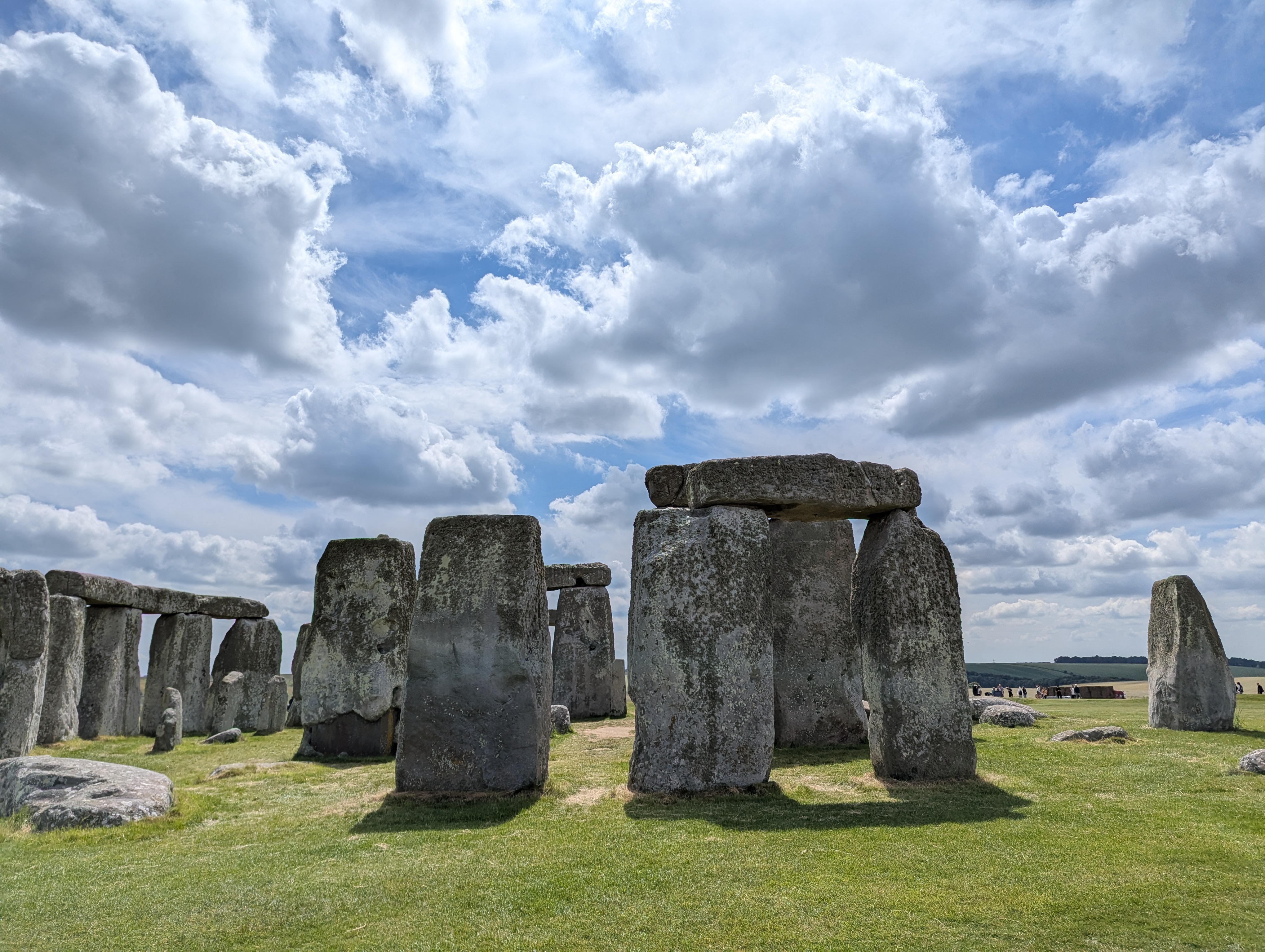
Who am I to “review” Stonehenge? But I will boldly give it five stars, if not more. It looked smaller than I had expected, but it was still quietly remarkable. The stones have been there for centuries, and they have nothing to prove! The sky was huge, with enormous clouds and lots of sunshine, the perfect backdrop.

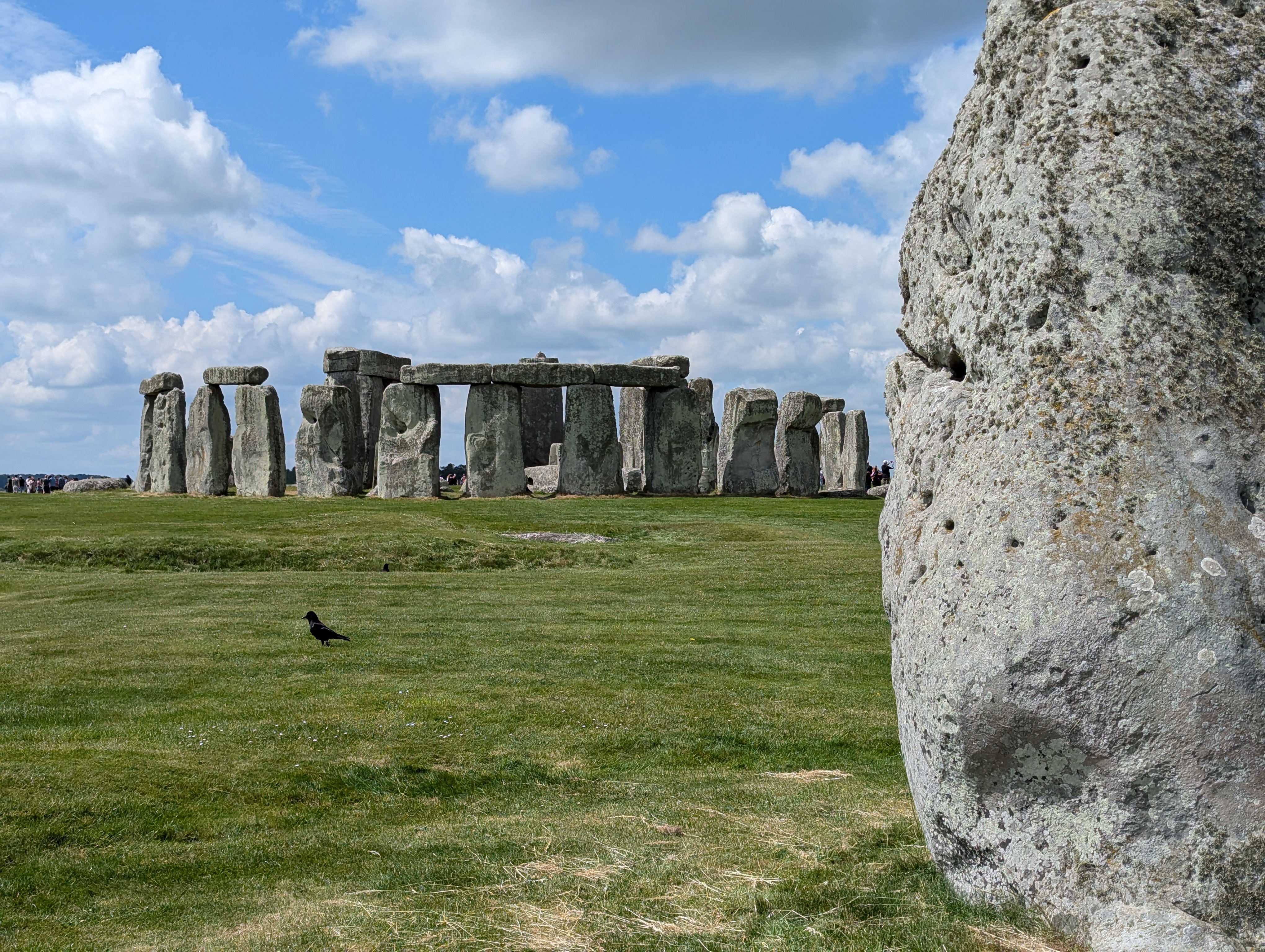
We walked slowly around the site, noting the Heel stone (below) and the Slaughter stone,

and marveling at the fallen stones. Back in the visitor center, a well-designed exhibit led us through the history of the site and harkened us back to the Salisbury Museum, which has extensive materials from 18th and 19th century archaeologists.

Little did we know that the very next day, climate change protestors would show up and throw orange powder all over the stones.

I understand their concern, but I think they are simply annoying everyone. Nevertheless, the day after that, thousands of people congregated peacefully for the Solstice celebration, and all was well.

Dinner tonight was not at the local pub as we had hoped, because it is a “wet pub,” meaning that they don’t serve food. Who knew? Luckily, the Bishops Mill down the road was surprisingly good, especially their chips. A good finale to a great day out.

Image

Jane’s world

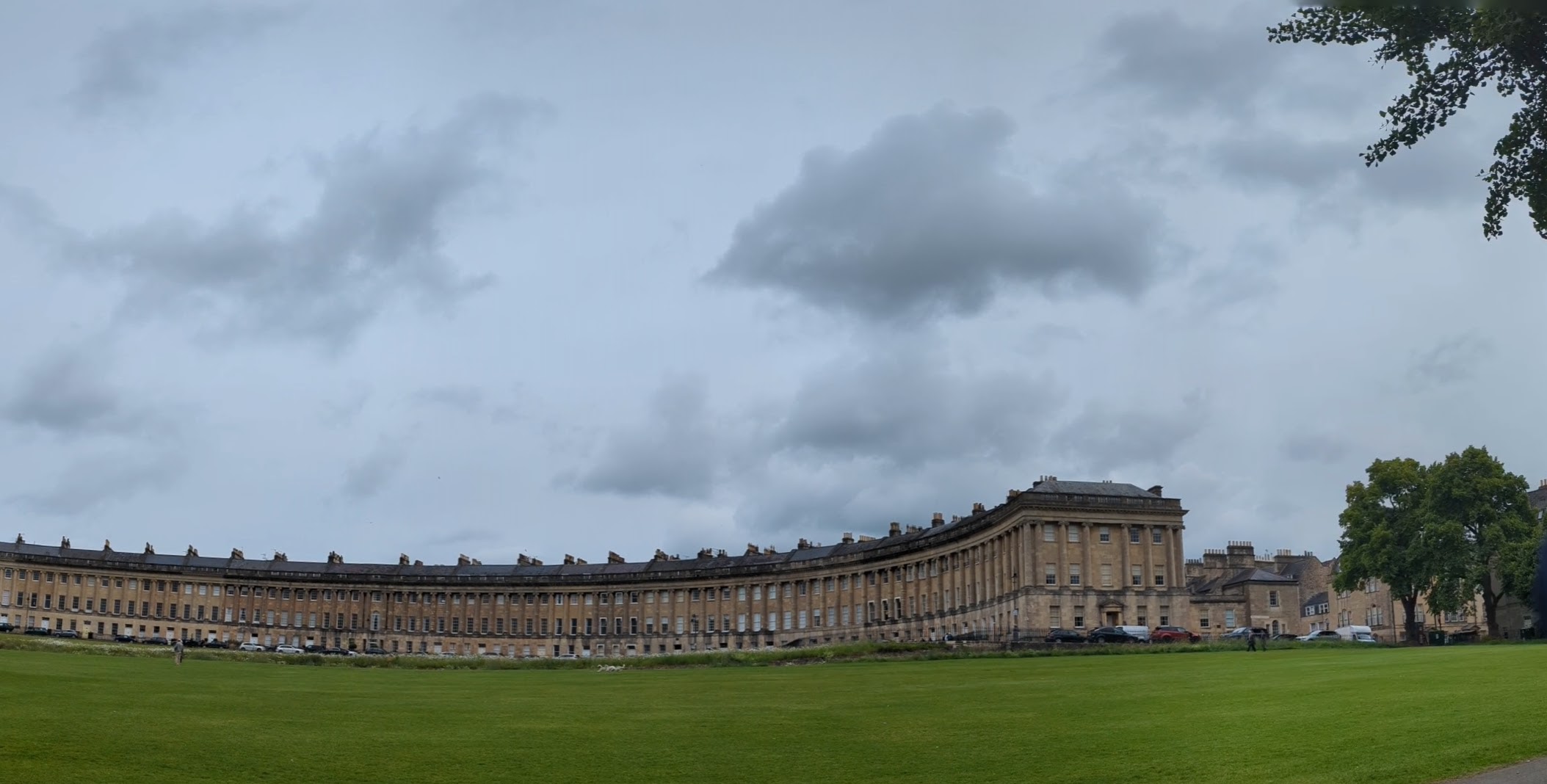
Today was the total Jane Austen experience. We walked uphill to the Royal Crescent, a sweeping expanse of lawns framed by the semi-circular, well, crescent of houses, each pillared and symmetrical. We got to experience one of them at the Number 1 house, furnished as it might have been in Jane’s day.

Highlights were the mastodon tusks and enormous shells displayed in a very Enlightenment-era way; the painting of Mary Delaney,

who created intricate paper flowers and whom I’d heard of through a quilt blog, I believe; and the turnspit in the kitchen, straight out of the at least two children’s books about the little dogs who ran in place to turn the meat on the spits.

Meanwhile, the views over the crescent were quite lovely. The stripes on the Green lawn are just like everything in a Thirkell novel, except that they no longer use a donkey to pull the mower…

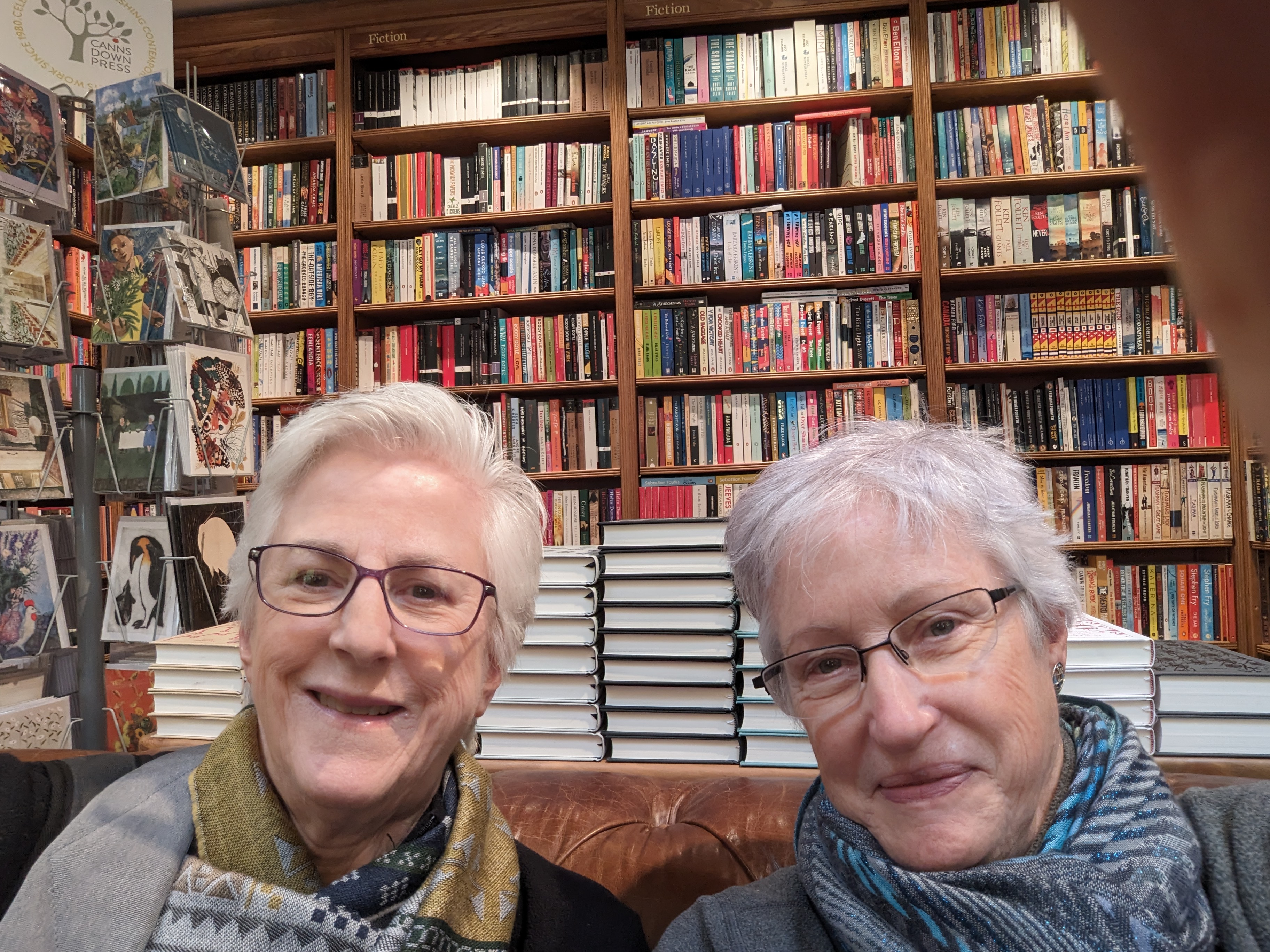
From here we visited the most wonderful bookstore, Bath Old Books, a small shop filled with treasures. In search of interesting books that were small enough to tuck into our suitcases, I found a recounting of an Irish childhood and Alison found an Orkney book. Delightful!

Lunch was at the Green Bird Cafe, delicious toasted sandwiches. Thus strengthened, we walked down to the Assembly Rooms, sadly with limited access because of renovations, and then to Persephone books, where I picked up some Christmas presents. A few steps farther on was the Jane Austen Centre.

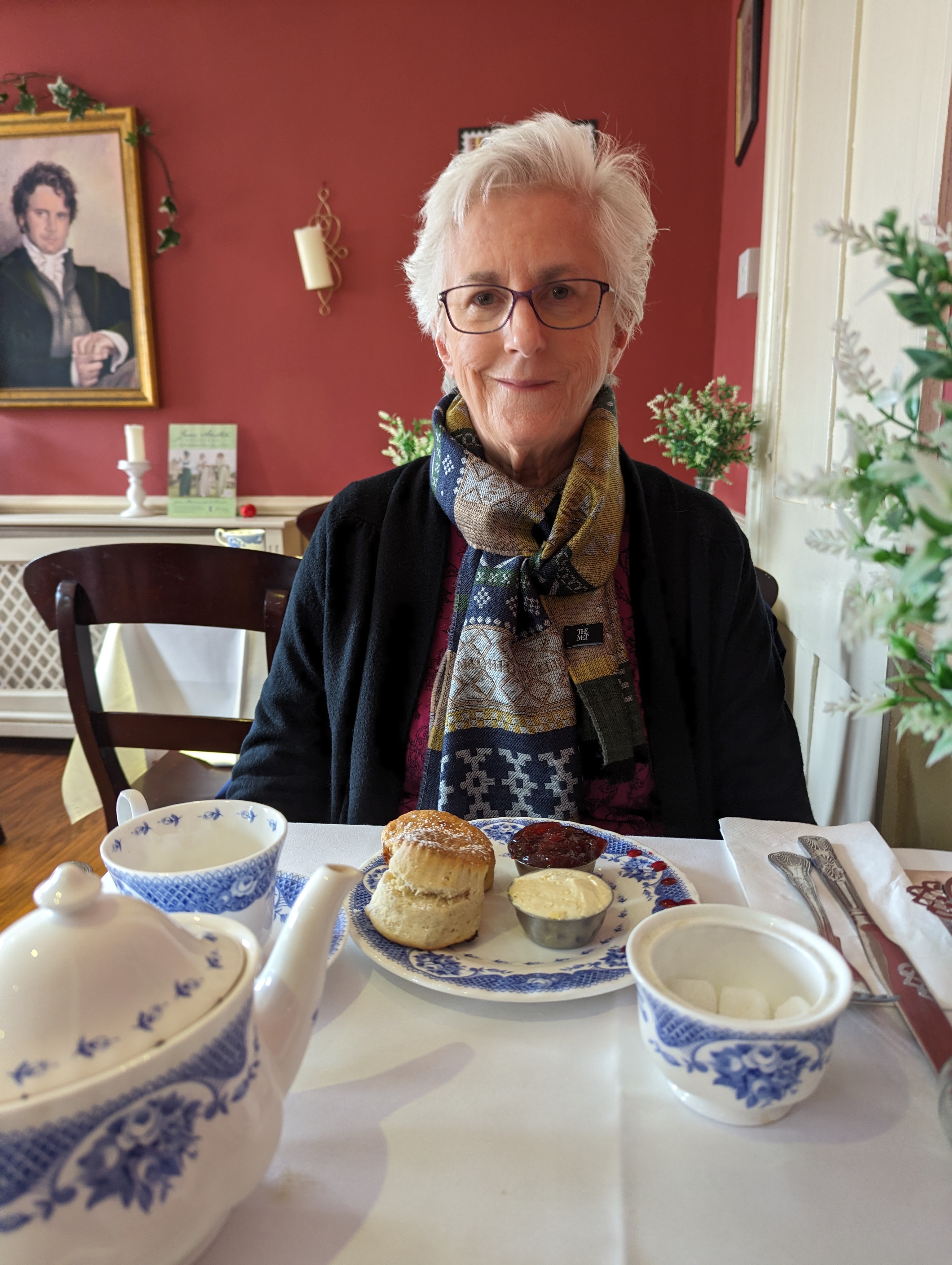
Here we were entertained by a Jane re-enactor who recounted the details of Jane’s life in a most dramatic way. Then we wandered through several rooms devoted to Jane and her family, ending of course in the gift shop. We had a delicious cream tea and discussed the Centre.

It is really designed for the Austen fanatic, and though we enjoyed it, we found it less than gripping. Still, we enjoyed seeing Mr. Darcy,

and we’ve now crossed it off our list!

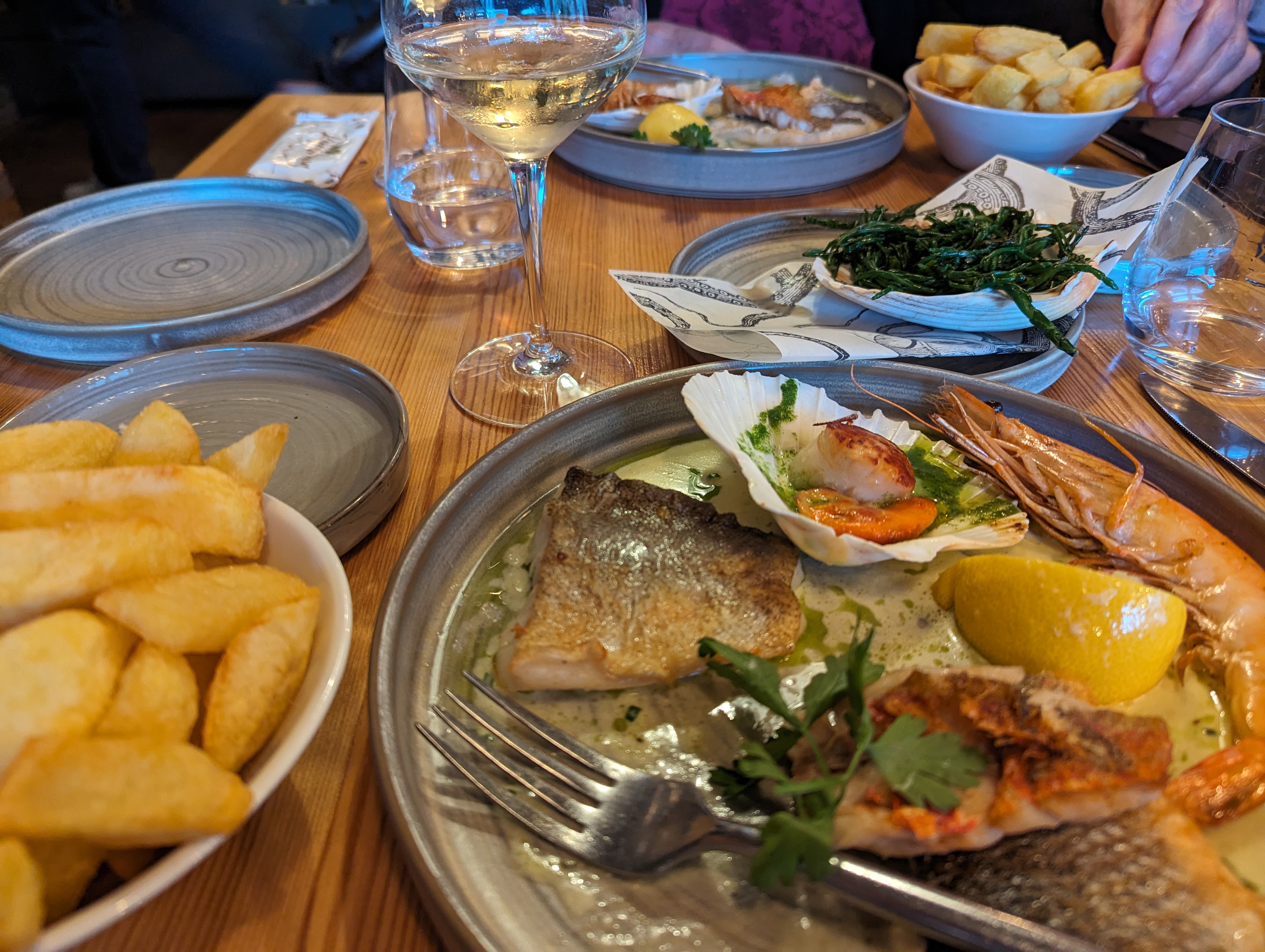
Dinner tonight was at The Scallop Shell, and it was a highlight.

A quick five-miute walk away, most delicious seafood, and to crown the evening, sticky toffee pudding! We rolled home and to bed.

Image

Our old stomping grounds

Yes, we’re back in England! We splurged on a BA flight in business class, and it was so worth it. We both slept fairly well, were able to stretch out, and, almost as good, enjoyed eating on real plates and drinking out of real glasses. We took the Heathrow Express to Paddington, got the train to Bath, and arrived at our lovely little flat with no trouble. Well, except for fumbling with the key box, but luckily a pair of young women passing by helped to figure it out. (This need for help may be a recurring theme, get ready!)

After a trip to Sainsbury’s to stock up on essentials, we had a wee supper and soon were in bed.

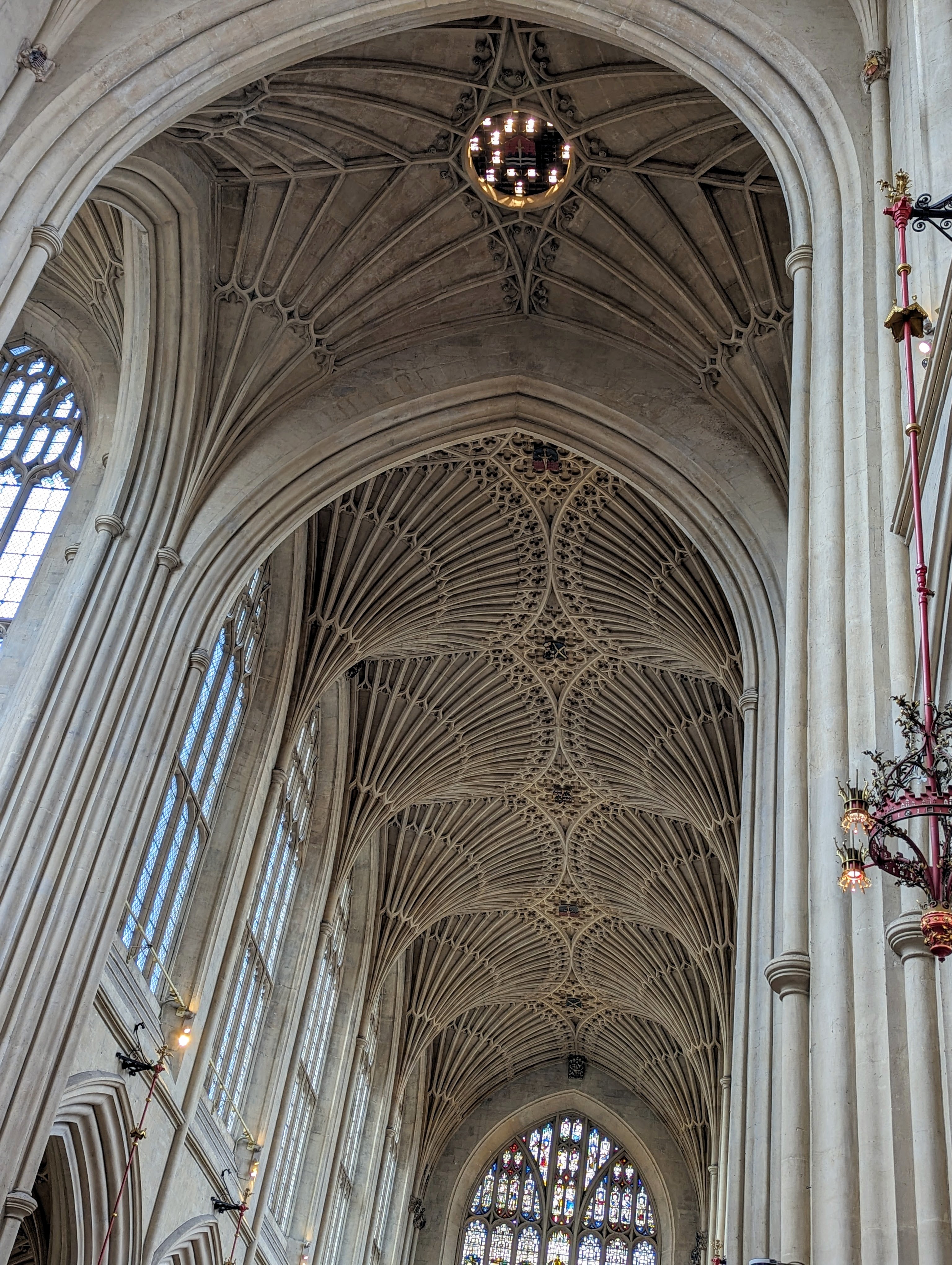
Today was cool and cloudy with peeks of sun, perfect walking weather. We had a leisurely morning before setting off for Bath Abbey and a lovely tour of a building that’s seen plenty of history over the past few centuries. It’s famous for this fan vaulting, quite stunning.

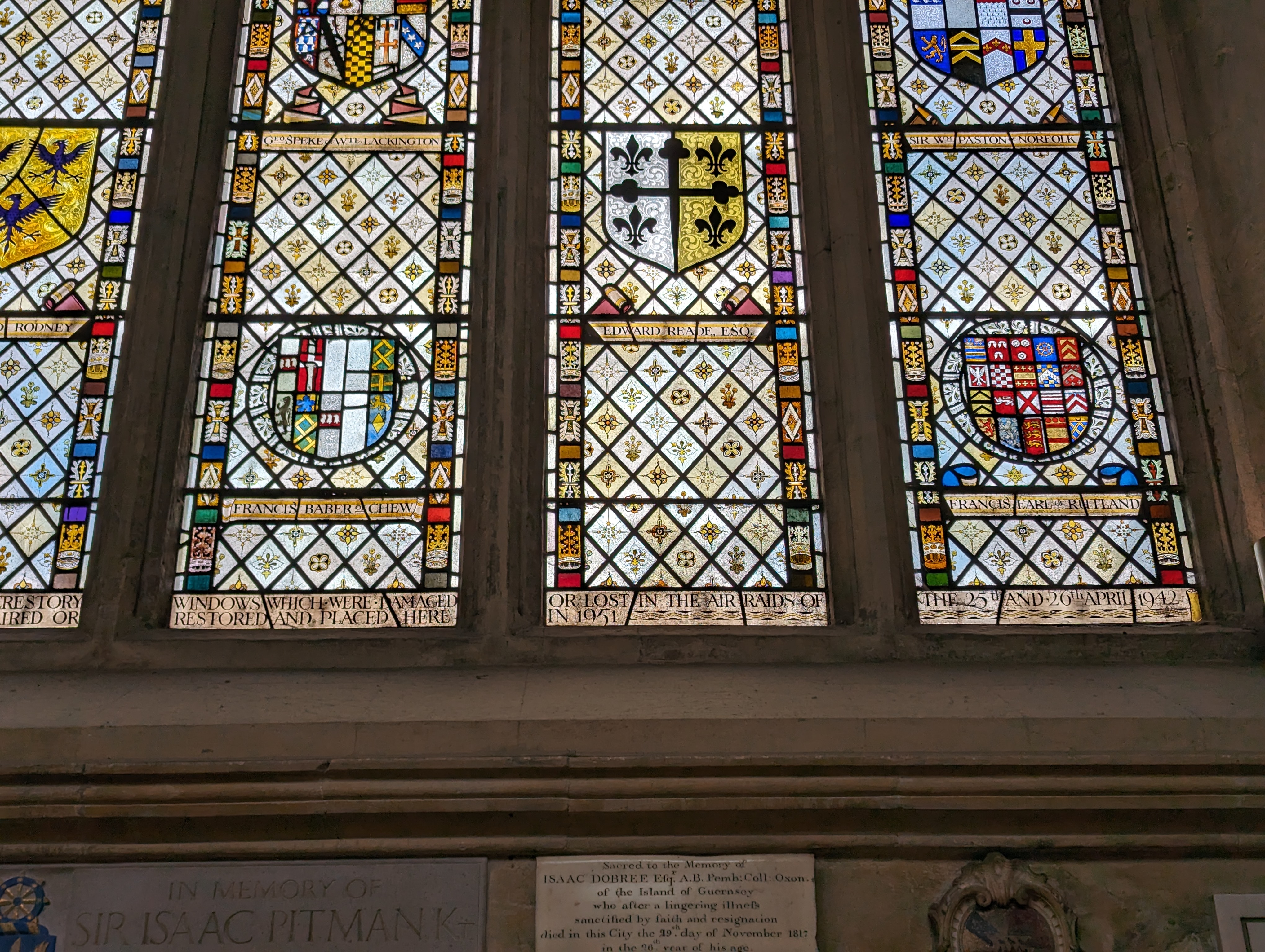
Our guide touched on the most important dates, which helped to set the stage for everything from the founding of the abbey pre-1000 A.D., to the dissolution of the monasteries (thanks, C.J. Sansom, for your novels about same), to the WWII damage to the stained glass. I had not known that they called the German bombings in this part of the world the “Baedeker bombings,” because the Germans wanted to target the most popular religious and tourist sites. This stained glass window honors the damaged windows that were restored in 1951.

The guide was pleased to show us an American flag on display (with only 48 stars) that marked the English thanks to the Americans for our part in the war, along with plaques that commemorated several American friends of England. Among these was one honoring a Mr. Bingham, whose history as a businessman, entrepeneur and senator is almost forgotten these days. Binghamton, NY, for example, was named for him. But I digress.

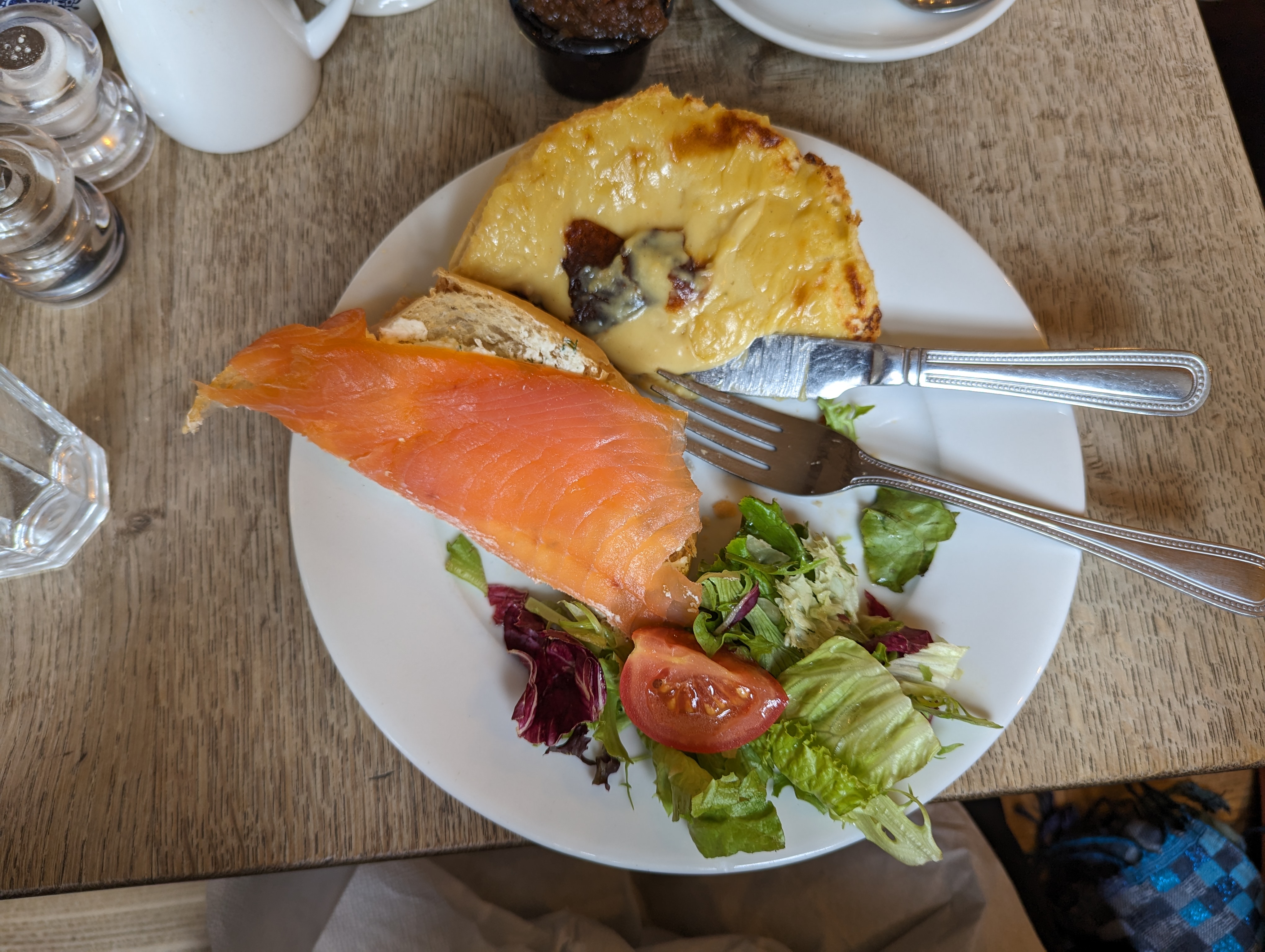
After a quick visit to the loo (twinned with Zambia!), we stopped by the gift shop and then wandered over to Sally Lunn’s, the oldest restaurant in town (as in, 15th century, or so they say). Narrow, twisting stairs up to the second floor led to a cozy room filled with tourists like us. The salmon and cream cheese and the Welsh rarebit were both delicious, and not heavy at all. A nice treat.

Then off to Topping’s bookstore (we’ve been to the one in Ely before) for another treat. Of course, most of the books I longed to buy were too big to fit into the suitcase, but I did find a small book about flat lands in England that I am looking forward to reading over the next weeks.

Then a visit to the post office to turn in old money for new, in my case an old 20 pound note for a new one, but still featuring the queen rather than Charles. The young man at the post office was quite helpful.

Home for a nap and a nip of wine, and then off to the Green Street Brasserie for a pub dinner. And so to bed.

Image

Musee de l’Orangerie and farewell

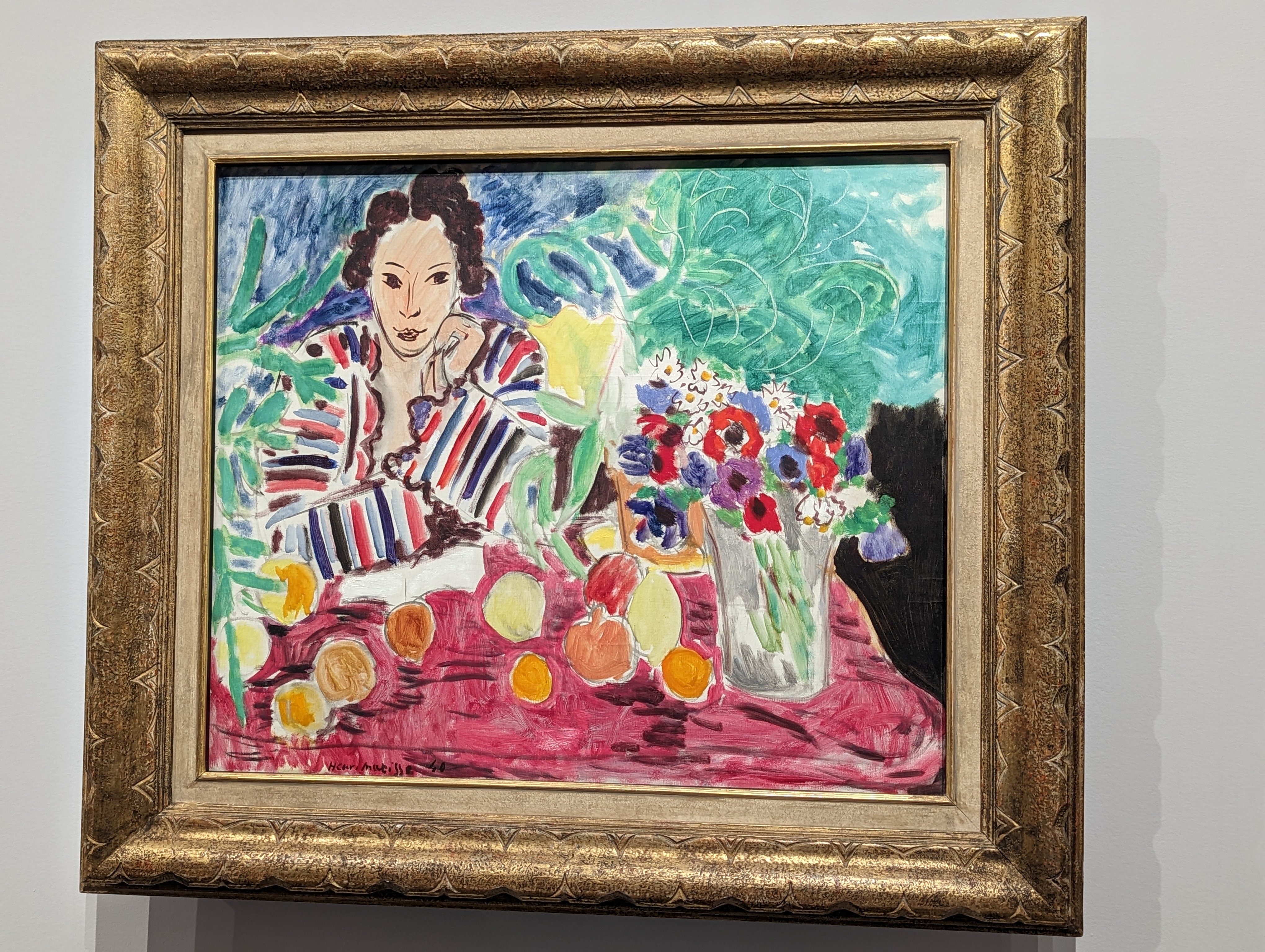
Our last day in Paris started at l’Orangerie, famous for its Monet waterlilies, and during our visit featuring a Matisse exhibit that we had missed when it came to the US.

The colors, the shapes, the patterns – just take a look. They could inspire a quilt!

Plus a few other gems. Renoir:

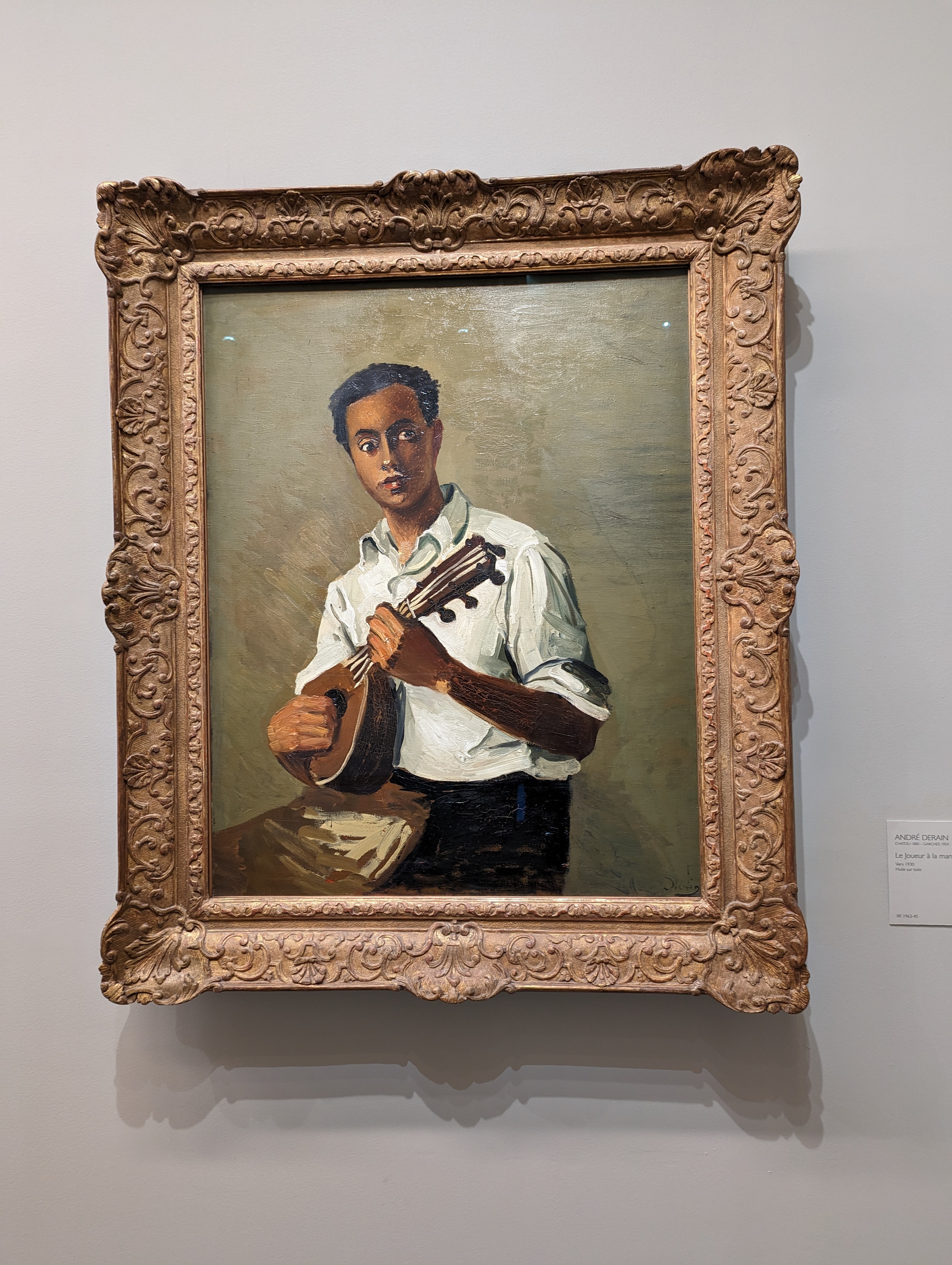
Derain:

Among many other masters.

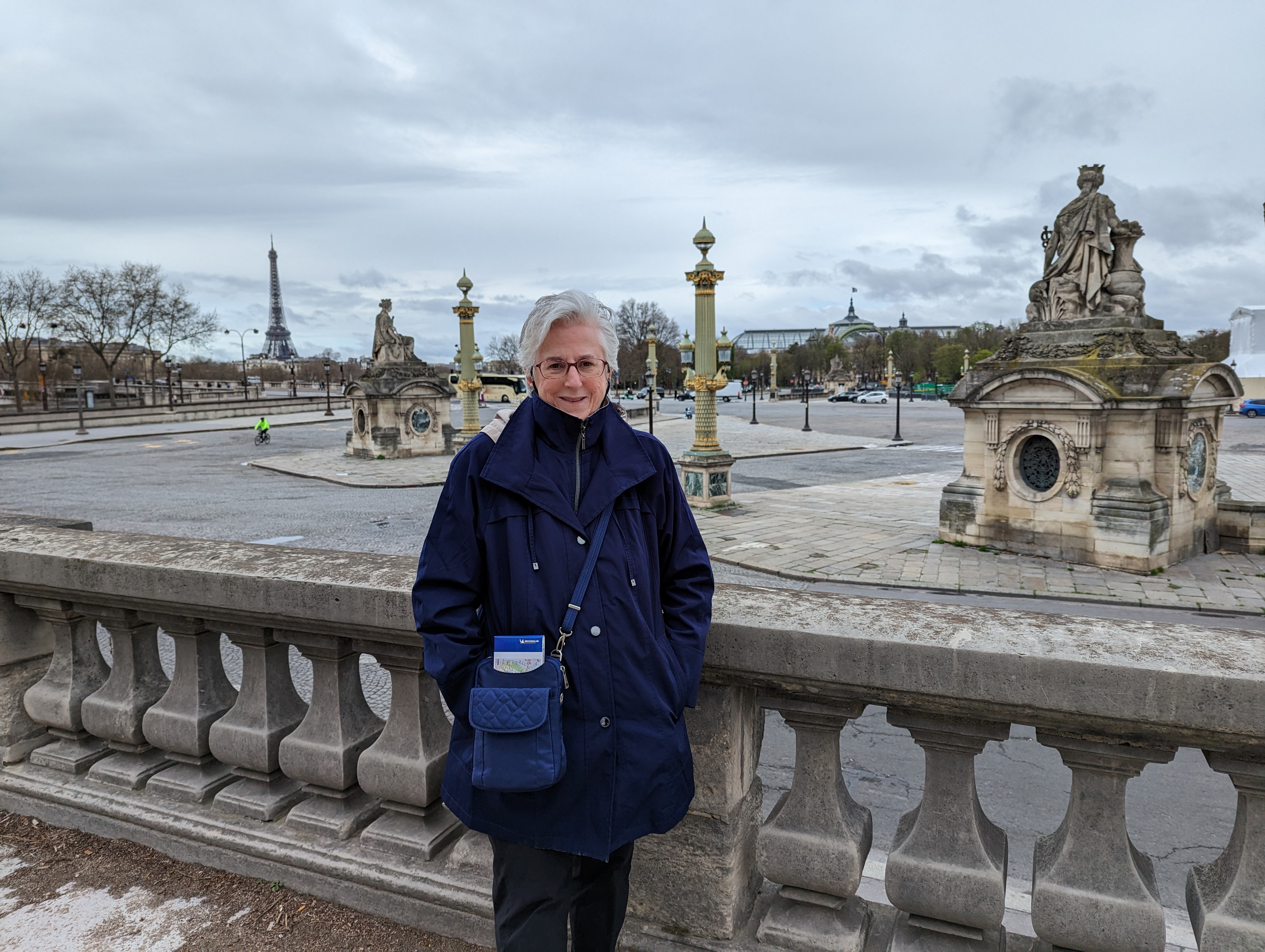
We took a quick wander through the waterlilies and debouched onto the Place de la Concorde.

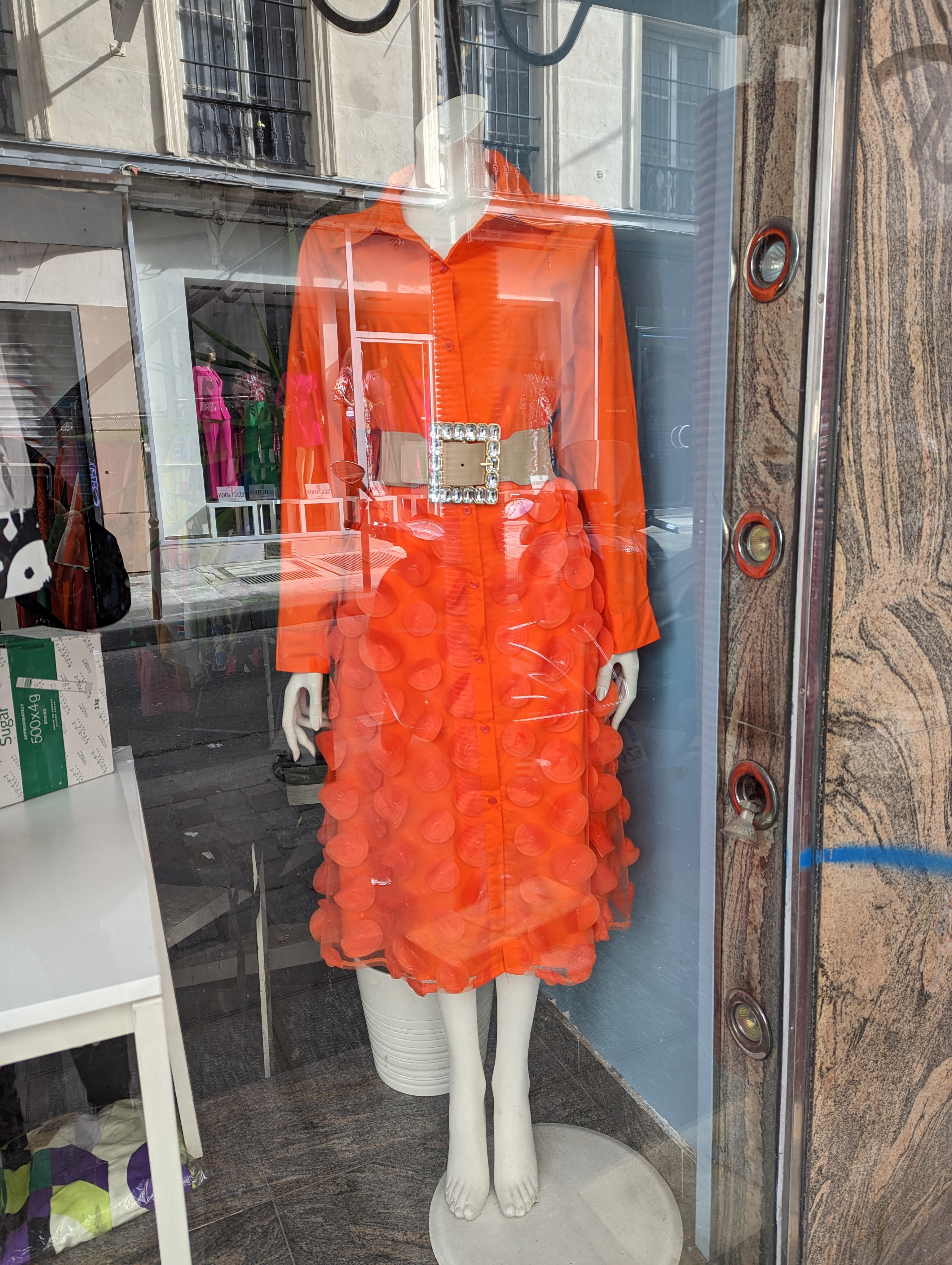
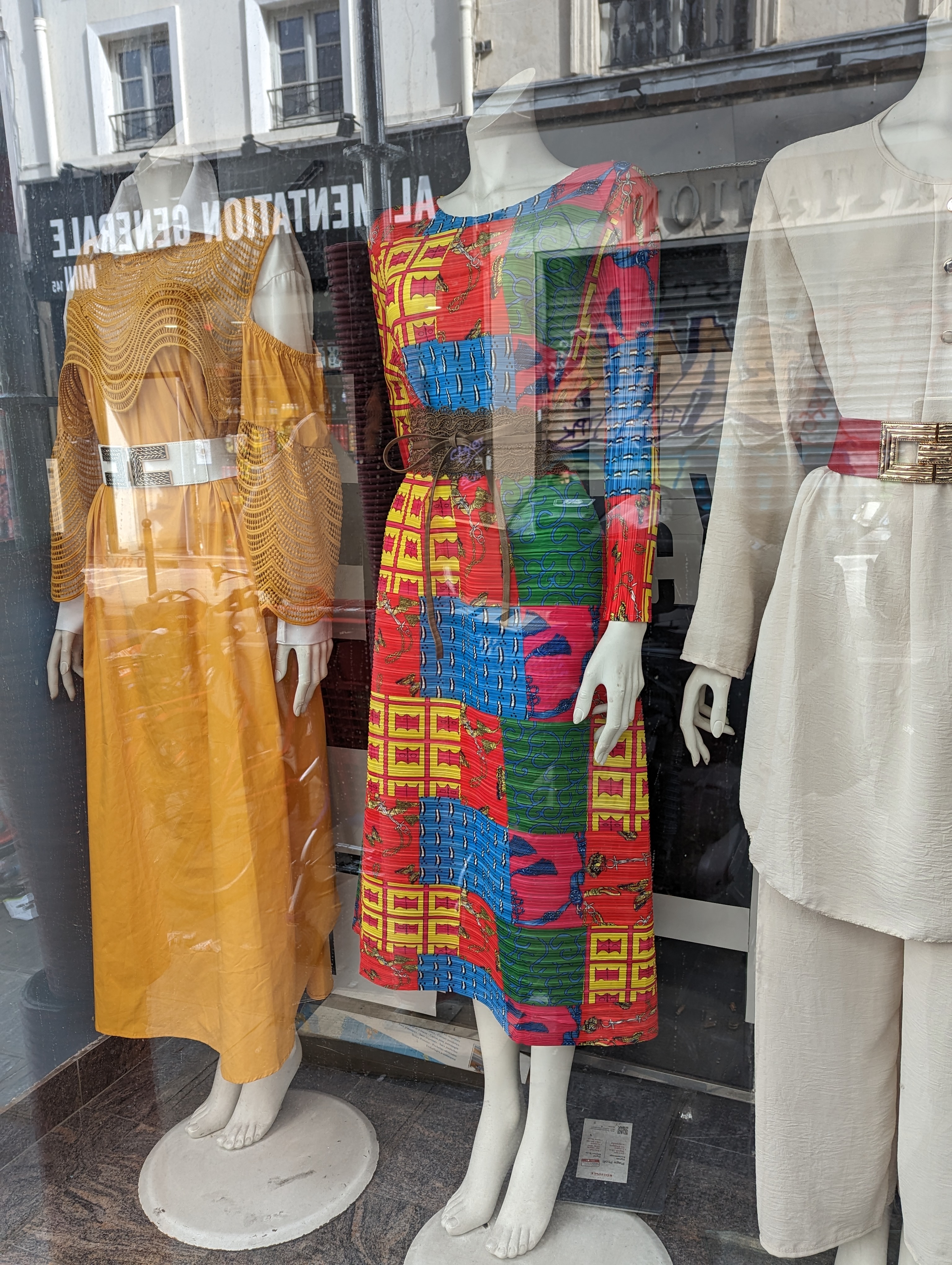
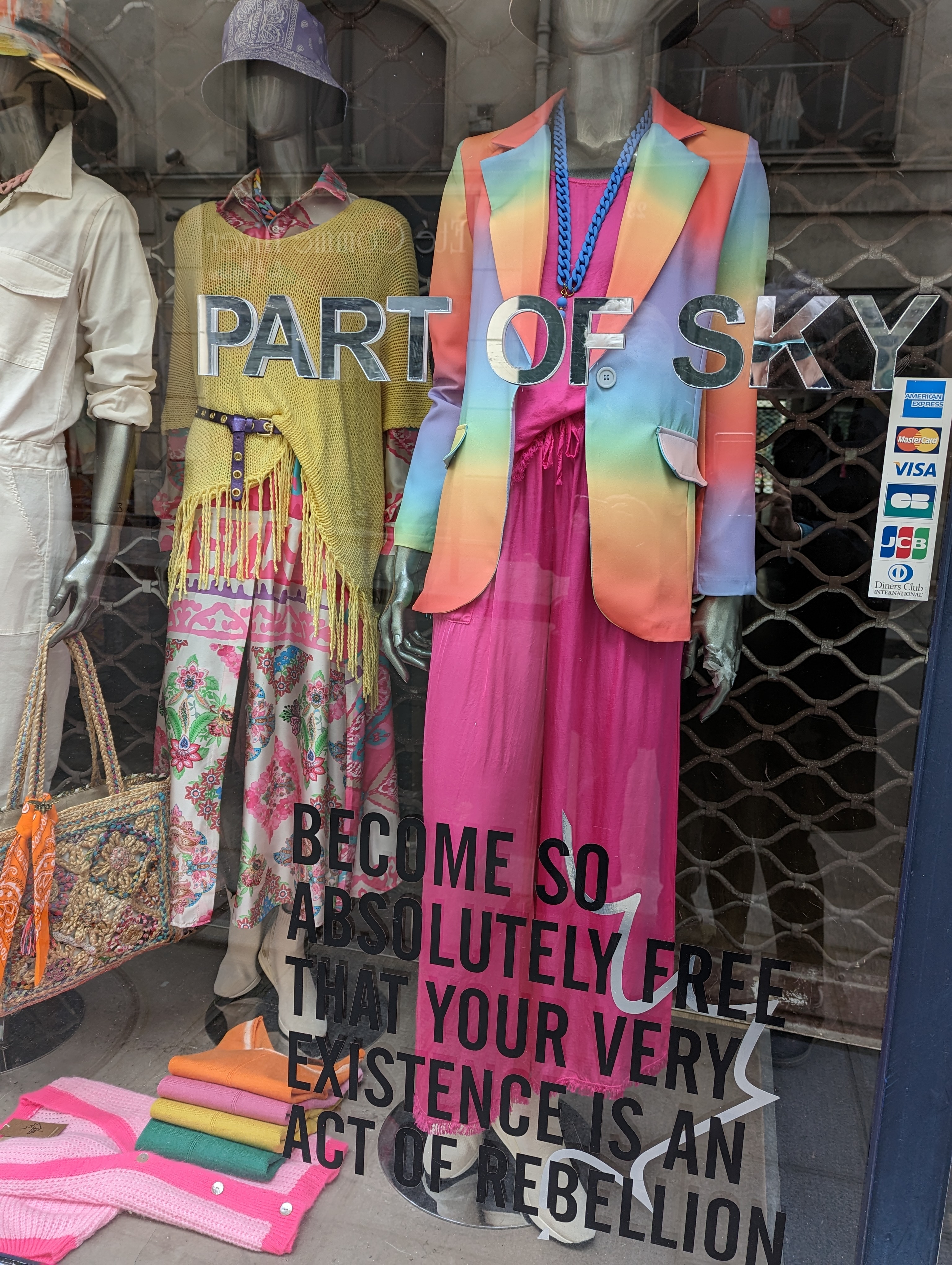
On the way home, we wandered through the streets in our neighborhood. Apparently this area is a magnet for fashion!

I’m not quite sure where you would wear these clothes, but on the other hand, I’m not a Parisian.

Our last little dinner was takeout from the neighborhood.

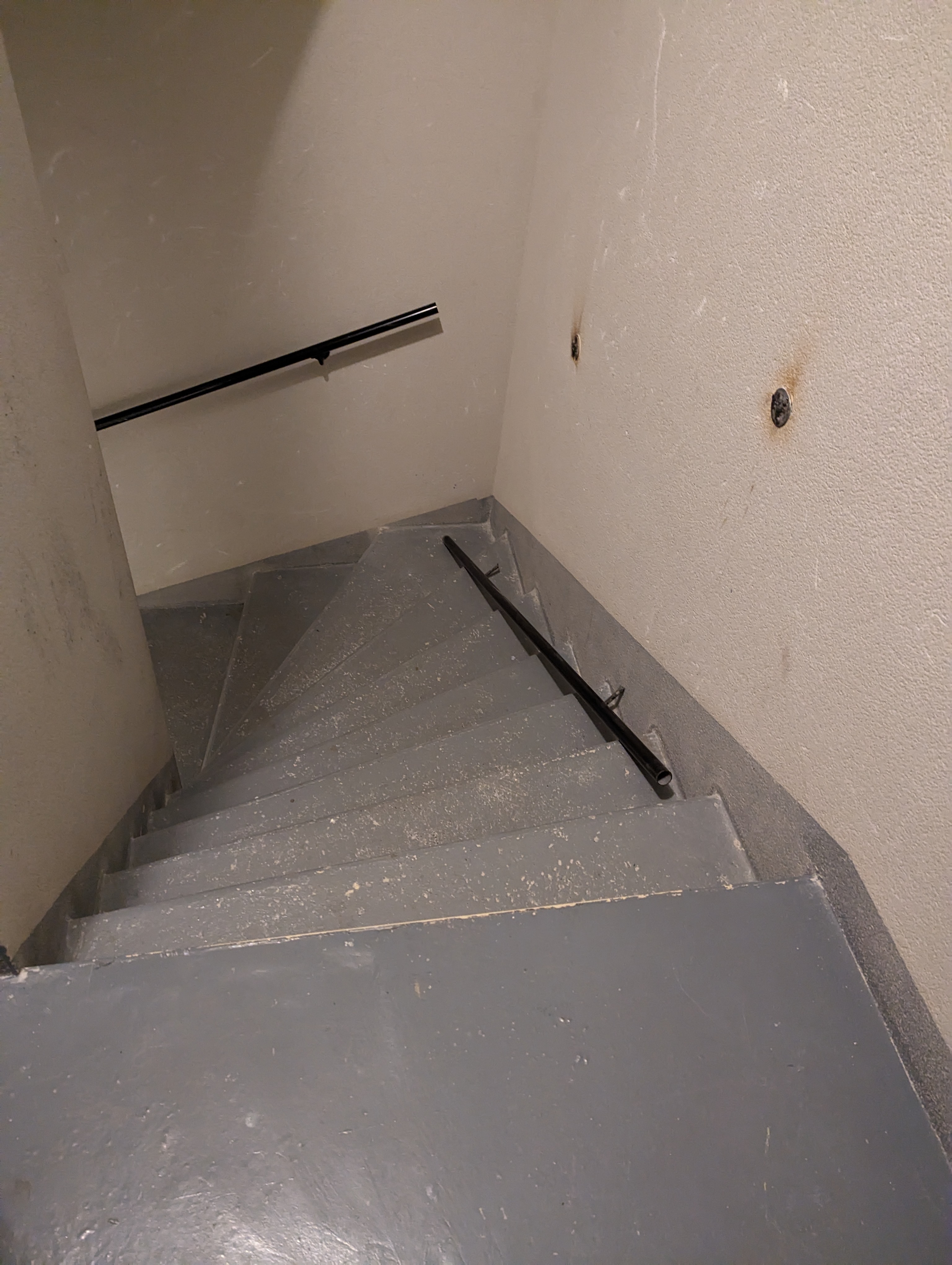
Meanwhile, the elevator had stopped working on Saturday and still was not fixed. We were worried about hauling our suitcases downstairs, especially since the handrails were lying on the floor, or even worse, attached at only one end, while the stairs were not only steep but winding.

Fortunately, by chance we ran into American neighbors renting the apartment below, and they were also concerned, especially the mother (who was about our age). But their party included a strapping young man who took our bags down to the sidewalk as though it were nothing. And then the cab we had booked sent a message that they weren’t available after all. Eek! But a further call to another company was a success and we made it to the plane with time to spare. Not a great ending to the trip, but it all worked in the end (and we spotted our neighbors on the flight – they live in northern Virginia, of course!).

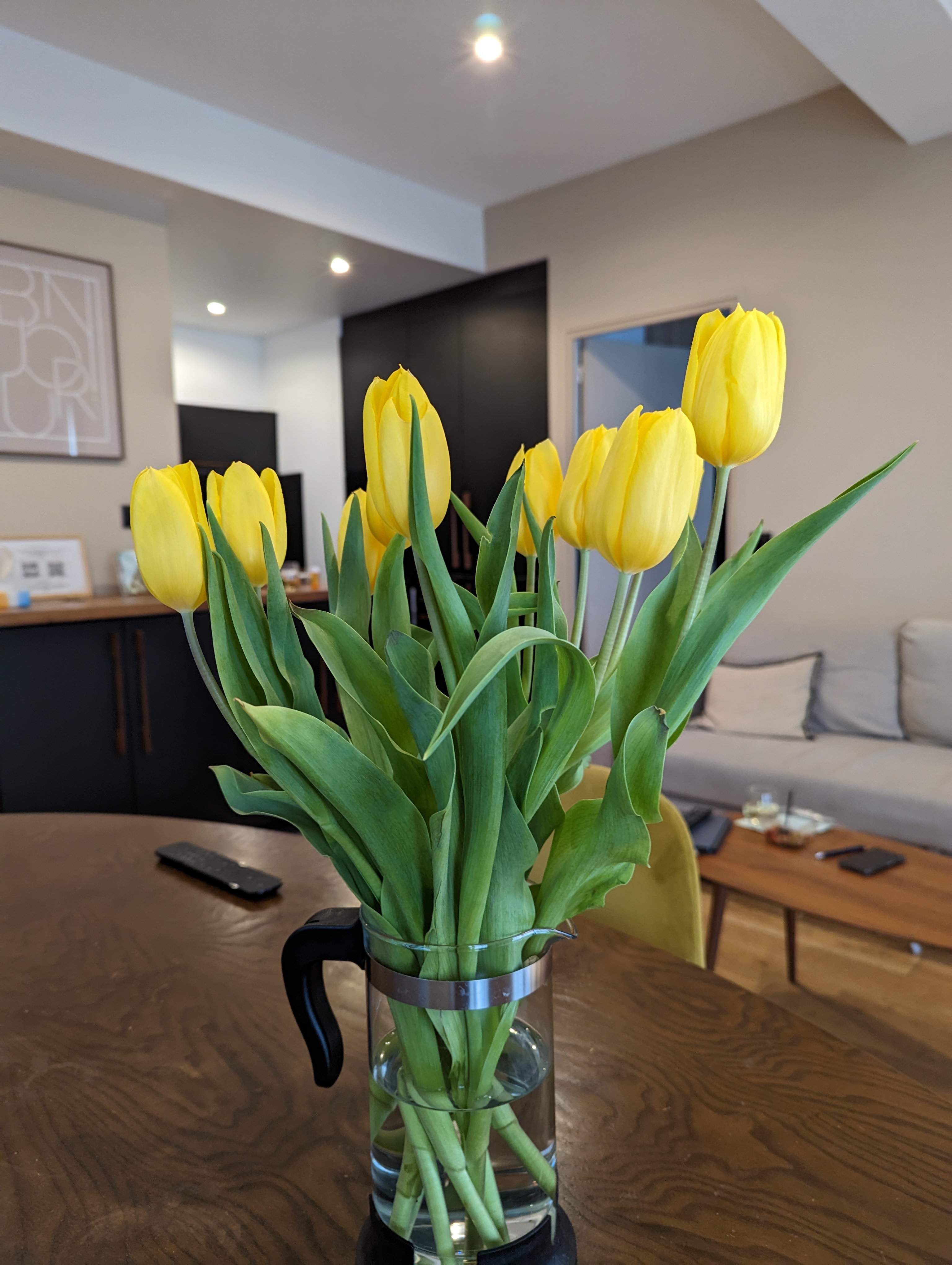
To end on a happier note, enjoy this bouquet of tulips!

Image

Tidying up the hardscaping

It’s well past time to fix the mess the sewer replacement people left behind, so to that end I called Meadows Farms to see what they could do. Well, not only could they regrade the spot by the front steps, but they could also (unrelated to the sewer business) redo the terrace with polymeric sand. This mysterious substance binds the stones together in some magic way, and ten+ years (maybe 15?) after the original installation, it was time to do it again. Oh, and they could also deliver some stones to replace the ones that disappeared during the sewer mess.

Although I didn’t take any before pictures, here’s one that gives a hint of how untidy the edges were.

My plan to leave the leaves on the garden beds so that little bugs can have a nice life resulted in edges even more untidy than usual. And you may be able to see how the cracks between the stones have become a habitat for weeds.

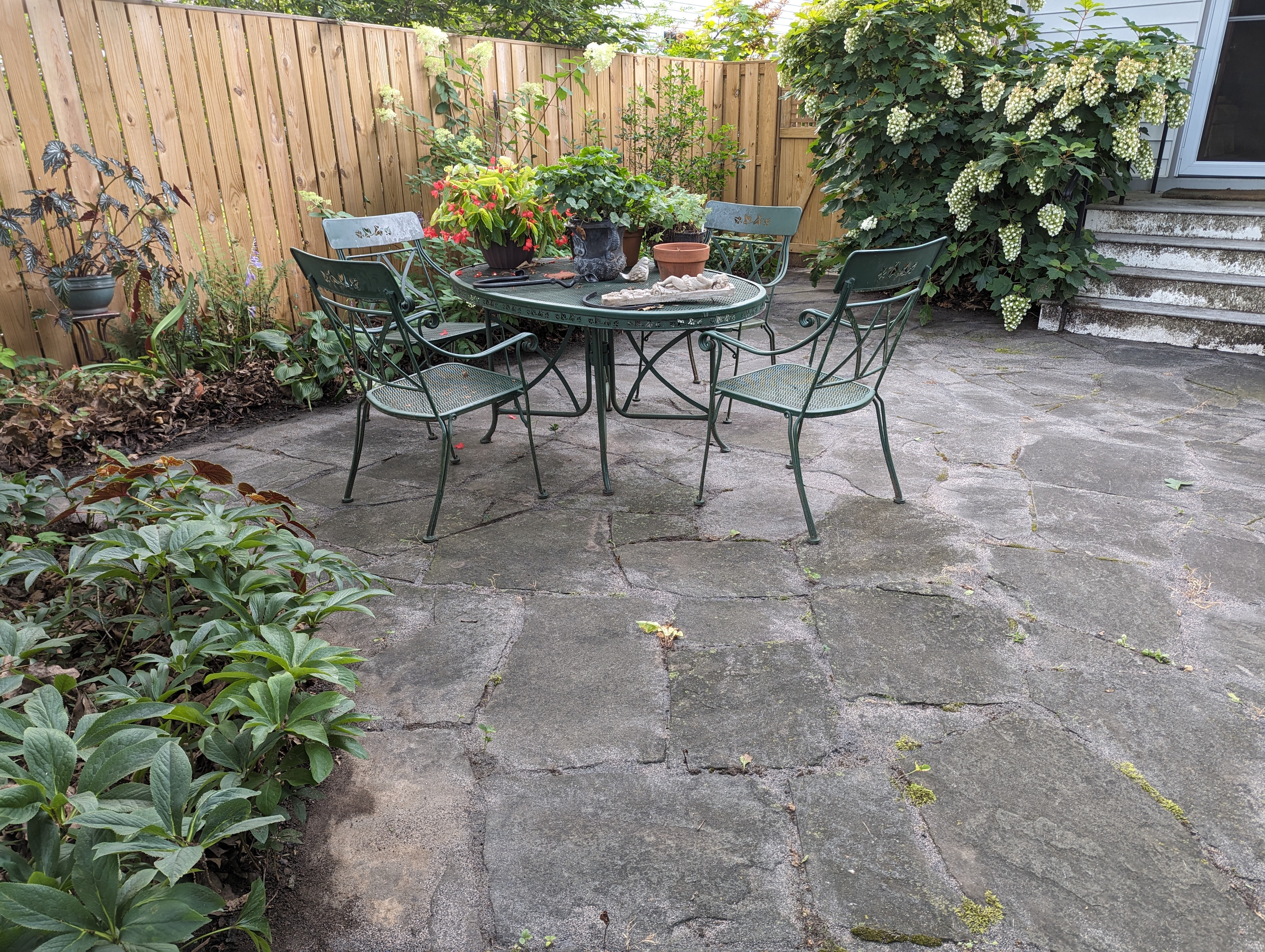
And look at it now!

So clean, so tidy, so satisfactory!!

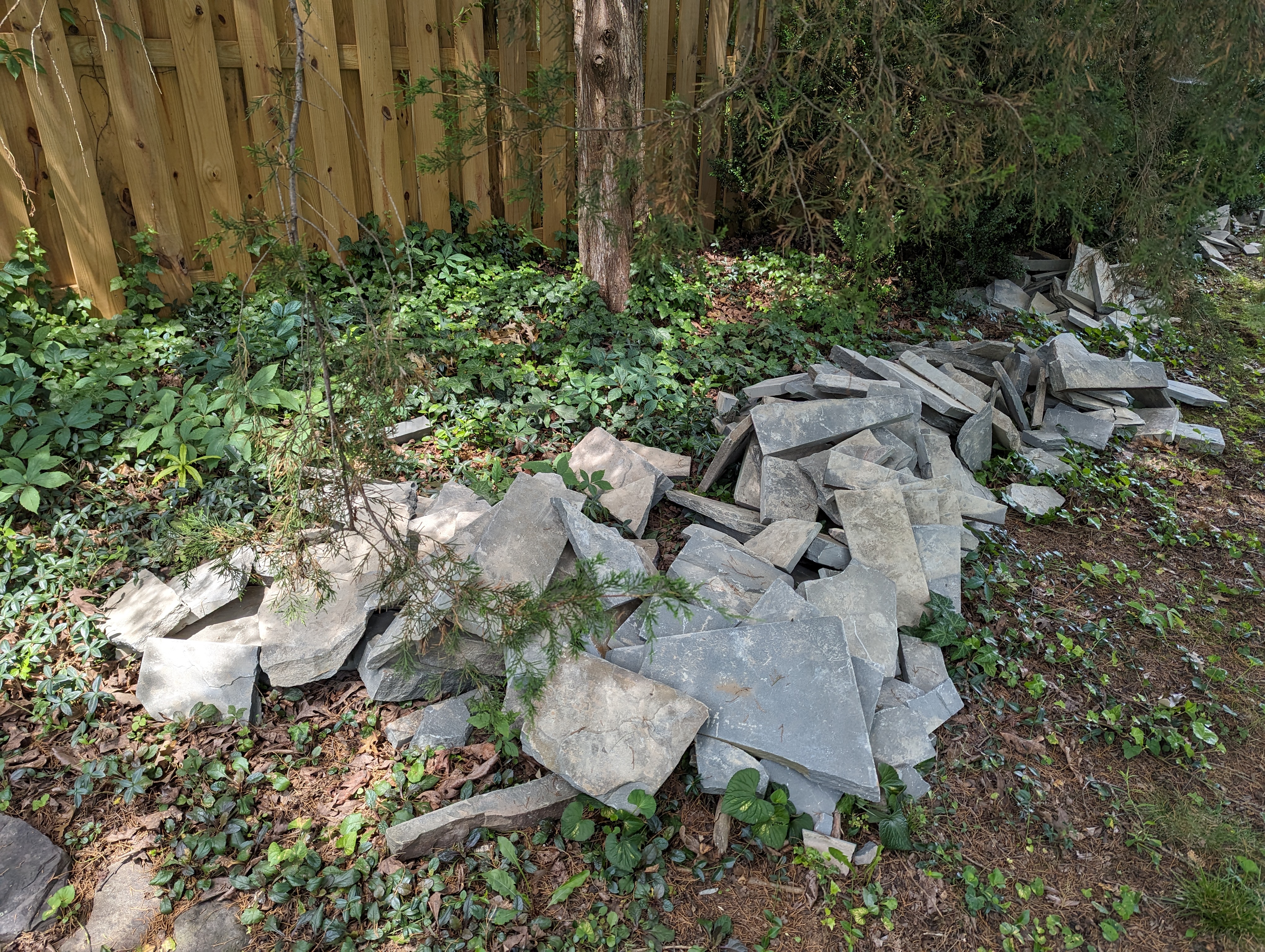
The stones they delivered are not quite as organically shaped as the original ones, but they will do. If I can manage to lift them into place, that is.

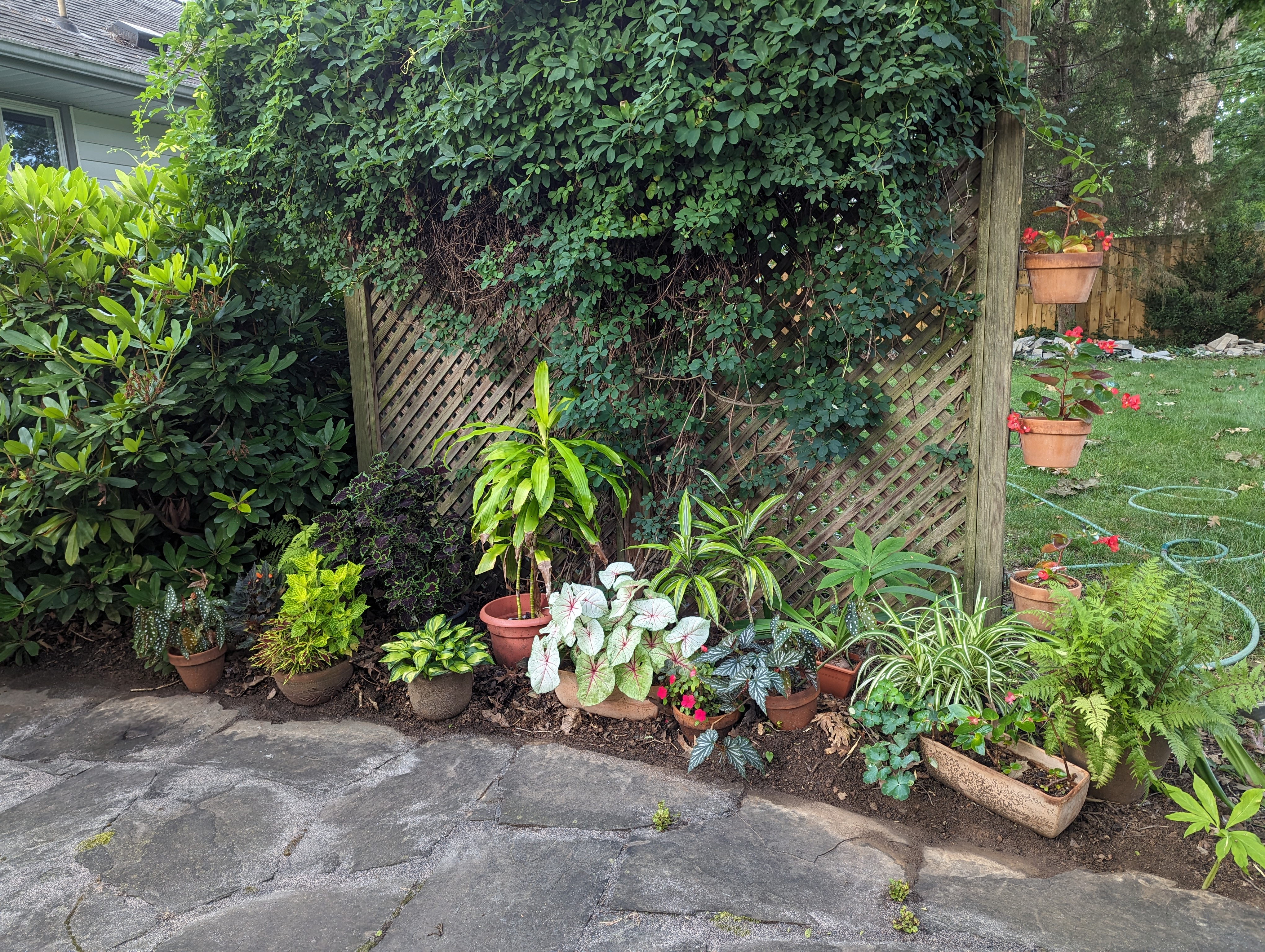
Looks pretty bad right now, but I’m hoping that placing a few every day will make this a manageable project.

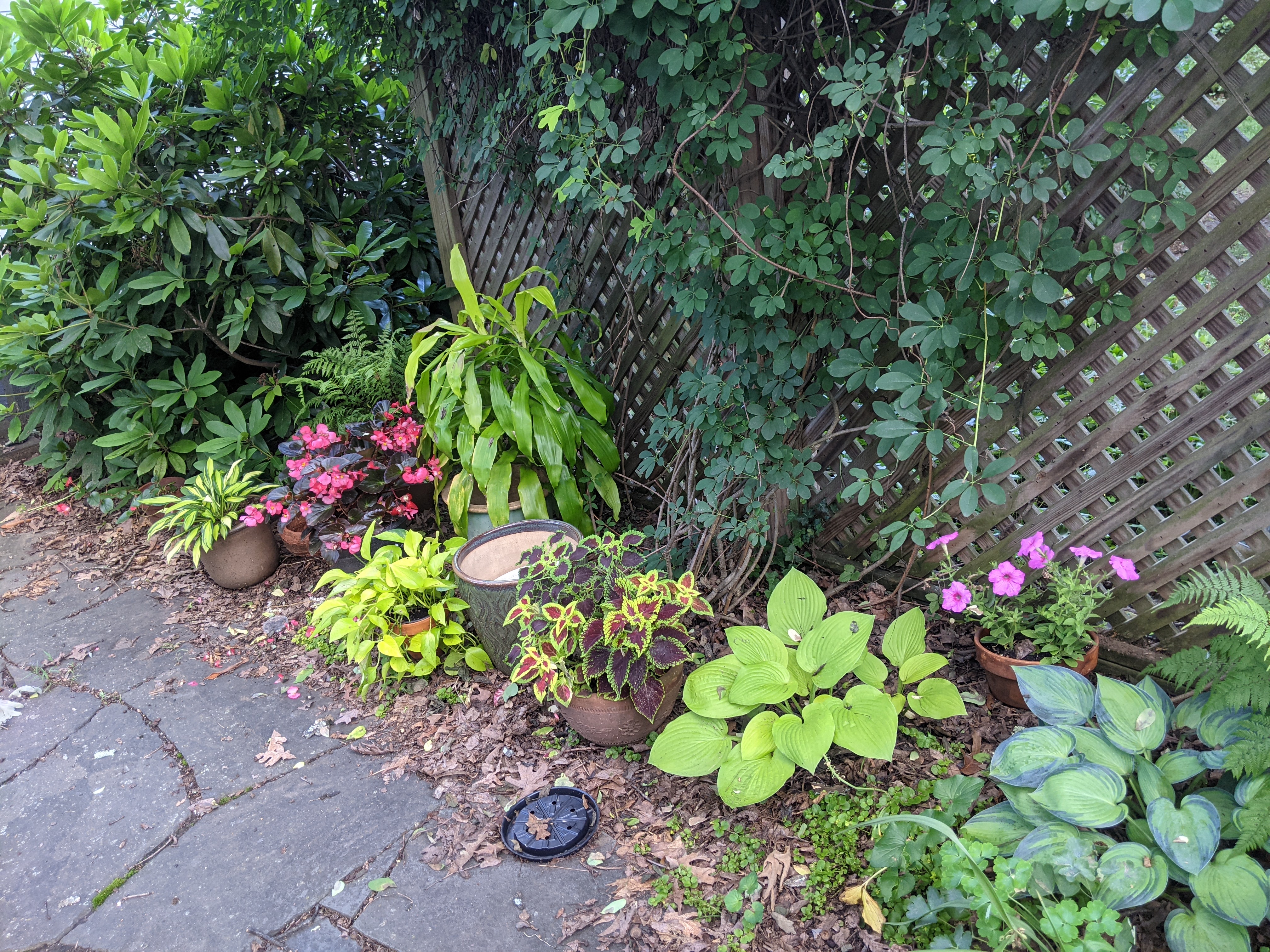
And the grading that prompted this whole thing looks very nice. The sewer people had uprooted the yews that grew against this wall, and I didn’t replant them. The rhododendron that I planted last year up and expired, though I have high hopes that a new one will have a better chance to staying alive.

Again, no before pictures but imagine this sloping down towards the foundation wall, scraggly as can be. Now it’s nice and level!

You need to imagine this space with some greenery that makes the downspout fade into the background… More planting to come this fall.

Image

Rue du Nil and farewell

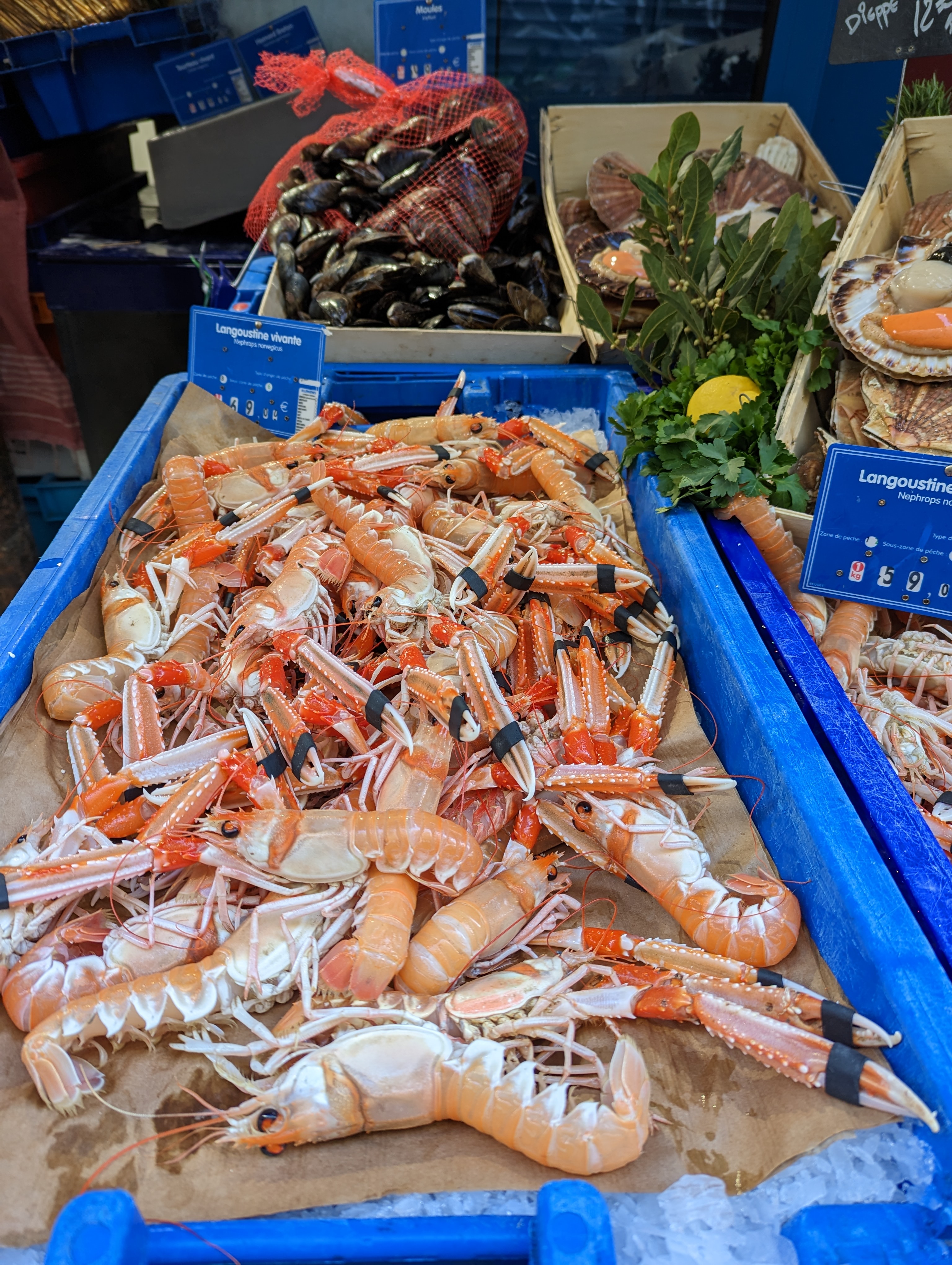
Silla’s train left at 2:00, so we just had a leisurely stroll around the neighborhood before lunch. We walked down Rue du Nil, first “attested” back in 1590 and made famous recently by a chef who has earned a Michelin star. For us it was only about a block away, with inviting shops: vegetables, cheese, chocolate, bread, fish, etc. We bought some cheese and wandered back to the apartment, had a decent but not exciting lunch at the restaurant next door, and then waved off Silla with kisses and tears. Hope to see her again at Gadenstaettli!

(Thanks to Terroirs d’Avenir for the photo)

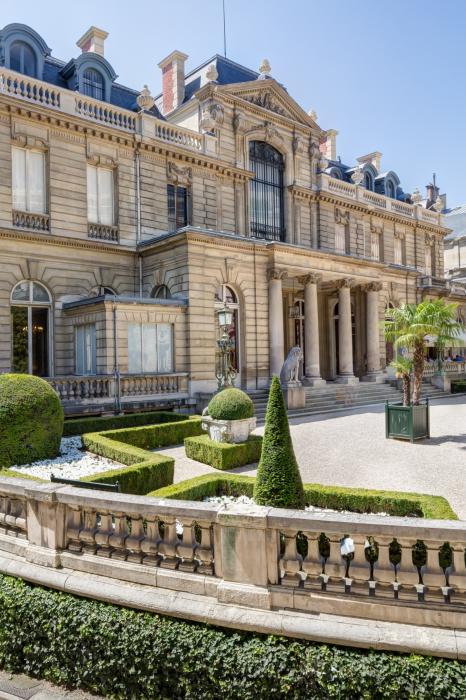
Then it was off to the Musée Jacquemart-André, a nineteenth century house owned by a couple who loved classical art and filled their house with it.

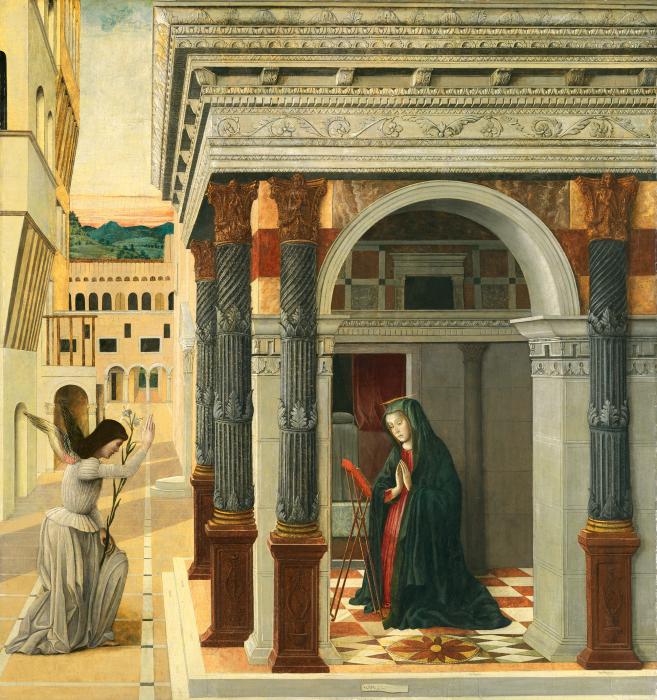
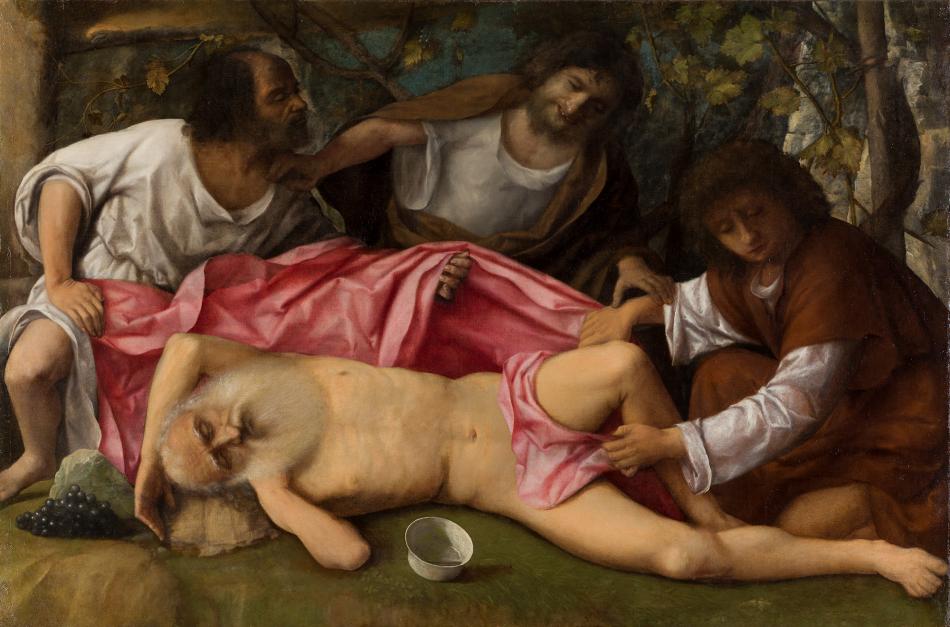
We were especially interested in a Bellini exhibit there, and it did not disappoint. I’m still not sure which Bellini is which (father, son, uncle?) but they all painted beautifully. Memling was there too, along with Mantegna, Giorgone and others. Lots of virgins and babies, plus an arresting painting of a drunken Noah and his sons.

And guess whom we should meet as we made our way down the gorgeous spiral staircase but Pablo, our Context guide at the Louvre!

Very happy to see him again, and I wish I had told him how often we had quoted him when talking to Silla about our Paris travels.

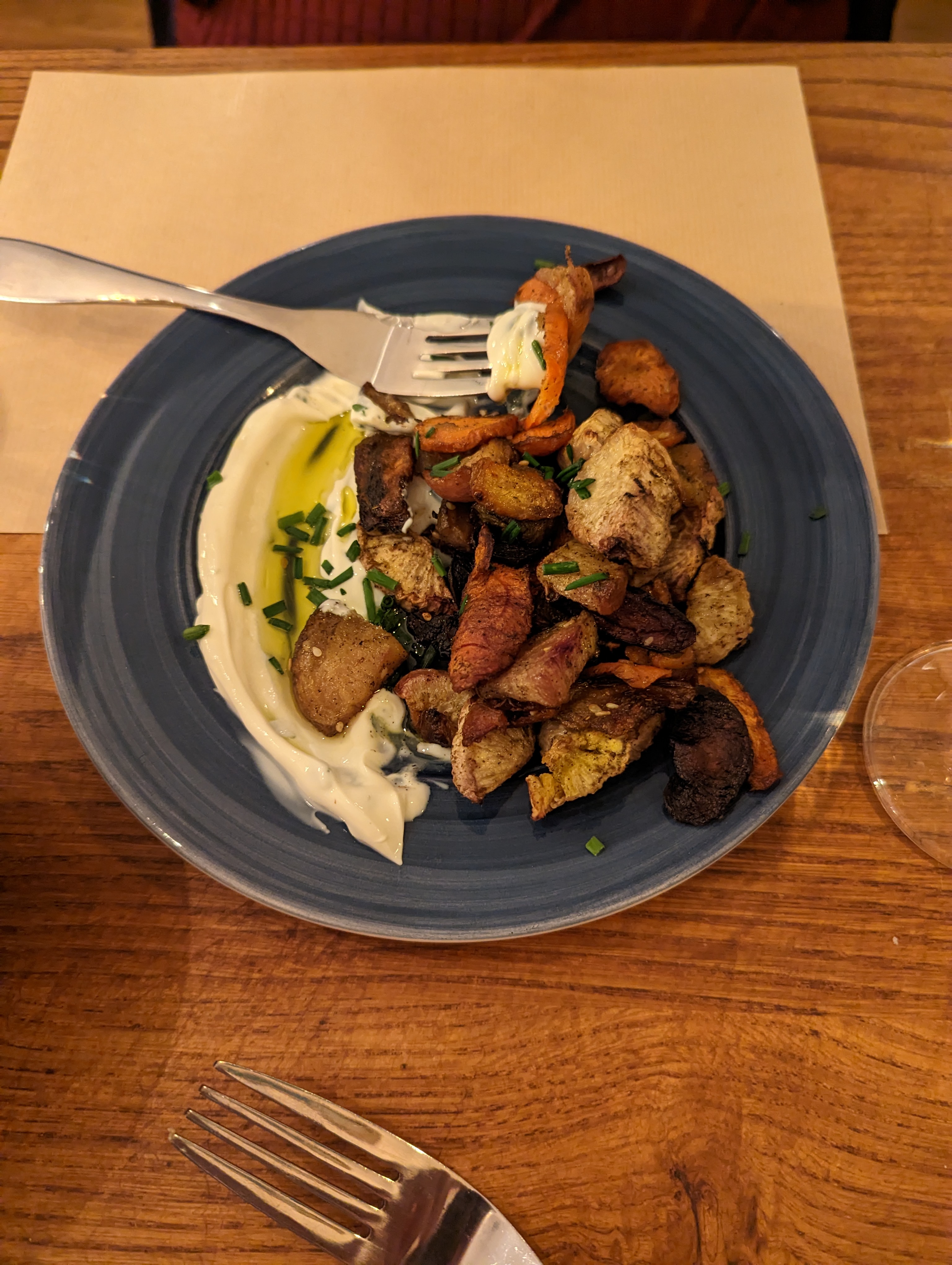
Dinner tonight was at de Saison, a hole in the wall around the corner from the Rue du Nil. We arrived promptly at 6:00 when they opened, and they were not really ready for us, but the chef/owner was jolly and poured us some wine, eventually coming by with a menu. We shared the roasted vegetables with chive hummus (or something like that),

then I had the duck (a certain amount of quacking took place to make sure our choices were clear) and Alison had the lamb (baa). Both delicious, and by then the place had filled up with the young things who must be the frequenters of this establishment. And so to bed.

Image

Delacroix and Ste. Chapelle

Our plan for today was to take the train to Chartres Cathedral, with its Gothic architecture and gorgeous stained glass. We had all been there but since it had been about fifty years ago, we were looking forward to seeing it anew. However, the travel gods were against us: Paris is on strike due to the proposed change in retirement age from 62 to 64. Everyone advised us not to even attempt a train, so we had a free day to do whatever we wanted.

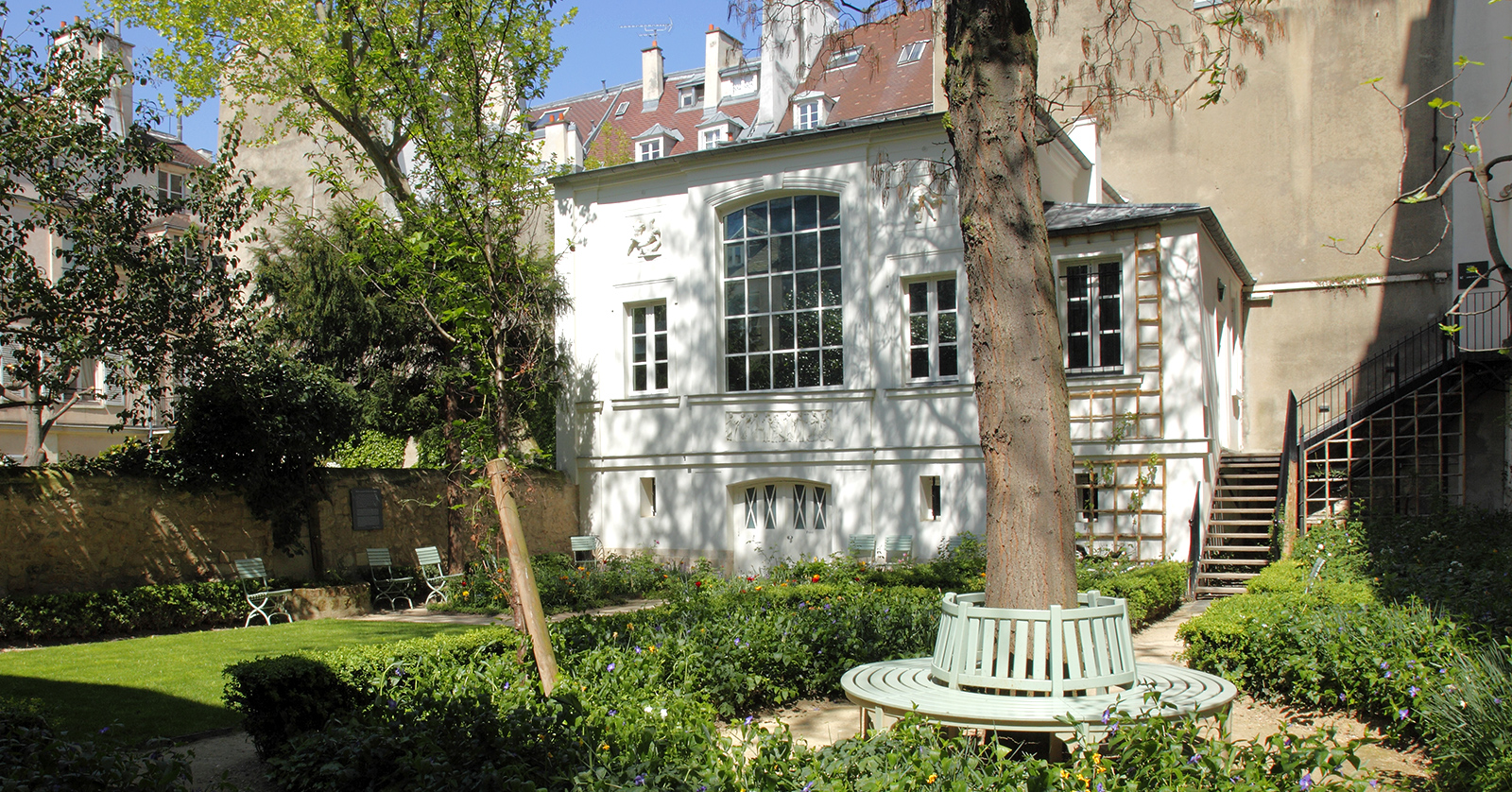
We started out at the Delacroix Museum, which was modest and only mildly interesting, but pleasant enough.

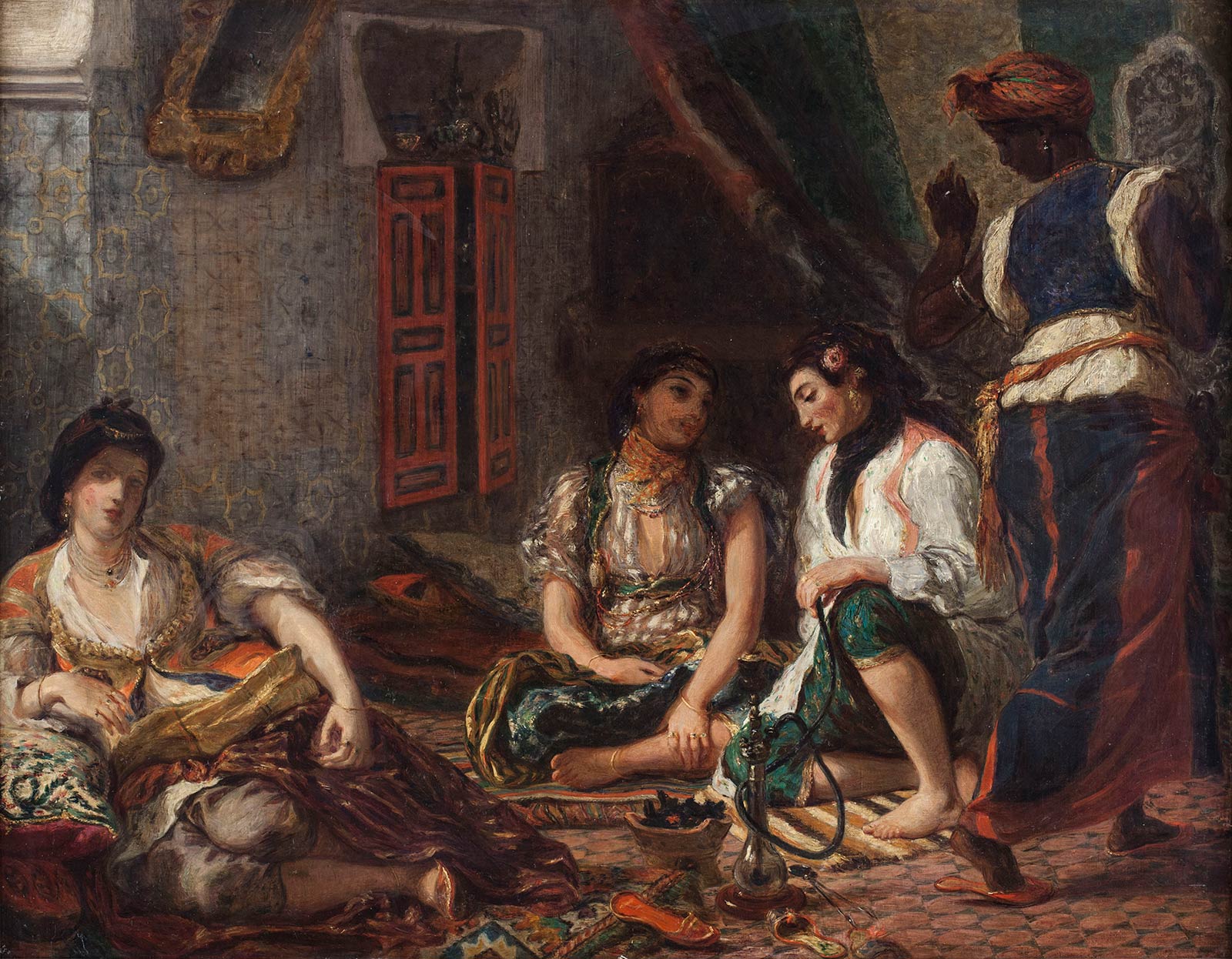
It’s housed in the elegant apartment and studio he lived and worked in and features many of his drawings, paintings and sculptures. His most famous paintings are at the Louvre, of course, but the artwork featured here showed another side to him. The paintings inspired by his visits to north Africa were particularly interesting.

Then off to an early lunch because we were told we’d need to get in line at 1:30 for our 2:00 timed tickets for Ste. Chapelle (more on this anon).

We found a cafe just across the street and sat down for a leisurely light lunch: Quiche and salad for Alison and me, French onion soup for Silla.

We took our time and enjoyed watching everyone walking along outside, guessing whether they were French or otherwise. (Of course the only way to confirm the outcome would be to stop and ask them, which was impossible!)

At around 1:00 we got in the long line for the chapel, hoping that they would not mind that we were at least an hour early. As it turned out, both venues made it sound very difficult to arrange a ticket (the Delacroix being the kind of website that takes forever to use and then foils you at the last minute) and advised us to make absolutely certain that we arrived there right on time – but it’s all a canard! The Delacroix let us buy our tickets on the spot, and there were only half a dozen or so other people even there. The chapel, after making everyone confused about which long line to get in, didn’t care a whit that we were an hour early and let us sail through!

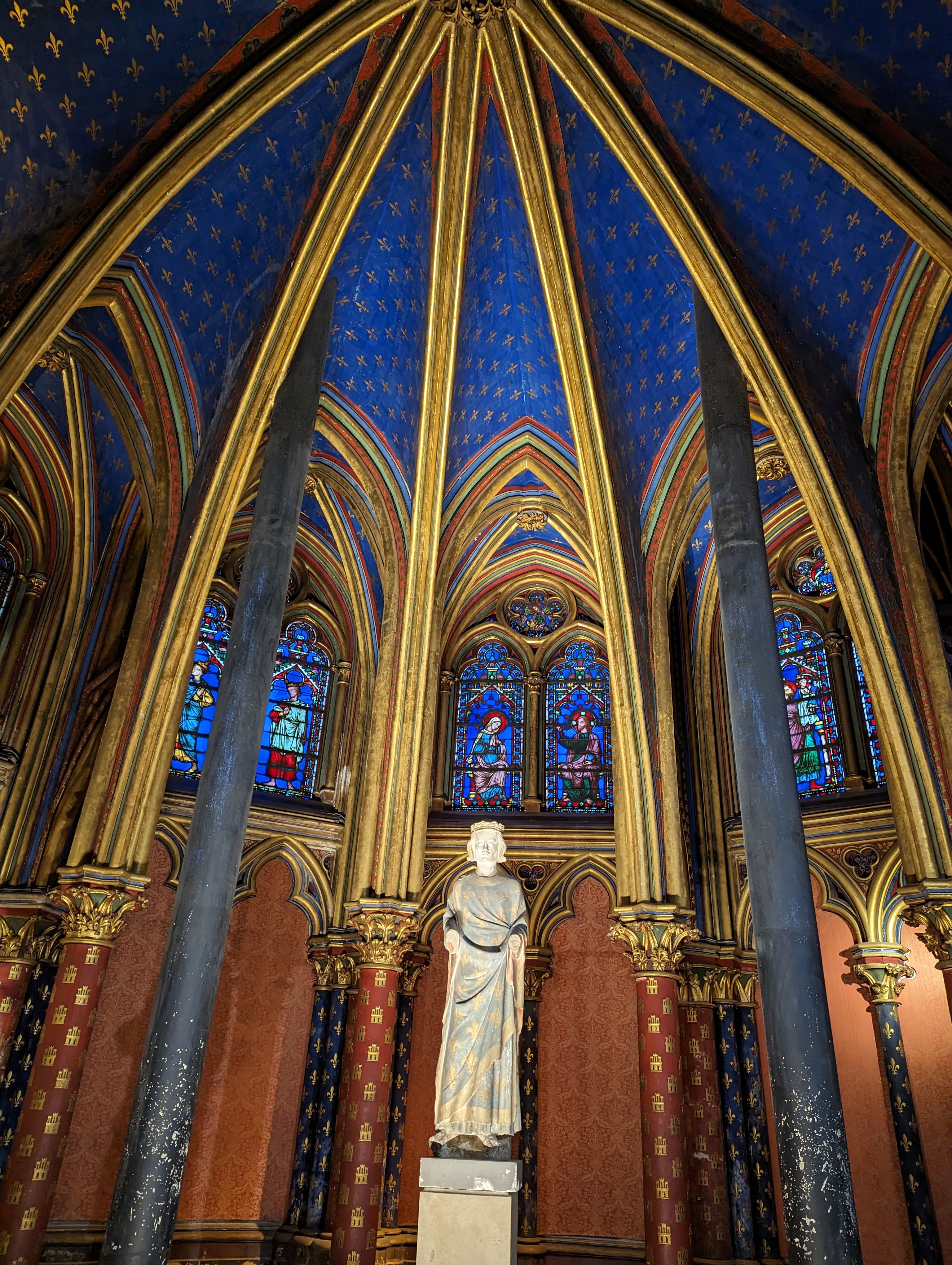
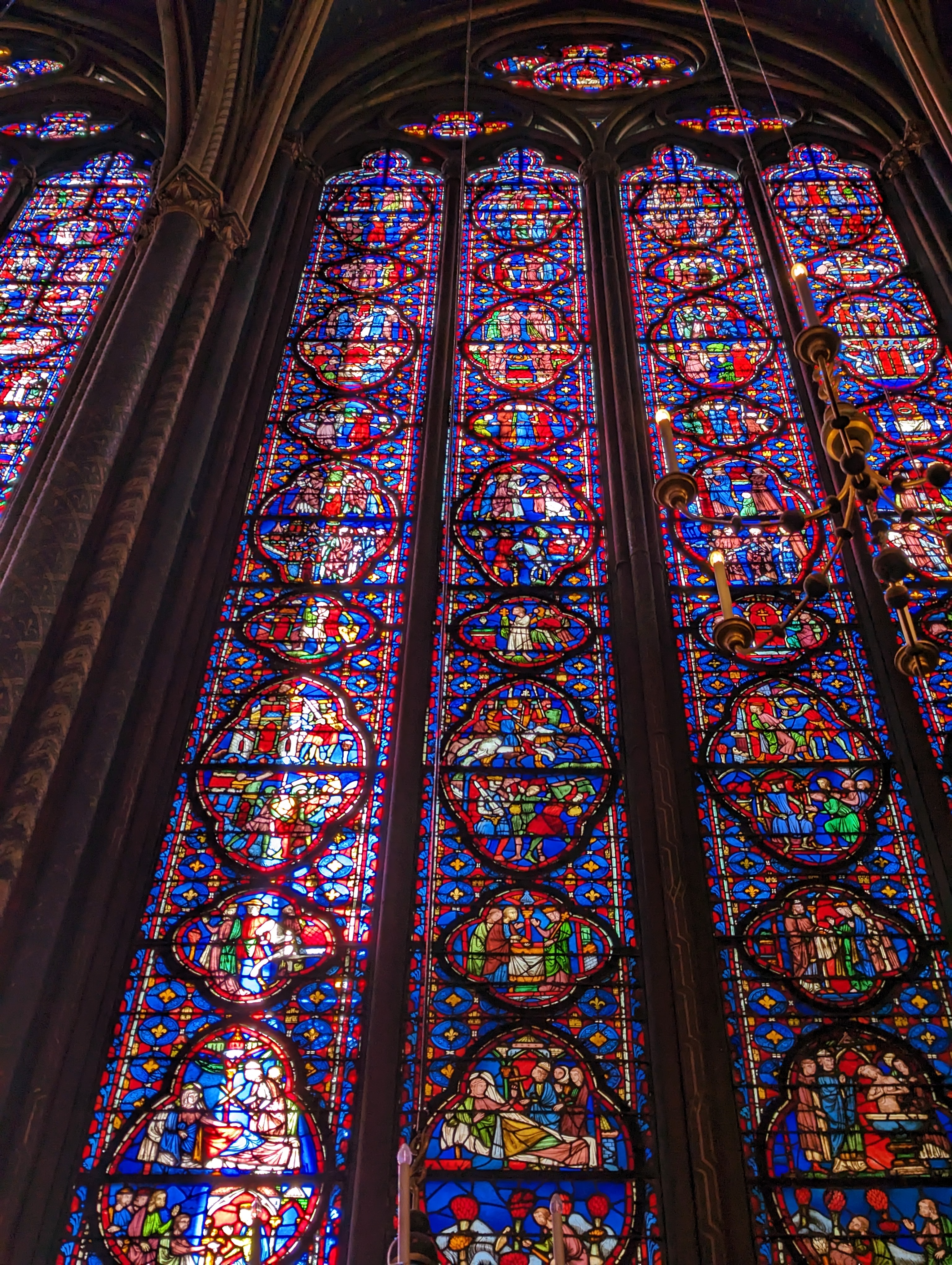
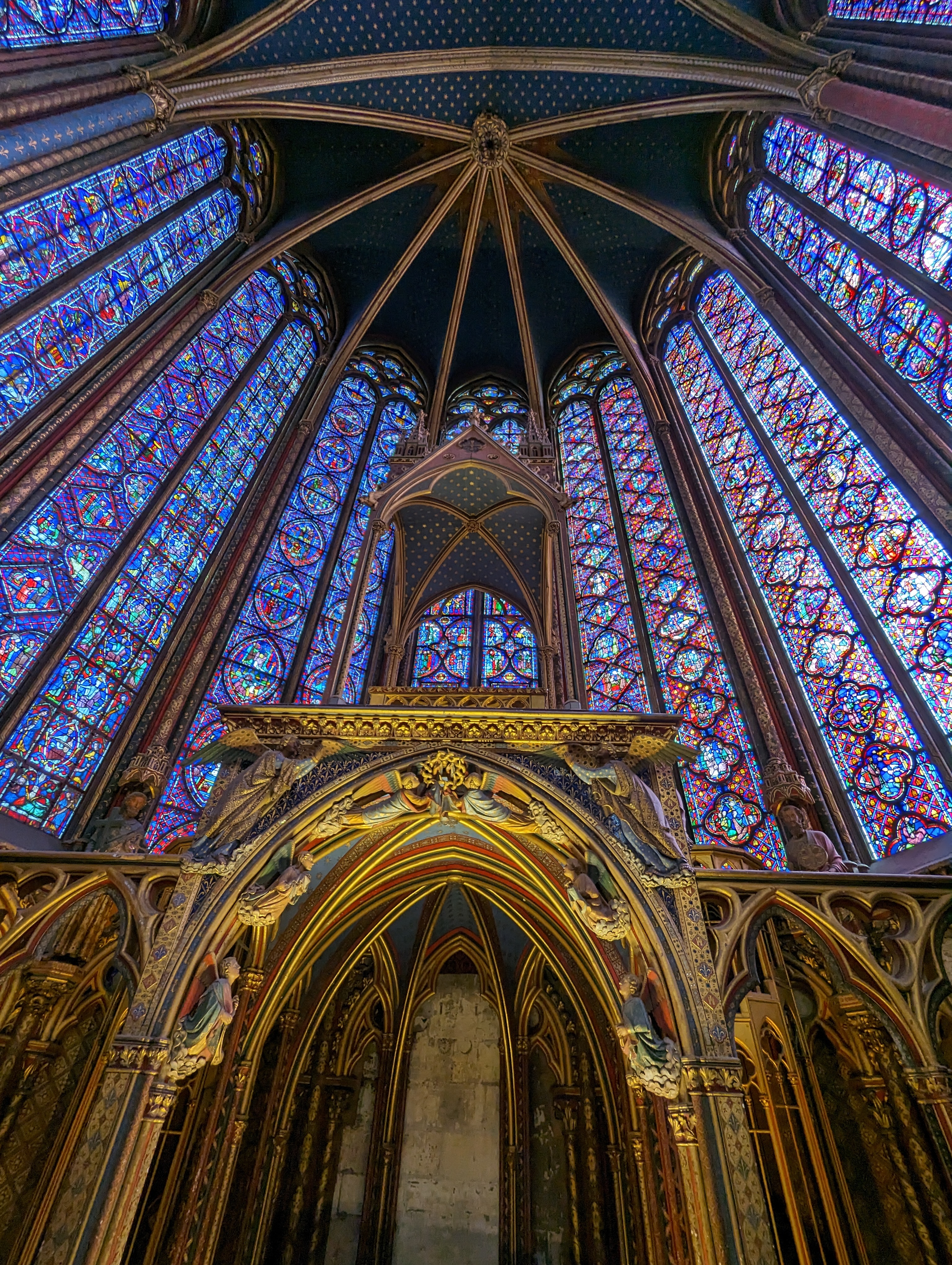
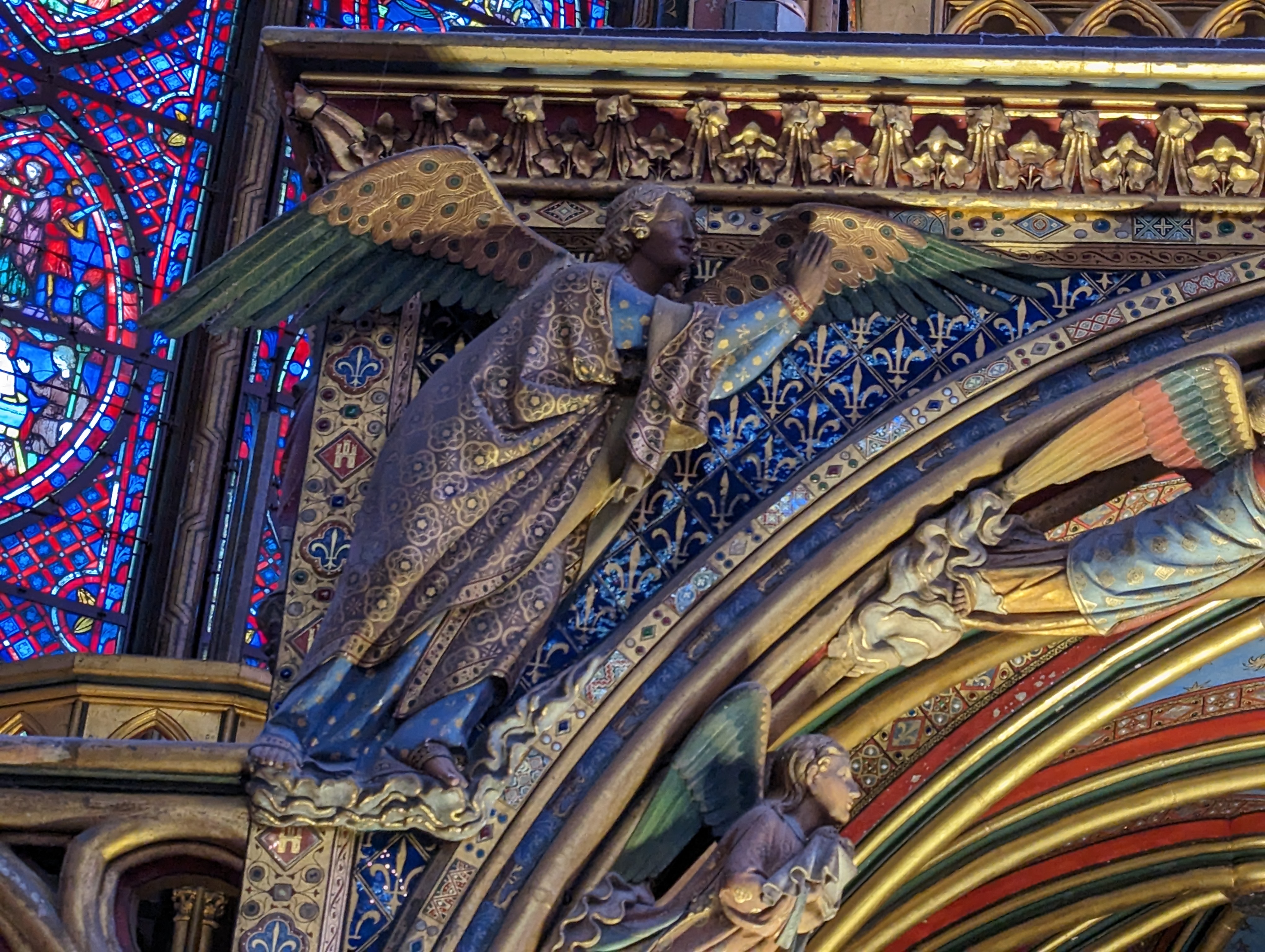
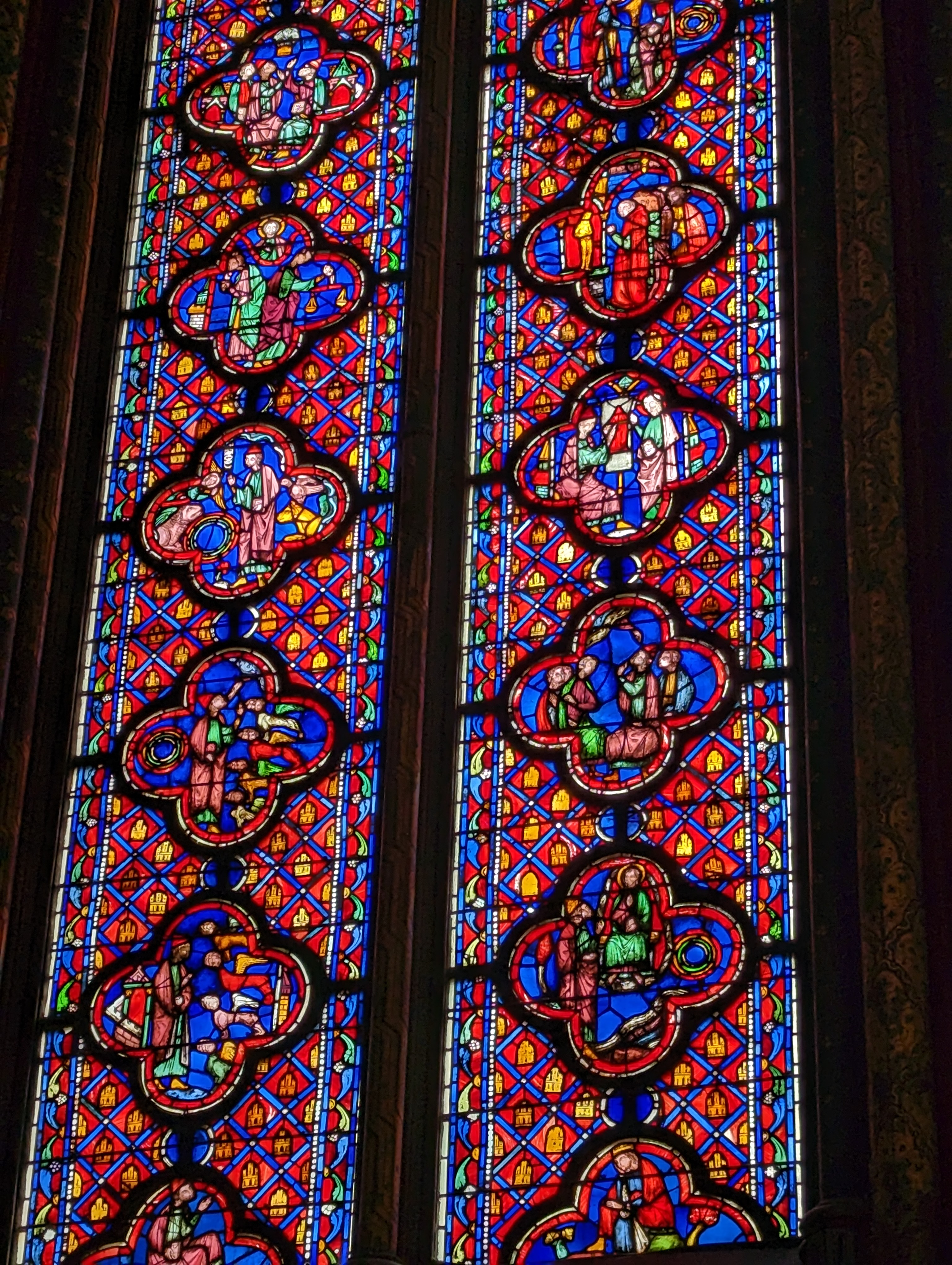
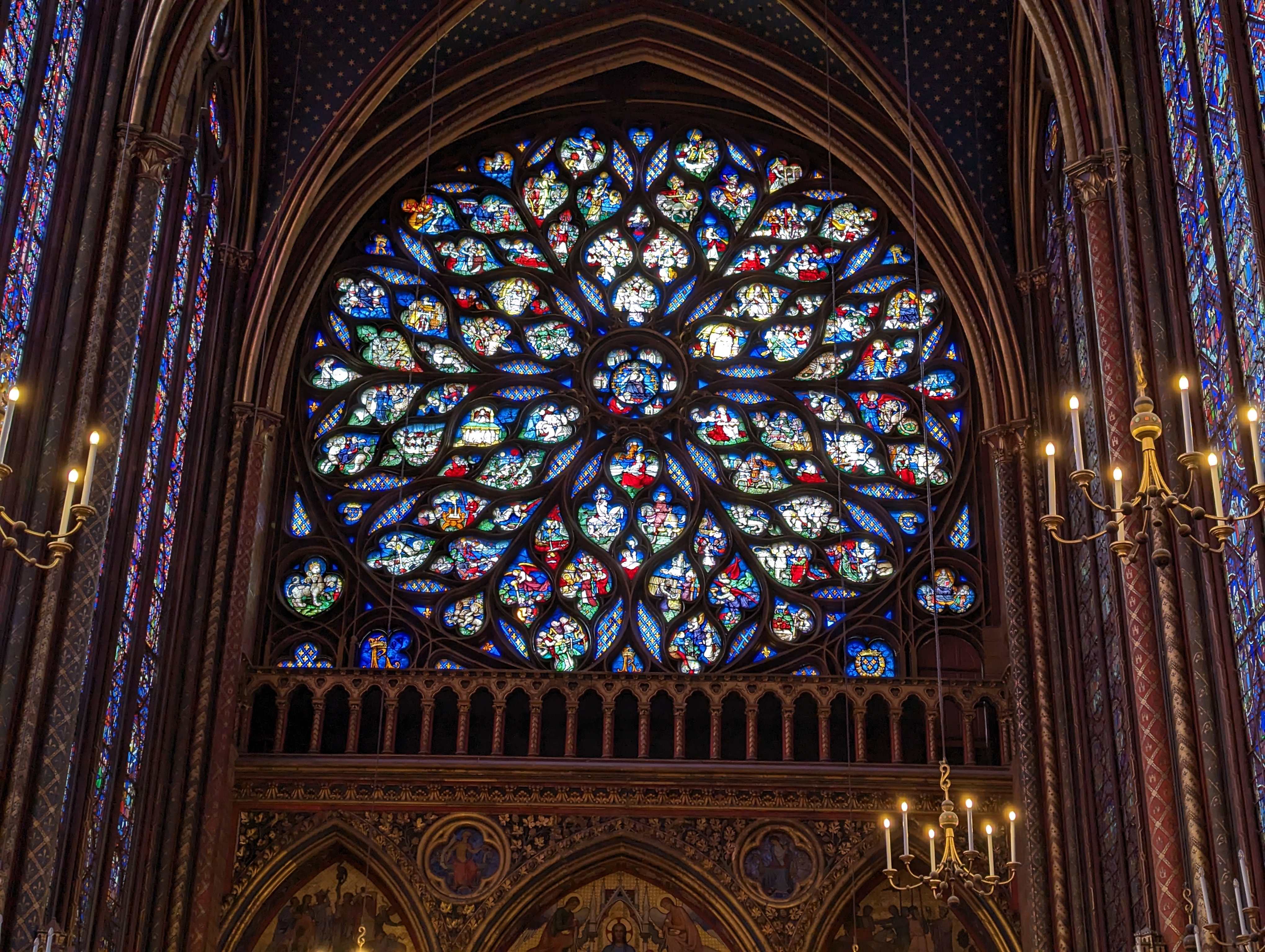
Today was cloudy, then brightly sunny, then cloudy again and then, while we were standing in line, raining hard for about five minutes. And of course you want to see the stained glass in good light. Well, we had enough sun to point out the contrast between light and shade, so that was fine, not to say occasionally brilliant. The intense blue, gold and red are so stunning that I couldn’t stop taking pictures.

The audio guide was designed for giants who could stand in front of the highest windows and pick out the figures from the Bible, so we didn’t have much luck with that. But in the end, the glories of the light, and the fascinating videos showing how they’ve restored the glass and cleaned the stone, were absorbing and illuminating. All in all, a stunning space.

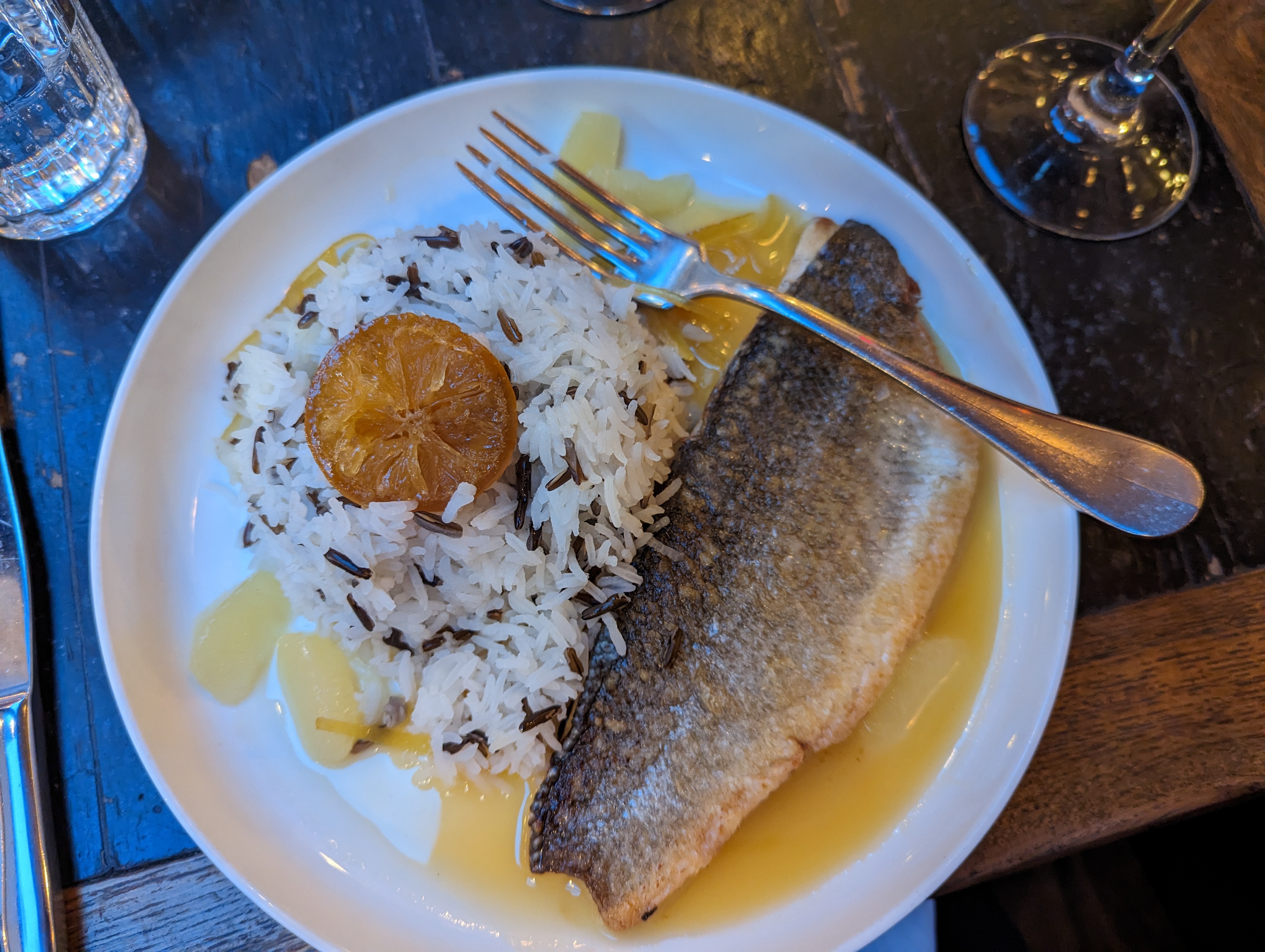
Dinner tonight was at Le Compas, the same place we went to last night, because we all liked it, especially Silla. Very French in the sense that all the waiters were professional and quick, and the food was traditional and delicious. Silla and I each had what the other one had had the night before, and we were both happy: mine was fish au citron and hers was the salmon with green beans. AO was very happy with her red meat.

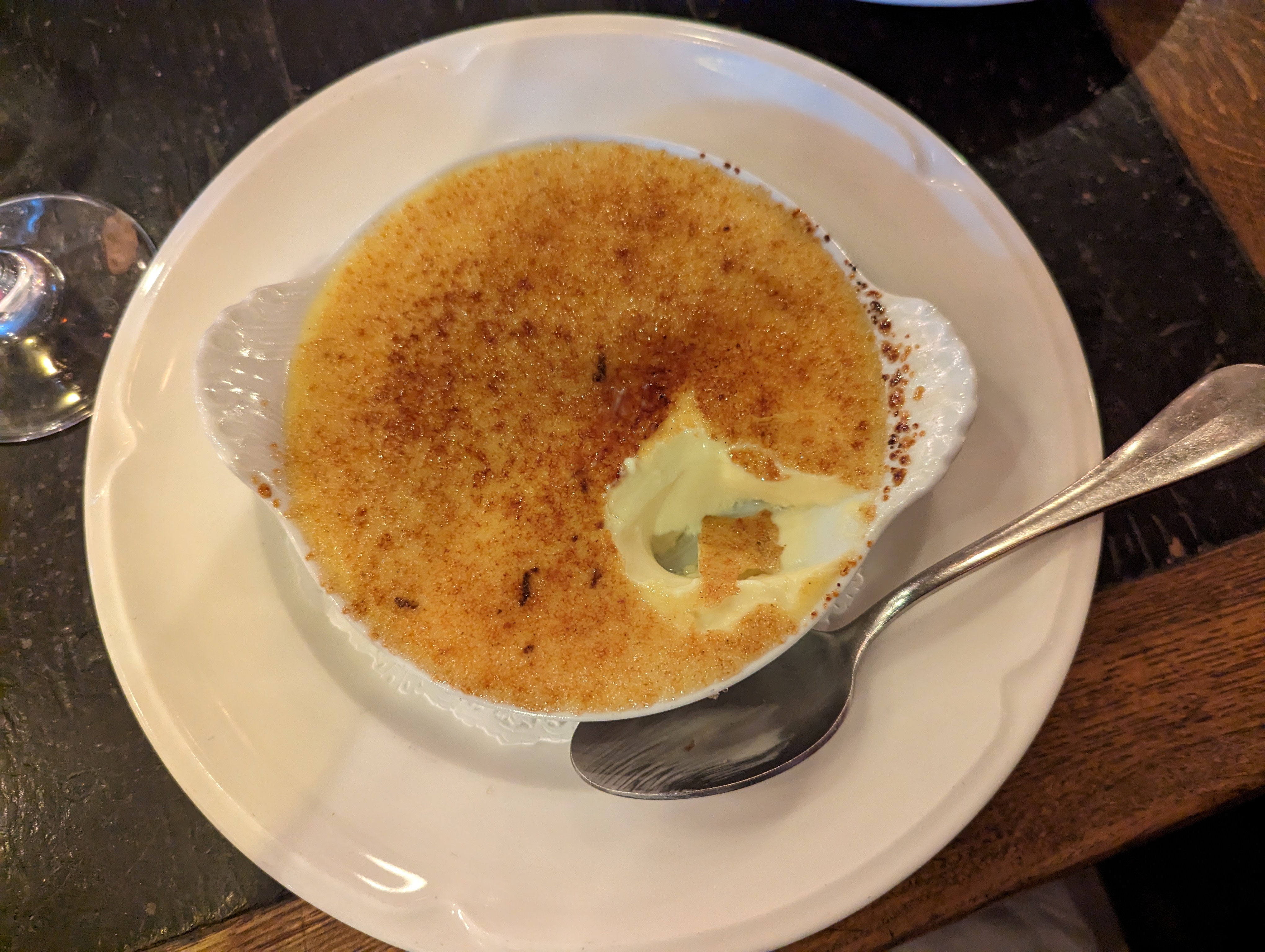
Then, because it was Silla’s last night with us, we splurged on creme brulee for us two, while AO had tarte tatin, and we were all delighted.