Blog Archives

Image

The grand old man

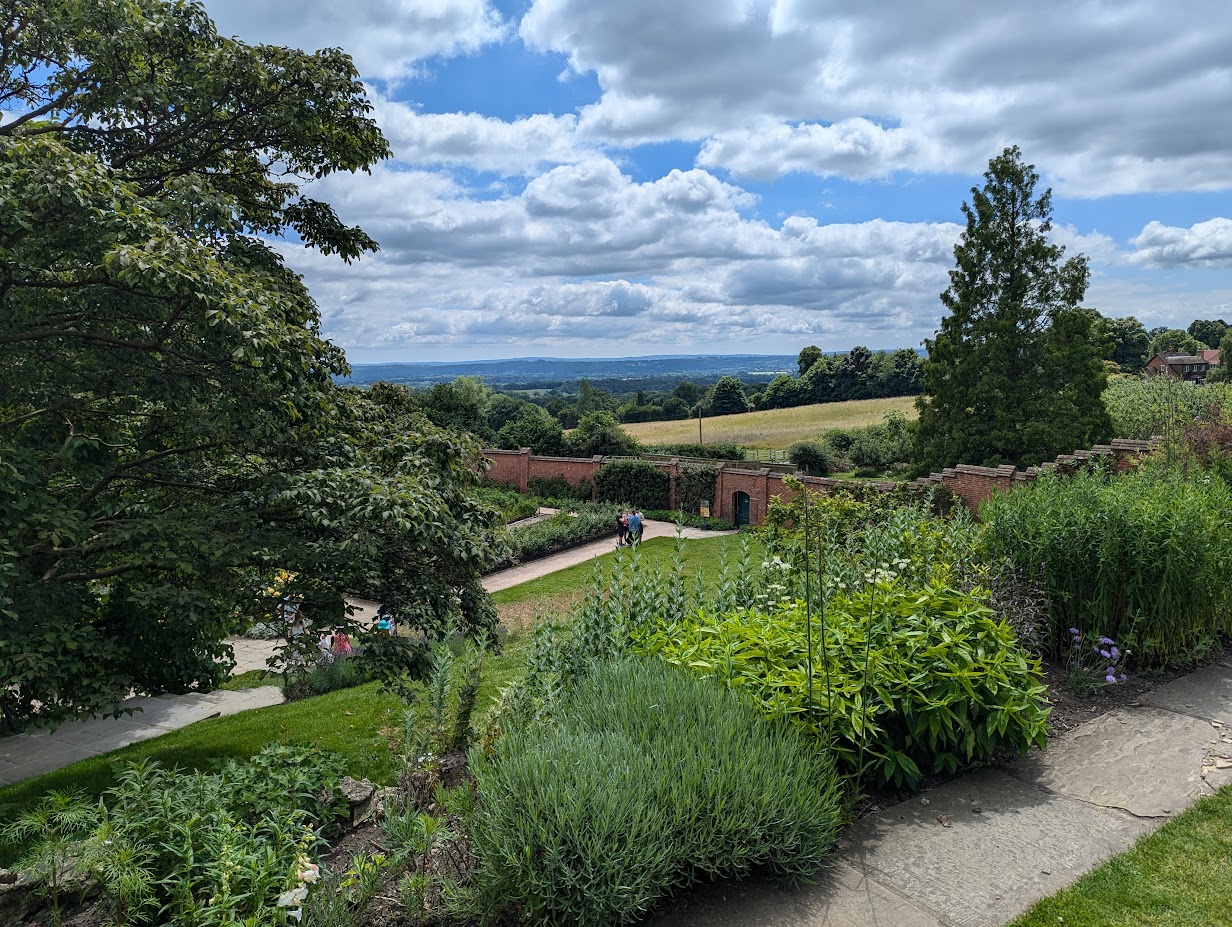
below: Overlooking the Kentish Weald
Churchill lived at Chartwell for more than forty years, and it was here that he gardened, painted, built walls and lakes, met with politicians, and enjoyed a vast array of friends. This wonderful description of a late night dinner there is priceless:

“In January 1928, James Lees-Milne stayed as a guest of Churchill’s son Randolph. He described an evening after dinner; ‘We remained at that round table till after midnight. Mr Churchill spent a blissful two hours demonstrating with decanters and wine glasses how the Battle of Jutland was fought. He got worked up like a schoolboy, making barking noises in imitation of gunfire, and blowing cigar smoke across the battle scene in imitation of gun smoke'”.

After Churchill died, Lady Churchill donated the house to the National Trust, and the house has been open to the public since 1966. We decided to take a day trip to visit the Old Man’s property. A train to Oxted and then a cab to Chartwell got us there easily.

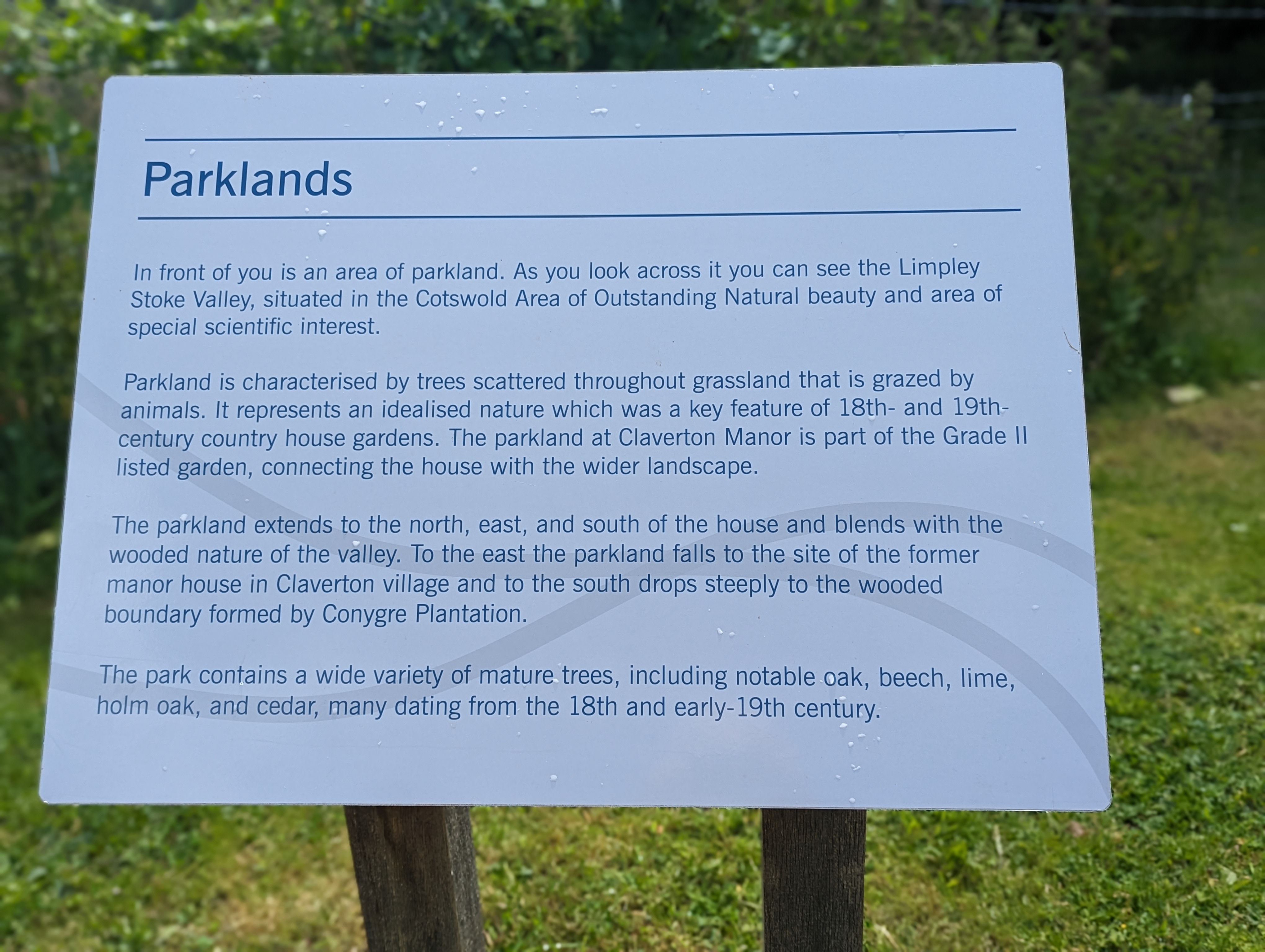
The approach to the house winds along a gentle slope, featuring a couple of these gorgeous trees

and the charming Gavin Jones Cascade.
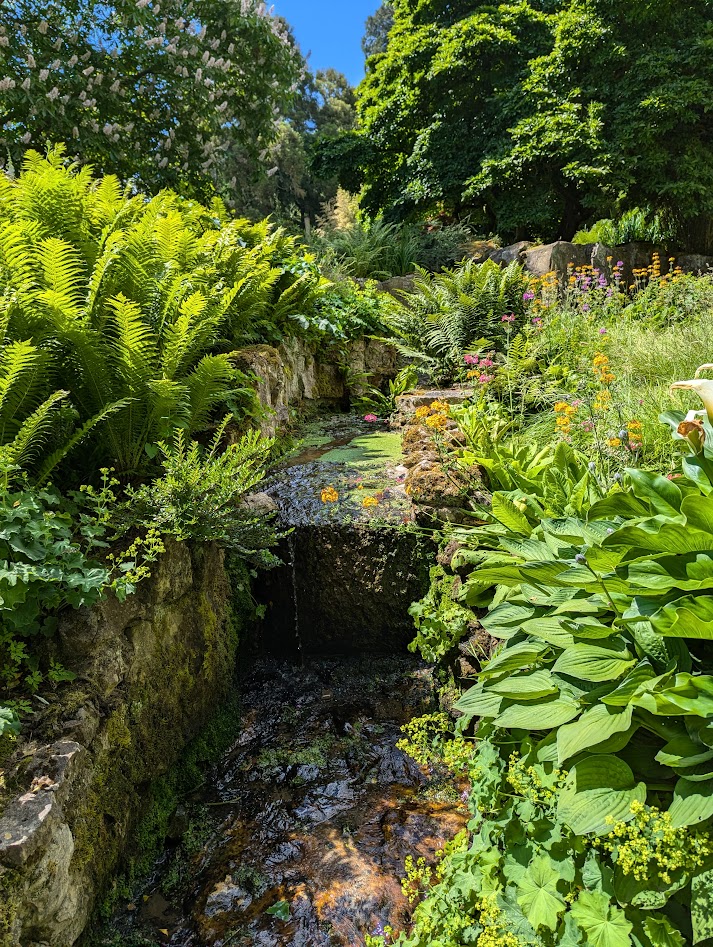
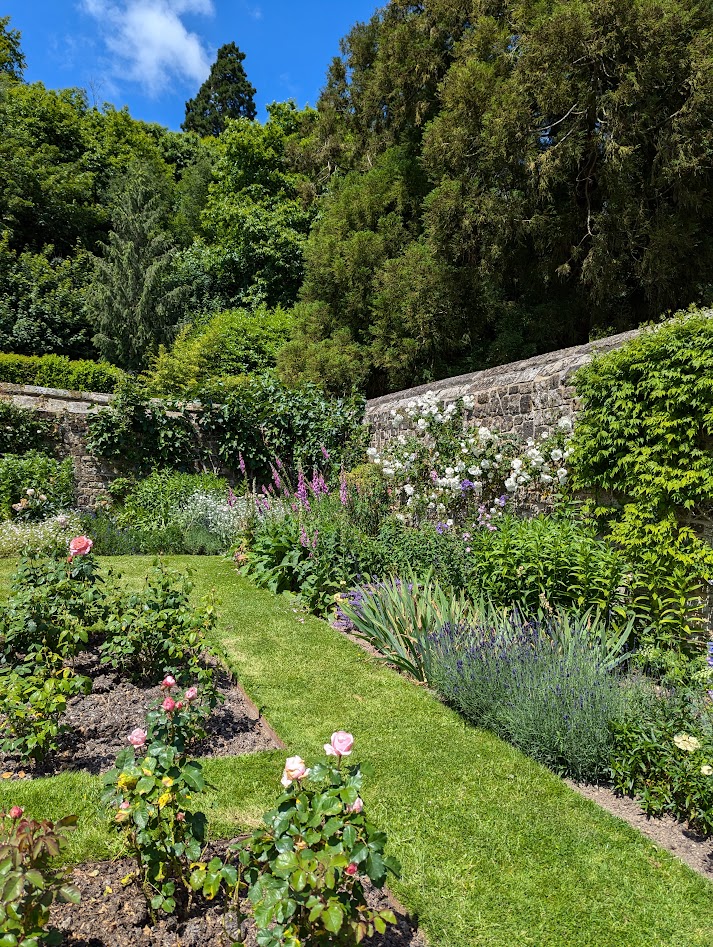
From here we wended our way up and through the grounds. There’s nothing like an old brick wall sheltering a sunken garden.
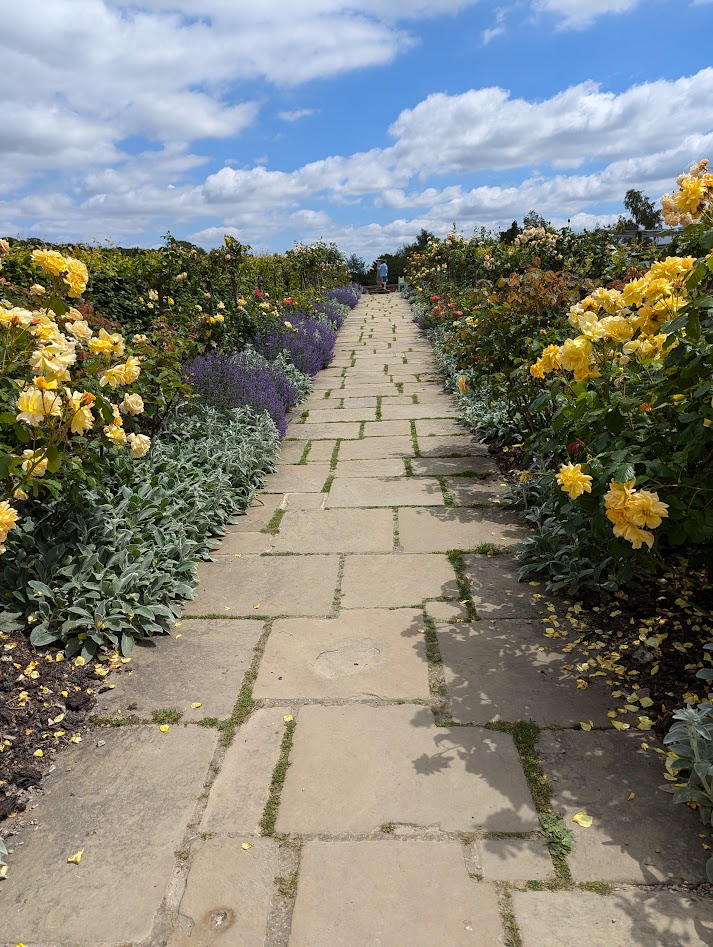
And then there is a lovely, long rose border
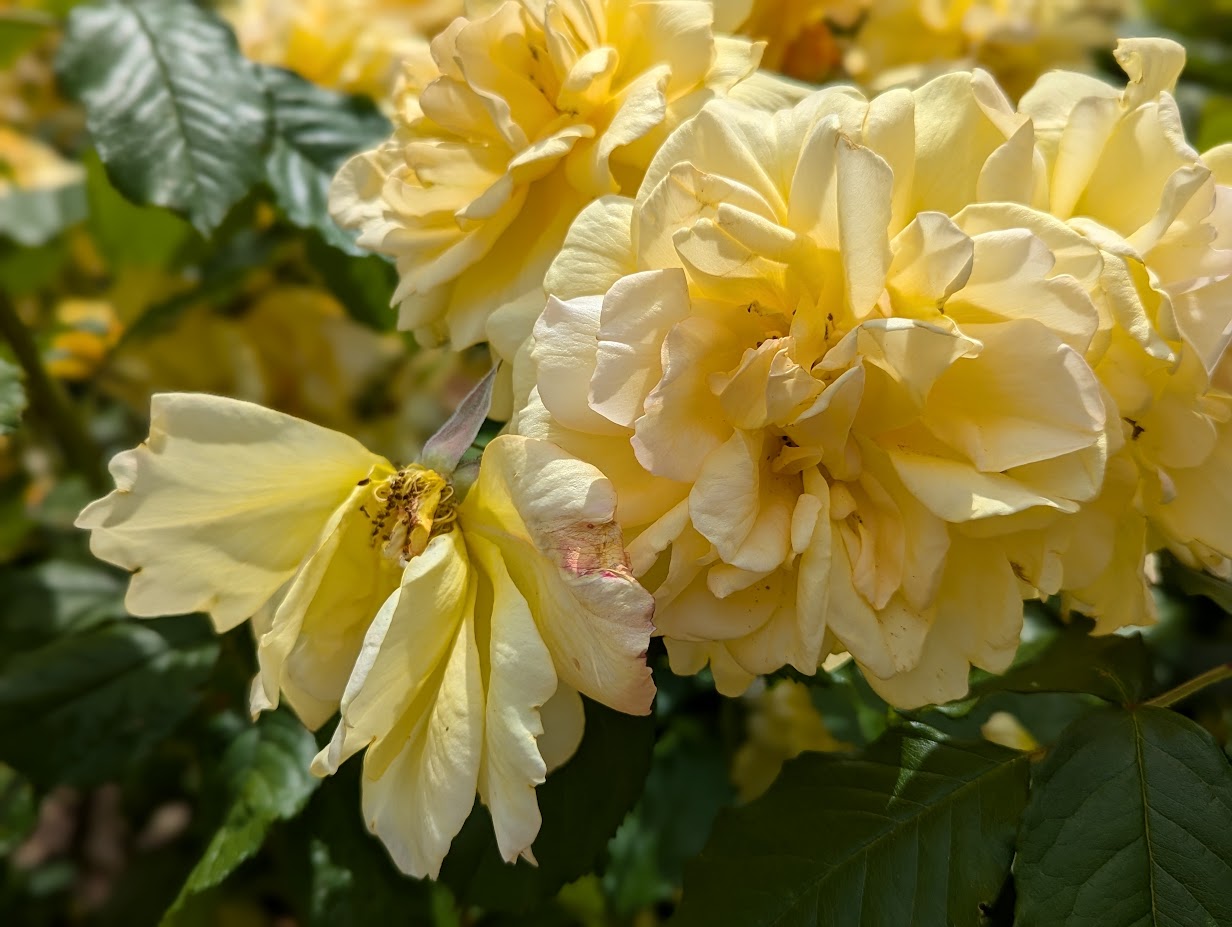
and some abundant rose petals:
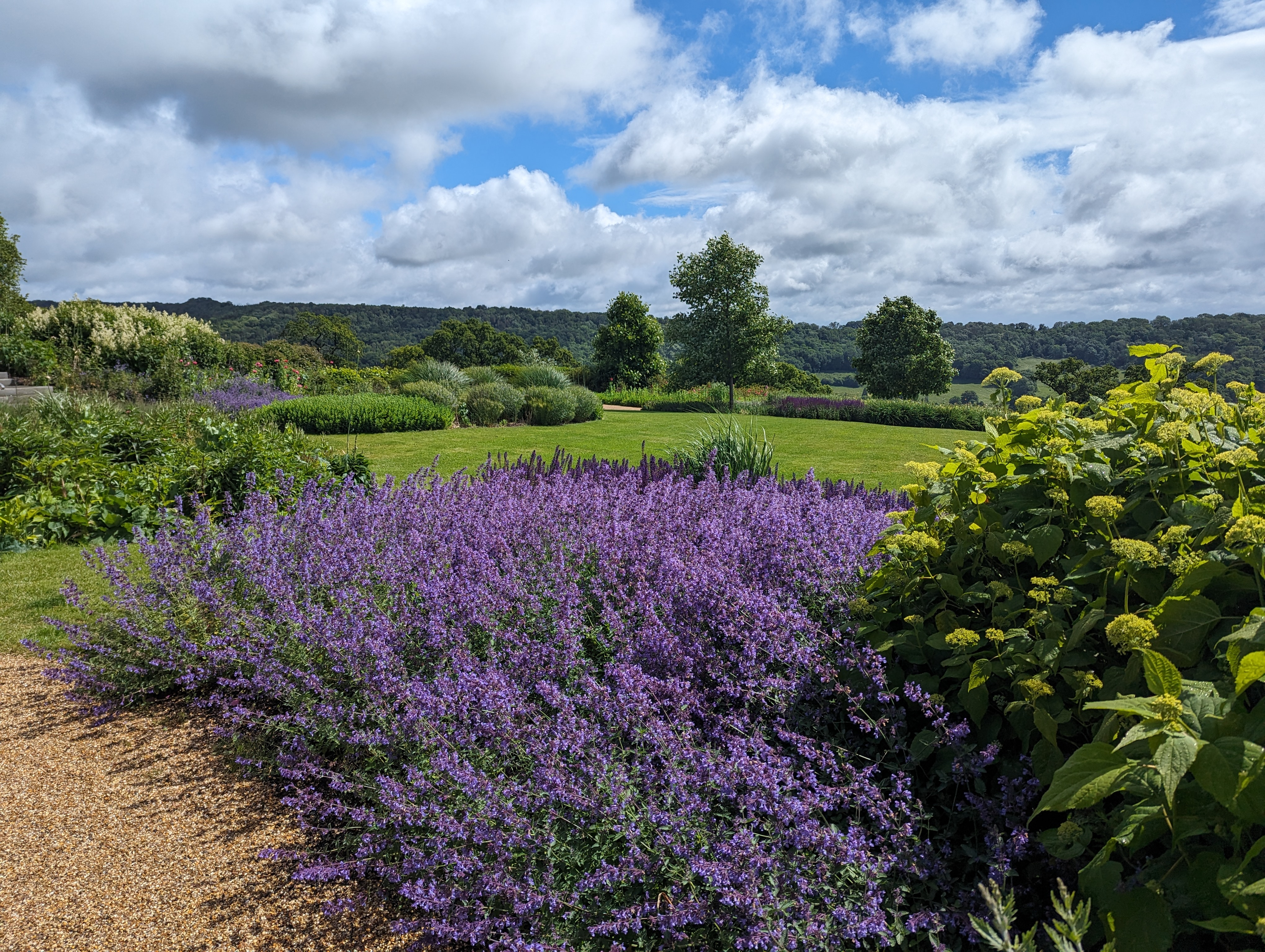
And then these catmints.
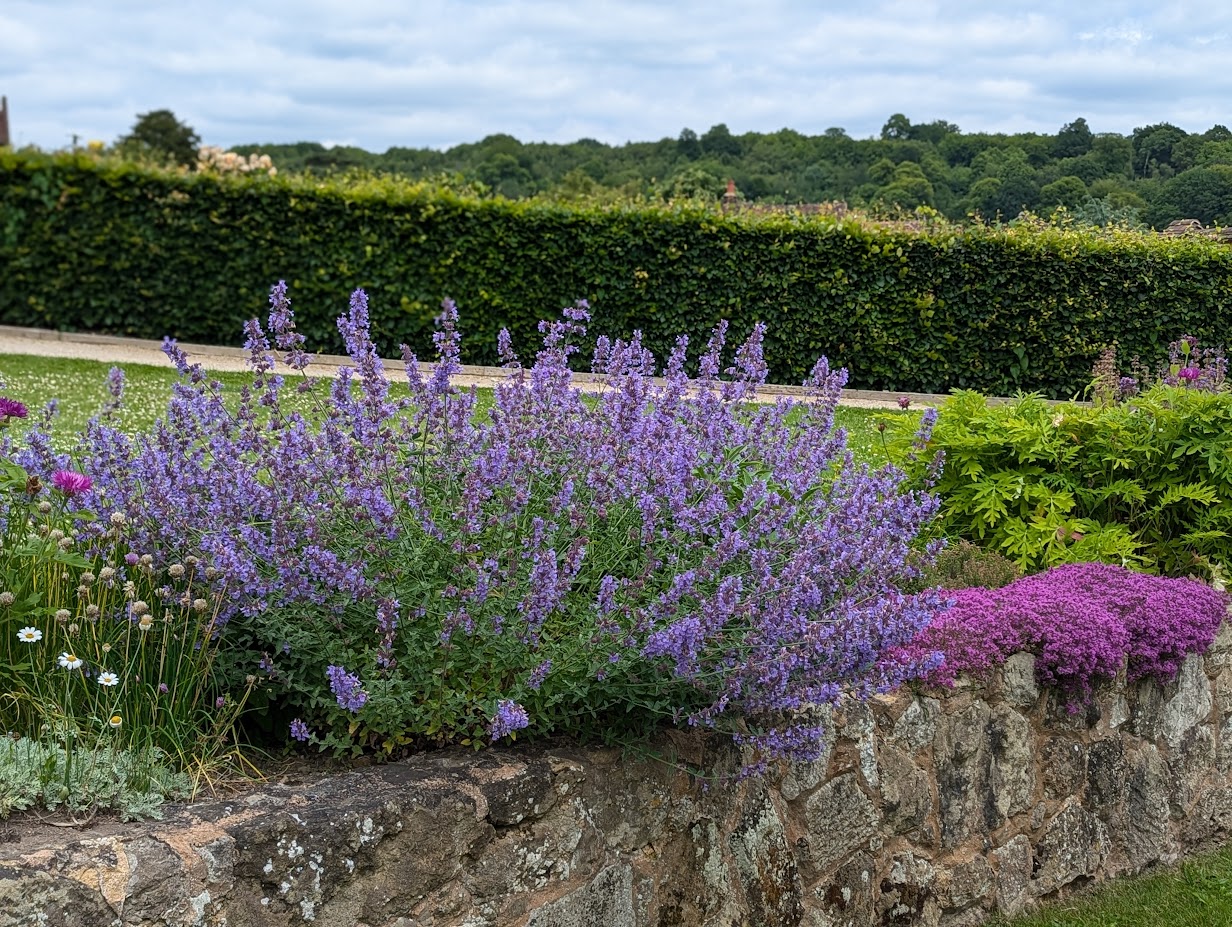
I love the inscription: The greater part of this wall was built between 1925 and 1935 by Winston Churchill with his own hands
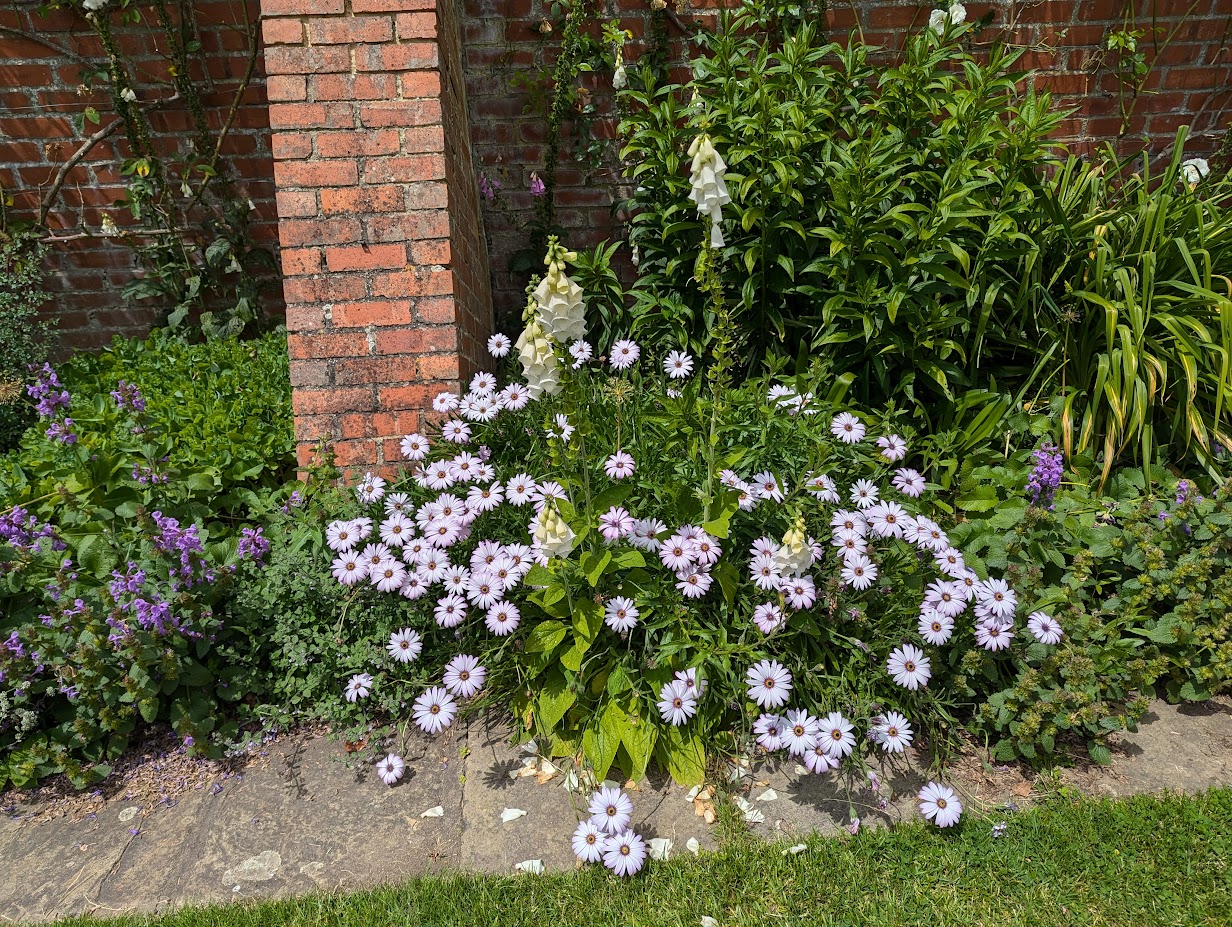
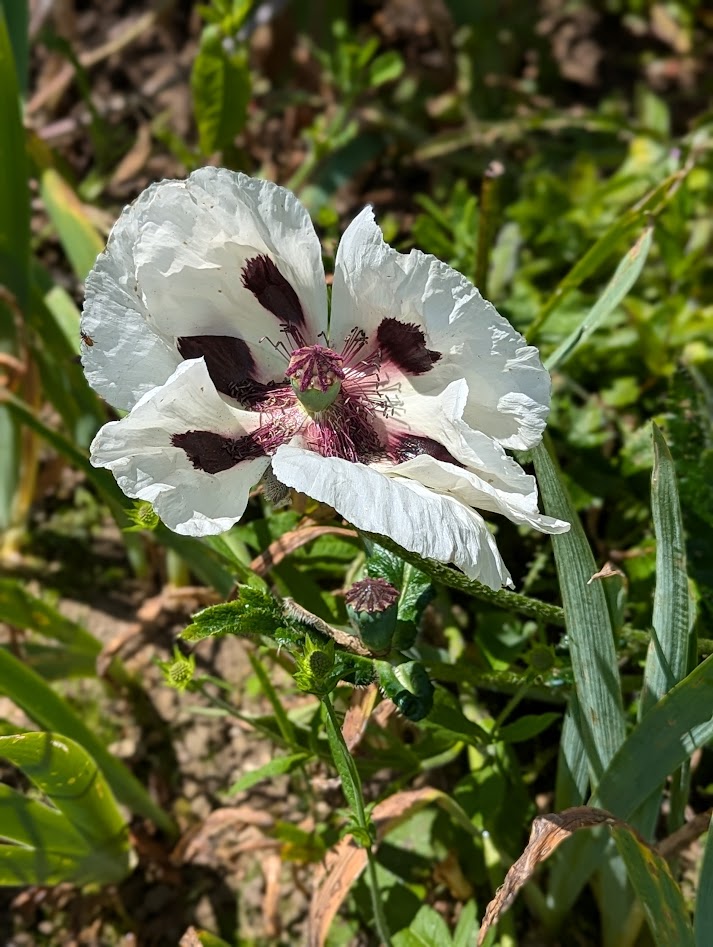
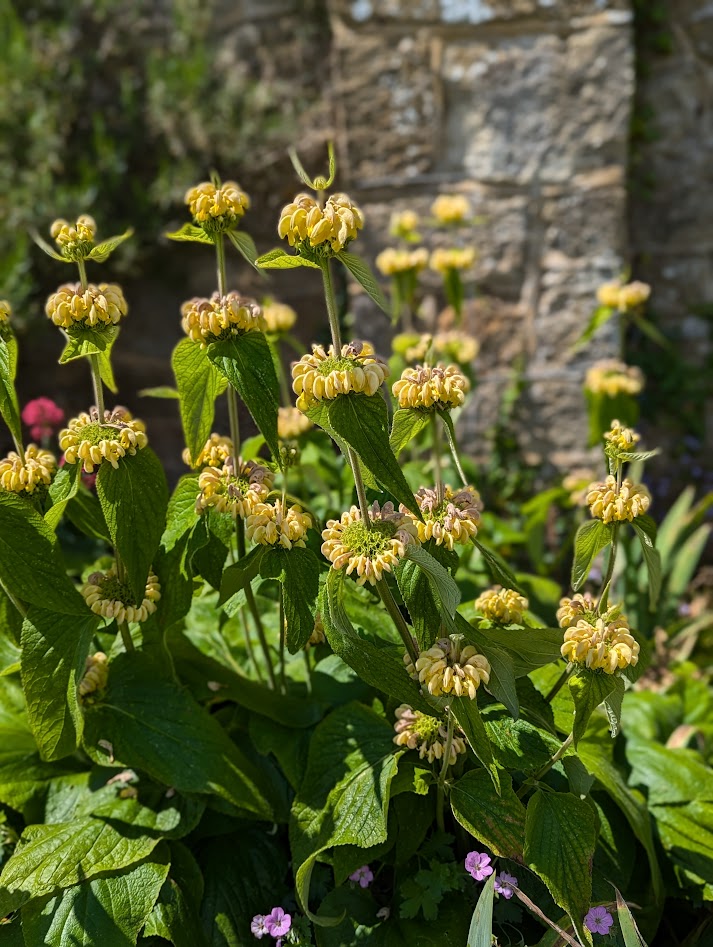
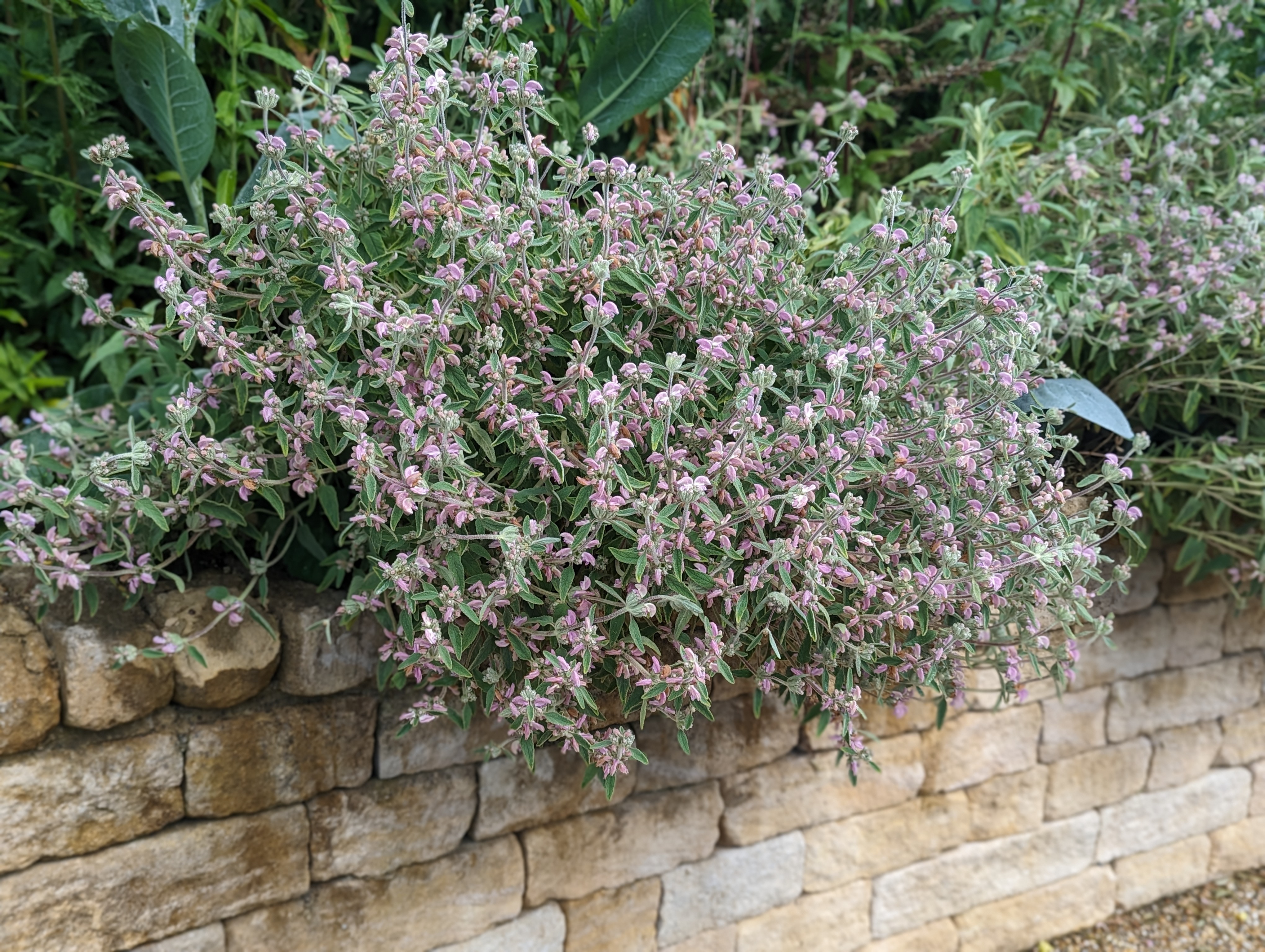
A few more beauties: cape daisy, oriental poppy and Turkish sage, Phlomis russeliana.

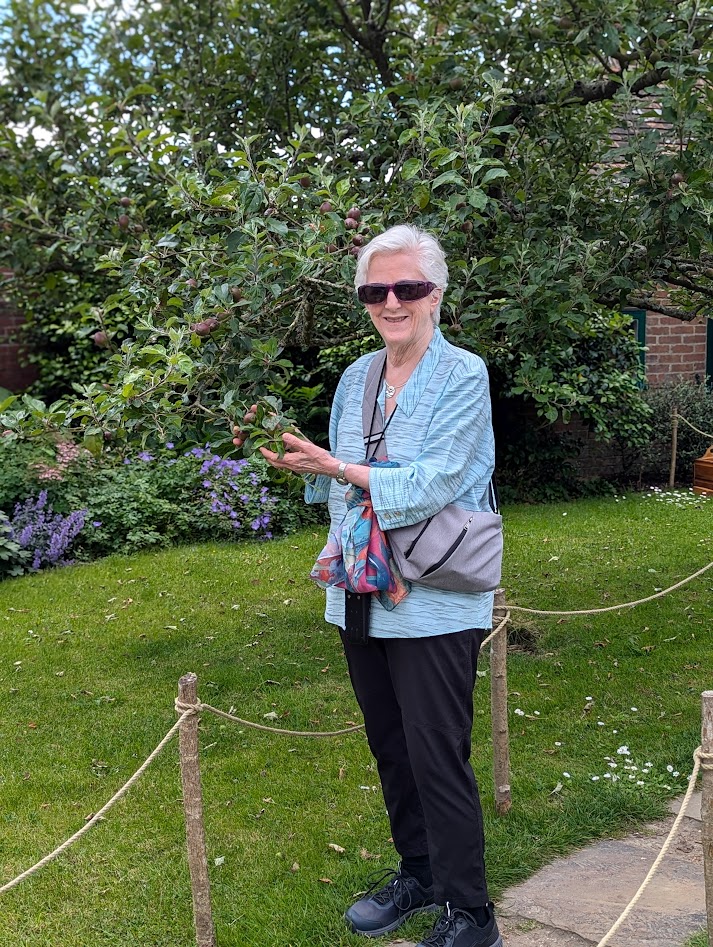
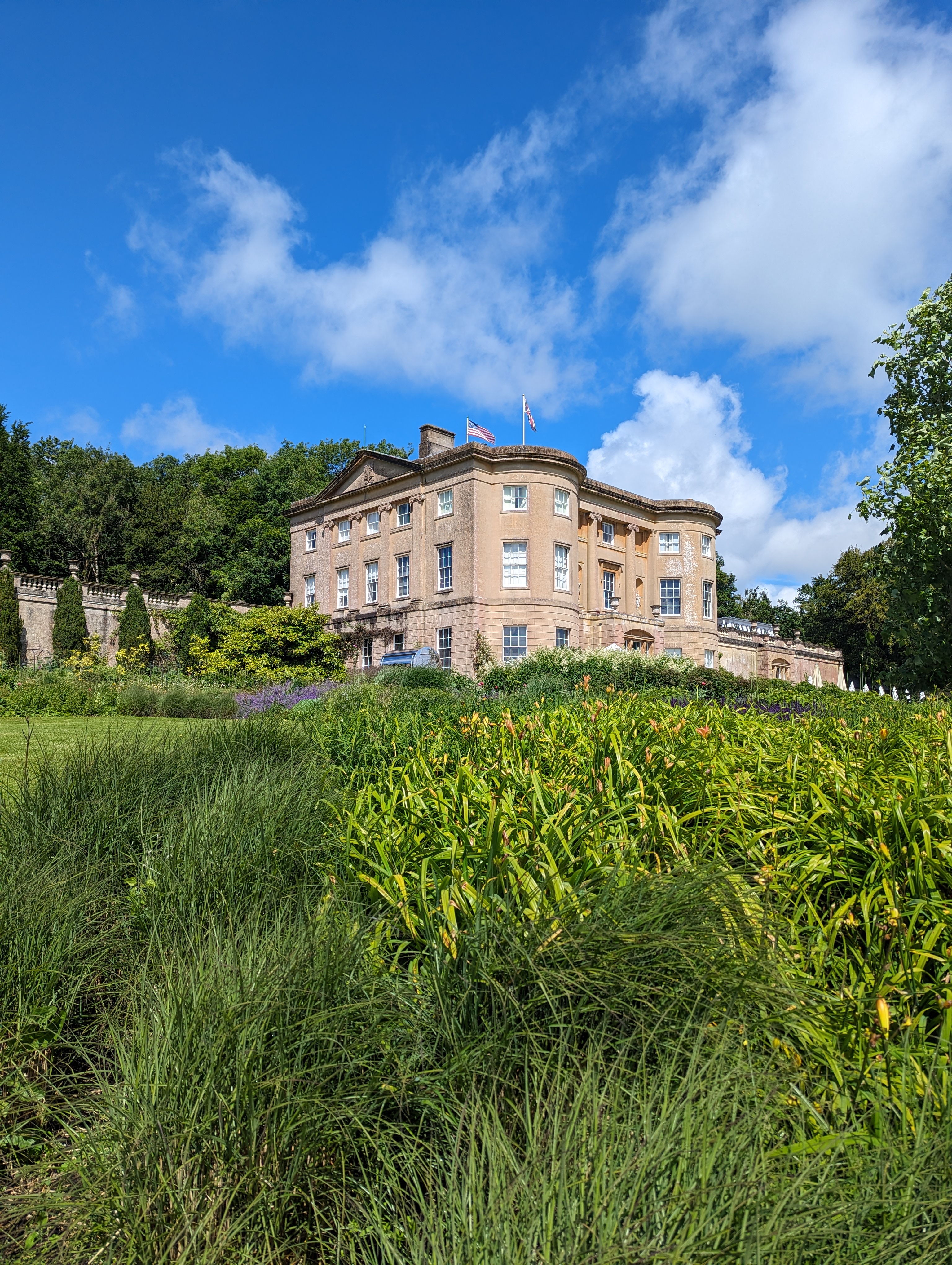
And here is the house, and a budding gardener!
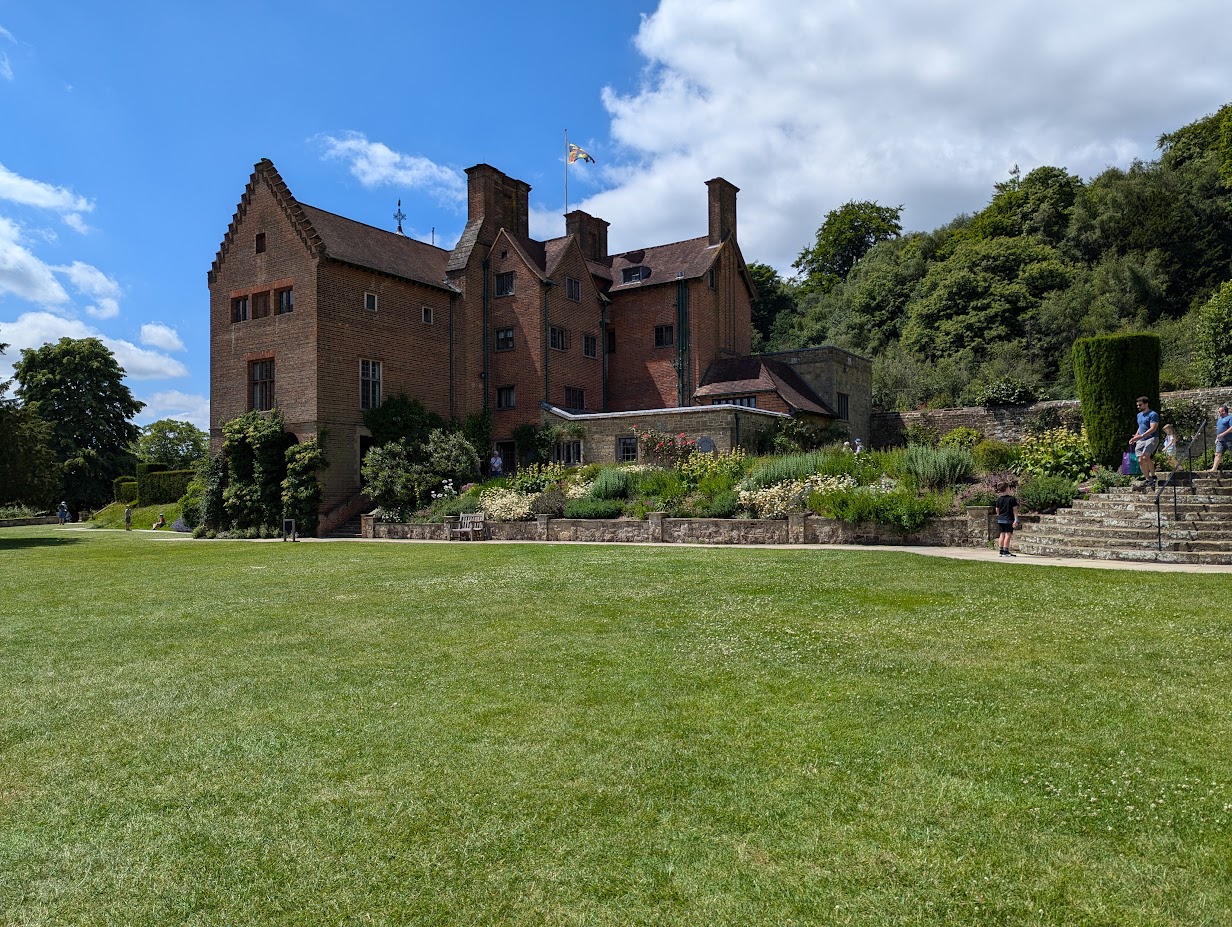
Next up: inside the house!
Image

A few days in London

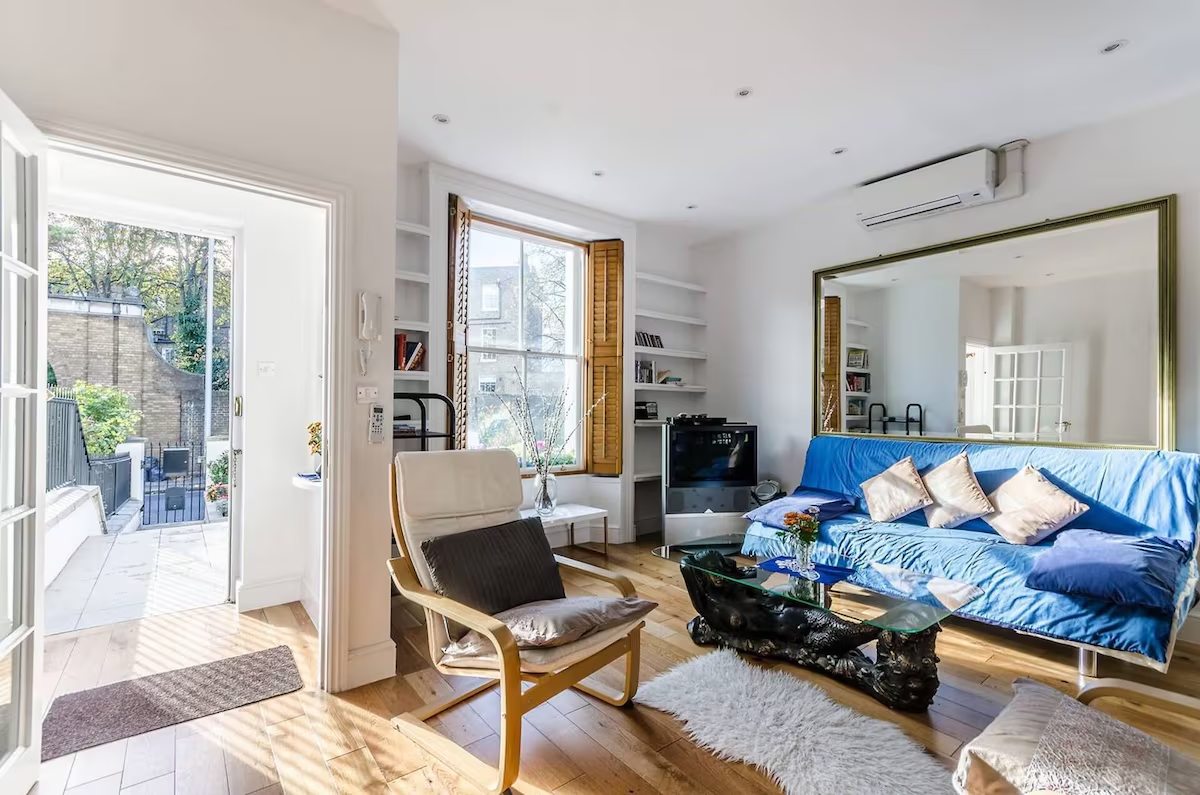
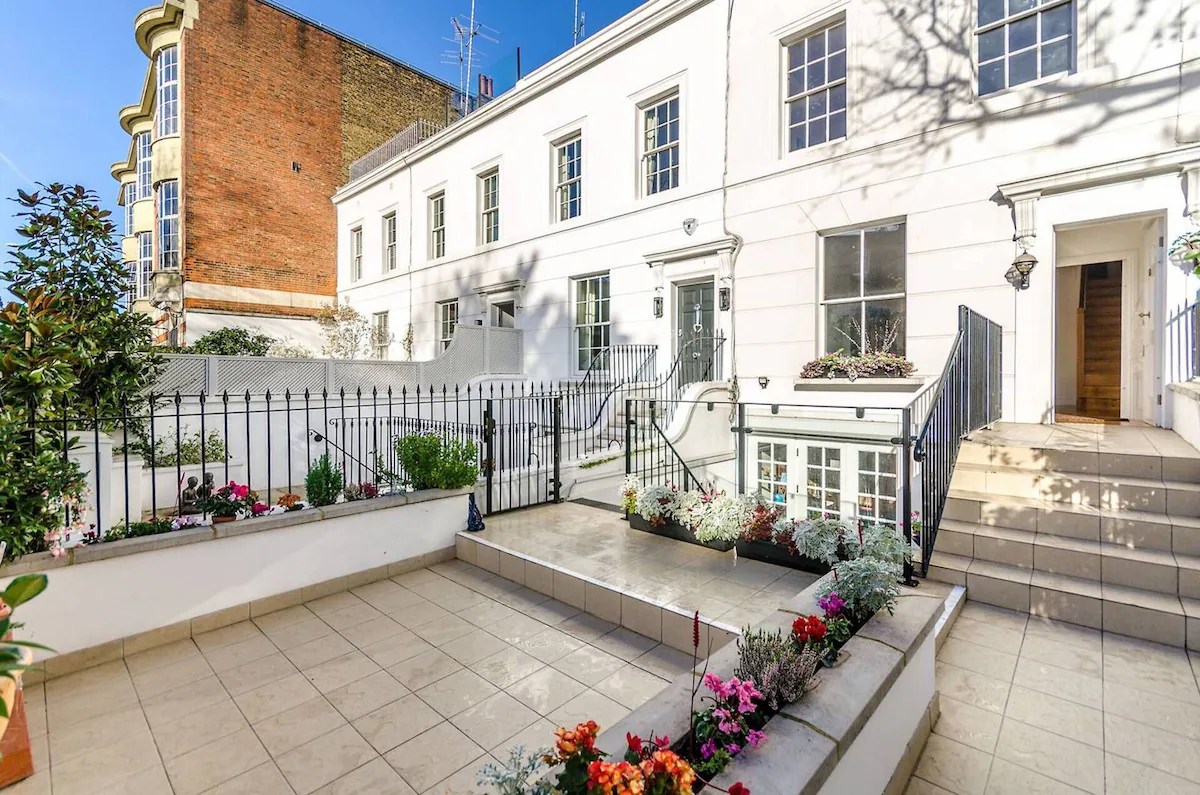
Leaving Bath and Salisbury, we took the train to London and our little flat near the V&A. Finding the flat was not easy! The address we had did not match up with any of the street numbers we could find. At long last, a friendly young woman, who clearly worried that we had been scammed, figured out where the house was, and we breathed a sigh of relief. The location was great, just a few minutes away from the Tube stop, and the house was interesting (why do I never take pictures of our rental flats?? but here are some from the website).

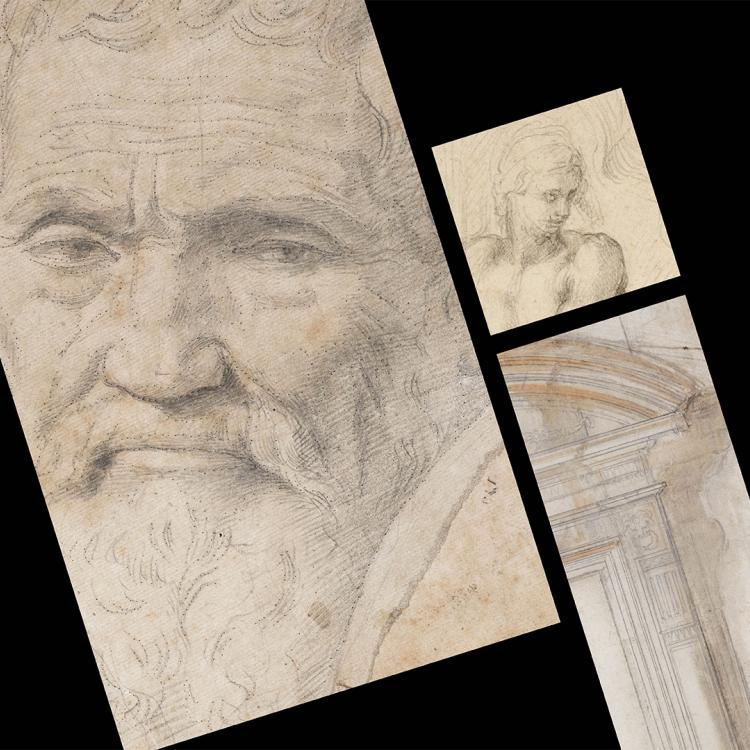
Our first stop was the British Museum and its many charms. Someone I follow online, who for years posted brilliant book reviews on her blog, The Idle Woman, turns out to be a curator at the British Museum, and this was her show.

Michelangelo comes vividly to life through drawings, poems and letters. Rather than an old man who’s no longer capable of much, here we see a man actively engaged with the world over the last thirty years of his long life. Beautifully done, brava, Sarah!

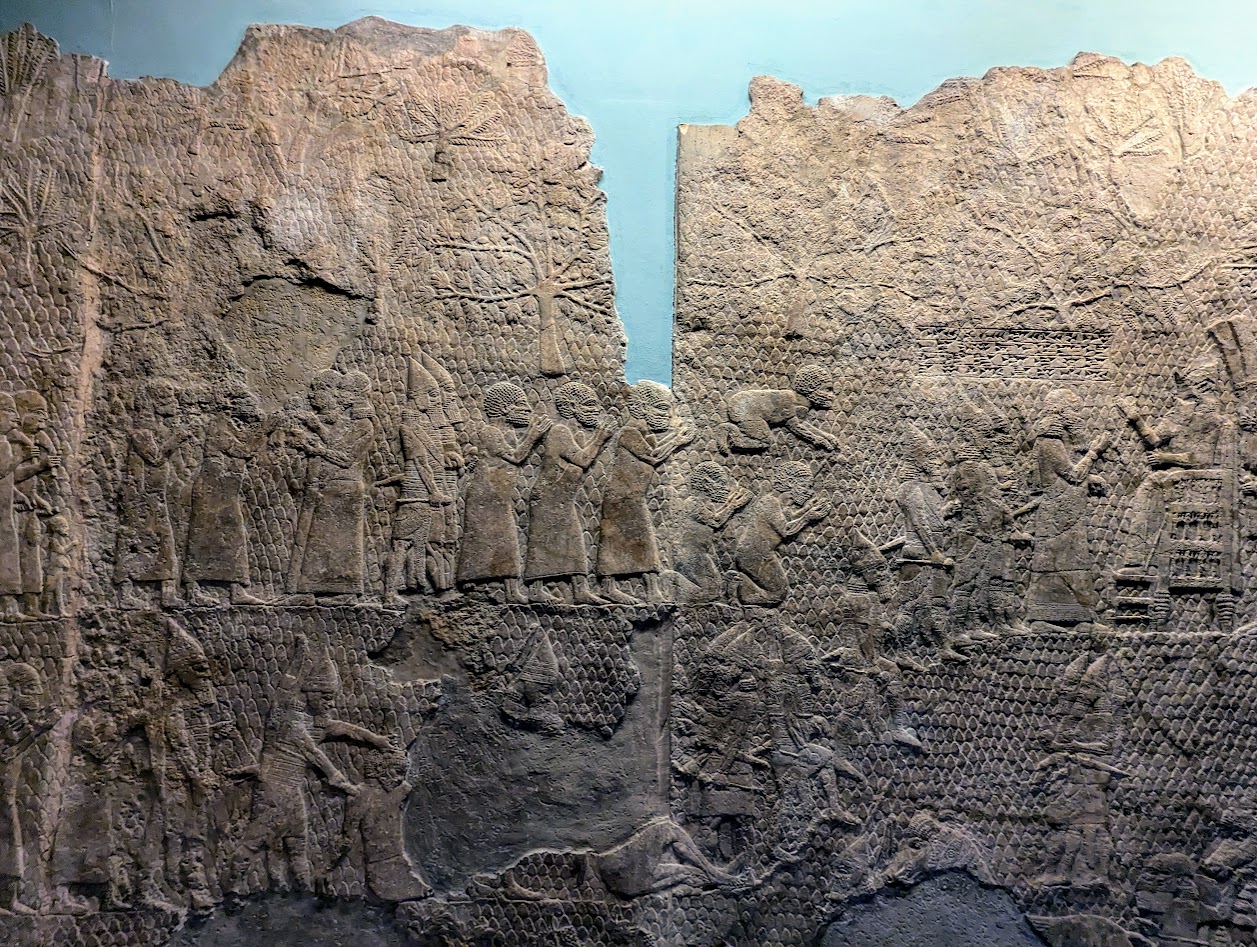
A Friday in June is not an ideal time to explore a museum, and the throngs of people made it a bit difficult to navigate. Luckily, this was just a quick visit once we had enjoyed seeing Michelangelo. I always love the Assyrians, and they are so enormous that even the crowds can’t spoil the views.

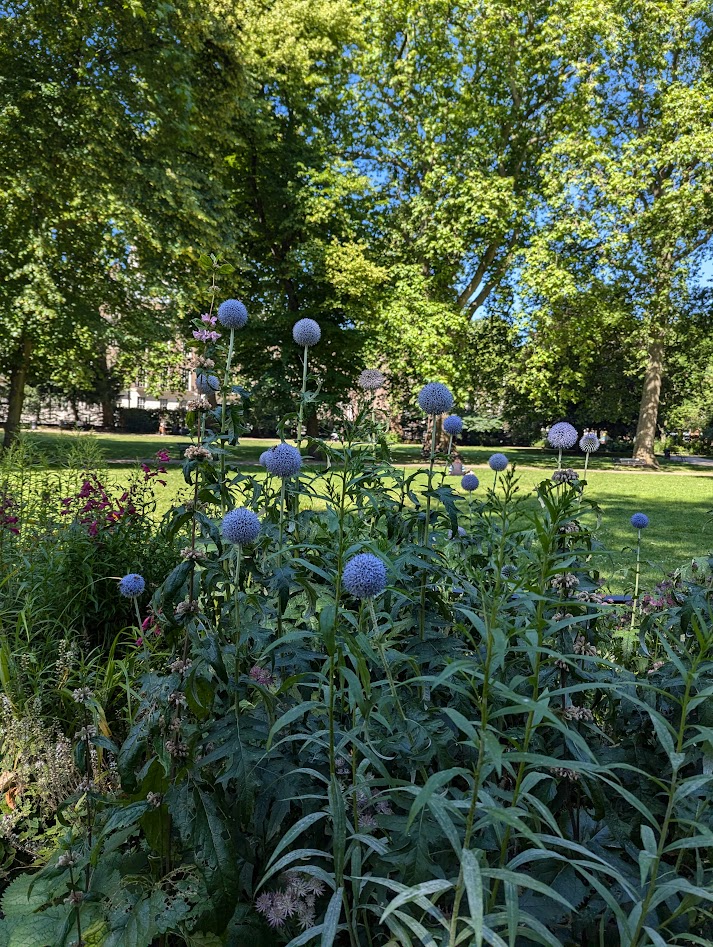
Just to finish up, here’s a lovely globe thistle to enjoy!

Image

Liberty!

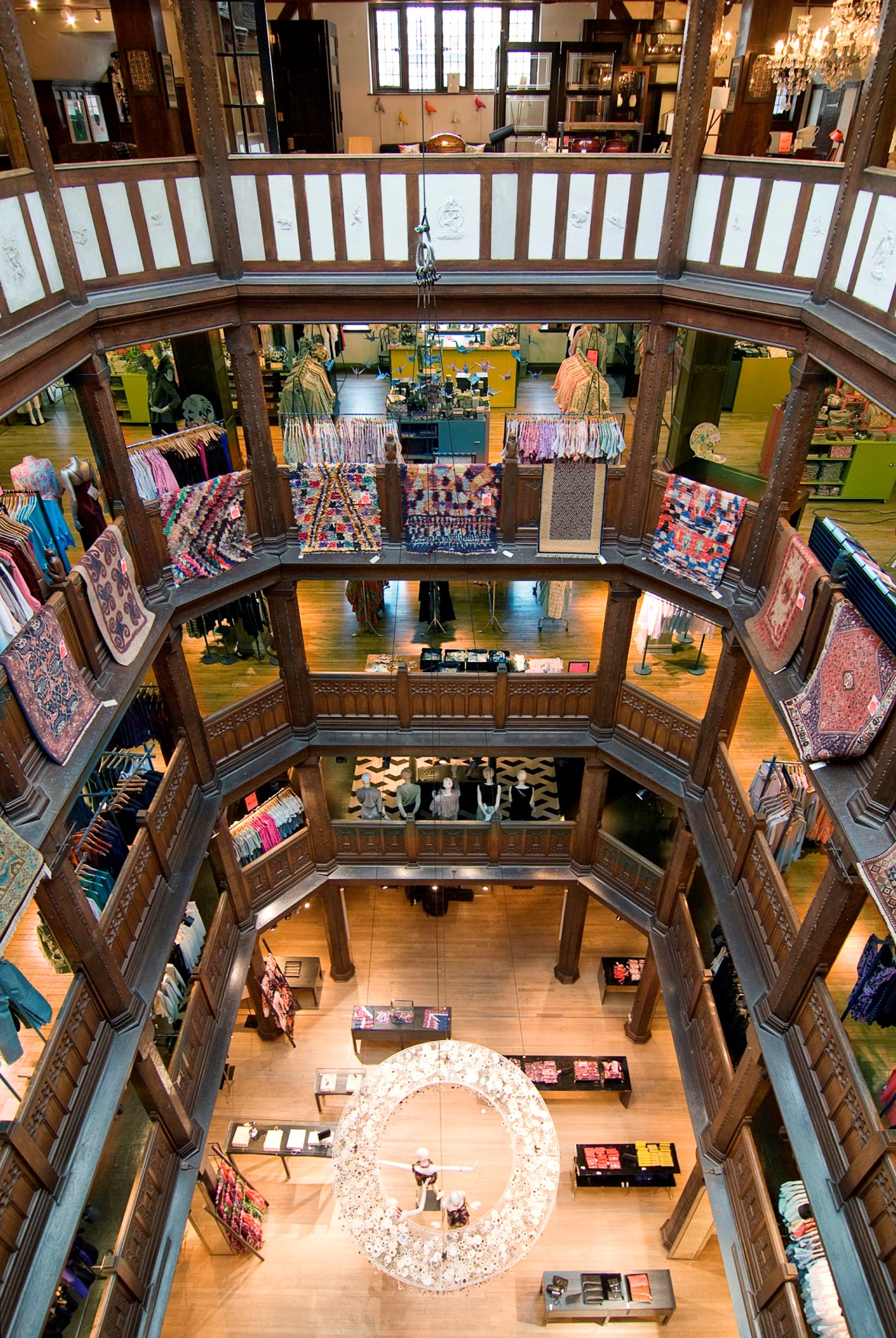
Liberty of London is famous among quilters and sewists. Here’s a bit of its history, from their webpage:

When our adventurous founder Arthur Lasenby Liberty laid plans for a London emporium laden with luxuries and fabrics from distant lands, his dream was to metaphorically dock a ship in the city streets. To this day, a voyage of discovery awaits on the good ship Liberty, with history hidden amongst six floors of cutting-edge design, unexpected edits and beautiful wares from the world’s greatest craftspeople.

And they aren’t kidding! The store was constructed from from the timbers of two ancient ‘three-decker’ battle ships. The whole place creaks!

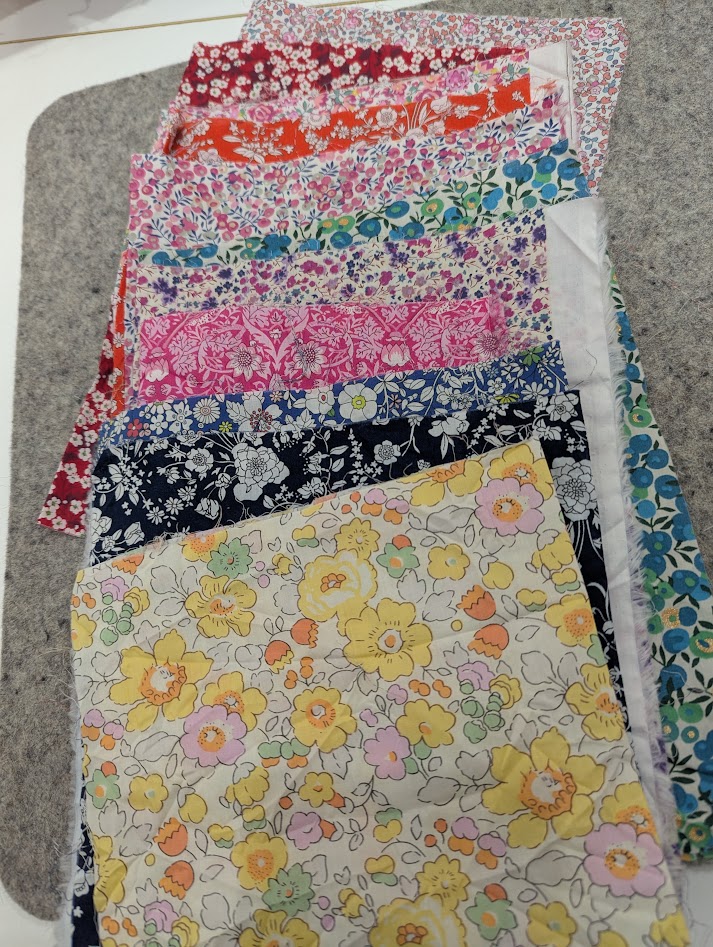
Although they sell everything from perfumes to jewelry to menswear, quilters are there for the fabric. See some of it online here.

Here’s a selection I happen to have of their famous Tana Lawns. See more and better photos on their Instagram here.

And here is the founder himelf.

Liberty is now celebrating its 150th birthday and it’s still going strong. This store and the British Museum are my must-sees the next time I’m in London.

Image

And now for something completely different!

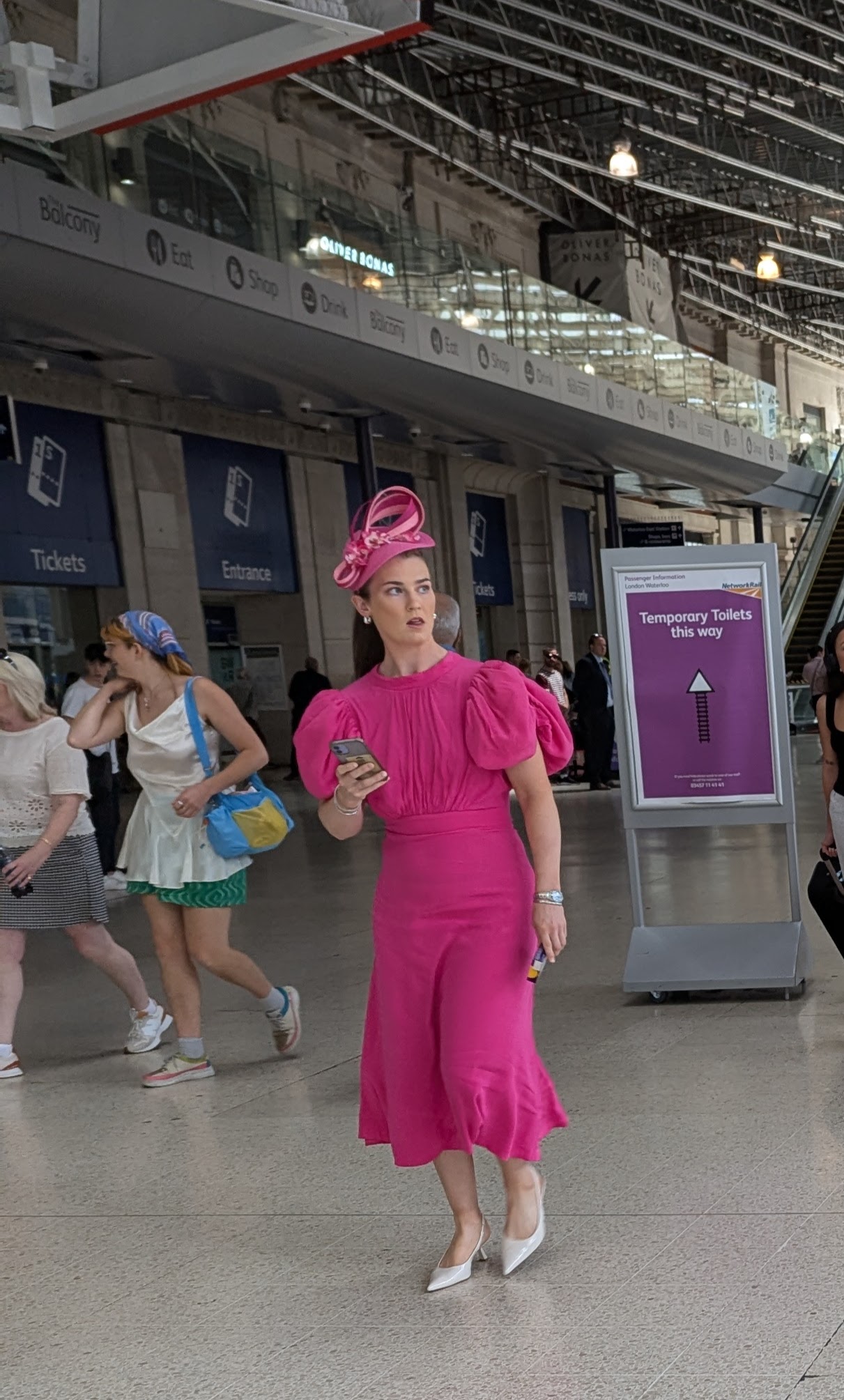
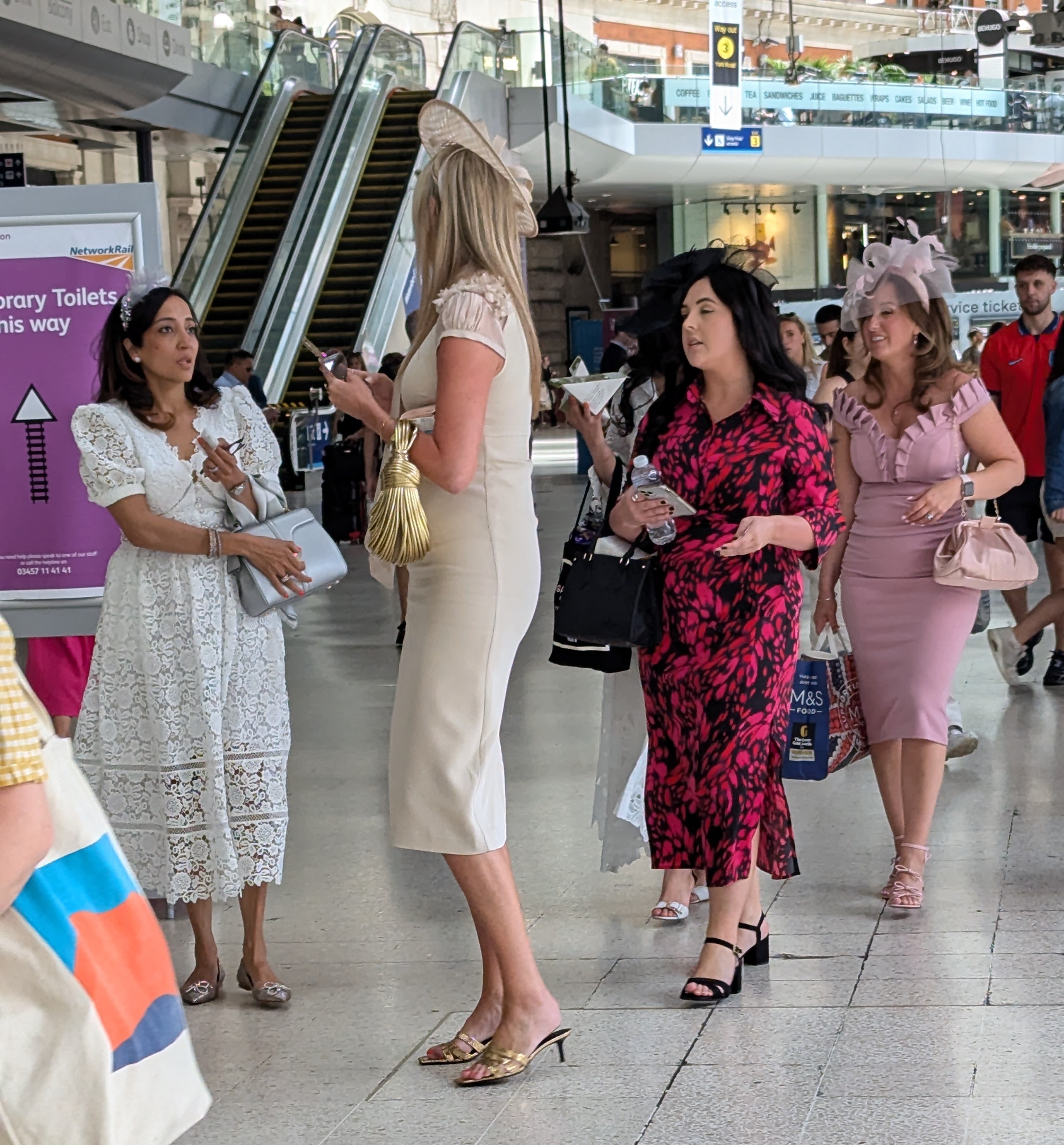
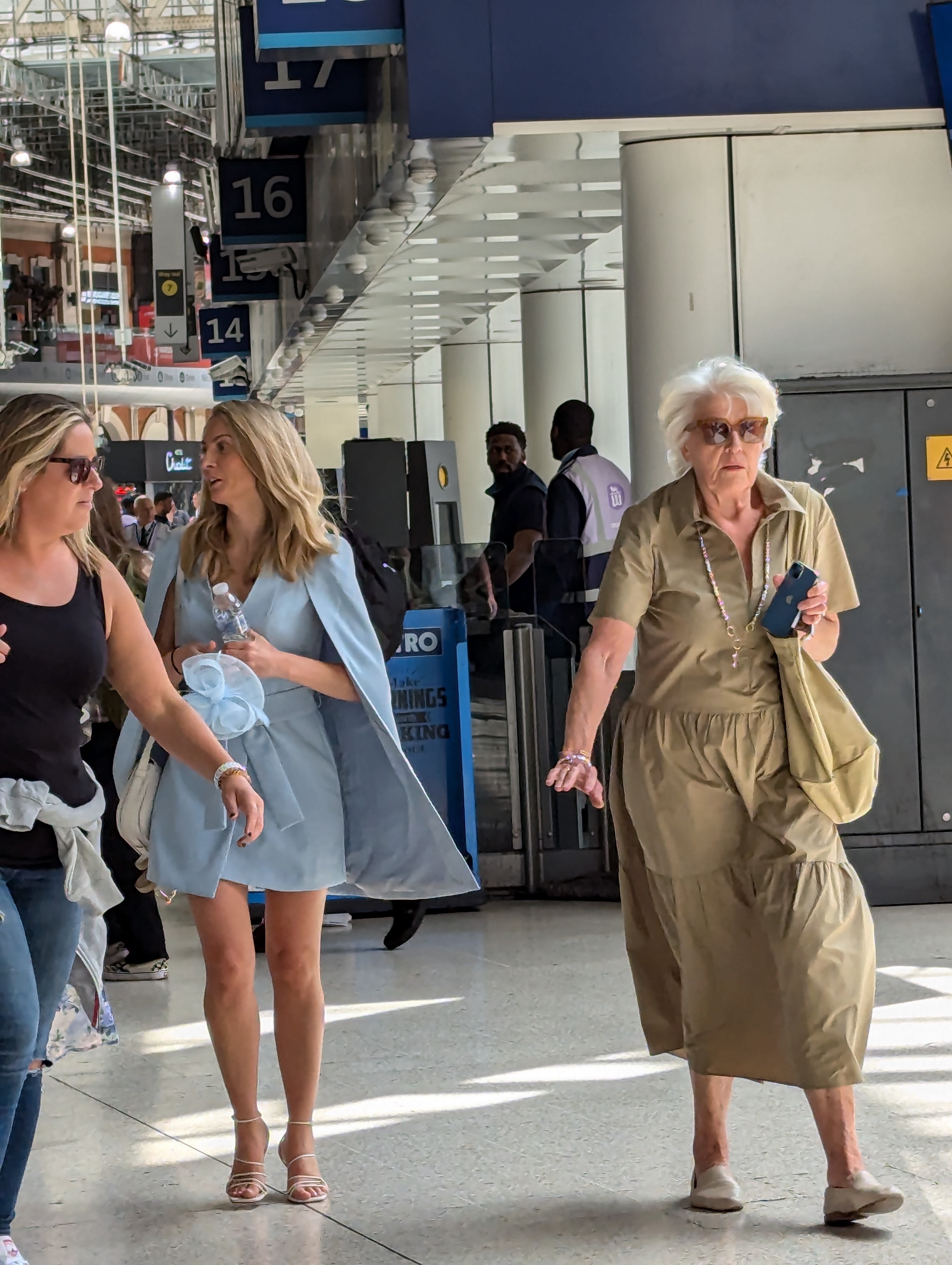
Our journey to London coincided with Ladies Day at Ascot, and I loved seeing how everyone racing for their trains had dressed for the event!

And then there’s this very harassed-looking woman who’s wearing sensible shoes and racing to her train!

Image

Stonehenge, at last!

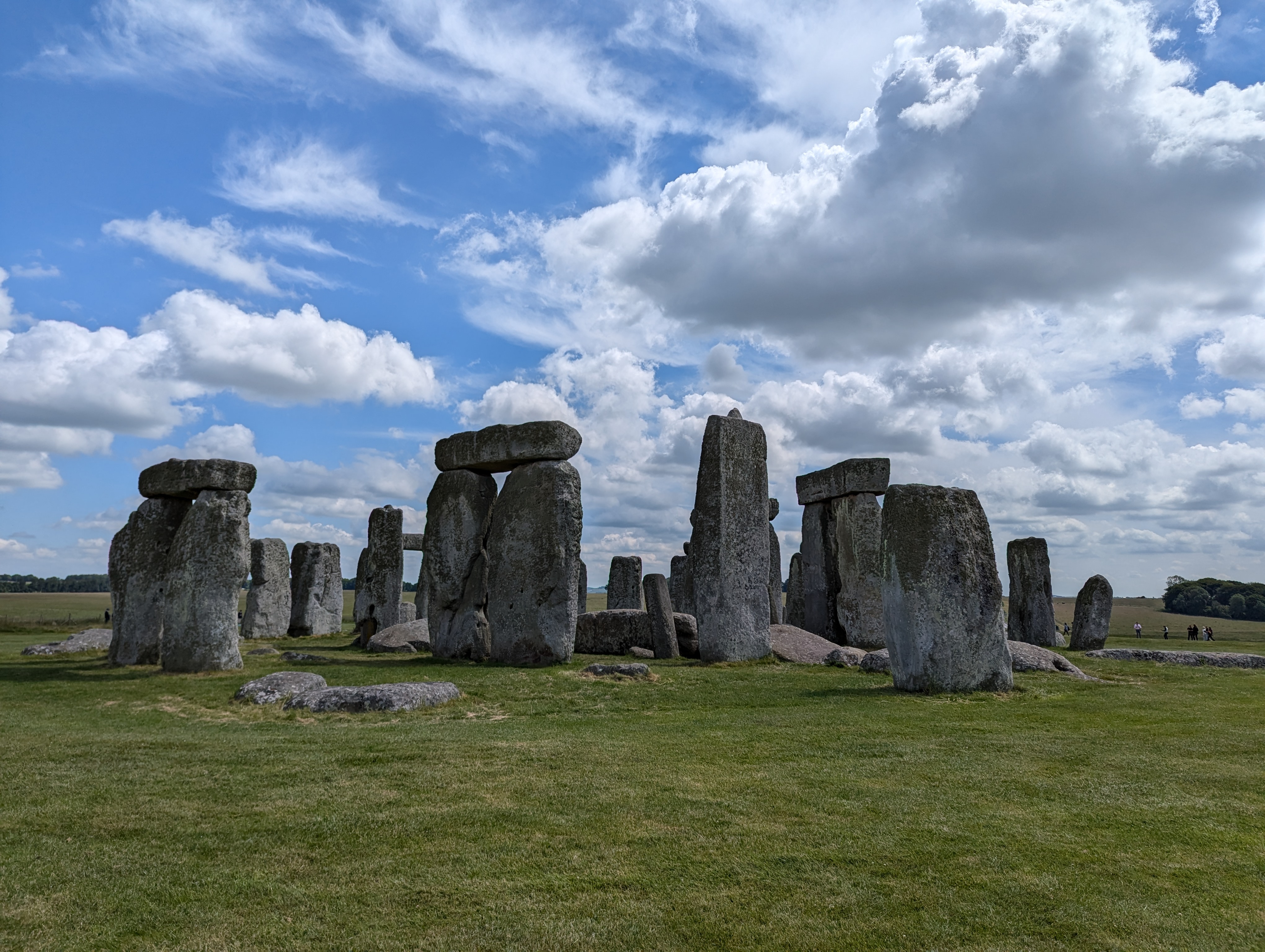
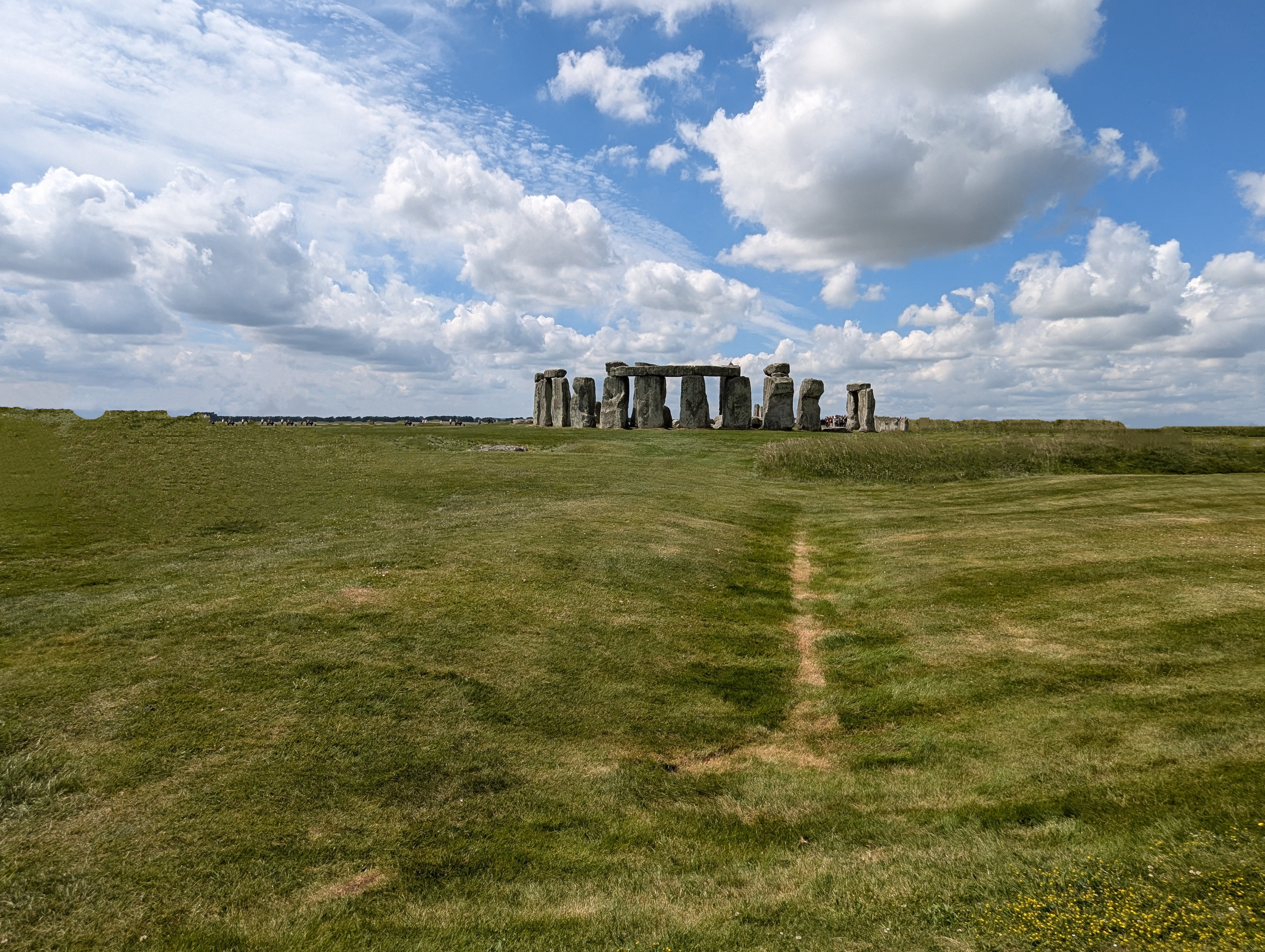
Despite loving all things neolithic, I had missed seeing Stonehenge for all these years that I’ve been visiting England (though I did see the Stonehenge exhibit at the British Museum a few years ago). I finally saw it for real today. (Thanks to a Google feature that has unfortunately since been discontinued, I was able to delete the people in these photos. In fact, people were everywhere but we never felt crowded.)

We took a bus from the train station, over gentle hills and plains, to the real thing, just standing there. They have staged your visit beautifully. First, you see the henge from the road,

then you walk along a path until you see the henge getting closer with every step. And then, there it is, silent and mysterious.

The exhibit inside expands your understanding of the site through artifacts and archaeological analyses. Some of these we saw at the Salisbury museum. Skeletons, pots, and other evidence of prehistoric life were everywhere.

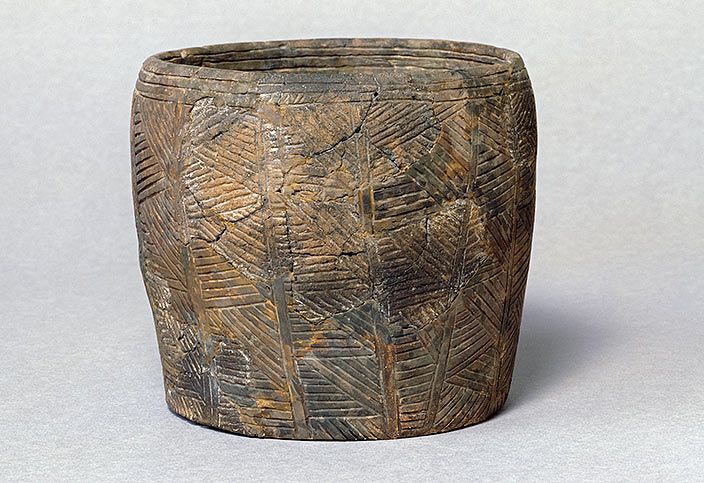
I will end with this grooved pot, because I seem to have lost any notes I took about this day. But the main points were that we had a glorious day out and were fortunate to see the the henge the day before some climate activists were moved to sprinkle orange powder all over the site!

Image

Vienna and Prague

The first day of a European trip means jet lag, and this was no exception. We landed around 8:30 and couldn’t check into our apartment until 3:00, so we dropped our bags at Bounce (now that we understand to look for a little hole in the wall) and set out.

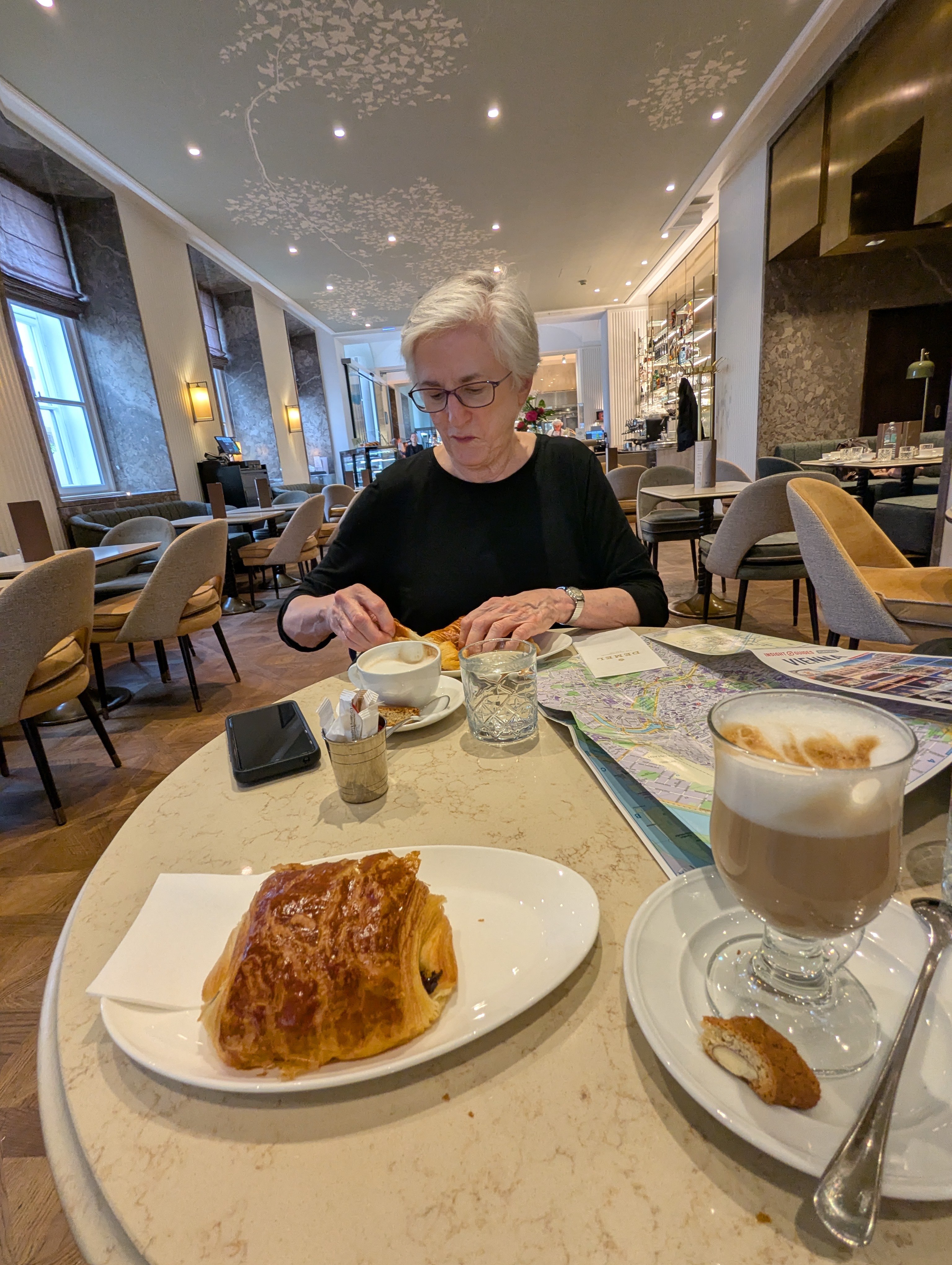
Our first stop was the Albertina, an art museum that also houses a branch of Demel, “Home of the finest cakes, chocolates and sweets in the heart of Vienna.” Here we are enjoying a little pastry and coffee in the best Viennese tradition.

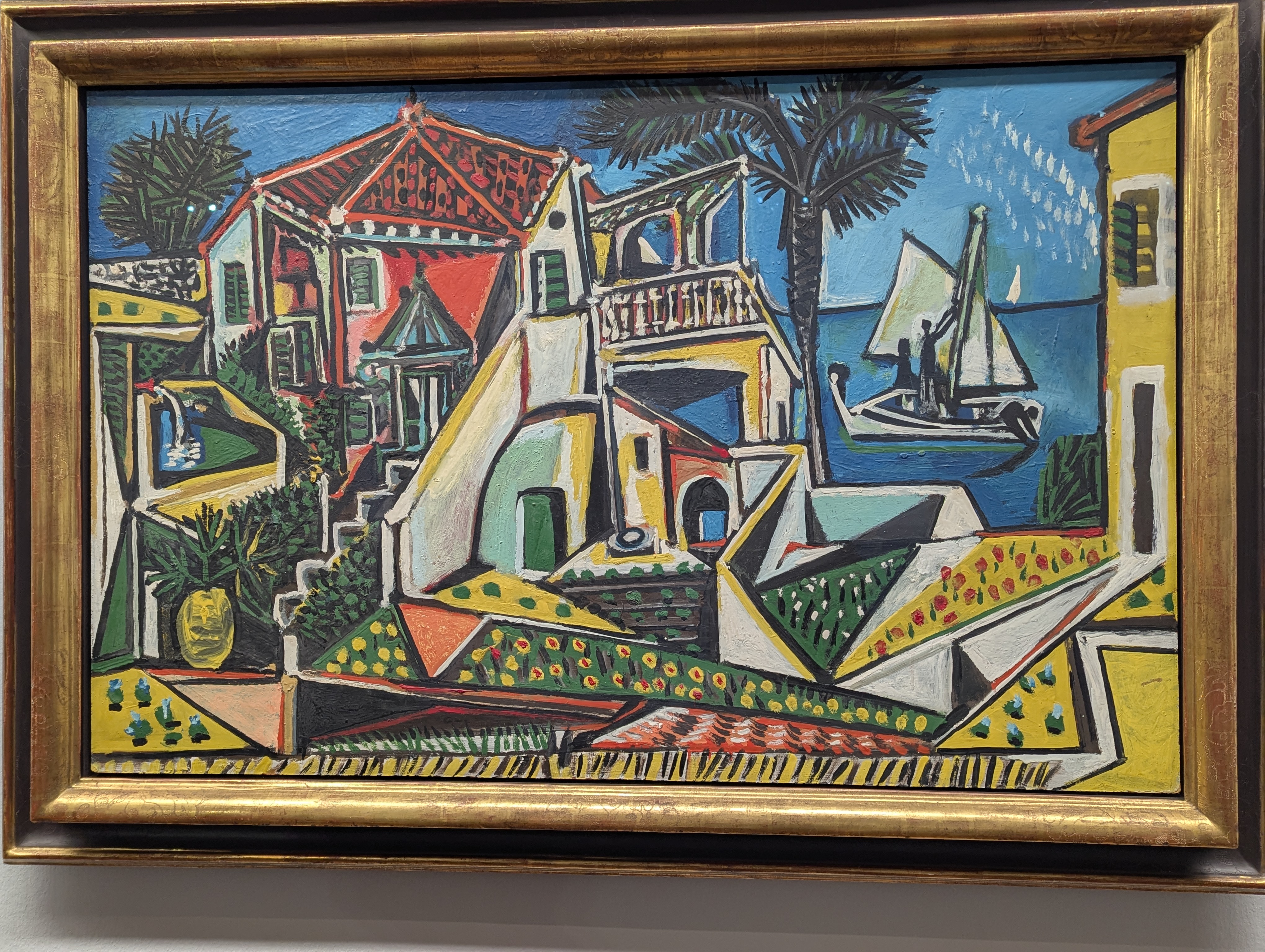
Thus fortified, we wandered through the art gallery, currently displaying “From Monet to Picasso.” Among the Impressionists, Expressionists and Cubists was this colorful Picasso,

an idyllic image that on closer inspection reveals a congested composition that reflects the tensions between Picasso and his beloved. Me, I liked the strong lines and constricted patterns. Quilt inspiration?

Since we had the time, we walked to St. Stephen’s Cathedral with its famous tiled roof that I remembered from my visit with Kit thirty-some years ago.

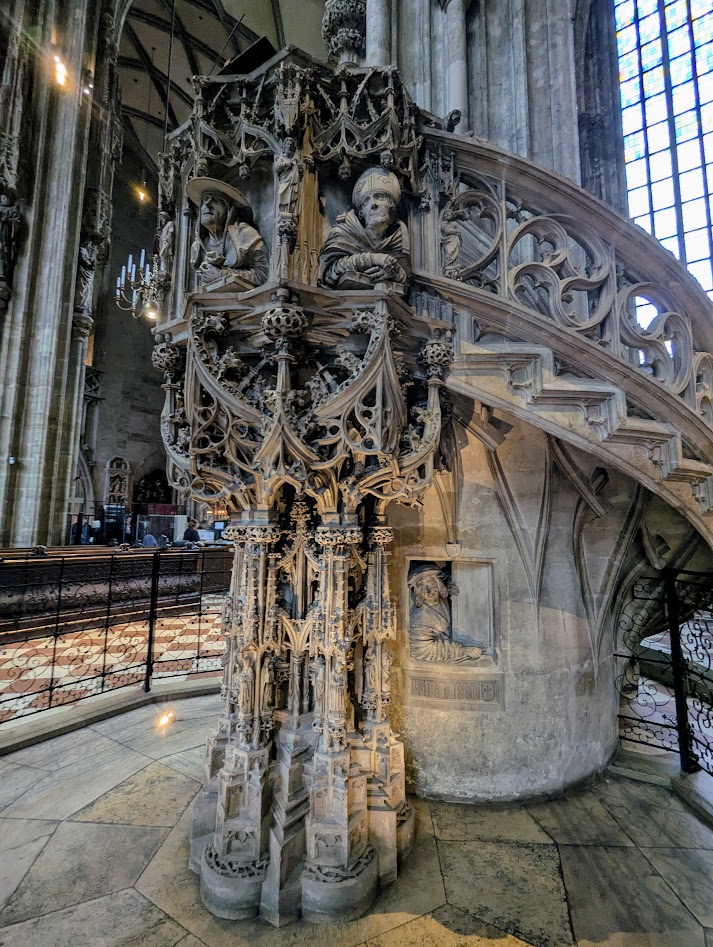
Inside we admired the intricate carvings on the pulpit

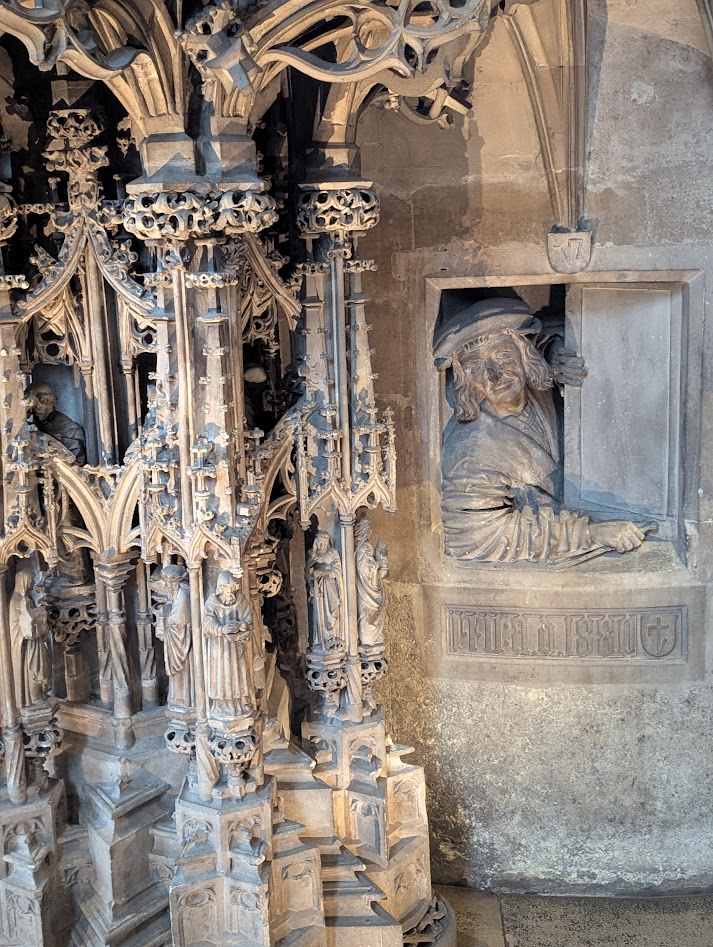
and enjoyed the self-portrait by one of the carvers.

Our jet lag was catching up with us, so we slowly made our way to the Operngasse, where our apartment awaited us. But stop! Eva, the apartment owner, said we could not get in until 3:30, so we sat outside on some very uncomfortable wooden benches until she should appear. Well, at least an hour and a half went by, so around 5:00 Alison texted her again. Soon enough a young man popped up (he is one of the apartment owners, I think) and said that Eva had sent a text a while ago saying that the apartment was ready! We had missed it entirely, and I blame it all on jet lag.

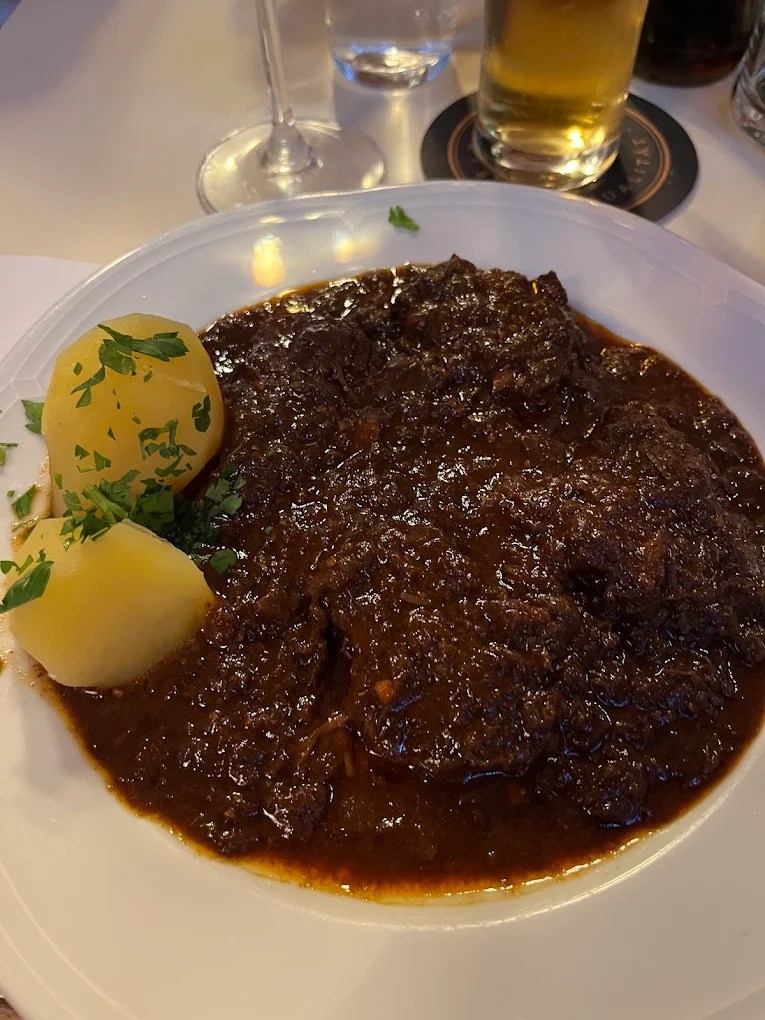
He showed us how everything worked – coffee maker, keys, wifi, etc. – and left us to our own devices. We were really beat but needed some food so we stopped by Billa, the local grocery chain, to pick up a few necessities (coffee pods, wine, yogurt, etc.). We then wandered along one of the streets in search of food and found a wonderful pub-like restaurant, where a delicious bowl of goulash and crusty bread (and wine) restored us.

(Thanks to other diners for these images, I was too hungry to take pictures!)

And so our first day ended happily.

Image

Farewell to Salisbury

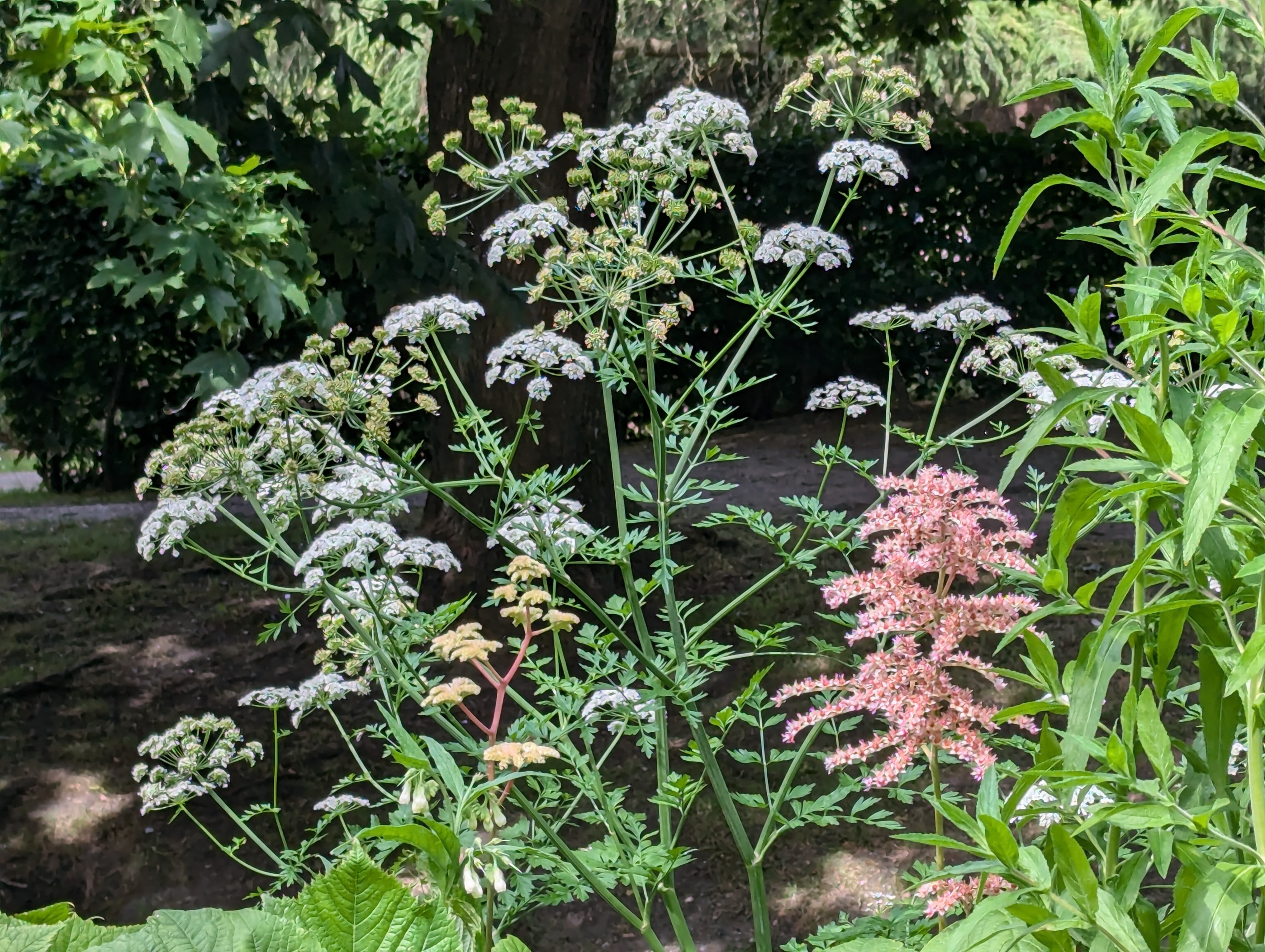
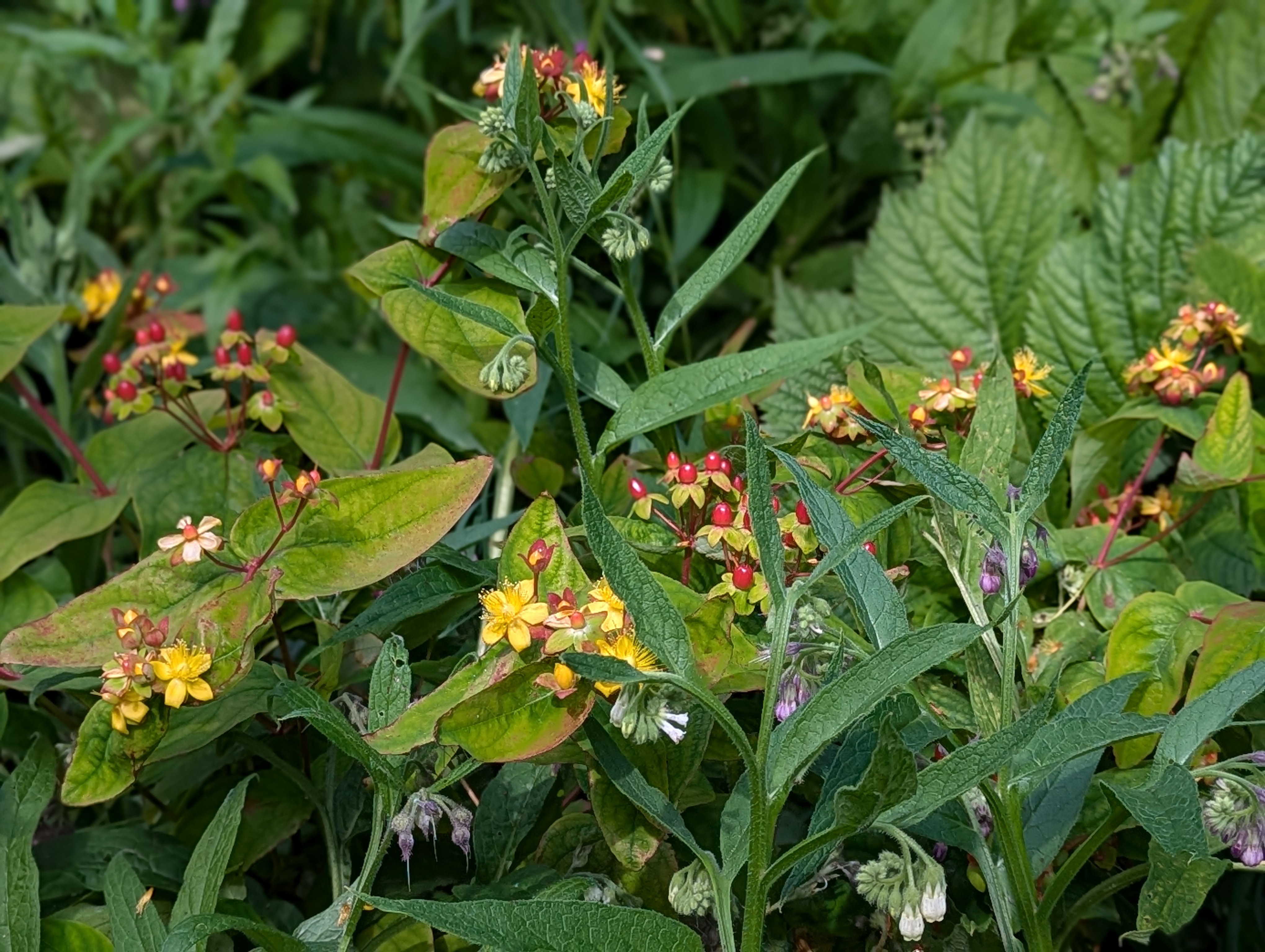
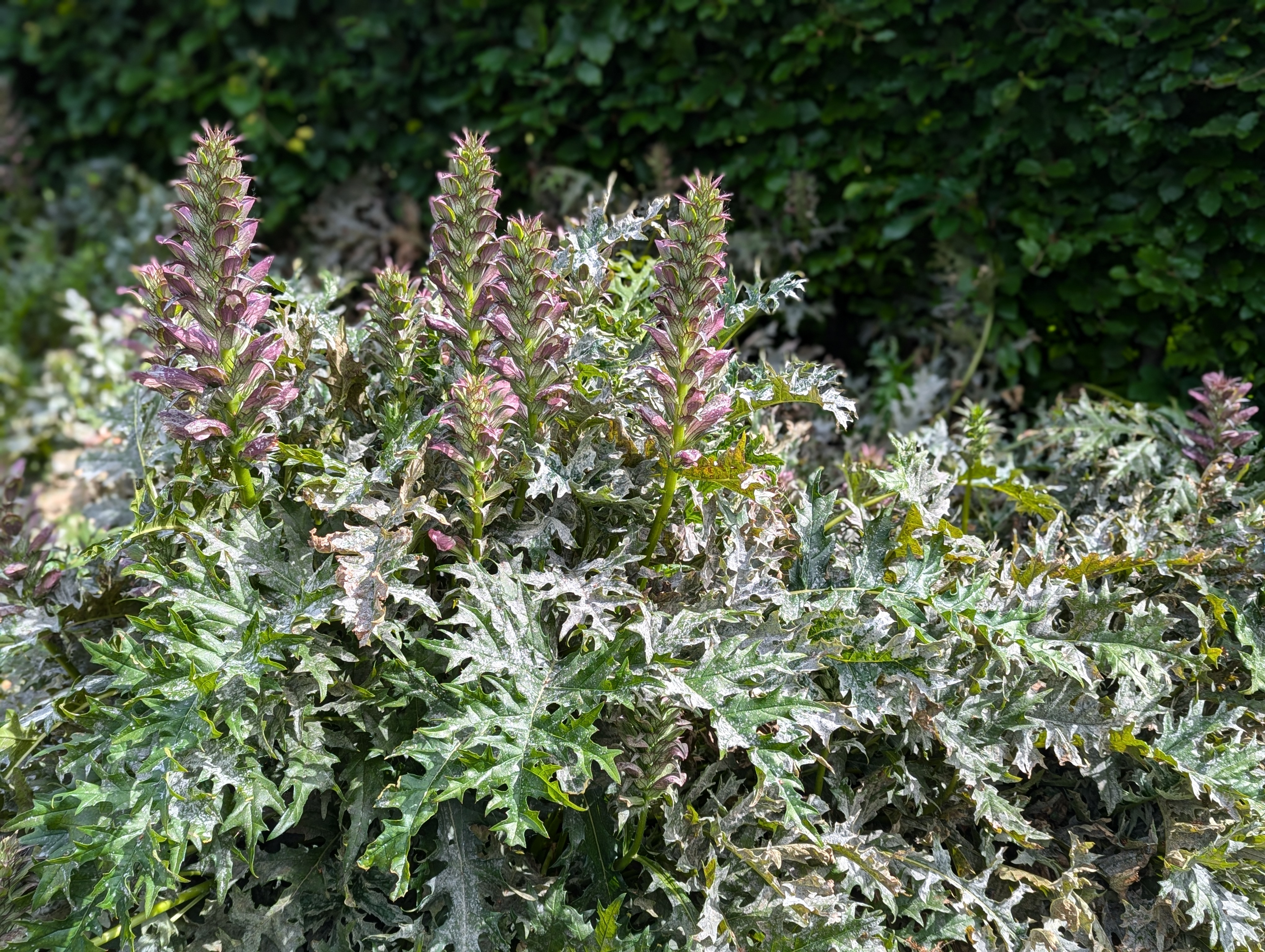
On our last day here, we started by walking through the Queen Elizabeth Gardens, dedicated in the early 1960s in honor of the queen’s coronation. We had a pleasant stroll and enjoyed the views of the River Avon. And, of course, the gardens themselves. I can’t quite identify these plantings, except for the Queen Anne’s lace, though the names are on the tip of my tongue.

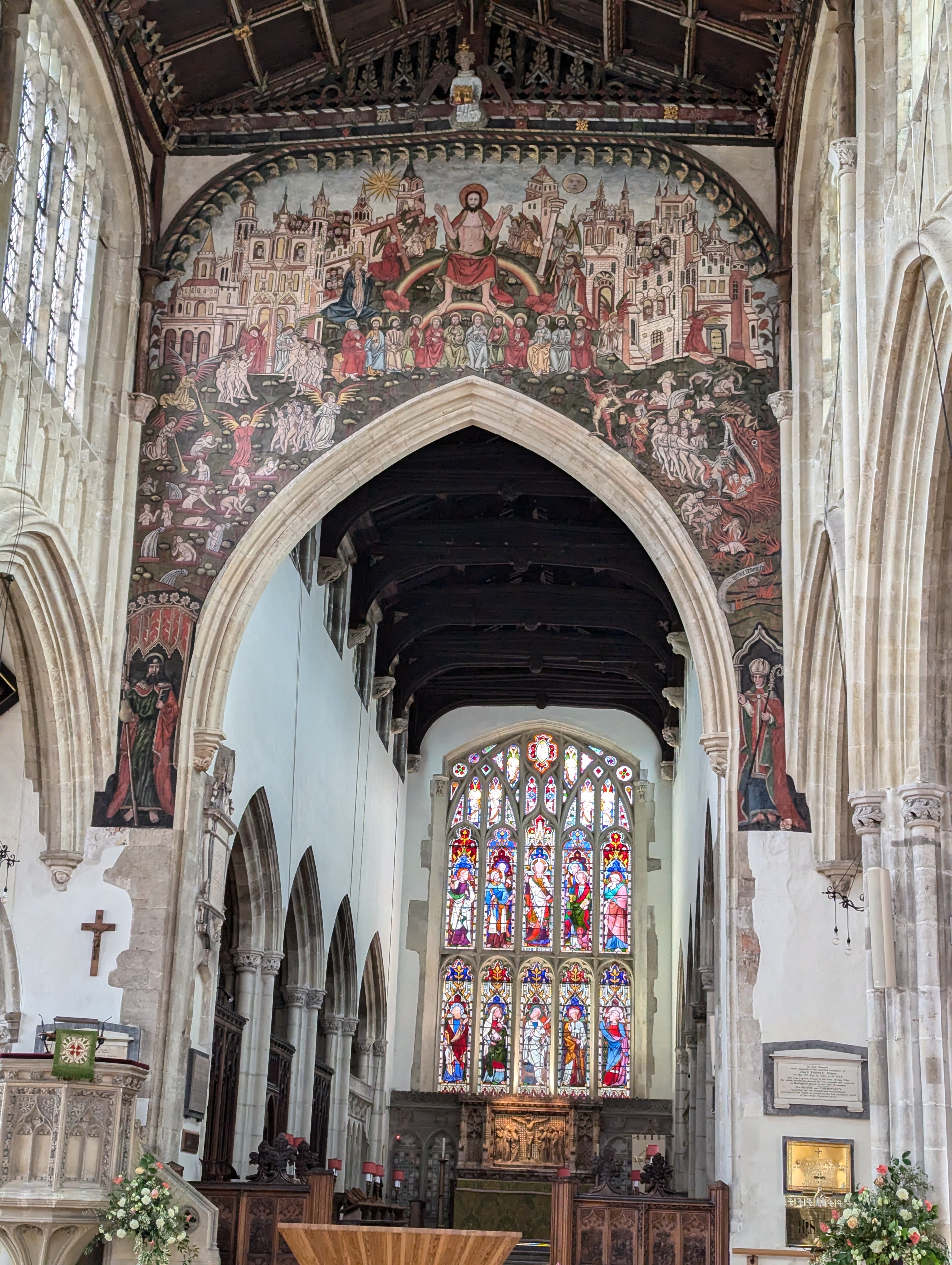
From here we walked through the city center to St. Thomas Church, which is famous for its 15th century Doom painting by an unknown painter. Jesus is at the top center, while on one side angels drag the wicked down into hell and on the other they help the good into the new Jerusalem. During the Reformation it was whitewashed over, then restored, and then whitewashed at least one more time over the centuries, but has fairly recently been cleaned and restored. It’s quite impressive.

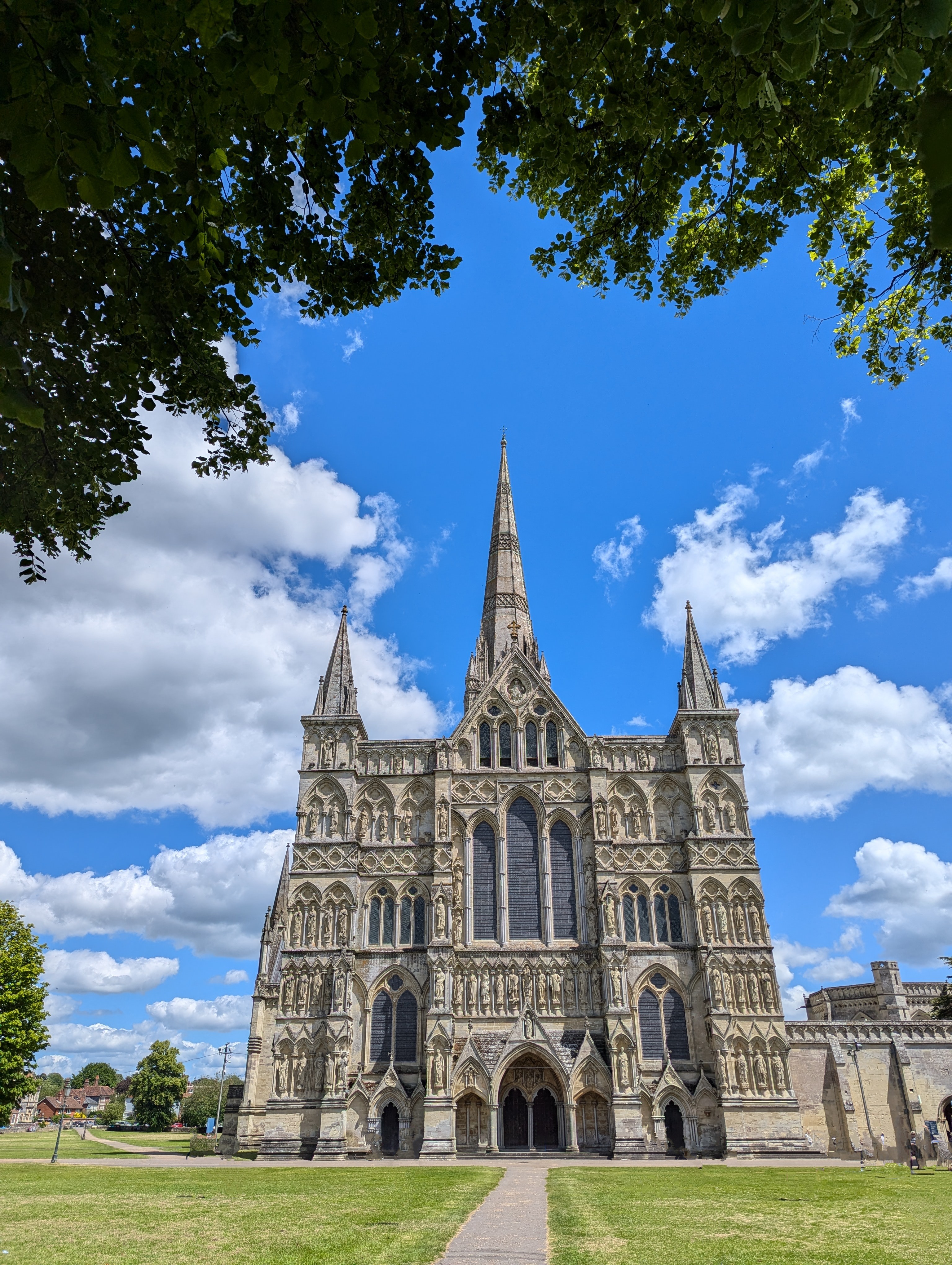
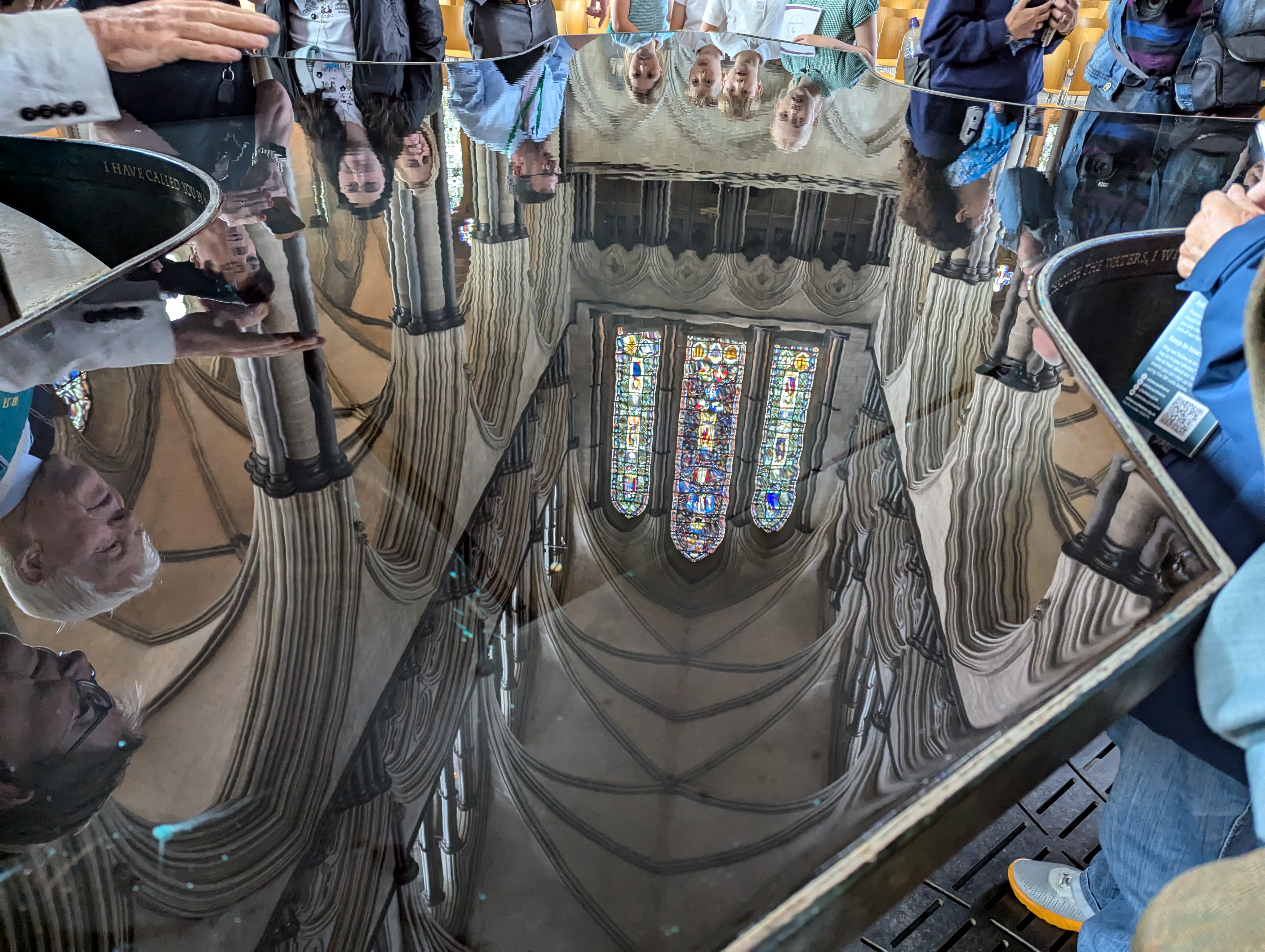
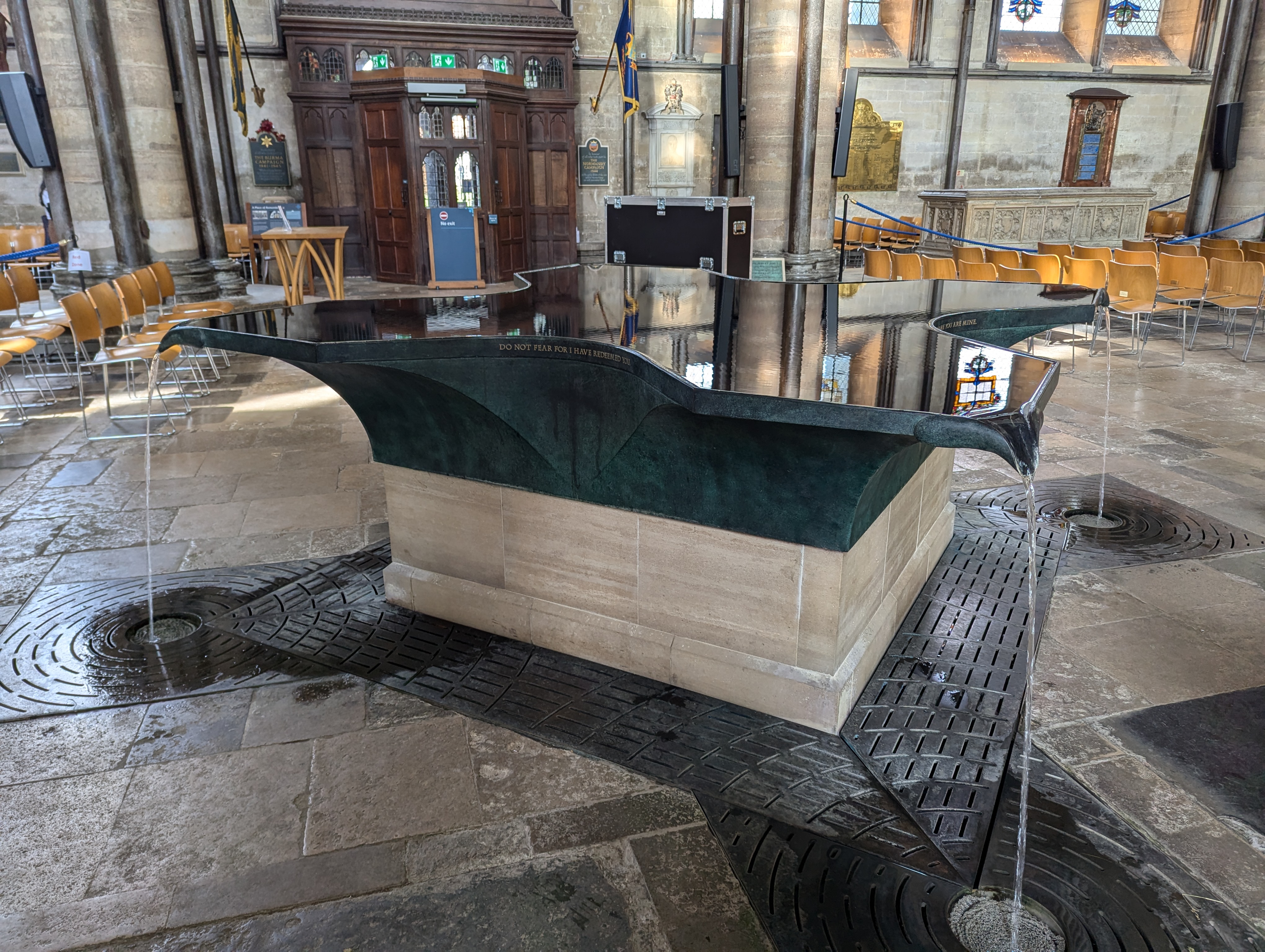
Next up, after a quick visit to Waterstone’s, was a tour of Salisbury cathedral, and it was spectacular. Our guide was knowledgeable and lively and could answer just about every question asked. This is the gorgeous baptismal font, which reflects so well that you could get dizzy and fall in if you weren’t careful.

And here’s a less dizzying look:

We dutifully looked at the oldest operating clock in the world, and I wished Pat had been here to understand it, which was more than I could do!

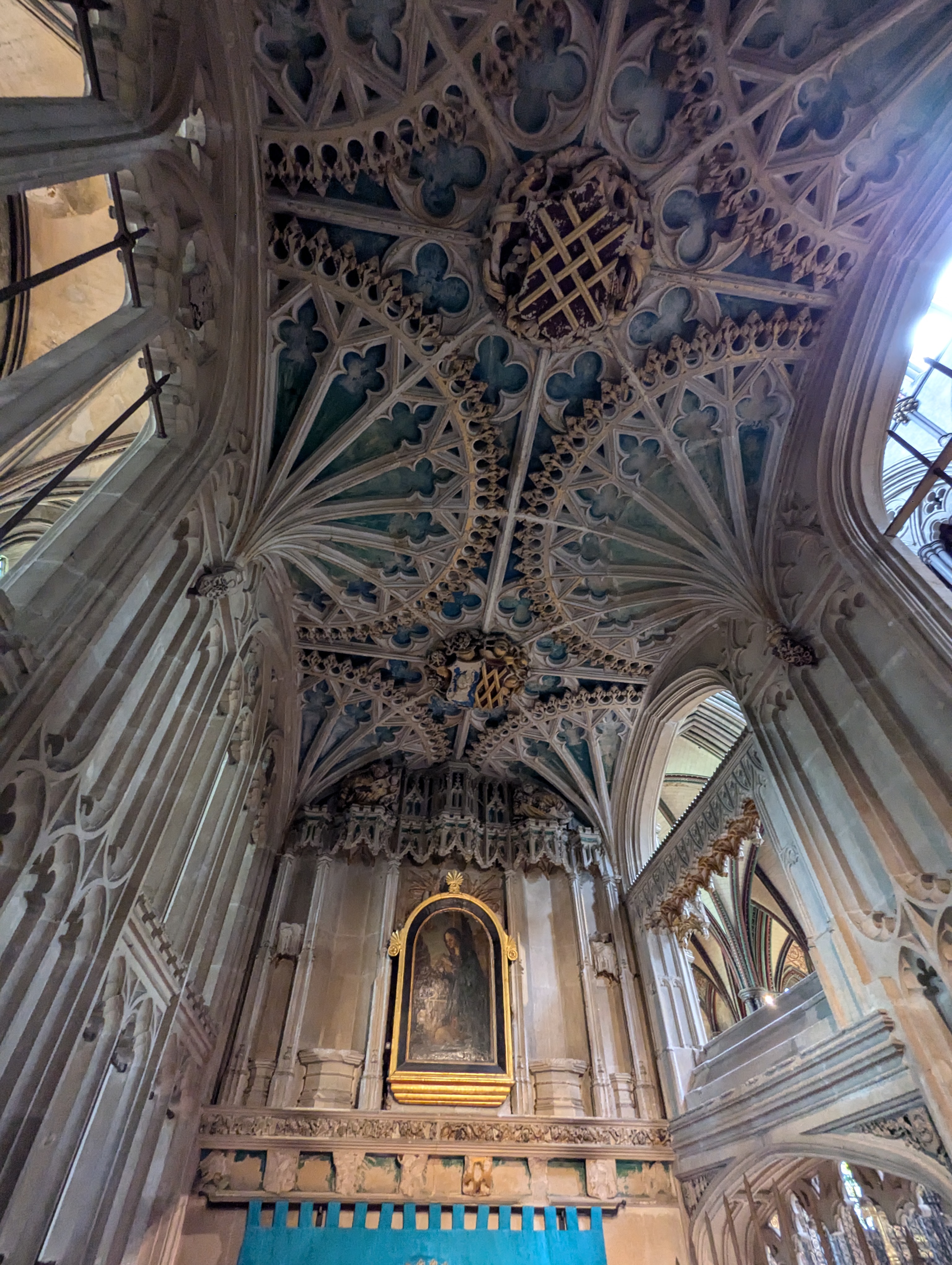
More highlights of this most beautiful cathedral:

We also visited the Magna Carta in the Chapter House. I remembered that on my last visit there, 30+ years ago, a guide told us that the Magna Carta was taken home every night by one of the staff who feared it was not safe left lying around! When I asked on this trip if this were true, two different people said, “Probably!” They preserve it a bit more carefully these days.

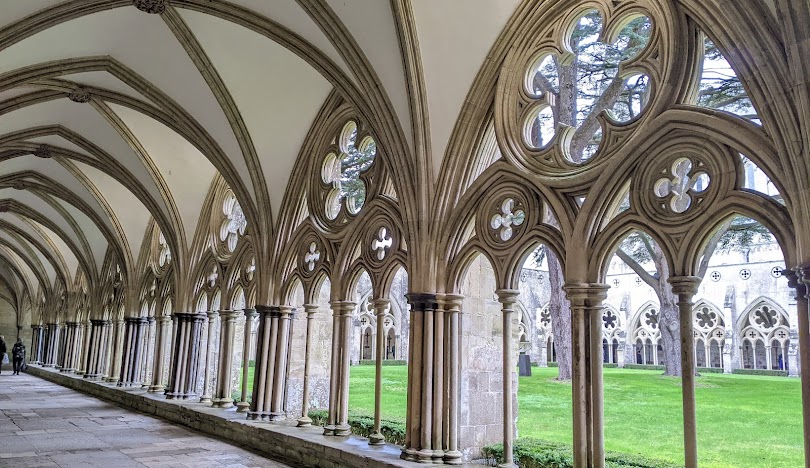
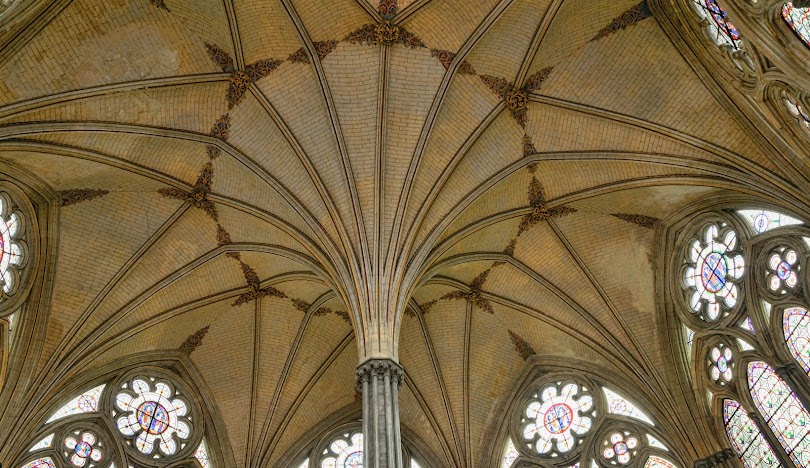
The Cloister and Chapter House are glorious.

Dinner tonight was at Baroushka’s again. Why not stick with the best?!

Image

On to Salisbury

We bade farewell to our efficient little apartment, packed, tidied up and taxied to the train station. The trip to Salisbury was easy, highlighted by a view of one of the chalk horses found in this part of the world.

Googling discovered that this one is known as the Westbury white horse. It has been recut (into the turf) numerous times since 1778. A nice little bonus as we trained along.

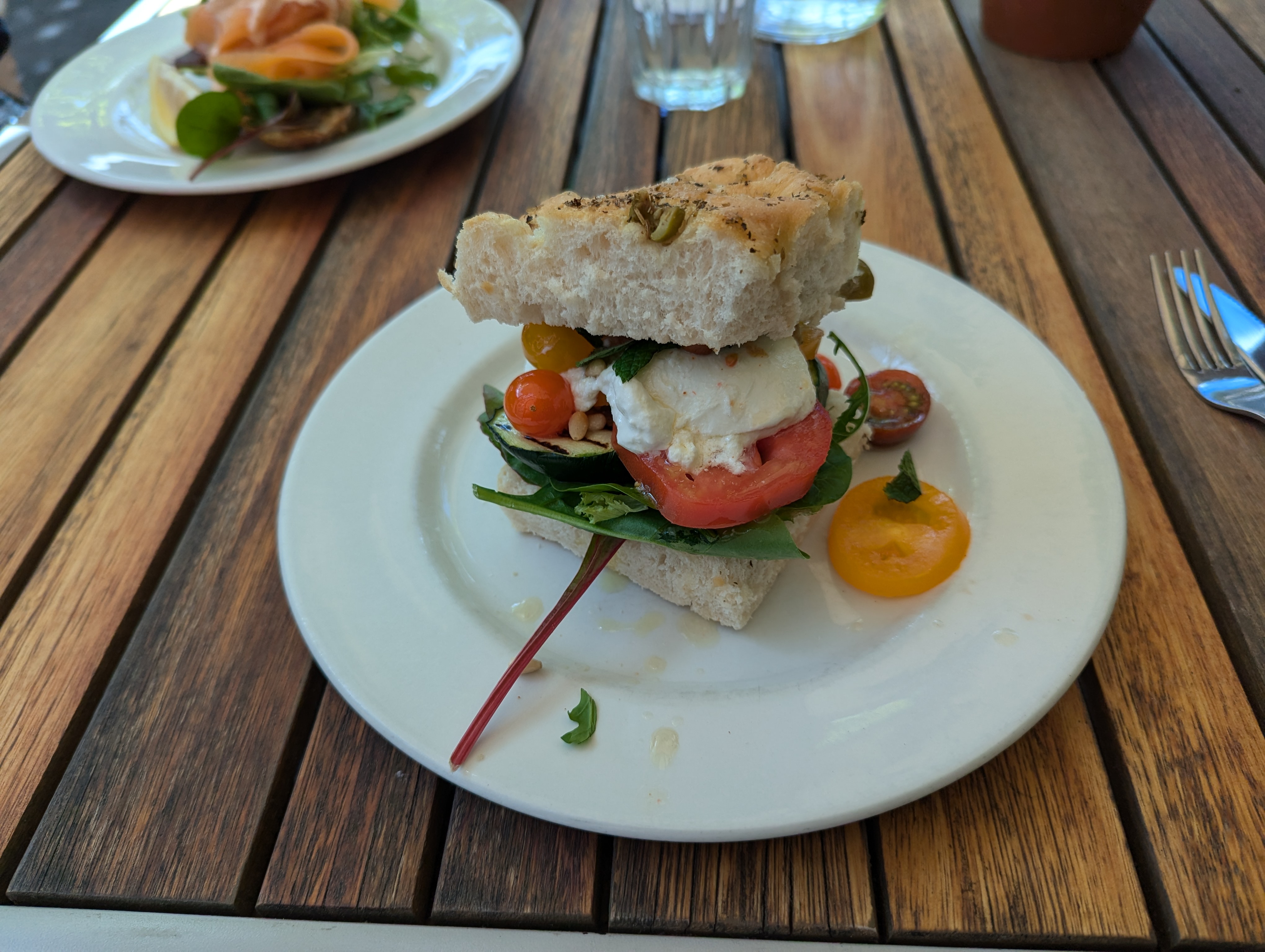
We dropped our bags at Caboose (a left luggage operation inside a pub) and headed into town for a light lunch at a little outdoor cafe.

We walked down towards the Cathedral, which we’ll visit tomorrow, and went into the Salisbury Museum. They have a Rex Whistler exhibit on at the moment, and an enthusiastic docent made us pay more attention than we might have otherwise. I was vaguely aware of him, but discovered that he knew everyone in the arts and society at the time (1928 onward), until his death in the war in 1944. This is a jaunty self-portrait from 1933.

Perhaps we should indeed have included Wilton House (where he painted numerous portraits and decorations) on our itinerary, but you can only do so much.

The Stonehenge exhibit was good prep for our visit there tomorrow. Everything from skeletons to cooking utensils to pottery, like this neolithic Durrington Walls Grooved Ware pot,

was on display, some dug up by treasure seekers, others by early archaeologists, and eventually by modern diggers with better equipment, all displayed in reverse chronological order that actually made a good deal of sense. I don’t know which I like more, the artifacts themselves or the be-whiskered old men who wrote about what they found in the 18th century!

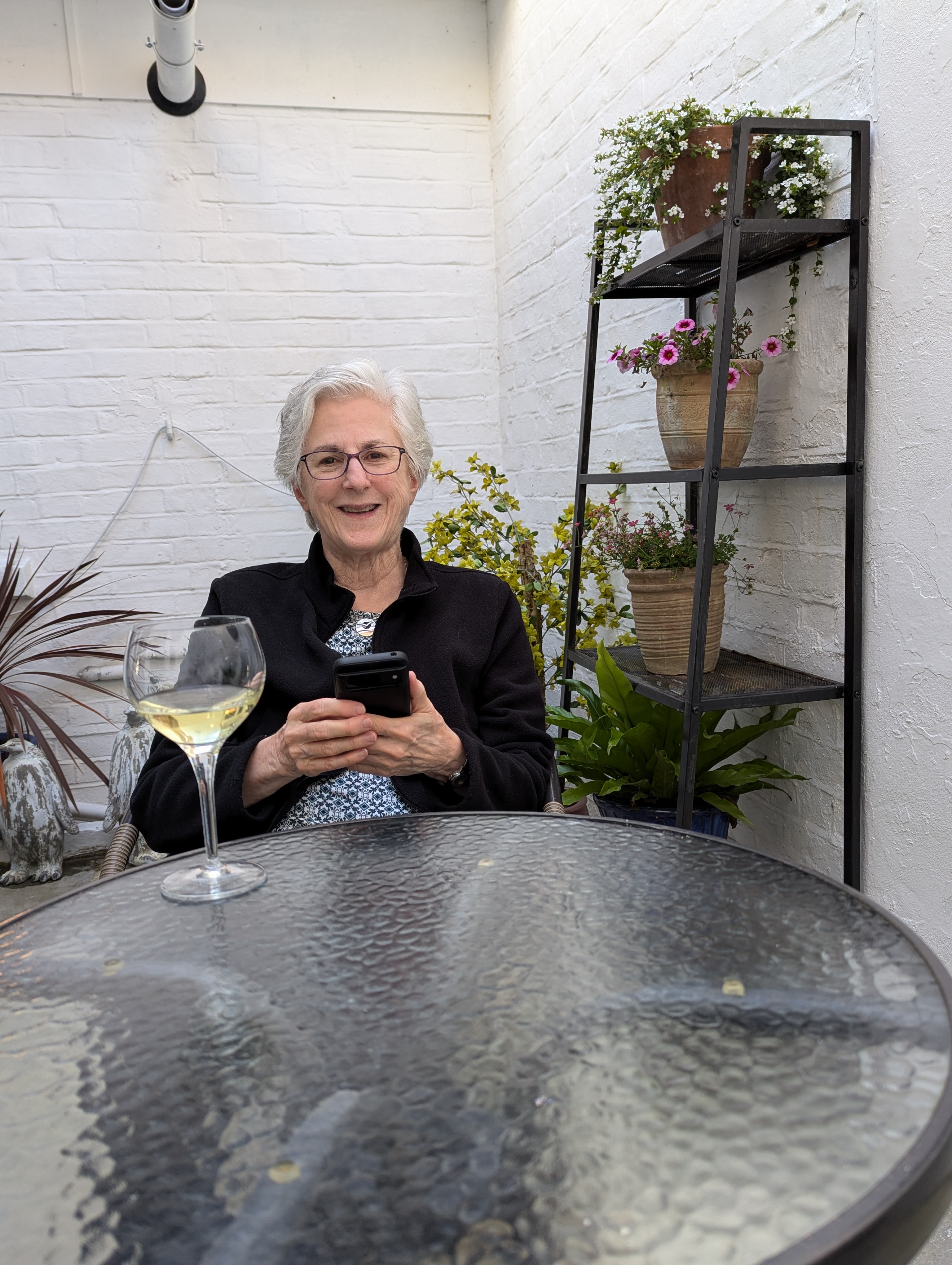
A quick stop at the food hall at Marks & Spencer for supplies, and we were soon enjoying a glass of wine on the terrace of our new digs for the next three days.

The flat is very thoughtfully designed, with notes of Morocco in some of the lighting and fabrics.

Another very steep staircase, but we’re getting used to hanging on to the balustrades as we go up and (especially) down.

Dinner tonight was at Baroushka, a Lebanese restaurant five minutes away. Alison had some most delicious lamb, and I had a roasted sea bream, and we were both happy. We might even come back again on Wednesday!

Image

Americana in Bath

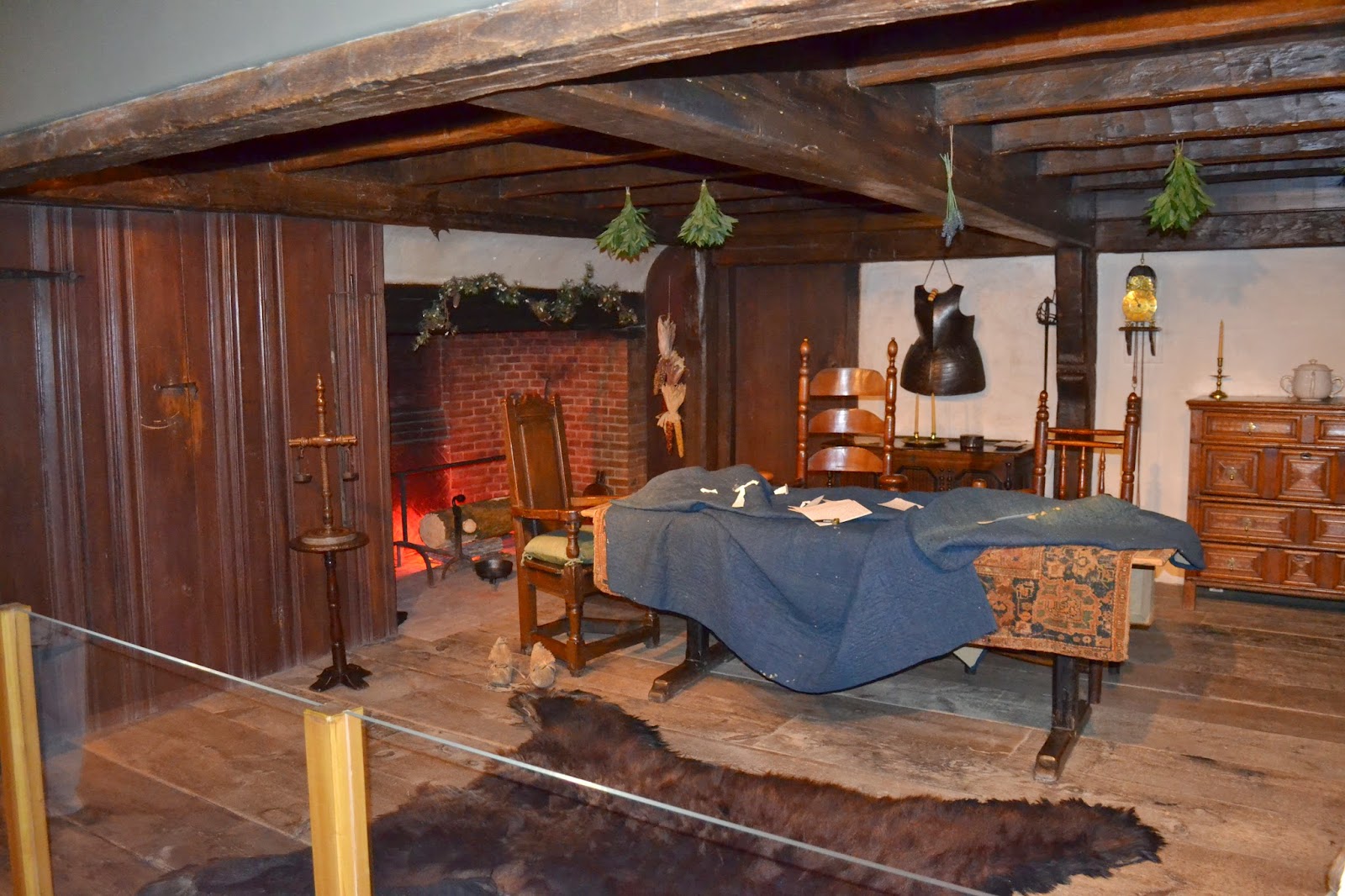
Two Englishmen who were both interested in antiques decided in the late fifties to collect American furniture and other items to introduce the best of America to the Brits. They set up their finds in a big house they found just outside of Bath that had most recently been used as housing for students but worked well as a museum of Americana. Each period room features a different example of American history and culture.

One of the rooms, for example, is furnished with an over-the-top carved bed and brilliant wallpaper from 19th century New Orleans,

while another was a New England room of about 1790 with wooden furniture of the period,

and so on, including items from American Indians, the Pennsylvania Dutch, the Civil War, etc. Dallas Pratt, one of the owners, also donated his collection of Renaissance-era maps, nothing to do with America really, but reflecting his interests. In other words, a little bit of this and a little bit of that.

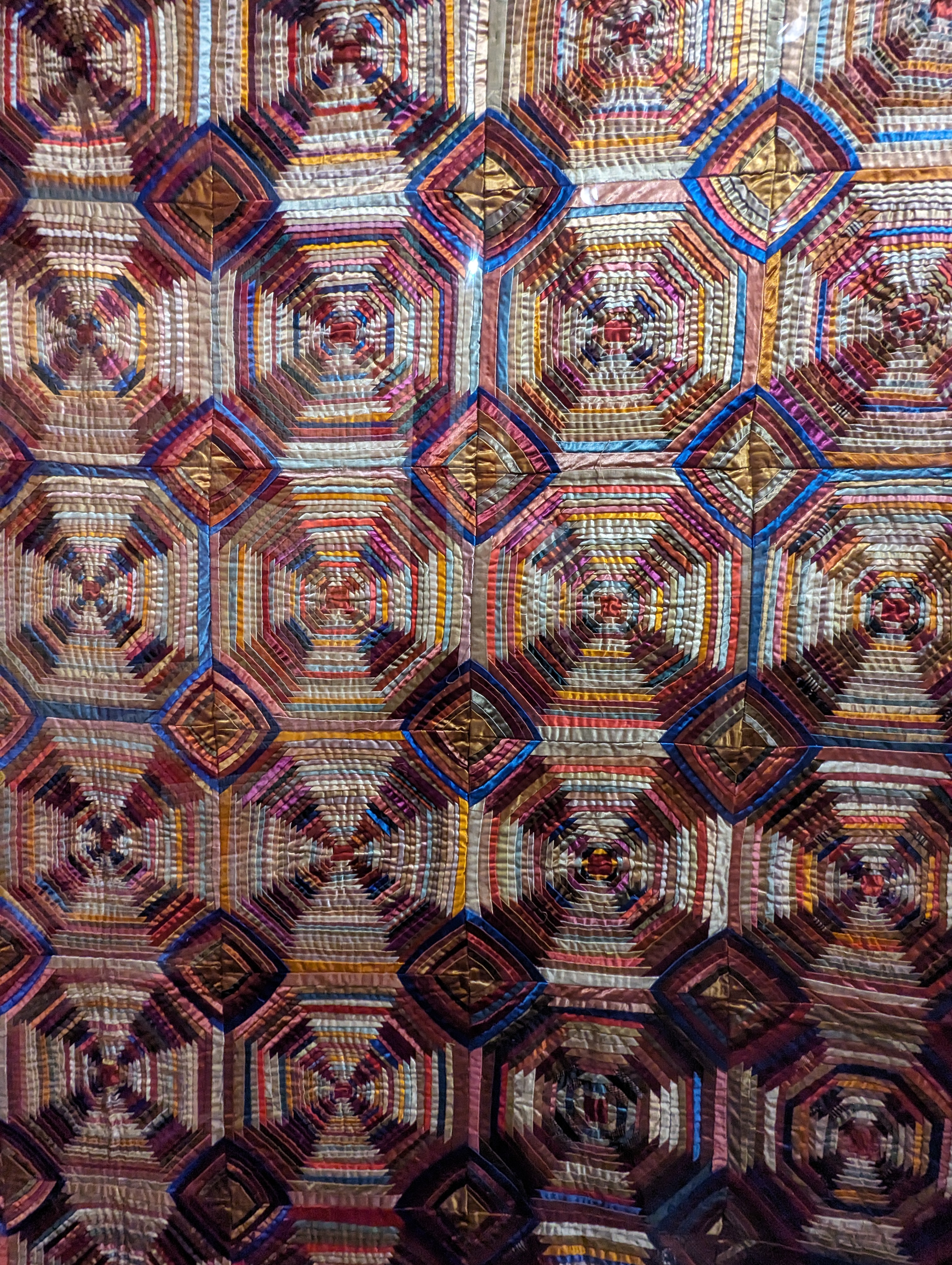
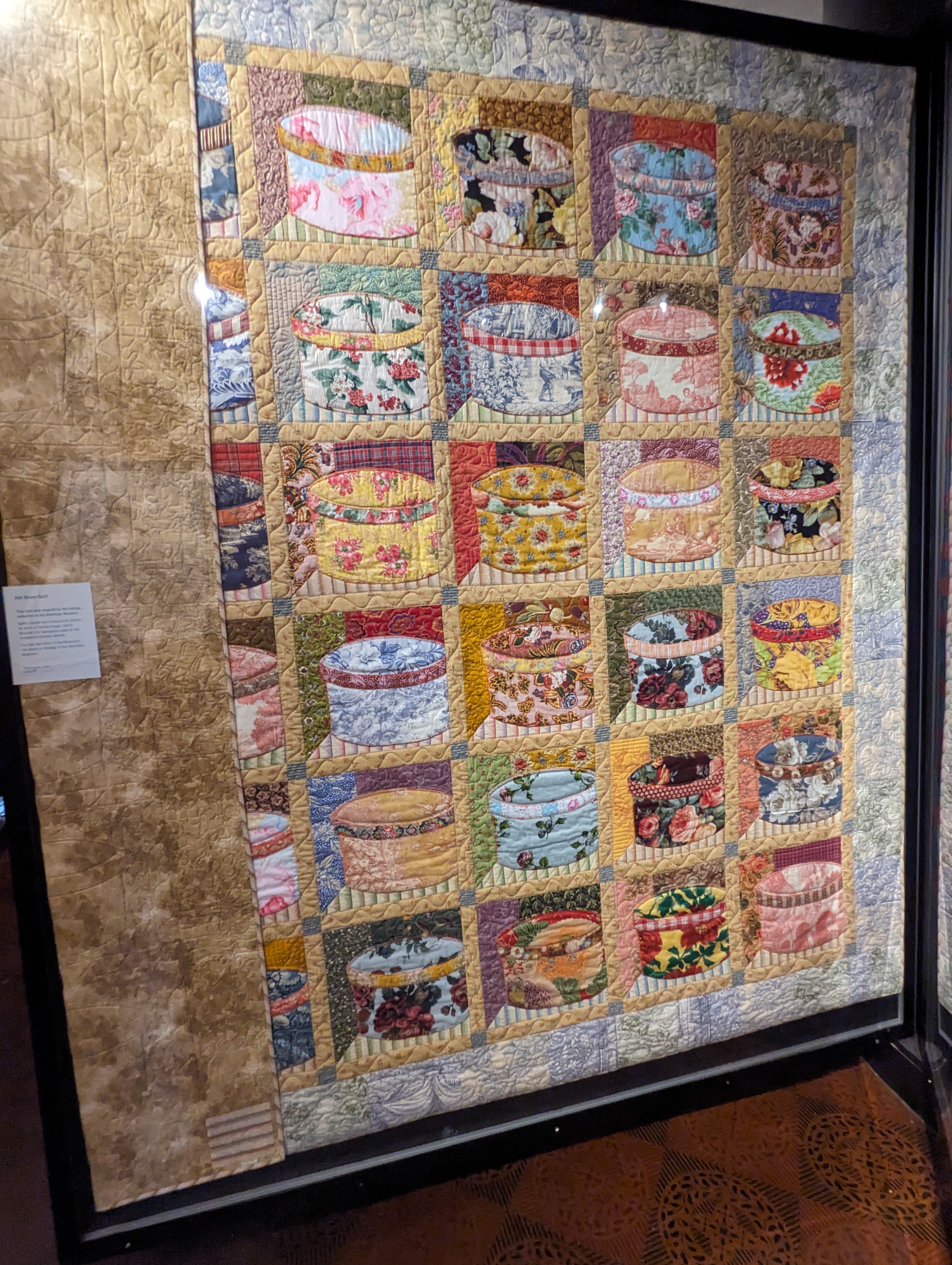
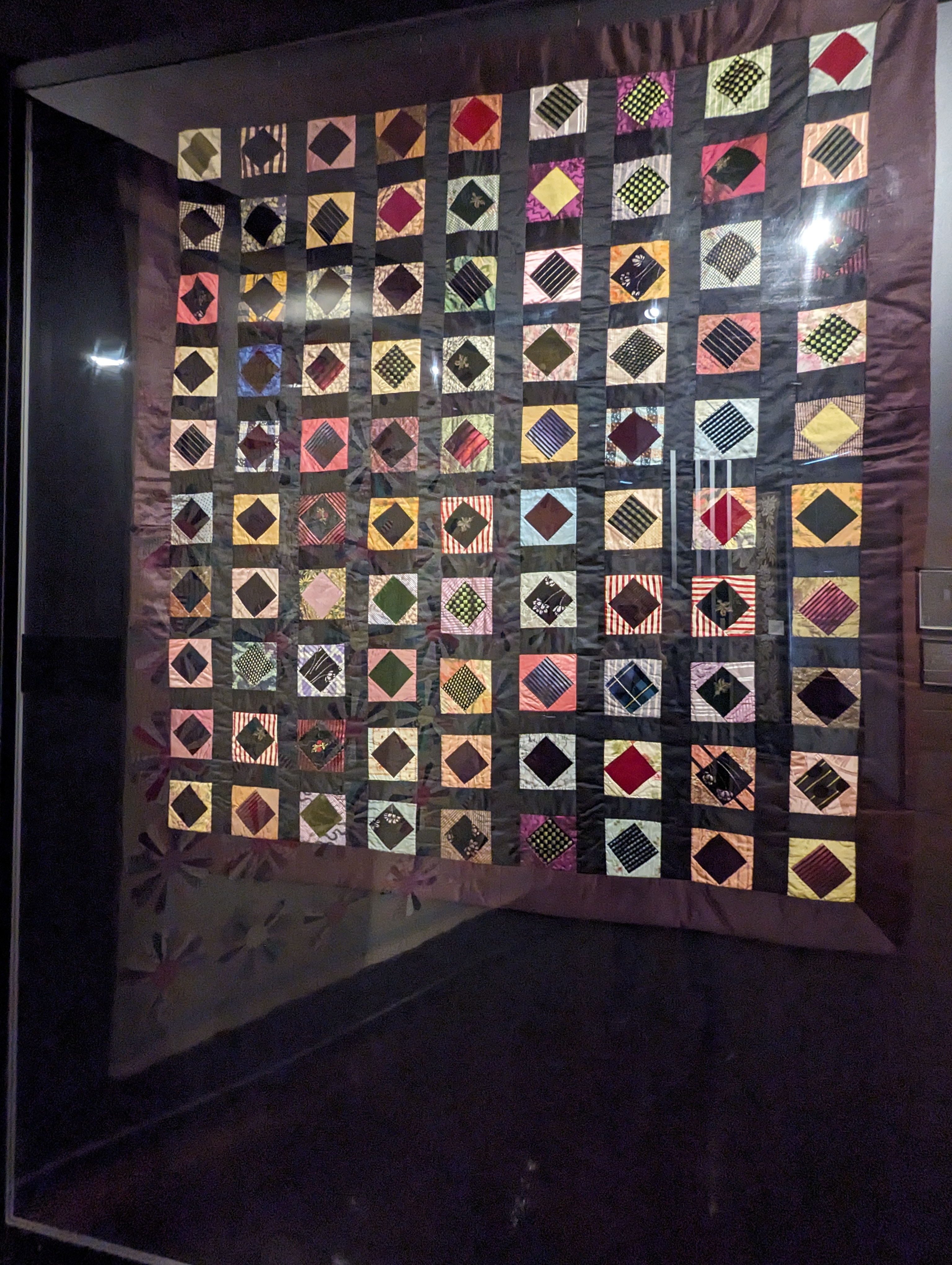
The men also amassed a collection of around 250 quilts, with 50 on display at any given time. They were nicely displayed on panels that allowed viewers to see every detail. This collection too was quite eclectic, ranging from an elegant silk log cabin,

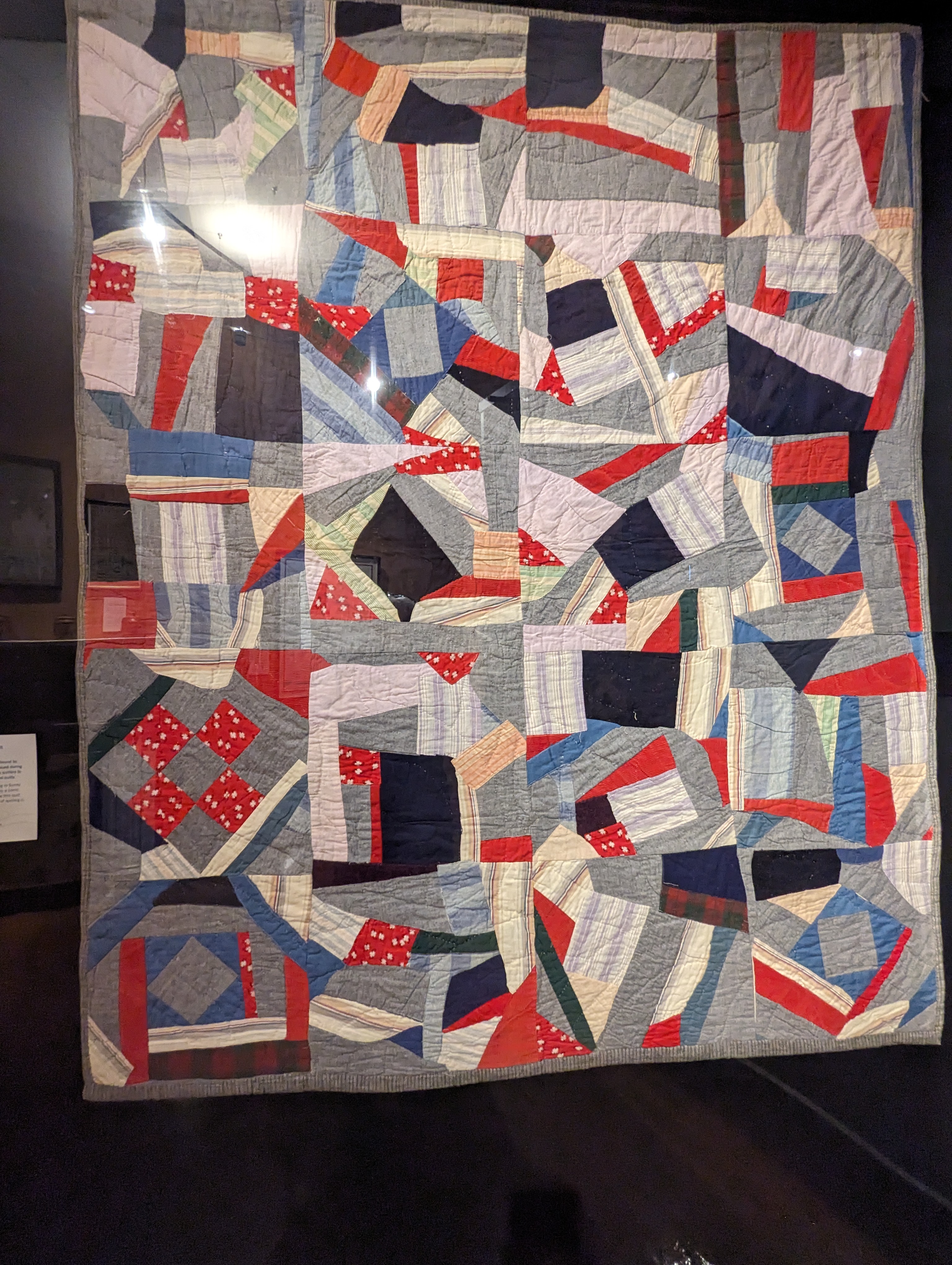
to a Red Cross crazy quilt,

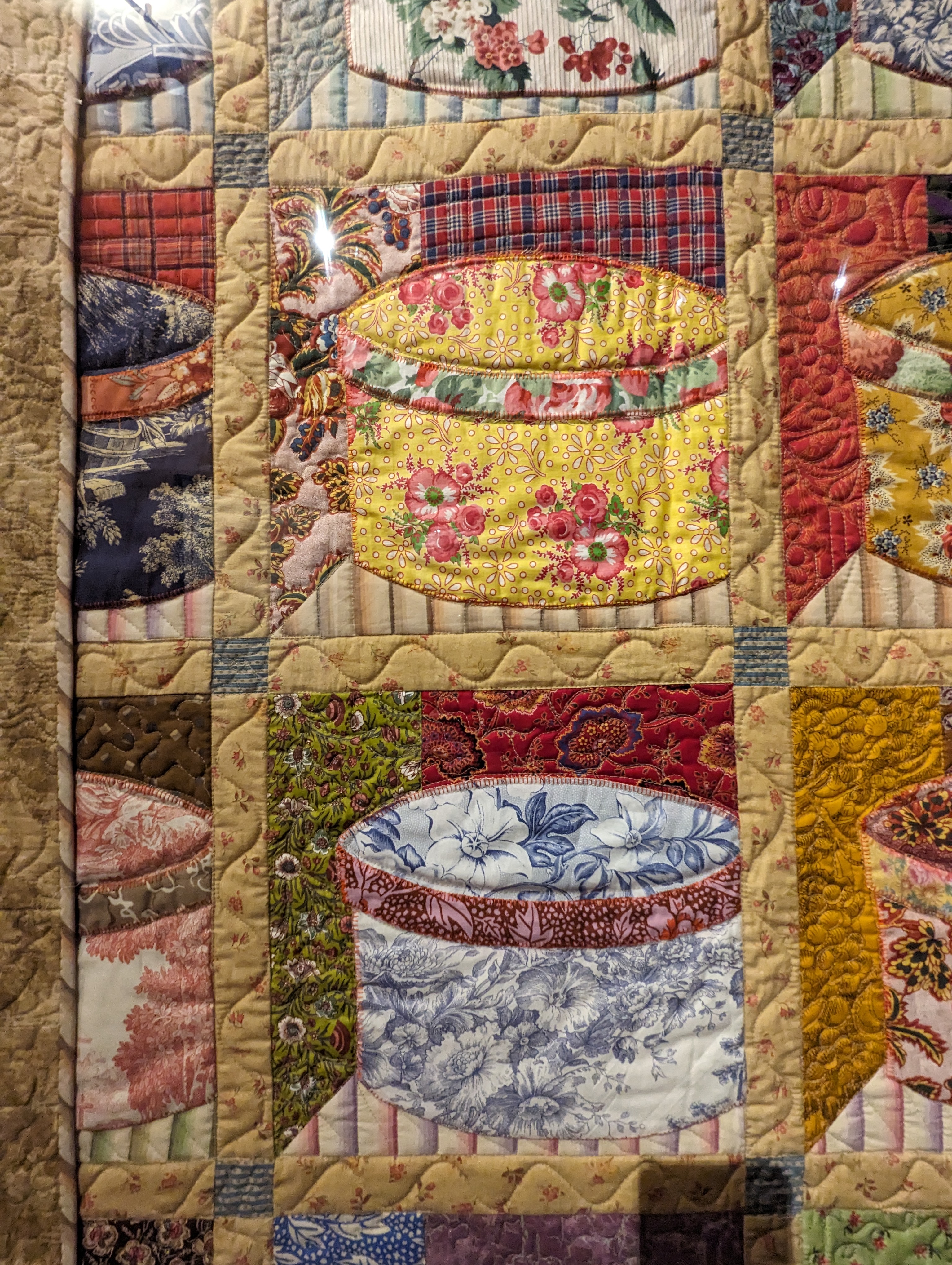
to a Kaffe quilt,

to a striking mourning quilt, also called “Darts of Death,” though that’s new to me,

to a square in a square quilt, one of my favorite motifs,

and more. There was no particular rhyme or reason that I could discern as to what kinds of quilts they collected – how about all kinds?- but an intriguing collection nevertheless.

Apart from the quilts, the collection was a bit of a jumble to my untrained eyes. A wonderfully displayed collection of Pennsylvania Dutch carvings caught my attention, less so the pressed glass and the pioneer cabin. But what was really amazing was the garden, 2.5 acres set in 125 acres of “rolling green topography,” as one critic described it.

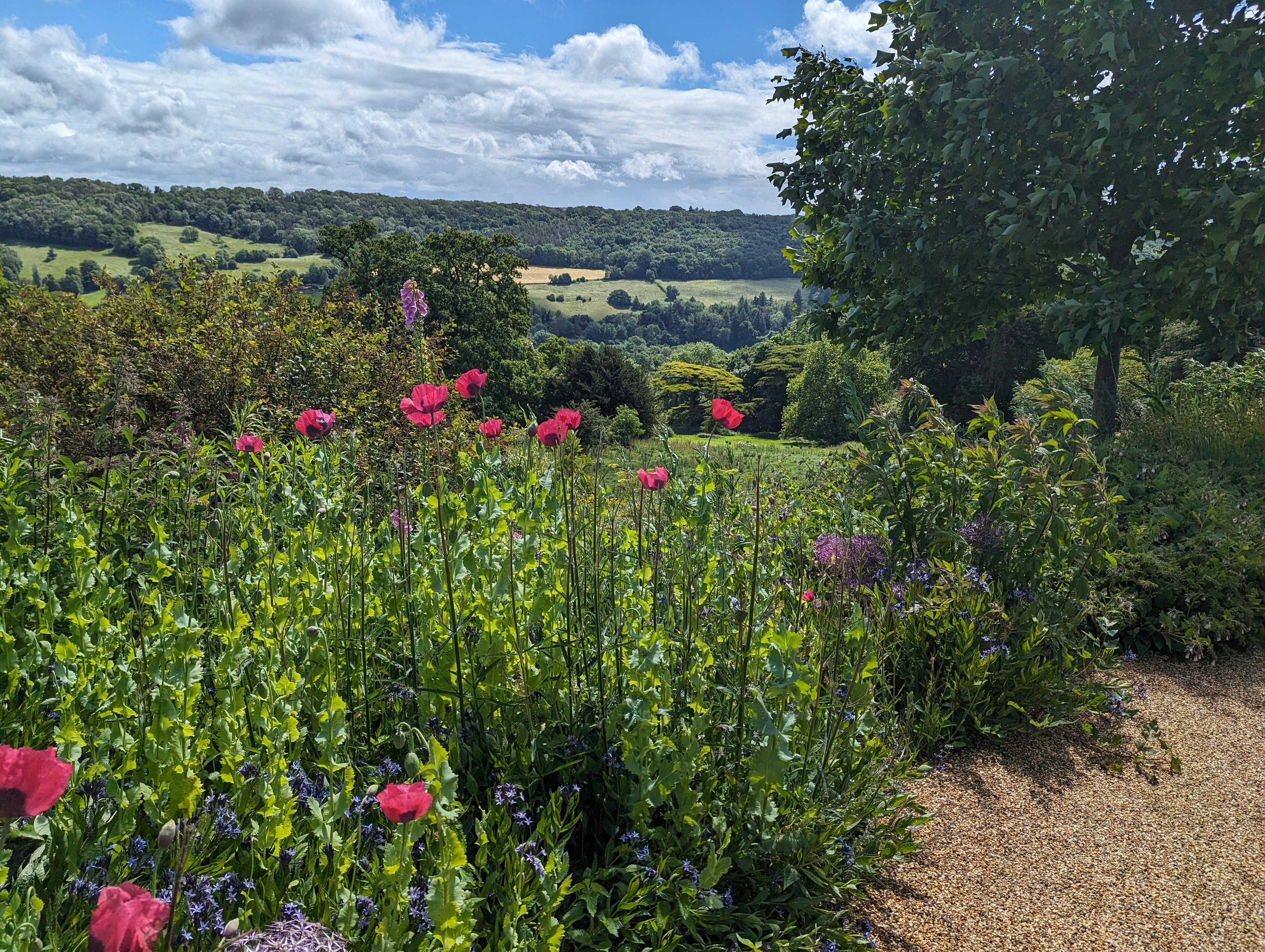
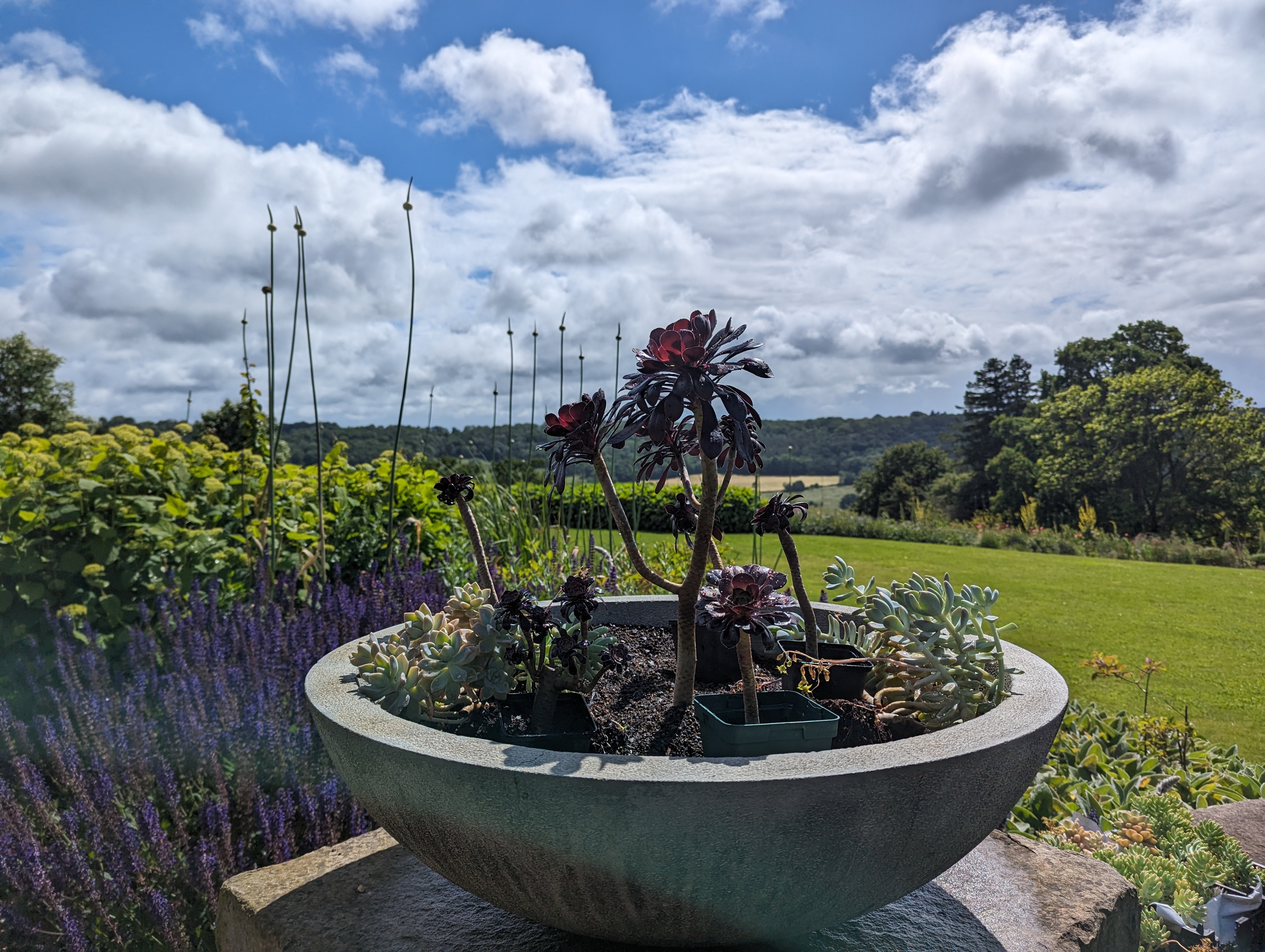
Oeme/Van Sweden had entirely reworked the garden about six years ago, and the results were astonishing. Start with a sloping site that looks down on a valley and up a borrowed landscape on the other side,

then add in huge swathes of grasses, lavender, poppies, verbascum (I think), foxgloves, roses, and daisies, among other things. (Click through for the full effect.)

And a month from now I’m sure another array of beauties will be in bloom. An interesting article about it can be found here. It was well worth the visit!

Image

Roman ruins, tea, and science

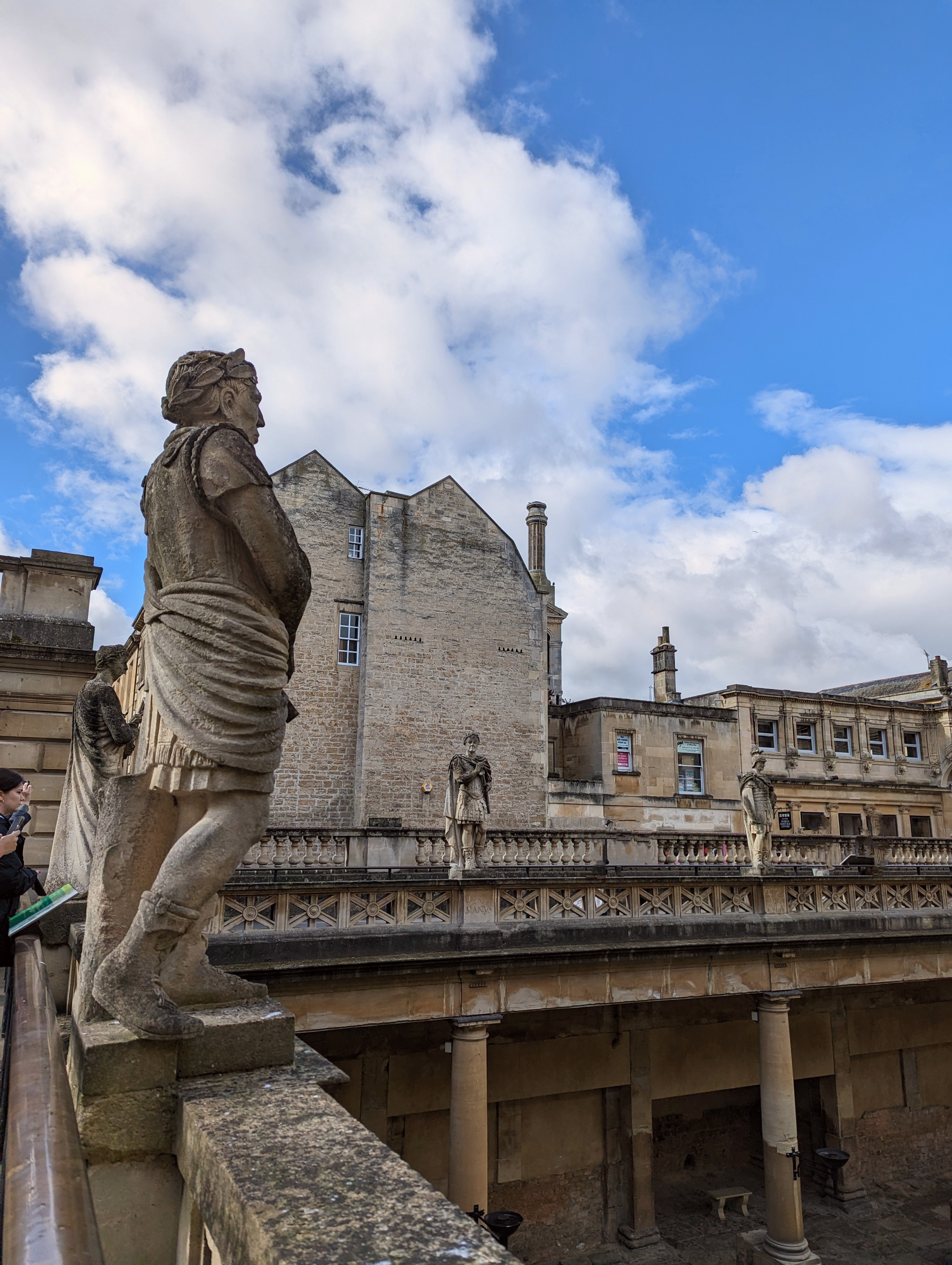
The Roman baths are a highlight for those of us who are not total Jane fanatics. They are such an agglomeration of Saxon, Roman, and Victorian eras that it’s a bit of a puzzle to understand exactly what you’re looking at, but the local council do a good job of sorting it all out for you in well-designed, informative panels that accompany the artifacts.

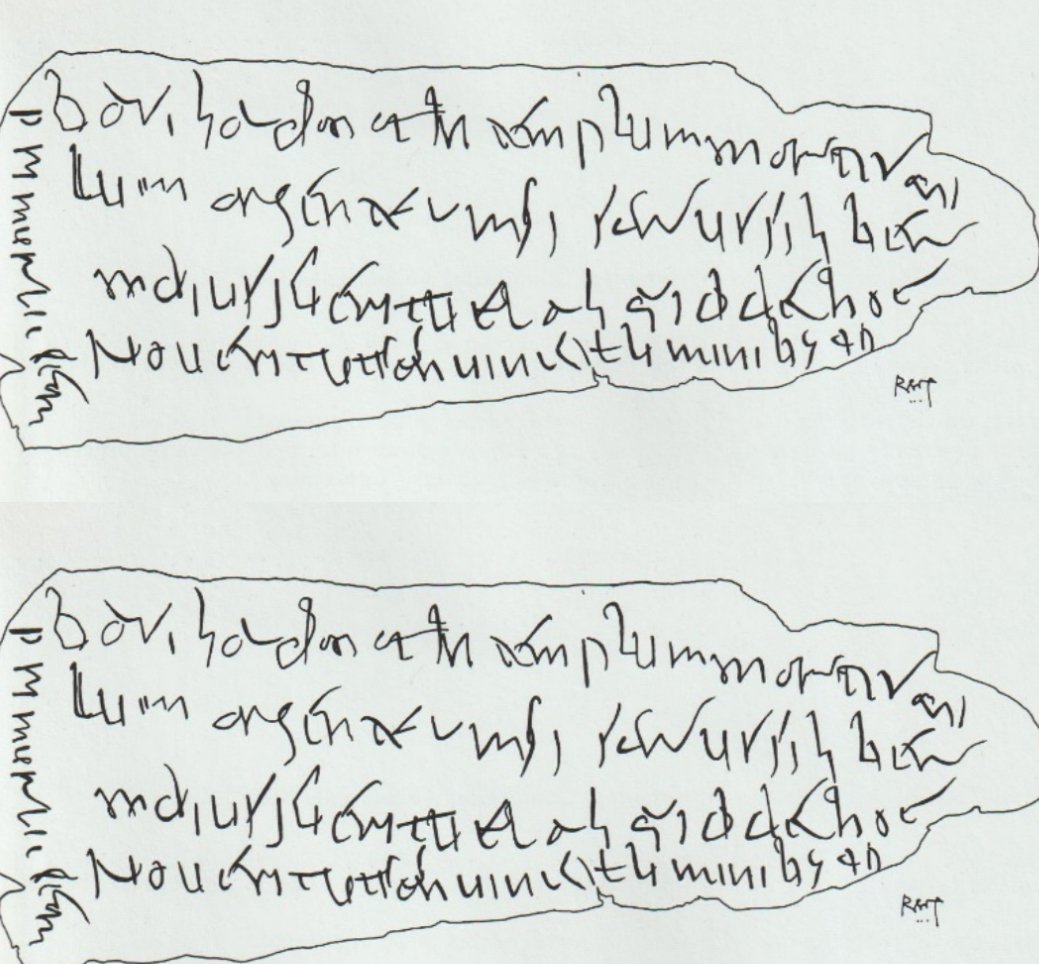
Peter Davenport’s Roman Baths , which I read in preparation for the trip, explains the layers of history found underground: the Celts, the Romans, the Saxons and the Victorians all discovered and used the healing waters over the centuries, and they dug up old roads, built on top of ancient stoneworks, and generally mixed everything up. The most interesting bits, to me, are those show what daily life involved. The very human curse tablets, thrown into the springs in hopes of justice being done, are a good example, described thus in Wikipedia: “…the stolen property is declared as having been transferred to a deity so that the loss becomes the deity’s loss; the suspect is named and, in 21 cases, so is the victim; the victim then asks the deity to visit afflictions on the thief (including death) not as a punishment especially but to induce the thief to hand the stolen items back.”

The victims’ fury echoes down the centuries! (Thanks to this site for the image!)

We dutifully took a sip of the waters, which were actually quite neutral (I was expecting sulfur), rust colored, and slightly warm. Take a look here.

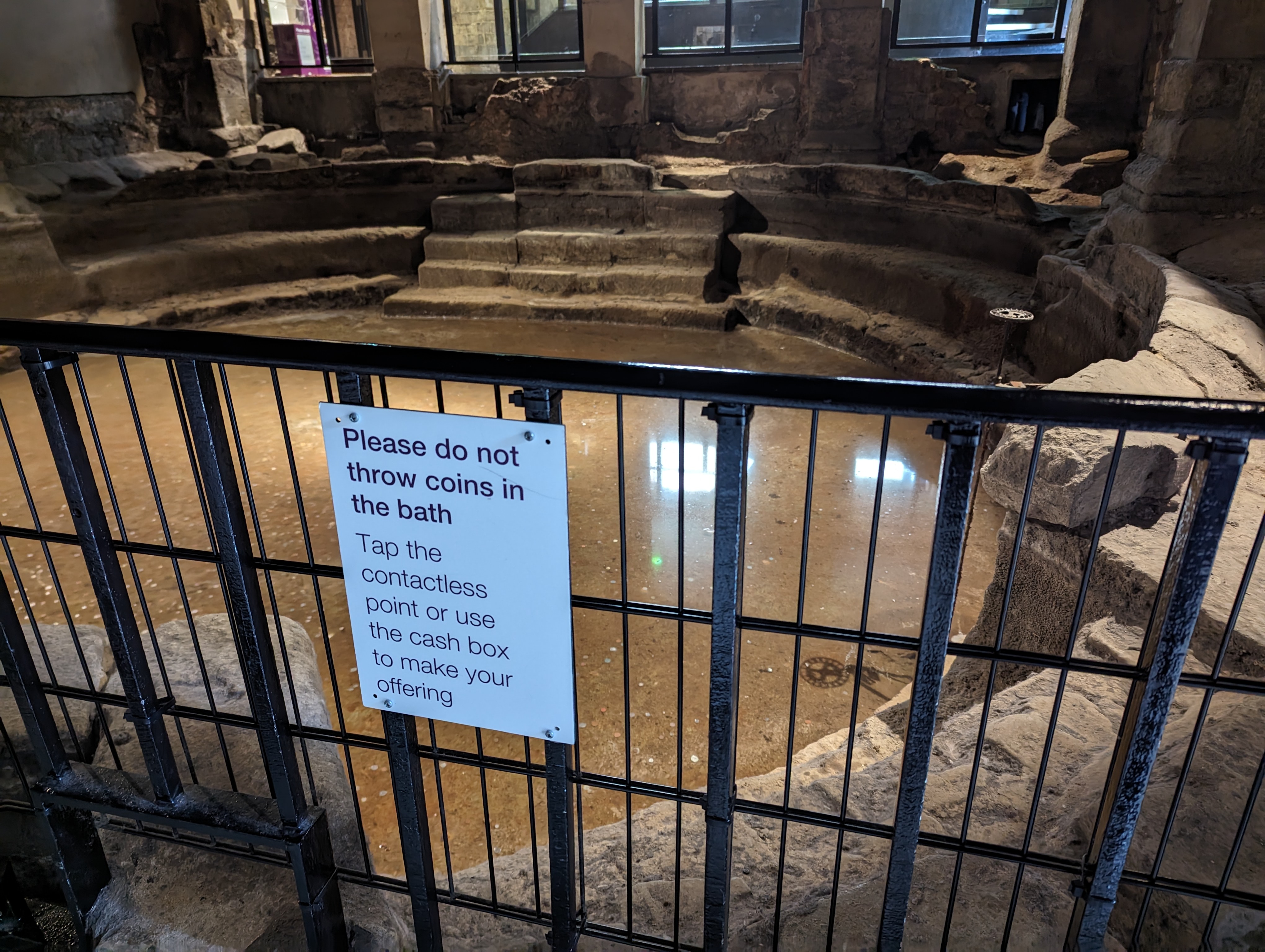
I loved this sign,

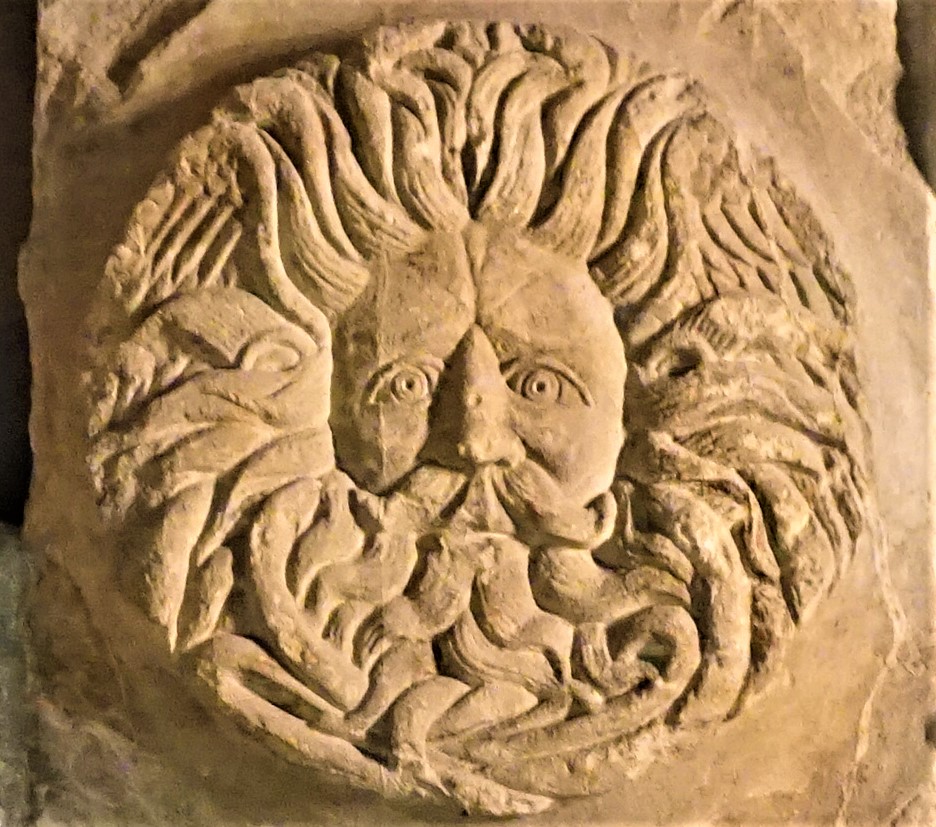
warning us not to throw stones into the waters but instead tap your contactless point. The Romans are so up to date! I celebrated the visit by taking home a replica of the Gorgon’s head, which has puzzled people for at least two hundred years. Is it the mythical creature killed by Perseus? Or is it a water god? Regardless, I plan to install it in the garden as a tribute to the Romans.

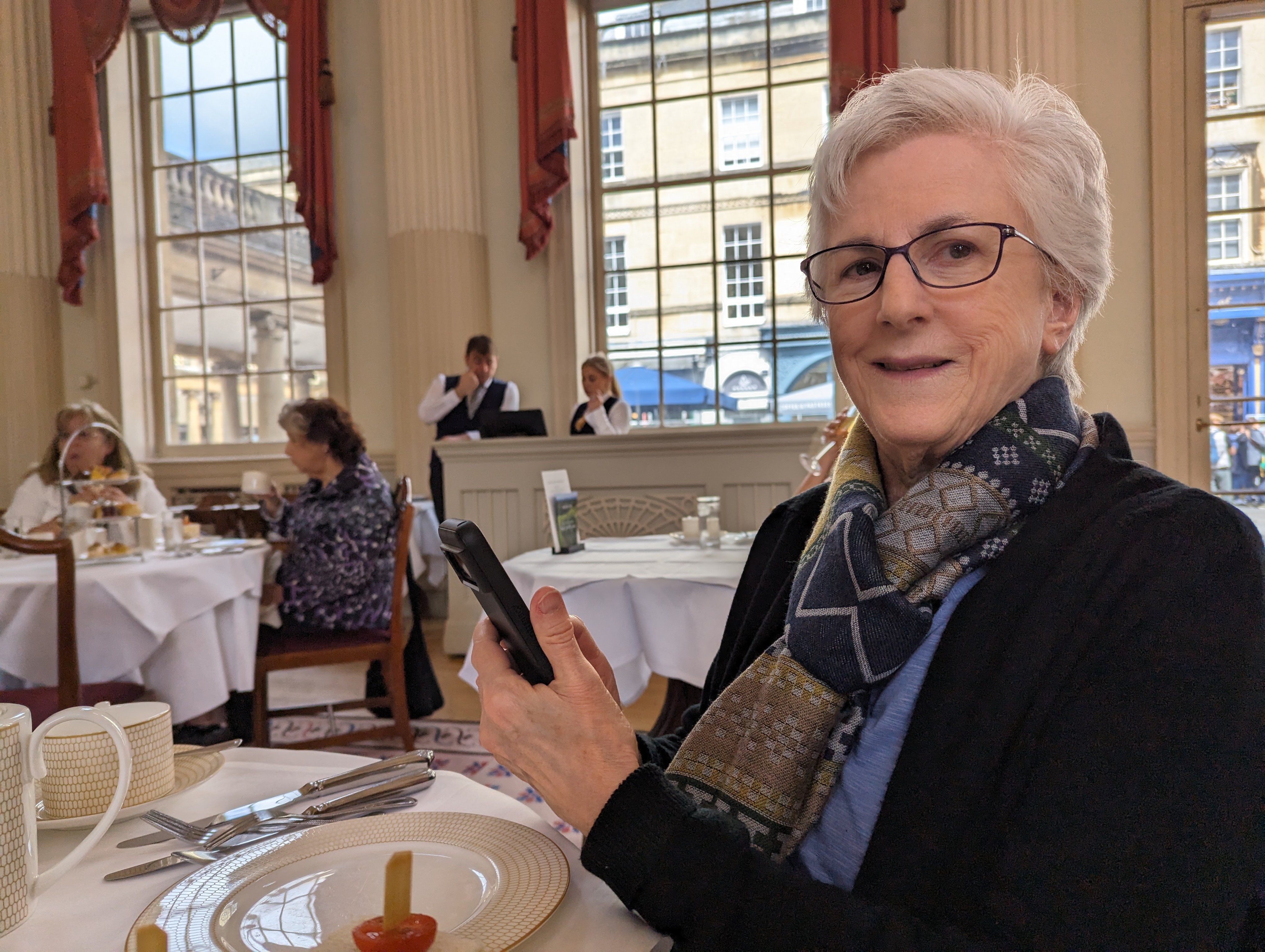
We had afternoon tea booked at the Georgian Pump Room, where fashionable people used to stroll around to see and be seen. It’s directly next to the baths, and when the pump room was built in the early 1700’s, they of course found the remains of a Roman temple. You can’t swing a cat in Bath without running into Roman ruins!

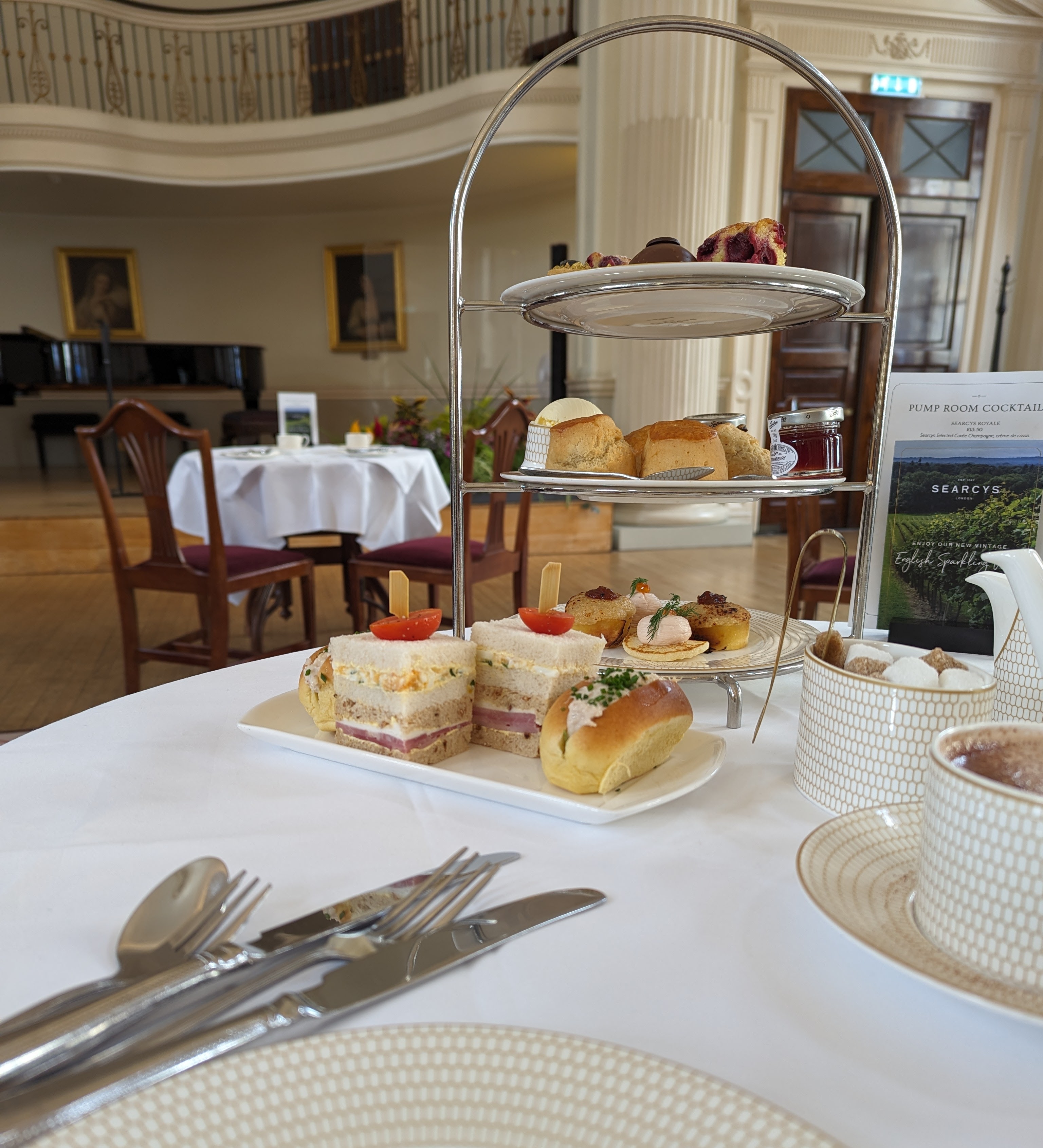
Tea was served in a large, elegant room complete with a pianist to set the tone. Delicious little savory and sweet confections, accompanied by tea, of course, made for a light lunch.

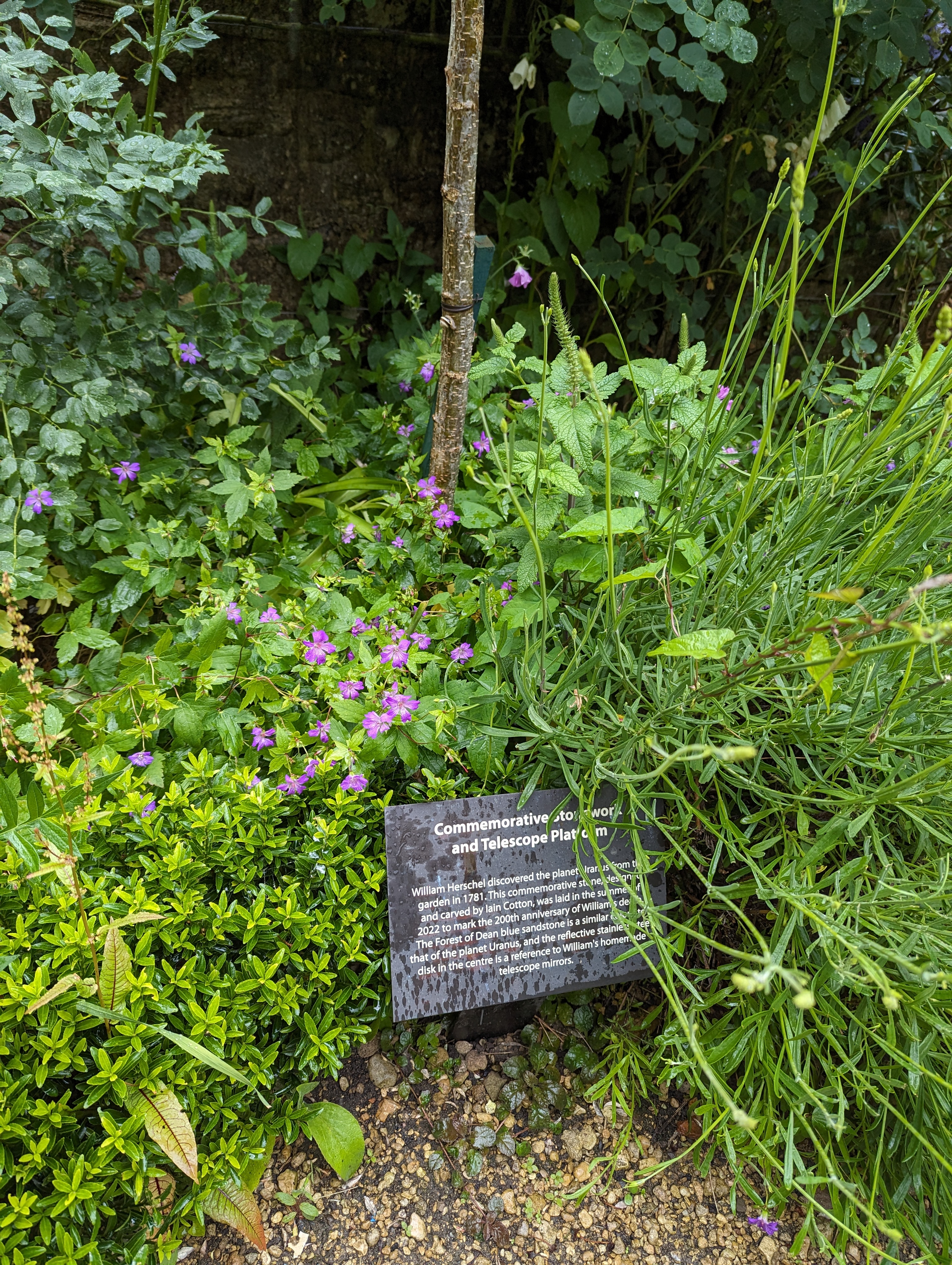
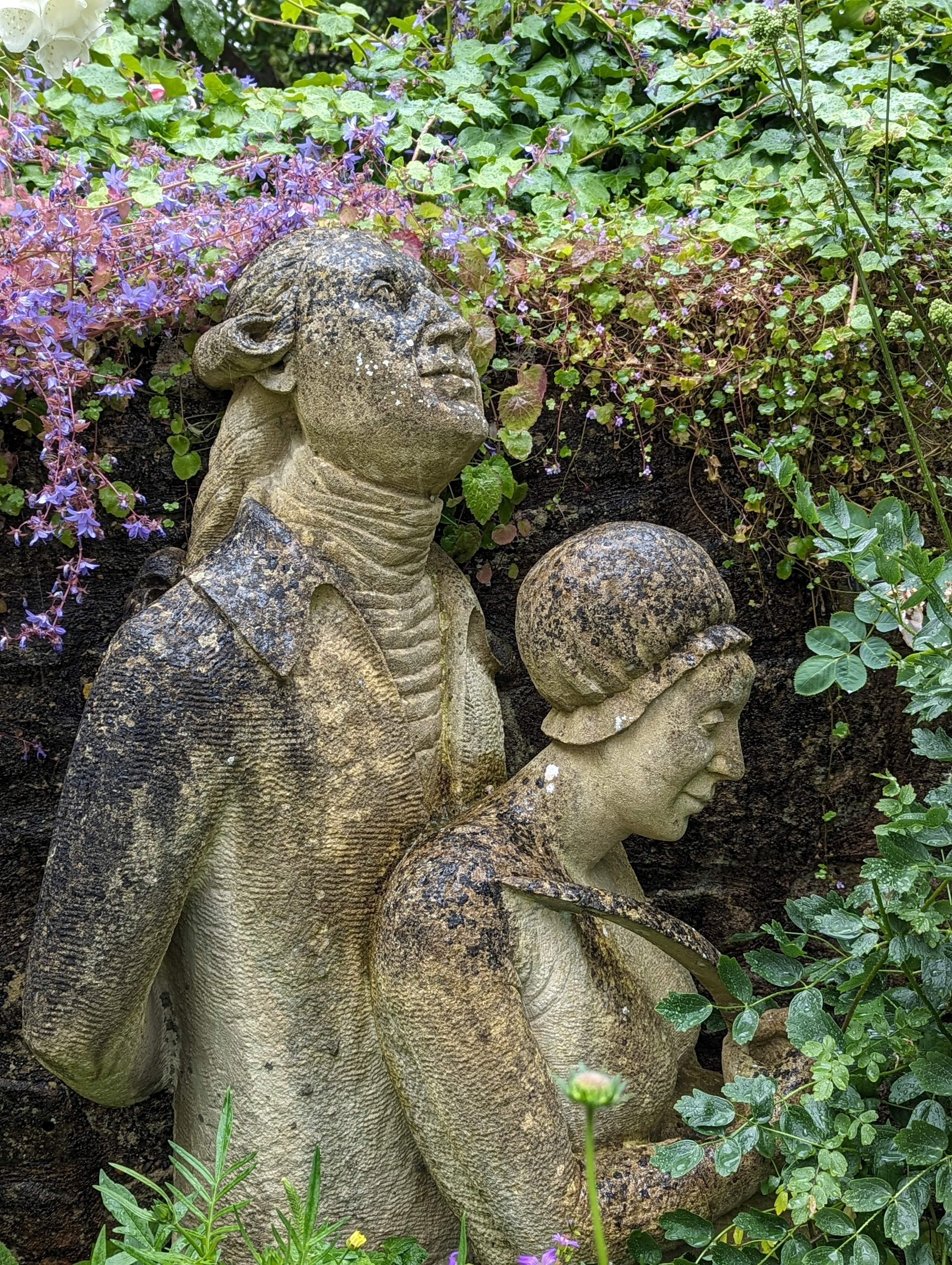
After an afternoon nap, and in between the showers that popped up frequently during the day, we walked down the block to the Herschel Museum of Astronomy. We had both read Carrie Brown’s “The Stargazer and His Sister,” about Herschel and his sister Caroline, when the author spoke at our staff day several years back, and it was a good introduction to the museum. It’s a small house filled with musical instruments (they were both musicians) and memorabilia from their scientific endeavors. I especially enjoyed the small garden in the back.

The plaque on the left commemorates Herschel’s discovery of Uranus on this site. This is where Herschel climbed up a ladder to adjust his telescope and scour the heavens. Caroline fed him while he stood there, both of them freezing cold and dedicated to science. And Caroline, whom he taught to read and write, made numerous discoveries of her own. Think of the talent that might have been wasted if she had been left to keep house with her difficult mother and never been taught anything at all!

Dinner tonight was at a tapas place, Pinxto, very noisy but delicious. Back to the flat, and bed.