
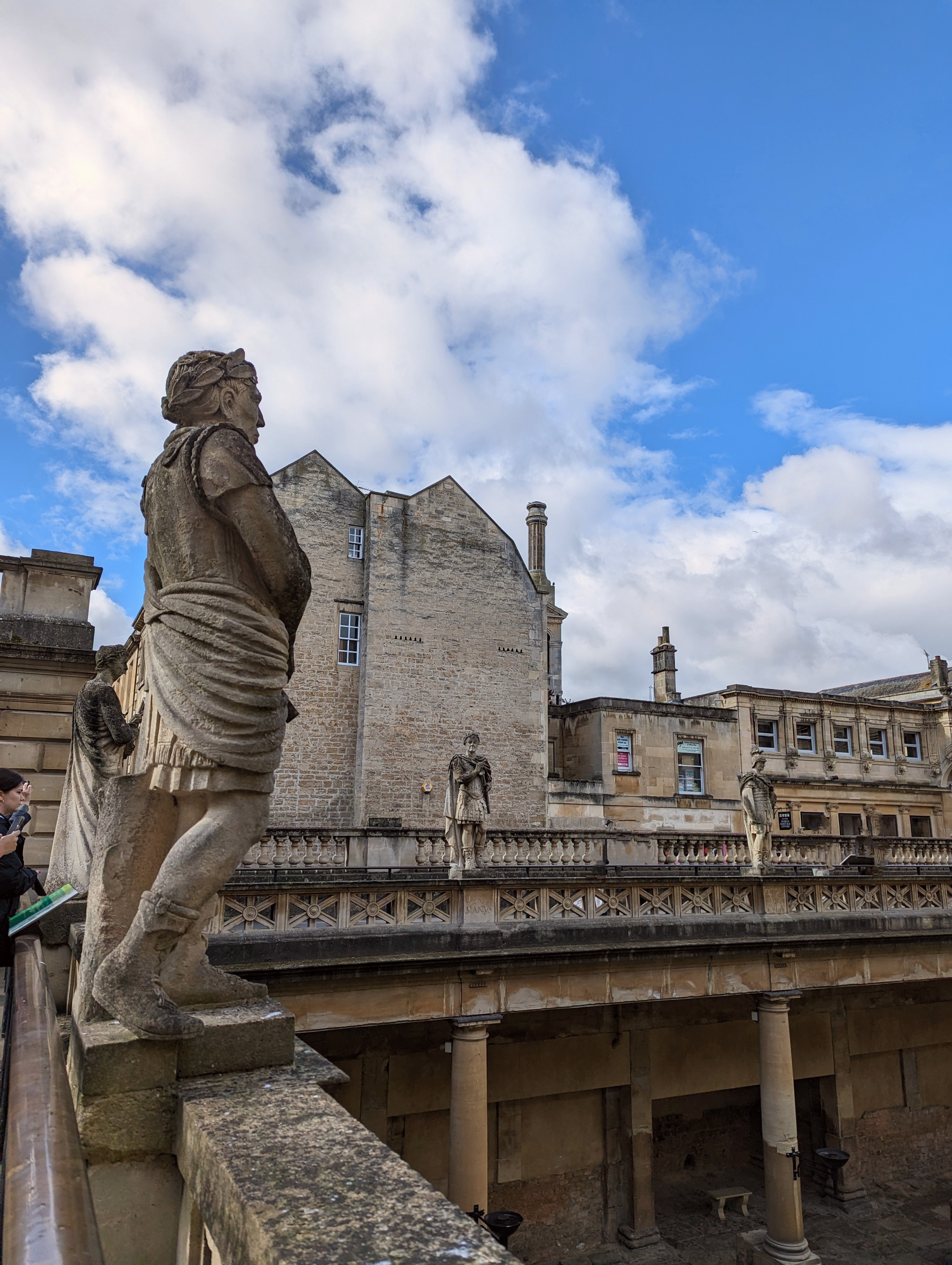
The Roman baths are a highlight for those of us who are not total Jane fanatics. They are such an agglomeration of Saxon, Roman, and Victorian eras that it’s a bit of a puzzle to understand exactly what you’re looking at, but the local council do a good job of sorting it all out for you in well-designed, informative panels that accompany the artifacts.
Peter Davenport’s Roman Baths , which I read in preparation for the trip, explains the layers of history found underground: the Celts, the Romans, the Saxons and the Victorians all discovered and used the healing waters over the centuries, and they dug up old roads, built on top of ancient stoneworks, and generally mixed everything up. The most interesting bits, to me, are those show what daily life involved. The very human curse tablets, thrown into the springs in hopes of justice being done, are a good example, described thus in Wikipedia: “…the stolen property is declared as having been transferred to a deity so that the loss becomes the deity’s loss; the suspect is named and, in 21 cases, so is the victim; the victim then asks the deity to visit afflictions on the thief (including death) not as a punishment especially but to induce the thief to hand the stolen items back.”
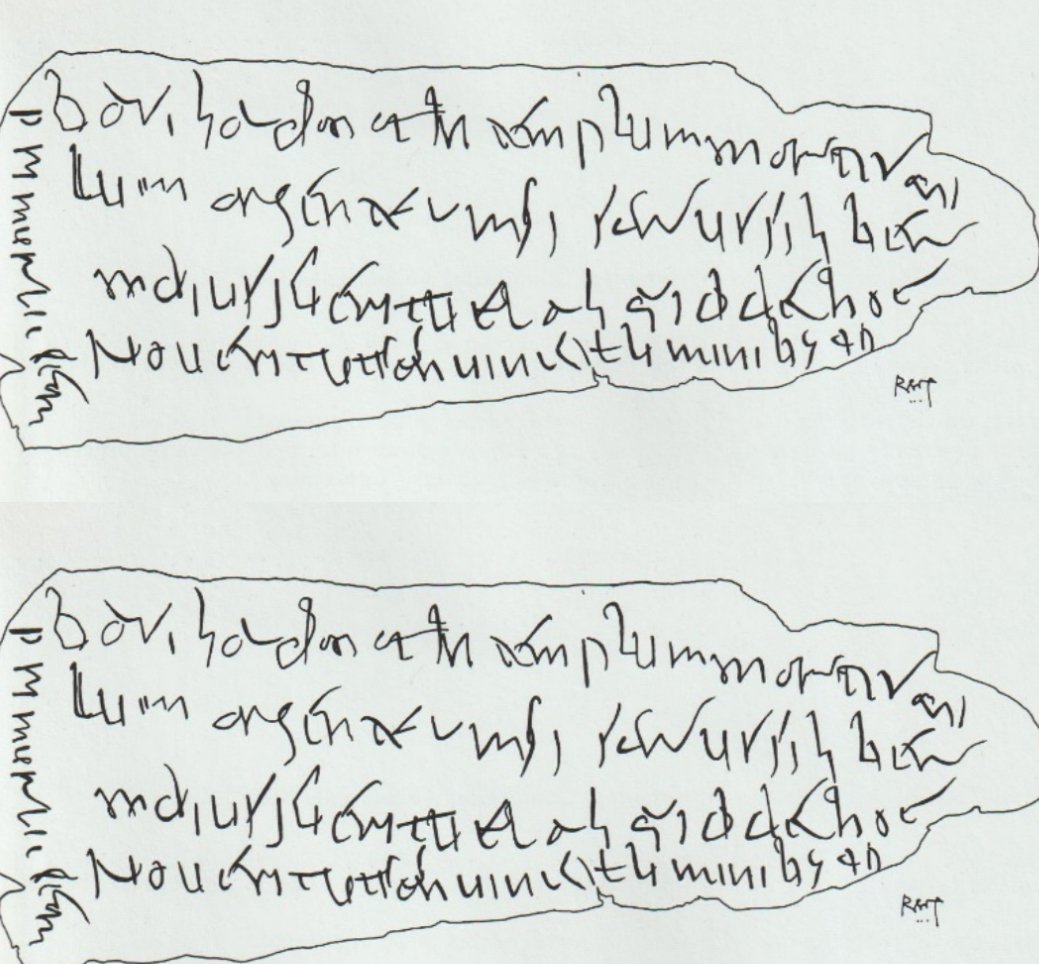
The victims’ fury echoes down the centuries! (Thanks to this site for the image!)
We dutifully took a sip of the waters, which were actually quite neutral (I was expecting sulfur), rust colored, and slightly warm. Take a look here.
I loved this sign,
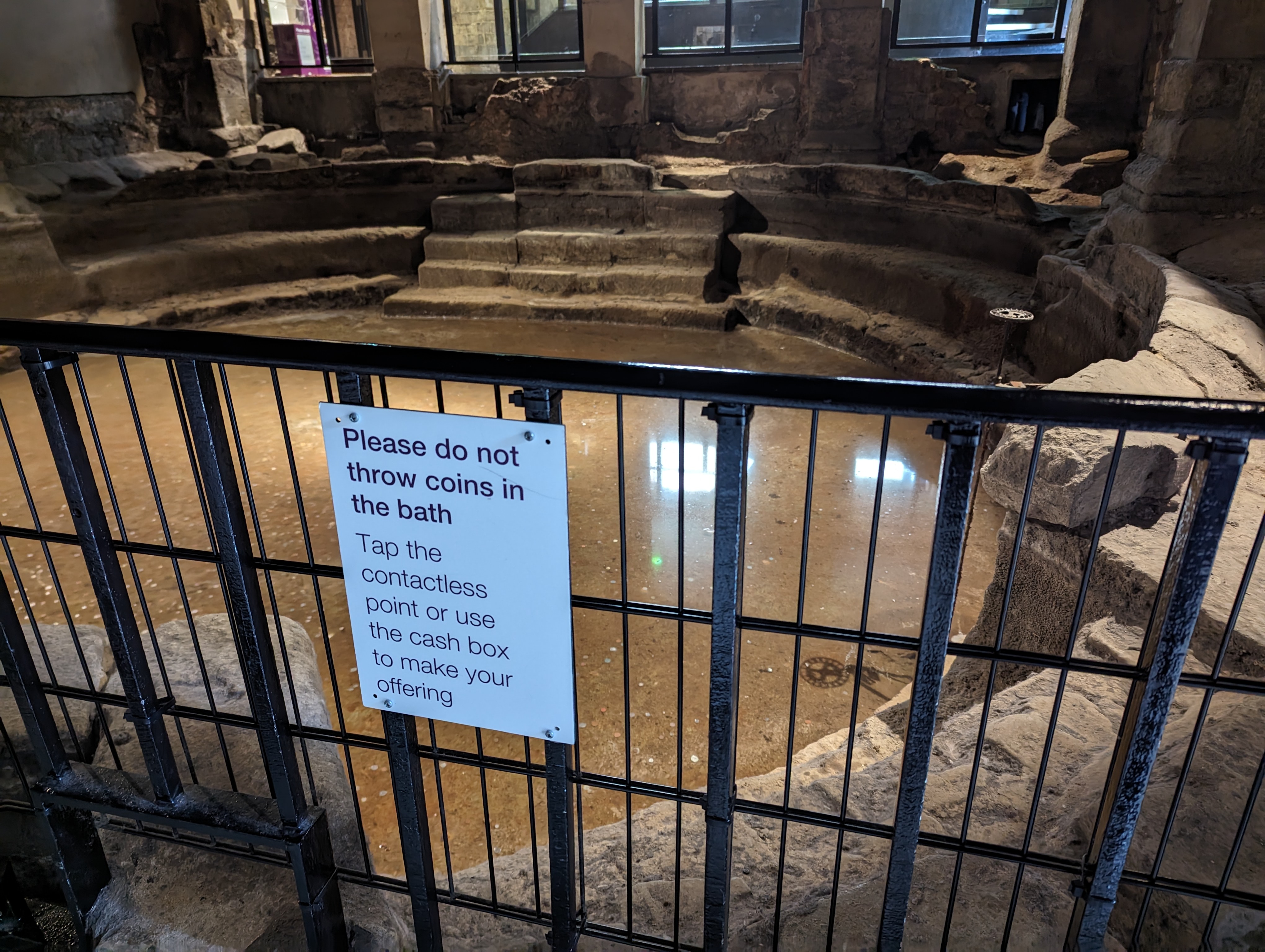
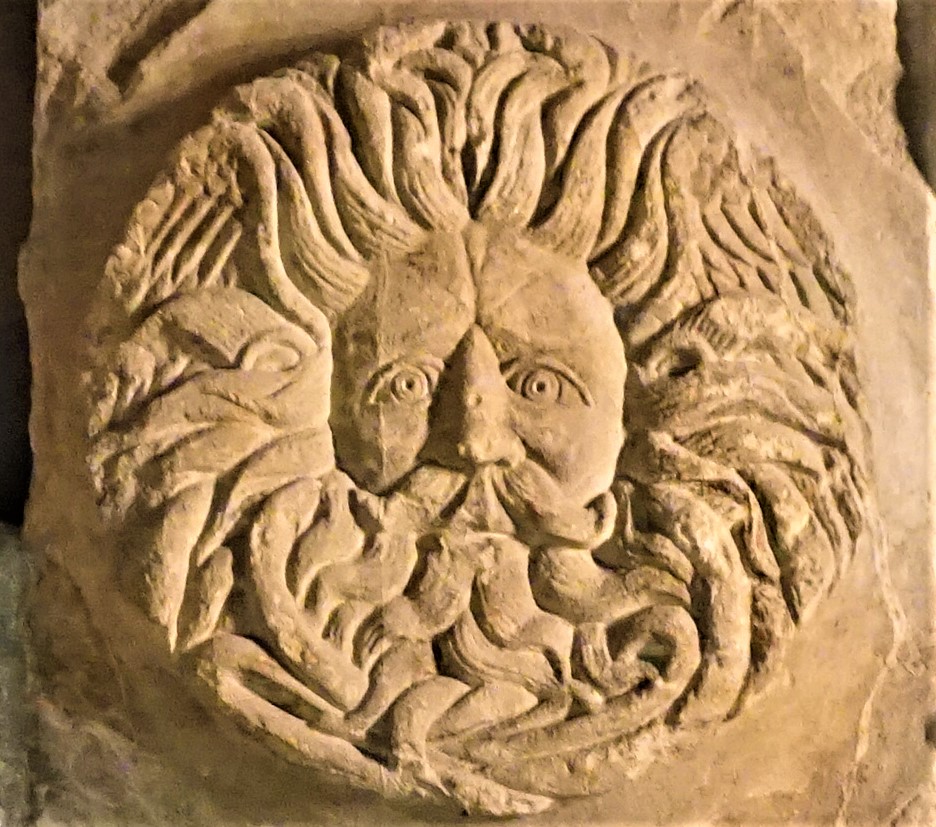
warning us not to throw stones into the waters but instead tap your contactless point. The Romans are so up to date! I celebrated the visit by taking home a replica of the Gorgon’s head, which has puzzled people for at least two hundred years. Is it the mythical creature killed by Perseus? Or is it a water god? Regardless, I plan to install it in the garden as a tribute to the Romans.
We had afternoon tea booked at the Georgian Pump Room, where fashionable people used to stroll around to see and be seen. It’s directly next to the baths, and when the pump room was built in the early 1700’s, they of course found the remains of a Roman temple. You can’t swing a cat in Bath without running into Roman ruins!
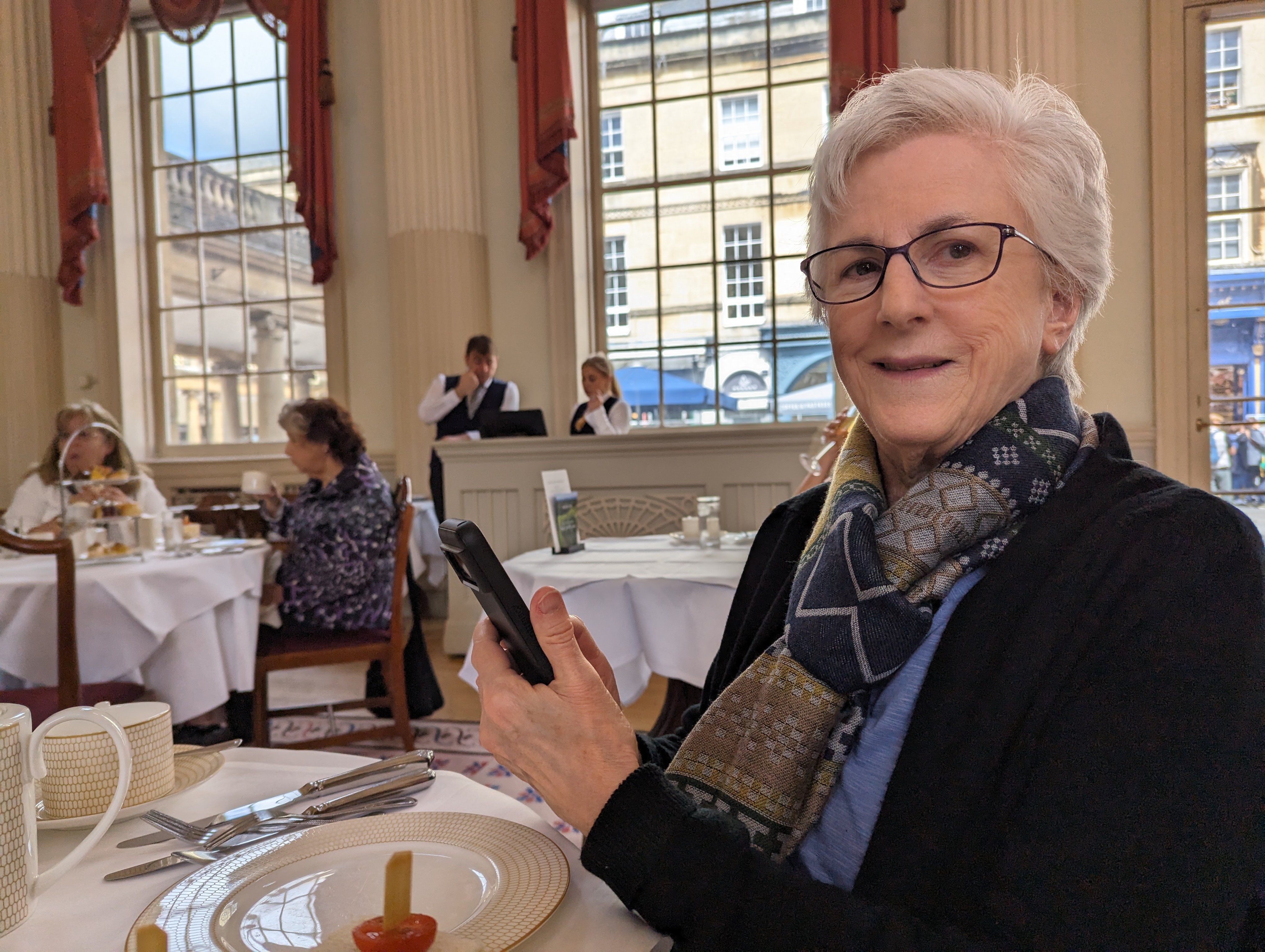
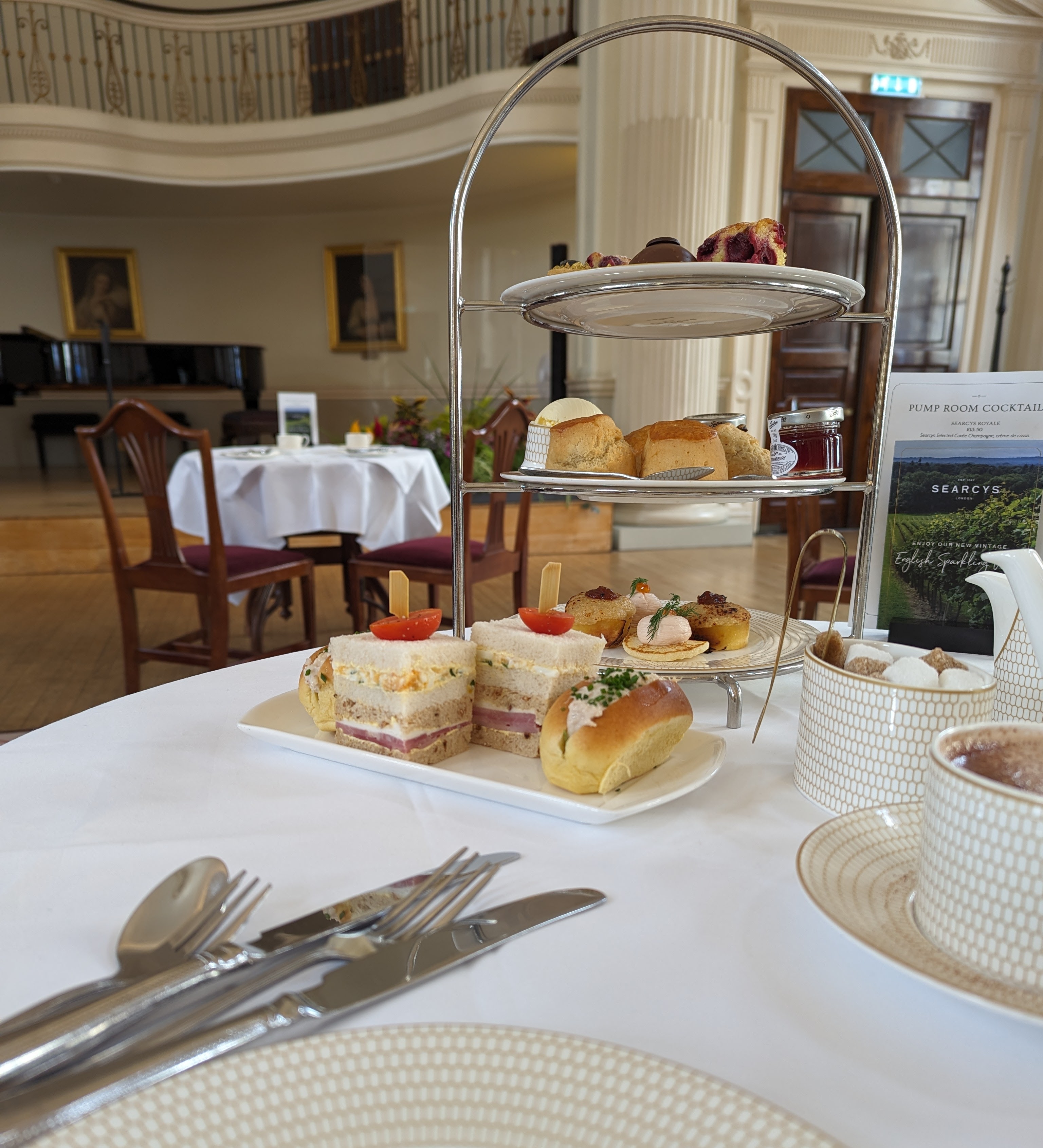
Tea was served in a large, elegant room complete with a pianist to set the tone. Delicious little savory and sweet confections, accompanied by tea, of course, made for a light lunch.
After an afternoon nap, and in between the showers that popped up frequently during the day, we walked down the block to the Herschel Museum of Astronomy. We had both read Carrie Brown’s “The Stargazer and His Sister,” about Herschel and his sister Caroline, when the author spoke at our staff day several years back, and it was a good introduction to the museum. It’s a small house filled with musical instruments (they were both musicians) and memorabilia from their scientific endeavors. I especially enjoyed the small garden in the back.
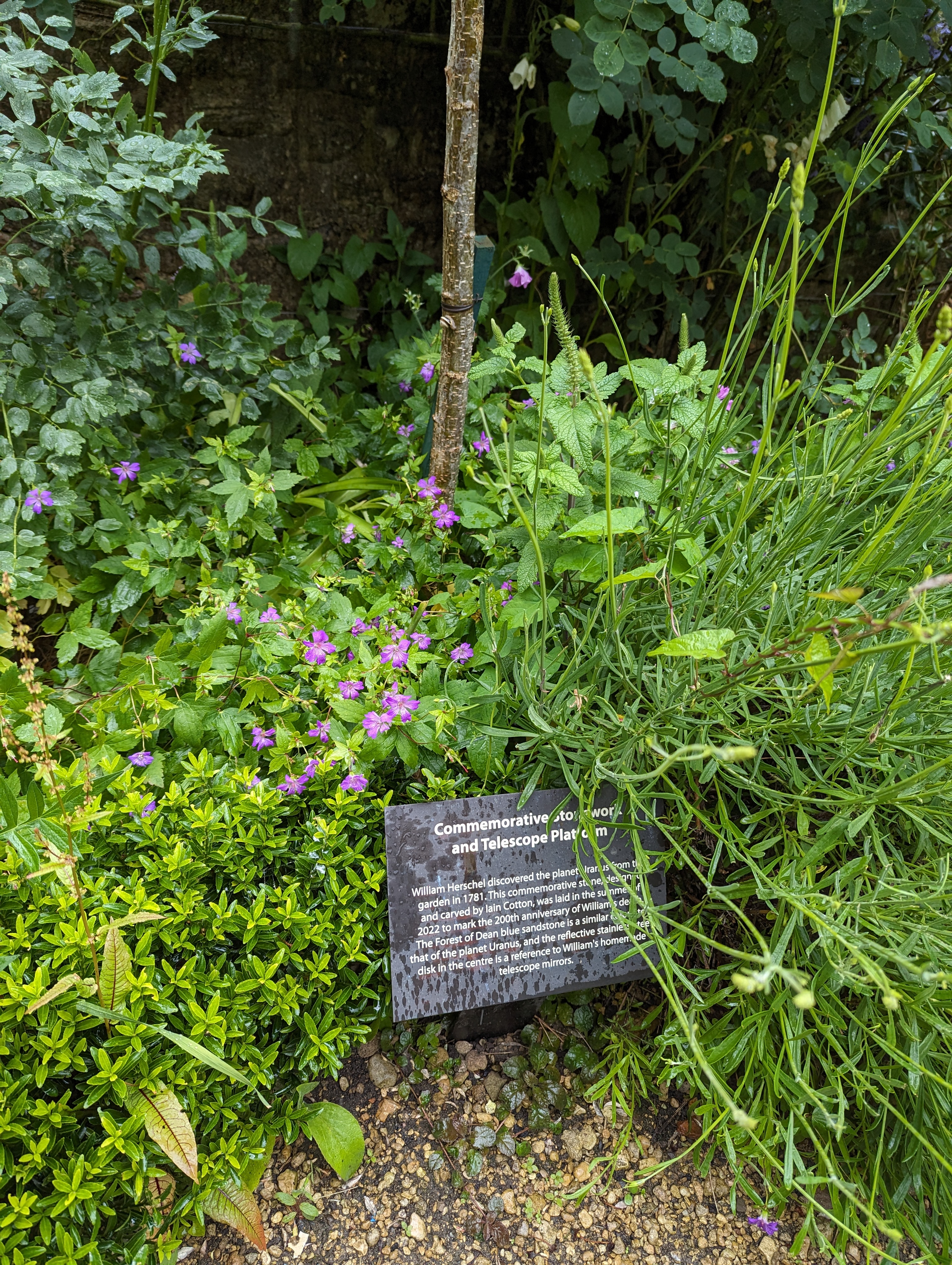
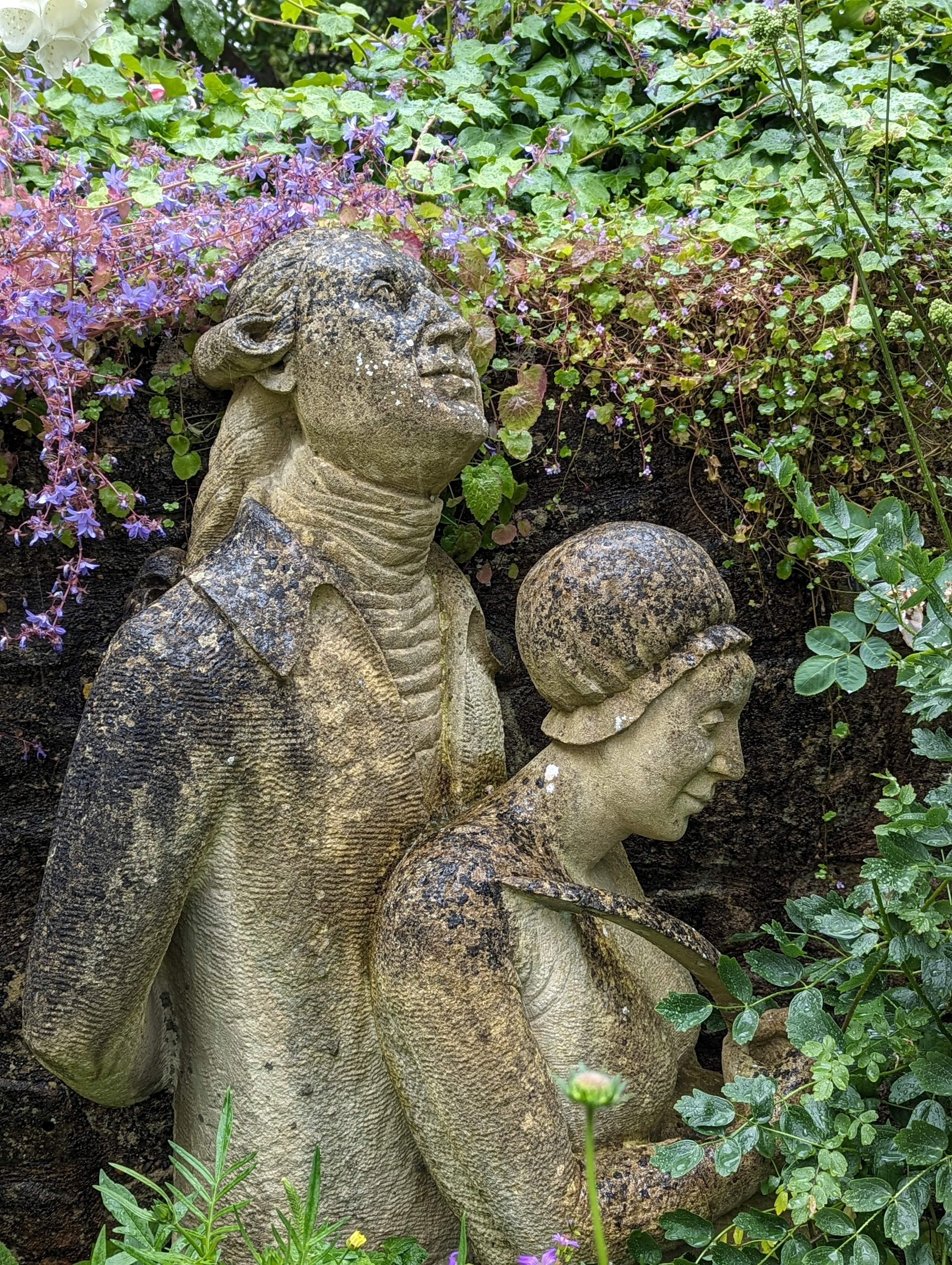
The plaque on the left commemorates Herschel’s discovery of Uranus on this site. This is where Herschel climbed up a ladder to adjust his telescope and scour the heavens. Caroline fed him while he stood there, both of them freezing cold and dedicated to science. And Caroline, whom he taught to read and write, made numerous discoveries of her own. Think of the talent that might have been wasted if she had been left to keep house with her difficult mother and never been taught anything at all!
Dinner tonight was at a tapas place, Pinxto, very noisy but delicious. Back to the flat, and bed.
 Caroline's Garden and Travel Record